

Dry-Farmed Tomatoes in Santa Cruz: Growing Intense Flavor with Less Water
A few of the product links in this guide are affiliate links. If you buy through one, Ambitious Harvest may earn a small commission at no extra cost to you, which helps keep these guides free. We only point to gear we would use in our own Santa Cruz garden. As an Amazon Associate, we earn from qualifying purchases. Read our full disclosure.
If you've ever tasted a dry-farmed tomato at the Santa Cruz Farmers Market, you know there's something different about them. The flesh is denser. The flavor is more concentrated. They taste like summer itself, distilled into each bite.
Dry-farmed tomatoes have become one of the Central Coast's signature crops, commanding premium prices at farmers markets and appearing on menus at farm-to-table restaurants throughout the Bay Area. But what exactly makes them different from the tomatoes you're growing at home? And can you actually try this technique in your own Santa Cruz garden?
The short answer is: maybe. Dry farming is a specific technique that requires specific conditions, and not every garden in Santa Cruz County can support it. This guide will help you understand what dry farming actually is, determine whether your site could work, and walk you through the steps if you want to try it. We'll also cover how to borrow some dry-farming principles even if your garden can't go fully irrigation-free.
What Are Dry-Farmed Tomatoes?
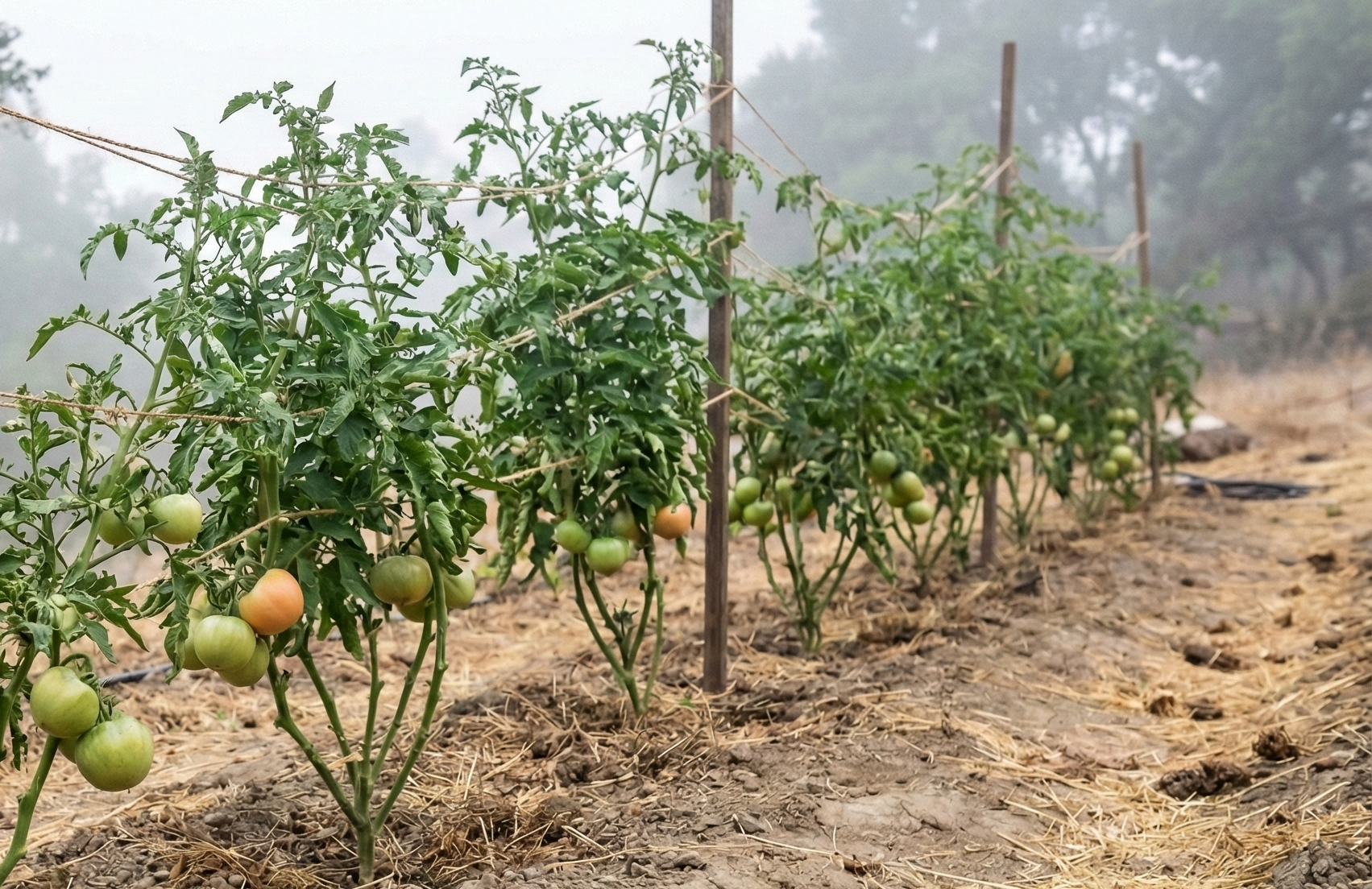
Dry-farmed tomatoes are grown with little to no in-season irrigation after plants are established. Instead of regular watering, they depend on moisture stored deep in the soil from winter rains, combined with a cool, foggy climate that reduces water loss from leaves.
According to Ag Alert (a publication of the California Farm Bureau Federation), dry farming is a form of deficit irrigation that can produce intensely flavored fruit when soil and climate conditions align. The Berkeley Food Institute has documented Central Coast dry-farm trials, noting that the technique produces smaller yields but concentrated flavor and significant water savings.
Key point: Dry farming is not just "watering less." It's a deliberate system that works only when soil depth, soil type, and summer climate all work together. Simply reducing irrigation on a regular garden bed will likely just give you stressed, stunted plants, not the dense, flavorful fruit that makes dry-farmed tomatoes special.
What Three Conditions Does Dry Farming Require?
Dry-farmed tomatoes succeed on parts of the Central Coast because three factors come together: deep soil that holds water, cool summers that reduce plant stress, and adequate winter rainfall to recharge soil moisture. If any one of these is missing, the technique won't work.
1. Deep, Water-Retentive Soil
Dry farming requires soil that can store enough water to carry plants through the entire summer. According to UC Santa Cruz's Center for Agroecology and Sustainable Food Systems, successful dry-farm sites typically have several feet of fine-textured soil (clay or clay loam) with no restricting layer like hardpan or bedrock that would prevent deep root growth.
Sandy soils drain too quickly and simply can't hold enough water. Rocky soils limit root depth. Compacted soils prevent roots from reaching deep moisture. The ideal dry-farm soil is what farmers sometimes call "heavy" soil, the kind that stays moist well below the surface even when the top few inches are dry.
What this means for your garden: If you can dig down two to three feet and find moist, clay-rich soil in mid-summer, you might have dry-farm potential. If you hit sand, rock, tree roots, or dry soil within a foot of the surface, true dry farming probably won't work on your site.
2. Cool, Foggy Summers
This is where Santa Cruz County's coastal climate becomes an asset. The Berkeley Food Institute identifies Central Coast areas near Santa Cruz and Monterey Bay as prime dry-farming territory specifically because summer fog, mild daytime temperatures, and relatively cool nights reduce how much water plants lose through their leaves.
When temperatures regularly exceed 90°F, tomato plants lose water faster than even deep soil reserves can supply. Ag Alert reports that dry-farmed tomatoes struggle in hot inland valleys for exactly this reason.
In Santa Cruz County: Coastal terraces and fog-influenced areas (think Aptos, Capitola, Live Oak, parts of Santa Cruz) have the best climate for dry farming. Hotter, more inland locations like sunny ridges in the San Lorenzo Valley may still need at least minimal irrigation even with ideal soil, because plants simply can't survive intense heat without some supplemental water.
3. Adequate Winter Rainfall
Dry farming depends entirely on recharging soil moisture during the wet season. Professional dry farmers typically leave fields fallow or grow deep-rooted cover crops that they terminate early in spring to conserve the stored water for summer crops.
In drought years, even traditional dry-farm sites may need supplemental irrigation or may not be suitable for dry-farmed tomatoes at all. This is why dry farming works best as a technique you adapt to conditions each year rather than a rigid system.
For home gardeners: Pay attention to winter rainfall totals. A normal or wet winter gives you a better shot at dry-farming success than a dry year. The Western Regional Climate Center and local weather stations can help you track seasonal precipitation.
Where Can Dry Farming Work in Santa Cruz County?
Not every Santa Cruz garden can support true dry farming. Understanding your microclimate is essential before you attempt this technique. For more on local growing conditions, see our guide to Navigating Santa Cruz County's Microclimates.
Best Candidates: Coastal Terraces and Fog Zones
Areas with regular summer fog, mild temperatures, and deep soil have the best potential. This includes parts of Aptos, Capitola, Live Oak, and the lower coastal areas of Santa Cruz. If your summer highs rarely exceed 80°F and you experience fog most mornings, your climate is favorable. For more on these areas, check out Gardening in Coastal Aptos and Capitola.
Soil is the limiting factor. Even in ideal climates, sandy beach-adjacent soils or shallow soils over bedrock won't hold enough moisture. The deep, clay-rich soils found on some coastal terraces are your best bet.
Possible with Modifications: Inland Valleys
Scotts Valley, Soquel, and similar inland areas have mixed conditions. They're warmer than the coast but cooler than the sunny San Lorenzo Valley ridges. With deep, heavy soil and some morning fog penetration, you might achieve a modified dry-farm approach that uses reduced irrigation rather than none at all. Learn more about these microclimates in The Santa Cruz Banana Belt.
Challenging: Hot Inland and Mountain Exposures
Boulder Creek, Ben Lomond's sunny ridges, and south-facing slopes throughout the county get too hot in summer for true dry farming. Even with ideal soil, the combination of heat and lower humidity means plants will need at least occasional deep watering to survive. See Gardening in the San Lorenzo Valley for more on these conditions.
Unlikely: Shaded and Shallow-Soil Sites
Redwood shade means less sun for tomatoes and tree roots competing for every drop of moisture. Shallow soils over bedrock or hardpan simply can't store enough water. Very sandy coastal soils drain too fast. If any of these describe your site, focus on water-wise techniques within a regular irrigation framework rather than true dry farming. Our guide to Growing Under the Redwoods offers alternatives for shaded sites.
What Is the Difference Between Dry Farming and Water-Stressed Tomatoes?
Before you stop watering your tomatoes and expect magic, it's essential to understand the difference between dry-farmed tomatoes and simply water-stressed ones.
Dry-farmed tomatoes: Plants intentionally grown without irrigation in soils and climates that can support this approach. Roots grow deep to access stored moisture. Yields are lower but flavor is concentrated.
Water-stressed tomatoes: Plants that simply aren't getting enough water for their conditions. They often develop blossom-end rot, cracking, stunted growth, increased disease susceptibility, and poor flavor.
If you garden on shallow or sandy soil and just stop watering mid-summer, you're far more likely to end up with stunted, unhealthy plants than the intensely flavorful fruit dry farming promises. The technique works only because the right conditions allow plants to actually access water, just from deep soil reserves rather than irrigation.
How Do You Dry Farm Tomatoes at Home, Step by Step?
If your site has the soil and climate conditions described above, you can adapt commercial dry-farming practices for your garden. These steps synthesize what Central Coast growers and university-affiliated trials documented by Ag Alert and the UCSC Center for Agroecology have reported.
Step 1: Prepare the Soil Deeply
Dry-farm fields are deeply worked to break compaction and allow roots to grow down into stored moisture. For a home garden, this means loosening soil at least 12 to 18 inches deep in your tomato planting area.
Double-dig or use a broadfork to loosen deep soil without inverting layers
Incorporate well-decomposed compost, but avoid high rates of fresh manure or high-nitrogen fertilizers (excessive nitrogen encourages lush top growth that demands more water)
Aim for a continuous, uncompacted soil profile so roots can grow deep without obstruction
Do this preparation in fall or early winter before the rains, giving soil time to settle and absorb winter moisture. For more on building healthy soil, see our Soil Amendments Guide.
Step 2: Plant Deeply with Wide Spacing
Dry-farm growers transplant tomatoes deeper than typical, burying part of the stem so roots can form along the buried portion and reach deeper moisture more quickly.
Remove lower leaves and plant transplants so that one-third to one-half of the stem is buried
Space plants 3 to 4 feet apart (wider than typical home garden spacing) to reduce competition for soil water
Plant when soil has warmed (at least 60°F) but while deep moisture is still abundant, typically mid-April to early May on the coast
Step 3: Water to Establish, Then Wean Off
According to Ag Alert, Central Coast dry farmers typically water only during initial establishment (a few irrigations after transplanting), then cut off irrigation entirely for the rest of the season.
Water deeply several times over the first two to three weeks after transplanting
Encourage roots to grow downward by watering deeply rather than frequently
Once plants are growing vigorously (usually 3 to 4 weeks after transplanting), stop regular irrigation
Watch for severe stress (wilting that doesn't recover overnight). Provide minimal rescue irrigation during heat spells if needed, but avoid returning to regular watering
For more guidance on deep watering techniques, see The Complete Guide to Watering Your Garden in Santa Cruz County.
Step 4: Weed Aggressively and Cultivate the Surface
Weeds compete directly for the stored moisture your tomatoes need. Dry-farm systems keep rows very clean and often rely on surface cultivation to create what's called a "dust mulch" that reduces evaporation.
Keep the area around dry-farm tomatoes completely weed-free, especially early in the season
Lightly cultivate the top inch or two of soil after any irrigation or rain to break the crust
Avoid deep cultivation that would bring moist subsoil into contact with drying air
Step 5: Manage Expectations for Yield and Flavor
The Berkeley Food Institute and farmers interviewed by Ag Alert consistently report that dry-farmed tomatoes yield less than irrigated ones, often producing smaller, denser fruit with higher sugar concentrations and more intense flavor.
Expect fewer, smaller fruits compared to well-watered plants
The reward is concentrated flavor that many people find superior for fresh eating
Dry-farmed tomatoes are particularly prized for salads and BLTs where you want maximum tomato flavor in every bite
What Are the Best Tomato Varieties for Dry Farming in Santa Cruz County?
Not every tomato variety performs well under dry-farm conditions. Central Coast growers have identified specific varieties that combine the vigor to survive deficit irrigation with the flavor that makes dry farming worthwhile. For a broader look at variety selection, see Best Tomatoes by Microclimate: What to Grow Where in Santa Cruz County.
Top Choice: Early Girl
Early Girl is the variety most associated with Central Coast dry farming. It's adapted to cool conditions, sets fruit even when nights are chilly, produces over a long season, and develops concentrated flavor under water stress. If you're trying dry farming for the first time, start here.
Also Recommended
Stupice: A Czech heirloom with exceptional cold tolerance and good flavor. Works well in fog-influenced areas.
San Francisco Fog: Bred specifically for coastal conditions. The name tells you everything about its intended climate.
Glacier: Ultra-early with excellent cold tolerance. Compact plants that do well with reduced water.
New Girl: A newer variety similar to Early Girl with improved disease resistance.
Varieties to Avoid for Dry Farming
Very late, large beefsteak types like Brandywine, Mortgage Lifter, and most giant heirlooms need more water and a longer warm season than dry-farming typically provides. They may survive but are unlikely to produce the flavor payoff that makes dry farming worthwhile.
Cherry tomatoes can work under reduced irrigation but often crack when rainfall or fog moisture fluctuates. If you want cherries, try Sungold, which handles our conditions well.
Where Can You Find Dry-Farm Varieties in Santa Cruz County?
Love Apple Farms (Scotts Valley): Their annual tomato plant sale (typically March) features dozens of varieties selected specifically for our climate, including dry-farm recommendations.
Renee's Garden Seeds (based in Felton): Local seed company with excellent fog-tolerant varieties. Available at local nurseries and online.
San Lorenzo Garden Center: Good selection of locally appropriate varieties in spring. Staff can advise on local performance.
Dig Gardens (Santa Cruz): Stocks a curated selection of vegetable starts, including tomatoes suited to coastal growing.
Where Won't Dry Farming Work, Even with Best Practices?
Ag Alert emphasizes that dry farming works only in "proper conditions," and that many farms (and by extension, home gardens) simply can't adopt it successfully. Knowing your site's limitations saves frustration.
Very sandy or shallow soils: These dry quickly and can't store enough water to carry plants through summer
Beds crowded by tree roots: Trees, especially redwoods and oaks, intercept deep moisture long before tomato roots can access it
Hot inland microclimates: Areas without regular fog or marine influence, where temperatures frequently exceed 90°F
Containers of any size: Pots simply cannot store enough water for dry-farm techniques
Raised beds with shallow soil: Most raised beds are 12 inches or less deep, far too shallow for dry-farm root systems
How Can You Borrow Dry-Farm Ideas Without Going Fully Dry?
Even if your site can't support true dry farming, you can apply some of its principles to grow more flavorful tomatoes while reducing water use. For comprehensive water-saving strategies, see our Water-Wise Gardening Guide.
Water Deeply but Less Frequently
Instead of frequent shallow watering, water deeply once or twice a week to encourage roots to grow down rather than staying near the surface. This builds drought resilience even within a regular irrigation schedule. Our guide on How Much to Water in Summer provides specific recommendations.
Avoid Over-Fertilizing with Nitrogen
High nitrogen produces lush, leafy growth that demands more water and can dilute fruit flavor. Moderate fertility with emphasis on phosphorus and potassium supports fruiting without excessive water demand.
Mulch Generously
While commercial dry farmers often use surface cultivation, home gardeners can achieve similar evaporation reduction with 3 to 4 inches of organic mulch (straw, leaves, or wood chips kept away from stems). Mulch also suppresses the weeds that compete for water. Learn more in Mulch and Soil Health: The Hidden Irrigation System.
Choose Appropriate Varieties
Even with regular irrigation, Early Girl and similar cool-tolerant varieties often produce more concentrated flavor than water-hungry beefsteaks in our foggy climate. Choosing the right variety matters for flavor regardless of irrigation approach.
What Are the Risks, and Who Should Try Dry Farming?
Dry farming is an experiment, not a guarantee. Even on good sites in good years, you're accepting lower yields in exchange for water savings and concentrated flavor.
Dry Farming is Best For:
Gardeners with deep, heavier soils in fog-influenced parts of Santa Cruz County
People willing to experiment and accept variable results
Those who prioritize flavor over maximum yield
Gardeners interested in water conservation as part of sustainable practice
Dry Farming is Not Ideal For:
Container gardeners
Sandy, shallow, or rocky soils
Hot inland microclimates
Gardeners who need maximum production from limited space
First-year gardeners still learning the basics
Recommended approach: Start with a trial row or small bed alongside regularly irrigated tomatoes. This lets you compare performance, evaluate your site's suitability, and decide whether the technique works for your garden and goals. Don't convert your entire tomato patch to dry farming in year one.
What Local Resources Help Santa Cruz Dry Farmers?
UCSC Center for Agroecology and Sustainable Food Systems: Research and education on sustainable farming practices including water-wise techniques.
UC Master Gardeners of Monterey and Santa Cruz Counties: Free gardening advice hotline and educational programs.
Santa Cruz Farmers Markets: Talk to local farmers about their dry-farm practices. Many are happy to share what works on their land.
Western Regional Climate Center: Rainfall data and climate information for tracking conditions.
Frequently Asked Questions
What exactly is dry farming?
Dry farming is a technique where crops are grown with little to no irrigation after establishment, relying instead on moisture stored deep in the soil from winter rains. It requires specific soil and climate conditions and produces smaller, more intensely flavored fruit.
Can I dry farm tomatoes in a raised bed?
True dry farming is very difficult in raised beds because most beds are too shallow (12 inches or less) to store adequate moisture. Dry-farm tomato roots need to reach 3 feet or deeper. However, you can apply reduced-irrigation principles in raised beds by watering deeply but infrequently.
What's the best tomato variety for dry farming in Santa Cruz?
Early Girl is the most widely used variety for dry farming on the Central Coast. It's adapted to cool conditions, sets fruit reliably, and develops excellent concentrated flavor under water stress. Stupice, Glacier, and San Francisco Fog are also good choices.
Why do dry-farmed tomatoes taste better?
When tomatoes receive less water, they produce smaller fruit with less dilution of sugars, acids, and volatile compounds. The result is a denser, more concentrated tomato flavor. Research from the Berkeley Food Institute has shown that dry-farmed tomatoes have higher soluble solids (sugars) than heavily irrigated ones.
How do I know if my soil is suitable for dry farming?
Check soil depth and moisture in mid-summer. Dig down 2 to 3 feet. If you find moist, clay-rich soil throughout that depth, your site has dry-farm potential. If you hit sand, rock, hardpan, tree roots, or dry soil within a foot, the technique likely won't work.
When should I stop watering my dry-farmed tomatoes?
Water deeply during establishment (the first 2 to 3 weeks after transplanting), then stop regular irrigation once plants are growing vigorously. This is usually 3 to 4 weeks after planting. Provide minimal rescue irrigation only if plants show severe stress that doesn't recover overnight.
What areas of Santa Cruz County are best for dry farming?
Coastal terraces and fog-influenced areas have the best potential. This includes parts of Aptos, Capitola, Live Oak, and lower Santa Cruz. You need a combination of deep, clay-rich soil and mild summer temperatures (consistent fog helps significantly). Hot inland areas and sandy coastal soils are poor candidates.
Will dry-farmed tomatoes yield as much as irrigated ones?
No. Dry-farmed tomatoes consistently yield less than irrigated plants, often producing fewer and smaller fruit. The tradeoff is concentrated flavor and significant water savings. If you need maximum production from limited space, regular irrigation is probably a better choice for your goals.
What Are the Key Takeaways?
Dry-farmed tomatoes are one of the Central Coast's agricultural treasures. The technique produces remarkably flavorful fruit while using significantly less water than conventional growing. But it's not magic, and it's not for every garden.
If you have deep, water-retentive soil in a fog-influenced area, dry farming is worth trying. Start small, be patient with the learning curve, and accept that you're trading yield for flavor. If your site doesn't fit the profile, don't be discouraged. You can still borrow dry-farming principles to grow more water-efficient tomatoes within a regular irrigation framework.
Either way, understanding how dry farming works deepens your appreciation for what makes our local food systems special. Next time you taste a dry-farmed Early Girl at the Santa Cruz Farmers Market, you'll know exactly what went into producing that concentrated burst of summer flavor.
