

Saving Tomato Seeds: Preserve Your Favorite Varieties
Some links in this guide are affiliate links. If you buy through them, we may earn a small commission at no extra cost to you. Read our full disclosure.
When you find a tomato variety that thrives in your garden and produces fruit you love, you don't have to buy seeds again. Saving tomato seeds is one of the most satisfying and practical gardening skills, connecting you to a tradition that predates commercial seed companies by thousands of years.
The process is straightforward, requires no special equipment, and can provide you with free seeds for years. Even better, seeds saved from your best plants over multiple years can gradually adapt to your specific microclimate, creating a truly local strain.
This guide covers everything you need to know to save tomato seeds successfully.
Why Should You Save Tomato Seeds?
Cost Savings
A single ripe tomato contains dozens of seeds, enough to grow more plants than most home gardeners need. After one packet purchase, you can have free seeds for years.
Variety Preservation
Many excellent heirloom varieties exist only because home gardeners saved and shared seeds. By saving seeds, you become part of this living tradition.
Local Adaptation
Seeds saved from plants that perform well in your garden carry genetic selection for your specific conditions. Over generations, this selection can improve local performance.
Self-Sufficiency
Knowing you can produce next year's plants from this year's harvest is a step toward garden independence.
Sharing
Seed saving produces more seeds than one garden needs. Sharing with neighbors and gardening groups spreads good varieties and builds community.
Which Tomatoes Can You Save Seeds From?
Open-Pollinated Varieties: Yes
Open-pollinated (OP) varieties breed true from seed. Seeds from a 'Brandywine' tomato will produce 'Brandywine' plants with the same characteristics as the parent.
How to identify: Look for:
"Heirloom" on the label
"Open-pollinated" or "OP" on the label
Absence of "F1" or "hybrid" designations
Varieties with history (named after people, places, or with known origin stories)
F1 Hybrids: No
F1 hybrids are first-generation crosses between two specific parent lines. Seeds from F1 hybrids can produce offspring with widely variable traits, you might get plants resembling either parent or something in between, but not identical to the fruit you saved from.
Popular hybrids like 'Early Girl,' 'Better Boy,' 'Celebrity,' and 'Big Beef' are F1 hybrids. Don't save seeds from these unless you're curious about what might emerge.
How to identify: Look for:
"F1" or "hybrid" on the label
Modern commercial variety names without historical origin
Varieties noted for disease resistance (often bred into hybrids)
When You're Unsure
If you don't know whether a variety is open-pollinated or hybrid:
Research the variety name online
Check seed company catalogs (they specify OP vs. F1)
Ask local gardeners or Master Gardeners
When in doubt, save anyway and see what happens, you'll learn whether offspring resemble the parent
Selecting Fruits for Seed Saving
Not every tomato is equally good for seed saving. Select carefully to improve your seeds' quality and performance.
Choose the Right Plants
Save seeds from plants that:
Are healthy and vigorous
Show good disease resistance in your conditions
Produce well in your microclimate
Have true-to-type characteristics (correct size, color, shape for the variety)
Avoid saving from:
Weak or diseased plants
Plants with unusual characteristics (unless you want to explore)
The earliest or latest fruit (middle-of-season is most representative)
Choose the Right Fruits
Select fruits that are:
Fully ripe or slightly overripe: Seeds mature as fruit ripens. Underripe fruit has immature seeds.
True to type: Correct shape, size, and color for the variety
From healthy plants: No disease symptoms
Representative: Typical fruit, not unusual outliers
Allow Full Ripening
For seed saving, let fruit ripen on the vine longer than you might for eating, even slightly past peak. This ensures seeds are fully mature and viable.
What Is the Fermentation Method?
Tomato seeds are surrounded by a gelatinous coating that inhibits germination and can harbor disease organisms. University seed-saving guides describe a fermentation process to remove this coating and reduce disease risk.
This is the recommended method for best-quality seeds with longest storage life.
Step-by-Step Instructions
1. Extract seeds and pulp
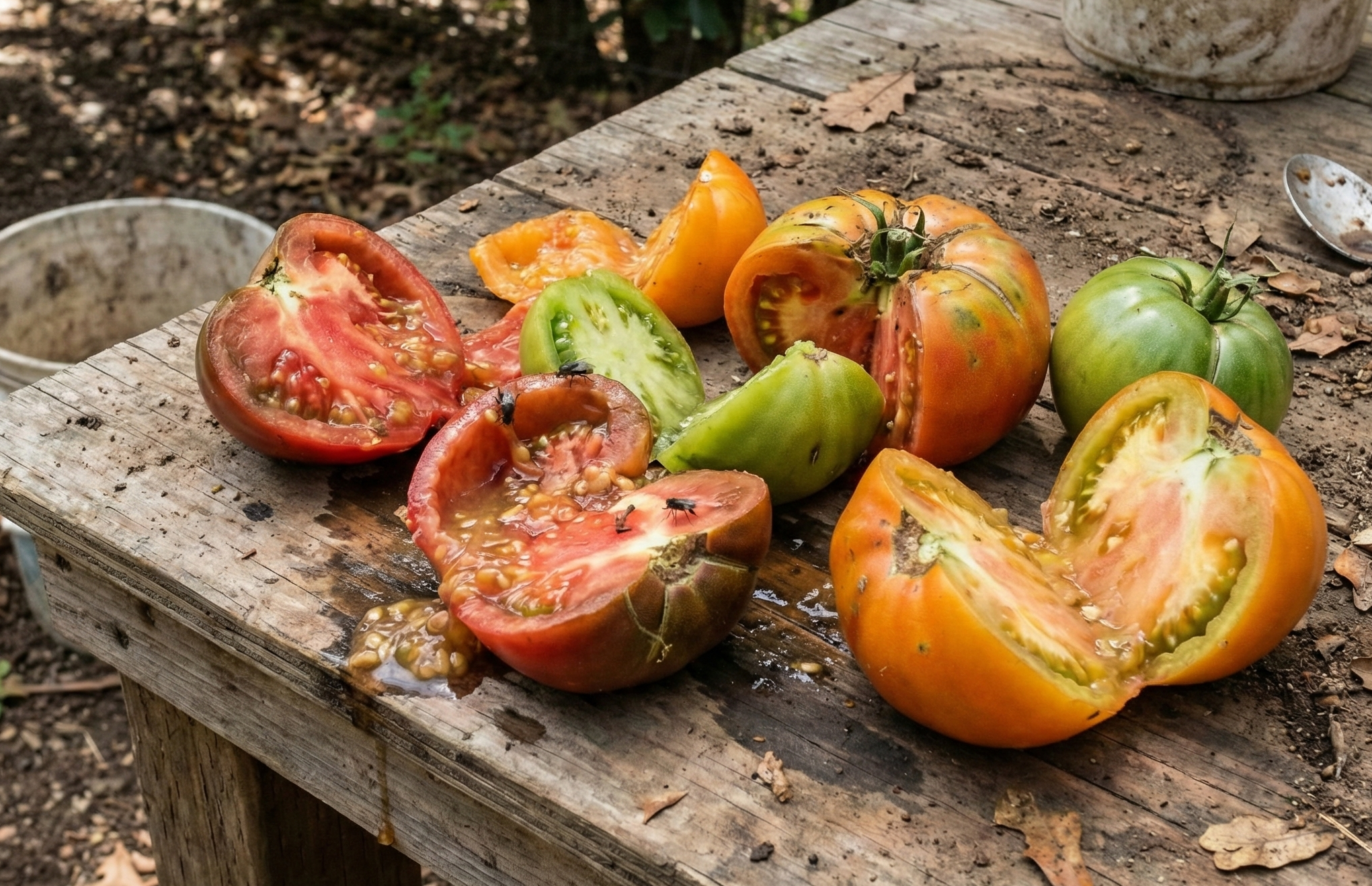
Cut the tomato horizontally (across the equator) to expose seed cavities. Squeeze seeds, pulp, and juice into a clean glass or plastic container. Don't worry about getting some tomato flesh in the mix.
2. Add water
Add about half as much water as the volume of pulp/seeds. This dilutes the mixture and helps fermentation.
3. Ferment
Cover the container loosely (to allow gas exchange but keep out flies) and let it sit at room temperature for 2-5 days.
Stir or swirl once or twice daily. You'll notice:
Bubbling (fermentation activity)
Possible mold forming on top (normal and okay)
Gradual breakdown of the gelatinous coating
4. Separate good seeds
After fermentation:
Add more water and stir
Let settle briefly
Pour off floating pulp, mold, and debris (these are unviable seeds and waste)
Repeat until only clean seeds remain at the bottom
Viable seeds are heavy and sink; empty or immature seeds float.
5. Rinse thoroughly
Pour seeds into a fine strainer and rinse under running water. Rub gently to remove any remaining coating.
6. Dry completely
Spread seeds in a single layer on:
A plate or glass dish
A coffee filter
A fine screen
Place in a warm, dry location with good air circulation, out of direct sunlight. Stir or flip seeds daily to ensure even drying.
Drying time: Usually 1-2 weeks, depending on humidity. Seeds must be completely dry before storage, any retained moisture causes mold and reduces viability.
Test for dryness: Properly dried seeds are hard and brittle. They should snap cleanly when bent, not bend or feel rubbery.
7. Store
Place dried seeds in:
Paper envelopes (labeled with variety and year)
Small glass jars
Plastic bags
Store in a cool, dark, dry place. A drawer, cabinet, or closet works well. Avoid areas with temperature fluctuations.
What Is the Quick-Dry Method (Simple Alternative)?
For gardeners who want a simpler approach, seeds can be dried without fermentation.
Method
Squeeze seeds onto a paper plate, coffee filter, or paper towel
Spread in a thin, single layer
Let dry completely at room temperature (1-2 weeks)
Peel dried seeds off the paper (some paper may stick, this is okay)
Store as above
Trade-offs
Advantages:
Simpler and faster
No fermentation smell
Works fine for short-term storage
Disadvantages:
Gelatinous coating remains (may inhibit germination)
Disease organisms not reduced
Shorter storage life
Seeds may stick together
UMN notes that seeds dried without fermentation can still work for saving year to year if disease pressure is low, but fermentation produces better-quality seeds for long-term storage.
How Do You Prevent Cross-Pollination?
Tomatoes are primarily self-pollinating, each flower contains both male and female parts, and pollination usually occurs within the flower before it opens. This means cross-pollination with other varieties is relatively uncommon.
However, cross-pollination can occur, especially:
When many varieties grow close together
With high pollinator (bee) activity
In certain variety types with more exposed flower parts
For Most Home Gardeners
Don't worry too much about isolation. Save seeds from your best plants and accept that occasional crosses may occur. You'll usually get true-to-type offspring, and if something unusual appears, it's an opportunity for discovery.
For Strict Purity
If you need guaranteed variety purity:
Distance: Separate varieties by 10-25 feet minimum
Physical barriers: Cover flower clusters with mesh bags before flowers open; shake to assist pollination
Timing: Grow only one variety, or grow varieties that flower at different times
Accept some crossing: Even with precautions, occasional crosses happen
For home seed saving, strict isolation is rarely necessary unless you're preserving a rare variety or planning to share seeds widely.
Storage and Viability
Proper Storage Conditions
Tomato seeds last longest when stored:
Cool: Room temperature is fine; refrigerator is better for long-term storage
Dry: Low humidity prevents mold and premature germination
Dark: Light can reduce viability over time
The rule of thumb: the cooler and drier, the longer seeds last.
How Long Do Seeds Last?
Properly dried and stored tomato seeds remain viable for:
4-6 years under good storage conditions
Up to 10 years under optimal conditions (cool, dry, dark)
Shorter periods if storage is warm, humid, or fluctuating
Even old seeds may germinate at reduced rates. Test germination of older seeds before relying on them for your whole planting.
Testing Viability
To test old seeds:
Fold 10 seeds in a damp paper towel
Place in a plastic bag, slightly open for air
Keep warm (70-80°F)
Check after 7-10 days
Count germinated seeds to estimate viability percentage
Record Keeping
Good records transform seed saving from a casual activity into a valuable garden practice.
What to Record
Variety name
Year saved
Plant the seed came from (if tracking individual plants)
Performance notes: vigor, yield, disease resistance, flavor
Microclimate where the parent grew
Any observations about conditions
Why It Matters
Over time, these records help you:
Select consistently for best performers
Track how varieties adapt to your conditions
Share information when you share seeds
Build institutional knowledge about what works in your garden
Simple System
A basic notebook or spreadsheet works fine. Include:
Variety name and year on each seed packet
A page per variety with accumulated notes
Overall observations about the growing season
Building Your Own Adapted Strains
The ultimate goal of seed saving isn't just free seeds, it's developing varieties uniquely suited to your garden.
How Selection Works
Each generation, save seeds from:
Plants that performed best in your conditions
Fruits with characteristics you value most
Plants that resisted local disease pressures
Over 5-10 generations, this selection pressure can create a strain noticeably better adapted to your specific microclimate than the original variety.
Santa Cruz Selection Criteria
For our conditions, you might select for:
Early ripening (especially in coastal areas)
Cool-night tolerance
Disease resistance (particularly to fungal issues)
Productivity despite fog
Good flavor even in cool conditions
Document Your Progress
Track what you're selecting for and any changes you observe. Even small improvements compound over generations.
Sharing Seeds
Seed saving naturally produces more seeds than one garden needs. Sharing extends your varieties' reach and builds gardening community.
How to Share
Seed swaps: Local gardening groups often host exchanges
Neighbors and friends: Share starts or seeds informally
Seed libraries: Many communities have seed libraries for borrowing and contributing
Online communities: Seed Savers Exchange and similar organizations facilitate sharing
Sharing Responsibly
When sharing seeds:
Label clearly with variety name and year
Note whether you can guarantee variety purity
Include basic growing information if helpful
State what you know and what remains uncertain
Frequently Asked Questions
Can I save seeds from store-bought tomatoes?
You can try, but most commercial tomatoes are F1 hybrids that won't breed true. Seeds may produce plants, but fruit characteristics will be unpredictable. For reliable results, save from known open-pollinated varieties.
How can I tell if my seeds are still good?
Do a germination test: place 10 seeds on a damp paper towel in a warm place for 7-10 days. Count how many sprout to estimate viability.
Will my saved seeds produce the same tomatoes?
If you saved from an open-pollinated variety and cross-pollination didn't occur, yes. F1 hybrid seeds will produce variable offspring.
Do I have to use the fermentation method?
No, but it produces better-quality seeds with longer viability. The quick-dry method works for short-term storage and low-disease situations.
How much seed can I get from one tomato?
One medium-sized tomato typically yields 50-200+ seeds, far more than most gardeners need for a season. A few tomatoes can provide years of seeds.
Can seeds be saved from the same plants I eat from?
Yes. You don't need to dedicate plants to seed saving. Simply choose the best fruits from plants you're already harvesting for eating, and save seeds from those.
What Is the Deeper Connection?
Seed saving connects you to thousands of years of agricultural tradition. Before commercial seed companies, all seeds were saved, by farmers, gardeners, and families who selected, preserved, and passed along the varieties that sustained their communities.
When you save seeds from your best 'Stupice' or your most productive 'Black Cherry,' you join this tradition. The seeds you save carry forward not just the variety's genetics but your garden's specific selection for local conditions.
Over time, a saved variety becomes uniquely yours, adapted to your soil, your microclimate, your preferences. That's a deeper satisfaction than any seed catalog can provide.
Free Gardening Resources
Know Your Microclimate Worksheet: Understand your conditions for better variety selection
