Tomato Problems and How to Fix Them: A Santa Cruz Troubleshooting Guide
A few of the product links in this guide are affiliate links. If you buy through one, Ambitious Harvest may earn a small commission at no extra cost to you, which helps keep these guides free. We only point to gear we would use in our own Santa Cruz garden. As an Amazon Associate, we earn from qualifying purchases. Read our full disclosure.
Even experienced gardeners face tomato problems. The difference between frustration and success often lies in recognizing what's happening and knowing which problems you can fix, which you can prevent next year, and which are simply part of growing tomatoes in coastal California.
Santa Cruz County presents a specific mix of challenges: cool nights that cause blossom drop, fog that encourages fungal diseases, and the moisture fluctuations that lead to cracking and blossom end rot. Understanding these local patterns helps you troubleshoot effectively rather than chasing solutions to problems you don't actually have.
This guide organizes common tomato problems by symptom, explains the likely causes in our climate, and offers practical fixes.
What Causes Tomato Fruit Problems?
Blossom End Rot
- Calcium can't reach developing fruit
- Usually from inconsistent watering
- Soil swings from dry to wet
- Excess nitrogen makes it worse
- Not a disease or infection
- Water deeply and consistently
- Mulch to even out moisture
- Avoid high-nitrogen fertilizers
- Don't over-fertilize early
- Be patient (later fruit often fine)
What it looks like: Dark, sunken, leathery patches on the bottom (blossom end) of fruits. Usually appears on the first clusters of the season. The spot starts small and water-soaked, then expands and turns black and leathery.
What it is: UC Master Gardeners explain that blossom end rot is a calcium deficiency in the developing fruit, but it's rarely caused by lack of calcium in the soil. Instead, it results from the plant's inability to transport calcium to fruits quickly enough, usually due to inconsistent watering.
Why it happens here: UC ANR notes that irregular watering, drought stress, and excessive nitrogen fertilization all interfere with calcium uptake. When soil moisture swings from very dry to very wet, calcium transport to developing fruits gets disrupted. The first fruit clusters are most vulnerable because they develop while root systems are still establishing.
Fixes:
Water consistently. This is the primary solution. Deep, regular watering that keeps soil evenly moist (not waterlogged) prevents most blossom end rot.
Mulch. A 2-4 inch layer of organic mulch buffers soil moisture fluctuations.
Avoid excessive nitrogen. High-nitrogen fertilizers, especially early in the season, promote rapid leafy growth that outpaces calcium uptake.
Don't over-fertilize. More fertilizer doesn't help and may worsen the problem.
Accept some early losses. First fruits are often affected even with good practices. Later fruits typically develop normally once roots are established and watering is consistent.
What doesn't work: Adding calcium to soil (usually unnecessary), foliar calcium sprays (calcium doesn't move from leaves to fruit), or Epsom salts (provides magnesium, not calcium, and can worsen the problem).
Cracking and Splitting
What it looks like: UC Master Gardeners describe two types: radial cracks extending from the stem outward, and concentric cracks circling the stem end. Both often appear suddenly on ripening fruit.
Why it happens: Rapid water uptake after a dry period causes fruit to expand faster than the skin can accommodate. Heavy rain or irrigation after drought, or the first foggy cool spell after a hot period, commonly triggers cracking.
Why it's common here: Santa Cruz County's variable weather, with cycles of fog and sun, warmth and cool, creates the fluctuating conditions that promote cracking. Late-season rains can devastate nearly-ripe fruit.
Fixes:
Water consistently. Avoid dramatic swings between dry and wet soil.
Harvest early. Pick fruit at "breaker" stage (first color change) and ripen indoors when heavy rain threatens or during foggy, cool periods. Fruit ripened indoors won't crack.
Mulch. Buffers moisture fluctuations.
Choose crack-resistant varieties. Cherry tomatoes and some modern hybrids resist cracking better than large heirlooms.
Catfacing
What it looks like: Misshapen, puckered, scarred fruit with deep folds and cavities, especially at the blossom end. Often affects large beefsteak-type tomatoes more than smaller varieties.
Why it happens: UC notes that catfacing results from incomplete pollination and abnormal flower development, often caused by cool temperatures during flowering. Temperatures below 55°F during bloom can cause the flower parts to fuse improperly.
Why it's common here: Our cool spring nights often dip into the low 50s or even 40s during the period when early tomatoes are flowering. This is a predictable consequence of our climate.
Fixes:
Accept some catfacing. In coastal Santa Cruz, some misshapen fruit is normal, especially on early clusters and large-fruited heirlooms.
Choose appropriate varieties. Smaller-fruited and cool-tolerant varieties are less prone to catfacing.
Use catfaced fruit. Misshapen tomatoes taste fine. Cut around the scars and use for cooking, sauces, or fresh eating.
Delay planting. Planting later (after nights warm up) means flowering occurs in warmer conditions, reducing catfacing.
Green or White Shoulders
What it looks like: The top of the fruit stays green, yellow, or white while the rest ripens, or develops hard, unpalatable areas near the stem.
Why it happens: Excessive heat and sun exposure on the shoulder area. Temperatures above 95°F prevent normal pigment development.
Why it happens here: More common in warmer inland microclimates during heat spells. Coastal gardens rarely see this problem.
Fixes:
Maintain good foliage cover. Don't over-prune; leaves shade developing fruit.
Provide afternoon shade. In very hot locations, shade cloth during heat waves helps.
Choose tolerant varieties. Some varieties are bred for uniform ripening regardless of heat.
What Causes Flowering and Fruit Set Problems?
Blossom Drop
What it looks like: Flowers form normally, then yellow and fall off without setting fruit. The plant looks healthy but produces few or no tomatoes.
Why it happens: UC ANR explains that tomatoes set fruit best when night temperatures remain between roughly 55-70°F. Nights consistently below 55°F or above 75°F interfere with pollination and fruit development, causing flowers to abort.
Why it's the #1 issue in coastal Santa Cruz: Our summer nights routinely dip into the low 50s, especially in foggy areas near the coast. This is well below the optimal range for fruit set. Gardeners who see abundant flowers but no fruit are almost always experiencing temperature-related blossom drop, not disease or deficiency.
Fixes:
Choose cool-tolerant varieties. This is the most effective solution. Varieties like 'Early Girl,' 'San Francisco Fog,' 'Oregon Spring,' and 'Stupice' set fruit in cooler conditions than standard varieties.
Plant in the warmest microclimate. South-facing walls, raised beds, and sheltered spots accumulate more heat. Black plastic mulch warms soil.
Use season extenders. Row covers, Wall O' Waters, and cloches trap heat around plants during cool periods.
Be patient. Fruit set often improves as summer progresses and nights warm slightly. Early flower drop doesn't mean the whole season is lost.
Avoid additional stress. Heavy pruning, drought stress, and over-fertilization during flowering can worsen blossom drop.
What won't help: Fertilizer, pesticides, or most other interventions. This is a temperature problem with a temperature solution.
Poor Pollination
What it looks like: Small, misshapen fruit or very light fruit set despite good flowering.
Why it happens: Tomatoes are self-pollinating, but pollen needs to move from anther to stigma, which normally happens through wind and flower vibration. Very still conditions, high humidity, or extreme temperatures can reduce pollen movement and viability.
Fixes:
Vibrate flowers. Gently shake plants or individual flower clusters to release and distribute pollen. An electric toothbrush held against the flower stem mimics bee vibration.
Improve air circulation. Don't plant in completely sheltered spots where air is stagnant.
Avoid overhead watering during flowering. Wet pollen doesn't transfer well.
What Causes Tomato Leaf Problems?
Yellow Lower Leaves
What it looks like: Lower leaves turn yellow and may drop, while upper growth remains green and healthy.
Why it happens: Often this is normal. As tomato plants grow, they naturally shed older lower leaves. The plant redirects resources to new growth and developing fruit.
When it's a problem: If yellowing progresses rapidly up the plant, spreads to all leaves, or appears with other symptoms (spots, wilting), investigate further.
Fixes:
Usually nothing needed. If only lower leaves are affected and the plant is otherwise healthy, this is normal aging.
Remove affected leaves. Improves air circulation and removes potential disease sources.
Check watering. Both overwatering and underwatering can cause yellowing. Assess your watering practices.
Consider nitrogen. If yellowing is widespread and plant looks pale overall, a nitrogen boost may help. But don't assume nitrogen deficiency without other evidence.
Leaf Spots and Blights
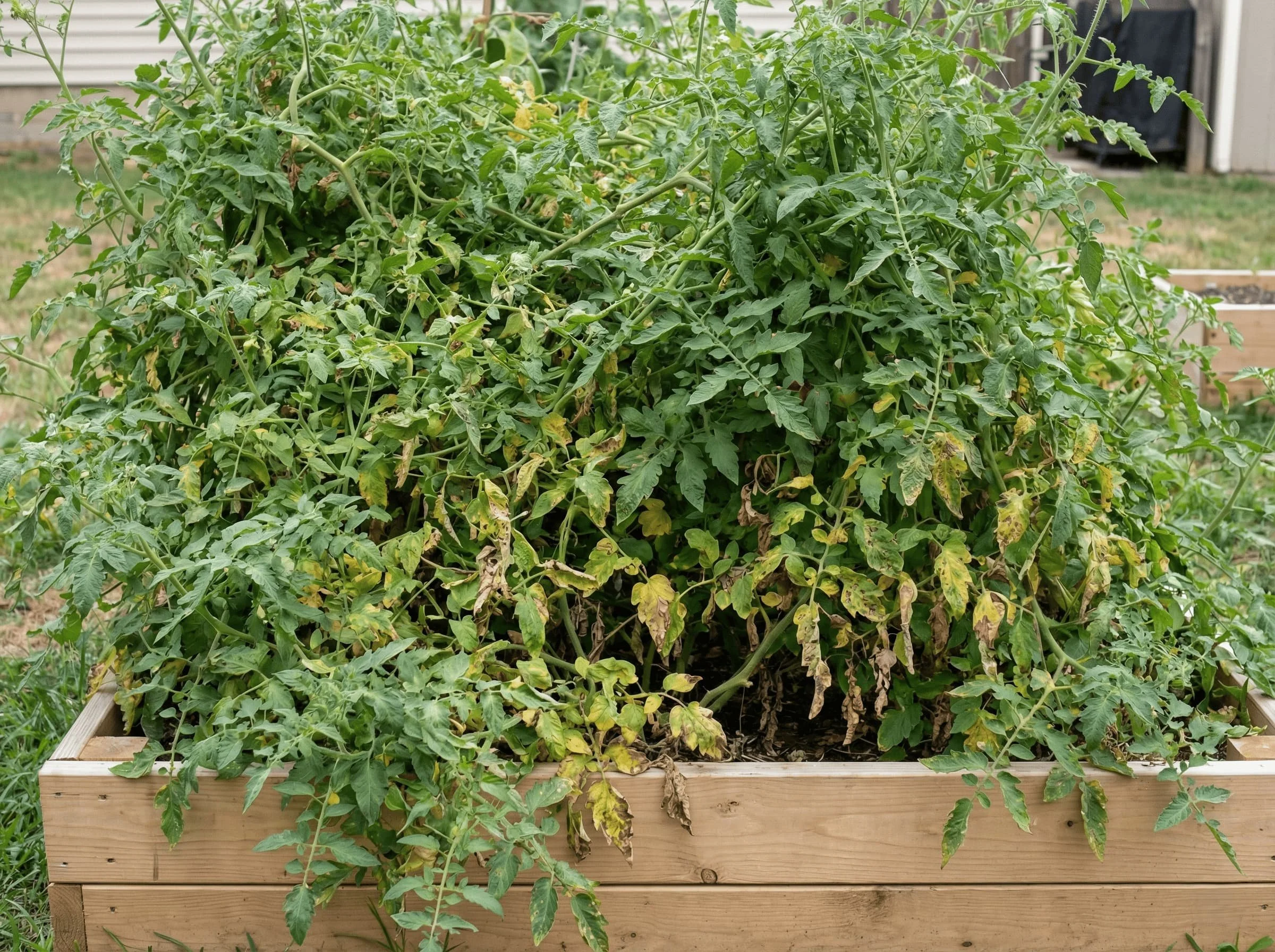
What it looks like: Brown or dark spots on leaves, often with yellow halos. May start on lower leaves and progress upward. In severe cases, leaves die and drop, defoliating the plant.
Common diseases:
Early blight: Brown spots with characteristic concentric rings ("target spots"). Starts on lower leaves. Caused by Alternaria fungus.
Septoria leaf spot: Small spots with dark borders and gray centers. Tiny black dots (fruiting bodies) visible in spots. Common in wet conditions.
Late blight: Gray-green water-soaked spots that rapidly turn brown and spread. Can affect leaves, stems, and fruit. The disease that caused the Irish Potato Famine. Can destroy entire plantings quickly in cool, wet conditions.
Why they're common here: Coastal humidity and fog create conditions favorable for fungal diseases. Morning dew that doesn't dry quickly, foggy periods, and cool nights all promote fungal growth.
Fixes:
Improve air circulation. Don't crowd plants. Prune lower leaves and suckers moderately. Stake or cage plants to keep foliage off the ground.
Water at soil level. Use drip irrigation or soaker hoses. Avoid overhead watering that wets foliage.
Remove affected leaves. At first sign of infection, remove and dispose of affected leaves (not in home compost).
Don't work with wet plants. Avoid touching plants when foliage is wet, which can spread spores.
Rotate crops. Don't plant tomatoes in the same spot year after year.
Choose resistant varieties. Many modern varieties have resistance to common diseases.
For late blight specifically: Act immediately. Late blight spreads rapidly in cool, wet conditions and can devastate plants within days. Remove and destroy (don't compost) affected plants. Alert neighbors if you find it, as it spreads via airborne spores.
Powdery Mildew
What it looks like: White, powdery coating on leaf surfaces, usually appearing late in the season.
Why it happens: Fungal disease favored by warm days, cool nights, and humid conditions. Unlike many fungal diseases, it doesn't require wet leaves, high humidity is sufficient.
Fixes:
Improve air circulation. Thin dense foliage.
Avoid evening overhead watering. Though powdery mildew doesn't require wet leaves, damp conditions favor it.
Remove affected leaves. Mild infections can be managed by removing affected foliage.
Sulfur-based fungicides. Can help prevent spread in severe cases.
Curled or Distorted Leaves
What it looks like: Leaves roll upward or inward, curl, or become distorted.
Possible causes:
Physiological leaf roll: Lower leaves roll upward during hot, dry periods. Not harmful.
Herbicide damage: Distorted, twisted growth, especially on new leaves. Often from drift or contaminated mulch/compost.
Viral disease: Severe curling, yellowing, and stunting. Plants may show mosaic patterns.
Aphid damage: Curling accompanied by sticky honeydew and visible insects.
Fixes:
Physiological roll: No treatment needed. Ensure adequate watering.
Herbicide damage: Remove affected parts. Avoid contaminated materials. Usually plants recover.
Viral disease: No cure. Remove and destroy affected plants to prevent spread.
Aphids: Wash off with water or treat with insecticidal soap.
What Pests Attack Tomatoes in Santa Cruz?
Tomato Hornworm
What it looks like: Large (3-4 inch) green caterpillars with white diagonal stripes and a horn on the rear end. Often found on upper foliage and stems. Can strip leaves and damage fruit.
Fixes:
Handpick. Highly effective in home gardens. Check plants regularly, especially upper leaves and stems.
Look for frass. Dark droppings on leaves indicate hornworm presence above.
Leave parasitized worms. If you find a hornworm covered with small white cocoons, leave it. Those are braconid wasp pupae, and the emerging wasps will parasitize future hornworms.
Bt (Bacillus thuringiensis). Organic control for caterpillars if handpicking isn't sufficient.
Aphids
What it looks like: Clusters of small, soft-bodied insects on new growth, leaf undersides, and stems. Leaves may curl. Sticky honeydew residue attracts ants and promotes sooty mold.
Fixes:
Strong water spray. Knocks aphids off plants and kills many on impact. Repeat every few days.
Encourage beneficial insects. Ladybugs, lacewings, and parasitic wasps all prey on aphids.
Insecticidal soap. For heavy infestations. Coat aphids directly; soap works on contact.
Don't over-fertilize. Excess nitrogen produces soft, succulent growth that attracts aphids.
Tomato Fruitworm (Corn Earworm)
What it looks like: Caterpillars boring into fruit, leaving holes and tunnels. May enter at the stem end or through the side.
Fixes:
Remove damaged fruit. Promptly harvest and dispose of affected fruit to reduce population.
Bt (Bacillus thuringiensis). Spray when caterpillars are small.
Encourage beneficial insects. Many natural enemies prey on fruitworms.
Whiteflies
What it looks like: Tiny white flying insects that rise in clouds when plants are disturbed. Found on leaf undersides. Can cause yellowing and weaken plants.
Fixes:
Yellow sticky traps. Monitor and reduce populations.
Insecticidal soap. For heavy infestations.
Improve plant vigor. Healthy plants tolerate moderate whitefly pressure.
What Environmental Problems Affect Tomatoes Here?
Wilting
What it looks like: Plants droop, especially during afternoon heat.
Possible causes:
Underwatering: Soil is dry. Plants recover overnight or after watering.
Overwatering: Soil is wet but plants wilt. Roots may be damaged.
Root problems: Disease, damage, or restriction.
Vascular disease: Fusarium or Verticillium wilt cause permanent wilting despite adequate water.
Diagnosis:
Check soil moisture. If dry, water deeply.
If soil is wet but plants wilt, suspect root problems or disease.
Cut a stem lengthwise. Brown discoloration in the vascular tissue indicates fusarium or verticillium wilt.
Fixes:
Adjust watering. Match watering to soil moisture needs.
For vascular disease: No cure. Remove and destroy affected plants. Plant resistant varieties (look for "F" and "V" designations) and rotate crops.
Sunscald
What it looks like: White or tan, papery patches on fruit, usually on the side facing the sun.
Why it happens: Excessive sun exposure on fruit, often after heavy pruning removes protective foliage.
Fixes:
Maintain foliage cover. Don't over-prune.
Shade cloth. During extreme heat.
Harvest early. Fruit can ripen indoors without sunscald risk.
For a complete guide to growing healthy tomatoes, see our tomato growing guide for Santa Cruz. Our organic pest control guide covers broader strategies for managing garden pests.
Frequently Asked Questions
My tomatoes flower but don't set fruit. What's wrong?
In Santa Cruz County, this is almost always caused by cool night temperatures. Choose varieties like 'Early Girl,' 'Oregon Spring,' or 'Stupice' that set fruit in cooler conditions.
What causes the black spot on the bottom of my tomatoes?
Blossom end rot, caused by inconsistent watering that prevents calcium uptake. Water consistently and mulch to prevent it. The problem usually resolves as roots establish and watering becomes more regular.
Should I spray my tomatoes to prevent disease?
For home gardens, good cultural practices (spacing, air circulation, drip irrigation) usually prevent serious disease better than spraying. If fungal disease appears, remove affected leaves first. Organic fungicides can help prevent spread but won't cure existing infections.
My tomato plant suddenly wilted and died. What happened?
Sudden collapse suggests vascular disease (fusarium or verticillium wilt). Cut a stem lengthwise; brown streaking confirms the diagnosis. Remove and destroy the plant. Plant resistant varieties (marked F or V) next year in a different location.
Are hornworms harmful?
The caterpillars can strip foliage quickly, but they're easy to control by handpicking. If you find one covered with white cocoons, leave it, those are beneficial wasp pupae that will help control future hornworms.
Why are my tomatoes splitting or cracking?
Splitting happens when a plant takes up water fast after a dry spell and the fruit swells quicker than its skin can stretch. It is common when we let beds dry out, then soak them deeply. Water steadily and mulch to even out soil moisture, and pick ripening fruit before a heavy irrigation or a rare summer rain. UC ANR covers steady tomato watering at ucanr.edu.
Why are my tomato leaves curling?
Upward leaf curl is usually harmless stress from heat or dry soil, and plants recover as conditions ease. If curling comes with yellowing, distorted new growth, or sticky residue, suspect a whitefly-spread virus or aphids instead. Check leaf undersides and keep watering even through hot inland afternoons. UC IPM helps you tell stress from pests at ipm.ucanr.edu.
Free Gardening Resources
Know Your Microclimate Worksheet: Understand your specific Santa Cruz County growing conditions
Garden Troubleshooting Guide: General problem-solving for vegetable gardens
Related Tomato Articles
Growing Tomatoes in Santa Cruz County
Growing Tomatoes in Containers
Heirloom Tomatoes for Santa Cruz
Determinate vs Indeterminate Tomatoes
Watering Tomatoes in Santa Cruz
Tomato Fertilizing + Soil Prep
Tomato Problems + Troubleshooting