

Determinate vs. Indeterminate Tomatoes: Which to Grow in Santa Cruz County
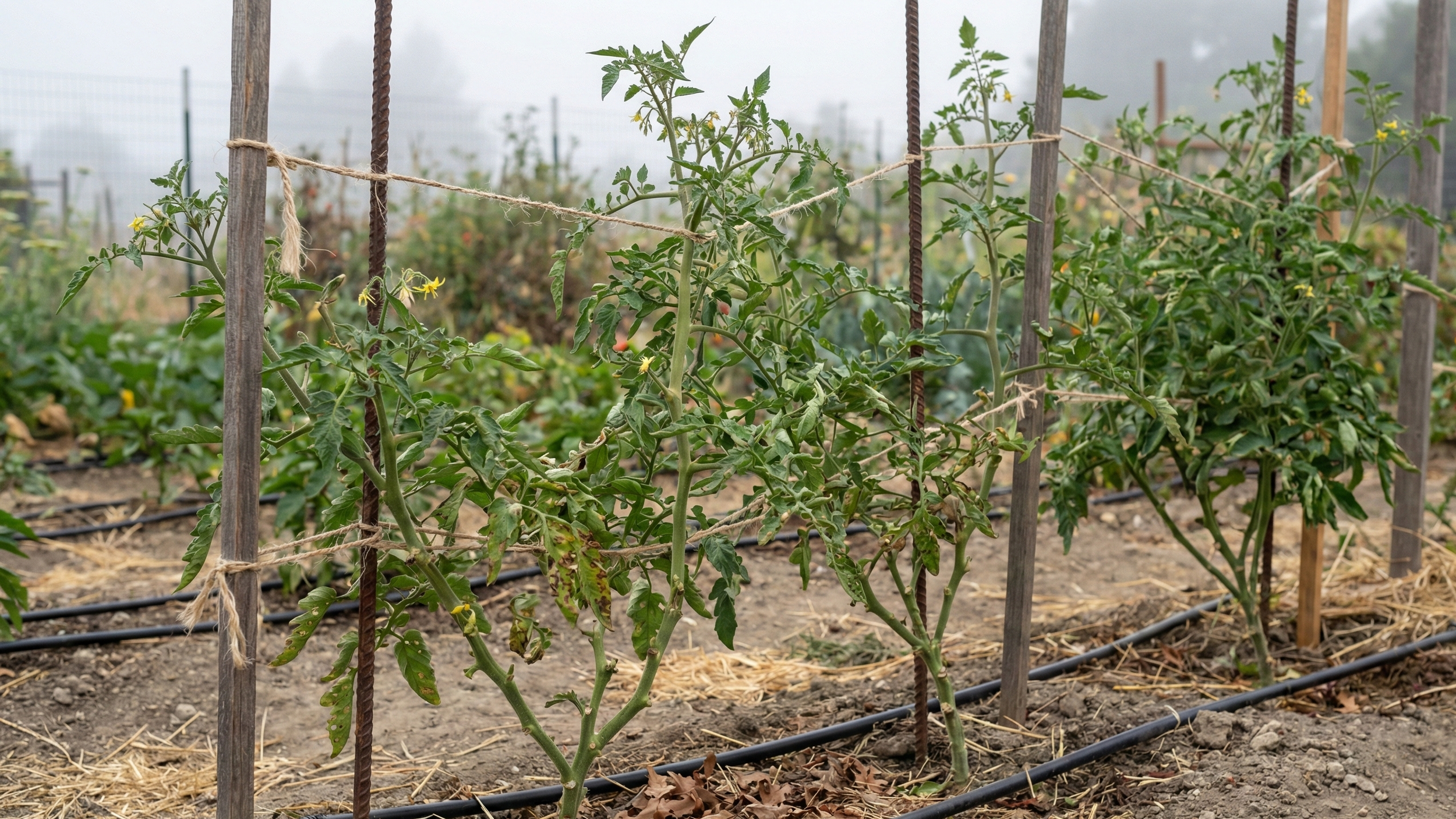
Walk into any nursery in spring and you'll see tomato varieties labeled "determinate" or "indeterminate." This isn't marketing jargon—it describes fundamentally different growth habits that affect everything from plant size to harvest timing to how you'll support and prune your plants.
Understanding this distinction helps you choose varieties suited to your garden space, your microclimate, and how you want to use your tomatoes. In Santa Cruz County, where our shorter coastal season and variable microclimates create specific challenges, this choice matters even more.
What Do These Terms Mean?
Determinate Tomatoes
Growth habit: Determinate tomatoes grow to a genetically predetermined size, then stop. They reach a certain height (typically 3-5 feet), set their fruit over a concentrated period, then decline. The plant essentially completes its life cycle and stops producing.
Also called: "Bush tomatoes" because of their compact, self-limiting growth.
Harvest pattern: Most fruit ripens within a 2-4 week window. After the main harvest, production tapers off significantly.
Examples: 'Roma,' 'San Marzano,' 'Celebrity,' 'Rutgers,' most paste tomatoes, and many varieties bred for containers or compact spaces.
Indeterminate Tomatoes
Growth habit: Indeterminate tomatoes continue growing and producing as long as conditions allow. Without pruning or frost, they can reach 8-12 feet or more. They don't stop at a set size—they keep vining.
Also called: "Vining tomatoes" because of their sprawling, continuous growth.
Harvest pattern: Fruit ripens continuously throughout the season. You'll pick tomatoes from the same plant for weeks or months, rather than all at once.
Examples: Most heirloom slicing tomatoes ('Brandywine,' 'Cherokee Purple,' 'Mortgage Lifter'), most cherry tomatoes ('Sungold,' 'Sweet 100'), and many popular hybrids ('Early Girl,' 'Better Boy').
Semi-Determinate
Some varieties fall between these categories—they have a more restrained growth habit than true indeterminates but produce over a longer period than strict determinates. These are sometimes labeled "vigorous determinate" or "semi-determinate."
Why This Matters in Santa Cruz County
The determinate/indeterminate distinction has particular relevance for our local growing conditions.
Our Shorter Effective Season
While Santa Cruz County has a year-round growing climate in theory, tomato season is effectively limited by:
Cool nights: Temperatures below 55°F interfere with fruit set, common in coastal areas even in summer
Fog: Reduces heat accumulation and sunlight
Fall decline: Shortening days and cooling temperatures slow ripening
UC Master Gardeners for coastal climates recommend shorter-season, often determinate or compact indeterminate varieties for foggy, cool zones where nights stay below 55°F for much of the summer.
Very long-season indeterminate varieties that need 80-90+ days of warm weather may never reach their potential in coastal Santa Cruz. They keep growing but never fully ripen their fruit before fall.
Microclimate Implications
Cool coastal gardens (Westside Santa Cruz, Live Oak, Aptos beach):
Shorter effective season
Cool nights limit fruit set
Determinate and early indeterminate varieties often perform better
Long-season heirlooms may disappoint
Warmer inland gardens (Scotts Valley, San Lorenzo Valley sunny slopes):
Longer warm season
More flexibility in variety choice
Indeterminate heirlooms can reach their potential
Determinate varieties still useful for concentrated harvests
Comparing Determinate and Indeterminate
Plant Size and Space Requirements
Determinate:
Typically 3-5 feet tall
More compact spread
Can be grown in smaller cages or with simple stakes
Better for containers (typically)
Plant spacing: 18-24 inches
Indeterminate:
Can reach 6-12+ feet if not topped
Sprawling habit requires management
Need tall, sturdy cages or stake-and-tie systems
Generally too large for containers (with exceptions)
Plant spacing: 24-36 inches
Harvest Pattern
Determinate:
Concentrated harvest over 2-4 weeks
Most fruit ripens around the same time
Plant declines after main harvest
Ideal for canning, sauce-making, preserving
Indeterminate:
Continuous harvest through the season
Pick ripe fruit regularly; more follows
Produces until frost or disease stops it
Ideal for fresh eating throughout summer
Pruning Needs
Determinate:
Generally should not be heavily pruned
Removing suckers reduces yield
The plant's natural form is appropriate
May remove lower leaves for airflow
Indeterminate:
Benefit from selective sucker removal
Pruning improves airflow and fruit size
Without pruning, can become tangled and disease-prone
Still, avoid extreme pruning in cool climates (foliage protects fruit)
Support Requirements
Determinate:
Sturdy cage (30-36 inches tall) usually sufficient
Short stakes work if tying is maintained
Less infrastructure investment
Indeterminate:
Tall, strong cages (5-6 feet) or tall stakes
May need overhead trellis in some systems
Require ongoing tying and training
More infrastructure but more production
Which Type for Your Situation?
Choose Determinate If:
You garden in a cool, foggy coastal microclimate
You have limited space or grow in containers
You want a concentrated harvest for canning or preserving
You prefer simpler support structures
You want lower-maintenance plants
You're okay with the harvest ending mid-season
Choose Indeterminate If:
You garden in a warmer inland microclimate
You have space for tall supports
You want tomatoes throughout the season
You prefer fresh eating over preserving
You're willing to prune and train plants
You want to grow large heirloom slicers or cherry tomatoes
A Balanced Approach
Many gardeners plant both types:
Determinate varieties for early, concentrated harvest and preserving
Indeterminate varieties for ongoing fresh eating
Early-maturing indeterminates as a hedge against cool seasons
This diversified approach ensures some harvest regardless of how the season plays out.
Variety Recommendations by Type
Determinate and Compact Varieties (Good for Coastal Santa Cruz)
Paste/Roma types:
'San Marzano' (actually indeterminate, but compact)
'Roma VF'
'Amish Paste'
Slicing types:
'Celebrity' (semi-determinate, disease resistant)
'Bush Early Girl' (compact form of Early Girl)
'Glacier' (extremely early, compact)
Cherry types:
'Tumbling Tom' (container variety)
'Window Box Roma'
Indeterminate Varieties (Better for Warmer Microclimates)
Large slicers and heirlooms:
'Brandywine' (needs heat for best flavor)
'Cherokee Purple' (complex flavor, needs warmth)
'Mortgage Lifter'
'Beefsteak'
Reliable producers:
'Early Girl' (indeterminate but early)
'Better Boy'
'Big Beef'
Cherry types:
'Sungold' (indeterminate, excellent flavor)
'Sweet 100' (very productive)
'Black Cherry'
Early Indeterminates (Good Everywhere)
These indeterminate varieties have shorter days-to-maturity, making them good choices even in cooler microclimates:
'Early Girl' (50-60 days)
'Stupice' (55-60 days, cold tolerant)
'Oregon Spring' (sets in cool weather)
'San Francisco Fog' (bred for coastal conditions)
Pruning Approaches by Type
Determinate: Minimal Pruning
Most extension sources advise against heavy pruning of determinate varieties because:
The plant has a limited number of potential fruiting branches
Removing suckers removes future fruit
The plant's natural compact habit doesn't require size control
Appropriate pruning for determinates:
Remove lower leaves that touch the ground (disease prevention)
Remove any dead or diseased foliage
Thin interior if airflow is severely restricted
Don't remove suckers as a routine practice
Indeterminate: Moderate Pruning
Indeterminate tomatoes benefit from selective pruning:
Remove suckers below the first flower cluster. These low suckers don't produce much fruit and clutter the plant base where disease pressure is highest.
Optionally remove some suckers above the first cluster. This is a judgment call. Removing suckers directs energy to fewer, larger fruits. Leaving them produces more but smaller fruits.
Don't over-prune in coastal conditions. Too much foliage removal exposes fruit to sunscald on rare hot days and reduces overall plant vigor. In foggy areas where heat is limited, plants need all the leaves they can get for photosynthesis.
Top plants late in the season. Removing growing tips in September redirects energy to ripening existing fruit rather than producing new growth that won't mature.
Support Systems by Type
For Determinate Tomatoes
Sturdy tomato cages: 30-36 inches tall, made from heavy gauge wire. Commercial cone-style cages are often too flimsy; look for cylindrical cages or make your own from concrete reinforcing wire.
Short stakes: 4-foot stakes with regular tying work for compact varieties. Pound stakes at planting time to avoid root disturbance later.
Florida weave: For row plantings, stakes between plants with string woven horizontally supports plants efficiently.
For Indeterminate Tomatoes
Tall cages: 5-6 feet tall, very sturdy construction. Concrete reinforcing wire formed into cylinders works well. Anchor firmly—loaded plants can topple weak cages.
Stake and tie: 6-8 foot stakes (T-posts work well) with regular tying as plants grow. Requires attention every week or two.
String trellis: Overhead support with strings descending to each plant. Plants are trained up the strings with regular winding. Efficient for intensive plantings.
Combination systems: Some gardeners use cages for the first few feet, then switch to tying as plants exceed cage height.
Container Considerations
Determinate Varieties Win for Containers
The compact, self-limiting growth of determinate varieties makes them much better suited to container growing. A determinate tomato will stay manageable in a large pot (5+ gallons minimum) while still producing a reasonable harvest.
Good container choices:
Compact determinate varieties
Dwarf varieties bred specifically for containers
Cherry tomatoes marketed for container/patio growing
Indeterminate Challenges in Containers
Most indeterminate varieties grow too large for containers. Their extensive root systems need more soil volume than containers provide, and their top growth becomes unwieldy and may topple.
Exceptions:
Some cherry tomatoes can work in very large containers (15+ gallons) with excellent support
Container versions of indeterminate varieties exist but require significant attention
If you must grow indeterminates in containers, use the largest container possible and plan for intensive support and frequent watering.
Frequently Asked Questions
What's the difference between determinate and indeterminate tomatoes in simple terms?
Determinate tomatoes grow to a set size, fruit heavily over a short period, then stop. Indeterminate tomatoes keep growing and producing all season until frost.
Which type is better for beginners?
Determinate varieties are generally easier—they need less pruning and simpler supports. However, early-maturing indeterminate varieties like 'Early Girl' are also beginner-friendly.
Do determinate tomatoes need pruning?
Minimal pruning only. Don't remove suckers from determinate varieties—you'll reduce your harvest. Remove only damaged foliage and leaves touching the ground.
Can I grow indeterminate tomatoes in containers?
It's difficult. Most indeterminates need more root space than containers provide. If you want containers, choose determinate or dwarf varieties.
Why do my indeterminate tomatoes never stop growing?
That's normal! Indeterminates grow continuously. Top them (remove growing tips) in late summer if you want to redirect energy to ripening existing fruit.
Are all heirloom tomatoes indeterminate?
Most large heirloom slicers are indeterminate, but not all. Check variety descriptions. Some paste-type heirlooms are determinate.
Which type produces more tomatoes?
Neither is inherently more productive—they just produce differently. Determinates give you more fruit in a shorter window; indeterminates spread production over time. Total yield depends on variety, care, and growing conditions.
Making Your Choice
For most Santa Cruz County gardeners, the best approach is matching variety type to microclimate:
Coastal, foggy gardens: Lean toward determinate varieties and early-maturing indeterminates. Long-season indeterminate heirlooms may not ripen well.
Warmer inland gardens: You have more flexibility. Indeterminate heirlooms can thrive. Consider both types for varied harvest timing.
Limited space or containers: Choose determinate varieties that stay compact.
Canning and preserving: Determinate paste varieties deliver concentrated harvests ideal for processing.
Fresh eating all season: Indeterminate varieties (especially cherry types) provide ongoing harvests.
The determinate/indeterminate distinction isn't about better or worse—it's about matching plant characteristics to your goals and growing conditions.
Free Gardening Resources
Know Your Microclimate Worksheet: Understand your specific Santa Cruz County growing conditions
Tomato Variety Selector: Find the right varieties for your garden
Related Tomato Articles
Growing Tomatoes in Santa Cruz County
Growing Tomatoes in Containers
Heirloom Tomatoes for Santa Cruz
Determinate vs Indeterminate Tomatoes
Watering Tomatoes in Santa Cruz
Tomato Fertilizing + Soil Prep
Tomato Problems + Troubleshooting

