

Watering Tomatoes in Santa Cruz County: How Much, How Often, and Common Mistakes
A few of the product links in this guide are affiliate links. If you buy through one, Ambitious Harvest may earn a small commission at no extra cost to you, which helps keep these guides free. We only point to gear we would use in our own Santa Cruz garden. As an Amazon Associate, we earn from qualifying purchases. Read our full disclosure.
More tomato problems trace back to watering than any other single factor.
Blossom end rot? Usually inconsistent watering. Cracking and splitting? Moisture fluctuations. Poor fruit set? Sometimes drought stress. Root rot and disease? Often overwatering. Get watering right and you prevent most of the problems that frustrate tomato growers.
In Santa Cruz County, our variable conditions (coastal fog, inland heat, sandy soils, heavy clays) make watering more nuanced than simple rules allow. A schedule that works perfectly in Scotts Valley might drown plants in foggy Live Oak or parch them on a sunny Boulder Creek slope.
This guide covers the principles of tomato watering, how to apply them across Santa Cruz County's microclimates, and the common mistakes that lead to disappointing harvests. For a broader overview of growing tomatoes locally, see our complete guide to growing tomatoes in Santa Cruz, and for water conservation strategies beyond tomatoes, explore water-wise gardening in California.
What Is the Fundamental Principle: Deep and Consistent?
UC IPM recommends deep watering to encourage deep roots, rather than frequent, shallow sprinkles that keep roots near the surface. This single principle underlies almost everything else about tomato watering.
- Roots stay shallow and weak
- Plants need constant watering
- More stress during hot days
- More prone to problems
- Roots grow deep and strong
- Plants tolerate dry periods
- Better heat resilience
- Healthier, more productive
Why Deep Watering Matters
Shallow watering creates shallow roots. When only the top few inches of soil stay moist, roots concentrate there. These shallow-rooted plants:
Need watering more frequently
Suffer more during hot spells
Are less stable and may need more support
Can't access nutrients deeper in the soil
Deep watering creates deep roots. When moisture penetrates 8-12 inches or more, roots follow it down. Deep-rooted plants:
Access water reserves during dry periods
Tolerate heat better
Need less frequent irrigation
Are more stable and resilient
Why Consistency Matters
Tomatoes suffer more from moisture swings than from moderate, consistent dryness. A cycle of too dry followed by too wet causes:
Blossom end rot: Calcium can't reach developing fruit during drought stress
Cracking and splitting: Rapid water uptake after drought causes fruit to expand faster than skin can accommodate
Blossom drop: Drought stress during flowering can cause flowers to abort
Root problems: Repeated wet-dry cycles stress roots
The goal isn't constantly wet soil. It's consistently moist soil that dries gradually and gets replenished before reaching stress levels.
How Much Water Do Tomatoes Need?
The General Guideline
Tomatoes generally need 1-2 inches of water per week from rain plus irrigation, applied deeply enough to moisten soil 8-12 inches down.
This translates to roughly:
In-ground plants: Deep watering 2-3 times per week in warm weather
Raised beds: May need watering every 1-2 days due to faster drainage
Containers: Daily watering often necessary in warm weather
Why Guidelines Are Just Starting Points
These numbers vary dramatically based on:
Soil type:
Sandy soils drain quickly and need more frequent watering
Clay soils hold water longer and need less frequent watering
Amended soils with good organic matter fall in between
Weather:
Hot, windy days increase water needs dramatically
Cool, foggy days reduce evaporation significantly
Humidity affects plant transpiration
Plant size:
Small transplants need much less water than full-grown plants
Heavily fruiting plants need more water
Mulch:
Mulched beds lose less water to evaporation
Unmulched soil dries much faster
The only reliable way to know when to water is to check your actual soil.
How to Know When to Water
The Finger Test
The simplest and most reliable method:
Stick your finger 2-3 inches into the soil near the plant (not right at the stem)
If soil feels moist at that depth, don't water
If soil feels dry 2-3 inches down, water deeply
Repeat daily until you understand your soil's rhythm
This takes 10 seconds and tells you more than any watering schedule.
Other Indicators
Plant appearance: Mild wilting in afternoon heat that recovers by evening is normal on hot days. Wilting that doesn't recover by morning indicates drought stress.
Soil appearance: Very dry surface soil isn't necessarily a problem if moisture remains below. Cracked, pulled-away-from-edges soil indicates significant drying.
Moisture meters: Inexpensive tools that measure soil moisture at various depths. Useful for checking deeper than finger-depth.
How to Water Tomatoes
Water the Soil, Not the Leaves
UC IPM advises watering at the base of plants rather than with overhead sprinklers to reduce leaf wetness and disease.
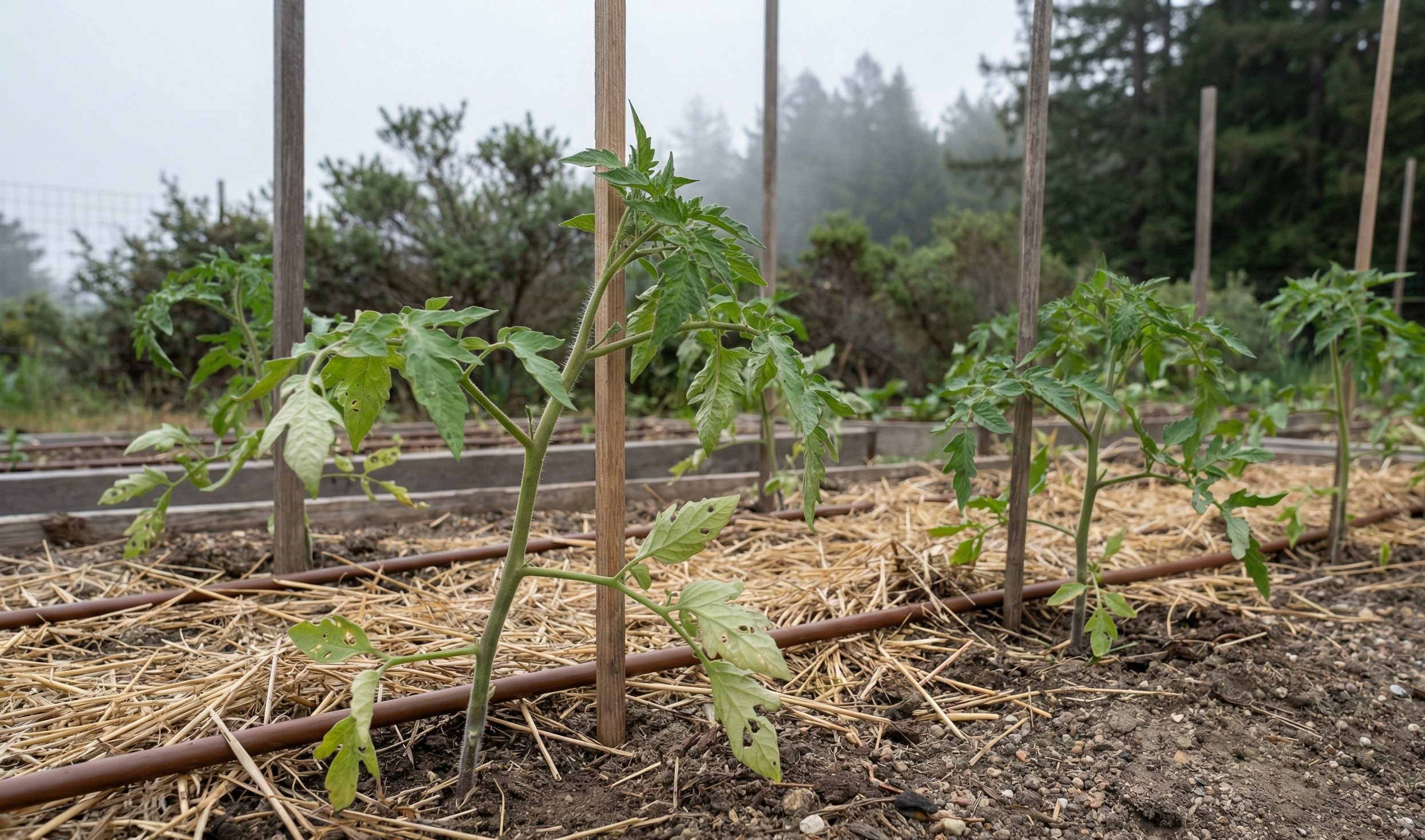
Wet foliage promotes fungal diseases, especially in Santa Cruz County's humid coastal areas where morning fog already keeps leaves damp. Drip irrigation or soaker hoses deliver water directly to the root zone where it's needed.
- Keeps foliage dry
- Conserves water
- Can automate
- Best for disease prevention
- Setup cost/time
- Can clog
- Inexpensive
- Easy setup
- Keeps foliage dry
- Good for rows
- Uneven distribution
- Degrades in sun
- No setup needed
- Observe plants while watering
- Target specific plants
- Time consuming
- Easy to underwater/over
- Hard to be consistent
Drip Irrigation
Advantages:
Waters soil directly, keeping foliage dry
Reduces fungal disease pressure
Conserves water (no evaporation spray)
Can be automated with timers
Delivers water slowly for deep penetration
Setup:
Run drip line or emitters along the row, near plant bases
Use 1-2 GPH emitters, 2-3 per plant for large indeterminate varieties
Run long enough to wet soil 8-12 inches deep (check by digging)
Soaker Hoses
Advantages:
Inexpensive and easy to install
Water seeps along entire length
Good for densely planted beds
Keeps foliage dry
Setup:
Snake through the bed near plant bases
Cover with mulch to reduce evaporation and UV degradation
Run until water penetrates desired depth
Hand Watering
Advantages:
No setup required
Allows observation while watering
Can target individual plants as needed
Technique:
Use a gentle flow that doesn't erode soil
Water at the base, not on leaves
Water slowly enough for soil to absorb (no puddling and runoff)
Continue until water penetrates 8-12 inches (check by digging)
Overhead Watering (When Necessary)
If overhead watering is unavoidable:
Water in early morning so foliage dries quickly
Never water in evening (leaves stay wet overnight)
Accept increased disease pressure, especially in foggy areas
Mulching: Your Watering Ally
Mulch is one of the most effective tools for managing soil moisture. A 2-4 inch layer of organic mulch:
Reduces evaporation: Less water lost to sun and wind
Moderates soil temperature: Keeps roots cooler in heat
Prevents crusting: Soil surface stays permeable
Suppresses weeds: Less competition for water
Adds organic matter: Improves soil as it breaks down
Best Mulches for Tomatoes
Straw: Classic choice; light, airy, effective
Shredded leaves: Free if you have trees; break down quickly
Wood chips: Long-lasting; keep away from stems
Compost: Provides nutrients as it mulches
Mulching Tips
Apply after soil has warmed (late spring/early summer)
Keep mulch a few inches away from stems to prevent rot
Replenish as mulch breaks down through the season
In very wet areas, thinner mulch prevents excessive moisture retention
How Often Should You Water by Santa Cruz Microclimate?
Cool Fog Belt (Westside Santa Cruz, Live Oak, Coastal Areas)
Conditions:
Lower evaporation due to fog and cooler temperatures
Higher humidity reduces plant water needs
Morning fog can keep foliage wet (disease pressure)
Wind can still dry containers and exposed beds
Approach:
Water based on soil moisture, not schedule
Expect to water less frequently than inland gardeners
Overwatering is more common than underwatering here
Focus on soil drainage to prevent waterlogging
Drip irrigation especially important to keep foliage dry
Common mistake: Watering because the calendar says to, not because soil is dry.
Warmer Inland (Scotts Valley, San Lorenzo Valley Sunny Slopes, Soquel Hills)
Conditions:
Higher evapotranspiration from heat
Less fog means more sun exposure
Wind on ridges can increase drying dramatically
Longer, hotter days in summer
Approach:
Expect to water more frequently than coastal gardens
Deep watering is especially important to build drought-tolerant roots
Mulch is critical for moisture retention
Mid-day wilting may be normal on hot days; water if it persists to evening
Common mistake: Shallow, frequent watering that creates dependent, shallow-rooted plants.
Under Redwoods (Felton, Ben Lomond Canyons)
Conditions:
Often cooler and more humid
Tree competition for water can be significant
Dappled light reduces evaporation
May have drainage issues in poorly drained areas
Approach:
Check soil moisture carefully, because conditions vary dramatically by spot
Container growing may be necessary if tree roots dominate
Consider raised beds to get above tree root competition
Common mistake: Assuming shade means plants need less water. Tree roots may be taking most of the water.
Container Growing (All Microclimates)
Conditions:
Containers dry much faster than ground soil
Small soil volume has limited water reserve
Wind and sun affect containers more than in-ground plants
Drainage holes mean water passes through quickly
Approach:
Check daily; water when top inch is dry
On hot days, containers may need twice-daily watering
Use saucers to catch excess water (empty if standing water remains after an hour)
Larger containers dry more slowly than small ones
Common mistake: Treating containers like in-ground plants. They need much more frequent attention.
What Are the Signs of Watering Problems?
Underwatering Symptoms
Wilting that doesn't recover by evening or early morning
Dry, cracked soil pulling away from pot or bed edges
Blossom end rot on developing fruit
Small, underdeveloped fruit
Leaf curl and drop
Slow growth despite warm weather
Overwatering Symptoms
Wilting despite wet soil (root damage)
Yellowing lower leaves
Soft, mushy stem base
Sour or rotten smell from soil
Fungal growth on soil surface
Root rot when plant is pulled (brown, mushy roots)
The Confusing Middle
Both overwatering and underwatering can cause wilting, making diagnosis tricky. The key is checking soil moisture:
Wilting + dry soil = needs water
Wilting + wet soil = root problems, likely from overwatering
If soil is wet but plant wilts, stop watering and let soil dry. Continuing to water makes the problem worse.
What Are the Most Common Watering Mistakes?
"A Little Every Day"
This is the most common mistake. Light, daily watering wets only the top few inches of soil, keeping roots shallow and dependent. Plants never develop the deep roots that sustain them through heat and drought.
Better approach: Water deeply every few days rather than lightly every day. Let soil dry somewhat between waterings to encourage root growth.
Watering on Schedule Rather Than Need
A fixed schedule ignores actual soil conditions. Weather, plant size, and other factors change water needs constantly.
Better approach: Check soil moisture before watering. Water when needed, not when the calendar says.
Overhead Watering in the Evening
Wet foliage overnight promotes fungal diseases, which are already problematic in Santa Cruz County's humid coastal areas.
Better approach: Water at soil level with drip or soaker hoses. If you must water overhead, do it in early morning.
Ignoring Drainage
Overwatered plants in poorly drained soil can suffer root rot, which looks like drought stress (wilting) but is caused by too much water.
Better approach: Ensure good drainage before planting. Raised beds help in problem areas.
Compensating for Drought with a Flood
After letting plants get too dry, the temptation is to give them extra water. But sudden heavy watering after drought causes cracking and may worsen blossom end rot.
Better approach: Return to normal watering gradually. Accept that some damage is done and focus on consistency going forward.
How Often Should You Water and Related Problems?
Good watering prevents most of the problems covered in our tomato troubleshooting guide:
Blossom end rot: Caused by calcium uptake problems during moisture stress. Consistent watering prevents it.
Cracking and splitting: Caused by rapid water uptake after drought. Even moisture prevents it.
Fungal diseases: Promoted by wet foliage. Drip irrigation and morning watering reduce them.
Root rot: Caused by overwatering and poor drainage. Proper watering and drainage prevent it.
If you're troubleshooting tomato problems, examine your watering practices first. The solution is often there.
Frequently Asked Questions
How often should I water tomatoes?
There's no universal answer. It depends on your soil, weather, and plant size. Check soil moisture 2-3 inches deep and water when dry at that depth. This might be every 2-3 days in warm weather, or less often in cool, foggy periods.
Is it better to water in the morning or evening?
Morning is better. It gives plants water for the hot day ahead, and any wet foliage dries quickly in morning sun. Evening watering leaves foliage wet overnight, promoting disease.
How do I know if I'm overwatering or underwatering?
Check soil moisture. Wilting + dry soil means underwater. Wilting + wet soil means overwatering (or root damage from overwatering). The finger test is your best diagnostic tool.
Should I water every day in hot weather?
Not necessarily. Deep watering less frequently is usually better than shallow daily watering. In-ground plants with deep roots can go several days between waterings even in heat. Containers are different: they may need daily or twice-daily watering.
Does fog reduce how much I need to water?
Yes. Foggy conditions reduce evaporation and plant water needs. In coastal Santa Cruz, you'll likely water less frequently than inland gardeners. Let soil moisture guide you, not assumptions.
My tomato plant is wilting but the soil is wet. What's wrong?
This usually indicates root damage, often from overwatering. Stop watering and let soil dry. Check for root rot (pull plant gently to see roots). If roots are brown and mushy, the plant may not recover.
What Is the Bottom Line?
Watering is the most important ongoing task in tomato growing. Master it and you prevent most problems. Get it wrong and no amount of fertilizer, pruning, or pest control will compensate.
The principles are simple: water deeply rather than shallowly, consistently rather than erratically, at soil level rather than overhead. Check your actual soil rather than following a schedule. Mulch to moderate moisture levels.
Apply these principles with attention to your specific microclimate and soil, and your tomatoes will reward you with healthy growth and abundant fruit.
Free Gardening Resources
Know Your Microclimate Worksheet: Understand your specific Santa Cruz County growing conditions
Drip Irrigation Setup 101: Get started with efficient watering
Related Tomato Articles
Growing Tomatoes in Santa Cruz County
Growing Tomatoes in Containers
Heirloom Tomatoes for Santa Cruz
Determinate vs Indeterminate Tomatoes
Watering Tomatoes in Santa Cruz
Tomato Fertilizing + Soil Prep
Tomato Problems + Troubleshooting
