

Growing Tomatoes in Containers in Santa Cruz County
A few of the product links in this guide are affiliate links. If you buy through one, Ambitious Harvest may earn a small commission at no extra cost to you, which helps keep these guides free. We only point to gear we would use in our own Santa Cruz garden. As an Amazon Associate, we earn from qualifying purchases. Read our full disclosure.
No garden bed? No problem.
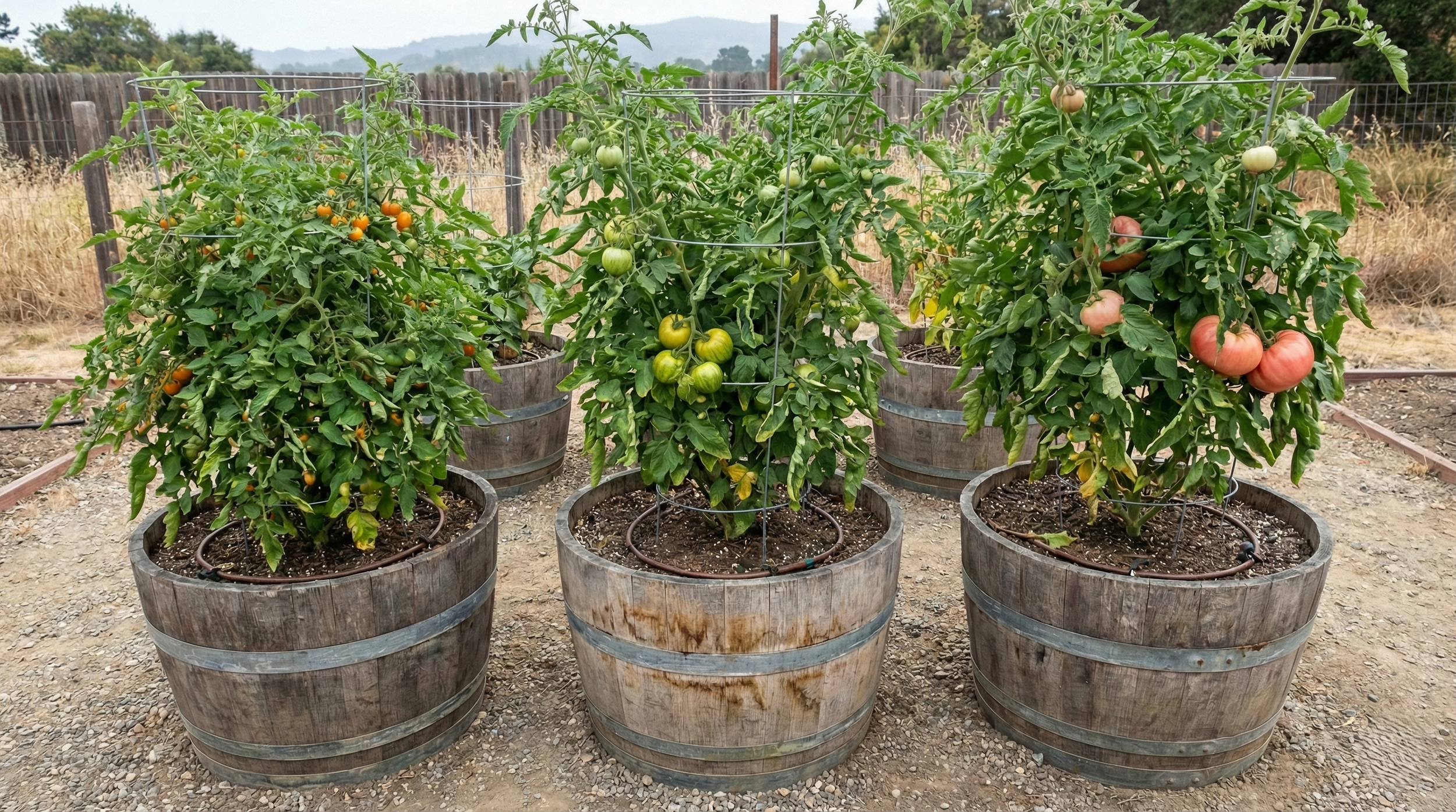
Tomatoes can thrive in containers on Santa Cruz patios, decks, balconies, and driveways, and in our coastal climate, containers actually offer some significant advantages. They warm faster than in-ground soil, they can be positioned to capture the warmest microclimates, and they can even be moved to chase the sun as seasons change.
The trade-off is that container tomatoes need more attention. Smaller soil volume means faster drying and quicker nutrient depletion. But if you're willing to water more frequently and feed more regularly, container tomatoes can be just as productive as their in-ground cousins, sometimes more so in our cooler coastal areas.
This guide covers everything you need to succeed with container tomatoes in Santa Cruz County.
Why Do Containers Work Well in Santa Cruz?
Container growing isn't just a compromise for gardeners without yard space, it's a legitimate strategy with real advantages in our climate.
Faster Soil Warming
UC Master Gardeners note that containers warm up faster than garden beds, which is a significant advantage in cool coastal areas where ground soil and night temperatures warm late in spring. While your neighbor's in-ground bed is still cold in April, a dark container on a sunny patio may already be warm enough for tomatoes.
Microclimate Creation
Patios, driveways, and walls absorb and radiate heat. UC guidance notes that patios near exterior walls can be up to 10°F warmer than surrounding air, a substantial difference that can mean the difference between tomatoes that thrive and tomatoes that sulk.
A container against a south-facing wall, on a concrete patio, or surrounded by gravel creates its own warm microclimate that benefits heat-loving tomatoes.
Mobility
Unlike in-ground plants, containers can be moved. This lets you:
Start plants in the warmest spot and move them as needed
Chase the sun as seasonal patterns shift
Pull containers under eaves during heavy rain
Relocate plants away from foggy corners
Bring containers into protected areas during cold snaps
Problem Avoidance
Containers bypass many in-ground challenges:
Poor native soil (you use potting mix instead)
Drainage problems (containers drain freely)
Soil-borne diseases (fresh mix each year)
Gophers (completely avoided)
Root competition from nearby trees
Container Size: Bigger Is Better
The single most common container tomato failure is using too small a pot. Tomatoes have extensive root systems, and cramped roots mean stressed plants, poor production, and constant watering struggles.
| Tomato Type | Minimum Size | Ideal Size | Growth Habit | Santa Cruz Notes |
|---|---|---|---|---|
| Determinate (Bush) Celebrity, Roma, Bush Early Girl |
5 gallons (12" diameter) |
10 gallons (16" diameter) |
Compact, 3-4 feet Sets fruit all at once |
Excellent for coastal fog zones. Can move to sunny spots as needed. |
| Indeterminate (Vining) Early Girl, Sungold, Stupice |
10 gallons (16" diameter) |
15-20 gallons (18-24" diameter) |
Vining, 6-10 feet Produces until frost |
Need sturdy caging or staking. Best against south-facing walls. |
| Cherry Tomatoes Sungold, Sweet 100, Black Cherry |
5 gallons (12" diameter) |
7-10 gallons (14-16" diameter) |
Varies by variety Highly productive |
Best Bet Most reliable producers in our cool climate! |
| Dwarf/Patio Varieties Tiny Tim, Patio Choice, Tumbling Tom |
3 gallons (10" diameter) |
5 gallons (12" diameter) |
Compact, 1-3 feet Great for balconies |
Perfect for apartments and foggy spots. Move to follow the sun. |
| Large Heirloom/Beefsteak Brandywine, Cherokee Purple |
15 gallons (18" diameter) |
20+ gallons (24" diameter) |
Large vines, 6-8 feet Heavy fruit |
Inland Only Challenging in containers. Need warmest spots. |
Container guidance based on UC Master Gardener recommendations and local growing experience.
Minimum Sizes by Plant Type
UC ANR container guides recommend pots at least 14-16 inches tall with substantial volume:
Determinate/compact varieties: Minimum 5-10 gallons. These naturally smaller plants can produce well in medium containers.
Indeterminate/vigorous varieties: 10-20 gallons and 18 inches deep or more. Larger is always better for these big plants.
Cherry tomatoes: 5-10 gallons for most varieties; some compact types can work in smaller containers.
Why Size Matters
Larger containers provide:
More root space for healthier, more productive plants
Greater soil volume to hold moisture (less frequent watering)
More nutrient reserve (less frequent feeding)
Better stability for tall plants
Greater temperature buffering (less heat stress)
A tomato in a 5-gallon pot may need watering twice daily in summer. The same plant in a 15-gallon container might need water only once daily or less. That difference alone justifies the larger container.
Good Container Options
Fabric grow bags: Excellent aeration, affordable, available in large sizes (15-25 gallons). The downside is they dry faster than solid containers and aren't as attractive.
Half-barrels: Classic look, substantial volume, good insulation. Heavy when filled.
Large plastic pots: Lightweight, affordable, available in many sizes. Dark colors absorb more heat (advantage in cool climates).
Self-watering containers: Built-in reservoirs reduce watering frequency. Good choice for busy gardeners.
DIY options: Food-grade buckets (5-gallon minimum, drill drainage holes), stock tanks, wooden planter boxes.
What to Avoid
Containers smaller than 5 gallons (except for truly dwarf varieties)
Pots without drainage holes
Metal containers in full sun (can overheat roots)
Shallow, wide containers (depth matters for tomatoes)
Potting Mix: Don't Use Garden Soil
This is non-negotiable: always use high-quality potting mix in containers, never native garden soil.
Container Tomato Potting Mix
The ideal blend for Santa Cruz container growing
Ingredients (per 10-gallon container)
Why Garden Soil Fails in Containers
Garden soil compacts in containers, destroying the air spaces roots need. It drains poorly, leading to waterlogging. It may harbor diseases, pests, and weed seeds. What works fine in the ground becomes a suffocating mess in a pot.
What to Look For
Quality potting mixes are:
Lightweight and fluffy
Well-draining while retaining moisture
Sterile (free of diseases and weed seeds)
pH-balanced for vegetables
Most commercial potting mixes contain peat moss or coco coir, perlite or vermiculite, and sometimes compost. Avoid mixes labeled "garden soil" or "topsoil."
Enhancing Your Mix
For tomatoes, consider adding to your potting mix:
Compost: A handful per container adds nutrients and beneficial organisms
Slow-release fertilizer: Provides steady nutrition (more on this below)
Perlite: Improves drainage if mix seems heavy
Reusing Potting Mix
You can reuse potting mix, but refresh it:
Remove old root debris
Add fresh compost (about 25% of volume)
Add slow-release fertilizer
Consider pasteurizing if disease was present (spread in sun for several days)
Fresh mix each year is ideal but not strictly necessary if you refresh properly.
What Are the Best Varieties for Containers in Santa Cruz?
Not all tomatoes perform equally well in containers, and variety selection matters even more in our cool coastal climate.
| Variety | Days | Type | Container Size | Why It Works Here | Best For |
|---|---|---|---|---|---|
| Bush Early Girl | 54 | Determinate | 5-10 gal | Bred for containers. Sets fruit in cool temps. Compact 18" plants. | CoastalBeginner |
| Sungold | 57 | Indeterminate | 7-15 gal | Most reliable producer in fog. Incredibly sweet orange cherries. | CoastalInland |
| Patio Choice Yellow | 60 | Determinate | 3-5 gal | AAS Winner. Compact plants (15-18"). Prolific yellow cherries. | Beginner |
| Tiny Tim | 45-55 | Determinate | 2-3 gal | Ultra-dwarf (12" tall). Perfect for windowsills. Quick harvest. | Coastal |
| Tumbling Tom Red | 70 | Determinate | 3-5 gal | Trailing habit for hanging baskets. Sweet cherry tomatoes. | Beginner |
| Glacier | 55 | Determinate | 5-10 gal | Sets fruit at very low temps (38°F!). Excellent cold tolerance. | Coastal |
| San Francisco Fog | 60-70 | Indeterminate | 10-15 gal | Bred specifically for Bay Area fog. Full-sized slicers. | Coastal |
| Stupice | 55-60 | Indeterminate | 10-15 gal | Czech heirloom with exceptional cold tolerance. Great flavor. | CoastalInland |
| Celebrity | 70 | Determinate | 10 gal | Disease-resistant hybrid. Reliable producer. Good-sized slicers. | Inland |
| Juliet | 60 | Indeterminate | 7-10 gal | Crack-resistant grape tomatoes. Disease resistant. Heavy yields. | CoastalInland |
Local variety performance is based on UC Cooperative Extension variety evaluations for climate Zone C, which includes Santa Cruz, plus Santa Cruz County gardener reports.
What Makes a Good Container Variety
Compact growth habit (determinate or small indeterminate)
Short days to maturity (earlier ripening)
Good production relative to plant size
Disease resistance (less soil volume means less margin for error)
What to Avoid in Containers
Large indeterminate heirlooms ('Brandywine,' 'Cherokee Purple,' 'Mortgage Lifter') generally don't perform well in containers:
Root systems need more space than containers provide
Plants may become stressed and unproductive
Late maturity means they may not ripen in coastal conditions
If you must try large heirlooms in containers, use the biggest container possible (20+ gallons) and expect modest results.
How Often Should You Water Container Tomatoes?
Watering is where container growing demands the most attention. Smaller soil volume means faster drying, and tomatoes are sensitive to moisture stress.
How Often to Water
UC ANR notes that container tomatoes dry out quickly and should be checked frequently. Check daily, stick your finger into the top inch of soil. If it's dry at that depth, water thoroughly.
Typical frequency:
ConditionsWatering FrequencyCool, foggy weatherEvery 2-3 daysMild weatherDailyHot, windy weatherTwice dailySmall containers (<10 gal)More frequentLarge containers (15+ gal)Less frequent
These are guidelines, always check actual soil moisture rather than following a schedule.
How to Water
Water thoroughly until water flows freely from drainage holes. This ensures the entire root zone is moistened, not just the surface. Superficial watering that never reaches the bottom of the container creates shallow roots and chronic stress.
UC Master Gardeners recommend two drip emitters per container plant to ensure adequate water. If hand watering, water slowly enough for absorption, don't just flood the surface and let water run out the sides.
Self-Watering Containers
Self-watering containers with built-in reservoirs can significantly reduce watering frequency. The reservoir provides a consistent water supply that plants access through wicking action. These are excellent for:
Busy gardeners who can't check daily
Hot, exposed locations
Vacation periods
Fill reservoirs regularly and don't rely entirely on the reservoir, check soil moisture occasionally.
Mulching Containers
A thin layer of mulch on container soil reduces evaporation and keeps roots cooler. Use:
Straw (1-2 inches)
Shredded leaves
Compost
Keep mulch away from the stem to prevent rot.
How Do You Fertilize Container Tomatoes?
Container plants can't send roots exploring for nutrients like in-ground plants. They depend entirely on what you provide, and nutrients leach out with every watering.
At Planting
Mix slow-release granular fertilizer into your potting mix according to package directions. This provides baseline nutrition for the first several weeks. Look for balanced vegetable fertilizers or tomato-specific formulas.
Ongoing Feeding
Begin supplemental feeding 3-4 weeks after transplanting, once plants are established and growing actively.
Recommended approach:
Liquid fertilizer every 1-2 weeks
Follow label dilution rates (or use slightly less)
Use balanced vegetable fertilizer or tomato formula
Feed when watering to prevent salt buildup
Signs of Nutrient Problems
Nitrogen deficiency: Pale green or yellowing leaves, especially older leaves; slow growth.
Phosphorus deficiency: Purple tinge to leaves; poor flowering.
Potassium deficiency: Brown leaf edges; weak stems.
If you see these signs, increase feeding frequency or concentration slightly. Container plants show deficiency faster than in-ground plants because of limited soil volume.
Don't Over-Fertilize
More isn't better. Excess fertilizer:
Burns roots
Promotes leaves over fruit
Can kill plants
Wastes money
Follow label rates and observe your plants. Healthy, productive plants with good color don't need more fertilizer.
Sun, Placement, and Support
Where to Place Container Tomatoes in Santa Cruz
Sun Requirements
Tomatoes need at least 6 hours of direct sun daily, more is better. In Santa Cruz's foggy coastal areas, maximize sun exposure:
South-facing locations are ideal
West-facing gets afternoon sun
Avoid north-facing or heavily shaded spots
Remember that fog reduces effective sun hours
Strategic Placement
Take advantage of container mobility:
Against walls: South or west-facing walls absorb heat during the day and radiate it at night, creating warmer conditions.
On hardscape: Concrete, brick, and stone patios absorb and reflect heat better than lawns or mulched areas.
In protected corners: Sheltered from wind, which can dry containers quickly and stress plants.
Chase the sun: As seasonal patterns shift, containers can move to follow the best light. Morning sun in spring may become shaded by summer; containers can relocate.
Support Systems
Even container tomatoes need support. UC guidance suggests small cages or trellises in pots for taller varieties.
Options:
Tomato cages: Insert at planting. Use sturdy cages that won't collapse under the weight of fruiting plants.
Stakes: A single stake works for determinate varieties. Requires regular tying as plants grow.
Trellises: Wall-mounted or freestanding trellises work well for containers positioned near structures.
Tip: Anchor supports at planting time when containers are stable. Adding supports later risks toppling containers or disturbing roots.
Container Tomatoes by Santa Cruz Microclimate
Coastal Fog Belt
Advantages: Containers can create warm microclimates where in-ground growing struggles.
Strategy:
Use dark containers to maximize heat absorption
Position against south-facing walls
Choose early, compact varieties
Accept that some varieties won't perform well regardless
Best varieties: 'Bush Early Girl,' 'Glacier,' 'Stupice,' cherry types
Warmer Inland Areas
Advantages: More flexibility in variety selection; longer growing season.
Strategy:
Can use larger containers for bigger varieties
May need afternoon shade during heat waves
Watch for rapid drying in hot, windy conditions
Best varieties: More options available; can try compact indeterminates and even some smaller heirlooms
Under Redwoods / Shaded Areas
Advantages: Containers can be placed in the sunniest available spots and moved as needed.
Strategy:
Position in whatever sun patches exist
Move containers to follow shifting sun
Focus exclusively on early, compact varieties
Consider supplemental lighting if growing on covered patios
Best varieties: Ultra-early determinates, cherry tomatoes
What Are Common Container Problems?
Wilting Despite Recent Watering
Possible causes:
Root rot from overwatering or poor drainage
Container too small, roots stressed
Severe heat stress
Root-bound plant
Solutions:
Check drainage; ensure holes aren't blocked
If roots are brown and mushy, plant may not recover
Move to shadier spot during heat waves
Transplant to larger container if root-bound
Poor Fruit Set
Possible causes:
Cool night temperatures (common in coastal areas)
Nutrient deficiency
Water stress
Too much nitrogen (all leaves, few flowers)
Solutions:
Choose cool-tolerant varieties
Feed with balanced fertilizer
Maintain consistent watering
Reduce nitrogen if plants are very leafy
Blossom End Rot
Cause: Inconsistent watering causing calcium uptake problems.
Solution: Water consistently. In containers, this may mean daily checking and watering. Mulch to moderate moisture fluctuations.
Rapid Drying
Causes: Container too small; hot, windy conditions; no mulch.
Solutions:
Use larger containers
Move to less exposed location
Add mulch
Consider self-watering containers
Water earlier in the day so plants are hydrated before heat peaks
Container Tomato Timeline for Santa Cruz
Typical timing for container-grown tomatoes in Santa Cruz County. Adjust within this range based on coastal vs. inland microclimates.
| Month | What to Do |
|---|---|
| February to March | Start seeds indoors under lights. |
| March to April | Prepare containers; acquire potting mix. |
| April | Begin hardening off seedlings. |
| Late April to May | Transplant to containers (inland areas); place in a warm, sheltered spot. |
| Mid-May to June | Transplant to containers (coastal areas); protect if nights are cool. |
| June to July | Establish a consistent watering and feeding routine. |
| July to September | Peak harvest period; maintain steady care. |
| September | Reduce watering slightly; harvest ripening fruit. |
| October | Harvest remaining fruit; ripen indoors if needed. |
Frequently Asked Questions
What size container do I really need?
For determinate varieties, 5-10 gallons minimum. For indeterminate varieties, 10-20 gallons. Bigger is always better, it makes watering and feeding easier and produces healthier plants.
Can I grow tomatoes in 5-gallon buckets?
Yes, for compact determinate varieties. Drill drainage holes in the bottom. For larger varieties, use two buckets nested (one as a drip tray) or upgrade to larger containers.
How often should I water container tomatoes?
Check daily. Water when the top inch of soil is dry. In hot weather, this may mean daily or twice daily. In cool, foggy weather, every few days.
Do container tomatoes need fertilizer?
Yes, more than in-ground plants. Start with slow-release fertilizer mixed into potting mix, then supplement with liquid fertilizer every 1-2 weeks once plants are established.
Can I reuse potting mix from last year?
Yes, with refreshment. Remove old roots, add fresh compost (25% of volume), and add slow-release fertilizer. If disease was present, either discard the mix or pasteurize in the sun.
Why are my container tomatoes wilting even though the soil is wet?
This usually indicates root problems, either rot from overwatering or root-bound stress. Check drainage and root health. Soggy soil plus wilting is a bad sign.
Free Gardening Resources
Know Your Microclimate Worksheet: Find the warmest spots for your containers
Tomato Variety Selector: Find the right varieties for container growing
Related Tomato Articles
Growing Tomatoes in Santa Cruz County
Growing Tomatoes in Containers
Heirloom Tomatoes for Santa Cruz
Determinate vs Indeterminate Tomatoes
Watering Tomatoes in Santa Cruz
Tomato Fertilizing + Soil Prep
Tomato Problems + Troubleshooting
