

Extending Tomato Season in Santa Cruz County
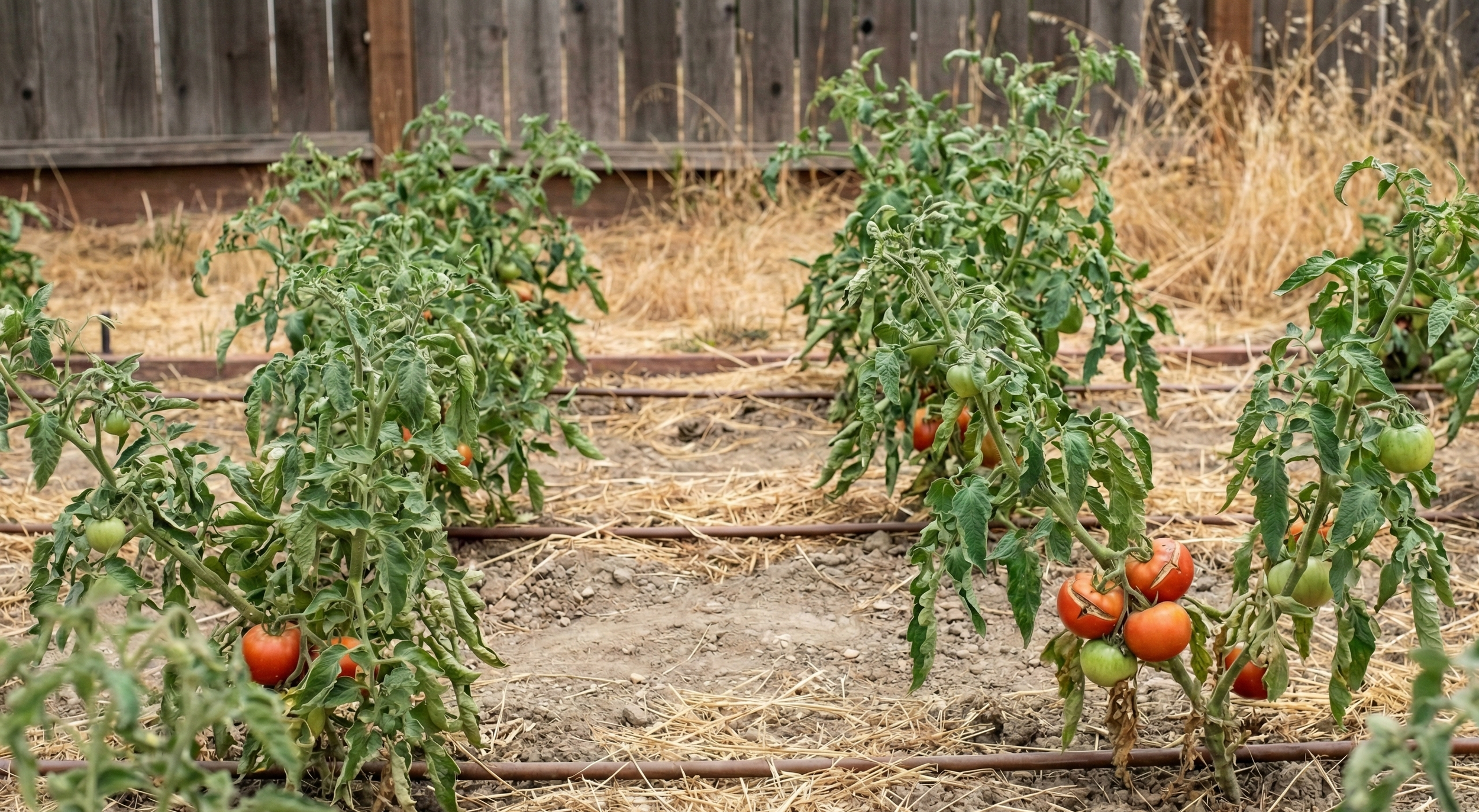
A few of the product links in this guide are affiliate links. If you buy through one, Ambitious Harvest may earn a small commission at no extra cost to you, which helps keep these guides free. We only point to gear we would use in our own Santa Cruz garden. As an Amazon Associate, we earn from qualifying purchases. Read our full disclosure.
Tomatoes love long, hot summers. Santa Cruz County's fog belt doesn't really have those.
While inland California gardeners enjoy months of warm nights and scorching days, coastal Santa Cruz gardeners work with a compressed window where tomatoes truly thrive. Our fog rolls in, nights stay cool, and by the time soil finally warms in late spring, we're already closer to fall than we'd like to admit.
But here's the good news: you can stretch that window at both ends. Not through magic or expensive gadgets, but by stacking small advantages: variety selection, microclimate awareness, soil warming, and strategic protection. Each technique might only gain you a week or two, but combined, they can transform a frustrating short season into a genuinely productive one.
This guide covers practical season extension strategies tailored to Santa Cruz County's unique conditions, from getting an early start in spring to squeezing the last ripe tomatoes out of fall.
What Is Our "Shorter Effective Season"?
Before we get to solutions, let's understand the problem.
What Limits Our Season
UC Master Gardeners for coastal climates note that near-ocean gardeners live in a "shorter effective season" zone where soil and night temperatures warm later in spring and cool earlier in fall. UC IPM emphasizes that tomatoes need warm soil and night temperatures above about 50-55°F to grow and set fruit well.
The constraints in coastal Santa Cruz:
Late soil warming: While air temperatures may feel pleasant in March or April, soil often remains too cold for tomato roots until well into May or even June near the coast.
Cool nights: Our summer nights routinely dip into the low 50s, sometimes into the 40s in foggy areas. This is below the threshold where tomatoes set fruit reliably.
Early fall cooling: As days shorten and fog returns in force, ripening slows dramatically. Plants may still have green fruit but lack the warmth to finish them.
Fog impact: Beyond temperature, fog reduces light intensity, further slowing growth and ripening.
- Start seeds indoors 6-8 weeks early
- Warm soil with black plastic
- Use raised beds (warm faster)
- Protect transplants with row cover
- Use Wall O' Water or cloches
- Plant in warmest microclimate
- Choose early, cool-tolerant varieties
- Water consistently (avoid stress)
- Manage disease proactively
- Support plants for good airflow
- Feed appropriately (not too much N)
- Keep plants healthy and vigorous
- Top indeterminate plants in Sept
- Remove late flowers and tiny fruit
- Harvest at breaker stage, ripen inside
- Remove mulch to warm soil
- Use green tomatoes for recipes
- Know when to call it done
The Numbers
In the fog belt (Westside Santa Cruz, Live Oak, areas near the bay), you may only get 8-10 weeks of "truly happy" tomato weather, meaning conditions where plants grow vigorously, flowers set fruit reliably, and fruit ripens on schedule.
In warmer inland pockets (Scotts Valley, San Lorenzo Valley sunny slopes, Soquel hills), that window expands to something closer to a normal California season, perhaps 12-16 weeks.
Season extension is about expanding that window at both ends: gaining weeks in spring before conditions are ideal, and extending into fall when they're declining.
| Technique | Extends Season | Cost | Best For | When |
|---|---|---|---|---|
| Wall O' Water | 4-6 weeks earlier | $10-15 each | Getting ahead of season. Warms soil and air. Proven frost protection. | Spring |
| Row Cover/Frost Cloth | 2-4 weeks (both ends) | $15-30/roll | Large areas. Easy on/off. Lightweight frost protection. | Both |
| Black Plastic Mulch | 2-3 weeks earlier | $15-25/roll | Warming soil before planting. Raises temp 5-10°F. | Spring |
| Cold Frame/Hoop House | 6-8 weeks (both ends) | $50-200+ | Serious extension. Year-round potential. | Both |
| South-Facing Wall | 2-4 weeks (both ends) | Free! | Coastal gardens. Free heat sink. Wind protection. | All Season |
| Container Growing | Variable (mobility) | $20-50/plant | Following sun. Move to warmest spots. | All Season |
| Topping Plants (Sept) | Faster ripening | Free! | Ripening existing fruit. Redirects energy. | Fall |
Which Tomato Varieties Extend the Season in Santa Cruz?
Variety selection is your first and most powerful season extension tool. The right varieties don't just tolerate our conditions. They're bred for them.
Days to Maturity Matters
Days to maturity (DTM) indicates how long from transplanting until first ripe fruit. For coastal Santa Cruz, this number is critical.
For the fog belt: Focus on early to mid-season varieties (55-75 days). These complete their cycle before cool fall weather arrives.
For warmer inland areas: You have more flexibility. Early varieties ensure some harvest; longer-season varieties (80+ days) have time to mature.
Cool-Tolerant Varieties
Some varieties set fruit better in cool conditions than others. Seek out varieties specifically noted for:
Cold tolerance
Setting fruit in cool weather
Short days to maturity
Bred for coastal or maritime climates
Recommended cool-tolerant varieties:
'Stupice' (55-60 days): Czech heirloom with excellent cold tolerance
'San Francisco Fog': Bred specifically for foggy coastal conditions
'Oregon Spring' (58 days): Sets fruit in cool weather, even parthenocarpically (without pollination)
'Glacier' (55 days): Ultra-early, compact, very cold tolerant
'Legend' (68 days): Disease resistant, sets in cool weather
'Early Girl' (50-60 days): Reliable producer, good coastal performance
Cherry Tomatoes as Insurance
Cherry tomatoes generally perform better than large slicers in cool conditions:
Smaller fruit ripens faster
Less total heat needed to mature each tomato
Many cherry varieties tolerate cool nights well
Reliable cherry varieties:
'Sungold': Sweet, productive, relatively early
'Matt's Wild Cherry': Tiny but intensely flavored, very productive
'Sweet 100': Classic, reliable producer
UC Master Gardeners recommend earlier-maturing, smaller-fruited tomatoes for foggy areas, specifically cherries and medium slicers rather than giant late beefsteaks.
What to Avoid in Cool Zones
Large, late-season heirloom slicers (80+ days) often disappoint in coastal Santa Cruz:
'Brandywine' (80-100 days)
'Mortgage Lifter' (85 days)
Large beefsteak types
These can work in warm inland microclimates but may never fully ripen near the coast. If you must grow them in foggy areas, choose your warmest microclimate and accept that results may be inconsistent.
How Can You Warm the Soil Earlier in Spring?
UC IPM recommends planting into warm, well-drained soil and avoiding very early planting into cold beds. Cold soil stunts roots, slows growth, and makes plants vulnerable to disease, even if air temperatures seem fine.
Actively warming soil can advance your planting date by 2-3 weeks.
Black Plastic Mulch
Clear or black plastic laid over beds absorbs solar heat and warms soil beneath it.
How to use:
Lay plastic over prepared beds 2-4 weeks before planting
Secure edges with soil, rocks, or staples
Cut planting holes when ready to transplant
Leave plastic in place through the season (it also suppresses weeds and retains moisture)
Black vs. clear plastic:
Black plastic absorbs heat and blocks weeds
Clear plastic warms soil faster but doesn't suppress weeds
In most cases, black plastic is the better choice
Dark Organic Mulch
If you prefer organic methods, dark compost applied thickly over beds also absorbs heat better than bare soil or light-colored mulch.
Note: Traditional organic mulches like straw keep soil cooler, not warmer. For spring soil warming, use dark materials or delay mulching until soil has warmed.
Raised Beds
Raised beds warm faster than in-ground soil because:
Elevated soil drains better and doesn't hold cold moisture
More surface area is exposed to warming air and sun
Dark-colored bed materials absorb heat
In cold, waterlogged, or compacted areas, raised beds can advance planting by several weeks.
Container Advantage
Large containers, especially dark-colored ones, warm quickly in spring sun. Placed against a south-facing wall or on a sunny patio, they can create a substantially warmer microclimate than in-ground beds.
This makes containers a legitimate season extension tool for early tomatoes, despite their other challenges.
How Do You Protect Young Tomato Plants in Spring?
Once nights are mostly above 45-50°F and soil is warming, you can transplant with protection to gain a head start. The goal is creating a warmer microclimate around young plants during the vulnerable early weeks.
Row Cover
Floating row cover (frost cloth) draped over plants or supported on low hoops:
Traps heat during the day
Retains a few degrees of warmth at night
Blocks wind, which is often the bigger coastal issue
Allows light, air, and water through
Tips:
Use lightweight row cover (not heavy frost blankets) for season extension
Support on wire hoops to avoid crushing plants
Remove or vent on warm, sunny days to prevent overheating
Can remain in place until plants outgrow the covering
Cloches and Individual Covers
For individual plant protection:
Wall O' Water: Water-filled plastic tubes surrounding each plant. Water absorbs heat during the day and releases it at night, maintaining significantly warmer temperatures. Very effective but labor-intensive.
Plastic milk jugs: Cut the bottom off a gallon jug and place over transplants. Simple, free, effective for early protection.
Commercial cloches: Various plastic or glass covers available. Look for ventilation options to prevent overheating.
Tips:
Vent or remove on sunny days above 70°F
Monitor plants for overheating
Remove once nights are consistently warm and plants are established
Cold Frames
A cold frame (essentially a box with a transparent lid) creates a protected microclimate for early transplants.
Place over in-ground plants or use with containers
Open during warm days, close at night
Can gain 2-4 weeks of growing season
Requires daily attention to venting
Wind Protection
In coastal Santa Cruz, cold wind is often as limiting as temperature. Wind protection alone can significantly improve early-season growth:
Temporary windbreaks (fabric, boards, plastic)
Permanent windbreak plantings
Planting in naturally sheltered spots
Using walls and structures for protection
How Do You Keep Tomato Plants Productive All Summer?
Season extension isn't just about spring and fall. It's also about maximizing production during the main season. Healthy, well-maintained plants remain productive longer.
Consistent Watering
Moisture stress causes:
Blossom drop (flowers abort without setting fruit)
Blossom end rot on developing fruit
Cracking when heavy watering follows drought
General plant stress that shortens productive life
Consistent watering, deep and regular rather than erratic, keeps plants healthy and setting fruit throughout the season.
Appropriate Nutrition
Feed enough to support growth without overdoing nitrogen:
Too little nutrition: Weak plants, poor fruit set
Too much nitrogen: Excessive foliage, delayed fruiting, reduced overall harvest
A balanced approach (compost plus modest supplemental feeding when fruit is forming) maintains productivity without excess.
Disease Management
Disease shortens the season more than anything else in humid coastal conditions. Prevention through:
Good air circulation (spacing, pruning, support)
Watering at soil level (keeping foliage dry)
Removing affected foliage promptly
Crop rotation from year to year
Healthy plants tolerate cooler nights and marginal conditions better, effectively extending the usable season.
Support and Pruning
Well-supported plants with good airflow:
Have less disease pressure
Expose fruit to what sun is available
Don't waste energy on sprawling across the ground
Are easier to monitor and maintain
For indeterminate varieties, moderate pruning keeps plants open and productive longer.
What Are the Best Late-Season Tactics for Ripening Tomatoes?
As summer fades, strategy shifts from encouraging new growth to ripening existing fruit. Cool nights and shortening days mean new flowers are unlikely to produce mature fruit before the season ends.
❄️ Frost Protection Quick Reference
When Frost is Forecast:
Top Your Plants
"Topping" means removing the growing tips of indeterminate plants in late season.
Why it works:
Stops new growth that won't mature in time
Redirects plant energy to ripening existing fruit
Signals the plant to focus on completing its cycle
When to top:
Late August to mid-September in most of Santa Cruz County
Earlier in the coolest coastal areas
When you judge there isn't enough season left for new fruit to mature
How to top:
Simply pinch or cut off the growing tip at the top of each main stem
Remove any new suckers that emerge after topping
Remove Late Flowers and Tiny Fruit
In fall, remove:
New flower clusters that appear after topping
Very small fruit that won't have time to size up
Any blemished or damaged fruit that's draining plant resources
This concentrates the plant's remaining energy on fruit with a realistic chance of ripening.
Reduce Watering (Carefully)
Some gardeners reduce watering slightly in fall to stress plants into ripening mode. This can work but carries risks:
Don't stress plants to the point of wilting
Blossom end rot can still occur on late fruit
Cracking can result if heavy rain follows drought
If you reduce watering, do so gradually and monitor plants closely.
Maximize Heat Capture
As temperatures drop, maximize heat around plants:
Remove mulch to let soil absorb more heat
Prune some foliage to expose fruit to sun
Consider draping dark fabric around plants to absorb heat
Move containers to the warmest microclimate
How Can You Use Microclimates to Grow Better Tomatoes?
Within a single Santa Cruz yard, temperature and conditions can vary dramatically. Learn your microclimates and use them strategically.
Warm Microclimates
Identify these spots:
South-facing walls and fences (absorb and radiate heat)
West-facing walls (afternoon sun)
Paved areas that retain heat
Protected corners sheltered from wind
Raised areas where cold air drains away
Slopes above fog pools
Use them for:
Your earliest plantings
Longer-season varieties that need more heat
Plants you want to push through cool fall weather
Cool Microclimates
Identify these spots:
North-facing areas
Low spots where cold air pools
Wind-exposed areas
Under evergreen trees
Near bodies of water
Use them for:
Quick-maturing cherry tomatoes
Cold-tolerant varieties that don't need heat
Succession plantings that extend harvest into fall
Mapping Your Yard
Spend time observing:
Where frost lingers longest in winter
Where fog is thickest and longest-lasting
Where wind hits hardest
Where sun hits first and lingers longest
Where soil dries fastest vs. stays wet
This knowledge helps you match varieties and planting times to specific spots, effectively giving you multiple growing zones within one garden.
When Should You Harvest and Ripen Tomatoes Indoors?
At some point each season, outdoor ripening slows dramatically. Knowing when to bring fruit inside, and how to ripen it successfully, extends your usable harvest even after plants have peaked.
When to Harvest for Indoor Ripening
Once nights consistently dip into the 40s and day length shrinks, outdoor ripening slows to a crawl. At that point:
Harvest at "breaker" stage (first color change) or later
Mature green tomatoes can ripen indoors, though more slowly
Don't leave fruit exposed to potential frost
UC IPM notes that tomatoes picked at breaker stage will continue to ripen off the vine with acceptable flavor, especially in cool or disease-prone conditions.
How to Ripen Indoors
Place tomatoes in a single layer (not touching)
Keep at room temperature (65-75°F)
Keep out of direct sunlight
Check daily and use ripening fruit promptly
Add a ripe banana or apple to speed ripening (ethylene gas)
Green Tomatoes
Tomatoes that won't ripen (immature green fruit) don't have to be wasted:
Ripening Green Tomatoes Indoors
Fried green tomatoes
Green tomato salsa
Green tomato pickles
Green tomato chutney or relish
These recipes transform end-of-season green tomatoes into delicious preserved foods.
What Does a Full-Season Tomato Playbook Look Like?
Santa Cruz Tomato Season Playbook
Month-by-month guide to maximizing your tomato harvest
Coastal Start late Feb
Coastal Continue hardening off
All Side-dress, prune suckers.
Coastal Cherries starting.
Coastal Fog Belt Strategy
February-March: Start seeds indoors under lights. Choose early and cool-tolerant varieties.
March-April: Lay black plastic over beds to warm soil. Prepare raised beds if drainage is an issue.
Mid-May to Early June: Transplant under row cover protection. Don't rush. Cold soil delays more than protects.
Summer: Maintain consistent watering. Support plants well for airflow. Monitor for disease in humid conditions.
August-September: Top indeterminate plants. Remove late flowers and tiny fruit.
September-October: Harvest at breaker stage and ripen indoors. Pull plants before heavy fall rains bring disease.
Expected results: With this approach, expect harvest from mid-July through October, depending on variety and conditions.
Warmer Inland Strategy
February: Start seeds indoors. You can grow a mix of early and longer-season varieties.
Late March-April: Warm soil if desired. Transplant once frost risk is past and soil is workable.
April-May: Use protection for earliest plantings if frost threatens. Plant main crop once nights warm.
Summer: Maintain plants as above. Inland gardens can push later-maturing heirlooms.
September: Top plants and thin late fruit. Inland gardens often produce well into October.
October: Harvest remaining fruit before temperatures drop. Ripen indoors as needed.
Expected results: With good variety selection and care, expect harvest from July through October or even November in warm years.
What Season Extension Won't Do
Let's be realistic about limitations:
It won't make Santa Cruz into Sacramento. You're extending the edges of a fundamentally different climate, not transforming it. Long-season, heat-loving varieties will still struggle near the coast regardless of protection.
It won't eliminate variety selection importance. No amount of row cover or black plastic will make a 90-day beefsteak ripen in a foggy coastal garden that only gets 10 weeks of real tomato weather.
It won't substitute for good basic care. Season extension techniques layer on top of proper watering, feeding, and disease management. They don't replace them.
The goal is realistic: expanding a limited but genuine growing window, not fighting fundamentally against climate.
Frequently Asked Questions
How much can I really extend the season in coastal Santa Cruz?
With good variety selection and multiple techniques combined, you can potentially gain 3-4 weeks at each end of the season. This might transform an 8-week productive window into a 14-16 week one.
Is it worth the effort?
That depends on your goals. For many gardeners, simply choosing early varieties and accepting a shorter season is simpler. For others, the extended harvest is worth the extra work. Start with variety selection, then add other techniques if you want more.
What's the single most important season extension technique?
Variety selection. Choose early, cool-tolerant varieties and you've done 80% of the work. Everything else builds on that foundation.
Should I use a greenhouse?
Greenhouses can significantly extend the season and may be worth considering if you're serious about tomatoes. However, they require substantial investment and management. Most home gardeners do well with simpler techniques.
When should I give up on outdoor ripening?
When nights are consistently in the low 40s and daytime highs struggle to reach the 60s, outdoor ripening essentially stops. At that point, harvest everything showing any color and ripen indoors.
Will my late-season green tomatoes ripen?
Mature green tomatoes (full-sized, glossy) will ripen indoors over 2-4 weeks. Immature green tomatoes (small, dull, hard) won't ripen properly but make excellent fried green tomatoes or pickles.
What Is the Big Picture?
Season extension in Santa Cruz County isn't about fighting our climate. It's about working with it intelligently. Our cool, foggy conditions create challenges, but they also bring advantages: lower disease pressure than humid, hot climates, milder winters that allow year-round gardening, and growing conditions that suit many crops besides tomatoes.
For tomatoes specifically, success comes from:
Choosing varieties suited to our conditions
Using every technique available to capture and retain heat
Protecting plants at season's edges
Maintaining health through the main growing window
Harvesting strategically and finishing fruit indoors
Stack these advantages together and you can grow excellent tomatoes in Santa Cruz County. Maybe not the same varieties or quantities as Central Valley gardeners, but tomatoes that taste like summer and reward your efforts all the same.
Where Can You Find Free Gardening Resources?
Know Your Microclimate Worksheet: Map your garden's warm and cool spots
Seasonal Planting Calendar: Month-by-month guidance for Santa Cruz County
Tomato Variety Selector: Find the right varieties for your microclimate
What Other Tomato Guides Should You Read?
Growing Tomatoes in Santa Cruz County
Growing Tomatoes in Containers
Heirloom Tomatoes for Santa Cruz
Determinate vs Indeterminate Tomatoes
Watering Tomatoes in Santa Cruz
Tomato Fertilizing + Soil Prep
Tomato Problems + Troubleshooting
Extending Tomato Season
