

Gardening in Coastal Aptos & Capitola: Working with Fog and Stable Temperatures
A few of the product links in this guide are affiliate links. If you buy through one, Ambitious Harvest may earn a small commission at no extra cost to you, which helps keep these guides free. As an Amazon Associate, we earn from qualifying purchases. Read our full disclosure.
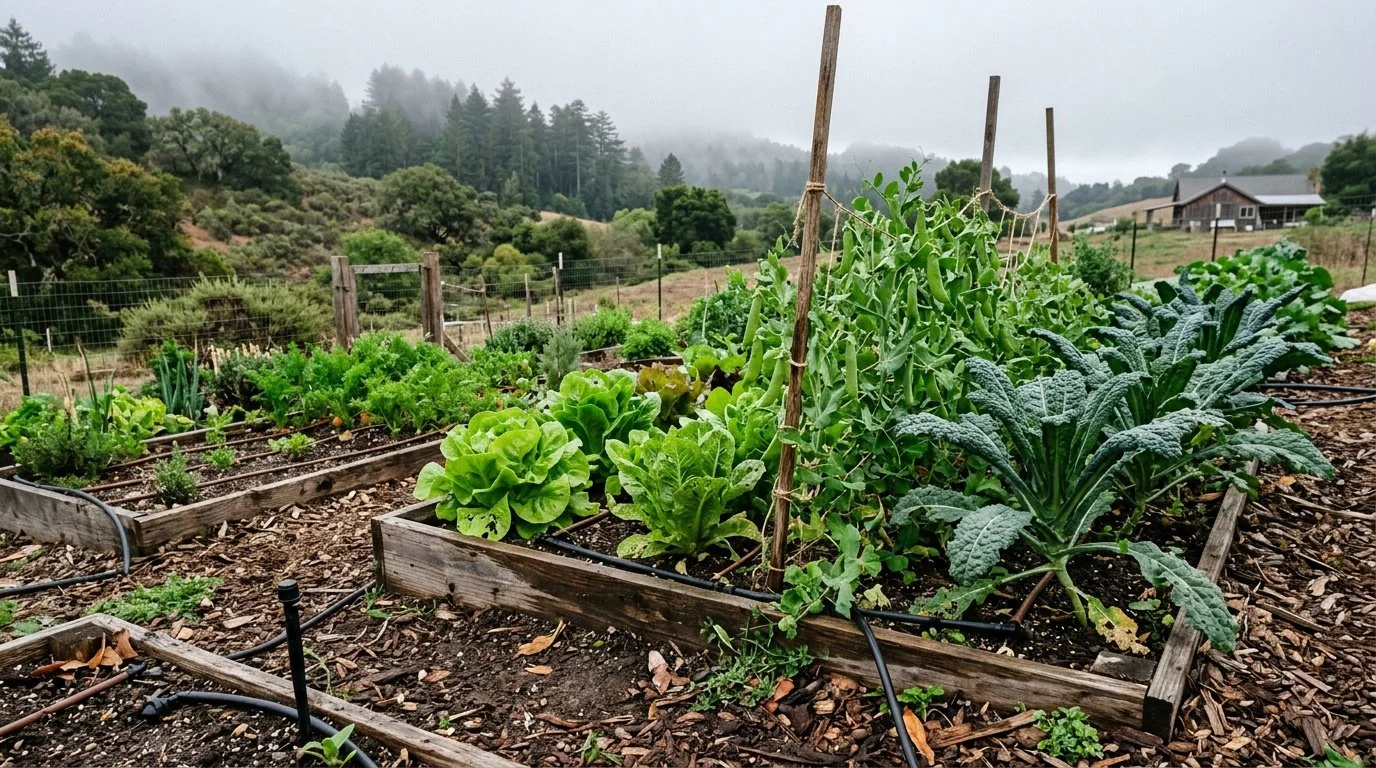
The lettuce can be ready for another picking while the tomatoes are still considering their first ripe fruit. If that sounds like your garden in coastal Aptos, Capitola, Live Oak, or Santa Cruz, the growing season is giving you useful information. Cool summers favor some crops and ask more patience of others.
Build the garden around that difference. Give greens and other cool-season crops a regular place, then reserve your warmest, sunniest space for a few summer experiments. You can still grow tomatoes. You don't have to make every bed prove that it can grow a melon.
Learn the conditions at bed level
The marine layer can keep a coastal morning cool long after an inland slope has warmed. Its reach and duration change from day to day. Shade from a redwood, afternoon wind, and a south-facing wall can matter as much as the address on your seed order.
Spend a few days watching where direct sun reaches the beds, and repeat that check in another season. Note which areas remain wet after rain and which dry quickly in wind. Our guide can help you understand your Santa Cruz microclimate, using the conditions plants actually experience.
The coast usually moderates temperature extremes, but don't assume frost happens only once a decade or that a summer heat wave can't reach you. Winter growth also slows with shorter days. A garden can hold harvestable crops through winter without growing them at spring speed.
Soil needs the same close look. Sandier ground near the shore may drain quickly, while a nearby bed can contain clay, imported fill, or compacted subsoil. A regional description is a clue, not a soil test. Check the spot before deciding how much compost or irrigation it needs.
Make cool-season crops the dependable part
Lettuce and salad greens
Cool weather gives lettuce a useful run before heat and maturity send it toward flowering. Try a small sowing, then another as space opens, rather than planting a whole season's salads at once. Even on the coast, lettuce can bolt, and a bed shaded all winter will grow slowly.
Buttercrunch, Red Sails, Merlot, Tom Thumb, and Flashy Trout Back offer different colors, shapes, and sizes to compare. Plant a few of the types you like to eat and record which hold their quality in your bed. A variety list is most useful when it becomes a local trial.
Brassicas and leafy crops
Broccoli, cauliflower, cabbage, and kale suit a cool-season plan. Get fall crops established while there is enough warmth and daylight to build a plant before winter. A tiny transplant set out very late won't behave like one planted earlier.
Options include DiCicco broccoli, Snow Crown cauliflower, Lacinato and Red Russian kale, and Early Jersey Wakefield cabbage. Allow mature spacing, particularly for cabbage and cauliflower; small starts can disguise how much room they will occupy.
For regular leaf picking, try Space spinach, Bright Lights or Fordhook Giant chard, Joi Choi bok choy, Red Kingdom mizuna, or tatsoi. Chard and spinach have different tolerance for warmth, so don't assume one planting date suits both. Harvest a manageable amount and watch how the plants regrow.
Peas and roots
Sugar Snap, Cascadia, and Oregon Giant peas give you options for fresh eating and cooking. Plan sowing for cool conditions and install their support before the vines need it. A fall planting and a late-winter or spring planting can fit many coastal gardens, with weather and drainage setting the exact dates.
Carrots, beets, radishes, and turnips are useful companions in the calendar. Scarlet Nantes carrots, Detroit Dark Red beets, and French Breakfast radishes are starting choices. Prepare a fine seedbed and keep it moist during emergence, then thin as needed. Root crops don't escape the effects of crowded seedlings just because the weather suits them.
Leave room for plants that stay
Artichokes: The broad silver leaves need a permanent place with sun, drainage, and access for picking. Green Globe and Imperial Star are familiar choices. Harvest buds while the scales remain tight. A perennial artichoke can return for several seasons, but it doesn't stay in the same stage of growth year-round.
Strawberries: Choose both a variety and a planting system. Albion and Seascape are day-neutral types; Chandler has a more concentrated seasonal pattern. Nursery form and local planting guidance matter, so use a recommendation for the plants you actually buy instead of treating September through November as the only valid window. Keep ripening fruit accessible for frequent picking.
Rhubarb: A cool site with good drainage may suit this large perennial. Victoria and Crimson Red are options to investigate for your location. Give a new crown time to establish. Eat only the stalks; the leaves are poisonous and should not be used as food.
Herbs: Rosemary, thyme, sage, and oregano need light and drainage, particularly through winter. Chives fit another useful corner. Avoid treating the whole group as having identical water needs, and don't assume a damp shaded bed suits a Mediterranean herb merely because it is near the ocean.
Berries: Blueberries need appropriately acidic conditions, often easier to manage in a suitable container mix than by guessing at amendments. Raspberries and blackberries need space for canes and access for pruning and harvest. Choose a named cultivated blackberry and manage its spread; vigor can become a problem beside a fence or path.
Give summer crops the warmest seat
Choose a sunny bed sheltered from persistent wind for tomatoes, beans, squash, and cucumbers. Check soil warmth as well as the calendar. A warm afternoon doesn't undo cold nights or a week of waterlogged soil.
Tomatoes worth a small trial
Early Girl, Stupice, San Francisco Fog, Sungold, Fourth of July, Oregon Spring, Glacier, and Sophie's Choice are names to compare when looking for an earlier crop. Check the packet or nursery description, including whether the plant is determinate or indeterminate. Days to maturity are estimates, not promises of a ripe tomato on a particular date.
Start with an earlier type and perhaps one variety you're curious about. Brandywine, Cherokee Purple, Big Beef, and other larger-fruited choices may need a more favorable site or more patience. They are experiments for a cool garden, rather than varieties that cannot succeed anywhere along the coast.
Late April through May is a common period to assess transplanting conditions, not a reason to plant into cold soil. A sunny wall can help create a warmer pocket, but don't crowd the plant against it. Leave room for support and airflow. See our guide to growing tomatoes in Santa Cruz for the fuller crop routine.
Beans, squash, and cucumbers
Provider or Purple Queen bush beans and Blue Lake pole beans give different choices for space and support. Sow once the soil is warm enough for the seed to establish well. A later small sowing can extend the harvest if the season still has time for it.
For summer squash, consider Cocozelle or Costata Romanesco, also sold with Romanesco wording. Pick regularly while fruit is at the size you like; one overlooked squash can grow well beyond dinner size. Start with fewer plants than the empty bed seems to allow.
Marketmore, Lemon, and Diva cucumbers are options for a trial in a warm, sunny position. Check each variety's maturity and pollination needs. Tomatoes, beans, squash, and cucumbers can all be productive here, but they don't share a universal planting day or watering schedule.
Choose heat-loving experiments deliberately
Peppers, eggplant, melons, and okra can be disappointing where summer warmth is limited. If one matters to you, try a small planting in the best available spot, possibly with carefully managed season protection. Start with an early variety and compare the harvest with the space and attention it required.
Winter squash and pumpkins also need enough time to mature. Check their season length before a late sowing. You can decide that a crop isn't worth repeating without ruling it out for every garden in Aptos or Capitola.
A coastal calendar you can adjust
Use these periods to plan what to check next. Move a planting when the soil, forecast, variety, or maturity requirement says to move it. The UC coastal vegetable planting guide offers a broader Bay Area reference, rather than a promise for a particular Santa Cruz bed.
- January through March: Assess drainage before sowing peas, roots, or greens. Set out suitable brassica starts when conditions allow, harvest established winter crops, and plan indoor tomato sowing backward from your intended transplant date.
- April through May: Keep harvesting spring crops and check the warm-season beds. Harden off tomato starts. Wait for suitable soil warmth before sowing beans, squash, or cucumbers. Continue small salad sowings where conditions remain favorable.
- June through August: Harvest and maintain summer crops, check containers and irrigation, and start planning fall brassicas early enough to establish them. A new planting needs time to mature; a late tomato start is not guaranteed to catch up.
- September through October: Use cooling conditions for fall greens, roots, and peas where appropriate. Transplant ready fall crops and harvest remaining summer fruit. Look ahead to garlic and other cool-season plantings.
- November through December: Harvest established beds and consider suitable greens, peas, or favas where the site and weather permit. Reduce irrigation as rain supplies moisture. Protect drainage and avoid working saturated ground.
Build a watering routine around the soil
Compost can help a sandy bed hold moisture and improve the workability of heavier soil. Use the bed's history and condition to decide how much is useful; an automatic two-to-four-inch layer every year can add more nutrients than needed. Test before attempting to correct pH or a suspected deficiency.
Check moisture beneath the surface and water to the rooting depth of the crop. A fixed two-or-three-times-a-week rule cannot account for rain, soil texture, mulch, containers, or the crop's size. Our water-wise gardening guide explains ways to conserve moisture without leaving the root zone dry.
Salt spray and wind can stress plants in exposed locations. Choose a sheltered position or an appropriate windbreak, and investigate salt injury before adding fertilizer to a struggling plant. Exposure depends on wind and topography, not just a quarter-mile circle around the beach.
Check under leaves and after dark
Slugs and snails can undo a new planting quickly. Reduce hiding places, inspect seedlings, and hand-pick when pests are active. Copper barriers and traps can be parts of a plan, but they need maintenance and do not solve every infestation.
Diatomaceous earth loses effectiveness when wet. The linked food-grade powder is not a substitute for a pesticide labeled for garden pest control. If you choose iron phosphate bait, follow the complete product label and keep it away from children and pets. A bait still needs careful storage and use around pets and wildlife.
Aphids often collect on tender growth. Check for predators and parasites, and try dislodging accessible colonies with water when that suits the plant. Insecticidal soap is a pesticide, even though the name sounds familiar: confirm the crop and pest on the label, follow application limits, and protect beneficial insects. The linked Safer 5118 concentrate must be diluted as its label directs; do not use it on new transplants, drought-stressed plants, or in temperatures above 90°F. Household dish detergent is not a replacement.
For powdery mildew, compare symptoms with a reliable guide before treating. Resistance, appropriate spacing, and a suitable growing site help. The disease does not require wet leaves, and routine preventive sulfur is not an all-crop instruction. Sulfur can injure sensitive plants and has temperature and oil-application restrictions.
The UC references below cover UC IPM: snails and slugs and UC IPM: powdery mildew. A cool coastal garden still gets pests, disease, frost, and heat stress; learning the first signs is more useful than assuming those problems belong inland.
Find plants and advice nearby
Ask a nursery about a variety's performance in conditions like yours, then check current stock before traveling. Local starting points include Dig Gardens, Sierra Azul Nursery, and San Lorenzo Garden Center. Their websites are the place to verify current locations and hours.
For seed, browse Renee's Garden Seeds and the current offering linked through Kitazawa Seed Company. A catalog's description can help you compare maturity and plant size; it doesn't replace a trial in your own bed. The Felton Seed Lending Library is another resource to check for seed availability and participation details.
At Santa Cruz Farmers Markets, ask growers about the varieties you enjoy buying and whether they suit a home garden. Check the current market calendar before visiting rather than relying on an old list of days.
Frequently asked questions
Should I stop trying to grow tomatoes?
No. Give an earlier variety a good site and compare results over a season. If a large late type repeatedly disappoints, change the variety or the location before giving it another whole bed.
Why does lettuce still bolt here?
Cool conditions can extend its useful season, but they don't stop flowering indefinitely. Variety, plant age, day length, warmth, and stress all matter. Smaller repeat sowings help avoid depending on one aging planting.
Can I harvest something all year?
It may be possible with planning, but year-round harvest is different from year-round rapid growth. Establish enough cool-season plants before winter slows them down, and adjust expectations to light and rainfall.
What if my bed is foggy and shaded?
Start with leafy crops in the brightest available spot and see how they perform. A crop that tolerates cool weather still needs light. Move fruiting crops to a sunnier place if growth remains thin and production poor.
When do I start the fall garden?
Earlier than an empty October bed might suggest, particularly for brassicas. Work backward from transplant size and the variety's season length. Quick greens can fit a later opening that would be too late for a large cabbage.
Are fruit trees worth trying?
They can be, but choose for the site and cultivar rather than a general coastal label. Apples, citrus, figs, persimmons, stone fruits, and avocados have different chill, heat, drainage, and frost needs. Ask a knowledgeable nursery, such as Sierra Azul Nursery, about an appropriate variety and rootstock before committing a permanent space.
Keep your planting notes close
The Seasonal Planting Calendar and Vegetables by Season Chart help organize the season. Use the Know Your Microclimate Worksheet to record what your own garden does, and the Tomato Variety Selector when choosing a summer trial. All are linked through the garden toolkit.
The most useful comparison next year will be with this year's bed. Write down which lettuce stayed good, when the first tomato ripened, and which planting felt worth repeating. A coastal garden becomes easier to plan when those observations have somewhere to live.
Sources and further reading
- Santa Cruz coastal fog overview; Aptos climate reference; Santa Cruz climate reference
- USDA Ben Lomond soil-series description
- Vegetable gardening by the sea; Lettuce bolting overview; UC Master Gardeners: choosing vegetables for your climate
- Ocean Mist on Castroville artichokes; California artichoke industry overview; California caneberry growing conditions
