

The Santa Cruz Banana Belt: Gardening in the County's Most Balanced Microclimate
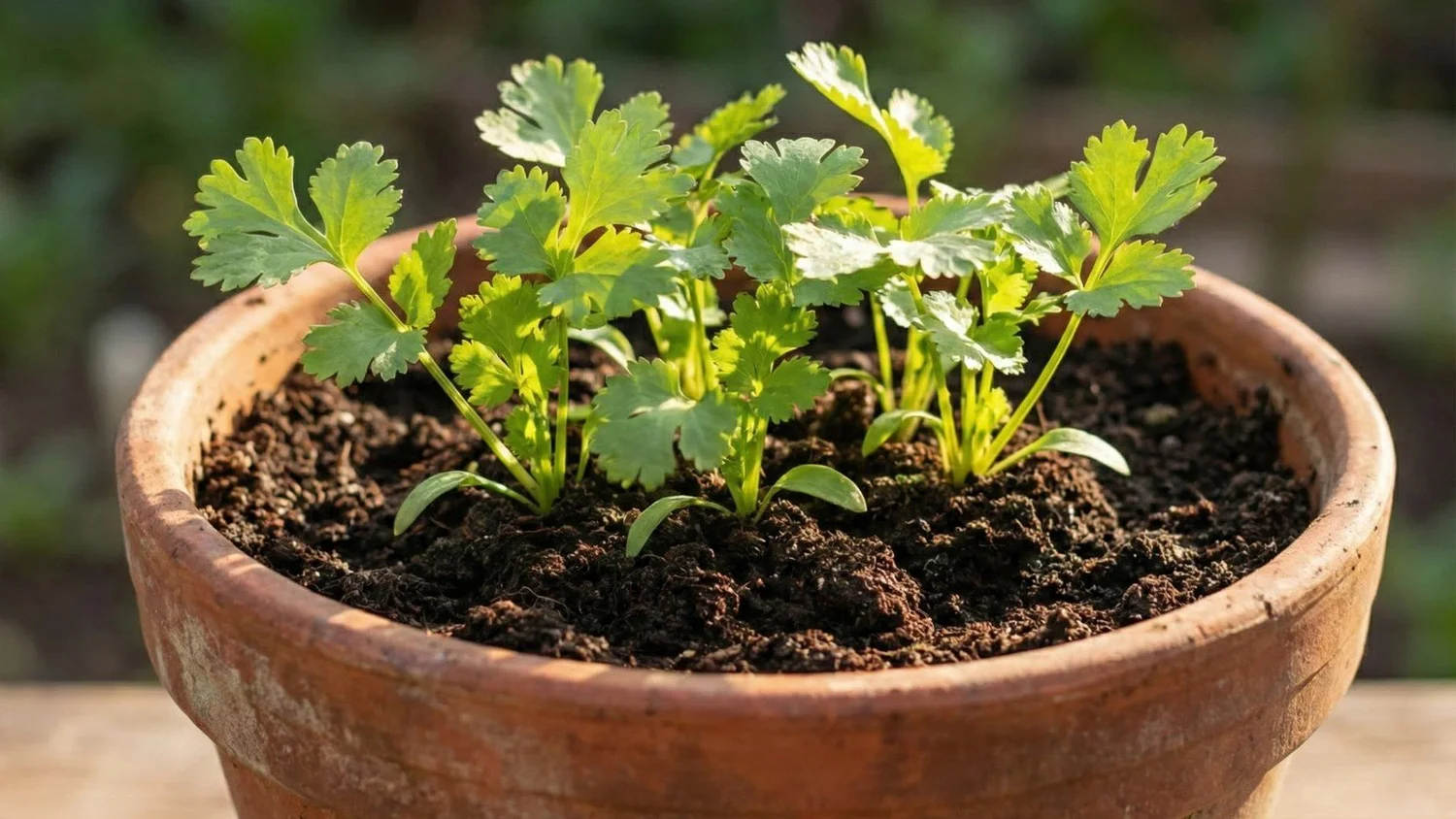
Cilantro seedlings in a Capitola container garden. This local photo illustrates mild coastal growing conditions without claiming that one pot proves the whole microclimate. Photo: Adrienne Gaughan / Ambitious Harvest Co
If you live in the stretch between Capitola and Aptos, especially in the hills just inland from the coast, you've stumbled into one of Santa Cruz County's best-kept gardening secrets: the Banana Belt.
This narrow zone combines the best of coastal and inland conditions: mild winters with minimal frost, warm (but not extreme) summers, good sunshine without the daily marine layer, and stable temperatures that make year-round gardening not just possible but easy. For tips on making the most of this climate with efficient watering, see our water-wise gardening guide.
While coastal Santa Cruz deals with persistent summer fog and inland areas swing between 100°F days and 40°F nights, you're sitting in the sweet spot. Your peppers ripen. Your tomatoes produce reliably. Your citrus survives winter. And frost is rare enough that you barely think about it.
This is the Banana Belt, and it's gardening on easy mode.
What Is the Banana Belt?
The term "Banana Belt" refers to an unusually warm microclimate within a generally cooler region. In Santa Cruz County, it's the zone that enjoys:
Geographic Location:
Capitola Village and hills
Soquel (especially hillsides)
Aptos Village and hills above
Live Oak (parts, especially inland from beach)
Rio Del Mar hills
La Selva Beach inland areas
The Magic Zone: Roughly 1/4 to 1 mile inland from the coast, at elevations of 100-400 feet. Far enough from the ocean to escape daily fog, close enough to benefit from marine temperature moderation.
| Feature | Banana Belt hills | Beach strip (Capitola / Aptos) | SLV sunny ridges | Pajaro Valley |
|---|---|---|---|---|
| Summer highs | Often low to mid-70s; warm spells into the 80s. | Mostly 60s to low 70s; heavier fog influence. | 80s to 90s; hotter during heat waves. | Upper 70s to mid-80s; some 90-degree days. |
| Winter lows | Rarely below the mid-30s; frost is uncommon. | Rarely below the high 30s; near-zero frost right at the beaches. | More frequent valley frosts (site dependent). | Occasional light frost in colder pockets. |
| Fog | Often above much of the marine layer. | Frequent morning fog and marine layer. | Minimal fog influence. | Less fog than the beach; generally more sun. |
| Signature crops | Citrus, mid-season tomatoes, peppers. | Cool-season vegetables, artichokes, strawberries. | Heirloom tomatoes, melons, heat-loving crops. | Strawberries, caneberries, and a full heat-loving crop suite. |
What Creates the Banana Belt?
Several factors converge to create these favored conditions:
1. Elevation Above the Marine Layer
The fog stops below you:
Banana Belt areas sit at 100-400 feet
You're literally above the fog most days
Morning sun arrives earlier than down at the beach
What this means:
More sunshine hours than coastal areas
Warmer daytime temperatures
Better fruit ripening
Longer effective growing days
2. Marine Temperature Moderation (Without the Fog)
Close enough to benefit, far enough to escape:
Ocean moderates temperature extremes
Summer highs often in the low to mid-70s, with warm spells into the 80s (not the 90s and 100s common in interior mountains)
Stable, predictable temperatures
What this means:
Minimal frost risk (maybe 1-2 nights per year)
No extreme heat
Extended growing season
Year-round gardening possible
3. South-Facing Slopes
Many Banana Belt areas are on south-facing hillsides:
Maximum sun exposure
Warm faster in spring
Stay warmer in fall
Good drainage (slopes)
Heat accumulation and retention
What this means:
Longer warm-season growing
Earlier spring planting
Later fall harvests
Better ripening of heat-loving crops
4. Protection from Coastal Wind
Hillsides provide wind breaks:
Less onshore wind than beach areas
Warmer, more sheltered
Less salt spray
Better for tender plants
How the Banana Belt Compares
Banana Belt vs. Coastal Beach Areas (Capitola Beach, Aptos Beach)
You have:
More sun (less fog)
Warmer temps (5-10°F warmer in summer)
Better fruit ripening
Less wind
Longer season
They have:
Even more stable temps (less swing)
Easier summer lettuce growing
No heat stress
Practical difference: Beach areas struggle to ripen tomatoes and peppers. You don't.
Banana Belt vs. Inland Mountains (Boulder Creek, Ben Lomond Sunny)
You have:
More stable temps (no 30-degree day/night swings)
Easier cool-season growing (less heat stress)
Less extreme conditions
Minimal frost risk
They have:
Much more heat (90-100°F+ summer days)
Longer warm-season (tomatoes to Thanksgiving)
Can grow long-season heirlooms
Extended fall season
Practical difference: They can grow heirloom tomatoes coastal areas can't. You can grow reliable tomatoes without their temperature extremes.
Banana Belt vs. Watsonville and Pajaro Valley
You have:
Better marine moderation (cooler summer days)
Hillside advantages (drainage, sun exposure)
Less agricultural development
Slightly earlier spring (southern exposure)
They have:
More heat (good for melons, eggplant)
Longer season overall
Better agricultural infrastructure
Flatter land (easier to work)
Practical difference: Similar growing conditions, but you have hillside microclimates and they have valley floor agricultural advantages.
| Crop type | Banana Belt suitability |
|---|---|
| Meyer lemons, mandarins, kumquats | Excellent; mild winters and rare frost support reliable citrus production. |
| Mid-season tomatoes and peppers | Very good; sufficient heat without the extreme stress seen in hotter inland areas. |
| Artichokes and strawberries | Good performance; similar to other coastal-influenced microclimates. |
| Figs, persimmons, feijoa | Very good; warm summers paired with generally mild winters. |
| Melons and okra | Possible but less reliable; typically perform better in hotter inland valleys. |
What Thrives in the Banana Belt
Your Sweet Spot Crops
Tomatoes (Almost Everything Works)
Early varieties: April planting, July through October harvest
Mid-season hybrids: Big Beef, Better Boy, Celebrity
Cherry tomatoes: Sungold, Sweet 100 (reliable)
You're not as hot as sunny mountains, but you're warm enough for good tomato production. And you're not as cool as the beach, so varieties actually ripen.
Peppers (Sweet and Hot)
Sweet bells: California Wonder, Jimmy Nardello
Hot peppers: Jalapeño, serrano (good production)
Better success than coastal areas
Reliable ripening
Citrus (The Banana Belt Specialty)
This is what the "Banana Belt" name is really about: citrus! In similar coastal-hills climates, Meyer lemon, Satsuma mandarins, and kumquats are reliable choices:
Lemons: Eureka, Meyer (thrives, nearly frost-free)
Limes: Bearss, Kaffir (good in protected spots)
Oranges: Washington Navel, Cara Cara (possible in warmest spots)
Mandarins: Satsuma, Clementine (excellent)
Kumquats: very reliable
Frost-sensitive citrus that fails elsewhere in the county can work here.
Avocados (Borderline but Possible)
In the warmest Banana Belt spots with frost protection:
Bacon (most cold-hardy)
Fuerte (fairly hardy)
Hass (needs warmest spots and protection)
Requires frost protection in coldest winters, but worth trying in favored microclimates.
Strawberries
Excellent conditions
Plant September through November
Harvest March through October
Commercial-quality production
Artichokes
Perennial, excellent production
Loves your mild winters and cool summers
Green Globe, Imperial Star
Year-Round Greens
Lettuce (nearly year-round possible)
Kale, chard (continuous)
Arugula, spinach (fall through spring)
Asian greens (cool months)
Berries
Blueberries (with soil amendment for acidity)
Raspberries (good production)
Blackberries (vigorous, can be invasive)
Mediterranean Herbs and Perennials
Rosemary (thrives year-round)
Lavender (loves your conditions)
Sage, thyme, oregano (all excellent)
Bay laurel (as shrub or tree)
Subtropical Fruits (In Warmest Spots)
Passion fruit (some success)
Kiwi (hardy kiwi and regular)
Feijoa (pineapple guava)
Fig (excellent)
Persimmon (very good)
What Still Struggles
Long-Season Heirlooms (80+ Days)
You're close, but:
Brandywine may ripen in warm years
Cherokee Purple borderline
Better to stick with 60-75 day varieties
Heat-Loving Tropicals
Not quite warm enough for:
Melons (possible but less reliable than Watsonville)
Eggplant (okay but not stellar)
Okra (too cool)
Cold-Hardy Crops Needing Vernalization
You're too mild for:
Some apple varieties needing high chill hours
Crops requiring hard winter cold
Banana Belt Growing Calendar
Winter (December through February)
Temperatures: 40s-60s, rare frost
Direct seed: greens, peas, fava beans
Transplant: cool-season starts, onions
Harvest: winter greens, brassicas, citrus
Protect: citrus if frost forecasted (rare)
Spring (March through May)
Temperatures: 50s-70s, warming
Direct seed: cool-season crops early, warm-season late
Transplant: tomatoes (April), peppers (May)
Harvest: cool-season crops, strawberries
Start: summer garden
Summer (June through August)
Temperatures: 65-85°F, warm but moderate
Direct seed: beans (succession), basil
Harvest: tomatoes, peppers, summer squash, berries
Maintain: water 2-3 times per week, side-dress
Plant: fall brassicas (late summer)
Fall (September through November)
Temperatures: 60s-70s, mild
Direct seed: cool-season crops for winter
Transplant: fall brassicas, strawberries
Harvest: late tomatoes (often through October), peppers
Plant: garlic (October)
Banana Belt Growing Strategies
Take Advantage of Your Mild Winters
Citrus is your signature crop:
Plant Meyer lemon (most reliable)
Protect from rare frost with fabric covers
Harvest fresh citrus year-round
This is what makes you special
Year-round cool-season growing:
Succession plant lettuce every 2-3 weeks
Keep kale and chard producing continuously
Winter garden is productive, not dormant
Frost protection is minimal:
Maybe 1-2 nights per year need protection
Row covers for tender crops
Fabric over citrus on cold nights
Most years, you don't need any protection
Maximize Your Growing Season
Earlier spring start:
Plant tomatoes in April (not May)
Earlier warm-season transplanting than true coastal
South-facing slopes warm first
Extended fall harvest:
Tomatoes often through October
Peppers into November in good years
Longer than beach areas
Mediterranean crops thrive:
Rosemary, lavender, sage grow huge
Drought-tolerant once established
Perfect conditions for these
Work With Your Moderate Summers
Not as hot as inland, warmer than beach:
You're in the middle zone
Mid-season tomato varieties work best (60-75 days)
Some heirlooms possible, but hybrids more reliable
Cool-season crops can be pushed into early summer
Sun exposure matters:
South and west-facing areas warmest
North-facing areas cooler (better for summer greens)
Create microclimates within your microclimate
Identifying Banana Belt Microclimates
You're Probably in the Banana Belt If:
You're 1/4 to 1 mile inland from the coast
Elevation 100-400 feet
On a hillside or slope (especially south-facing)
Fog burns off by 9-10am most summer mornings
Winter lows rarely below 35-40°F
Summer highs rarely above 85°F
Neighbors have citrus trees that produce
You're in Capitola hills, Soquel, Aptos hills, or Live Oak inland
You're Probably NOT in the Banana Belt If:
Right on the beach (too foggy)
In a valley bottom (cold air sinks, more frost)
North-facing slope only (less sun, cooler)
Under dense redwood canopy (too shaded, too cool)
Above 500 feet elevation (getting into mountain zone)
Microclimate Variations Within the Banana Belt
Even within the Banana Belt, conditions vary:
Warmest spots:
South-facing slopes
Protected from wind
Elevations 200-300 feet
Full sun exposure
Plant: Citrus, avocados (with protection), heat-lovers
Moderate spots:
Mixed sun and shade
Some wind exposure
Elevations 100-200 or 300-400 feet
Plant: Tomatoes, peppers, most vegetables
Cooler spots:
North-facing
More wind
Lower elevations (more fog)
Plant: Cool-season crops, fog-tolerant varieties
Recommended Varieties for Banana Belt
Tomatoes
Best choices:
Celebrity (70 days): reliable hybrid
Early Girl (52 days): safe bet
Big Beef (70 days): good flavor
Sungold (57 days): best cherry
Better Boy (70 days): productive
Worth trying:
Brandywine (80-90 days): warm years only
Cherokee Purple (80 days): borderline
Citrus (Your Specialty)
Most reliable:
Meyer lemon: nearly frost-proof
Improved Meyer lemon: sweeter than regular
Bearss lime: Persian lime type
Satsuma mandarin: very cold-hardy
Kumquat: very reliable
Good in warmest spots:
Eureka lemon
Washington Navel orange
Cara Cara orange (pink flesh)
Clementine mandarin
Peppers
California Wonder: sweet bell
Jimmy Nardello: sweet Italian
Jalapeño: hot, reliable
Shishito: mild, productive
Subtropical Fruits
Fig: Black Mission, Brown Turkey
Persimmon: Fuyu, Hachiya
Feijoa: Coolidge, Apollo
Passion fruit: Frederick or standard
Local Resources for Banana Belt Gardeners
Nurseries and Supplies
Dig Gardens has locations in both Santa Cruz (420 Water Street) and Aptos (7765 Soquel Drive). They carry vegetable starts, citrus trees, herbs, and gardening supplies with knowledgeable staff who understand local growing conditions.
Sierra Azul Nursery (2660 E. Lake Avenue, Watsonville) specializes in plants suited to our climate, including citrus, subtropicals, and drought-tolerant varieties.
San Lorenzo Garden Center (235 River Street, Santa Cruz) carries a full range of vegetable starts, seeds, citrus trees, and amendments.
Seeds
Renee's Garden Seeds is based in Felton and specializes in varieties that perform well in our coastal climate.
Kitazawa Seed Company offers excellent Asian vegetable varieties that thrive in mild coastal conditions.
Education and Community
UC Master Gardeners of Monterey Bay offers classes, garden tours, and a help line for troubleshooting.
Santa Cruz Farmers Markets (Downtown on Wednesday, Westside on Saturday, Live Oak on Sunday) often have vegetable starts in spring and local expertise.
Frequently Asked Questions About the Santa Cruz Banana Belt
What is the Santa Cruz Banana Belt?
The Banana Belt refers to an unusually warm microclimate within Santa Cruz County, roughly located in Capitola Village and hills, Soquel (especially hillsides), Aptos Village and hills, parts of Live Oak inland from the beach, Rio Del Mar hills, and La Selva Beach inland areas. It sits 1/4 to 1 mile inland from the coast at 100-400 feet elevation, above the fog but close enough to benefit from marine temperature moderation. This creates ideal growing conditions.
Why is it called the Banana Belt?
The term "Banana Belt" describes any unusually warm microclimate within a generally cooler region. While you probably won't grow bananas here, the name reflects that frost-sensitive crops (especially citrus) that fail elsewhere in the county can thrive in this zone. Meyer lemons, mandarins, and other citrus are the signature crops that give this area its name, thriving in conditions that would kill them elsewhere in Santa Cruz County.
How do I know if I'm in the Banana Belt?
You're likely in the Banana Belt if you're 1/4 to 1 mile inland from the coast, at 100-400 feet elevation, on a hillside (especially south-facing), fog burns off by 9-10am most summer mornings, winter lows rarely drop below 35-40°F, and summer highs rarely exceed 85°F. A good sign: neighbors have citrus trees that produce reliably. You're probably NOT in the Banana Belt if you're right on the beach, in a valley bottom, or above 500 feet elevation.
Can I grow citrus in the Banana Belt?
Yes! Citrus is the Banana Belt's signature crop. Meyer lemon is most reliable and nearly frost-proof. Bearss lime, Satsuma and Clementine mandarins, and kumquats also do well. In the warmest spots, try Eureka lemon, Washington Navel orange, or Cara Cara orange. You may need frost protection 1-2 nights per year (fabric covers over trees), but most winters you won't need any protection at all.
What tomatoes grow best in the Banana Belt?
Mid-season tomato varieties (60-75 days to maturity) work best: Celebrity, Early Girl, Big Beef, Better Boy, and Sungold (cherry). You can plant in April rather than waiting until May like coastal areas. In warm years, longer-season heirlooms like Brandywine and Cherokee Purple may ripen, but hybrids are more reliable. You'll harvest tomatoes through October in most years, longer than beach areas.
How does the Banana Belt compare to coastal beach areas?
You have more sun (less fog), warmer temperatures (5-10°F warmer in summer), better fruit ripening, less wind, and a longer growing season. Beach areas have even more stable temperatures and easier summer lettuce growing with no heat stress. The practical difference: beach areas struggle to ripen tomatoes and peppers; you don't. Your citrus thrives; theirs often fails.
Can I grow avocados in the Banana Belt?
Borderline but possible in the warmest spots with frost protection. Bacon avocado is most cold-hardy, followed by Fuerte (fairly hardy). Hass needs the warmest spots and protection on cold nights. Expect to provide frost protection in coldest winters using fabric covers or outdoor-rated lights for heat. Worth trying if you have a protected south-facing location.
What's the best planting calendar for the Banana Belt?
Plant tomatoes in April (earlier than coastal areas), peppers in May. Direct seed cool-season crops year-round since winters are mild enough for continuous production. Plant citrus anytime. Plant garlic in October. Start fall brassicas in late summer for winter harvest. Your mild winters mean you can garden productively 12 months per year with minimal frost protection.
Free Banana Belt Gardening Resources
Download these free guides for gardening in Santa Cruz County's favored microclimates:
Know Your Microclimate Worksheet , Not sure if you're in the Banana Belt? This worksheet helps you assess your garden's sun exposure, fog patterns, frost risk, and temperature ranges to identify your specific microclimate.
Tomato Variety Selector , Find the best tomato varieties for your Banana Belt garden. Includes days to maturity, variety types, and recommendations that match your warm but moderate conditions.
Seasonal Planting Calendar , Month-by-month planting guide for Santa Cruz County. Use the "warm inland" timing for most Banana Belt locations, adjusted earlier than coastal recommendations.
Vegetables by Season Chart , Quick reference for what to plant in spring, summer, fall, and winter. Your mild climate means year-round options.
Additional Resources
What Is the Bottom Line?
The Santa Cruz Banana Belt is the county's warmest coastal zone: not too hot, not too cool, not too foggy, not too dry. You have stable, moderate, favored conditions that make gardening easier than almost anywhere else in the county.
Your signature advantage is the ability to grow frost-sensitive plants (especially citrus) that fail elsewhere while still having reliable summers for tomatoes and peppers.
If you live here, take advantage:
Plant citrus (Meyer lemon is your signature crop)
Grow tomatoes and peppers reliably
Garden year-round with minimal frost worry
Try subtropical fruits in your warmest spots
Enjoy some of the best all-around growing conditions in Santa Cruz County
You're in the sweet spot. Use it.
