

5 Microclimates That Shape Every Santa Cruz Garden
A few of the product links in this guide are affiliate links. If you buy through one, Ambitious Harvest may earn a small commission at no extra cost to you, which helps keep these guides free. We only point to gear we would use in our own Santa Cruz garden. As an Amazon Associate, we earn from qualifying purchases. Read our full disclosure.
Santa Cruz County contains at least five distinct gardening microclimates, from foggy coastal zones averaging 55 to 70 degrees in summer to inland valleys reaching 90 to 100 degrees. Two gardens a few hundred feet apart in elevation can run 10 to 15 degrees apart on a summer afternoon, though the cause is usually crossing the fog line or changing aspect rather than the elevation itself, making variety selection and planting timing hyper-local decisions.
Temperature inversions are common in the county's valleys, where cold air drains downhill and pools at night and can create frost pockets even in areas classified as zone 10a.
Why Does Santa Cruz County Have So Many Microclimates?
Most gardening guides treat California's coast as one uniform zone. But Santa Cruz County spans an extraordinary range of conditions in a compact area:
Elevation change: Sea level to about 2,600 feet in just 15 miles (Loma Prieta, the range high point at 3,786 feet, sits just over the line in Santa Clara County)
Marine influence: Coastal fog versus inland sunshine
Topography: Sunny south-facing slopes versus shaded north-facing canyons
Vegetation: Open chaparral versus dense redwood forests
Temperature swings: Stable coastal 60s versus inland 90 to 100 degree summer days
Within a single town, you can have drastically different growing conditions. Boulder Creek has both hot sunny ridges above the tree line and cool shaded canyons under dense redwoods. Scotts Valley has warm chaparral hills and cooler forested valleys. Even your own backyard likely has multiple microclimates.
Are USDA Hardiness Zones Accurate for Santa Cruz County?
USDA hardiness zones (most of Santa Cruz County is 9b to 10a, with some 9a and 10b pockets) only measure average minimum winter temperatures. They don't account for:
Summer heat: 90 to 100 degrees inland versus 70s coastal
Fog patterns: Daily coastal fog versus rare inland fog
Day/night temperature swings: 30-degree inland swings versus 10-degree coastal swings
Sun exposure: Full sun ridges versus shaded canyons
Growing season length: Tomatoes producing through Thanksgiving inland versus October coastal
Sunset Climate Zones (we're zones 15, 16, and 17) are more useful because they consider summer heat, winter chill, humidity, and growing season length. But even Sunset zones don't capture the extreme variation within our county.
What Are the Main Microclimates in Santa Cruz County?
1. Coastal Zone (Aptos, Capitola, Santa Cruz Beaches, Live Oak, Seacliff)
Characteristics:
Temperatures remain in the 50s to 70s year-round, extremely stable. Summer fog arrives daily to near-daily as marine layer. Day-to-night temperature swings are small, typically 10 to 15 degrees. Frost risk is minimal to none. Annual rainfall is moderate at 25 to 30 inches. Salt air exposure is moderate near beaches.
What thrives:
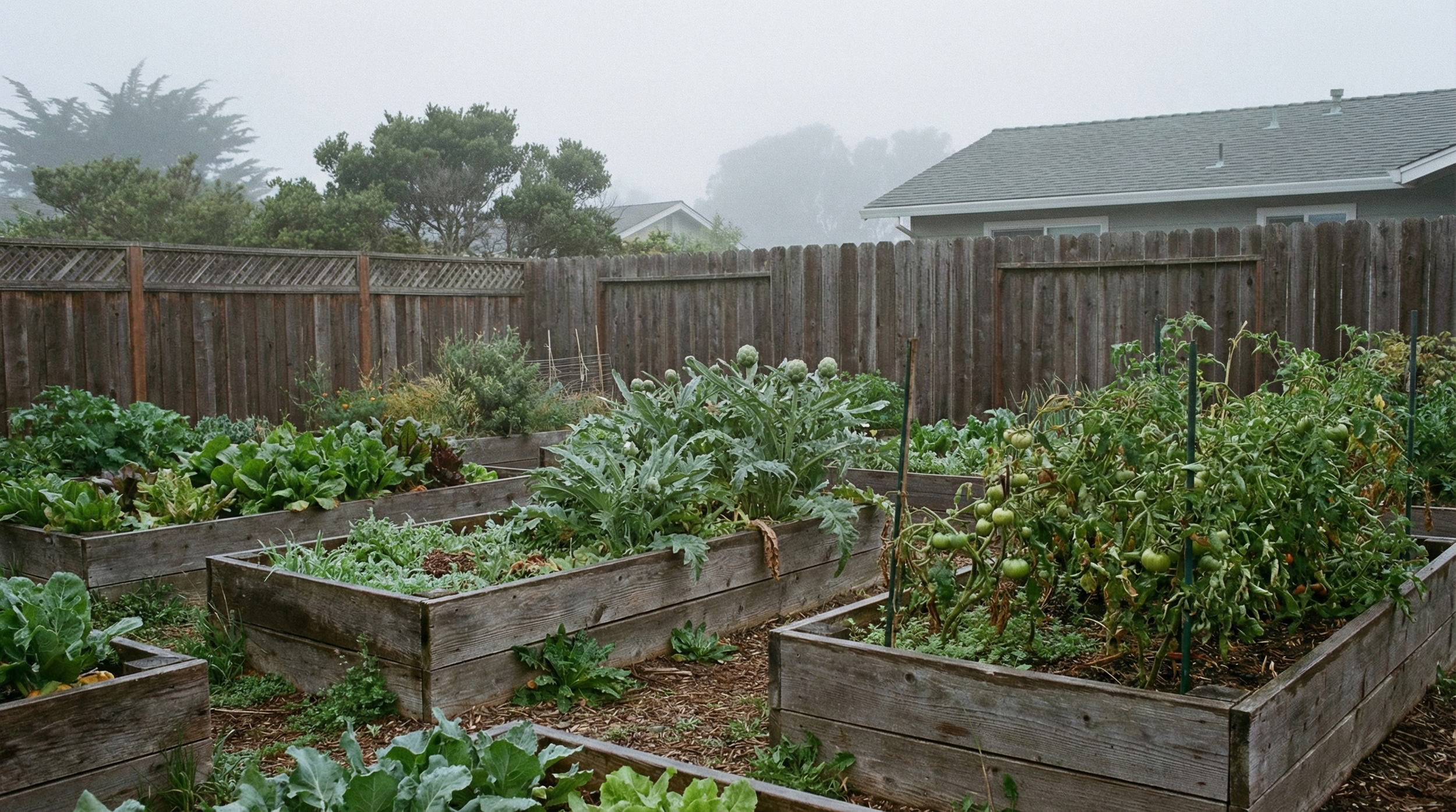
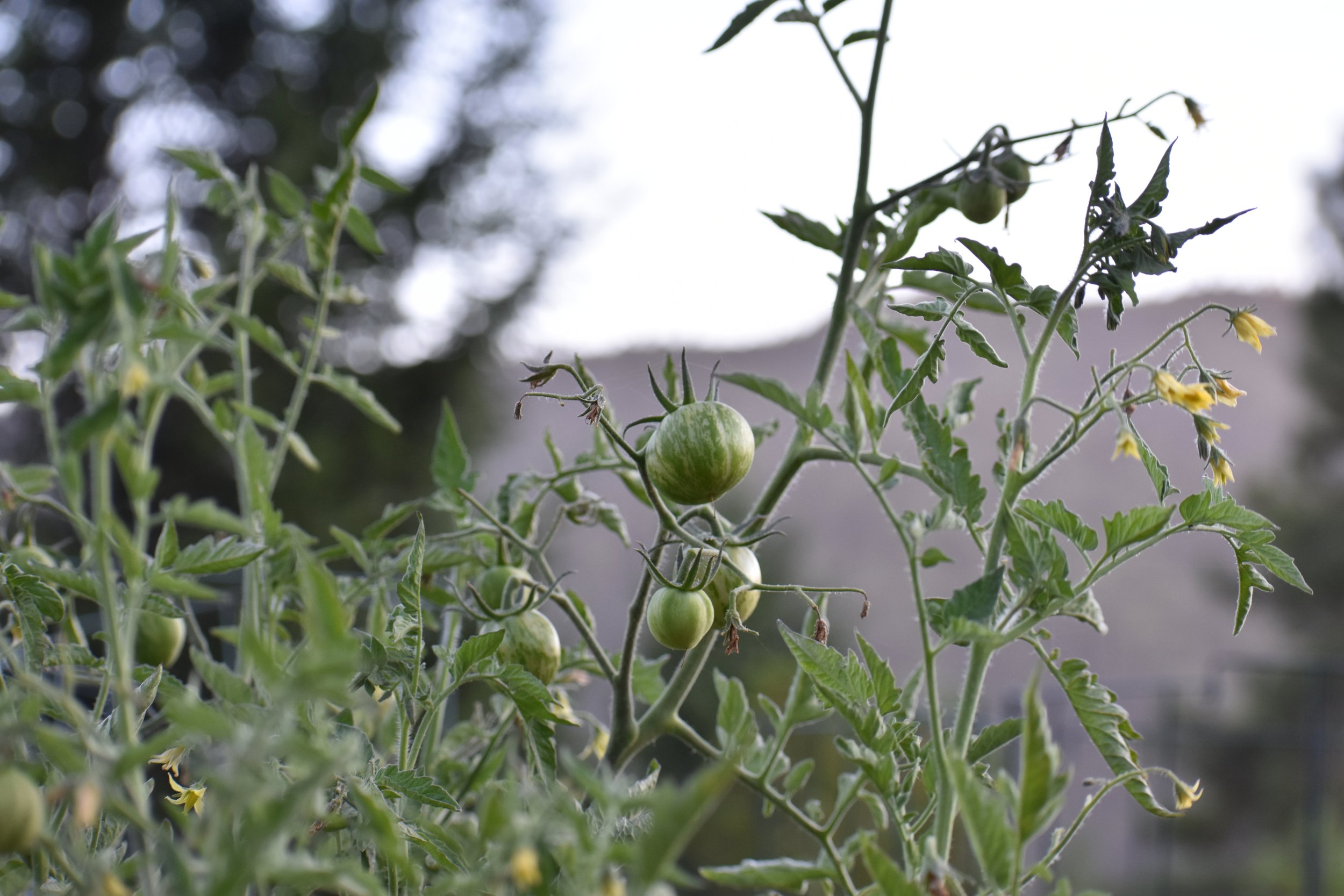
Cool-season crops (lettuce, greens, brassicas) grow nearly year-round here. Fog-tolerant tomatoes like Early Girl, Stupice, San Francisco Fog, and Sungold produce reliably. Berries, especially strawberries, love coastal conditions. Herbs grow year-round, with parsley thriving and cilantro happy in cooler months. Artichokes are perennial here and love the coastal climate.
What struggles:
Heat-loving crops like melons, eggplant, and hot peppers lack sufficient heat units. Long-season crops may not ripen before cool weather returns. Some tomato varieties that need temperature swings for peak flavor underperform.
Growing strategy: Plant cool-season crops nearly year-round. Choose early-maturing, fog-tolerant varieties for warm-season crops. Your stable temperatures are perfect for steady, predictable growth but won't give you the explosive heat-driven production of inland areas.
Local resources: Dig Gardens in Aptos (7765 Soquel Drive) carries coastal-appropriate transplants. San Lorenzo Garden Center (235 River Street, Santa Cruz) stocks fog-tolerant tomato varieties.
2. Sunny Mountain Ridges and Chaparral (Boulder Creek Above Tree Line, Ben Lomond Sunny Exposures, Scotts Valley Hills, Bonny Doon)
Characteristics:
Summer afternoons often run in the 90s, and in a heat event higher, with nights dropping into the 40s and 50s, creating 30-degree daily swings. Summer fog is rare to none. Winter brings 50s to 60s during the day and 30s to 40s at night, with possible frost in low spots. Frost risk is moderate in valleys, low on ridges. Sun exposure is full and intense.
What thrives:
Heat-loving crops excel here: melons, eggplant, hot peppers, okra. All tomato varieties perform well with an extended season through Thanksgiving in good years. You can succession plant fast-maturing tomatoes through early July. Corn, beans, and squash (the native "Three Sisters" crops) love this heat. Mediterranean herbs like rosemary, oregano, thyme, and lavender thrive. Stone fruits including peaches, plums, and apricots do well (check variety chill hour requirements). Cool-season crops flourish in winter thanks to full sun exposure.
What struggles:
Crops needing stable temperatures may struggle. Shallow-rooted crops without deep watering stress quickly. Spring cool-season crops bolt faster than at the coast.
Growing strategy: This is Santa Cruz County's hot zone, so take advantage of it. One note if you use our planting calendar: choose Coastal, not Mountain. Mountain in that tool means high-elevation Sierra conditions, which do not apply anywhere in this county, ridges included. Succession plant warm-season crops for extended harvests. Plant cool-season crops fall through winter (your sun exposure means they'll grow all winter). Use mulch heavily and ensure deep irrigation in summer. Your big temperature swings (hot days, cool nights) actually benefit tomatoes and many fruit crops by developing complex flavors.
Local resources: Mountain Feed & Farm Supply (9550 Highway 9, Ben Lomond) serves this area with seeds, transplants, and local growing expertise.
3. Under the Redwoods (Felton Canyons, Ben Lomond Below Tree Line, Shaded Scotts Valley Areas)
Characteristics:
Temperatures run 10 to 15 degrees cooler than nearby sunny areas year-round. Summer highs reach 75 to 85 degrees when sunny areas hit 90 to 100. Light is dappled shade to full shade with limited direct sun hours. Moisture levels are higher with greater humidity and slower soil drying. Soil is acidic from redwood needle decomposition with high organic matter content. Frost risk can be higher in valleys and cold air pockets.
Coastal redwood forests in the Santa Cruz Mountains are sustained in part by summer fog drip, which can supply a significant share of their warm-season water. This fog drip also contributes to the higher humidity and slower soil drying in these areas.
What thrives:
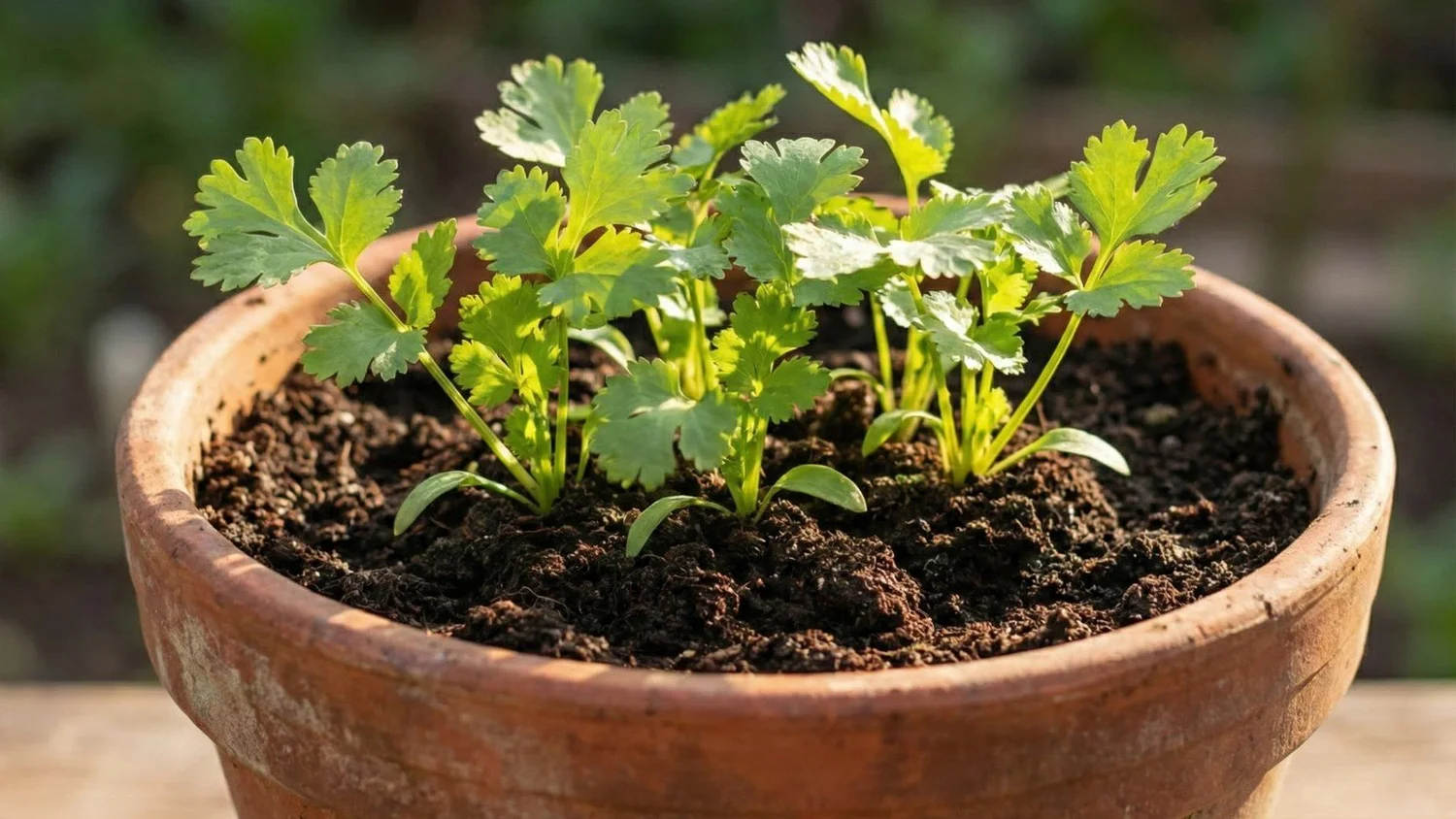
Shade-tolerant greens excel: lettuce, arugula, spinach, chard, Asian greens like bok choy and mizuna. Herbs that appreciate moisture and shade do well: parsley, cilantro, chervil, mint. Native understory berries like huckleberries and salal produce in this environment. Cool-season crops have an extended harvest window as your shade delays bolting significantly.
What struggles:
Tomatoes need 6 to 8 hours of direct sun, and most redwood areas don't provide this. Peppers need heat and sun they won't find here. Squash and corn need sun and heat. Root vegetables grow more slowly but are possible with 4 to 6 hours of sun.
Growing strategy: Embrace the shade. Plant crops that bolt quickly elsewhere but thrive in your cool, moist conditions. If you have a sunny clearing with 6+ hours of direct sun, you can grow tomatoes and other sun-lovers there, but expect slower growth than sunny areas. Focus on extending your cool-season harvest as you can grow lettuce and greens longer into summer than anywhere else in the county.
Soil management: Redwood soil is acidic, typically pH 5.5 to 6.5. Most vegetables prefer pH 6.0 to 7.0. Test your soil first, then use agricultural lime to raise pH for vegetables. Wood ash also raises pH but varies in strength and adds salts and potassium, so use it sparingly if at all. The good news: high organic matter from decomposing needles means excellent soil structure and water retention.
Local resources: Scarborough Gardens (33 El Pueblo Road, Scotts Valley) can advise on shade-tolerant varieties and soil amendments for acidic conditions.
4. Inland Valleys (Scotts Valley Mixed Areas, Soquel Hills, Inland Santa Cruz)
Characteristics:
Temperatures are variable, typically in the 60s to 80s depending on specific location and sun exposure. Marine influence is moderate with some fog but not daily. You'll find a mix of sunny and shaded areas depending on terrain. Growing conditions fall between coastal and mountain extremes.
What thrives:
Most crops perform well here as this is the "Goldilocks zone." Tomatoes produce well with appropriate variety selection. Both cool and warm-season crops succeed. Your planting calendar is flexible.
What struggles:
Very specific to your exact location. You need to observe your yard carefully to understand your conditions.
Growing strategy: Observation is essential. Your microclimate depends heavily on specific sun exposure, elevation, and whether you're in a valley bottom or on a slope. You likely have spots that mimic coastal conditions and spots that mimic sunny mountain conditions. Map your yard and plant accordingly.
5. Pajaro Valley and Watsonville (Watsonville, Freedom, Aromas)
Characteristics:
Summer temperatures range from 70s to 90s with winter in the 50s to 60s. This area is warmer and sunnier than coastal Santa Cruz. Less fog than coast but more than mountains. This is the agricultural heart of the county with commercial strawberry and vegetable production. It has the longest growing season in the county.
What thrives:
Strawberries grow commercially here for good reason, and they'll thrive in your garden too. Tomatoes produce excellently with extended harvest into November in good years. Peppers, both hot and sweet, love the warmth. Most warm-season crops perform well. Year-round cool-season crop production is possible thanks to mild winters.
What struggles:
Very little struggles here. This is prime growing territory. Peak summer may be too warm for some cool-season crops like lettuce and spinach.
Growing strategy: You have the most flexibility in the county. Take advantage of your warm, sunny conditions and long season. Succession plant for continuous harvests. Your commercial agricultural infrastructure means excellent access to supplies, soil amendments, and local expertise.
Local resources: Sierra Azul Nursery (2660 E. Lake Avenue, Watsonville) is the go-to resource for this area with extensive vegetable starts and California natives.
How Do I Find My Microclimate in Santa Cruz County?
Don't rely on town names alone. Microclimates exist within neighborhoods, even within single properties. Here's how to assess yours:
1. Track Temperature Patterns
Use a min/max thermometer for 2 to 4 weeks. Note your hottest and coolest spots. Compare day/night temperature swings. Track how long fog or marine layer lasts in your area.
2. Measure Sun Exposure
Track sun hours for different areas of your yard. Note seasonal changes as summer sun differs from winter sun. Identify morning sun versus afternoon sun exposure. Map shade patterns from trees and structures.
3. Observe Moisture Patterns
Where does soil dry out fastest? Where does dew linger longest? Where do puddles form when it rains? Where does frost form first?
4. Look at Your Neighbors
What grows well in nearby gardens? What struggles? Are their tomatoes producing abundantly or just surviving? How late in season do warm-season crops produce?
5. Check Frost Dates
Ask neighbors about last spring frost and first fall frost dates. Low-lying areas and valley bottoms frost more frequently. South-facing slopes and ridges frost less. Coastal areas rarely frost at all.
6. Note Wind Patterns
Coastal areas experience onshore wind. Mountain ridges may have strong winds. Sheltered canyons tend to be calmer. Wind affects plant stress and water needs.
What Should I Plant in My Santa Cruz Microclimate?
If You're Coastal
Focus on: Cool-season crops, fog-tolerant varieties, early-maturing warm-season crops.
Avoid: Long-season heat-lovers, late-season varieties that need sustained warmth.
Varieties to try: Early Girl tomato, Oregon Spring tomato, Stupice tomato, San Francisco Fog tomato, Sungold cherry tomato.
If You're on Sunny Ridges
Focus on: Heat-loving crops, succession planting, extended season possibilities.
Avoid: Crops that bolt quickly in heat (spring lettuce in summer).
Varieties to try: Any tomato variety including beefsteaks and paste types, Sungold cherry tomato, Big Beef tomato, melons of all types, eggplant, hot peppers.
If You're Under Redwoods
Focus on: Shade-tolerant greens, extended cool season, moisture-loving crops.
Avoid: Sun-requiring crops unless you have a sunny clearing.
Varieties to try: Buttercrunch lettuce, Red Russian kale, Bright Lights chard, bok choy, mizuna, arugula.
If You're in Inland Valleys
Focus on: Observation and mapping your microclimates carefully.
Plant: According to what your specific spot receives in terms of sun, heat, and moisture.
Experiment: Try crops from multiple microclimate categories to see what works.
If You're in Watsonville
Focus on: Warm-season crops, succession planting, extended season.
Take advantage of: Your flexibility and long season.
Varieties to try: nearly anything grown in the county, with the widest window for warm-season crops.
How Can I Create Microclimates in My Garden?
You're not stuck with the microclimate you have. You can create new ones.
To Create Warmer Spots
Plant against south or west-facing walls that radiate heat
Use dark mulch that absorbs heat
Create wind breaks with fencing or shrubs
Add rocks or stones as thermal mass that releases heat at night
Use row covers or cloches in spring to capture warmth
To Create Cooler Spots
Add shade cloth over heat-sensitive crops
Plant under deciduous trees that provide summer shade
Use light-colored mulch that reflects heat
Plant on north-facing areas of your property
Increase irrigation for evaporative cooling effect
To Extend Season
Use cold frames or hoop houses for frost protection
Plant in raised beds that warm faster in spring
Use black plastic mulch for heat-loving crops to warm soil
Add row covers for frost protection on both ends of the season
Beyond Microclimates: Other Factors That Matter
Soil Type
Coastal areas often have sandy soil
Mountain areas have rocky soil, clay, or decomposed granite
Under redwoods you'll find acidic soil with high organic matter
Valleys have variable soil, often clay
Test your soil and amend accordingly. Microclimate matters, but so does soil. UC Master Gardeners of Monterey Bay offers soil testing guidance and workshops.
Water Access
Coastal areas have moderate rain (25 to 30 inches annually) with municipal water available
Mountain areas often get well above 45 inches of rain, substantially more than the coast, with possible well water
Redwood areas have high moisture retention in soil
Inland areas vary, so plan for irrigation
No matter which microclimate you garden in, water-wise gardening practices help you make the most of California's seasonal rainfall patterns and conserve during dry months.
Wildlife Pressure
Deer are more common in mountain and redwood areas
Gophers are everywhere but especially problematic in areas with deep, loose soil
Coastal areas contend with birds and raccoons
Mountain areas have mountain lions present in the range though rarely seen, and black bears as occasional visitors rather than residents
Local Resources for All Microclimates
Education and Classes
UC Master Gardeners of Monterey Bay offers classes, workshops, and a help desk for gardening questions specific to our region.
UCSC Center for Agroecology provides workshops on organic gardening techniques suited to local conditions.
Cabrillo College Horticulture Department offers classes and hosts plant sales.
Native Plants for Any Microclimate
California Native Plant Society, Santa Cruz Chapter holds spring and fall plant sales at Cabrillo College with locally appropriate natives.
UCSC Arboretum focuses on California natives and Mediterranean-climate plants, with seasonal sales.
Seeds Suited to Local Conditions
Renee's Garden Seeds is based in Felton and selects varieties that perform well in our diverse conditions.
Frequently Asked Questions About Santa Cruz Microclimates
How do I know which microclimate I'm in?
Start by noting your general location, then observe your specific conditions. Track temperatures with a min/max thermometer for 2 to 4 weeks. Note fog patterns, sun hours, and how your conditions compare to nearby areas. Talk to neighbors about what grows well. Most importantly, your elevation, sun exposure, and proximity to the coast matter more than town name.
Can I grow tomatoes under redwoods?
Only if you have a sunny clearing that receives at least 6 hours of direct sun. Most redwood understory areas don't provide enough light. If you're determined, try the sunniest spot you have with early-maturing varieties like Stupice or Sungold. Focus on what thrives in shade (greens, herbs) rather than fighting your conditions.
Why do my neighbors' tomatoes do better than mine?
Even within a single block, microclimates vary significantly. Your neighbor may have a south-facing yard while yours faces north. Their house may block wind while yours is exposed. Their mature trees may create more heat-trapping effect. Observe what's different about their spot and see if you can create similar conditions in part of your yard.
Is it worth amending acidic soil under redwoods or should I just grow acid-loving plants?
You can do both. Amending with lime or wood ash raises pH for vegetables in the short term, but you'll need to reapply as redwood needle decomposition continues acidifying soil. Growing acid-loving plants like blueberries (which love pH 5.0 to 5.5) in their own dedicated area makes sense. For vegetables, build raised beds with imported soil for more control.
How accurate are the USDA and Sunset zone maps for Santa Cruz County?
They provide general guidance but miss crucial local variation. USDA zones only measure minimum winter temperatures and don't capture our summer heat differences or fog patterns. Sunset zones are more useful but still can't account for whether you're on a sunny ridge or in a shaded canyon. Use them as starting points, then refine through observation.
My property has multiple microclimates. How do I take advantage of this?
Map your microclimates and plant accordingly. Put heat-loving crops in your warmest, sunniest spots. Use shadier areas for greens that bolt elsewhere. Plant cool-season crops in areas that stay cooler longer. Your diversity is an advantage. You can grow a wider range of crops than someone with uniform conditions.
When should I plant warm-season crops in my microclimate?
Coastal areas should transplant tomatoes and peppers in early May when soil warms, using early-maturing varieties. Sunny mountain areas can plant in late April and continue succession planting through early July. Redwood areas should plant in their sunniest clearing in May, accepting slower growth. Watsonville can plant from late April through early July for an extended season.
How do I know if my cool-season crops are bolting due to heat or something else?
Heat-induced bolting happens when temperatures consistently exceed 75 to 80 degrees or when day length increases significantly. Signs include sudden upward stem growth, smaller leaves at the top, and eventual flowering. If bolting happens while temperatures are still cool, other factors may be involved: plant stress from transplant shock, root damage, or inconsistent watering. In Santa Cruz County, most bolting is heat-related, especially as we move from spring into summer.
How Is Climate Change Affecting Santa Cruz Microclimates?
Research on the coast redwood region has reported a decline of roughly a third in summer fog frequency over the twentieth century, and the National Park Service summarizes what a longer-term decline would mean for redwoods and for water supply. This could shift microclimates slightly, with redwood areas becoming somewhat drier and warmer over time. Observing your conditions year over year helps you adapt your gardening practices as conditions evolve.
Free Gardening Resources
Download these free guides for more microclimate-specific gardening information:
Know Your Microclimate Worksheet: Printable worksheet to track temperatures, sun hours, and conditions in your specific location.
Seasonal Planting Calendar: Month-by-month planting guide with timing adjustments for different microclimates.
Tomato Variety Selector: Choose the right tomato varieties for your specific microclimate.
Beginner Garden Setup Checklist: Getting started guide with microclimate considerations built in.
Additional Resources
The Bottom Line
Santa Cruz County doesn't have one climate. It has dozens of microclimates, sometimes within a single property. Understanding YOUR specific microclimate is the key to gardening success.
Don't fight your microclimate. Work with it. Coastal gardeners shouldn't try to grow melons. Mountain gardeners shouldn't expect spring lettuce to last all summer. Redwood gardeners need to embrace shade rather than resent it.
Once you understand your microclimate, everything else, including variety selection, planting timing, and succession planning, falls into place.
Your homework: Spend the next month observing your garden. Track temperatures. Measure sun hours. Watch moisture patterns. Talk to neighbors. Your microclimate will reveal itself, and your garden will thrive because of it.
