

Soil Amendments for Santa Cruz County Gardens: What to Add and When
A few of the product links in this guide are affiliate links. If you buy through one, Ambitious Harvest may earn a small commission at no extra cost to you, which helps keep these guides free. We only point to gear we would use in our own Santa Cruz garden. As an Amazon Associate, we earn from qualifying purchases. Read our full disclosure.
Understanding your soil is the first step toward a productive garden, but knowing how to improve it is where the real progress happens. Santa Cruz County's diverse landscapes mean gardeners face everything from fast-draining coastal sand to dense redwood clay to the variable soils of inland valleys. The good news? The right amendments can transform problem soil into a thriving growing environment.
This guide covers the most useful soil amendments for our region, when and how to use them, and where to find them locally. You'll learn which amendments address specific problems common in Santa Cruz County soils and how to avoid wasting money on products you don't actually need.
Why Does Santa Cruz Soil Need Help?
Before adding anything to your soil, it helps to understand what you're working with. Santa Cruz County's diverse microclimates come with equally diverse soil conditions.
Coastal areas (Aptos, Capitola, Live Oak, Santa Cruz beaches): Sandy soils dominate near the coast. Water and nutrients drain through quickly, leaving plants thirsty and hungry. These soils warm up fast in spring but don't hold moisture or fertility well.
Redwood zones (Felton, Ben Lomond canyons, parts of Bonny Doon): Soils here tend toward clay with low pH (acidic) from years of decomposing redwood needles. Drainage can be poor, and the acidity limits nutrient availability for many vegetables.
Inland valleys (Scotts Valley, Soquel hills, Watsonville): Conditions vary widely, sometimes within a single property. You might find clay, loam, or sandy patches depending on the specific location and history of the land.
The UC Master Gardeners of Monterey and Santa Cruz Counties recommend getting a soil test before making major amendments. This tells you your soil's pH, nutrient levels, and organic matter content so you can target your efforts rather than guessing.
How Soil Type Affects Amendment Choices
| Your Soil Type | Common Problems | Priority Amendments |
|---|---|---|
| Coastal sandy | Drains too fast, low fertility, poor water retention | Compost, aged manure, coco coir |
| Redwood clay | Poor drainage, acidic pH, compacted | Compost, lime (if pH below 6.0), gypsum |
| Inland mixed | Variable drainage, moderate fertility | Compost, targeted nutrients based on soil test |
Which Organic Amendments Build Long-Term Soil Health?
Organic amendments come from living sources (plants, animals, or their byproducts) and improve soil structure while adding nutrients. They're the foundation of healthy garden soil and benefit virtually every soil type in Santa Cruz County.
Compost
Compost is the single most valuable amendment for Santa Cruz gardens. It improves drainage in clay soils, increases water retention in sandy soils, adds slow-release nutrients, and feeds beneficial soil organisms. If you only add one thing to your soil, make it compost.
How to use it: Spread 2 to 4 inches over garden beds and work it into the top 6 to 8 inches of soil when establishing new beds. For existing gardens, add 1 to 2 inches as a top dressing each season. Compost breaks down over time, so annual applications maintain soil health. If you want to produce your own, composting techniques for small spaces can help you get started.
Where to find it locally:
Aptos Landscape Supply sells bulk compost by the cubic yard
Central Home Supply in Scotts Valley offers bulk soil amendments
Mountain Feed & Farm Supply in Ben Lomond carries bagged options
Cost consideration: Bulk compost (around $30 to $50 per cubic yard) is far more economical than bagged (often $8 to $15 for 2 cubic feet). One cubic yard covers about 100 square feet at 3 inches deep. For anything larger than a few containers, buying bulk makes sense.
Aged Manure
Well-rotted manure from horses, cows, or chickens adds nitrogen and organic matter. A six-month age claim alone does not verify controlled composting or pathogen reduction. Ask the producer for documentation of the composting process. For raw manure in an edible garden, use the National Organic Program intervals as conservative home-garden precautions: incorporate at least 120 days before harvest when the edible portion can contact soil or soil particles, and at least 90 days when it cannot. These organic-production standards are not universal backyard-garden law.
How to use it: Apply 1 to 2 inches and work into soil, similar to compost. Chicken manure is higher in nitrogen than horse or cow manure, so use it more sparingly (about half the volume).
Local sources: Many Santa Cruz County horse owners are happy to give away manure; an age claim alone does not establish pathogen treatment. Check Craigslist, Nextdoor, or ask at local feed stores like Mountain Feed & Farm Supply. Some farms in the Watsonville area also sell composted manure.
Caution: Avoid manure from animals that have been treated with persistent herbicides (aminopyralid, clopyralid), which can damage or kill garden plants. Ask about the animals' feed and any recent treatments.
Worm Castings (Vermicompost)
Worm castings are earthworm waste, and they're packed with nutrients and beneficial microorganisms. They're gentler than most fertilizers, won't burn plants, and improve soil structure.
How to use it: Mix a handful into planting holes, add a thin layer (1/4 to 1/2 inch) around established plants, or brew into compost tea for a liquid feed. Worm castings are potent, so a little goes a long way.
Where to find them locally: San Lorenzo Garden Center and Mountain Feed & Farm Supply carry bagged worm castings. You can also make your own with a worm bin.
Leaf Mold
Leaf mold is simply decomposed leaves. It's an excellent amendment for improving soil structure and water retention, though it's lower in nutrients than compost.
How to use it: Apply 2 to 3 inches and work into soil, or use as mulch around plants. Leaf mold is particularly valuable in redwood areas where fallen leaves are abundant.
Making your own: Pile fall leaves in a corner of your yard (or in a wire bin) and let them sit for 1 to 2 years. Our wet winters and mild temperatures speed decomposition. Oak leaves from local trees work well, though they take longer to break down than softer leaves.
Cover Crops (Green Manure)
Cover crops are plants grown specifically to improve soil, then cut down and incorporated before they set seed. They add organic matter, fix nitrogen (legumes), prevent erosion, and break up compacted soil. They also work well alongside companion planting strategies that maximize garden potential.
Best cover crops for Santa Cruz County:
Fava beans: Plant in fall (October through November), cut in early spring. Fixes nitrogen, produces edible beans if you let some mature.
Crimson clover: Beautiful red flowers attract pollinators. Fixes nitrogen. Plant in fall.
Annual ryegrass: Fast-growing, great for breaking up clay. Plant in fall. Must be cut before it sets seed.
Buckwheat: Summer cover crop. Attracts beneficial insects, breaks down quickly.
Where to find seeds: Mountain Feed & Farm Supply, Peaceful Valley Farm Supply (online, ships to Santa Cruz), or check Renee's Garden Seeds in Felton for smaller quantities.
When Should You Use Mineral and Inorganic Amendments?
These amendments address specific soil problems like pH imbalance, poor drainage, or compaction. Unlike organic amendments, they don't break down or add organic matter, but they serve important roles in soil management.
Lime (Calcium Carbonate or Dolomite)
Lime raises soil pH, making acidic soils more neutral. This matters because many vegetables grow best in slightly acidic to neutral soil (pH 6.0 to 7.0). Below pH 6.0, some nutrients become less available to plants.
When to use it: Only if a soil test shows pH below 6.0. Redwood zone gardeners in Felton, Ben Lomond, and similar areas often need lime, as decomposing redwood debris acidifies soil over time. Coastal and inland gardeners typically don't need it.
How to use it: Follow soil test recommendations for application rates (usually 5 to 10 pounds per 100 square feet for moderate correction). Apply in fall and work into soil. Lime takes several months to affect pH, so don't expect immediate results.
Types available:
Garden lime (calcium carbonate): Most common, gentle, slow-acting
Dolomite lime: Contains magnesium as well as calcium. Use if soil test shows magnesium deficiency.
Hydrated lime: Fast-acting but caustic. Not recommended for most home gardens.
Where to find it: San Lorenzo Garden Center, Mountain Feed & Farm Supply, and most hardware stores carry garden lime.
Gypsum (Calcium Sulfate)
Gypsum improves clay soil structure without changing pH. It helps clay particles clump together, creating larger pore spaces for water and air. It also adds calcium and sulfur.
When to use it: For heavy clay soils that drain poorly. Common in parts of Scotts Valley, the redwood zones, and some inland areas. Gypsum works best on sodic soils (high in sodium), which are less common here but do occur.
How to use it: Apply 20 to 40 pounds per 100 square feet and work into soil. Results take time (months to a year), and you may need repeat applications.
Realistically: Gypsum helps some clay soils but isn't a magic fix. For most Santa Cruz County clay, adding compost consistently over several years does more to improve structure than gypsum alone.
Perlite
Perlite is expanded volcanic glass, lightweight and full of tiny air pockets. It improves drainage and aeration in dense soils and container mixes.
When to use it: Primarily for container gardening and seed-starting mixes. In-ground use is less common because perlite tends to float to the surface over time. For clay soil in garden beds, compost and gypsum are more effective long-term solutions.
How to use it: Mix into potting soil at a ratio of about 1 part perlite to 3 to 4 parts soil for containers. For seed-starting, up to 50% perlite creates a light, well-draining mix.
Where to find it: San Lorenzo Garden Center, Mountain Feed & Farm Supply, and most nurseries carry perlite in various bag sizes.
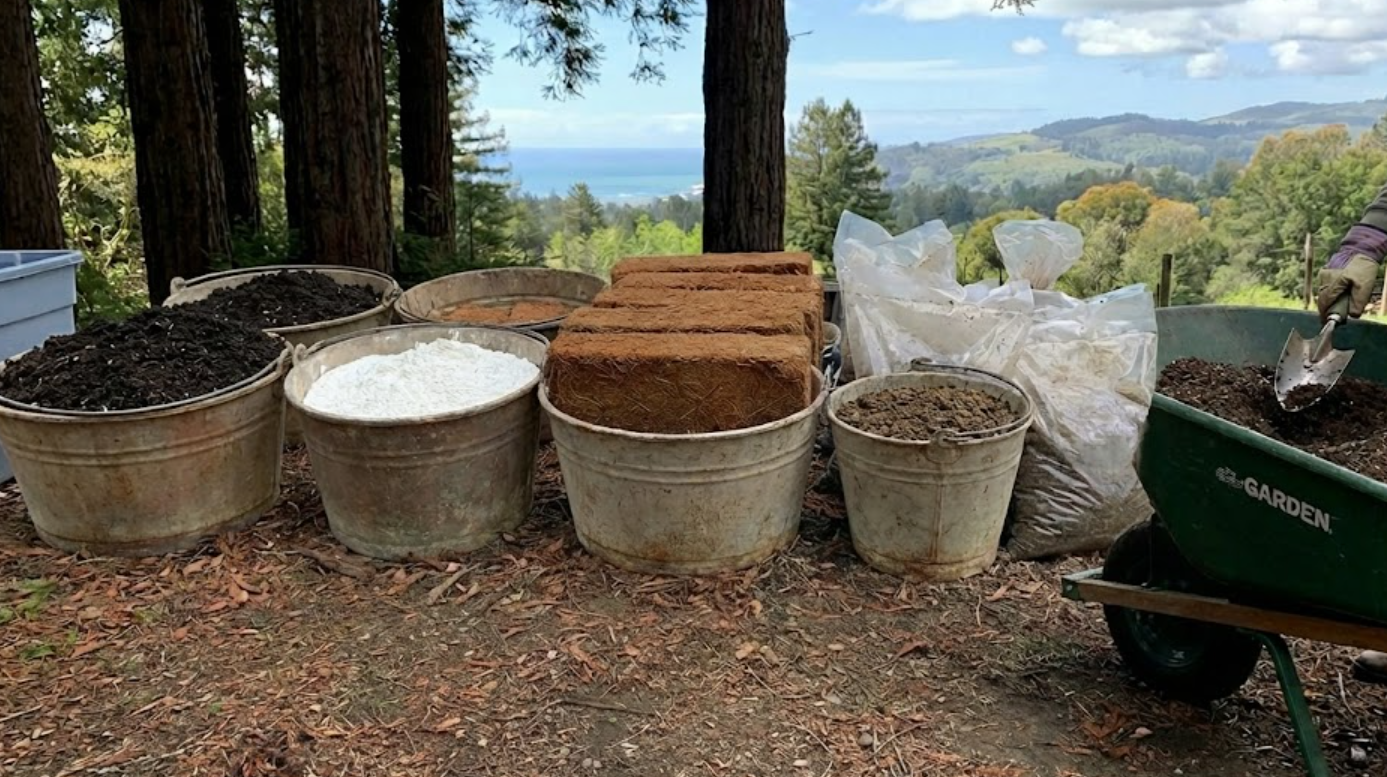
Coco Coir
Coco coir is processed coconut husk fiber. It holds moisture well (better than peat moss) while still allowing drainage. It's pH neutral and a sustainable alternative to peat.
When to use it: For improving water retention in sandy soils, creating seed-starting mixes, or as a component in container soil. Particularly useful for coastal gardeners dealing with fast-draining sand. Pairing coco coir with water-wise gardening practices helps you get the most from every drop.
How to use it: Mix into sandy garden soil at up to 25% by volume. For containers, use as part of a potting mix (not alone, as it lacks nutrients). Coco coir often comes compressed; rehydrate with water before use.
Where to find it: Mountain Feed & Farm Supply, San Lorenzo Garden Center, and many nurseries carry coco coir in blocks or bags.
Which Nutrient-Specific Amendments Does Your Garden Need?
These amendments target specific nutrient deficiencies. Use them based on soil test results or plant symptoms, not as routine additions.
Bone Meal
Bone meal is ground animal bones, high in phosphorus and calcium. Phosphorus supports root development, flowering, and fruiting.
When to use it: When soil tests show phosphorus deficiency, or when planting bulbs and transplants that benefit from root-building nutrients. Santa Cruz County soils vary widely in phosphorus content.
How to use it: Work 1 to 2 tablespoons into each planting hole, or apply 5 to 10 pounds per 100 square feet and incorporate into soil. Bone meal breaks down slowly, releasing nutrients over several months.
Caution: If you have dogs, be aware that bone meal smells appealing to them and can cause digestive issues if eaten. Mix it well into soil rather than leaving it on the surface.
Blood Meal
Blood meal is dried animal blood, very high in nitrogen. It provides a quick nitrogen boost for heavy-feeding plants or nitrogen-deficient soils.
When to use it: For nitrogen-hungry crops like corn, squash, and leafy greens, or when plants show yellowing leaves (a common nitrogen deficiency symptom). Use sparingly, as too much can burn plants.
How to use it: Apply 1 to 2 pounds per 100 square feet and scratch into soil surface. Water well after application. Can also be mixed into planting holes at 1 teaspoon per hole.
Alternative: Compost or manure with a documented controlled composting process can supply nitrogen. For raw manure in edible gardens, follow the harvest-interval precautions above.
Kelp Meal
Kelp meal is dried, ground seaweed. It contains trace minerals, growth hormones, and compounds that support plant health and stress tolerance.
When to use it: As a general soil conditioner and trace mineral source. Particularly useful in sandy coastal soils that may lack trace elements. Also helps plants handle temperature stress and transplant shock.
How to use it: Apply 1 to 2 pounds per 100 square feet and work into soil, or add a handful to planting holes. Can also be brewed into a foliar spray.
Local connection: Seaweed washes up regularly on Santa Cruz County beaches. While you can theoretically harvest and compost it (after rinsing off salt), purchased kelp meal is more practical and consistent.
Sulfur
Elemental sulfur lowers soil pH, making alkaline soils more acidic. This is the opposite of lime.
When to use it: Only if soil tests show pH above 7.5 and you're growing acid-loving plants like blueberries. Most Santa Cruz County soils don't need sulfur; coastal and redwood areas are often already acidic.
How to use it: Follow soil test recommendations carefully. Apply in small amounts over time rather than all at once. Sulfur takes several months to affect pH.
For blueberries: If you want to grow blueberries in neutral or alkaline soil, sulfur amendments and acidifying fertilizers help. But in redwood areas where soil is already acidic, you may not need them at all.
What Do Most Santa Cruz Gardens Actually Need?
With all these options, it's easy to overthink soil amendments. For most Santa Cruz County vegetable gardens, a simple approach works best.
The Essential Amendment: Compost
If you do nothing else, add compost. Annually. Consistently. It addresses the most common problems in our region (sandy drainage, clay compaction, low organic matter) while adding balanced nutrients and supporting soil life.
The "Probably Don't Need" List
Fertilizer blends for other regions: Products formulated for different climates may not match our needs. Look for products without excessive nitrogen (which our mild winters don't deplete as quickly as cold-winter areas).
pH adjusters without a soil test: Adding lime or sulfur without knowing your soil's pH can create new problems.
Expensive "miracle" amendments: Products promising dramatic results are usually overpriced. Compost, manure with a documented controlled composting process, and targeted minerals based on soil tests accomplish more for less.
Peat moss: While it works, coco coir is more sustainable and performs similarly for water retention.
When to Invest in Soil Tests
Get a professional soil test if:
You're establishing a new garden on previously untested ground
Plants are struggling despite good watering and sunlight
You're in a redwood zone and want to know your exact pH
You suspect nutrient deficiencies based on plant symptoms
You're planning a major garden expansion
The UC Davis Analytical Lab offers comprehensive soil testing. Basic tests provide pH, nutrient levels, and organic matter content, with current pricing listed on the lab's ordering site. The UC Master Gardeners can help interpret results.
When and How Should You Apply Soil Amendments?
Best Times to Amend Soil in Santa Cruz County
Fall (September through November): Ideal for major soil building. Add compost, plant cover crops, apply lime if needed. Winter rains help incorporate amendments, and you'll have improved soil ready for spring planting.
Early spring (February through March): Add compost to beds before planting warm-season crops. Work in any amendments while soil is moist but not waterlogged.
Avoid: Amending waterlogged soil (compacts structure) or bone-dry soil (amendments won't incorporate well).
Seasonal Amendment Calendar
| Season | Months | Best Amendments to Apply |
|---|---|---|
| Fall | September through November | Compost, lime (if needed), cover crop seeds |
| Winter | December through January | Let cover crops grow; avoid working wet soil |
| Early Spring | February through March | Compost, targeted nutrients before planting |
| Late Spring / Summer | April through August | Side-dress with compost; foliar kelp for stress |
Application Methods
For new beds: Spread amendments over the entire bed area and dig or till into the top 8 to 12 inches. This is your chance for deep incorporation.
For established beds: Top-dress with compost and let earthworms and water work it in, or gently fork into the top few inches without disturbing plant roots.
For planting holes: Add amendments directly to each hole when transplanting. Good for bone meal, worm castings, or compost when you want targeted nutrition.
Local Resources
Bulk soil amendments:
Aptos Landscape Supply (Aptos): bulk compost, mulch, soil blends
Central Home Supply (Scotts Valley): bulk amendments and bagged products
Bagged amendments and supplies:
San Lorenzo Garden Center (Santa Cruz): full range of amendments
Mountain Feed & Farm Supply (Ben Lomond): organic amendments, cover crop seeds
Sierra Azul Nursery (Watsonville): amendments plus native plants
Testing and education:
UC Master Gardeners of Monterey and Santa Cruz Counties: soil questions, workshops, advice
UC Davis Analytical Lab: professional soil testing
Soil testing lab list: UC Master Gardeners' recommended labs
Frequently Asked Questions About Soil Amendments
How do I know what amendments my soil needs?
A soil test is the most reliable way to know what your soil actually needs rather than guessing. That said, compost benefits virtually all soils, so adding it annually is a safe starting point. For specific issues (suspected pH problems, persistent nutrient deficiencies, poor drainage), a soil test through UC Davis Analytical Lab provides clear guidance.
Can I add too much compost?
In vegetable gardens, it's hard to overdo compost as long as you're also growing plants that use the nutrients. However, excessive compost (more than 4 to 6 inches annually) in native plant areas can create problems, as California natives are adapted to lean soils. For food gardens, 2 to 4 inches per year is a good range.
How long does it take for amendments to improve my soil?
You'll notice some improvement in soil texture immediately after adding compost or other organic matter. However, building truly healthy soil is a multi-year process. Expect meaningful improvement in drainage, water retention, and fertility after 2 to 3 seasons of consistent amendment. Soil biology takes time to establish.
Should I use perlite or vermiculite in my garden beds?
For in-ground garden beds, neither is particularly effective long-term. Perlite floats to the surface, and vermiculite compacts over time. Both are better suited for containers and seed-starting mixes. For improving garden bed drainage or water retention, compost is more effective and economical.
Is coco coir better than peat moss?
Coco coir is more sustainable (peat bogs take thousands of years to form), has a more neutral pH, and resists compaction better than peat moss. For most uses in Santa Cruz County gardens, coco coir is the better choice. It's particularly useful for sandy coastal soils that need help retaining moisture.
When should I use lime in Santa Cruz County?
Only use lime if a soil test shows your pH is below 6.0 and you're growing plants that prefer neutral soil. Gardeners in redwood zones (Felton, Ben Lomond, Bonny Doon) are most likely to need lime due to acidic conditions from decomposing redwood debris. Coastal and most inland areas typically don't need pH adjustment.
Do I need to add fertilizer if I'm using compost?
Compost provides slow-release nutrients, but heavy-feeding crops (tomatoes, corn, squash) may benefit from additional fertilization during the growing season. For most vegetables, compost plus an occasional side-dressing of balanced organic fertilizer is sufficient. Leafy greens and root vegetables often thrive on compost alone.
Can I make my own soil amendments?
Absolutely. Compost from kitchen and yard waste, leaf mold from fallen leaves, and worm castings from a vermicomposting bin are all excellent homemade amendments. Cover crops are another form of DIY soil improvement. Making your own saves money and reduces waste, though it requires time and space.
Free Soil and Garden Resources
Know Your Microclimate Worksheet: Identify your garden's microclimate to understand what soil conditions you're likely working with.
Beginner Garden Setup Checklist: Step-by-step guide for starting a garden, including soil preparation recommendations.
Garden Troubleshooting Guide: Diagnose plant problems that might indicate soil issues, including nutrient deficiencies.
Seasonal Garden Tasks Checklist: Month-by-month guide that includes when to add amendments and build soil health.
How Do You Build Soil Health Over Time?
Improving your soil isn't a one-time project. It's an ongoing practice that rewards consistency over perfection. Start with compost, add it regularly, and observe how your plants respond. Over time, you'll develop an intuition for what your specific plot needs.
The gardeners with the best soil didn't achieve it through expensive products or complicated protocols. They built it through years of adding organic matter, growing cover crops, and paying attention to what their plants were telling them. Your soil can get there too.
