

Preventing Basil from Bolting in Santa Cruz: Keep Your Plants Bushy and Productive
A few of the product links in this guide are affiliate links. If you buy through one, Ambitious Harvest may earn a small commission at no extra cost to you, which helps keep these guides free. We only point to gear we would use in our own Santa Cruz garden. As an Amazon Associate, we earn from qualifying purchases. Read our full disclosure.
Every basil grower faces the same moment of despair: one day your plant is a beautiful mound of fragrant leaves, and the next it's shooting up flower spikes while the leaves turn small and bitter. That's bolting, and it's basil's way of telling you it's done making leaves and ready to make seeds.
But bolting doesn't have to be inevitable. With the right techniques, variety selection, and understanding of Santa Cruz County's unique growing conditions, you can keep basil productive for months longer than gardeners who simply let nature take its course.
This guide covers everything you need to know to prevent bolting and extend your basil season, from the pinching technique that every serious basil grower uses to choosing varieties that resist bolting in our coastal climate.
Why Does Basil Bolt?
To prevent bolting, it helps to understand what triggers it. Basil is an annual plant with one goal: reproduce before it dies. Everything it does, including bolting, serves that biological imperative.
The Bolting Triggers
Day length: As days grow longer and then begin shortening after the summer solstice, basil receives signals that its growing season is ending. This triggers the reproductive response.
Heat stress: Prolonged temperatures above 80°F can push basil toward flowering, though this is less common in Santa Cruz County's mild climate than in hotter regions.
Cold stress: Nights below 50°F signal to basil that conditions are becoming unfavorable, accelerating the drive to flower.
Root stress: When basil becomes root-bound in containers or has its roots disturbed, it often bolts as a stress response.
Age: Even with perfect conditions, basil eventually matures and bolts. It's simply completing its lifecycle.
Drought stress: Inconsistent watering, especially periods of drought followed by heavy watering, can trigger bolting.
What Happens When Basil Bolts
When basil shifts from vegetative growth (leaves) to reproductive growth (flowers), several changes occur:
Flower spikes emerge from stem tips
Leaf production slows dramatically
Existing leaves become smaller
Flavor becomes stronger and more bitter
Plant energy redirects toward seed production
The main stem elongates and becomes woody
Once full bolting begins, it can't be completely reversed, though you can slow it down and salvage some production.
What Is the Santa Cruz Advantage (and Challenge) for Growing Basil?
Santa Cruz County's climate creates both advantages and challenges for growing bolt-resistant basil.
The Advantages
Mild temperatures: Our summer temperatures rarely reach the sustained heat that triggers stress-bolting in hotter regions. While inland areas may see occasional hot days, we avoid the prolonged 90°F+ heat that pushes basil to bolt quickly.
Extended growing season: Santa Cruz's mild shoulder seasons mean basil can produce from late spring through early fall, giving you more harvesting time than gardeners in regions with early frosts.
Cool coastal nights: While temperatures below 50°F can stress basil, our gradual seasonal transitions (rather than sudden cold snaps) give plants time to adjust.
The Challenges
Coastal fog: Cool, damp conditions can slow basil growth and sometimes cause fungal issues, though fog rarely triggers bolting directly.
Variable microclimates: A basil plant in sunny Boulder Creek behaves very differently from one in foggy Aptos. Understanding your specific microclimate helps you anticipate when bolting pressure increases.
Late soil warming: Coastal gardeners often must wait until late May or June to plant basil, giving less total growing time before the plant's internal clock triggers bolting.
Why Is Pinching the Most Important Technique for Preventing Bolting?
If you learn only one thing from this guide, let it be this: regular pinching is the key to bushy, productive basil that resists bolting.
How Pinching Works
When you pinch off the growing tip of a basil stem, you remove the plant's apical dominance, the hormonal signal that tells the plant to grow upward from that single point. With the tip removed, the plant activates dormant buds lower on the stem, sending out two new branches where there was one.
Each time you pinch, you double the number of growing tips. This creates a bushy, multi-branched plant with far more leaves than an unpinched plant that grows tall and leggy.
More importantly, pinching removes the sites where flowers would form. Flower buds develop at stem tips. By regularly removing stem tips before flowers appear, you continuously reset the plant's reproductive clock.
How to Pinch Basil
When to start: Begin pinching when seedlings have 3 to 4 sets of true leaves (not counting the initial seed leaves).
Where to pinch: Look for a stem tip with a pair of leaves at the top. Just above the next leaf pair down, pinch or cut the stem. You're removing the top set of leaves plus any developing tip.
How often: Every 2 to 3 weeks during active growing season. More frequent pinching creates bushier plants.
How much: You can pinch individual tips as you notice them growing long, or do a more thorough "haircut" where you trim back multiple stems at once.
The Pinching Mindset Shift
Many gardeners hesitate to pinch because it feels like destroying the plant they're trying to grow. Shift your thinking: every time you pinch, you're doubling your future harvest potential.
An unpinched basil plant might give you one tall stem with a handful of large leaves before bolting. A well-pinched plant produces dozens of branching stems covered in harvestable leaves, and the regular harvesting you do counts as pinching anyway.
Think of it this way: Pinching isn't removing basil from your plant. Pinching is creating more basil on your plant.
Which Bolt-Resistant Basil Varieties Grow Best in Santa Cruz?
Variety selection significantly affects how long your basil resists bolting. Some varieties are bred specifically to resist flowering, while others bolt quickly regardless of care.
Best Choices for Bolt Resistance
Genovese Basil (standard culinary basil)
The classic Italian basil for pesto and Caprese salads. While not specifically bred for bolt resistance, quality Genovese strains perform well when pinched regularly. Look for named selections like 'Genovese Compact' or 'Italian Large Leaf' rather than generic "sweet basil."
Days to maturity: 60-70 Bolt resistance: Moderate (good with pinching) Best for: Pesto, Italian dishes, general cooking
Genovese Slow-Bolt Selections
Several seed companies offer Genovese-type basils specifically selected for slow bolting:
'Prospera' (also has downy mildew resistance)
'Amazel' (very slow to bolt)
'Everleaf' (stays compact and productive)
Days to maturity: 60-75 Bolt resistance: High Best for: Gardeners who want classic basil flavor with extended harvest
Italian Large Leaf
Larger leaves than standard Genovese, but similar flavor. Some selections have good bolt resistance.
Days to maturity: 60-70 Bolt resistance: Moderate to high (varies by selection) Best for: Pesto (larger leaves are easier to harvest in quantity)
Other Varieties Worth Growing
Thai Basil
Distinctive anise/licorice flavor. More bolt-resistant than sweet basil varieties and tolerates more heat. The flowers are also beautiful and edible, so if it does bolt, you still benefit.
Days to maturity: 60-90 Bolt resistance: High Best for: Thai and Vietnamese cuisine, stir-fries
Lemon Basil
Bright citrus flavor. Bolts readily in heat, but Santa Cruz's mild temperatures help extend production. Requires vigilant pinching.
Days to maturity: 60-75 Bolt resistance: Low to moderate Best for: Fish, salads, iced tea, desserts
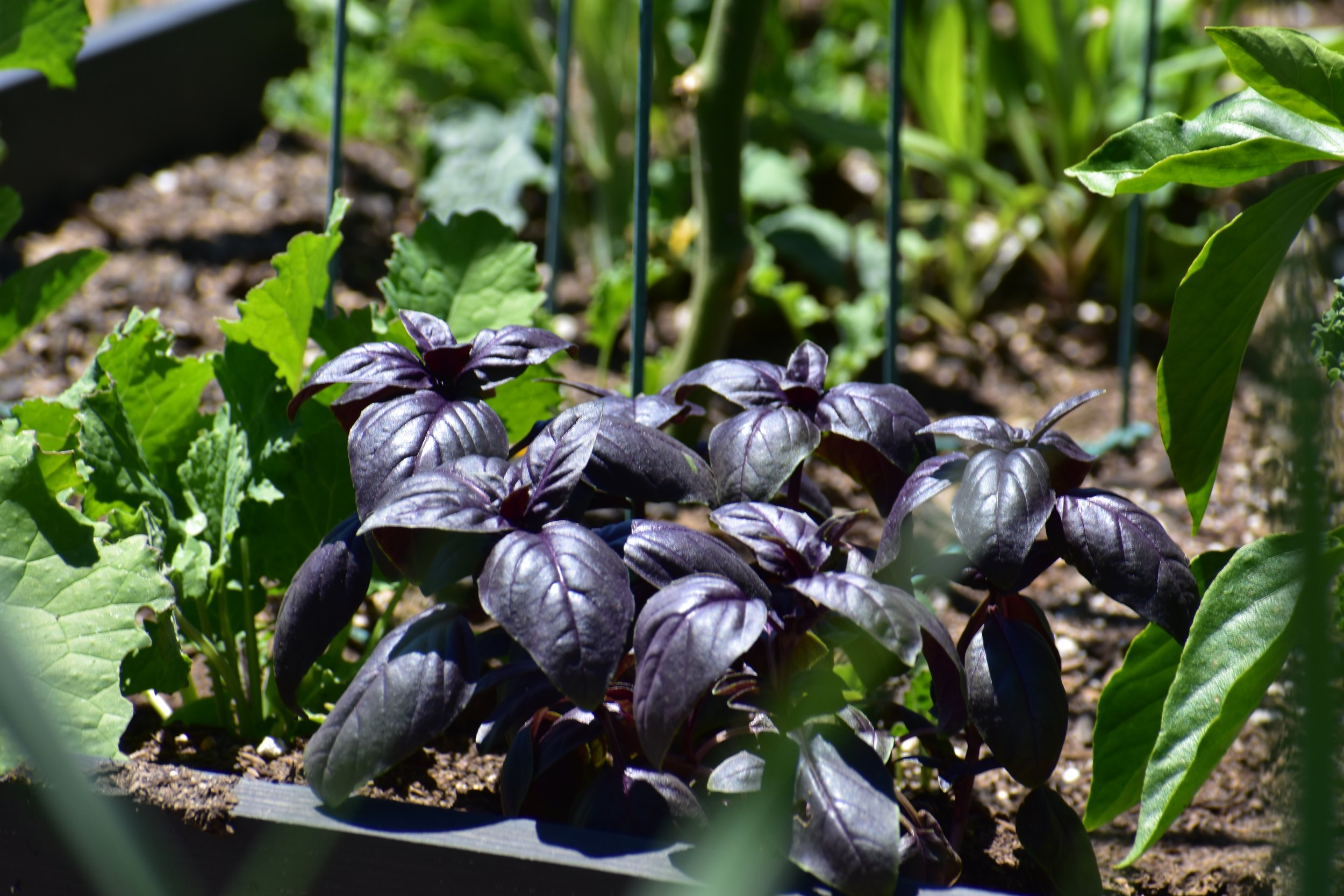
Purple Basil (Dark Opal, Red Rubin)
Striking purple color but tends to bolt more readily than green basils. The flavor is slightly more peppery. Grow it for color, but don't count on it as your main basil.
Days to maturity: 60-80 Bolt resistance: Low Best for: Ornamental, purple pesto, salads
African Blue Basil
A sterile hybrid that cannot produce viable seed, so it never truly bolts. It sends up flower spikes (which attract bees) but continues producing leaves. Camphor-like flavor that's not ideal for pesto but interesting in some dishes.
Days to maturity: N/A (perennial in mild climates) Bolt resistance: Very high (sterile) Best for: Continuous production, pollinator gardens, adventurous cooks
Varieties to Avoid If Bolt Resistance Matters
Lettuce Leaf Basil: Large leaves but bolts quickly
Most purple basils: Beautiful but early bolters
Cinnamon Basil: Distinctive flavor but short production window
How Should You Grow Basil Based on Your Santa Cruz Microclimate?
Your location within Santa Cruz County affects both when to plant and how aggressively your basil will try to bolt.
Coastal Areas (Aptos, Capitola, Santa Cruz, Live Oak)
Coastal fog and cool temperatures slow basil growth but also reduce bolting pressure. Your basil may grow more slowly, but it often produces longer into fall.
Coastal strategies:
Plant in the warmest, most protected spot (south-facing wall, heat-reflecting surfaces)
Wait until late May or June when soil truly warms
Choose fog-tolerant varieties (Genovese performs well)
Container growing lets you move plants to catch sun
Expect slower growth but extended production
Inland Valleys (Scotts Valley, Soquel, Watsonville)
Warmer conditions mean faster basil growth and potentially earlier bolting, especially in Watsonville's hotter summers.
Inland strategies:
Plant earlier (mid-May in warm spots)
Afternoon shade helps during heat waves
More frequent pinching may be needed
Mulch to keep roots cool
Watch for stress bolting during hot periods
San Lorenzo Valley (Boulder Creek, Ben Lomond, Felton)
The warmest summer temperatures in the county (on sunny exposures) combined with cooler nights create interesting growing conditions. Sunny spots can produce abundant basil; shaded canyons struggle.
Mountain strategies:
Full sun is essential in these microclimates
Plant in the warmest microclimate on your property
Be prepared for earlier fall frosts than coastal areas
Succession plant to ensure continuous supply
For more on growing in different areas, see Navigating Santa Cruz County's Microclimates.
What Does a Week-by-Week Bolt Prevention Calendar Look Like?
Here's a practical schedule for managing basil in Santa Cruz County:
May (Planting Month)
Week 1-2: Plant transplants after last frost risk (coastal areas may wait until late May). Pinch immediately if plants already have 3-4 leaf sets.
Week 3-4: First pinching if you haven't already. Remove the top growth above the second or third leaf node.
June (Establishment Month)
Week 1-2: Plants should be branching from first pinch. Pinch any long stems again.
Week 3-4: Regular pinching/harvesting begins. Take what you need for cooking, pinch any flower buds you see.
July (Peak Production Month)
Week 1-2: Heavy harvesting and pinching. This is prime pesto season. Harvest aggressively; the plants can take it.
Week 3-4: Watch for first flower buds on stressed plants. Pinch them immediately. Succession plant if you want fall basil.
August (Maintenance Month)
Week 1-2: Bolting pressure increases as days shorten after the summer solstice. Pinch vigilantly.
Week 3-4: Even well-maintained plants may start showing flower buds. Pinch daily if needed. Make large batches of pesto to freeze.
September (Harvest Before Decline)
Week 1-2: Make your final large harvests. Plants that have been well-maintained may still produce, but quality declines.
Week 3-4: Let one plant flower for seeds if desired. Pull declining plants and plant fall crops.
How Does Succession Planting Keep Basil Coming All Season?
No matter how well you pinch, individual basil plants eventually slow down or bolt. Succession planting ensures you always have young, vigorous plants coming up.
Succession schedule for Santa Cruz:
Planting 1: Late May (main summer crop)
Planting 2: Late June (mid-summer reinforcement)
Planting 3: Late July (fall production)
By the time your first planting starts showing bolting fatigue, your second planting is hitting peak production. Your third planting carries you into fall.
Container advantage: You can start basil in containers any time, keep them in warm spots, and plant out when they're vigorous. This gives you more flexibility than direct sowing.
What Should You Do When Bolting Starts?
Despite your best efforts, basil eventually bolts. Here's how to handle it:
If You Catch It Early
Cut flower stalks immediately: As soon as you see flower buds forming at stem tips, cut the entire stem back by one-third to one-half, down to a leaf node. This removes the flowering trigger and stimulates new branching.
Increase watering: Stress often triggers bolting. Ensure consistent moisture.
Harvest heavily: Make pesto, freeze leaves, use what you can while quality is still good.
If Bolting Is Underway
Salvage what you can: Harvest all usable leaves immediately. Leaves from bolting plants are still edible, just stronger in flavor.
Cut plants back hard: Trim back to about 6 inches tall. Some plants will send out new growth from the base. It won't be as vigorous as the first flush, but it extends your harvest.
Accept the timeline: Severely bolted plants aren't worth fighting. Pull them and plant your succession crop.
If Flowers Have Fully Opened
Let one plant go to seed: If you want to save seeds, allow one plant to flower completely. The seeds are viable when the flowers have dried on the plant.
Enjoy the flowers: Basil flowers are edible and attract beneficial insects. Not every flower spike needs to be removed.
Remove for aesthetic reasons: If you don't want seeds and the plant looks messy, pull it and compost it.
Can Container Growing Help Control Bolting?
Containers offer advantages for bolt-prone herbs like basil.
Mobility: Move containers to optimal sun or shade as conditions change.
Root temperature control: Containers warm up faster in spring but can overheat in summer. Move to shaded locations during heat waves, or use light-colored pots that reflect heat.
Stress monitoring: Container plants show stress (wilting, yellowing) faster than in-ground plants, giving you earlier warning to intervene.
Container Growing Tips
Use pots at least 12 inches in diameter (larger is better)
Ensure excellent drainage
Use quality potting mix with good water retention
Water when the top inch feels dry
Fertilize monthly with balanced liquid fertilizer
Pinch just as you would in-ground plants
What Are the Most Common Basil Problems?
Basil Bolts Immediately After Transplanting
Cause: Root stress from transplanting or the plant was already stressed when purchased.
Prevention: Transplant carefully, avoiding root disturbance. Choose nursery plants that haven't started flowering yet. Water well after transplanting.
Small, Yellowing Leaves
Cause: Usually nitrogen deficiency or overwatering.
Fix: Apply balanced organic fertilizer. Ensure good drainage and don't overwater.
Purple or Brown Leaf Edges
Cause: Cold stress, often from nighttime temperatures below 50°F.
Fix: Wait until soil temperatures are consistently 60°F+ before planting. Cover plants during unexpected cold nights.
Leaves Have Holes
Cause: Slugs, snails, or caterpillars.
Fix: Hand-pick pests, use beer traps for slugs, or apply Bt for caterpillars.
Fuzzy Gray Mold on Leaves
Cause: Downy mildew, increasingly common on basil.
Fix: Remove affected leaves immediately. Improve air circulation. Look for resistant varieties like 'Prospera' or 'Devotion.'
Basil Won't Grow
Cause: Soil too cold (below 60°F), too much shade, or poor drainage.
Fix: Wait for warmer weather, ensure full sun (6+ hours), improve drainage.
Frequently Asked Questions
Why does my basil always bolt so quickly?
The most common reason is not pinching. Without regular pinching, basil grows tall and flowers within weeks. Start pinching when plants have 3-4 leaf sets and continue every 2-3 weeks. Stress from inconsistent watering, root-bound containers, or temperature extremes also triggers early bolting.
Can I still eat basil after it bolts?
Yes, but the flavor changes. Bolted basil leaves are stronger and more bitter. They're still usable in cooked dishes where the flavor mellows, but less ideal for fresh applications like Caprese salad. The flowers are also edible and attract bees.
How often should I pinch my basil?
Every 2-3 weeks during active growing season. If you're harvesting regularly for cooking, you're effectively pinching as you go. The key is removing stem tips before they develop flower buds.
What's the best basil variety for Santa Cruz County?
Genovese-type basils perform well across all microclimates. For maximum bolt resistance, look for slow-bolt selections like 'Amazel,' 'Prospera,' or 'Everleaf.' Thai basil is also excellent for our climate and more bolt-resistant than sweet basil types.
Why did my basil bolt right after I bought it from the nursery?
Nursery plants are often stressed from being root-bound, transported, or starting to flower before purchase. Choose the youngest, healthiest plants available, pinch immediately after transplanting, and avoid plants that already show flower buds.
Is there a basil that never bolts?
African Blue Basil is a sterile hybrid that cannot produce viable seeds, so it never completes the bolting process. It sends up flower spikes but continues producing leaves. The flavor is camphor-like (not classic Italian basil), but it's the closest thing to a never-bolt variety.
Can I keep basil going through winter in Santa Cruz?
Basil is sensitive to temperatures below 50°F and will not survive even our mild winters outdoors. However, you can grow basil indoors near a sunny window or under grow lights through winter. Coastal gardeners occasionally have basil survive mild winters in very protected spots, but it's not reliable.
Should I let basil flower for the bees?
If you have multiple plants, let one flower while keeping others productive. Basil flowers are excellent bee forage. Just know that the flowering plant will stop producing quality leaves.
Downloadable Guides
These free PDF guides support your herb-growing success:
Companion Planting Guide: Learn what to plant near basil (tomatoes are classic companions).
Seasonal Planting Calendar: Month-by-month planting guidance for Santa Cruz County.
Garden Troubleshooting Guide: Quick fixes for common garden problems.
Local Resources
UC Master Gardeners of Monterey and Santa Cruz Counties: Free gardening advice hotline and educational programs.
San Lorenzo Garden Center: Carries basil starts, including multiple varieties.
Renee's Garden Seeds: Felton-based seed company with excellent basil variety selection.
Mountain Feed & Farm Supply: Organic herb starts and gardening supplies.
What Are the Key Takeaways for Preventing Basil Bolting?
Bolting isn't a sign of failure. It's basil doing what basil does: trying to reproduce. Your job is to delay that process long enough to enjoy an abundant harvest.
The formula is simple: pinch early, pinch often, choose slow-bolt varieties, and succession plant for insurance. Do these things and you'll have bushy, productive basil plants all summer long, no matter which Santa Cruz County microclimate you call home.
And when your plants do eventually bolt? Make one last batch of pesto, let the bees enjoy the flowers, save some seeds if you want, and know you'll do it all again next year.
Related Articles
Herb Growing Guides
Growing Herbs in Santa Cruz County - Complete guide to growing culinary herbs
Growing Basil in Santa Cruz - Tips for our most popular summer herb
Growing Rosemary in Santa Cruz - The easiest Mediterranean herb
Growing Lavender in Santa Cruz - Fragrant, drought-tolerant beauty
Growing Mint in Santa Cruz - Vigorous grower for mojitos and more
Growing Thyme in Santa Cruz - Versatile culinary and cocktail herb
Growing Oregano in Santa Cruz - Mediterranean kitchen essential
Growing Sage in Santa Cruz - Savory herb for cooking and cocktails
Growing Parsley in Santa Cruz - The underrated two-year herb
Growing Cilantro in Santa Cruz - Cool-season favorite
Growing Dill in Santa Cruz - Quick-growing annual herb
Growing Chives in Santa Cruz - Easy perennial onion flavor
Herb Care & Preservation
Preventing Basil from Bolting - Keep basil productive all season
Preserving Fresh Herbs - Drying, freezing, and infusing methods
Special Topics
Growing Herbs for Cocktails - From garden to glass
Fire-Wise Herb Gardens - Low-growing, high-moisture plants for defensible space
