

Growing Kohlrabi in Santa Cruz County: Cool-Season Crop Guide
A few of the product links in this guide are affiliate links. If you buy through one, Ambitious Harvest may earn a small commission at no extra cost to you, which helps keep these guides free. We only point to gear we would use in our own Santa Cruz garden. As an Amazon Associate, we earn from qualifying purchases. Read our full disclosure.
Kohlrabi might be the most underrated vegetable you can grow in Santa Cruz County. With its peculiar bulbous shape and crisp texture, this member of the brassica family (related to cabbage and broccoli) thrives in our cool, mild climate where it can grow nearly year-round.
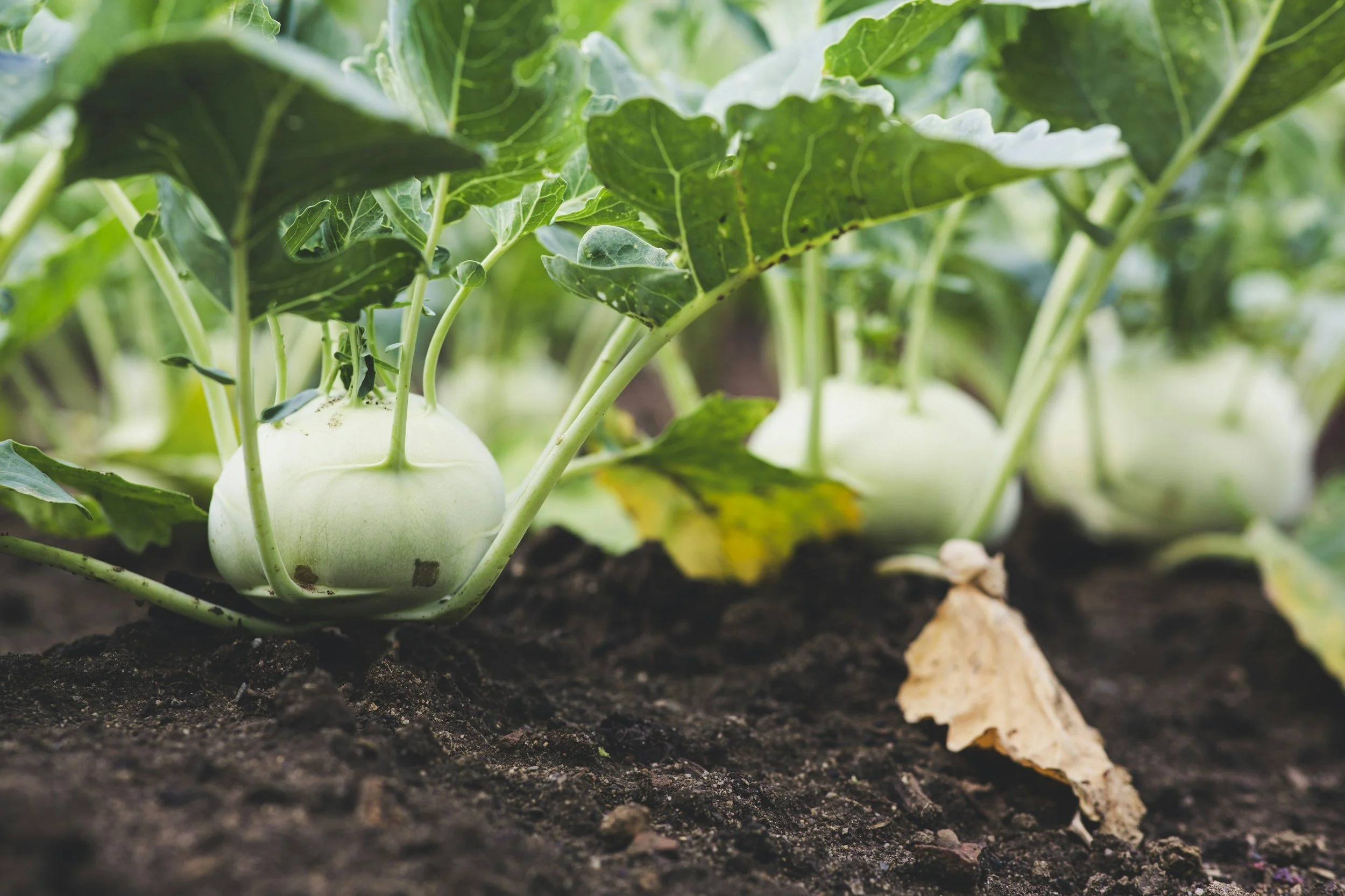
Its name comes from the German words for cabbage (kohl) and turnip (rube), reflecting both its appearance and taste. The edible part is the swollen stem that grows above ground, with a mild, sweet flavor and a texture similar to a broccoli stem or water chestnut. Kohlrabi can be green or purple, and both types taste essentially the same.
If you've never grown kohlrabi, Santa Cruz County is an ideal place to start. Our moderate temperatures prevent the woody texture that develops when kohlrabi grows in hot conditions, and our long cool season means you can harvest crisp, tender bulbs for much of the year.
Why Does Kohlrabi Thrive in Santa Cruz?
Kohlrabi is a cool-season crop that becomes tough and woody in heat. This makes it challenging in much of California, but Santa Cruz County's coastal influence and mild temperatures create ideal growing conditions.
Our climate advantages for kohlrabi include stable temperatures that rarely exceed 80 degrees F (even inland areas stay moderate compared to the Central Valley), a long cool season from fall through spring, coastal fog that keeps summer temperatures mild, and enough warmth for steady growth without heat stress. Understanding your local microclimate in Santa Cruz County helps you fine-tune planting dates for the best results.
While inland California gardeners struggle to grow tender kohlrabi, you can produce excellent crops from fall through early summer, and coastal gardeners may succeed even through July and August.
When Should You Plant Kohlrabi in Santa Cruz County?
Kohlrabi grows quickly (45 to 60 days to harvest), so you have multiple planting windows throughout the year.
Fall planting (September through October) is prime time for kohlrabi. Plant from seed or transplants for harvest in November and December. Cool weather produces the sweetest, most tender bulbs.
Winter planting (November through February) works well in our mild climate. Growth slows but continues, with harvest in late winter and early spring.
Spring planting (March through April) gives you a late spring harvest before summer heat arrives. This window works best for coastal areas like Aptos and Capitola where temperatures stay cool longer.
Summer planting is possible in foggy coastal areas, but inland gardeners should wait until late August or September when temperatures begin to drop.
For succession planting, sow seeds every 2 to 3 weeks during your main growing windows. This extends your harvest rather than producing everything at once.
How Do You Grow Kohlrabi?
Starting from Seed
Kohlrabi seeds germinate quickly and plants grow fast, so direct sowing works well. Plant seeds 1/2 inch deep and 1 inch apart, then thin to 4 to 6 inches apart once seedlings have a few true leaves. You can eat the thinnings as microgreens.
For an earlier start, begin seeds indoors 4 to 6 weeks before your planned transplant date. Kohlrabi transplants well and suffers minimal setback.
Soil and Site Requirements
Kohlrabi prefers fertile, well-drained soil with consistent moisture. Like all brassicas, it's a moderately heavy feeder that benefits from soil amended with compost before planting. The UC Master Gardener Program of Sonoma County recommends planting kohlrabi in fertile soil high in organic matter, and keeping it out of beds where other cabbage family crops grew in the last few years. For more on building healthy garden soil, see our California garden soil amendments guide.
Choose a spot with full sun (6 or more hours), though kohlrabi tolerates partial shade, especially in warmer inland areas where afternoon shade can prevent bolting.
Soil pH between 6.0 and 7.5 works well. Most Santa Cruz County soils fall within this range, though gardens under redwoods may need lime to raise pH.
Water and Care
Keep soil consistently moist but not waterlogged. Irregular watering causes the bulbs to crack or become woody. Drip irrigation or soaker hoses work well for maintaining even moisture.
Mulch around plants with straw or compost to retain soil moisture, moderate soil temperature, and suppress weeds. A 2 to 3-inch layer is ideal.
Side-dress with compost or a balanced organic fertilizer when bulbs begin to form, about 3 to 4 weeks after transplanting or when direct-seeded plants are well established.
Frost Tolerance
Kohlrabi tolerates light frosts and even improves in flavor after a light freeze. This makes it an excellent choice for fall and winter gardens in Santa Cruz County, where hard freezes are rare. You can harvest kohlrabi well into December and January without protection in most local microclimates.
What Are the Best Kohlrabi Varieties to Grow?
Green Varieties
Early White Vienna is the classic variety, ready in 55 days with pale green skin and white flesh. Reliable and widely available.
Kossak is a giant variety that stays tender even when large (up to 10 inches across). Takes longer to mature (80 days) but produces impressive yields.
Winner matures in just 45 days, making it ideal for succession planting and quick harvests.
Purple Varieties
Purple Vienna has beautiful purple skin with white flesh inside. Matures in 60 days and adds color to the garden. The flavor is similar to green varieties, perhaps slightly more peppery.
Kolibri is an improved purple variety with excellent uniformity and crack resistance. Good choice if you've had trouble with splitting bulbs.
Giant Varieties
Superschmelz is an Austrian heirloom that grows enormous (up to 10 pounds) while remaining tender and sweet. Despite its size, the texture stays crisp rather than woody. Needs 60 to 70 days.
Gigante is another large variety that maintains quality at bigger sizes. Good for gardeners who want fewer plants with larger harvests.
For Santa Cruz County, any of these varieties will perform well. Start with Early White Vienna or Purple Vienna if you're new to kohlrabi, then experiment with giant varieties once you've had success.
When Should You Harvest Kohlrabi?
When to Harvest
Harvest kohlrabi when bulbs reach 2 to 3 inches in diameter for standard varieties. At this size, the texture is crisp and tender with the best flavor. Larger bulbs (4 to 5 inches) are still good but may become slightly fibrous.
Giant varieties like Kossak and Superschmelz are exceptions. These stay tender even at much larger sizes and can be harvested anywhere from 4 to 10 inches across.
Don't wait too long to harvest. Overripe kohlrabi becomes woody and develops an unpleasant texture. When in doubt, harvest earlier rather than later.
How to Harvest
Cut the bulb from the root at soil level, or pull the entire plant. Remove the leaves (which are also edible) and trim the root end.
The leaves can be cooked like collard greens or kale. They're slightly tougher than kale leaves but have good flavor when sauteed or added to soups.
Storage
Store unwashed kohlrabi bulbs in a plastic bag in the refrigerator for up to 2 weeks. Remove the leaves first, as they draw moisture from the bulb.
For longer storage, kohlrabi keeps well in a root cellar or cool garage (35 to 40 degrees F) for several months. This makes it an excellent crop for winter eating.
How Do You Eat Kohlrabi?
Kohlrabi's mild, slightly sweet flavor and crisp texture make it versatile in the kitchen.
Raw: Peel and slice into sticks for snacking or add to salads. The texture is similar to jicama or water chestnut. Kids often enjoy raw kohlrabi because of its mild flavor and satisfying crunch.
Roasted: Cut into cubes, toss with olive oil and salt, and roast at 400 degrees F until caramelized. Roasting brings out kohlrabi's natural sweetness.
Stir-fried: Add sliced kohlrabi to stir-fries in the last few minutes of cooking. It stays crisp and absorbs sauces well.
Soups and stews: Cube and add to soups where you'd use turnips or potatoes. Kohlrabi holds its shape well and doesn't become mushy.
Slaw: Shred kohlrabi for a crunchy slaw, either alone or mixed with cabbage and carrots.
What Should You Plant With Kohlrabi?
Kohlrabi grows well with beets, onions, and aromatic herbs like dill, mint, and rosemary that help deter cabbage family pests. For a deeper look at pairing crops effectively, see our companion planting guide.
Avoid planting kohlrabi near other brassicas (broccoli, cabbage, cauliflower, kale, Brussels sprouts). Grouping brassicas together concentrates pests and diseases and depletes the same soil nutrients. Rotate kohlrabi to a different bed each season, waiting 2 to 3 years before planting brassicas in the same spot.
Also avoid planting near tomatoes, peppers, and strawberries, which can compete for nutrients or attract pests that affect brassicas.
What Are the Most Common Problems and Solutions?
Pests
Aphids cluster on leaves and stems. Spray off with a strong stream of water, or use insecticidal soap for heavy infestations. Encourage beneficial insects like ladybugs and lacewings.
Cabbage worms (green caterpillars) chew holes in leaves. Hand-pick, use floating row covers to prevent moths from laying eggs, or apply Bt (Bacillus thuringiensis) for organic control. The UC IPM program recommends Bt as an effective organic option for caterpillar pests on cole crops.
Flea beetles create small holes in leaves, especially on young plants. Row covers provide the best protection. Older plants usually outgrow minor damage.
Slugs and snails are particularly problematic in Santa Cruz County's moist climate. Hand-pick at night, use beer traps, or apply iron phosphate bait around plants.
Diseases
Clubroot causes swollen, distorted roots and stunted growth. Prevent by rotating crops and maintaining soil pH above 7.0. Once present, avoid planting brassicas in that area for several years.
Black rot causes yellowing leaves with V-shaped lesions. Remove affected plants promptly and practice crop rotation. Avoid overhead watering.
Growing Problems
Woody texture results from heat stress or delayed harvest. Plant in cooler seasons, harvest promptly, and provide afternoon shade in warmer areas.
Cracking occurs from irregular watering. Maintain consistent soil moisture, especially as bulbs enlarge.
Bolting (going to seed) happens when plants experience temperature swings or stress. Plant at appropriate times for your microclimate and keep plants well-watered.
Where Can You Find Kohlrabi Seeds and Starts?
Seeds:
Renee's Garden Seeds (based in Felton) carries kohlrabi varieties suited to our climate.
Kitazawa Seed Company offers Asian brassica varieties.
Johnny's Selected Seeds and Territorial Seed Company (online) have extensive kohlrabi selections.
Transplants:
Look for kohlrabi starts at local nurseries in fall and early spring.
San Lorenzo Garden Center, Dig Gardens (Santa Cruz and Aptos), and Sierra Azul Nursery in Watsonville often carry brassica starts during planting season.
Farmers markets sometimes have vegetable starts as well.
Frequently Asked Questions About Growing Kohlrabi
What does kohlrabi taste like?
Kohlrabi has a mild, slightly sweet flavor similar to broccoli stems or cabbage hearts, but milder and crisper. Raw kohlrabi has a texture like jicama or water chestnut. Cooked kohlrabi becomes tender but holds its shape, similar to turnips. The flavor is never overpowering, making it appealing even to people who don't typically enjoy brassicas.
Is the whole kohlrabi plant edible?
Yes. The bulb is the primary harvest, but the leaves are also edible and nutritious. Cook kohlrabi leaves like collard greens or kale by sauteing with garlic and olive oil, or add them to soups and stir-fries. The leaves are tougher than kale, so they benefit from longer cooking. Don't waste them.
Why is my kohlrabi woody and tough?
Woody texture usually results from growing in hot weather, delayed harvest, or irregular watering. In Santa Cruz County, plant kohlrabi in fall through spring rather than summer (except in foggy coastal areas). Harvest when bulbs reach 2 to 3 inches across for standard varieties. Keep soil consistently moist throughout the growing period.
Can I grow kohlrabi in containers?
Yes. Kohlrabi's compact size and shallow root system make it suitable for containers. Use a pot at least 8 inches deep and 12 inches wide. One plant per container this size, or space plants 6 inches apart in larger containers. Keep soil consistently moist, as containers dry out faster than garden beds.
How long does kohlrabi take to grow?
Most kohlrabi varieties mature in 45 to 60 days from transplant or 55 to 70 days from direct seeding. This quick growth makes kohlrabi ideal for succession planting and filling gaps in the garden. Giant varieties like Kossak and Superschmelz take longer (70 to 80 days) but produce much larger bulbs.
When is the best time to plant kohlrabi in Santa Cruz County?
Fall (September through October) is the ideal planting window, producing harvests in November and December. Spring planting (March through April) also works well for late spring harvests. Coastal gardeners can plant through early summer. Avoid planting when temperatures will exceed 80 degrees F, as heat causes woody texture and bolting.
Should I start kohlrabi from seeds or transplants?
Either works well. Direct seeding is economical and kohlrabi germinates easily. Transplants give you a head start and work better for precise spacing. For fall planting, direct seeding is convenient since soil is warm and seeds germinate quickly. For spring planting, starting transplants indoors gives you earlier harvests before summer heat arrives.
How do I prevent pests on kohlrabi?
Floating row covers provide the best prevention, blocking cabbage moths from laying eggs and keeping flea beetles away. Apply covers immediately after planting and secure the edges. For aphids, a strong spray of water often controls light infestations. Hand-pick cabbage worms or apply Bt (Bacillus thuringiensis). Practice crop rotation and don't plant brassicas in the same spot year after year.
Free Kohlrabi Growing Resources
Seasonal Planting Calendar: Month-by-month guide showing the best times to plant kohlrabi and other cool-season crops in Santa Cruz County.
Companion Planting Guide: Learn which plants grow well with kohlrabi and which to keep separate.
Garden Troubleshooting Guide: Quick solutions for common pest and growing problems affecting brassicas.
