

Growing Blackberries in Santa Cruz County: A Complete Guide
A few of the product links in this guide are affiliate links. If you buy through one, Ambitious Harvest may earn a small commission at no extra cost to you, which helps keep these guides free. We only point to gear we would use in our own Santa Cruz garden. As an Amazon Associate, we earn from qualifying purchases. Read our full disclosure.
Blackberries might be the most generous fruit you can grow. Give them decent soil, regular water, and a little structure to climb, and they'll reward you with pounds of berries every summer for a decade or more. They're more adaptable than raspberries, more productive than most fruit trees in their early years, and far easier than the fussy blueberries that struggle in our alkaline soils.
If you've noticed wild Himalayan blackberries taking over roadsides and creek banks throughout Santa Cruz County, you already know these plants can thrive here. The cultivated varieties we'll discuss are better behaved, more productive, and produce larger, sweeter fruit, but they share that same fundamental vigor.
This guide walks you through understanding the different blackberry types, choosing varieties suited to your specific microclimate, getting plants established, and maintaining them for years of harvests. You'll also find links to deeper guides on trellising, pruning, containers, and troubleshooting as you need them.
Why Do Blackberries Work Well in Santa Cruz County?
According to UC ANR's Growing Blackberries in California guide, blackberries perform well in the mild coastal and interior valleys of California. They need less winter chill than many fruits, tolerate a range of soil types, and produce reliably in our Mediterranean climate.
Santa Cruz County offers several advantages for blackberry growing:
Mild winters: Most blackberry varieties need only 200 to 700 chill hours, well within what even our warmest coastal areas accumulate. Unlike cherries or apples that may struggle with insufficient chill, blackberries rarely face this problem here.
Moderate summers: While blackberries handle heat better than raspberries, they still appreciate our relatively cool summers. Coastal fog keeps fruit from sunburning, and moderate temperatures extend the harvest window.
Long growing season: Our mild fall weather allows blackberry canes to harden off gradually before winter, reducing cold damage. Spring growth starts early, giving plants a long season to establish.
Year-round gardening climate: Unlike regions with harsh winters, we can plant, maintain, and enjoy blackberries without fighting extreme weather.
The main challenge in Santa Cruz County is the same one that makes wild blackberries so invasive: our climate is almost too good for them. Without proper management, cultivated blackberries can become overgrown and unproductive. The solution is understanding how these plants grow and staying on top of annual pruning.
What Are the Different Blackberry Types?
Before choosing varieties, it helps to understand the three main categories of blackberries. Each has different growth habits, support needs, and characteristics that affect how you'll grow them.
Erect Blackberries
Erect blackberries produce stiff, upright canes that can often stand without support, though a simple trellis improves yields and makes management easier. Erect varieties are generally hardier and easier to manage than trailing types, since their stiff, self-supporting canes need less training and structure.
Characteristics:
Canes grow upright to 5 to 8 feet
Can be grown without a trellis if primocanes are tipped
Generally thornless options available
Easier pruning and maintenance
Fruit is typically firm and good for fresh eating
Best for: Beginners, smaller spaces, gardeners who want lower maintenance
Popular erect varieties: Apache, Arapaho, Navaho, Ouachita, Natchez
Semi-Erect Blackberries
Semi-erect blackberries fall between erect and trailing types. They produce arching canes that start upright but bend under their own weight and the load of fruit. They always need some support.
Characteristics:
Canes arch and spread, reaching 8 to 12 feet
Require trellising for best results
Often thornless
Very productive
Good balance of ease and yield
Best for: Gardeners willing to trellis who want high yields
Popular semi-erect varieties: Triple Crown, Chester, Hull
Trailing Blackberries
Trailing blackberries produce long, flexible canes that sprawl along the ground unless trained onto a trellis. This category includes the classic Pacific Coast varieties like Marionberry, Boysenberry, and our local favorite, the Olallieberry. According to UC Master Gardeners of Contra Costa County, many blackberry varieties produce fruiting canes 12 feet or more per year, and trailing types are especially vigorous.
Characteristics:
Long, flexible canes (10 to 20+ feet)
Absolutely require trellising
Most are thorny (with some exceptions)
Often have the most complex, intense flavor
More labor-intensive to manage
Best for: Experienced gardeners, those prioritizing flavor, fans of classic varieties
Popular trailing varieties: Marionberry, Boysenberry, Olallieberry, Thornless Evergreen
For a detailed comparison with our local specialty berry, see our guide to Olallieberry vs. Blackberry: What's the Difference?
Primocane-Fruiting Blackberries
Most blackberries follow a two-year cycle: canes grow the first year (primocanes), then fruit and die the second year (floricanes). However, some newer varieties fruit on first-year canes, similar to fall-bearing raspberries.
According to Indiana Berry, primocane-fruiting varieties like Prime-Ark Freedom can produce fruit on both first and second-year canes in warm climates, potentially giving two crops per season.
Advantages of primocane types:
Fruit the first year after planting
Can be cut to the ground annually for simplified pruning
Fall crop may avoid spotted wing drosophila pressure
Good option for gardeners who want quick results
Considerations:
Fall crop ripens late (may not fully mature in cooler microclimates)
Generally lower total yield than traditional floricane types
Fewer variety options
Popular primocane varieties: Prime-Ark Freedom (thornless), Prime-Ark 45, Prime-Ark Traveler
How Do You Pick the Right Spot?
Blackberries are more adaptable than many fruits, but site selection still matters for long-term success.
Sunlight
UC ANR recommends full sun for blackberries. In Santa Cruz County, this means:
Foggy coastal areas (Aptos, Live Oak, Westside Santa Cruz): Give blackberries your sunniest spot. Morning fog rarely causes problems, but maximizing afternoon sun improves fruit quality and reduces disease.
Inland valleys (Scotts Valley, Soquel hills): Full sun works well. South-facing locations are excellent.
Warmer inland areas (Boulder Creek ridges, sunny San Lorenzo Valley exposures): Full sun is fine, but afternoon shade on the hottest days can reduce sunburn on fruit. UC Master Gardeners of Inyo and Mono Counties notes that blackberries benefit from protection from the strongest afternoon rays in hot locations.
Soil and Drainage
According to UC ANR, blackberries do best in well-drained sandy or loamy soils with a pH of 5.5 to 6.5. They're more tolerant of heavy soil than raspberries but still suffer in waterlogged conditions.
UC Master Gardeners of San Luis Obispo County emphasizes that blackberries require frequent irrigation during the growing season but should never be saturated. This balance is key in Santa Cruz County's clay-heavy soils.
For heavy clay: Amend generously with compost or plant in raised beds. Indiana Berry reports that raised beds can increase blackberry yields by up to 87% in soils prone to Phytophthora root rot.
For sandy coastal soils: Add organic matter to improve water retention. Sandy soils drain well but dry out quickly in summer.
For redwood duff soils: The slightly acidic conditions (pH around 6) are actually ideal for blackberries. Ensure adequate sun penetration.
Avoiding Problem Sites
UC ANR advises against planting blackberries in soil with a history of Verticillium wilt, including sites recently cropped to tomatoes, potatoes, eggplant, or peppers. This fungal disease can persist in soil and devastate blackberry plantings.
Also avoid planting near wild blackberries, which can harbor diseases and pests. UC Master Gardeners of San Luis Obispo County recommends removing any wild brambles before establishing cultivated varieties.
How Should You Choose Varieties for Santa Cruz County?
The best blackberry variety for your garden depends on your microclimate, how much effort you want to put into trellising, and whether you prioritize ease, yield, or flavor.
For Beginners: Thornless Erect Varieties
If you're new to blackberries, start with a thornless erect variety. They're forgiving, productive, and don't require elaborate trellising.
Triple Crown: Semi-erect, thornless, with excellent flavor and large fruit. One of the most popular home garden varieties. Needs some support but very manageable.
Ouachita: Erect, thornless, disease-resistant. Produces early in the season with good yields. Self-supporting if primocanes are tipped.
Natchez: Erect, thornless, very early ripening. Large berries with good flavor. Performs well in warm locations.
Apache: Erect, thornless, large fruit. One of the hardiest thornless options. Good disease resistance.
For Maximum Flavor: Trailing Varieties
If you have space for a trellis and want the most complex, intense blackberry flavor, consider trailing types.
Marionberry: The gold standard for blackberry flavor in the Pacific Northwest. Trailing, thorny, mid-season. Excellent for fresh eating, pies, and jam.
Boysenberry: Large, soft, intensely flavored berries with wine-like complexity. Trailing, thorny. Best used quickly or frozen.
Thornless Evergreen: Late-season trailing variety with good flavor. Thornless and very productive. More manageable than thorny trailing types.
For the iconic Central Coast berry with similar characteristics, see our complete Growing Olallieberries guide.
For Extended Harvest: Primocane Varieties
Want fruit the first year and a fall harvest that extends into October?
Prime-Ark Freedom: The first thornless primocane blackberry. Erect habit, large fruit, good flavor. Can produce on both first and second-year canes.
Prime-Ark Traveler: Thornless primocane type with good shipping quality. Slightly later than Prime-Ark Freedom.
By Microclimate
Foggy coastal areas: Thornless Evergreen, Triple Crown, Chester (all handle cooler conditions well)
Warm inland areas: Natchez, Ouachita, Prime-Ark Freedom (tolerate heat)
Limited space: Apache, Arapaho (compact erect growth)
Maximum yield: Triple Crown, Chester (semi-erect types are extremely productive)
For complete variety recommendations and comparisons, see our guide to Best Blackberry Varieties for Santa Cruz County Gardens.
When and How Should You Plant Blackberries?
With your site selected and varieties chosen, it's time to plant.
When to Plant
UC Master Gardeners of San Luis Obispo County recommends planting blackberries during the dormant season, mainly December and January. This timing allows roots to establish before the demands of spring growth.
In Santa Cruz County:
Best: December through February (bare-root plants)
Acceptable: Through March if soil is workable
Container plants: Can be planted year-round with adequate watering, but winter is still ideal
Spacing
Spacing depends on growth habit. UC ANR and UC Master Gardeners of Inyo and Mono Counties recommend:
Erect varieties: 3 feet apart in rows, 6 to 8 feet between rows
Semi-erect varieties: 5 to 6 feet apart in rows, 8 feet between rows
Trailing varieties: 5 to 8 feet apart in rows, 8 to 10 feet between rows
For most home gardens, a single row 10 to 20 feet long provides plenty of berries.
Planting Steps
Prepare the site: Dig or till the planting area, incorporating 2 to 4 inches of compost. If drainage is poor, create raised beds or mounded rows.
Dig the hole: Make it large enough to spread the roots without crowding.
Position the plant: According to UC Master Gardeners of San Luis Obispo County, plant so the base of the stalk is about 1 inch higher than the surrounding soil level. This prevents crown rot.
Backfill and firm: Fill around roots with amended soil, pressing gently to eliminate air pockets.
Water deeply: Soak the planting area thoroughly.
Mulch: Apply 3 to 4 inches of wood chips, bark, or straw, keeping mulch a few inches away from the canes.
Cut back: Prune bare-root plants to 6 inches above ground. This encourages root development.
How Do You Trellis Blackberries?
While erect varieties can technically grow without support, UC ANR advises trellising all blackberries for easier maintenance, better air circulation, and improved yields.
Simple Two-Wire Trellis
UC Master Gardeners of San Luis Obispo County recommends a simple two-wire system for most home gardens, with the top wire about 3.5 feet above the ground. Add a lower support wire and set sturdy end posts deep enough to stay firm under a full load of canes and fruit.
This system works well for erect and semi-erect varieties.
T-Trellis for Trailing Types
Trailing blackberries need more support. A T-trellis with crossarms at the top allows canes to spread horizontally:
Posts 6 to 7 feet tall (after setting 2 feet in ground)
Crossarms 2 to 3 feet wide at the top
Wires strung along each end of the crossarms
For detailed instructions and diagrams, see our guide to How to Prune and Trellis Blackberries.
How Should You Water Blackberries?
UC Master Gardeners of San Luis Obispo County recommends providing 1 to 2 inches of water per week during the growing season (mid-May through October), irrigating two times per week.
UC ANR notes that blackberries require frequent irrigation in California's dry summers, ensuring soil stays moist but never saturated.
Watering tips for Santa Cruz County:
Use drip irrigation: Overhead watering promotes fruit rot and fungal diseases
Increase during heat waves: Bump up to every other day during hot spells
Reduce in fall: Taper off watering as plants go dormant
Mulch heavily: Maintains soil moisture and reduces watering needs
By microclimate:
Foggy coastal: 1 inch per week may suffice
Warm inland: Plan for 1.5 to 2 inches per week
Sandy soils: More frequent, lighter watering
How Should You Fertilize Blackberries?
UC ANR recommends annual nitrogen fertilization for good blackberry growth and production.
Organic approach: Apply 50 pounds of compost or aged manure per 100 feet of row in late fall or early winter. This allows leaching of excess salts by winter rains.
Conventional approach: Apply 5 to 6 pounds of balanced fertilizer (like 20-20-20) per 100 feet of row in early spring when growth begins. If plants lack vigor, add 1 pound of ammonium nitrate per 100 feet at bloom.
For home gardens: A few cups of balanced organic fertilizer (4-4-4 or similar) per plant in early spring usually suffices. Side-dress with compost annually.
UC Master Gardeners of San Luis Obispo County notes that no pruning is needed during the first year after planting, allowing plants to establish.
What Is the Blackberry Fruiting Cycle?
Like raspberries, blackberries follow a biennial cane cycle. Understanding this is crucial for proper pruning.
Year 1 (Primocanes): New canes emerge from the crown and grow vigorously. On traditional varieties, these canes don't fruit.
Year 2 (Floricanes): Last year's primocanes are now floricanes. They flower, produce fruit, and then die after harvest. Meanwhile, new primocanes are growing.
According to UC Master Gardeners of Inyo and Mono Counties, the basic pruning approach consists of removing the two-year-old canes that have borne fruit and tying the new current-season canes to supports.
However, they also note that unless there is significant disease, it's best to delay removing old fruiting canes until they have died back considerably. This allows the dying canes to move nutrients back into the crown and roots.
For complete pruning instructions by variety type, see How to Prune and Trellis Blackberries.
What Should You Expect in the First Year?
Don't expect fruit the first year (unless you're growing primocane varieties). First-year blackberries should focus on establishing roots and growing strong primocanes.
What to expect:
Vigorous cane growth (especially trailing types)
No fruit on traditional varieties
Possible small fall crop on primocane types
What to do:
Keep plants watered and weed-free
Train canes to your trellis as they grow
UC Master Gardeners of San Luis Obispo County confirms no pruning is needed the first year
What Happens in the Second Year and Beyond?
By year two, you'll harvest your first real crop. Established blackberry plants can produce for 10 to 15 years or more with proper care.
What to expect:
Floricanes flower and fruit (typically June through August)
Heavy yields from established plants
New primocanes growing simultaneously
Harvest tips:
Pick berries when fully black and slightly soft
Harvest every 2 to 3 days during peak season
Morning picking extends shelf life
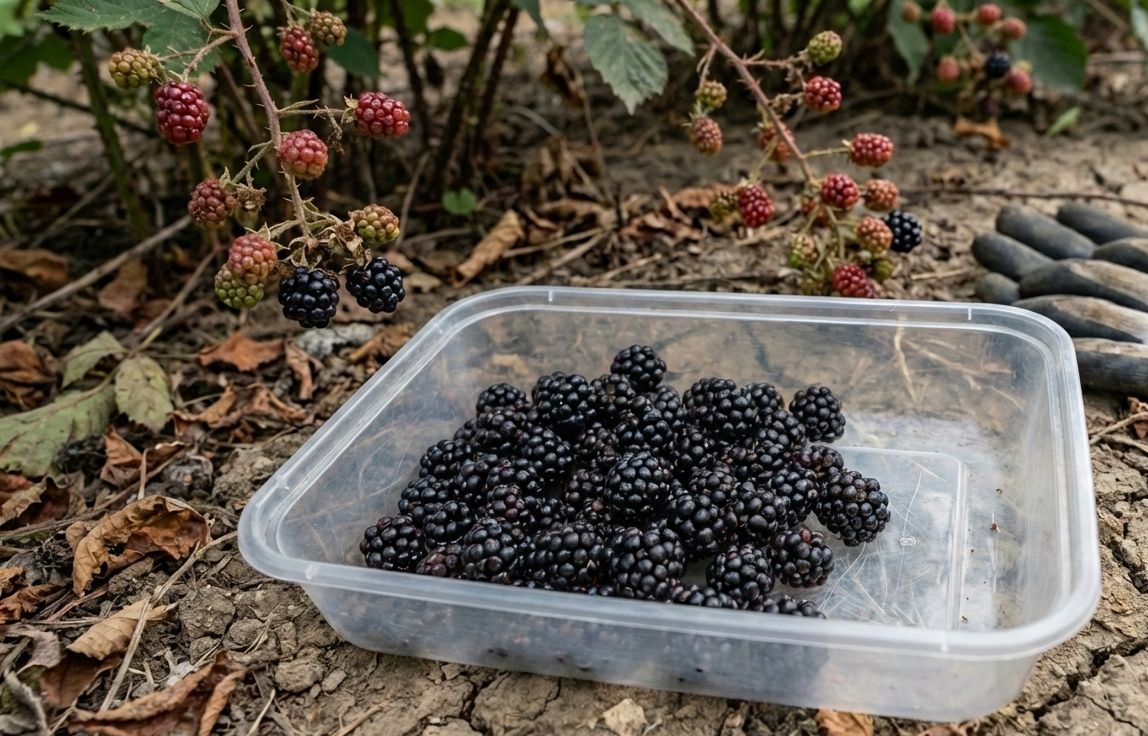
Use shallow containers to avoid crushing
For a detailed timeline of what to expect, see Blackberry Growth Stages: What to Expect Year by Year.
What Are the Most Common Problems?
Blackberries are generally robust, but a few issues affect Santa Cruz County gardeners:
Spotted Wing Drosophila (SWD): This invasive fruit fly lays eggs in ripening fruit. Early-ripening varieties and prompt harvesting help. See our guide to Common Garden Pests in Santa Cruz County.
Fungal diseases: Powdery mildew, cane diseases, and fruit rots can occur, especially in foggy coastal areas. Good air circulation, drip irrigation, and sanitation help prevent problems.
Red berry mite: UC ANR describes this pest that causes parts of the berry to remain red and hard at harvest. Lime sulfur spray in early spring provides control.
Phytophthora root rot: Common in poorly drained soils. Plant in raised beds and avoid overwatering.
For complete troubleshooting, see Blackberry Problems: Pests, Diseases, and How to Fix Them.
What Is the Difference Between Blackberries and Other Caneberries?
Wondering whether to grow blackberries, raspberries, or olallieberries? Here's how they compare:
Blackberries:
Most adaptable and forgiving
Handle heat better than raspberries
More variety options (erect, trailing, thornless)
Longer harvest season
Raspberries:
Prefer cooler conditions (excellent for foggy areas)
Lighter flavor, more delicate fruit
Primocane types offer simple management
See our Growing Raspberries guide
Olallieberries:
Most complex, intense flavor
Thrive in coastal fog
Trailing habit requires trellising
THE Central Coast specialty berry
See our Growing Olallieberries guide
Local Resources
Where to buy blackberry plants:
San Lorenzo Garden Center in Santa Cruz (seasonal availability)
Sierra Azul Nursery in Watsonville (call ahead)
GrowOrganic/Peaceful Valley (ships bare-root plants)
Local nurseries during bare-root season (December through February)
Local expertise:
UC Master Gardeners of Monterey and Santa Cruz Counties offer free gardening advice
UCSC Farm and Garden sometimes holds caneberry workshops
For more information:
UC ANR Growing Blackberries in California (comprehensive PDF guide)
Frequently Asked Questions
What's the easiest blackberry to grow in Santa Cruz County?
Thornless erect varieties like Triple Crown, Ouachita, or Natchez are the easiest for beginners. They produce well with minimal trellising, don't have painful thorns, and offer good disease resistance. Triple Crown is particularly popular for its excellent flavor and manageable growth habit.
When is blackberry season in Santa Cruz?
Most blackberries ripen from June through August in Santa Cruz County, with peak harvest in July. Early varieties like Natchez start in June, while late varieties like Chester and Thornless Evergreen continue into August. Primocane varieties can produce a fall crop into September or October.
Do blackberries need a trellis?
Erect varieties can grow without a trellis if you tip the primocanes at 3 to 4 feet to encourage branching, but all blackberries benefit from some support. Semi-erect and trailing types absolutely require trellising. A simple two-wire trellis makes harvesting, pruning, and pest management much easier.
How long until blackberries produce fruit?
Traditional blackberry varieties fruit in their second year. You'll get your first harvest the summer after planting bare-root plants in winter. Primocane varieties like Prime-Ark Freedom can produce a small fall crop the first year after spring planting.
What's the difference between blackberries and olallieberries?
Olallieberries are a specific trailing blackberry hybrid developed in Oregon, known for their complex, wine-like flavor. They thrive in Santa Cruz County's foggy coastal climate. Standard blackberries are more diverse, including erect, semi-erect, and trailing types with varying flavors and growth habits. See our Olallieberry vs. Blackberry comparison for details.
Can I grow blackberries in containers?
Yes! Compact varieties like Baby Cakes work well in large containers (at least 15 gallons). Even standard varieties can be grown in half-barrels with proper support. Container blackberries need more frequent watering and fertilizing. See Growing Blackberries in Containers for complete guidance.
How do I keep blackberries from spreading?
Erect and semi-erect varieties spread less aggressively than trailing types. Remove any suckers that appear outside your desired planting area. Root barriers can help contain spreading. Avoid planting trailing varieties unless you're prepared to manage their vigorous growth.
Why are my blackberries small or dry?
Small, seedy berries usually indicate water stress during fruit development. Berries that stay partially red may have red berry mite damage. Ensure consistent watering (1 to 2 inches per week) during fruiting and consider lime sulfur spray in spring if red berry mite is a recurring problem.
What Downloadable Guides Are Available?
For quick reference, download these PDF guides:
Seasonal Planting Calendar: When to plant blackberries and other crops by month
Garden Troubleshooting Guide: Quick fixes for common problems including pest identification
Companion Planting Guide: What to plant near your berry patch
Gopher Control Guide: Essential for Santa Cruz County gardeners (gophers love berry roots)
Blackberries are one of the most rewarding fruits you can grow in Santa Cruz County. Whether you choose an easy-care thornless erect variety for your first attempt or take on trailing types for maximum flavor, you'll find blackberries are forgiving, productive, and well-suited to our climate.
Start with one or two plants, give them a sunny spot with decent drainage, provide a simple trellis, and keep them watered through summer. By year two, you'll be harvesting more berries than you can eat fresh, with plenty left for pies, jam, and the freezer.
Related Articles:
Growing Blackberries in Santa Cruz
