

How to Propagate Blackberries and Olallieberries: Complete Guide
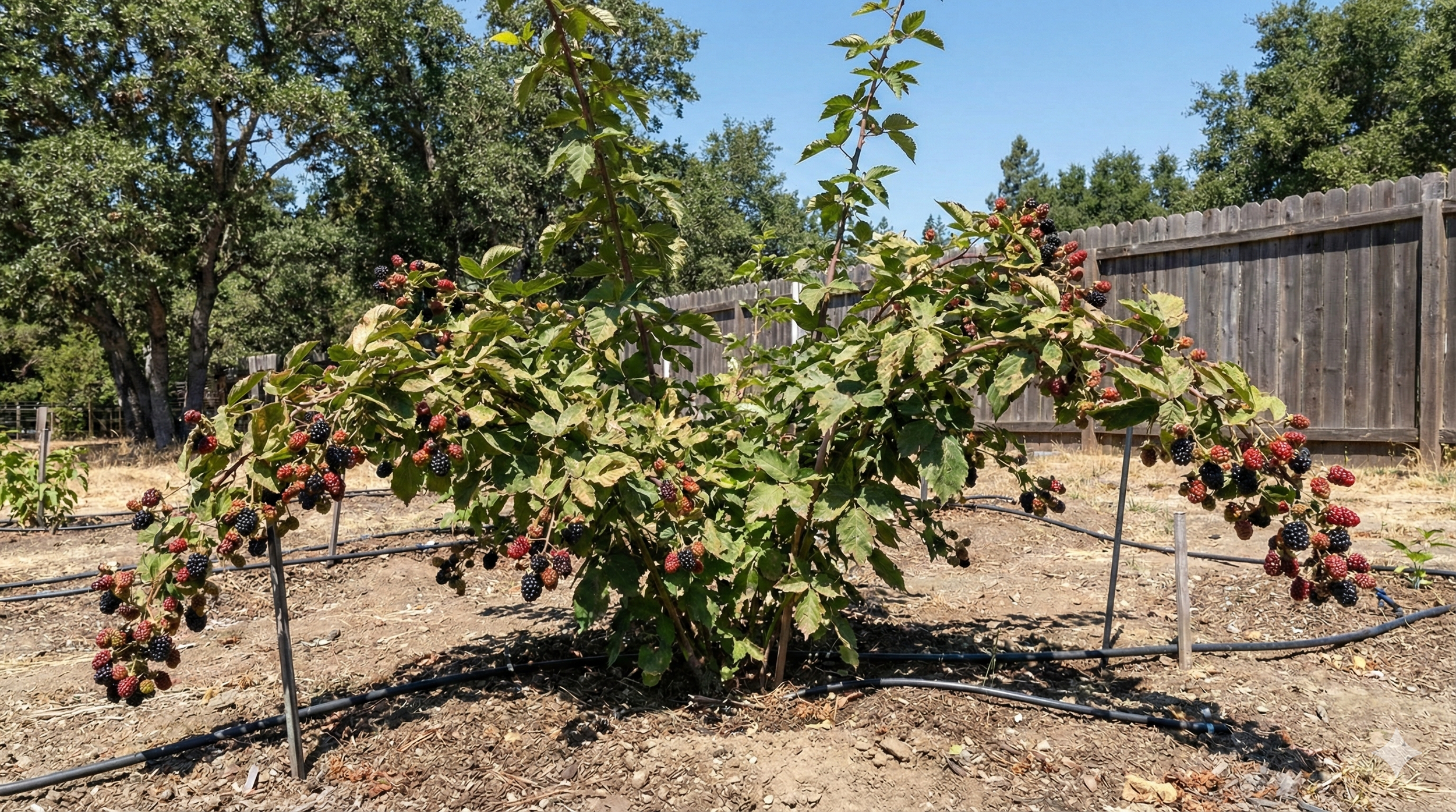
A few of the product links in this guide are affiliate links. If you buy through one, Ambitious Harvest may earn a small commission at no extra cost to you, which helps keep these guides free. We only point to gear we would use in our own Santa Cruz garden. As an Amazon Associate, we earn from qualifying purchases. Read our full disclosure.
One healthy blackberry or olallieberry plant can become five, ten, or even more with simple propagation techniques. The best part? You don't need expensive equipment, rooting hormones, or greenhouse conditions. Blackberries have been cloning themselves in the wild for millennia, and home gardeners can harness those same natural tendencies.
Whether you want to expand your olallieberry row, share plants with neighbors, or replace aging canes with vigorous new stock, this guide covers every practical propagation method for trailing and erect blackberries. We'll focus especially on tip layering, the easiest and most reliable technique for trailing types like olallieberries, while also covering suckers, root cuttings, and stem cuttings for different blackberry growth habits.
One important caveat before you start: propagating from a neighbor's patch or unknown sources can introduce root rot organisms and viruses into your garden. Always start with healthy, disease-free plants, and only propagate from vigorous stock showing no signs of disease.
Propagation Methods Overview: Which Works Best?
Different blackberry types respond best to different propagation methods. Understanding your plant's growth habit helps you choose the right approach.
University and extension guides list the main propagation methods for blackberries as:
Tip layering (best for trailing types)
Simple and serpentine layering (good for trailing types)
Root suckers (best for erect and semi-erect types)
Root cuttings (works for most types)
Stem/cane cuttings (less reliable, but possible)
Matching Method to Plant Type
Trailing blackberries and olallieberries: Trailing cultivars produce fewer root suckers and are most often propagated by tip layering, where the cane tip is buried and develops its own roots. This is the go-to method for olallieberries and other trailing varieties like Marion and Boysen.
Erect blackberries (Navaho, Ouachita, Prime-Ark types): These spread naturally by sending up root suckers, making sucker division the easiest propagation method. Root cuttings also work well.
Semi-erect blackberries (Triple Crown, Chester): Can be propagated by either tip layering or suckers, depending on the plant's growth pattern.
Tip Layering: The Best Method for Trailing Blackberries and Olallieberries
If you grow olallieberries or other trailing blackberries, tip layering should be your primary propagation method. It's simple, highly reliable, and takes advantage of the plant's natural tendency to root wherever cane tips touch moist soil.
Why Tip Layering Works So Well
The RHS describes stem-tip layering and notes that many blackberries and hybrid berries naturally root where tips touch moist soil. You've probably seen this happen accidentally: a cane escapes the trellis, arches to the ground, and suddenly you have a new plant growing where the tip landed.
UC ANR and Oregon State both recommend tip layering as the standard propagation method for trailing blackberries: cover the tips of canes with soil in late summer or early fall, let them root, then cut and transplant the rooted tips the following spring.
Step-by-Step Tip Layering
Timing: Mid to late summer (July-September in Santa Cruz County), when canes are long enough and soil is still warm for root formation.
Step 1: Select healthy canes
Choose vigorous, disease-free primocanes (first-year canes) that have grown long enough to reach the ground easily. Avoid any canes showing signs of disease, unusual coloring, or weak growth.
Step 2: Prepare the rooting spot
Select a location near the mother plant where you want the new plant to root. Loosen the soil and work in some compost if the ground is compacted. Alternatively, sink a pot filled with potting mix into the ground at the rooting spot for easier transplanting later.
Step 3: Bury the cane tip
Bend the cane tip down to the soil about 4-8 inches from the end. Bury the tip 2-4 inches deep, leaving the very end of the tip exposed or just below the surface. Use a U-shaped pin, rock, or small stake to hold the cane in place if it springs back up.
Step 4: Keep moist
Water the buried tip regularly to encourage root formation. The soil should stay consistently moist but not waterlogged. Roots typically form within 6-10 weeks.
Step 5: Check for rooting
In late fall, gently tug on the buried section. Resistance indicates roots have formed. You can carefully dig around the tip to confirm a small root ball has developed.
Step 6: Sever and transplant
Once well-rooted (late fall or the following spring), cut the cane about 6-12 inches above the rooted section, severing the new plant from the mother. Dig up the rooted tip with its root ball intact and transplant to its permanent location, or pot it up to grow on before planting out.
Tip Layering Tips for Success
Don't bury too deep: 2-4 inches is enough; deeper burial can cause rot
Use a pot: Sinking a pot into the ground makes transplanting easier and reduces root disturbance
Layer multiple canes: For more plants, layer several cane tips at once
Mark your layers: Use flags or stakes so you don't accidentally disturb rooting tips
Simple and Serpentine Layering: Multiple Plants from One Cane
If you want several new plants from a single long cane, simple layering and serpentine layering offer more efficiency than tip layering alone.
Simple Layering
Simple layering buries a section of stem while leaving the tip exposed. Roots and shoots form at the buried section, creating a new plant.
How to do it:
Select a long, flexible cane
About 12-18 inches from the tip, bend the cane down to the ground
Dig a shallow trench (2-3 inches deep)
Bury a 6-8 inch section of the cane, leaving the tip exposed above ground
Pin the buried section in place with landscape staples or rocks
Keep moist until roots form
Once rooted, sever behind the buried section and transplant
Serpentine Layering
Serpentine layering alternates buried and exposed sections along a long cane, yielding multiple rooted plants from a single cane.
How to do it:
Select a very long, flexible trailing cane
Weave the cane in and out of the soil along its length
Bury 6-8 inch sections at regular intervals, leaving 6-8 inch sections exposed between them
Pin each buried section in place
Keep all buried sections moist
Once roots and new shoots form at each buried node, cut between them to create individual plants
When to use serpentine layering:
When you need many plants quickly
When you have very long trailing canes
When establishing a hedge or long row
Gardeners report that serpentine layering is useful for generating multiple plants, though it requires more space and careful cutting once roots form.
Propagating Erect and Semi-Erect Blackberries by Suckers
If you grow erect blackberry varieties (Navaho, Ouachita, Arapaho, Prime-Ark types) or semi-erect types (Triple Crown, Chester), root suckers are your easiest propagation method.
Why Suckers Work for Erect Types
Erect and semi-erect blackberries often spread by sending up root suckers; these suckers can be dug and transplanted to start new plantings. Unlike trailing types, erect blackberries produce abundant suckers from their spreading root systems.
Oregon State explains that erect cultivars are usually propagated by digging and transplanting suckers or by root cuttings taken from healthy plants.
Step-by-Step Sucker Propagation
Timing: Late winter to early spring, while plants are dormant
Step 1: Identify healthy suckers
Look for vigorous shoots emerging 6-24 inches from the mother plant. Choose suckers that are at least pencil-thick with healthy foliage (or healthy dormant buds in winter).
Step 2: Dig the sucker
Use a sharp spade to dig around the sucker, going deep enough to capture a portion of the connecting root. Aim to get 4-6 inches of root attached to the sucker.
Step 3: Sever from mother plant
Cut the connecting root cleanly with your spade or pruners, separating the sucker from the parent plant.
Step 4: Keep roots moist
Wrap roots in damp newspaper or burlap, or place in a bucket with a few inches of water. Don't let roots dry out before transplanting.
Step 5: Transplant immediately
Plant the sucker in its new location at the same depth it was growing, in well-prepared soil with good drainage. Water thoroughly and mulch.
Managing Unwanted Suckers
Erect blackberries can spread aggressively via suckers. If you don't want new plants:
Mow or hoe suckers as they appear
Install root barriers around the planting area
Remove suckers when small (easier than dealing with established plants)
Root Cuttings: A More Advanced Method
Root cuttings work for most blackberry types and are useful when you want many plants but tip layering isn't practical.
When to Use Root Cuttings
Erect varieties that don't tip-layer well
When you need many plants from limited stock
During dormant season when other methods aren't available
Step-by-Step Root Cuttings
Timing: Late winter (January-February in Santa Cruz County), while plants are fully dormant
Step 1: Expose roots
Carefully dig around the base of a healthy, mature blackberry plant to expose some of the larger roots.
Step 2: Select and cut root sections
Choose roots that are pencil-thick (about 1/4 to 1/2 inch diameter). Cut sections 3-6 inches long. Make a straight cut at the end that was closest to the plant (top) and an angled cut at the far end (bottom) so you remember which end is up.
Step 3: Store or plant
Root cuttings can be planted immediately or stored in damp peat moss in the refrigerator for a few weeks.
Step 4: Plant the cuttings
Horizontal method: Lay cuttings horizontally in a tray or nursery bed, covered with 1-2 inches of potting mix
Vertical method: Plant cuttings vertically with the straight-cut (top) end just at or slightly below the soil surface
Step 5: Provide proper conditions
Keep cuttings moist but not waterlogged. Maintain temperatures around 55-65°F if possible. Shoots should emerge in 4-8 weeks.
Step 6: Transplant
Once cuttings have developed shoots and a good root system, transplant to their permanent location.
Stem (Cane) Cuttings: Possible but Less Reliable
Stem cuttings are the least reliable propagation method for blackberries, but some gardeners use them successfully.
When Stem Cuttings Make Sense
When you can't tip-layer (plant is too small, wrong season)
When you want to try propagating without disturbing the mother plant
As an experiment alongside more reliable methods
How to Take Stem Cuttings
Many home-scale guides describe propagating blackberries by taking 8-12 inch pieces of vegetative cane and rooting them in pots with well-draining mix and rooting hormone.
Step 1: Select cuttings
Take semi-hardwood cuttings from healthy, disease-free canes in late summer. Choose sections with several nodes (the bumps where leaves attach).
Step 2: Prepare cuttings
Cut 8-12 inch sections. Remove leaves from the lower half of each cutting. Dip the cut end in rooting hormone (optional but helpful).
Step 3: Plant in sterile mix
Insert cuttings into a well-draining propagation mix (perlite and peat, or similar). Bury about half the cutting length.
Step 4: Maintain humidity
Cover with a plastic dome or bag to maintain humidity. Keep in bright, indirect light.
Step 5: Wait for rooting
Check for roots after 6-8 weeks. Gently tug on cuttings; resistance indicates rooting.
Why Tip Layering Is Usually Better
Tip layering and suckers are generally more reliable for home gardeners; cane cuttings require more careful moisture and disease management. If you're new to propagation, start with tip layering before attempting stem cuttings.
Timing and Climate Considerations for Santa Cruz County
Best Timing for Each Method
Tip layering: UC ANR and Oregon State recommend tip layering in late summer or early fall, when canes are long enough and conditions are still warm for root formation. In Santa Cruz County, this means July through September.
A practical layering guide notes that blackberry canes often begin tip layering naturally mid-summer as long arching canes reach the ground; gardeners can harness this timing.
Transplanting rooted layers: Move rooted tips in late fall through early spring (November-February), when plants are dormant and rain provides natural irrigation.
Sucker division: Best in late winter to early spring (January-March), before active growth begins.
Root cuttings: Take during full dormancy (December-February).
Santa Cruz County Considerations
Coastal areas (foggy, mild):
Tip layering can extend into early fall; mild temperatures support root development
Watch for excessive moisture around rooting tips in wet winters
Transplant in fall to take advantage of winter rains
Inland areas (warmer, drier):
Start tip layering earlier (July-August) before soil dries out
Keep rooting tips well-watered
Consider fall transplanting to establish roots before summer heat
Drainage concerns: Very wet winter soils can rot new roots on freshly transplanted or layered plants. Ensure good drainage in propagation areas, and consider raised beds for new plantings, especially in heavy clay soils.
Disease Prevention: The Most Important Step
Propagation multiplies plants, but it also multiplies any diseases present in the parent stock. This section is critical.
Why Disease-Free Stock Matters
The MSU raspberry and blackberry guide stresses that viruses are easily spread via vegetative propagation (root suckers, tip layers, etc.), and the most important step in managing viral diseases is to establish plantings from virus-tested stock.
UC ANR warns that taking plants from neighbors' patches can bring root rot fungi and viruses into an otherwise clean garden. It advises buying certified disease-free plants for new plantings.
Signs of Healthy vs. Unhealthy Plants
Only propagate from plants showing:
Vigorous, consistent growth
Normal leaf color and size
Strong fruit production
No stunting or dieback
Never propagate from plants with:
Yellow or mottled leaves (possible virus)
Stunted growth
Crumbly fruit
Chronic cane dieback
Crown gall (lumpy growths at soil line)
Orange rust (orange spores on leaf undersides)
Tool Sanitation
Clean pruning tools before and between plants:
Wipe with 70% rubbing alcohol, or
Dip in 10% bleach solution (1 part bleach to 9 parts water), or
Use commercial disinfectant
This prevents spreading any pathogens from plant to plant.
When to Buy New Stock Instead
Consider purchasing certified disease-free plants from reputable nurseries when:
Starting a brand-new planting
Existing plants show any disease symptoms
You don't know the health history of available plants
Expanding significantly beyond a few new plants
Use propagation primarily to fill gaps in established, healthy plantings rather than to create entirely new beds from questionable stock.
Containment: Preventing Unwanted Spread
Blackberries are vigorous. The same traits that make them easy to propagate can turn them into garden thugs if not managed.
The Accidental Thicket Problem
Practical layering articles note that if you don't manage canes, blackberries can tip-layer themselves into an impenetrable thicket as every cane touching soil roots.
Every cane tip that touches the ground can potentially become a new plant. In a single season, an unmanaged trailing blackberry can multiply dramatically.
Preventing Unwanted Propagation
Keep canes on the trellis: Train canes up and along your support structure. Don't let them arch over and touch the ground unless you want new plants there.
Remove unwanted rooted tips: Check around your plants monthly during the growing season. Any cane tips that have rooted in unwanted locations should be dug up and removed (or transplanted somewhere you do want them).
Manage suckers (erect types): Mow or hoe suckers that emerge outside your desired planting area. Do this when they're small, before they establish.
Plan your propagation: Decide in advance where you want new plants. Layer tips intentionally into those spots, and prevent rooting elsewhere.
Avoiding the "Spreading Everywhere" Reputation
Blackberries have a reputation for taking over gardens, but this is usually a management issue, not an inevitability. With regular attention to:
Keeping canes trained on supports
Removing unwanted suckers and rooted tips
Propagating intentionally rather than accidentally
You can maintain productive, contained blackberry plantings that don't become a nuisance.
Where Olallieberries Fit In
Everything in this guide applies to olallieberries, with a few specific notes.
Olallieberries Are Trailing Blackberries
Olallieberries are 'Olallie' trailing blackberries, so they follow trailing blackberry propagation behavior: fewer root suckers and heavy reliance on tip layering for new plants.
Tip Layering Is Your Best Bet
For olallieberries specifically:
Primary method: Tip layering (highly reliable)
Secondary method: Simple or serpentine layering
Less useful: Suckers (olallieberries don't produce many)
Possible but fussy: Stem cuttings
Watch for Accidental Propagation
Trailing canes can easily reach the ground and root if not kept on a trellis, so olallieberry growers often see "bonus" plants where cane tips touch soil.
If you want to expand your olallieberry row in Santa Cruz County:
Use intentional tip layering in late summer
Plan spacing before you layer (olallieberries need 3-4 feet between plants)
Transplant rooted tips in fall or early spring
If you don't want more plants:
Keep all canes on the trellis
Check for and remove any cane tips that have rooted accidentally
Be especially vigilant near fences, pathways, or property lines
Frequently Asked Questions
What's the easiest way to propagate blackberries?
For trailing types (including olallieberries): tip layering. For erect types: digging and transplanting suckers. Both methods take advantage of what the plants naturally want to do.
When is the best time to propagate blackberries?
Tip layering: mid-summer to early fall. Sucker division and root cuttings: late winter to early spring during dormancy. Transplanting rooted layers: late fall through early spring.
How long does tip layering take?
Roots typically form within 6-10 weeks after burying the cane tip. You can transplant the new plant in late fall or the following spring once a good root system has developed.
Can I propagate thornless blackberries?
Yes! All propagation methods work for thornless varieties. Tip layering is especially nice with thornless types since you don't get scratched working with the canes.
Should I use rooting hormone?
For tip layering and sucker division, rooting hormone is unnecessary. The plants root readily without it. For stem cuttings, rooting hormone can improve success rates but isn't required.
Can I propagate blackberries from store-bought fruit?
No. Blackberries don't grow true from seed, and the seeds in store-bought fruit won't produce plants like the parent. You need vegetative propagation (layering, cuttings, suckers) from an existing plant.
My neighbor offered me some blackberry suckers. Should I take them?
Be cautious. While generous, this offer carries disease risk. If you don't know the health history of the parent plants, you could introduce viruses or root rot into your garden. If the plants look healthy and have been productive for years with no problems, the risk is lower, but purchasing certified disease-free stock is safer for establishing new plantings.
How do I know if my blackberry has a virus?
Common signs include: mottled or yellowing leaves, stunted growth, crumbly or poorly-formed fruit, and declining vigor over time. Viral infections cannot be cured; infected plants should be removed and destroyed (not composted), and you should not propagate from them.
How many new plants can I get from one blackberry?
With tip layering, you can root one new plant per cane tip. A mature trailing blackberry might have 6-10 suitable canes, so potentially 6-10 new plants per year. Serpentine layering can yield multiple plants per cane. Erect types can produce numerous suckers annually.
Start Multiplying Your Blackberries
Propagating blackberries and olallieberries is one of the most rewarding skills a home gardener can develop. With tip layering, you can turn one healthy plant into a productive row over just a few seasons, all without spending money on new nursery stock.
Start simple: this summer, select two or three healthy trailing canes and bury their tips. By next spring, you'll have new plants ready to transplant. Once you've experienced how easy and reliable tip layering is, you'll understand why blackberries have spread so successfully across every temperate region of the world.
Just remember the two cardinal rules: only propagate from healthy, disease-free plants, and manage your plantings to prevent unwanted spread. Follow those guidelines, and you'll enjoy abundant blackberries and olallieberries for years to come, with plenty to share.
Free Gardening Resources
Know Your Microclimate Worksheet: Understand your specific Santa Cruz County growing conditions
Seasonal Planting Calendar: Month-by-month guidance for Santa Cruz County
Water-Wise Gardening Guide: Strategies for managing water in our Mediterranean climate
Related Articles:
How to Propagate Blackberries and Olallieberries
