

8 Blackberry Varieties Proven in Santa Cruz County Gardens
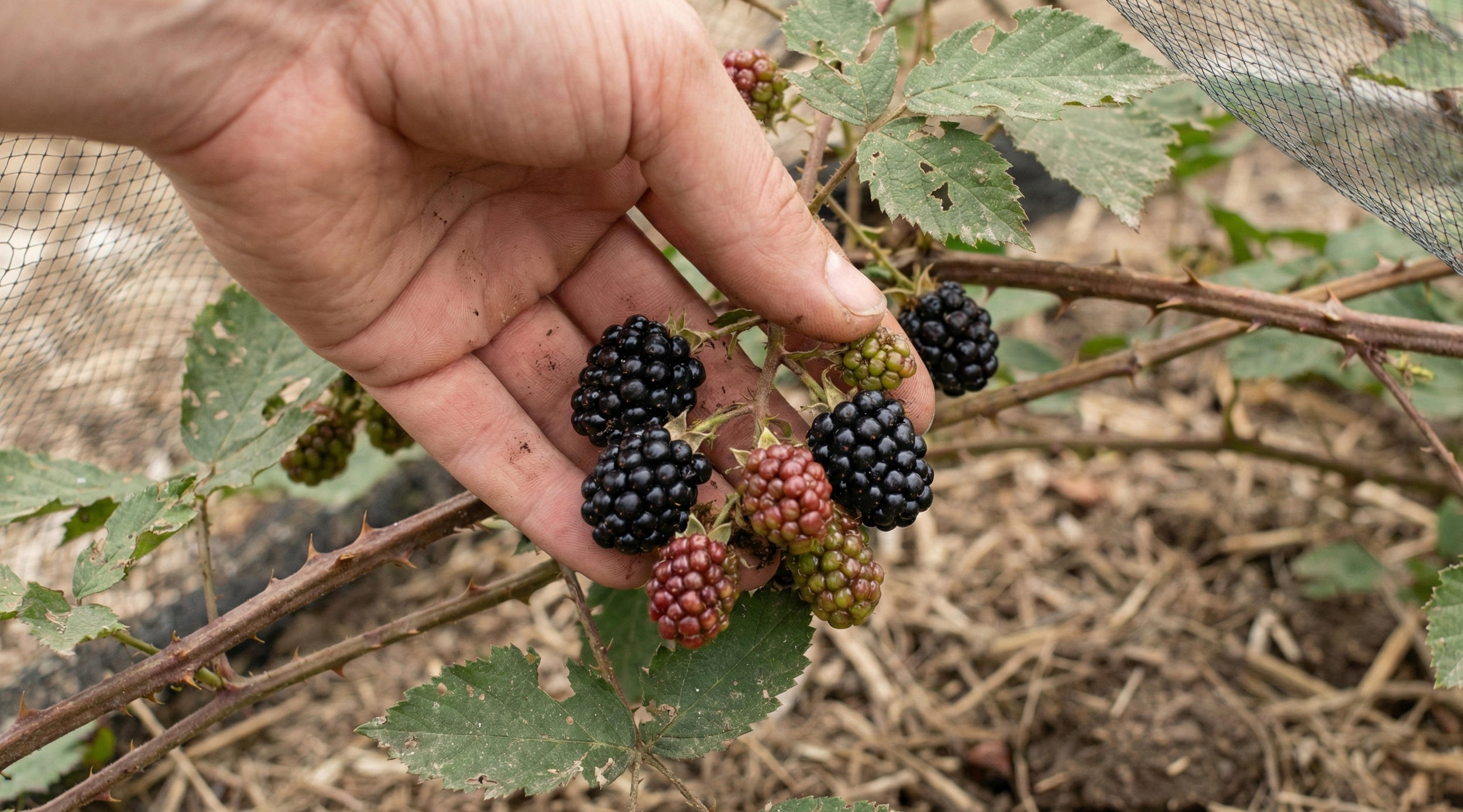
The best blackberry varieties for Santa Cruz County are Triple Crown, Chester, Ouachita, and Prime-Ark Freedom, all of which produce reliably in our mild coastal climate. According to Oregon State University Extension, semierect blackberries are thornless and generally yield more than trailing or erect types, though their canes are vigorous and need a trellis. In Santa Cruz County's 400 to 800 chill hour range, all common blackberry varieties receive sufficient winter chilling for full fruit production.
This guide breaks down the best varieties by category, with clear assessments of each one's strengths and trade-offs. Beginner or seasoned grower, you will find options that work for our local conditions.
According to UC Agriculture and Natural Resources, trailing blackberry varieties like Olallie and Marion thrive in cooler coastal climates, while erect varieties perform well in warmer inland areas throughout California.
How Do You Choose: Key Factors for Santa Cruz County?
Before we get to specific varieties, consider these factors that affect performance in our area:
Growth Habit
According to Oregon State Extension, blackberries fall into three main growth categories:
Erect: Stiff, upright canes (5 to 8 feet) that can often stand without support. Easiest to manage.
Semi-erect: Arching canes (8 to 12 feet) that need trellising. Very productive.
Trailing: Long, flexible canes (10 to 20+ feet) that must be trained on a trellis. Often the best flavor but most work.
For Santa Cruz County beginners, erect and semi-erect varieties offer the best balance of ease and reward.
Thornless vs. Thorny
GrowOrganic's variety guide notes that modern thornless varieties can match or exceed thorny types for yield and quality. Unless you're specifically seeking a thorny trailing variety for flavor, thornless is the way to go for home gardens.
Ripening Season
Santa Cruz County's blackberry season typically runs June through August:
Early: Late June (Natchez, Arapaho)
Mid-season: July (Ouachita, Triple Crown, Marionberry)
Late: August (Chester, Thornless Evergreen)
Fall (primocane types): September through October
Planting varieties from different seasons extends your harvest window.
Climate Fit
Most blackberries need 200 to 700 chill hours, well within what Santa Cruz County accumulates. Heat tolerance matters more in our warmest inland areas, while trailing types perform best in cooler coastal zones.
What Are the Best Thornless Erect Varieties: Best for Beginners?
These varieties produce upright canes that can grow without a trellis (though one helps). They're the easiest blackberries to manage and a perfect starting point.
Ouachita
The reliable all-rounder
Ouachita (pronounced WAH-shi-tah) is one of the best all-purpose blackberries for home gardens. Released by the University of Arkansas, it combines ease of care with excellent disease resistance and good flavor.
According to Stark Bro's, Ouachita is heat-tolerant and performs well across many U.S. regions, including western states. Virginia Tech's variety study found it had high Brix (sugar) readings, indicating good sweetness.
Characteristics:
Type: Erect, thornless
Ripens: Early to mid-season (June to early July in Santa Cruz)
Berry size: Medium (5 to 6 grams)
Flavor: Sweet-tart, balanced
Trellis: Optional (self-supporting if tipped at 42 inches)
Best for: Beginners, warm inland areas, disease-prone sites
Santa Cruz notes: Excellent choice for Scotts Valley, Boulder Creek, and other inland locations. Disease resistance to rosette and other common problems is a major advantage.
Natchez
Earliest thornless variety
If you want blackberries as early as possible, Natchez delivers. It's typically the first thornless variety to ripen, often starting in late June in Santa Cruz County.
Ohio State South Centers notes that Natchez produces very large berries with excellent fruit quality. GrowOrganic highlights its disease resistance and glossy berries.
Characteristics:
Type: Semi-erect, thornless
Ripens: Early (late June)
Berry size: Large (6 to 8 grams)
Flavor: Sweet with mild tartness
Trellis: Helpful (semi-erect habit benefits from support)
Best for: Early harvest, warm locations, fresh eating
Santa Cruz notes: Great for warmer inland microclimates. The early harvest helps avoid peak spotted wing drosophila pressure later in summer.
Apache
Largest fruit on erect plants
Apache produces some of the largest berries you'll find on an erect thornless plant. According to Indiana Berry, fruit averages around 10 grams, significantly larger than most varieties.
Characteristics:
Type: Erect, thornless
Ripens: Mid-season (July)
Berry size: Very large (8 to 10 grams)
Flavor: Good, firm
Trellis: Optional (very erect growth)
Best for: Those who want large berries, fresh eating, farmers markets
Santa Cruz notes: The large, attractive berries make excellent fresh eating. More erect than other varieties, reducing trellis needs.
Arapaho
Small seeds, great for jam
Arapaho ripens early and produces medium-sized berries notable for their particularly small seeds. According to GrowOrganic, this makes it an excellent choice for jam and preserves.
Characteristics:
Type: Erect, thornless
Ripens: Early (June to early July)
Berry size: Medium (5 to 6 grams)
Flavor: Good, balanced
Trellis: Optional
Best for: Jam makers, early harvest, compact spaces
Santa Cruz notes: The early ripening and small seeds make this ideal for preserving. Compact growth suits smaller gardens.
Navaho
Highest sugar content
Navaho consistently scores among the sweetest blackberries in taste tests. Virginia Tech's study recorded Brix readings of 10.3 to 12.0, indicating excellent sweetness.
Characteristics:
Type: Erect, thornless
Ripens: Mid-season (July)
Berry size: Medium (5 grams)
Flavor: Very sweet, excellent
Trellis: Optional
Best for: Fresh eating, those who prefer sweet over tart
Santa Cruz notes: Outstanding for fresh eating. Some susceptibility to orange rust, so site selection and sanitation matter. Plant in areas with good air circulation.
What Are the Best Semi-Erect Varieties: Maximum Yield?
Semi-erect blackberries produce arching canes that need support but reward you with exceptional productivity. These are the workhorses of the blackberry world.
Triple Crown
Our top recommendation for most Santa Cruz gardeners
If you can only grow one blackberry variety, make it Triple Crown. This USDA release combines excellent flavor, high yields, thornless canes, and manageable growth into one outstanding package.
According to Crop Circle Farms, Triple Crown is highly productive and disease resistant, with very large, sweet, and juicy berries. Ohio State notes it produces firm fruit with higher soluble solids than Chester.
Characteristics:
Type: Semi-erect, thornless
Ripens: Mid to late season (July)
Berry size: Very large (7+ grams)
Flavor: Excellent, sweet with complexity
Trellis: Required
Best for: Most home gardeners, those wanting the best overall variety
Santa Cruz notes: Performs well throughout the county. The combination of flavor, yield, and ease makes it hard to beat. Invest in a good trellis and you'll be harvesting for years.
Chester
Latest thornless, extends the season
Chester ripens about 10 days after most other varieties, extending your blackberry season into August. According to Virginia Tech, it was the highest-yielding variety in their multi-location study.
GrowOrganic notes Chester's excellent resistance to cane blight, making it particularly dependable.
Characteristics:
Type: Semi-erect, thornless
Ripens: Late (August)
Berry size: Medium to large (5 to 7 grams)
Flavor: Good, slightly tart
Trellis: Required
Best for: Extending harvest season, heavy production, cooler areas
Santa Cruz notes: The late ripening is perfect for coastal gardens where fog keeps temperatures moderate into late summer. Pairs well with an early variety like Natchez for a long harvest window.
Hull
Disease resistant workhorse
Hull produces reliable crops of medium-sized berries with good flavor and strong disease resistance. It's been a commercial standard for decades.
Characteristics:
Type: Semi-erect, thornless
Ripens: Mid-season (July)
Berry size: Medium (5 to 6 grams)
Flavor: Good, sweet
Trellis: Required
Best for: Reliable production, disease-prone areas
Santa Cruz notes: A solid performer if you want something proven. Less exciting than Triple Crown but very dependable.
What Are the Best Trailing Varieties: Best Flavor?
Trailing blackberries require more work (trellising, training, managing thorns) but reward you with the most complex, intensely flavored berries. These are the choice of serious berry lovers.
Marionberry
The gold standard for flavor
Ask any Pacific Northwest berry grower about the best-tasting blackberry and they'll say Marionberry. Developed at Oregon State University, it's the benchmark against which all others are judged.
According to the Willamette Heritage Center, Marionberry was released in 1956 and produces flavor superior to Boysenberry or Evergreen blackberries. Oregon State Extension notes it produces fruit with small seeds and excellent flavor and aroma.
Characteristics:
Type: Trailing, thorny
Ripens: Mid-season (July)
Berry size: Medium to large
Flavor: Exceptional, complex, earthy-sweet
Trellis: Required (canes reach 15 to 20 feet)
Best for: Flavor seekers, pies, jam, processing
Santa Cruz notes: Worth the extra work for the flavor alone. Best in coastal and cooler areas where the trailing habit and cooler temps produce optimal fruit. Not as heat-tolerant as erect types.
Growing tip: Oregon State notes that trailing types are least winter cold hardy and heat tolerant, best adapted to the Willamette Valley and similar coastal climates. Santa Cruz County's coast fits this description well.
Boysenberry
Intense, complex, soft
Boysenberries produce large, soft, intensely flavored berries with wine-like complexity. They're a cross between blackberry, raspberry, and loganberry, creating a unique flavor profile.
According to Oregon State Extension, Boysenberry is classified as a raspberry-blackberry hybrid with trailing growth. Berries Unlimited notes the berries are too soft for commercial shipping, making home growing the only way to experience them at peak quality.
Characteristics:
Type: Trailing, thorny (thornless versions exist but may still produce some thorns)
Ripens: Mid-season (June to July)
Berry size: Very large
Flavor: Exceptional, intense, complex
Trellis: Required
Best for: Jam, preserves, immediate eating, flavor enthusiasts
Santa Cruz notes: The soft berries don't store well, so plan to use them immediately or freeze them. Perfect for jam makers who want intense flavor. Thornless versions are available but may still produce some thorns or thorny suckers.
Thornless Evergreen
Thornless trailing option
If you want trailing-type flavor without the thorns, Thornless Evergreen is your best option. It produces smaller, sweet berries late in the season.
According to Oregon State Extension, the Evergreen blackberry (Rubus laciniatus) has lacy leaves and produces small, sweet fruit in midsummer. The thornless mutation makes it far more manageable than thorny trailing types.
Characteristics:
Type: Trailing, thornless
Ripens: Late (August)
Berry size: Small to medium
Flavor: Sweet, mild
Trellis: Required
Best for: Thornless trailing option, late harvest, manageable trailing growth
Santa Cruz notes: A good compromise if you want trailing-type berries without fighting thorns. The late ripening extends the season well into August.
Olallieberry
The Central Coast specialty
We'd be remiss not to mention our local specialty. Olallieberries are technically a trailing blackberry hybrid that thrives in Santa Cruz County's foggy coastal climate better than almost anywhere else.
For complete information, see our dedicated guide: Growing Olallieberries in Santa Cruz County
Characteristics:
Type: Trailing, thorny
Ripens: Early to mid-season (May to June)
Berry size: Medium to large
Flavor: Exceptional, complex, wine-like
Trellis: Required
Best for: Local flavor, pies, the iconic Santa Cruz berry experience
Santa Cruz notes: If you live in a coastal microclimate, olallieberries may outperform standard blackberries. Visit Gizdich Ranch or Swanton Berry Farm during harvest to taste what's possible.
What Are the Best Primocane Varieties: Fruit the First Year?
Primocane blackberries fruit on first-year canes, offering quick results and simplified pruning. You can cut them to the ground each winter and still get a crop.
Prime-Ark Freedom
First thornless primocane blackberry
Prime-Ark Freedom is a game-changer: the world's first thornless primocane-fruiting blackberry. According to Ohio State, it produces very large fruits, larger than Natchez, with excellent flavor.
Indiana Berry notes it can fruit on both first and second-year canes in Zone 6 or warmer, potentially providing two crops per season.
Characteristics:
Type: Erect, thornless, primocane-fruiting
Ripens: Fall (September to October on primocanes)
Berry size: Very large (10+ grams)
Flavor: Good
Trellis: Helpful
Best for: Quick results, fall harvest, simple pruning
Santa Cruz notes: The fall crop may avoid spotted wing drosophila pressure that peaks in mid-summer. In warm inland areas, the floricane crop (early summer) plus primocane crop (fall) can provide an extended harvest. Coastal areas may not have enough heat for the fall crop to fully ripen.
Prime-Ark 45
Original primocane variety
Prime-Ark 45 was one of the first primocane blackberries released. It's thorny but very productive.
Prime-Ark 45 produces large fruit and good flavor, though the NC State Southeast Regional Caneberry Production Guide notes the primocane crop is variable in regions where heat impairs flower development.
Characteristics:
Type: Erect, thorny, primocane-fruiting
Ripens: Fall (late September to October)
Berry size: Large (6+ grams)
Flavor: Good, firm
Trellis: Helpful
Best for: Maximum primocane yield, those who don't mind thorns
Santa Cruz notes: More productive than Prime-Ark Freedom but thorny. Best for warm inland areas where the fall crop has time to ripen fully.
Prime-Ark Traveler
Thornless with good shipping quality
Prime-Ark Traveler is another thornless primocane option with slightly firmer fruit than Freedom.
Characteristics:
Type: Erect, thornless, primocane-fruiting
Ripens: Fall
Berry size: Large
Flavor: Good
Trellis: Helpful
Best for: Thornless primocane option, firmer fruit
Santa Cruz notes: An alternative to Prime-Ark Freedom if you want firmer berries.
What Are the Best Compact Varieties: For Containers and Small Spaces?
Limited space? These varieties work well in containers or tight spots.
Baby Cakes
Dwarf container variety
Baby Cakes is a compact blackberry bred specifically for containers and small spaces. It produces full-sized berries on plants that stay 3 to 4 feet tall.
Characteristics:
Type: Compact/dwarf, thornless
Ripens: Mid-season
Berry size: Full-sized
Flavor: Good
Trellis: Not needed
Best for: Containers, patios, very small spaces
Santa Cruz notes: Perfect for apartment balconies or small patios. Needs a container of at least 10 to 15 gallons with good drainage.
For complete container growing guidance, see Growing Blackberries in Containers.
What Are the Best Variety Recommendations by Situation?
Where Can You Buy Blackberry Plants?
Local nurseries (seasonal availability):
San Lorenzo Garden Center in Santa Cruz
Sierra Azul Nursery in Watsonville
Mail-order sources:
GrowOrganic/Peaceful Valley (organic options)
Stark Bro's (wide selection)
Indiana Berry (commercial-quality plants)
One Green World (unusual varieties)
Best time to buy: December through February for bare-root plants. Container plants available year-round but selection is best in spring.
Frequently Asked Questions
What's the best thornless blackberry for Santa Cruz County?
Triple Crown is the best all-around thornless blackberry for most Santa Cruz County gardeners. It combines excellent flavor, high yields, and manageable growth. For warmer inland areas, Ouachita is more heat-tolerant. For the earliest harvest, choose Natchez.
Which blackberry has the best flavor?
Among erect and semi-erect types, Triple Crown and Navaho consistently score highest for flavor. Among trailing types, Marionberry is widely considered the best-tasting blackberry available. Olallieberry offers similar quality and thrives in our coastal climate.
Can I grow thornless Marionberries?
Unfortunately, no true thornless Marionberry exists. Thornless Evergreen is the closest thornless option for a trailing-type blackberry. USDA breeders have been working on thornless Marionberry alternatives, but none have been released commercially that match Marion's flavor.
What's the difference between primocane and regular blackberries?
Regular (floricane) blackberries fruit on second-year canes, meaning you wait a year after planting for your first harvest. Primocane blackberries fruit on first-year canes, giving you berries the same season you plant. Primocane types also offer simpler pruning since you can cut all canes to the ground each winter.
How many blackberry plants do I need?
For a family of four, 6 to 10 plants provide plenty for fresh eating with some left for preserving. A single 15-foot row of productive semi-erect varieties like Triple Crown can yield 10 to 15 pounds per plant at maturity.
Do I need two varieties for pollination?
No. All the blackberry varieties mentioned here are self-pollinating. You'll get fruit with a single plant. However, planting multiple varieties extends your harvest season and provides variety in flavor and use.
Which variety is most disease resistant?
Ouachita has excellent resistance to rosette (double blossom) disease and good overall disease tolerance. Chester resists cane blight. Apache and Natchez also have good disease resistance. Avoid Navaho in disease-prone areas, as it's susceptible to orange rust.
Are boysenberries the same as blackberries?
Boysenberries are a hybrid between blackberry, raspberry, and loganberry. They're classified with blackberries and grown the same way, but have a distinct flavor and softer texture. If you love complex berry flavor and don't mind soft fruit, they're worth growing.
Downloadable Guides
For quick reference, download these PDF guides:
Companion Planting Guide: What to plant near your berry patch
Garden Troubleshooting Guide: Quick fixes for common problems
Seasonal Planting Calendar: When to plant blackberries and other crops
The best blackberry variety for your Santa Cruz County garden depends on your priorities. For most gardeners, Triple Crown offers the ideal combination of excellent flavor, high yields, thornless canes, and manageable growth. It's our top recommendation.
If you want the easiest possible start, Ouachita forgives mistakes and handles heat well. For maximum flavor and you're willing to work for it, Marionberry sets the standard. For quick results and fall harvest, Prime-Ark Freedom delivers fruit the first year.
Whatever you choose, blackberries reward consistent care with years of abundant harvests. Start with one or two varieties, learn how they grow, and expand from there.
Related Articles:
Best Blackberry Varieties for Santa Cruz
Blackberry Variety Comparison Chart
| Variety | Type | Thorns | Ripens | Size | Flavor | Yield | Trellis |
|---|---|---|---|---|---|---|---|
| Erect Varieties (Easiest) | |||||||
| Ouachita | Erect | No | Early-Mid | Medium | High | Optional | |
| Natchez | Semi | No | Early | Large | High | Helpful | |
| Apache | Erect | No | Mid | V. Large | High | Optional | |
| Arapaho | Erect | No | Early | Medium | High | Optional | |
| Navaho | Erect | No | Mid | Medium | ★ | Med | Optional |
| Semi-Erect Varieties (Best Yield) | |||||||
| Triple Crown ★ | Semi | No | Mid-Late | V. Large | ★ | V. High | Required |
| Chester | Semi | No | Late | Med-Lg | V. High | Required | |
| Hull | Semi | No | Mid | Medium | High | Required | |
| Trailing Varieties (Best Flavor) | |||||||
| Marionberry ★ | Trail | Yes | Mid | Med-Lg | ★★ | High | Required |
| Boysenberry | Trail | Yes* | Mid | V. Large | ★★ | Med | Required |
| Thornless Evergreen | Trail | No | Late | Small-Med | High | Required | |
| Olallieberry | Trail | Yes | Early-Mid | Med-Lg | ★★ | Med | Required |
| Primocane Varieties (Fruit First Year) | |||||||
| Prime-Ark Freedom | Primo | No | Fall | V. Large | Med-High | Helpful | |
| Prime-Ark 45 | Primo | Yes | Fall | Large | High | Helpful | |
| ★ = Top Pick | *Thornless versions available but may produce some thorns | Flavor bars show relative ratings | |||||||
Which Blackberry Should You Grow?
Find your perfect variety based on your situation
Can't Decide? Start Here
For most Santa Cruz County gardeners, one variety stands out as the best all-around choice:
Triple CrownExcellent flavor • Thornless • High yields • Manageable growth • Works in most microclimates
