

Common Garden Pests in Santa Cruz County (And How to Beat Them)
A few of the product links in this guide are affiliate links. If you buy through one, Ambitious Harvest may earn a small commission at no extra cost to you, which helps keep these guides free. We only point to gear we would use in our own Santa Cruz garden. As an Amazon Associate, we earn from qualifying purchases. Read our full disclosure.
How Do You Identify Common Garden Pests?
Every garden has pests. The UC Integrated Pest Management Program provides research-based guidance for managing common vegetable garden pests in California. It's not a sign you're doing something wrong. It's just nature doing what nature does. The key is recognizing problems early, understanding what you're dealing with, and responding with effective, organic solutions.
Santa Cruz County's mild climate means pests are active year-round. We don't get hard freezes that knock back populations, so some pests that would die off in colder climates just keep going here.
This guide covers the most common pests you'll encounter in local vegetable gardens, how to identify them, and what actually works to control them.
Aphids
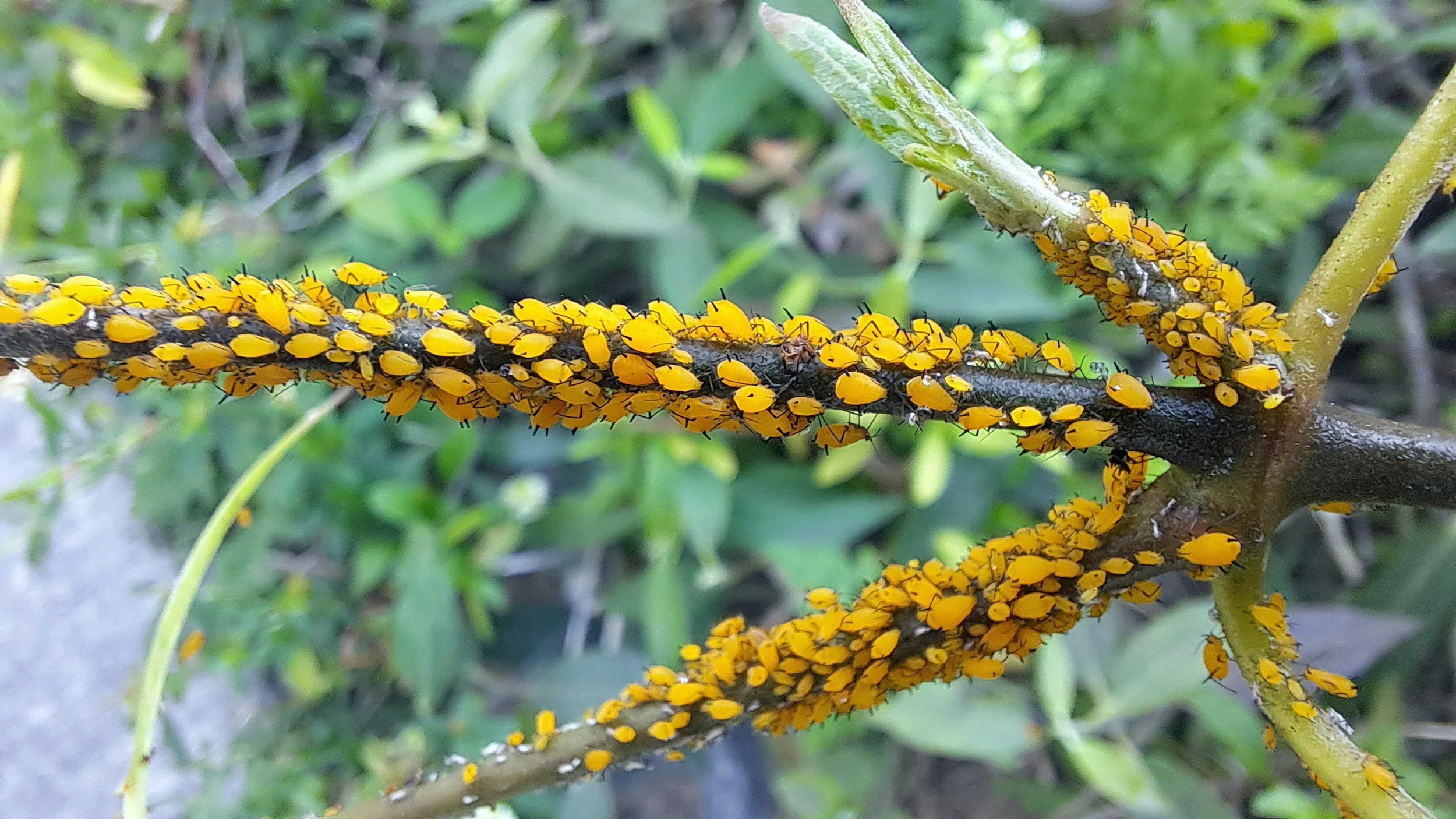
What they are: Tiny soft-bodied insects, usually green, black, yellow, or gray, that cluster on new growth, stems, and the undersides of leaves. They reproduce incredibly fast.
Damage:
Suck plant sap, weakening plants
Cause curled, yellowed, or distorted leaves
Excrete sticky "honeydew" that attracts ants and grows black sooty mold
Can transmit plant viruses
What they attack: Nearly everything, but especially brassicas, beans, peppers, tomatoes, lettuce, and fruit trees. Worst in spring and fall when temperatures are mild.
Control:
Physical removal:
Blast them off with a strong spray of water from the hose
Repeat every few days until populations crash
Often the only control needed for minor infestations
Encourage predators:
Ladybugs, lacewings, and syrphid flies devour aphids
Avoid broad-spectrum pesticides that kill beneficials
Plant flowers that attract predators (yarrow, sweet alyssum, fennel)
Organic sprays:
Insecticidal soap (follow label directions, spray directly on aphids)
Neem oil (disrupts feeding and reproduction)
Homemade spray: 1 tablespoon dish soap per quart of water
Ant control: Ants "farm" aphids for honeydew and protect them from predators. If you see ants streaming up your plants, that's often how aphids arrived. Use sticky barriers on tree trunks or bait stations for ants.
Prevention:
Check plants regularly, catch infestations early
Avoid over-fertilizing with nitrogen (promotes the soft growth aphids love)
Attract beneficial insects with diverse plantings (see our organic pest control guide)
Slugs and Snails
What they are: Slugs are soft-bodied mollusks without shells. Snails have shells. Both are primarily nocturnal and thrive in Santa Cruz's cool, moist conditions.
Damage:
Chew irregular holes in leaves
Devour seedlings overnight
Leave silvery slime trails
Can destroy young transplants completely
What they attack: Lettuce, basil, strawberries, cabbage, beans, and most tender seedlings. Worst in cool, damp weather and heavily mulched areas.
Control:
Hand-picking:
Go out at night with a flashlight or early morning
Pick them off and drop in soapy water
Surprisingly effective if done consistently
Beer traps:
Bury a container (yogurt cup, tuna can) with rim at soil level
Fill with cheap beer
Slugs are attracted, fall in, and drown
Empty and refill every few days
Copper barriers:
Copper tape or mesh around raised beds or containers
Slugs get a mild electric shock when crossing copper
Must be wide enough they can't bridge it (at least 2 inches)
Iron phosphate bait:
Sluggo and similar products are safe around pets and wildlife
Scatter around affected areas
Slugs eat it, stop feeding, and die within a few days
Reapply after rain
Sprinkle around plants
Sharp particles damage slug bodies
Must be reapplied after rain or irrigation
Less effective in our humid coastal conditions
Prevention:
Water in the morning so soil surface dries by evening
Reduce hiding spots (boards, debris, dense ground cover near beds)
Protect seedlings with cloches or row cover until established
Create dry barriers (gravel, sand) around beds
Cabbage Worms and Cabbage Loopers
What they are: Green caterpillars that feed on brassica family plants. Cabbage worms are velvety green, larvae of the white cabbage butterfly. Cabbage loopers "loop" when they crawl, larvae of a brown moth.
Damage:
Chew large holes in leaves
Leave dark green frass (droppings)
Can destroy small plants quickly
Tunnel into cabbage and broccoli heads
What they attack: All brassicas: cabbage, broccoli, cauliflower, kale, Brussels sprouts, collards, kohlrabi, and Asian greens.
Control:
Hand-picking:
Check plants thoroughly, including undersides of leaves
Look for eggs (tiny white or yellow dots) and remove them
Pick off caterpillars and drop in soapy water
Effective for small plantings
Row cover:
Cover plants with lightweight fabric immediately after transplanting
Prevents butterflies and moths from laying eggs
Most effective prevention method
Remove to harvest or leave on if edges are secured
Bacillus thuringiensis (Bt):
Organic bacterial spray that kills caterpillars
Sold as Dipel, Thuricide, or similar brands
Spray on leaves; caterpillars die after eating treated foliage
Safe for beneficials, pets, and humans
Reapply after rain
Spinosad:
Another organic option derived from soil bacteria
Effective on caterpillars
Can harm bees if sprayed directly, so apply in evening
Prevention:
Use row cover from transplant day
Attract parasitic wasps with small-flowered plants (dill, fennel, yarrow)
Inspect plants weekly, especially undersides of leaves
Remove and destroy infested plant debris
Whiteflies
What they are: Tiny white flying insects that rise in a cloud when disturbed. They cluster on leaf undersides and feed on plant sap.
Damage:
Suck sap, weakening plants
Cause yellowing and leaf drop
Excrete honeydew leading to sooty mold
Can transmit plant viruses
Weaken plants over time
What they attack: Tomatoes, peppers, squash, cucumbers, beans, and many ornamentals. Worst in warm weather and in greenhouses.
Control:
Physical removal:
Yellow sticky traps catch adult whiteflies
Place traps near affected plants
Helps monitor and reduce populations
Water spray:
Strong water spray dislodges nymphs and adults
Repeat every few days
Helps but usually doesn't eliminate established populations
Insecticidal soap and neem:
Must contact the insects directly
Spray undersides of leaves thoroughly
Repeat applications needed
Most effective on nymphs, less so on adults
Reflective mulch:
Aluminum foil or reflective plastic mulch confuses whiteflies
Reduces landing and feeding
Useful for high-value crops like tomatoes
Vacuum:
A small handheld vacuum can suck up adults in the cool morning when they're sluggish
Sounds silly but works for small infestations
Prevention:
Inspect new transplants carefully before bringing them home
Avoid over-fertilizing (lush growth attracts whiteflies)
Remove heavily infested plant material
Encourage natural enemies (lacewings, ladybugs, parasitic wasps)
Tomato Hornworms
What they are: Large green caterpillars (up to 4 inches) with white diagonal stripes and a horn on the rear end. Larvae of the sphinx moth.
Damage:
Devour leaves, stems, and fruit
Can defoliate a tomato plant in days
Leave large dark droppings on leaves below
What they attack: Tomatoes, peppers, eggplant, and occasionally potatoes.
Control:
Hand-picking:
The most effective control
Look for damage and droppings, then search nearby foliage
They're well-camouflaged but large enough to spot
Drop in soapy water
Leave parasitized worms alone:
If you see a hornworm covered in white rice-like cocoons, don't kill it
Those are parasitic wasp pupae that will hatch and kill more hornworms
Nature is doing your work for you
Bt (Bacillus thuringiensis):
Effective on smaller caterpillars
Less effective on large, mature hornworms
Spray when you first notice damage
Spinosad:
Also effective on caterpillars
Apply in evening to protect bees
Prevention:
Till soil in fall and spring to kill overwintering pupae
Rotate tomato family crops
Inspect plants regularly during summer
Squash Bugs
What they are: Gray-brown shield-shaped insects about 5/8 inch long. Adults overwinter and emerge in late spring. Nymphs are smaller with green-gray bodies.
Damage:
Suck sap from leaves and stems
Cause wilting and yellowing
Can kill young plants and vines
Transmit cucurbit yellow vine disease
What they attack: Squash (especially winter squash), pumpkins, cucumbers, and melons.
Control:
Hand-picking:
Check undersides of leaves for bronze-colored eggs laid in clusters
Scrape off eggs and crush
Pick adults and nymphs into soapy water
Most effective early in the season before populations explode
Trap boards:
Lay boards or shingles on the ground near plants
Squash bugs hide underneath at night
Flip boards in the morning and crush the gathered bugs
Row cover:
Protect young plants until flowering
Remove once flowers appear for pollination
Neem oil:
Can help deter adults and kill nymphs
Must contact insects directly
Repeat applications needed
Diatomaceous earth:
Apply around base of plants
Damages bugs as they crawl through
Reapply after rain
Prevention:
Remove plant debris at end of season (adults overwinter in it)
Rotate crops
Plant resistant varieties when available
Delay planting to avoid peak adult emergence
Spider Mites
What they are: Tiny arachnids (not insects) almost invisible to the naked eye. You'll notice their damage and fine webbing before you see the mites themselves.
Damage:
Suck cell contents from leaves
Cause stippling (tiny yellow dots)
Leaves turn bronze or yellow
Fine webbing on undersides of leaves in severe cases
Plants weaken and may die
What they attack: Beans, tomatoes, peppers, cucumbers, melons, strawberries, and many ornamentals. Worst in hot, dry, dusty conditions.
Control:
Water spray:
Strong spray on leaf undersides knocks off mites and disrupts webbing
Most effective control for mild infestations
Repeat every few days
Increase humidity:
Mites thrive in dry conditions
Regular overhead watering (morning only) can suppress populations
Balance against fungal disease concerns
Insecticidal soap:
Spray directly on mites
Cover leaf undersides thoroughly
Repeat every 5 to 7 days
Neem oil:
Effective miticide
Apply in cool temperatures to avoid leaf burn
Repeat applications needed
Predatory mites:
Release beneficial mites that eat spider mites
Available from biological control suppliers
Works best for greenhouse or serious infestations
Prevention:
Keep plants well-watered (stressed plants are more susceptible)
Avoid dusty conditions (dust suppresses mite predators)
Don't over-fertilize with nitrogen
Remove heavily infested leaves or plants
Flea Beetles
What they are: Tiny (1/16 inch) jumping beetles, usually black or bronze. They leap like fleas when disturbed.
Damage:
Chew small round holes in leaves (shothole damage)
Can kill seedlings and young transplants
Larger plants can tolerate more damage
What they attack: Brassicas, eggplant, tomatoes, peppers, potatoes, and radishes. Worst on young plants in spring.
Control:
Row cover:
Most effective protection for seedlings
Cover immediately at transplanting
Lightweight fabric allows light and water through
Sticky traps:
Yellow sticky cards catch adults
Helps reduce populations
Diatomaceous earth:
Dust on leaves and around plants
Deters and damages beetles
Reapply after rain
Spinosad or neem:
Can reduce populations
Difficult to eliminate completely
Prevention:
Delay planting brassicas until plants are larger and more resilient
Use transplants rather than direct seeding
Remove crop debris where adults overwinter
Rotate crops
What Are the Key Integrated Pest Management Principles?
For all pests, remember these fundamentals:
1. Prevention first: Healthy plants resist pests better. Good soil, adequate water, and proper spacing all matter.
2. Monitor regularly: Check your garden at least weekly. Catch problems early when they're easier to manage.
3. Identify correctly: Make sure you know what you're dealing with before treating. Not every bug is a pest.
4. Tolerate some damage: A few holes in leaves won't ruin your harvest. Not every pest requires intervention.
5. Start with least-toxic options: Physical removal, water spray, and barriers before sprays. Organic sprays before anything stronger.
6. Encourage beneficials: Most pest populations are kept in check by predators and parasites. Create habitat for the good bugs.
7. Rotate and diversify: Mixed plantings and crop rotation break pest cycles.
Which Beneficial Insects Are Your Best Allies?
These garden helpers eat pest insects. Encourage them by:
Planting flowers they need (yarrow, fennel, dill, sweet alyssum, cosmos)
Providing water sources
Avoiding broad-spectrum pesticides
Leaving some areas a little wild
Key beneficials:
Ladybugs (eat aphids)
Lacewings (eat aphids, mites, small caterpillars)
Syrphid flies (larvae eat aphids)
Parasitic wasps (parasitize caterpillars, aphids, whiteflies)
Ground beetles (eat slugs, snails, soil-dwelling pests)
Spiders (eat almost anything)
A healthy garden has both pests and predators in balance. Your job is to tip that balance slightly in your favor.
One popular aphid remedy does not hold up; see whether planting garlic around roses stops aphids.
Frequently Asked Questions About Garden Pests in Santa Cruz County
What are the most common garden pests in Santa Cruz County?
The most common vegetable garden pests in Santa Cruz County are aphids (on nearly everything, especially spring and fall), slugs and snails (worst in cool, moist conditions), cabbage worms (on all brassicas), whiteflies (on tomatoes and peppers), tomato hornworms, squash bugs, spider mites (in hot, dry weather), and flea beetles (on seedlings). Our mild climate without hard freezes means pest populations stay active year-round.
Why are slugs and snails so bad in Santa Cruz County?
Santa Cruz County's cool, moist climate is ideal for slugs and snails. Coastal fog, mild temperatures, and damp conditions let them thrive year-round. Areas like Aptos, Capitola, and coastal Santa Cruz see especially high slug populations. Control them with iron phosphate bait (Sluggo), beer traps, hand-picking at night, and copper barriers. Water in the morning so soil surfaces dry by evening when slugs become active.
How do I control aphids organically in Santa Cruz?
Start by blasting aphids off plants with a strong water spray from the hose. Repeat every few days until populations crash. This alone handles most minor infestations. For persistent problems, use insecticidal soap or neem oil sprayed directly on the aphids. Encourage natural predators (ladybugs, lacewings, syrphid flies) by planting flowers like yarrow, sweet alyssum, and fennel. Control ants, which protect and "farm" aphids.
What's eating holes in my cabbage and kale leaves?
Green caterpillars are likely the culprits: cabbage worms (velvety green, from white butterflies) or cabbage loopers (they "loop" when crawling). Hand-pick caterpillars and eggs from leaf undersides. The most effective prevention is covering plants with row cover immediately after transplanting to prevent moths and butterflies from laying eggs. Bt (Bacillus thuringiensis) spray kills caterpillars organically if applied when they're small.
When are garden pests worst in Santa Cruz County?
Different pests peak at different times. Aphids are worst in spring (March through May) and fall (September through November) when temperatures are mild. Slugs and snails are most active in cool, wet weather (fall through spring). Cabbage worms appear whenever white butterflies are flying (spring through fall). Spider mites and whiteflies peak in hot, dry summer weather (July through September). Monitor your garden weekly year-round.
How do I tell if a bug in my garden is a pest or beneficial?
Not every bug is a pest! Ladybugs, lacewings, ground beetles, spiders, and parasitic wasps are beneficial predators that eat pest insects. Before killing any insect, identify it first. Pests typically cause visible damage: holes in leaves, stippling, wilting, or sticky residue. Beneficials are often found hunting on or near damaged plants. If you see a hornworm covered in white cocoons, leave it alone. Those are parasitic wasp pupae doing your pest control for you.
Do organic pest controls actually work in Santa Cruz gardens?
Yes! Organic methods work well in Santa Cruz County. Physical controls (hand-picking, water sprays, row covers) are often the most effective first line of defense. Bt effectively kills caterpillars. Iron phosphate (Sluggo) controls slugs safely. Insecticidal soap and neem oil handle soft-bodied insects like aphids and whiteflies. The key is catching problems early, identifying pests correctly, and being consistent with treatment. Encourage beneficial insects for long-term balance.
How can I prevent pest problems in my Santa Cruz garden?
Prevention starts with healthy plants: good soil, proper watering, and appropriate spacing. Use row covers on vulnerable crops like brassicas from transplant day. Rotate crops annually to break pest cycles. Remove plant debris where pests overwinter. Attract beneficial insects by planting flowers (yarrow, fennel, dill, sweet alyssum, cosmos). Monitor your garden weekly to catch problems early. Tolerate minor damage rather than reaching for sprays immediately.
Free Resources for Pest Management
Download these free guides to help manage pests in your Santa Cruz County garden:
Garden Troubleshooting Guide , Quick-reference guide for diagnosing common garden problems including pest damage, plant diseases, and nutrient deficiencies. Identify what's wrong and take action fast.
Gopher Control Guide , Santa Cruz County's most destructive garden pest deserves its own guide. Learn what actually works (and what doesn't) for gopher control, including exclusion, trapping, and encouraging predators.
Companion Planting Guide , Use companion planting to deter pests naturally. Learn which plants repel specific pests, attract beneficial insects, and grow better together.
How do I get rid of whiteflies on my plants?
Whiteflies look like a tiny cloud of white specks that lifts off when you brush a leaf, and they cluster on the undersides. In our mild-winter climate they persist on brassicas and tomatoes nearly year-round. Spray leaf undersides with insecticidal soap, hang yellow sticky traps, and encourage lacewings. UC IPM's Pest Notes at ipm.ucanr.edu walk through whitefly management for home gardens.
