

Growing Olallieberries in Santa Cruz County: Your Guide to California's Favorite Pie Berry
A few of the product links in this guide are affiliate links. If you buy through one, Ambitious Harvest may earn a small commission at no extra cost to you, which helps keep these guides free. We only point to gear we would use in our own Santa Cruz garden. As an Amazon Associate, we earn from qualifying purchases. Read our full disclosure.
If you've ever waited in line for a warm slice of olallieberry pie at Gizdich Ranch in Watsonville, you already know why this berry inspires such devotion. That sweet-tart intensity, that deep purple juice soaking into flaky crust - it's the taste of summer on the Central Coast.
What you might not know is that you can grow these legendary berries in your own Santa Cruz County backyard. Olallie never did well in Oregon, for lack of cold hardiness, and became a significant commercial cultivar in California instead. Our stretch of coast is one of the places it settled into. While the rest of California struggles with heat-stressed plants and sunburned fruit, our marine influence creates near-perfect conditions for this finicky but rewarding berry.
This guide covers everything you need to know about growing olallieberries at home, from understanding their fascinating hybrid history to harvesting your own crop for pies, jams, and summer snacking.
What Exactly Is an Olallieberry?
The olallieberry is the market name for the 'Olallie' blackberry, released by USDA-ARS in cooperation with Oregon State University, a complex hybrid developed through decades of berry breeding. It's not a distinct species but rather a carefully crafted combination of several berry types, which explains its unique flavor profile.
The parentage: The 'Olallie' resulted from crossing 'Black Logan' with youngberry. But that only tells part of the story, because both parent berries were themselves hybrids:
Black Logan: also known as 'Mammoth', one of the founding genotypes of the USDA-ARS trailing blackberry program and a product of Judge James Logan's California breeding work
Youngberry: developed by Byrnes M. Young in Morgan City, Louisiana
This complex heritage gives olallieberries characteristics of both blackberries and raspberries, though they're classified as a trailing blackberry. The result is a berry that's sweeter and more aromatic than most blackberries, with a tender texture that makes it perfect for baking but challenging to ship.
The name:"Olallie" comes from Chinook Jargon, a trade language used in the Pacific Northwest, where it simply means "berry." You'll find the word in place names throughout Oregon and Washington, including Olallie Lake.
How Did Olallieberries Get from Oregon Laboratories to Watsonville Fields?
The olallieberry's journey from experimental cross to Santa Cruz County icon spans decades and involves a bit of agricultural serendipity.
The breeding timeline:USDA-ARS breeder George F. Waldo, working in cooperation with Oregon State University, crossed 'Black Logan' (also called 'Mammoth') with 'Young'. The USDA-ARS and Oregon State record puts the selection in 1938 and the release in 1944.
The Gizdich connection: In 1950, Croatian immigrant Vincent John Gizdich and his son leased extra acreage at their Watsonville ranch to experiment with the new berry from Oregon. The gamble paid off. The Central Coast's climate proved ideal, and eventually the Gizdiches devoted 20 acres to olallieberries.
That decision helped establish Watsonville and the greater Santa Cruz area as the olallieberry capital of California, a distinction that endures today through U-pick fields, farm stands, and of course, Nita Gizdich's famous pie shop.
Why Is Santa Cruz County Ideal for Olallieberries?
Olallieberries are picky about climate. They originated in Oregon's Willamette Valley, bred for the Pacific Northwest's cool, maritime conditions. When they traveled south to California, they didn't thrive everywhere, but they found a second home along the Central Coast.
What makes our climate perfect:
Cool, foggy summers prevent the heat stress and sunburn that plague olallieberries in hotter regions. Our marine layer keeps temperatures moderate during the critical fruiting period, allowing berries to develop full flavor without shriveling or cooking on the vine.
The Santa Cruz "olallie corridor": The fog belt running from Davenport through Santa Cruz to Watsonville creates ideal growing conditions. Pescadero to the north shares similar characteristics. In these areas, summer highs rarely exceed the mid-70s during June's harvest season, and morning fog provides natural irrigation and cooling.
Contrast with inland areas: Head over Highway 17 to the Santa Clara Valley or south to Gilroy, and conditions change dramatically. Hotter summers, less fog, and more temperature swings stress olallieberry plants. They can grow there with extra care (afternoon shade, additional water), but they won't match the effortless productivity of coastal plantings.
Chill hours: Like other floricane blackberries, olallieberries need adequate winter chill to produce well. They need adequate winter chill, which Santa Cruz County normally provides. However, unusually warm winters can reduce chill accumulation and affect the following year's crop, a concern that's grown as climate patterns shift.
What Is the Growth Habit and Structure of Olallieberry Plants?
Before you plant, understand what you're working with. Olallieberries have specific growth characteristics that affect how you'll site, support, and maintain them.
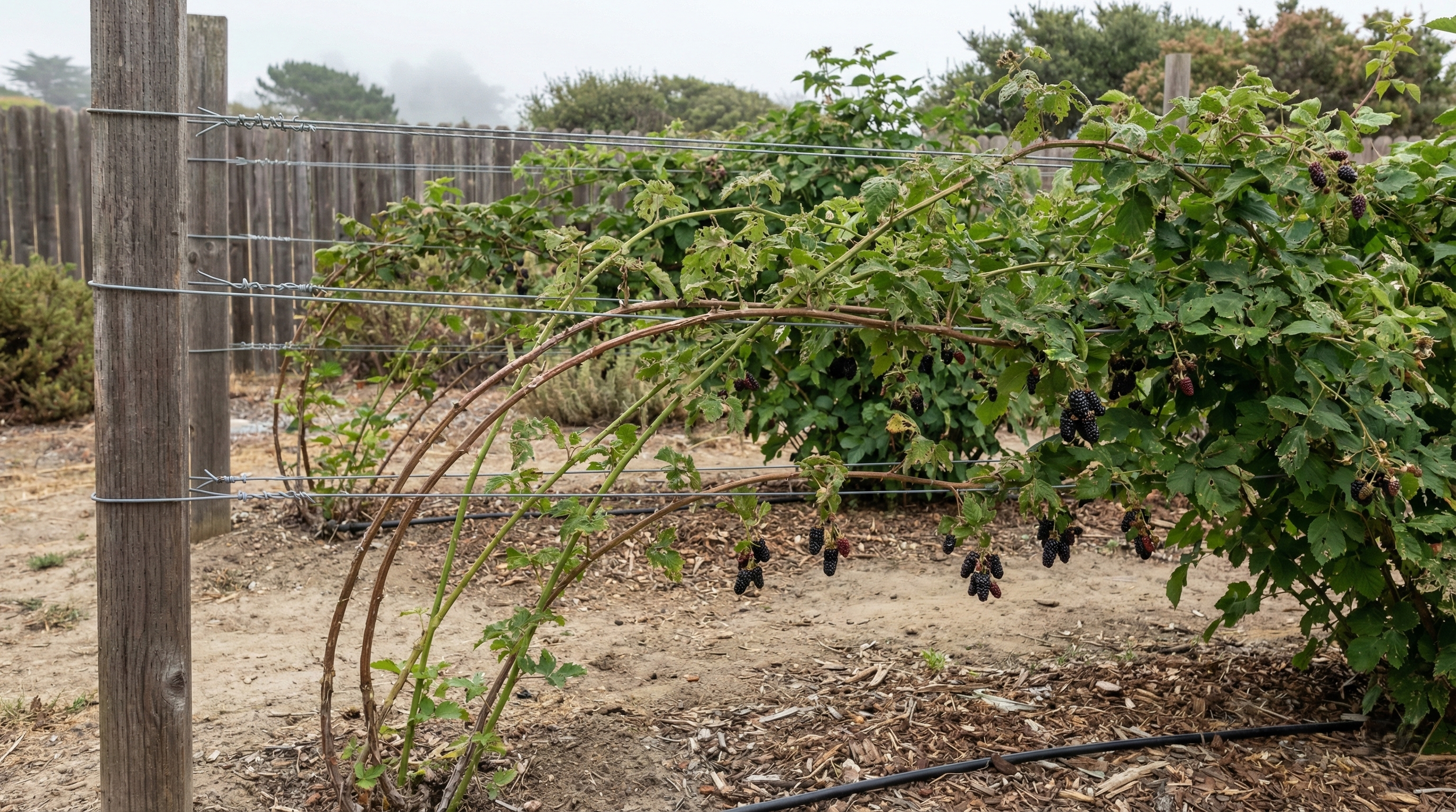
Trailing habit:Olallieberries are trailing cane blackberries with long, vine-like growth. Unlike erect blackberry varieties that stand upright, olallieberry canes want to sprawl along the ground or scramble over whatever's nearby. This means trellising isn't optional; it's essential.
Thorns: Fair warning: olallieberries are thorny. The canes are covered with sharp prickles that make pruning and harvesting an adventure. Long sleeves, thick gloves, and careful technique are required. (If thorns are a dealbreaker, consider thornless blackberry varieties instead.)
The two-year cane cycle: Like most blackberries, olallieberries fruit on floricanes (second-year canes). Here's how the cycle works:
Year 1 (Primocanes): New canes grow from the crown, reaching 10-15 feet or more. They produce only leaves, no fruit.
Year 2 (Floricanes): Those same canes flower and fruit, then die after harvest.
Meanwhile: New primocanes are growing to replace them, continuing the cycle.
This means you'll always have both types of canes on a mature plant, and your pruning strategy must account for both.
Plant lifespan:Well-maintained blackberry plantings can crop for 15 years or more, with peak production typically from years 3-8. After that, vigor may decline and you might consider replacing plants.
How Do You Choose the Best Site in Santa Cruz County?
Choosing the right spot sets the foundation for years of successful harvests.
Sun requirements: Full sun (6+ hours direct) produces the best fruit, but olallieberries tolerate light afternoon shade, especially in warmer microclimates. In foggy coastal areas, prioritize the sunniest spot available. Inland, some afternoon shade can actually help prevent stress.
Soil needs:Blackberries prefer well-drained loam or sandy loam with a soil pH between about 5.6 and 6.5. Good drainage is critical; they're susceptible to root rot in waterlogged soil. If you have heavy clay, consider raised beds or mounded rows.
Microclimate considerations for Santa Cruz County:
Coastal yards (Santa Cruz Westside, Live Oak, Aptos):
Fog is your friend; don't worry about too much of it
Prioritize drainage over heat protection
South-facing fences and walls work well
Watch for powdery mildew in prolonged damp conditions
Inland areas (San Lorenzo Valley, Scotts Valley, Soquel hills):
Consider afternoon shade to prevent heat stress
Mulch heavily to retain soil moisture
Plan for more irrigation than coastal gardens
Morning sun with afternoon protection is ideal
Space planning: Remember that these are vigorous, spreading plants. A single olallieberry can send canes 10-15 feet in a season. Plan for adequate space and consider how you'll contain the plants within their allotted area.
How Do You Plant Olallieberries: Spacing, Soil Prep, and Trellising?
When to Plant
Plant bare-root olallieberries during dormancy, typically December through February in our area. Potted plants can go in almost any time but establish best in late winter to early spring before the growing season begins.
Spacing
For home garden trellises, space plants 3-4 feet apart. Commercial operations use wider spacing (8-10 feet) to allow canes to run further, but home gardeners can get excellent production from closer plantings with good pruning.
Soil Preparation
Test your soil pH (target 5.5-6.5)
Improve drainage if needed with raised beds or amended soil
Add organic matter: Work in 2-4 inches of compost before planting
Avoid heavy fertilization at planting: A light application of balanced fertilizer is sufficient
Building Your Trellis
Olallieberries absolutely require support. Without trellising, the canes sprawl into an impenetrable thorny mass that's impossible to harvest or maintain.
Simple two-wire trellis:
Set sturdy posts (4x4 or metal T-posts) at least 2 feet deep
Run wires at approximately 3 feet and 5 feet high
Posts every 15-20 feet for stability
Fence-line planting: A sturdy fence (chain link, welded wire, or wood with wire) works well. Train canes along the fence, using ties to secure them.
Training strategy: The most manageable approach separates primocanes from floricanes:
Train fruiting floricanes to one side of the trellis
Direct new primocanes to the opposite side
This simplifies harvest and post-harvest pruning
What Seasonal Care Do Olallieberries Need?
Watering
Olallieberries need consistent moisture, approximately 1-2 inches per week from rain or irrigation. Increase during flowering and fruiting; decrease after harvest.
Coastal gardens: Our fog provides some moisture, and cooler temperatures reduce water needs. Focus on ensuring good drainage rather than heavy irrigation.
Inland gardens: Plan for more frequent watering, especially during warm spells. Drip irrigation works well. Mulch heavily to retain moisture.
Fertilizing
Year 1: Apply a modest mid-summer feeding with balanced fertilizer. Avoid over-fertilization, which produces excessive vegetative growth at the expense of future fruit.
Established plants: Feed in early spring as growth begins, and again lightly after harvest. Use a balanced fertilizer or one slightly higher in potassium to support fruit production.
Understanding the Pruning Cycle
Pruning olallieberries intimidates many gardeners, but it's straightforward once you understand the two-year cane lifecycle.
After harvest (July):Remove all canes that just fruited (floricanes) at ground level. They're done and will only harbor disease if left. This opens up the plant and makes room for the current season's primocanes.
Winter dormancy (December-February):
Shorten primocane laterals to promote fruiting spurs
Remove any weak, damaged, or diseased canes
Thin if overly crowded (Oklahoma State suggests leaving 8 to 15 canes on trellised trailing types, and 3 to 5 if you are not trellising)
Tie remaining canes to trellis if not already secured
What Pests, Diseases, and Coastal Challenges Affect Olallieberries?
Common Pests
Aphids and spider mites: The usual suspects for caneberries. Monitor undersides of leaves; treat with insecticidal soap or encourage beneficial insects.
Spotted wing drosophila: This invasive fruit fly attacks ripening berries. Harvest frequently, remove damaged fruit, and maintain good sanitation.
Birds: They love olallieberries as much as you do. Netting may be necessary as fruit ripens.
Common Diseases
Powdery mildew:Can be problematic in coastal gardens with prolonged fog and damp conditions. Improve air circulation, avoid overhead watering, and remove affected canes.
Root rot: Usually caused by poor drainage. Prevention is key; once established, root rot is difficult to treat.
Cane diseases: Various fungal issues can cause cane dieback. Good sanitation (removing spent canes promptly, cleaning tools) is the best prevention.
IPM Approach
Remove and dispose of spent canes and fallen fruit
Encourage beneficial insects with diverse plantings
Avoid overhead irrigation that keeps foliage wet
Monitor regularly and address problems early
When Should You Harvest Olallieberries in Santa Cruz County?
The olallieberry harvest is brief and intense. Unlike everbearing berries that produce over months, olallieberries deliver their crop in a concentrated window.
Typical timing:In Santa Cruz County, olallieberry picking runs June into August, and home gardens usually peak in June, with some variation based on microclimate and weather. Cooler, foggier locations may run slightly later.
Local U-pick reference points:
Swanton Berry Farm's organic olallieberry season typically runs June through August
Gizdich Ranch berry season progresses through summer, with olallieberries among the earlier crops
What to expect: The main harvest flush lasts approximately 3-4 weeks, with heavier picking in the first half. You'll get some stragglers before and after the peak, but plan to pick frequently during the main season; ripe berries don't wait.
What Yields and Lifespan Should You Expect?
Time to First Harvest
You may get a few berries in year 1, but don't expect a real crop until year 2. Meaningful harvests begin in year 2-3. Oregon State puts trailing blackberries in mature production from the third year on.
Expected Yields
Oregon State puts mature yields for trailing blackberry cultivars at 10 to 13 pounds per plant, sometimes more under ideal conditions. That's enough for plenty of pies, jams, and fresh eating from just a few plants.
Plant Lifespan
Expect productive plants for many years with good care. Oklahoma State says well-maintained blackberry plantings can crop for 15 years or more. Consider interplanting new starts as insurance, or plan for replacement when production drops significantly.
Where Can You Find Plants and Berries Locally?
Local U-Pick and Pie Destinations
Gizdich Ranch (Watsonville) The legendary destination for olallieberry pie and U-pick berries. The Gizdich family has been growing olallieberries since 1950, and Nita Gizdich's pie shop has made their olallieberry pie famous. U-pick and pie shop hours vary by season; check their website.
Swanton Berry Farm (Davenport) Organic U-pick strawberries, olallieberries, and other berries along Highway 1 north of Santa Cruz. Their olallieberry season typically runs June through August.
Where to Buy Plants
Olallieberry plants can be tricky to find locally, but several options exist:
Mail-order/online:
Territorial Seed Company - Bare-root plants
GrowOrganic / Peaceful Valley - Bare-root plants
Armstrong Garden Centers - May have potted plants seasonally
Specialty nurseries:
Cal Poly Pomona Nursery - Includes olallieberries on their 2026 berry list
Local options: Call Santa Cruz and Watsonville garden centers to ask about availability. Nurseries that stock Dave Wilson caneberries may carry or be able to order 'Olallie'. The best time to find bare-root plants is late winter (January-February).
Frequently Asked Questions
Are olallieberries the same as blackberries?
Olallieberries are a type of blackberry, specifically a trailing blackberry hybrid. They're classified botanically as blackberries but have distinct characteristics (sweeter, more aromatic, more delicate) due to their complex parentage. See our olallieberry vs blackberry comparison for details.
How many plants do I need?
For a household that enjoys berries, 2-3 plants will provide plenty for fresh eating, with some left for a few pies or batches of jam. Serious berry enthusiasts or those wanting to freeze quantities might plant 4-6.
Can I grow olallieberries in a container?
It's possible but challenging. You'll need a very large container (half wine barrel minimum), sturdy support for the trailing canes, and vigilant watering. In-ground planting is generally more successful for these vigorous plants.
Why didn't my olallieberries produce fruit this year?
Common causes include: the plant is too young (wait for year 2-3), insufficient winter chill (increasingly common with warm winters), incorrect pruning (removing primocanes that would have fruited the following year), or frost damage to flower buds.
How do I know when olallieberries are ripe?
Ripe olallieberries are fully black/deep purple with a slightly dull (not shiny) surface. They should be very soft and come off the plant easily with a gentle tug. Taste test if unsure; they should be sweet with balanced tartness. They do not continue ripening after picking.
Do olallieberries spread aggressively?
They can spread via root suckers and tip-rooting canes. Contain them by mowing or hoeing suckers that appear outside the desired area, and don't let cane tips touch the ground where they can root. They're manageable but require attention.
What's the difference between olallieberry and marionberry?
Both are Oregon-bred blackberry hybrids, but marionberry ('Marion') is a cross of 'Chehalem' and 'Olallie', making it an olallieberry descendant. Marionberries are the dominant commercial blackberry in Oregon; olallieberries found their niche in California.
How Do You Start Your Olallieberry Journey?
Growing olallieberries connects you to a distinctly Central Coast tradition. When you harvest your first handful of warm, fragrant berries in June, you'll understand why Watsonville growers took a chance on an experimental Oregon berry back in 1950, and why that gamble created a local food icon.
Start with a sunny fence line or sturdy trellis, a couple of bare-root plants from a reputable source, and patience through that first year of vegetative growth. By year two, you'll be picking your own olallieberries. By year three, you might have enough for a pie that rivals Gizdich's.
And if your first pie isn't quite perfect, you can always drive to Watsonville for a slice of the original while your plants mature. Consider it research.
