

Olallieberry vs Blackberry: What's the Difference and Which Should You Grow?
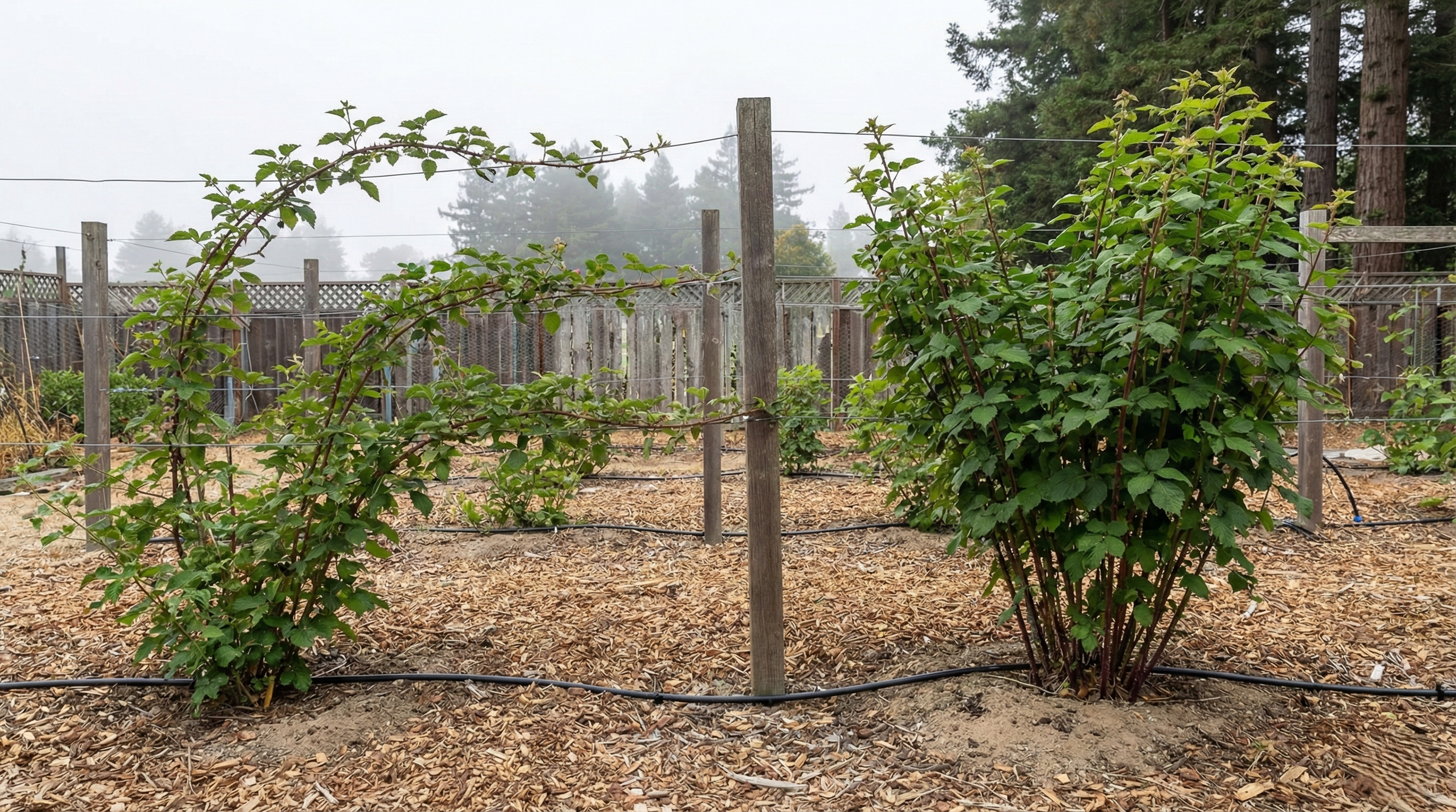
The olallieberry is a trailing blackberry hybrid developed by the USDA in 1950, a cross of loganberry and youngberry that is roughly two-thirds raspberry and one-third blackberry by genetics. According to UC Agriculture and Natural Resources, olallieberries thrive in coastal California's cool, foggy summers, while most upright blackberry varieties perform better in warmer inland areas. The two differ in growth habit, flavor, climate preference, and ease of care.
It's one of the most common questions gardeners ask, and the answer is both yes and no. Olallieberries are technically a type of blackberry - specifically a trailing blackberry hybrid - but they're so distinctive in flavor, growth habit, and climate preferences that they deserve their own category in the home garden.
Understanding the differences helps you choose the right berry for your situation. If you're a Santa Cruz County gardener with a foggy coastal yard, olallieberries might be your best bet. If you're inland with hot summers, or you simply want easier maintenance, traditional blackberries might serve you better. And for many gardeners, the answer is to grow both.
The UC Master Gardeners of San Luis Obispo County confirm that olallieberries are a trailing blackberry hybrid that performs best in coastal California conditions, while erect varieties like Ouachita and Triple Crown are better suited to warmer inland areas.
Let's break down the key differences.
What Is an Olallieberry and Where Did It Come From?
Olallieberry: A Complex California-Oregon Hybrid
The olallieberry is the marketing name for the 'Olallie' blackberry, a hybrid developed by USDA breeder George F. Waldo in cooperation with Oregon State University. The original cross was made in 1935 and officially released in 1950.
Parentage:
'Black Logan' (itself a California creation from 'Crandall' blackberry × 'Aughinbaugh' dewberry)
Youngberry (a Louisiana cross of 'Phenomenal' × 'Austin Mayes')
This complex heritage gives olallieberries characteristics of multiple berry types. They're classified as blackberries but carry genetic contributions from raspberries and dewberries as well.
The name: "Olallie" comes from Chinook Jargon, a trade language of the Pacific Northwest, where it simply means "berry."
Blackberries: A Diverse Family
"Blackberry" covers a huge range of cultivated varieties, from wild-type trailing vines to modern thornless erect bushes. Today's garden blackberries include:
Erect types: Upright bushes that need minimal support (Navaho, Ouachita, Prime-Ark)
Semi-erect types: Somewhat arching canes that benefit from support (Triple Crown, Chester)
Trailing types: Long, vine-like canes requiring trellising (Marion, Boysen, and yes, Olallie)
Most blackberries sold today are bred for:
Heat tolerance
Lower chill requirements
Thornlessness
Larger, firmer fruit
Extended harvest seasons (especially primocane-fruiting types)
Do Olallieberries and Blackberries Grow Differently?
Olallieberries: Trailing and Vigorous
Olallieberries are trailing blackberries with long, vine-like canes that can reach 10-15 feet in a single season. They absolutely require trellising - without support, they sprawl into an unmanageable thicket.
Key characteristics:
Vigorous, sprawling growth
Long, flexible canes
Thorny (definitely thorny)
Requires sturdy trellis or fence
Canes need annual training and tying
Modern Blackberries: Often More Compact
Many popular blackberry varieties are erect or semi-erect, meaning they grow more upright and need less support:
Erect varieties (Navaho, Ouachita, Arapaho, Prime-Ark Freedom):
Stand mostly upright
May need only a simple support wire
More compact footprint
Often thornless
Semi-erect varieties (Triple Crown, Chester):
Arching growth
Benefit from trellising but less demanding than trailing types
Often thornless
Trailing varieties (Marion, Boysen):
Similar to olallieberries
Need full trellising
What This Means for Your Garden
Choose olallieberries if:
You have room for a proper trellis (4-5 feet tall, several feet wide)
You don't mind managing vigorous, spreading vines
Thorns don't deter you
Choose erect/semi-erect blackberries if:
Space is limited
You want easier maintenance
You prefer thornless varieties
You don't want to build a substantial trellis
Do Olallieberries Grow Better on the Coast?
This is perhaps the most important distinction for California gardeners.
Olallieberries: Coastal Specialists
Olallieberries thrive in cool, foggy, mild climates. They were bred in Oregon and found their perfect California home on the Central Coast - specifically the corridor from Pescadero through Santa Cruz to Watsonville.
Why they love the coast:
Cool summers prevent heat stress and sunburn
Fog provides natural cooling during fruit development
Mild winters provide adequate chill without extreme cold
Marine influence moderates temperature swings
Problems in hot climates:
Fruit can sunburn and shrivel
Heat stress reduces yield
Berries may ripen unevenly
Plants need significantly more water and may still struggle
Chill hours: Olallieberries typically need around 400+ hours below 45°F, and unusually warm winters can affect the following year's crop.
Modern Blackberries: Bred for Adaptability
Many contemporary blackberry varieties were specifically bred to handle:
Lower chill requirements (300-500 hours, some even less)
Heat tolerance
Variable winter temperatures
Inland California conditions
Examples:
Prime-Ark Freedom: Primocane-fruiting (fruits on first-year canes), low chill
Ouachita: Heat tolerant, 300-400 chill hours
Navaho: Heat tolerant, upright growth, 800+ chill hours but handles heat well
Regional Recommendations
Coastal Santa Cruz (fog belt, mild summers): Olallieberries are ideal. You're in their preferred climate.
Inland valleys (hotter summers, variable winters): Modern heat-tolerant blackberries will likely outperform olallieberries. Consider Ouachita, Triple Crown, or Prime-Ark types.
San Lorenzo Valley and mountain areas: Either can work. Consider your specific microclimate - sunnier spots favor olallieberries; hotter, drier spots favor adapted blackberries.
What Does an Olallieberry Taste Like Compared to a Blackberry?
Olallieberries: The Pie Berry
Ask anyone who's tasted a fresh olallieberry why they grow them, and the answer is almost always flavor.
Flavor profile:
Intensely sweet with balanced tartness
Complex, aromatic, almost wine-like notes
Richer and more nuanced than most blackberries
Texture:
Soft and tender
Very juicy
Delicate skin that bruises easily
Does not ship or store well
Best uses:
Pies (the classic application)
Jams and preserves
Cobblers and crisps
Eating fresh from the vine
Freezing for year-round baking
Blackberries: Variable but Often Firmer
Blackberry flavor varies significantly by variety, but many modern types were bred for:
Flavor profile:
Sweet to sweet-tart
More straightforward berry flavor
Less aromatic complexity than olallieberries
Some varieties (Triple Crown, Ouachita) have excellent flavor
Texture:
Generally firmer than olallieberries
Ship and store better
Hold up well in fruit salads and fresh applications
Best uses:
Fresh eating
Fruit salads
Pies and baked goods
Jam (though may need more sugar than olallieberries)
The Pie Test
Gizdich Ranch in Watsonville built its reputation on olallieberry pie for good reason. The berry's natural sweetness, complex flavor, and tender texture make it arguably the best pie berry grown in California. Standard blackberries make good pies too, but olallieberry pie has a richness and depth that's hard to match.
How Much Fruit Do Olallieberries Produce?
Olallieberries
Harvest season: Late May through June in Santa Cruz County (short, concentrated)
Window: Approximately 3-4 weeks
Yield: 10-15 lbs per mature plant
Storage: 1-2 days refrigerated; must freeze for longer storage
Characteristics:
Very brief harvest window
Berries must be picked frequently (every 2-3 days)
Extremely perishable
Freeze well for year-round use
Modern Blackberries
Harvest season: Variable by type
Summer-bearing (floricane): June-July typically
Fall-bearing (primocane): August-October
Window: Varies; primocane types can produce for 6-8 weeks
Yield: Variable by variety; many produce heavily
Storage: Several days refrigerated; firmer varieties last longer
Characteristics:
Some varieties offer extended harvest seasons
Less perishable than olallieberries
Primocane types allow fall harvest
Which Fits Your Lifestyle?
Choose olallieberries if:
You can dedicate time to picking during the brief June window
You're prepared to use or freeze berries immediately
You value intense flavor over convenience
Choose blackberries if:
You want a longer, more relaxed harvest season
You prefer berries that store longer
You want to pick casually rather than intensively
Are Olallieberries Hard to Grow?
Olallieberries: Rewarding but Demanding
Challenges:
Requires sturdy trellising
Vigorous growth needs regular management
Thorny canes make pruning and picking an adventure
Sensitive to hot, dry conditions
Brief harvest window requires planning
Rewards:
Exceptional flavor you can't buy in stores
Connection to local Central Coast food traditions
Produces heavily in the right climate
Skill level: Intermediate. Requires understanding of trailing berry culture, trellising, and the floricane/primocane cycle.
Modern Blackberries: Generally Easier
Advantages:
Thornless varieties available
Erect types need minimal support
More heat tolerant (less fussing with microclimate)
Primocane types have simpler pruning (cut everything down in winter)
Many are more forgiving of imperfect care
Considerations:
Some varieties still need trellising
Quality varies significantly by variety
May not match olallieberry flavor
Skill level: Beginner to intermediate. Erect thornless types are among the easiest berries to grow.
Can I Grow Both Olallieberries and Blackberries?
For many Santa Cruz County gardeners, the ideal approach is to grow both olallieberries AND blackberries. Here's how to make it work:
Site Selection
Olallieberries: Give them your coolest, foggiest spot. North-facing fences, areas with afternoon shade, or locations that get the full benefit of marine influence.
Blackberries: Plant in your warmest, sunniest location. South-facing walls, areas protected from fog, spots with excellent air circulation.
Staggered Harvests
Planting both extends your berry season:
June: Olallieberry harvest (short but intense)
July-August: Summer blackberries (floricane types)
August-October: Fall blackberries (primocane types)
With good planning, you could have fresh berries from June through October.
Different Purposes
Olallieberries for baking, freezing, and jam
Blackberries for fresh eating and easy snacking
Space Requirements
A reasonable home planting might include:
2-3 olallieberry plants on a dedicated trellis (about 8-12 linear feet)
3-4 thornless blackberry plants in a sunny corner (10-15 linear feet)
This would supply plenty of berries for a household with some left over for sharing.
How Do Olallieberries and Blackberries Compare Side by Side?
Frequently Asked Questions
Is an olallieberry just a blackberry?
Technically, yes - olallieberries are classified as a trailing blackberry. But they're a specific hybrid with distinct characteristics that set them apart from generic blackberries in flavor, texture, and growing requirements.
Which is sweeter, olallieberry or blackberry?
Olallieberries are typically sweeter with more complex flavor. They need less added sugar in pies and jams. Blackberry sweetness varies by variety.
Can I grow olallieberries inland?
You can try, but they won't perform as well as they do on the coast. They'll need afternoon shade, extra water, and may still struggle in hot summers. Heat-tolerant blackberry varieties are a better choice for inland gardens.
Do olallieberries cross-pollinate with blackberries?
Both are self-fertile, so cross-pollination isn't required. However, having multiple berry plants nearby (even different types) can improve pollination and fruit set.
Which is better for beginners?
Modern thornless, erect blackberries (like Ouachita or Prime-Ark Freedom) are easier for beginners. Olallieberries require more infrastructure (trellising) and management.
Why can't I find olallieberries in grocery stores?
Olallieberries are too soft and perishable to ship well. They're almost exclusively a local, seasonal product - which is part of what makes growing your own (or visiting a U-pick farm) so special.
What's the difference between olallieberry and boysenberry?
Both are trailing blackberry hybrids developed in the early 20th century. Boysenberries are larger and slightly more tart; olallieberries are sweeter and more aromatic. Both thrive on the California coast.
Which Should You Grow: Olallieberries or Blackberries?
For Santa Cruz County gardeners, the decision often comes down to microclimate:
If you're in the fog belt (coastal Santa Cruz, Live Oak, Aptos, Davenport), olallieberries are a natural choice. You're in their ideal climate, and you can grow a berry that captures the essence of Central Coast food culture.
If you're inland or in a warmer microclimate (Scotts Valley, south county, anywhere with hot summers), modern heat-tolerant blackberries will likely produce better with less effort.
If you have space for both, consider it. A few olallieberry plants for serious baking, and some thornless blackberries for easy summer snacking, gives you the best of both worlds.
Either way, you'll be growing berries that beat anything you can buy at the store. And that's really the point.
Free Gardening Resources
Know Your Microclimate Worksheet: Understand your specific Santa Cruz County growing conditions
Seasonal Planting Calendar: Month-by-month guidance for Santa Cruz County
More Olallieberry Growing Guides
Part of our Complete Olallieberry Series for Santa Cruz County:
Growing Olallieberries in Santa Cruz County: The Complete Guide - Everything you need to know about growing these California-born berries in our unique coastal climate
How to Plant and Care for Olallieberries - Step-by-step planting instructions, soil preparation, trellising, and year-round care
Harvesting and Using Olallieberries: From Garden to Pie - When to pick, how to store, and delicious ways to use your harvest
Olallieberry Troubleshooting Guide: Common Problems and How to Fix Them - Identify and solve powdery mildew, gray mold, pests, and other common issues
