

Best Berries to Grow in Santa Cruz County: 5 Top Picks for Coastal Gardens
A few of the product links in this guide are affiliate links. If you buy through one, Ambitious Harvest may earn a small commission at no extra cost to you, which helps keep these guides free. We only point to gear we would use in our own Santa Cruz garden. As an Amazon Associate, we earn from qualifying purchases. Read our full disclosure.
Santa Cruz County is berry paradise.
UC ANR notes that strawberries, raspberries, blackberries, and blueberries are all suitable for California gardens, with raspberries especially favoring coastal areas. Add in the olallieberry, a Central Coast cult classic, and you have five berries that thrive in conditions that frustrate gardeners elsewhere.
The same cool fog that makes growing tomatoes a challenge creates ideal conditions for berries. Cool, moist summers prevent sunburn and heat stress. Long, mild growing seasons extend harvest windows for months. And the rich agricultural soils that have supported the Pajaro Valley's commercial berry industry work just as well in backyard gardens.
The Central Coast, including Santa Cruz and Watsonville, sits in the heart of California's berry industry. What commercial growers have known for decades, home gardeners are discovering: if you want berries, you're in exactly the right place.
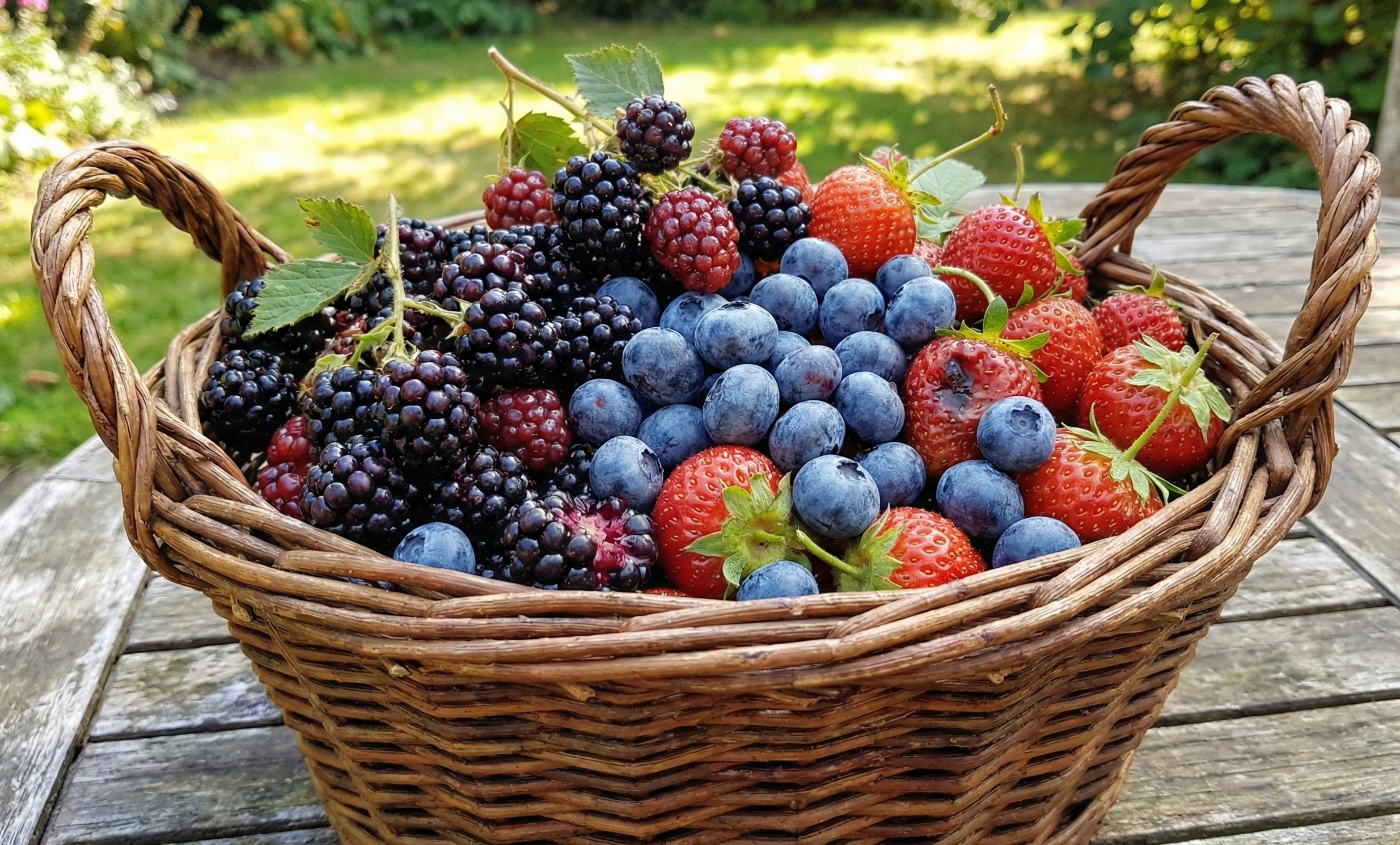
Here are the five best berries to grow in Santa Cruz County, why each one thrives here, and how to get started.
1. Olallieberry: The Central Coast Cult Classic
If there's one berry that says "Santa Cruz County," it's the olallieberry. Drive Highway 1 in summer and you'll see the signs: olallieberry pie at Gizdich Ranch, olallieberry jam at Swanton Berry Farm, olallieberry everything.
Why Olallieberries Thrive Here
Olallieberries are a hybrid of 'Black Logan' and youngberry, developed by USDA and Oregon State University and later adopted heavily along the Central Coast. While they struggled in hotter, drier regions, olallieberries found their perfect home in cool, coastal climates.
The fog belt from Pescadero to Watsonville creates exactly what olallieberries need: cool temperatures during fruit development, protection from sunburn, and enough marine moisture to keep canes happy without excessive irrigation. The result is intensely flavored berries with a distinctive sweet-tart balance that sun-baked berries can't match.
The Local Connection
Santa Cruz County is one of the best places to find olallieberries, with local farms offering U-pick seasons and famous olallieberry pies. Gizdich Ranch in Watsonville has been making olallieberry pie for decades; Swanton Berry Farm near Davenport grows them organically.
A local food nonprofit calls berries "the taste of summer" along the Central Coast, and olallieberries are the signature variety. Growing them in your backyard connects you to this local tradition.
Season and Harvest
Olallieberries typically ripen June through July in Santa Cruz County, with peak harvest in late June. The season is relatively short compared to other berries, which is part of what makes them special.
Getting Started
Olallieberries are trailing caneberries that need a trellis or support system. They produce on second-year canes (floricanes), so you won't get fruit until the year after planting. Give them morning sun with afternoon fog protection, consistent water, and patience.
Learn more: Growing Olallieberries in Santa Cruz County: Your Complete Guide
2. Strawberry: The Undisputed Queen
Walk through Watsonville in spring and you'll see strawberry fields stretching to the horizon. California produces about 1.8 billion pounds of fresh strawberries annually, and a significant portion comes from right here in Santa Cruz County.
Why Strawberries Thrive Here
UC ANR explains that both June-bearing and day-neutral strawberries perform well in California, with day-neutral types fruiting spring through fall in milder coastal climates. That's the key advantage: while inland gardeners get a brief strawberry season, Santa Cruz gardeners can harvest for six months or more.
Strawberries blanket the coastline and are in season roughly May through October, with U-pick available at farms like Swanton Berry Farm, Live Earth Farm, Crystal Bay Farm, and Gizdich Ranch. The same conditions that support commercial production work beautifully in home gardens.
The Local Connection
Strawberries are woven into local culture. The Watsonville Strawberry Festival celebrates the harvest each year. Local farms have been growing strawberries for generations. When you plant strawberries in Santa Cruz County, you're participating in an agricultural tradition that defines the region.
Swanton Berry Farm, featured in Visit California's guide to U-pick farms, pioneered organic strawberry production on the Central Coast. Their success proved that quality and sustainability could go together.
Season and Harvest
Day-neutral varieties can produce from late spring through fall, with peaks in early summer and again in early fall. June-bearing types produce one heavy crop in late spring to early summer. Either way, you'll have fresh strawberries for months.
Getting Started
Strawberries are the easiest "success story" berry for Santa Cruz gardens. They're forgiving of beginner mistakes, produce fruit the first year, and can grow in containers, raised beds, or in-ground gardens. Start with day-neutral varieties like 'Albion' or 'Seascape' for the longest harvest season.
Learn more: Growing Strawberries in Santa Cruz County
3. Raspberry: Best in the Fog Belt
Raspberries have a reputation for being finicky, but that reputation comes from gardeners trying to grow them in hot, dry climates. In the Santa Cruz fog belt? Raspberries are remarkably easy.
Why Raspberries Thrive Here
UC ANR's berry bulletin states that raspberries grow best in coastal areas with cooler temperatures, explicitly noting coastal climates as ideal. UC Master Gardeners reinforce that red raspberries prefer cooler climates and benefit from afternoon shade in hot inland areas, but thrive near the coast.
The same fog that frustrates tomato growers gives raspberries their ideal climate. Cool, moist conditions prevent the heat stress and sunburn that plague raspberries elsewhere. Where inland gardeners struggle to keep raspberry canes alive through summer, coastal gardeners often find them almost too vigorous.
The Local Connection
Central Coast U-pick guides list June through September as prime raspberry season at farms like Crystal Bay Farm, demonstrating how well they perform in local foggy summers. Raspberries are mentioned among the key local berries along the Central Coast.
Season and Harvest
Summer-bearing raspberries fruit in June and July. Fall-bearing (primocane-fruiting) varieties produce from late summer through fall, with some continuing until frost. Plant both types for raspberries from early summer through November.
Getting Started
Raspberries need good drainage, consistent water, and a support system for their canes. They spread by underground runners, so plan for their expansion or contain them with barriers. In foggy areas, they can handle full sun; in sunnier inland valleys, afternoon shade helps.
Learn more: Growing Raspberries in Santa Cruz County
4. Blueberry: Acid-Loving but Rewarding
Blueberries require more effort than other berries because of their specific soil needs. But the payoff is worth it: fresh blueberries from your own garden taste nothing like store-bought, and the plants are beautiful year-round.
Why Blueberries Can Thrive Here
UC Master Gardeners recommend Southern Highbush blueberries for warm-summer, mild-winter California regions, noting that they can thrive where soil pH is adjusted to be more acidic. Coastal Santa Cruz offers moderate summer heat and enough winter chill for many Southern Highbush and some Northern Highbush cultivars.
The challenge is soil. Blueberries need acidic soil with pH below about 6.0, and most Santa Cruz County soils are closer to neutral or slightly alkaline. This isn't a dealbreaker; it just means you need to amend soil or grow in containers with the right mix.
UC Master Gardeners highlight blueberries as great choices for container gardening, given the right soil mix. Containers let you control pH precisely, making blueberries accessible even if your garden soil isn't naturally acidic.
The Local Connection
Central Coast U-pick guides mention blueberries as an early-summer crop, typically May through July, often grown alongside strawberries, raspberries, and blackberries at regional farms. They're less iconic than strawberries or olallieberries locally, but they grow well here with proper care.
Season and Harvest
Blueberries ripen from late May through July in Santa Cruz County, depending on variety. Plant early, mid, and late-season varieties to extend your harvest window.
Getting Started
Start with Southern Highbush varieties bred for mild winters, such as 'Misty,' 'O'Neal,' or 'Jewel.' Plant in acidified soil (pH 4.5-5.5), use sulfur and peat moss to lower pH, and mulch with acidic materials like pine needles. Container growing is excellent for beginners because you control the soil completely.
Learn more: Growing Blueberries in Santa Cruz County
5. Blackberry: From Wild Invader to Cultivated Treasure
Wild Himalayan blackberries have invaded every corner of Santa Cruz County, choking creek beds and taking over neglected lots. But cultivated blackberries are different. They're better-behaved, more productive, and produce far better fruit than their weedy cousins.
Why Blackberries Thrive Here
UC Master Gardeners note that most commercial blackberries in California are Marion berries or Olallie berries, ideally suited to coastal valleys with mild summers. UC ANR's blackberry bulletin explains that caneberries prefer deep, well-drained soils and perform well in many parts of California, with coastal zones particularly favorable for trailing types.
The Central Coast's fog and mild temperatures create perfect conditions for Pacific Northwest varieties bred for similar climates. Trailing and semi-erect blackberries like 'Marion,' 'Boysen,' and 'Triple Crown' thrive here; even erect thornless types perform well with proper care.
The Local Connection
Central Coast U-pick guides list blackberries as a later-summer berry, June through September, at farms like Live Earth Farm. Local guides mention blackberries as part of a "height of summer" berry lineup along with raspberries, olallieberries, and blueberries.
Season and Harvest
Blackberries ripen from late June through September, depending on variety. They follow olallieberries in the harvest calendar, extending berry season into late summer. Some primocane-fruiting varieties can produce into fall.
Getting Started
Choose thornless varieties for easier maintenance, or trailing types for the best flavor. Blackberries need a trellis for trailing types, regular pruning to manage growth, and consistent water during fruiting. They're vigorous growers, so give them room to spread.
Learn more: Growing Blackberries in Santa Cruz County
How Do You Create Your Own Santa Cruz Berry Garden?
UC ANR's home-garden berry guide notes that strawberries, raspberries, blackberries, and blueberries can all be grown together in California if you match each to its preferred soil and microclimate. Add olallieberries to that list and you have the foundation for a backyard berry paradise.
The Year-Round Harvest Calendar
Plant all five berries and you can harvest fresh fruit from late spring through fall:
With thoughtful variety selection, you can have fresh berries for seven months or more.
Soil and Site Considerations
UC Master Gardeners highlight that caneberries (blackberries, raspberries, olallieberries) prefer soil pH around 5.5-6.5, while blueberries need more acidic conditions (pH 4.5-5.5). Strawberries are flexible, tolerating pH from 5.5-7.0.
This means you may need different soil preparations for different berries:
Caneberries and strawberries: Most Santa Cruz County soils work well with compost amendments and good drainage.
Blueberries: Require soil acidification or container growing with acidic potting mix.
Space Planning
A complete berry garden doesn't require much space:
Strawberries: 25 plants fit in a 4x8 foot raised bed
Blueberries: 2-3 plants in large containers or a dedicated acidic bed
Raspberries: A 10-foot row produces plenty for fresh eating
Olallieberries: One established plant yields 10-15 pounds
Blackberries: One to two plants supply a family
You can fit all five berry types in a modest backyard, or grow smaller quantities in containers on a patio.
The Mini U-Pick Concept
A Central Coast U-pick guide suggests that local homeowners can essentially recreate a mini U-pick at home by planting a mix of strawberries, raspberries, olallieberries, blueberries, and blackberries. Time your plantings and variety selections to stretch the harvest, and you'll have something ready to pick from late spring through fall.
Quick Comparison: Which Berry Is Right for You?
Picking a few pounds at a local farm is the fastest way to decide which berries you actually want at home. Our guide to the u-pick farms around Santa Cruz covers who opens their rows and when.
Frequently Asked Questions
Which berry is easiest to grow in Santa Cruz County?
Strawberries are the easiest for beginners. They produce fruit the first year, tolerate a range of conditions, and grow well in containers, raised beds, or in-ground gardens. Day-neutral varieties give you the longest harvest season with minimal planning.
Can I grow all five berries in my backyard?
Yes, if you have moderate space and can accommodate blueberries' acidic soil needs. Most Santa Cruz County yards can support all five berry types. The main constraint is usually sun exposure; most berries need at least 6 hours of direct sunlight.
Do I need to worry about cross-pollination between different berry types?
No. Strawberries, raspberries, blackberries, olallieberries, and blueberries are all different species and won't cross-pollinate. You can plant them next to each other without any concerns. Some blueberry varieties do benefit from having another variety nearby for better pollination.
What's the difference between olallieberries and blackberries?
Olallieberries are a specific blackberry hybrid with a distinctive sweet-tart flavor and softer texture. They're technically a type of blackberry but have become so culturally distinct on the Central Coast that they're treated as a separate berry. Olallieberries are more delicate and don't ship well, which is why you rarely find them in grocery stores.
When is the best time to plant berries in Santa Cruz County?
Late fall through early spring (November through March) is ideal for bare-root caneberries and blueberries. Strawberries can be planted fall through spring for best results. Container-grown plants can go in almost any time, though fall planting gives roots time to establish before summer heat.
How do I deal with birds eating my berries?
Bird netting is the most effective solution. Cover ripening fruit with fine mesh netting, securing edges so birds can't get underneath. Some gardeners also use reflective tape or fake predators, though these are less reliable than physical barriers.
Ready to Start Your Berry Garden?
Santa Cruz County offers something rare: a climate where five different berries all thrive. The same conditions that support our famous U-pick farms work just as well in backyard gardens.
Start with one or two berries that match your space and experience level. As you gain confidence, add more. Within a few years, you could be harvesting fresh berries from late spring through fall, just like the local farms.
The fog that rolls in on summer evenings isn't a gardening obstacle here. It's an advantage. Embrace it, plant some berries, and enjoy the harvest.
Free Gardening Resources
Know Your Microclimate Worksheet: Understand your specific Santa Cruz County growing conditions
Seasonal Planting Calendar: Month-by-month guidance for Santa Cruz County
Garden Troubleshooting Guide: General problem-solving for vegetable and fruit gardens
