

Container Gardening: Growing Vegetables, Herbs, and Flowers in Pots
A few of the product links in this guide are affiliate links. If you buy through one, Ambitious Harvest may earn a small commission at no extra cost to you, which helps keep these guides free. We only point to gear we would use in our own Santa Cruz garden. As an Amazon Associate, we earn from qualifying purchases. Read our full disclosure.
What Makes Container Gardening So Effective in Santa Cruz County?
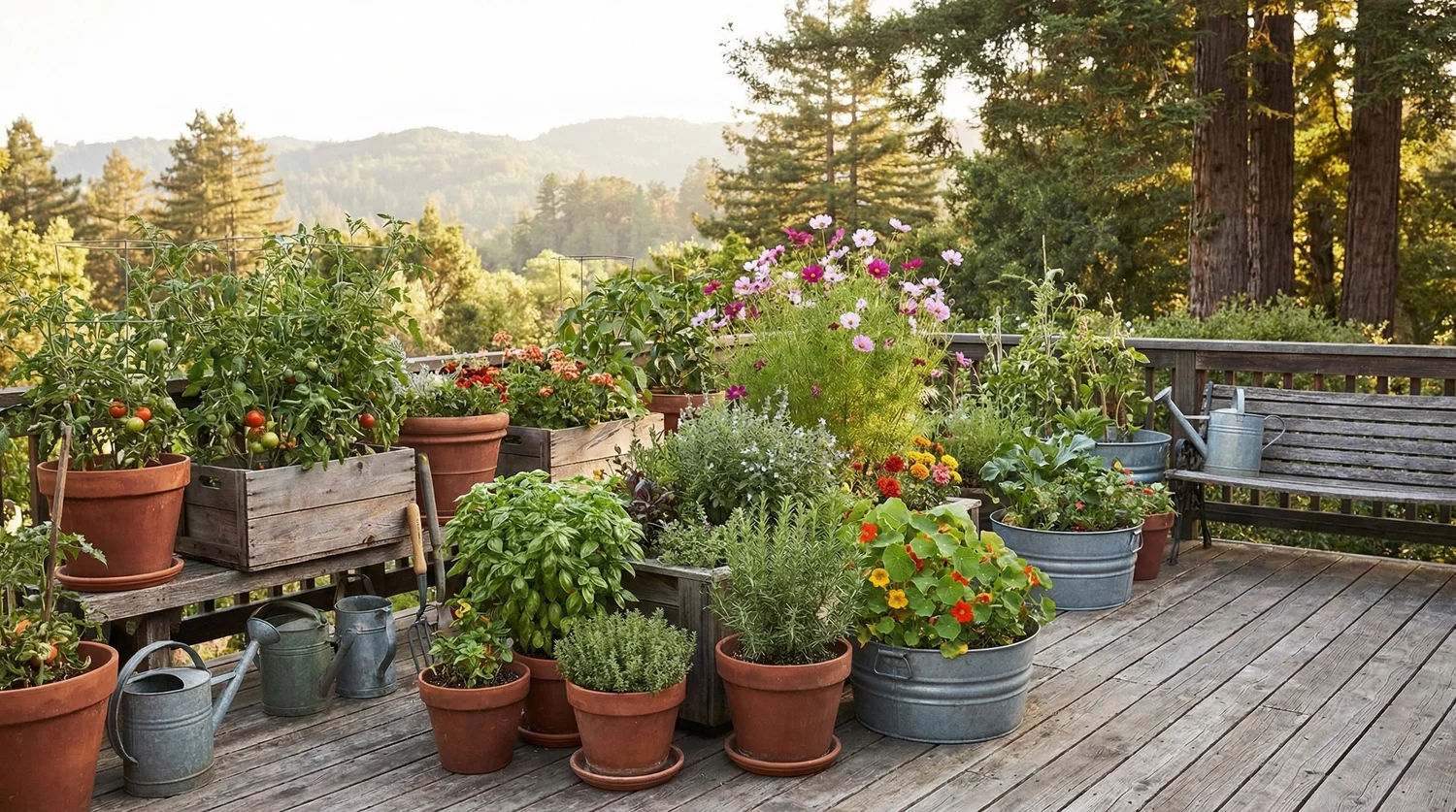
Container gardening lets you grow vegetables, herbs, and flowers in almost any space, from a sunny apartment balcony to a fog-cooled coastal patio. According to UC Agriculture and Natural Resources, container-grown vegetables can produce yields comparable to in-ground gardens when growers select appropriate varieties, use quality potting mix, and maintain consistent watering. In Santa Cruz County, where rental housing is common and yard space is often limited, containers offer a practical path to homegrown food without the commitment of permanent garden beds.
Whether you are working with a small deck in Capitola, a shared driveway in downtown Santa Cruz, or a sunny corner of a Scotts Valley yard, container gardening adapts to your situation. The key is understanding which containers, soil mixes, and plant varieties perform best in our specific coastal and inland microclimates. This guide covers everything you need to start growing successfully in pots, with recommendations grounded in what actually works along the Central Coast.
Which Containers Work Best for Growing Food?
The container you choose affects root health, moisture retention, and how often you need to water. In Santa Cruz County's mild but sometimes windy climate, the right pot can make the difference between a thriving tomato plant and a stressed one.
Fabric grow bags are one of the best options for vegetable gardening. They promote air pruning of roots, which prevents root-binding and encourages a dense, fibrous root system. Fabric bags in 5-, 7-, and 10-gallon sizes work well for tomatoes, peppers, and squash. They dry out faster than plastic pots, but in our coastal climate where summer fog keeps humidity moderate, this is less of a problem than in hotter inland valleys.
Glazed ceramic pots retain moisture well and look attractive on patios. They work particularly well for herbs and smaller vegetables like lettuce and radishes. Choose pots with drainage holes or drill your own. Unglazed terra cotta is beautiful but dries out quickly, requiring more frequent watering during warm spells.
Plastic nursery pots are lightweight, affordable, and retain moisture longer than any other material. Five-gallon buckets (food-grade, with drainage holes drilled in the bottom) are a budget-friendly option that many experienced Santa Cruz gardeners rely on. They are not the most attractive choice, but they perform well and can be hidden inside decorative cache pots.
Self-watering containers have a built-in reservoir that wicks water up to roots as needed. These are excellent for gardeners who travel or forget to water. The Earthbox and similar designs are especially useful during our dry summers when container plants may need daily attention.
For sizing, follow these general guidelines:
- Herbs, lettuce, radishes: 1- to 3-gallon containers
- Peppers, bush beans, chard: 3- to 5-gallon containers
- Tomatoes, cucumbers, squash: 7- to 15-gallon containers
- Dwarf fruit trees: 15- to 25-gallon containers
Bigger is almost always better with containers. Larger volumes of soil hold moisture longer, buffer temperature swings, and give roots more room to grow. When in doubt, go one size up.
What Potting Mix Should You Use for Container Vegetables?
Never use garden soil in containers. It compacts, drains poorly, and can harbor diseases. Container gardening requires a dedicated potting mix that stays loose and well-aerated while holding enough moisture to keep roots hydrated between waterings.
A good base potting mix for vegetables includes peat moss or coconut coir for moisture retention, perlite or pumice for drainage, and compost for nutrients and beneficial microbes. UC research on container media recommends a mix that drains freely but retains adequate moisture, typically a blend of roughly 40 percent peat or coir, 30 percent perlite or pumice, and 30 percent compost.
For Santa Cruz County gardeners, locally sourced pumice from landscape supply yards is an excellent perlite alternative. It is heavier (which helps stabilize tall plants in wind) and does not float to the surface during watering the way perlite does.
You can buy quality bagged potting mixes at local nurseries. Look for mixes labeled for vegetables or container gardening. Avoid mixes with added moisture-control crystals for edible crops, as some gardeners prefer to manage watering themselves.
Refreshing potting mix between seasons: You do not need to replace all your potting mix each year. Remove the top few inches, break up compacted areas, and blend in fresh compost and a handful of perlite or pumice. This extends the life of your mix for two to three seasons before a full replacement is needed.
For acid-loving plants like blueberries (which grow beautifully in containers here), amend your mix with additional peat moss and use an acidifying fertilizer to maintain a pH between 4.5 and 5.5.
Which Vegetables and Herbs Thrive in Containers Along the Central Coast?
Almost any vegetable can grow in a container if the pot is large enough, but some varieties are specifically bred for container culture and perform significantly better in limited root space.
Tomatoes are the most popular container vegetable, and for good reason. Determinate (bush) varieties like 'Patio Princess,' 'Bush Early Girl,' and 'Tumbling Tom' are bred for compact growth. In Santa Cruz's coastal climate, cherry tomato varieties often outperform large slicers in containers because they ripen faster during our cooler summers. 'Sungold,' 'Sweet 100,' and 'Juliet' are reliable producers even in partially foggy locations.
Peppers are natural container plants. Their compact root systems and upright growth habit make them well-suited to 5-gallon pots. 'Shishito,' 'Jimmy Nardello,' and 'Padron' are excellent choices that produce prolifically through our long growing season. Sweet bell peppers need the warmest spot you can find, as our coastal temperatures sometimes slow their ripening.
Leafy greens are perhaps the easiest container crops. Lettuce, spinach, chard, and kale all grow well in relatively shallow containers (8 to 12 inches deep). In Santa Cruz, you can grow lettuce nearly year-round in containers, since our mild winters rarely bring hard freezes and our cool summers prevent the bitter bolting that plagues inland gardeners.
Herbs are a natural fit for container growing. Basil, cilantro, parsley, rosemary, thyme, and mint all perform well in pots. Keep mint in its own container because it will take over any shared planting. Mediterranean herbs like rosemary, thyme, and oregano prefer drier conditions and excellent drainage, so add extra perlite to their mix.
Bush beans produce surprisingly well in containers. Plant them in a wide, shallow container (a half wine barrel works perfectly) and you can harvest a steady supply from spring through fall. 'Provider' and 'Contender' are reliable bush varieties for our area.
Strawberries thrive in containers and hanging baskets. Day-neutral varieties like 'Albion' and 'Seascape' (developed at UC Davis for California conditions) produce fruit from spring through fall in our climate. A strawberry tower or tiered planter maximizes your harvest in minimal space.
How Do You Water Container Gardens in Santa Cruz's Climate?
Watering is the single most important skill in container gardening. Containers dry out much faster than in-ground beds, and inconsistent watering causes blossom end rot in tomatoes, bitter lettuce, and stressed plants that attract pests.
In Santa Cruz County, your watering schedule will vary dramatically by season and location. Coastal gardens with regular fog may need watering every two to three days in summer, while inland locations in Scotts Valley or the San Lorenzo Valley may require daily watering during heat waves.
The finger test is the simplest way to check moisture. Push your finger two inches into the soil. If it feels dry at that depth, water thoroughly. If it still feels moist, wait another day. This is more reliable than watering on a fixed schedule because conditions change daily.
Water deeply when you water. Light sprinkles only wet the top inch and encourage shallow root growth. Water until you see it flowing freely from the drainage holes. This ensures the entire root zone is hydrated and flushes out accumulated salts from fertilizer.
Morning watering is ideal. It gives plants moisture before the warmest part of the day and allows foliage to dry before evening, reducing disease risk. If you miss the morning, afternoon watering is fine. Just avoid wetting the leaves late in the day.
For gardeners with many containers, a drip irrigation system is a worthwhile investment. Simple drip kits with adjustable emitters for each pot connect to a hose bib and timer. This automates watering and delivers moisture directly to the root zone with minimal waste. Many Santa Cruz garden centers carry drip irrigation components and can help you design a system.
During our dry season (typically May through October), container plants may need water every day or even twice daily during heat events. Grouping containers together helps create a more humid microclimate and reduces individual water loss. Mulching the soil surface in each pot with a thin layer of straw or wood chips also slows evaporation.
How Much Sun Do Container Plants Need?
One advantage of container gardening is mobility. You can position pots to capture the best light and even move them as the sun's angle changes with the seasons. In Santa Cruz County, where fog, shade trees, and building shadows create varied light conditions, this flexibility is valuable.
Full sun crops (tomatoes, peppers, squash, beans, cucumbers) need at least six to eight hours of direct sunlight daily. In coastal areas where morning fog is common, position these containers where they will receive the strongest afternoon light. South- and west-facing walls that reflect heat can boost temperatures enough to ripen warm-season crops that might otherwise struggle.
Partial shade crops (lettuce, spinach, chard, kale, herbs like cilantro and parsley) perform well with four to six hours of direct light. These are excellent choices for north-facing patios or spots shaded by nearby buildings. In fact, some afternoon shade actually helps leafy greens produce longer without bolting during warmer months.
Shade-tolerant crops (mint, chives, some varieties of lettuce) can manage with as little as three to four hours of dappled or indirect light. These are good options for under-tree locations or covered porches.
If your sunniest spot changes seasonally (as it does for many homes in the Santa Cruz Mountains), consider placing containers on plant caddies with wheels so you can roll them to follow the light without straining your back.
How Should You Fertilize Container Vegetables?
Container plants need more frequent fertilizing than in-ground gardens because nutrients leach out every time you water. A consistent feeding program is essential for productive container vegetables.
Start with compost in your potting mix. A blend containing 25 to 30 percent quality compost provides a slow-release nutrient base. This alone will feed most plants for the first three to four weeks after planting.
Supplement with liquid fertilizer every one to two weeks once plants are actively growing. Fish emulsion and liquid kelp are popular organic options among Santa Cruz gardeners. Fish emulsion provides nitrogen for leafy growth, while kelp adds potassium and trace minerals. Many growers alternate between the two or use a blend.
Slow-release granular fertilizer mixed into the potting soil at planting time provides a steady nutrient supply over several months. Organic options like fish meal, bone meal, and kelp meal break down gradually and feed the soil biology as well as the plant.
Watch your plants for signs of nutrient deficiency. Yellowing lower leaves often indicate nitrogen deficiency. Purple-tinged leaves can signal phosphorus shortage. Poor fruit set despite healthy foliage may mean the plant needs more potassium. Adjusting your fertilizer based on what the plant tells you is more effective than following a rigid schedule.
Avoid over-fertilizing, which causes excessive leafy growth at the expense of fruit production and can burn roots. When in doubt, use half the recommended rate and increase gradually.
What Are the Best Tips for Container Gardening Success in Santa Cruz?
After years of container gardening along the Central Coast, several practices consistently make the difference between a struggling container garden and a productive one.
Elevate containers slightly off the ground using pot feet, bricks, or a small rack. This improves drainage, prevents water from pooling under the pot, and discourages slugs and snails from taking up residence underneath (a persistent challenge in our damp coastal climate).
Use companion planting in larger containers. A classic combination is a tomato plant surrounded by basil and a trailing nasturtium at the edge. The basil may help deter certain pests, the nasturtium attracts beneficial insects, and the combination makes efficient use of space.
Rotate your crops between containers each season, just as you would in an in-ground garden. This helps prevent soilborne disease buildup. If a tomato grew in a particular pot last year, plant beans or lettuce in it this season.
Protect containers from wind. Exposed balconies and rooftops in Santa Cruz can get battered by afternoon winds, especially near the coast. Position tall plants against walls for support, use heavy pots or weigh down lighter ones, and consider a small windbreak for exposed locations.
Extend your season by moving containers to sheltered spots when weather turns cold. A pot of basil that would die in an exposed garden bed might survive well into November tucked against a warm south-facing wall. This is one of the great advantages of container gardening in our mild but variable climate.
Start small. Five to ten well-maintained containers will produce more food and more satisfaction than thirty neglected ones. Master the basics of watering and feeding with a manageable number of pots before scaling up.
Frequently Asked Questions
Can you grow tomatoes in containers in Santa Cruz County?
Yes, tomatoes grow very well in containers here. Choose determinate or compact indeterminate varieties and use at least a 7-gallon pot with quality potting mix. Cherry and grape tomato varieties are especially reliable in containers along the coast, where cooler temperatures sometimes slow the ripening of larger varieties. Provide a cage or stake for support and water consistently.
How often should you water container plants in coastal California?
During summer, most container vegetables in Santa Cruz County need water every one to two days, depending on pot size, material, and sun exposure. Coastal fog can reduce watering needs compared to inland locations. Check soil moisture by pushing your finger two inches deep. If it feels dry at that depth, water thoroughly until water flows from the drainage holes.
What size container do you need for vegetables?
Small herbs and lettuce grow well in 1- to 3-gallon pots. Peppers, bush beans, and chard need 3- to 5-gallon containers. Tomatoes, cucumbers, and squash perform best in 7- to 15-gallon pots. Larger containers hold more moisture, buffer temperature changes, and give roots room to grow. When choosing between two sizes, the bigger pot will almost always produce better results.
Is regular garden soil okay for containers?
No. Garden soil compacts in containers, restricts drainage, and can introduce diseases and weed seeds. Always use a dedicated potting mix made with peat moss or coconut coir, perlite or pumice, and compost. This combination stays loose and well-aerated while holding enough moisture to keep roots healthy between waterings. Refresh your mix each season with added compost.
What vegetables grow in shade on a patio?
Leafy greens like lettuce, spinach, chard, and kale grow well with just four to six hours of sunlight. Herbs including cilantro, parsley, chives, and mint tolerate partial shade. Root vegetables like radishes can also produce in less-than-full sun. These crops actually benefit from afternoon shade in warmer months, which prevents bolting and extends your harvest season.
How do you fertilize container vegetables organically?
Start by blending compost into your potting mix at planting time. Once plants are actively growing, apply liquid fish emulsion or liquid kelp every one to two weeks. You can also mix slow-release organic granular fertilizer into the soil at planting. Watch plants for signs of nutrient deficiency such as yellowing leaves and adjust feeding accordingly. Avoid over-fertilizing, which promotes foliage over fruit.
Can you garden year-round in containers in Santa Cruz?
Santa Cruz County's mild climate makes year-round container gardening very feasible. Grow warm-season crops like tomatoes and peppers from spring through fall. Transition to cool-season crops like lettuce, kale, peas, and root vegetables for fall and winter harvest. Containers near warm walls can extend the season for tender plants. Cover crops are not practical in pots, but a layer of mulch protects soil during winter.
What is the cheapest way to start container gardening?
Food-grade 5-gallon buckets (often available free from bakeries and restaurants) with drainage holes drilled in the bottom are the most affordable containers. Mix your own potting soil using bulk ingredients from a landscape supply yard. Start plants from seed rather than buying transplants. Even a modest investment of twenty to thirty dollars can set up a productive container garden with several pots of vegetables and herbs.
Start Growing in Containers This Season
Container gardening removes many of the barriers to growing your own food. You do not need a yard, perfect soil, or years of experience. A few well-chosen pots, quality potting mix, and the right varieties for our Central Coast climate are all it takes to start harvesting fresh vegetables and herbs from your own space.
For research-based container gardening guidance, see UC Master Gardeners' Container Gardening Basics, Edibles in Containers, and UC's container soil recommendations.
Visit Your Garden Toolkit for printable planting guides, seasonal checklists, and tools to help you plan your container garden with confidence.
