

Building a Pizza Garden with Kids
A few of the product links in this guide are affiliate links. If you buy through one, Ambitious Harvest may earn a small commission at no extra cost to you, which helps keep these guides free. We only point to gear we would use in our own Santa Cruz garden. As an Amazon Associate, we earn from Read our full disclosure.
A Garden You Can Eat on Pizza
If you want to get kids genuinely excited about gardening, give them a purpose they care about. And what kid doesn't care about pizza?
A pizza garden grows the ingredients for homemade pizza: tomatoes for sauce, basil and oregano for flavor, peppers for toppings. You can make it as simple as a few containers or as elaborate as a circular bed divided into "slices." Either way, the payoff is the same: a pizza made with ingredients your kids grew themselves.
The UC Master Gardeners note that including children in the garden helps them develop skills for life, and gardening promotes both mental and physical health.
Designing Your Pizza Garden
The classic pizza shape:
The traditional pizza garden is a circle divided into wedges, like slices of pizza. Each wedge holds a different plant. This works great if you have space for a dedicated bed (6 to 8 feet across is ideal).
To create it:
Mark a circle in your garden area using string and a stake
Divide it into 6 or 8 wedges using paths, stones, or small boards
Plant one crop per wedge
Add a stepping stone or mulched path in the center so kids can reach everything
No space? No problem:
A pizza garden works just as well in containers, a single raised bed, or a row along a fence. The "pizza" concept is about what you grow, not the shape. Group your pizza plants together however works for your space.
What to Plant
Here are the essential pizza garden crops, all of which grow well in Santa Cruz:
Tomatoes (The Sauce)
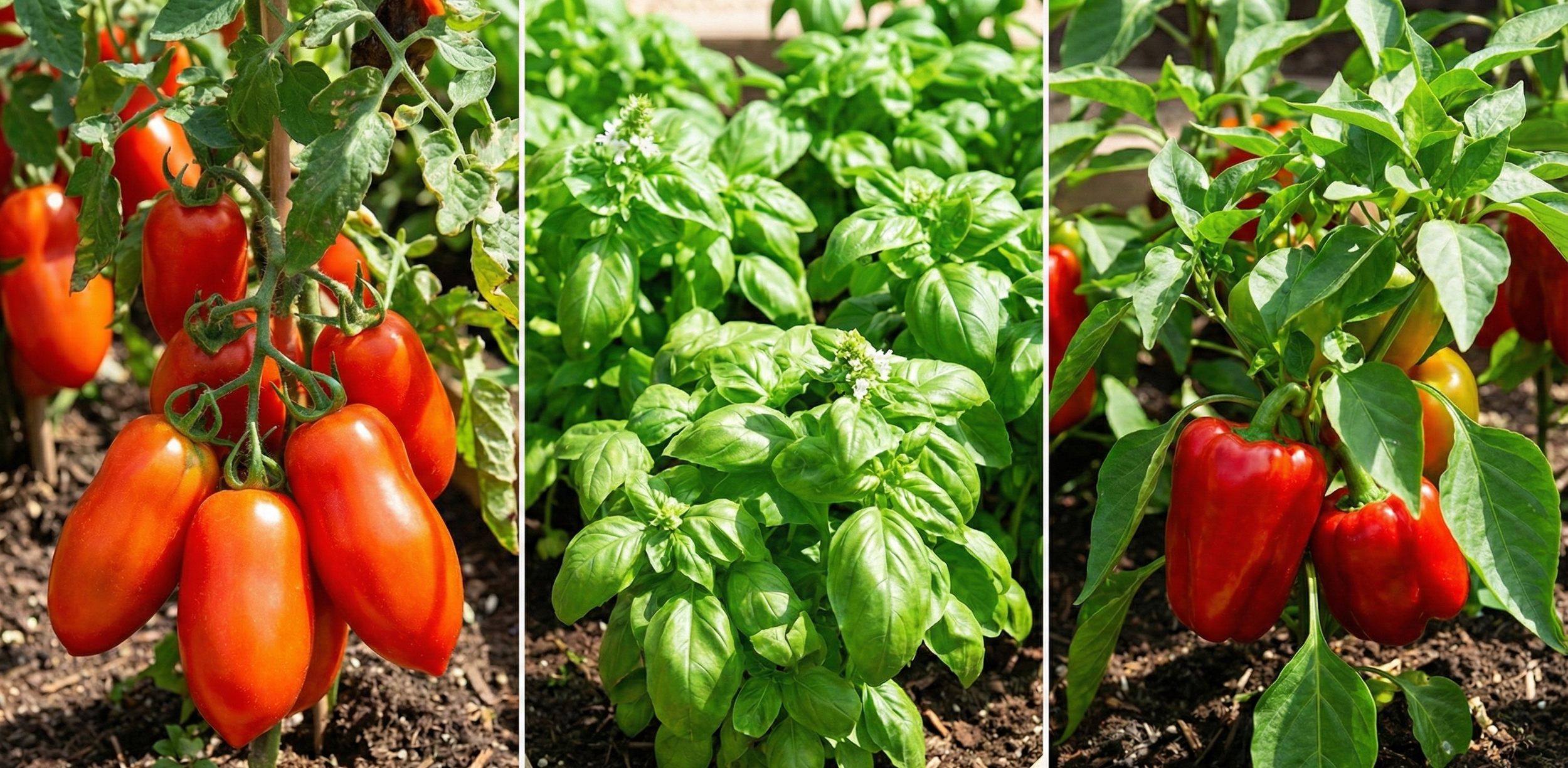
You can't have pizza without tomatoes. For a pizza garden, paste tomatoes work best because they're meatier and make better sauce, but cherry tomatoes are easier for kids and great for fresh snacking.
'San Marzano' or 'Roma' for sauce
'Sungold' or 'Sweet 100' for snacking
Plant after soil warms, April through June
Provide a cage or stake
Basil (The Classic Herb)
Basil and tomatoes are best friends in the garden and on the pizza. The smell of fresh basil is one of summer's great pleasures.
'Genovese' for classic Italian flavor
'Purple Ruffles' for something different
Plant after last frost when soil is warm
Pinch flowers to keep leaves coming
Oregano (The Pizza Herb)
Dried oregano is the signature pizza flavor. Fresh oregano is even better. Once established, oregano is nearly indestructible and comes back year after year.
Greek oregano has the strongest flavor
Plant from transplants in spring
Grows well in containers
Harvest anytime, dries easily
Bell Peppers (The Topping)
Sweet bell peppers are mild enough for picky eaters and come in red, yellow, orange, and green. They take a while to mature but are worth the wait.
'California Wonder' is a reliable choice
'Mini Bell' varieties are fun for kids
Plant transplants after soil warms
Be patient. Peppers are slow but productive
Hot Peppers (For Adventurous Families)
If your family likes a little heat, add a hot pepper plant. Kids often love the excitement of growing something "spicy" even if they won't eat it.
'Jalapeño' is a good starter
'Padron' are mild until they're not (fun surprise)
Handle with care after touching hot peppers
Onions or Garlic (The Flavor Base)
Every good pizza sauce starts with onions and garlic. These take longer to grow but are easy and satisfying to harvest.
Green onions are faster (60 days from seed)
Onion sets are easiest for beginners
Optional Add-Ons:
Parsley: mild, good in sauce
Arugula: peppery, great on pizza after baking
Spinach: for white pizza or calzones
Zucchini: if you have room (and want a lot of zucchini)
When to Plant
In Santa Cruz, you can plant your pizza garden in stages:
Fall (October to November):
Garlic (harvest the following summer)
Early Spring (March to April):
Oregano transplants
Onion sets
Parsley, arugula, spinach from seed
Late Spring (April to June):
Tomato transplants
Basil transplants or seeds
Pepper transplants
Plan your planting so everything is growing strong by midsummer when you'll want to start harvesting for pizza night.
Caring for Your Pizza Garden
Watering: Most pizza garden crops like consistent moisture. Water at the base of plants, not on the leaves. Drip irrigation or soaker hoses work well if you want to make it easy.
Feeding: Tomatoes and peppers are hungry plants. Add compost at planting and fertilize every few weeks during the growing season. Herbs like oregano and basil need less feeding.
Harvesting:
Pick basil leaves regularly from the top of the plant
Harvest oregano anytime (it's best just before flowering)
Wait for tomatoes to fully ripen on the vine
Pick peppers when they reach full size and color
Pull garlic when the lower leaves turn brown
Making Pizza Together
The harvest is only half the fun. Making pizza together completes the experience.
Simple homemade pizza dough:
1 cup warm water
1 packet (2 1/4 tsp) active dry yeast
3 cups flour
2 tbsp olive oil
1 tsp salt
1 tsp sugar
Dissolve yeast and sugar in warm water. Let sit 5 minutes until foamy. Add flour, oil, and salt. Mix and knead until smooth. Let rise 1 hour. Roll out and top with your garden ingredients.
Easy fresh tomato sauce:
Blend or crush fresh tomatoes
Add minced garlic, salt, and a drizzle of olive oil
Stir in fresh oregano and basil
Use raw or simmer for 15 minutes
Assembly:
Let kids do as much as possible:
Roll or stretch the dough
Spread the sauce
Tear basil leaves and sprinkle oregano
Add cheese and toppings
Slice peppers (with supervision)
Bake at 450 to 500 degrees until the crust is golden and the cheese is bubbly. Top with fresh basil after baking for the best flavor.
Beyond Pizza Night
Once you've got a pizza garden going, you can expand the concept:
Salsa garden: tomatoes, peppers, cilantro, onions
Salad garden: lettuce, spinach, cucumbers, cherry tomatoes
Taco garden: peppers, tomatoes, cilantro, jalapeños
Pasta garden: tomatoes, basil, garlic, zucchini
The idea is the same: grow what you'll eat, and eat what you grow. When kids see the connection between the garden and the dinner table, something clicks.
A Garden They'll Remember
Building a pizza garden with your kids isn't really about the pizza. It's about working together, watching things grow, and creating something from scratch. Years from now, they might not remember every meal you made together. But they'll remember the summer they grew their own pizza toppings.
For more on growing the herbs your pizza garden needs, see our guide to growing herbs in Santa Cruz.
Tomatoes are the star of any pizza garden. Our tomato growing guide has variety picks and planting tips for local conditions.
Frequently Asked Questions About Pizza Gardens with Kids
What plants do you need for a pizza garden?
Essential pizza garden crops include tomatoes (for sauce), basil (classic pizza herb), oregano (the signature pizza flavor), and bell peppers (mild topping). Optional additions include garlic, onions, hot peppers like jalapeño, parsley, arugula (great on pizza after baking), and spinach for white pizza. All of these grow well in Santa Cruz County. Choose paste tomatoes like San Marzano for sauce or cherry tomatoes like Sungold for snacking.
How big does a pizza garden need to be?
A classic circular pizza garden is 6-8 feet across, divided into wedges like pizza slices. But you don't need a dedicated bed. Pizza gardens work in containers, a single raised bed, a row along a fence, or scattered pots on a patio. The "pizza" concept is about what you grow, not the shape. Even a few containers with one tomato, one basil, and one pepper plant makes a functional pizza garden.
When should I plant a pizza garden in Santa Cruz?
Plant in stages: garlic goes in fall (October-November) for summer harvest. In early spring (March-April), plant oregano transplants, onion sets, and cool-season crops like parsley and arugula. In late spring (April-June) when soil warms, add tomato transplants, basil, and pepper transplants. Time your planting so everything is growing strong by midsummer when you'll harvest for pizza night.
What age kids can help with a pizza garden?
Kids of all ages can participate at different levels. Toddlers (1-3) can help water, dig in soil, and pick ripe tomatoes. Preschoolers (3-5) can plant seeds, pull weeds, and tear basil leaves. School-age kids (6-10) can do more independent tasks like transplanting, regular watering, and helping make pizza. Older kids can take ownership of specific plants or lead the pizza-making process. Match tasks to ability.
Can I grow a pizza garden in containers?
Absolutely. A single large container (15+ gallons) can hold one tomato plant with basil planted around its base. Use separate pots for peppers and oregano. Oregano does especially well in containers and comes back year after year. Container pizza gardens work great on patios, balconies, or small spaces. Just ensure containers get at least 6 hours of sun and consistent watering.
How do I get kids to actually eat what they grow?
Kids are more likely to eat vegetables they've grown themselves. Involve them in every step: planting, watering, harvesting, and especially cooking. Let them pick their own toppings from the garden. Make pizza assembly hands-on (stretching dough, tearing basil, adding cheese). The connection between garden and table creates ownership. Some kids who "hate" tomatoes will eat ones they grew themselves.
What's the easiest pizza garden herb for beginners?
Oregano is the easiest pizza garden herb. Once established, it's nearly indestructible and comes back year after year. It tolerates some drought, grows well in containers or ground, and needs minimal care. Greek oregano has the strongest flavor. Harvest anytime, and it dries easily for year-round use. Basil requires more attention (pinch flowers, consistent water) but offers bigger immediate rewards.
Can I make pizza sauce from fresh garden tomatoes?
Yes, and it's simple. Blend or crush fresh ripe tomatoes, add minced garlic (also from your garden), salt, and a drizzle of olive oil. Stir in fresh oregano and basil. Use the sauce raw for bright fresh flavor, or simmer 15 minutes for a more concentrated taste. Paste tomatoes like San Marzano make thicker sauce, but any ripe tomato works. Kids can help with everything except hot stovetop cooking.
Free Kids Gardening Resources
Download these free guides for gardening with kids in Santa Cruz County:
Seasonal Planting Calendar - Know exactly when to plant each pizza garden crop in Santa Cruz County. Month-by-month guidance helps you time tomatoes, basil, peppers, and garlic for the best harvest.
Beginner Garden Setup Checklist - Starting your first garden with kids? This checklist covers site selection, raised beds or containers, soil prep, and what to gather before planting.
Companion Planting Guide - Learn which plants grow well together. Tomatoes and basil are garden best friends! This guide helps you plan plant combinations for healthier gardens.
Vegetables by Season - Quick reference for what to plant in spring, summer, fall, and winter. Helpful for planning pizza garden timing and year-round family gardening projects.
