

The 9 Best Plant Nurseries in Santa Cruz County (And What Each Does Best)
Where Should You Shop for Plants in Santa Cruz County?
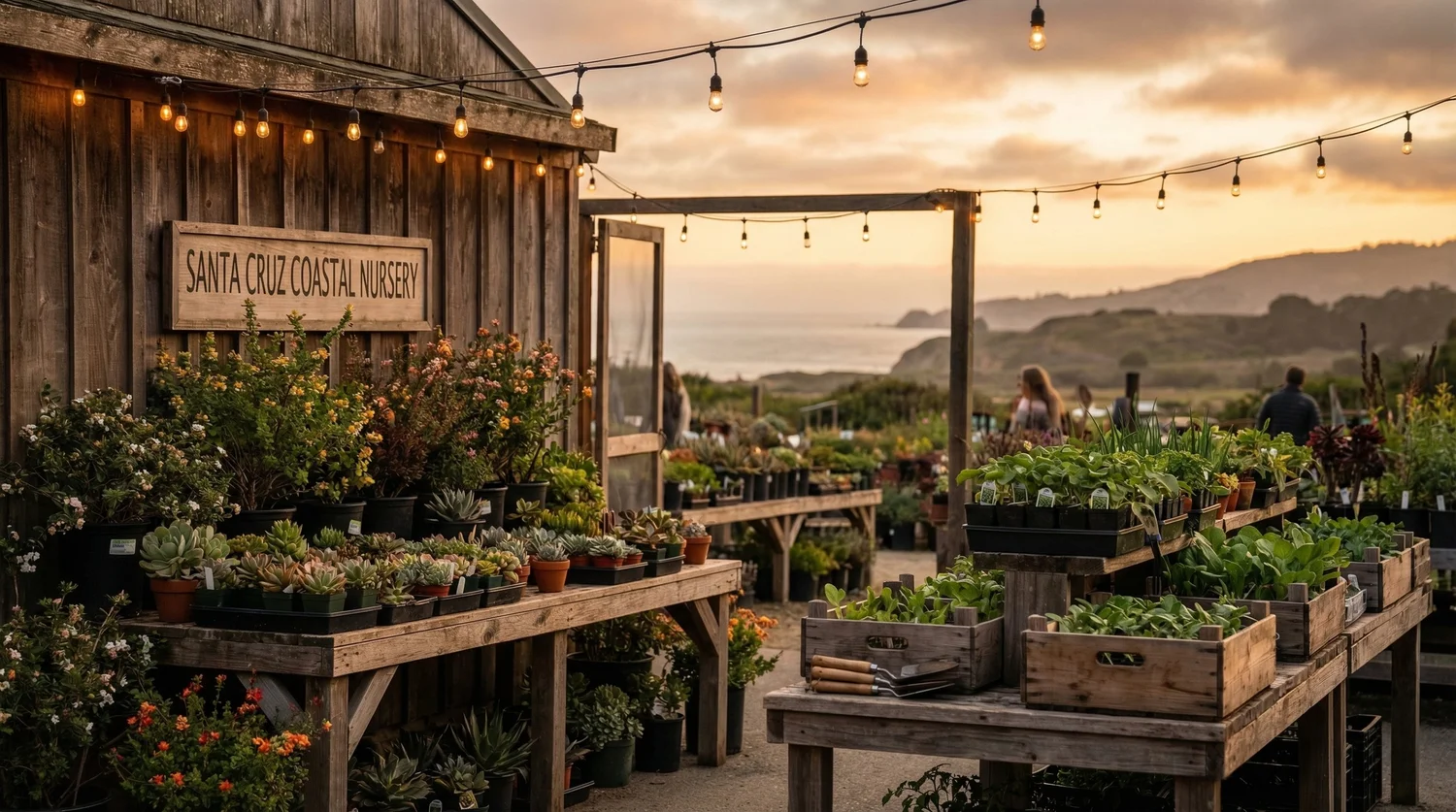
Santa Cruz County has many nurseries with different specialties, and local staff can help match plants to coastal, valley, and mountain conditions. Local origin alone does not guarantee faster establishment or freedom from pests. UC IPM advises gardeners to choose plants suited to the site’s soil, climate, water, temperature, and light, and to inspect stock for quality and pest problems. Use this guide to compare specialties, then verify current inventory, services, hours, and plant condition with the nursery.
What follows is not a ranking but a guide to what each nursery specializes in and when to visit. Every one of these businesses contributes something unique to our local gardening community. The best nursery for you depends on what you are growing, what stage your garden is in, and what kind of expertise you need.
What Makes Sierra Azul Nursery and Gardens Special?
Sierra Azul Nursery and Gardens, located at 2660 East Lake Avenue in Watsonville, is the nursery that serious California native plant enthusiasts and water-wise gardeners in Santa Cruz County consider their home base. Family owned and operated for more than thirty years, this nursery has built a reputation as one of the premier sources for native and Mediterranean climate plants in the entire Central Coast region.
What they do best. Sierra Azul specializes in California native plants, Mediterranean climate species, and drought-tolerant ornamentals. Their selection of native grasses, manzanitas, ceanothus, salvias, and other locally adapted species is one of the deepest you will find locally. If you are designing a low-water landscape, restoring native habitat, or adding fire-resistant plantings to your property, Sierra Azul is where you start.
The gardens. What sets Sierra Azul apart is their extensive demonstration gardens, which show how native and Mediterranean plants look in mature, established landscapes. Walking these gardens gives you a much better sense of how a plant will actually perform in your yard than reading a nursery tag ever could. The staff encourages you to wander and often provides informal guided insights if you have questions.
Staff expertise. The team at Sierra Azul has deep knowledge of native and drought-tolerant plants, including how those plants behave in different Santa Cruz County microclimates. They can tell you which manzanita thrives near the coast versus inland, which native grasses handle heavy clay, and how to design a planting that looks good year-round with minimal irrigation. This level of locally specific knowledge is uncommon and extremely valuable.
Best time to visit. Fall through early spring (October through March) is the best time to plant natives in Santa Cruz County, and it is also when Sierra Azul's selection is at its peak. The spring wildflower season (March through May) makes the demonstration gardens particularly stunning. Visit on a weekday morning for the most attentive staff interaction.
Dig Gardens
Dig Gardens operates two locations in Santa Cruz: the Water Street shop in Santa Cruz and a second location on Soquel Drive in Aptos. This nursery has become a cultural institution as much as a plant shop, blending contemporary design sensibility with genuine horticultural knowledge.
What they do best. Dig Gardens excels at indoor plants, succulents, unusual ornamentals, and curated gift items. Their houseplant selection runs from common pothos and philodendrons to rare aroids, unusual tropical foliage, and collector-grade succulents. If you are looking for an interesting container plant, a terrarium specimen, or a gift for a plant-loving friend, Dig is the first place to check.
Design services. Dig offers landscape design and installation services with a modern aesthetic that emphasizes texture, structure, and drought tolerance. Their designed landscapes around Santa Cruz showcase a distinctive style that combines succulents, grasses, and architectural plants in ways that feel both contemporary and regionally appropriate.
The shopping experience. Both locations are beautifully merchandised and feel more like curated boutiques than traditional nurseries. This is intentional and appeals to gardeners who appreciate design and aesthetics alongside plant quality. The staff is knowledgeable and enthusiastic, particularly about indoor plants and succulents.
What to know before you go. Dig's prices reflect its boutique positioning and are generally higher than box stores or traditional nurseries. The premium buys you carefully selected, healthy specimens and informed advice. The Water Street shop leans boutique, while the Aptos store is closer to a full garden center and carries soil, starts and fruit trees. But for special plants and beautiful containers, Dig is worth the investment.
Why Is Scarborough Gardens a Santa Cruz Institution?
Scarborough Gardens has been a fixture of the Santa Cruz County gardening community, sitting alongside Scarborough Lumber at 33 El Pueblo Road in Scotts Valley. This is a true full-service, old-school nursery in the best sense, with the kind of broad, practical plant knowledge that comes from serving local gardeners.
What they do best. Scarborough's strength is its breadth. This is where you go when you need a well-rounded selection of vegetables, herbs, annuals, perennials, shrubs, trees, and soil amendments all in one place. Their vegetable starts in spring are some of the most reliable in the county, grown to be ready for Santa Cruz County conditions.
Vegetable starts. Scarborough's spring vegetable start selection is one of the best reasons to visit. Tomatoes, peppers, cucumbers, squash, herbs, and other warm-season crops are available in a wide range of varieties, including many heirloom and specialty types that big-box stores never carry.
Staff knowledge. The staff at Scarborough tends toward practical, hands-on gardening expertise. They can answer questions about soil amendments, pest problems, planting timing, and variety selection with the confidence that comes from years of local experience. This is the kind of nursery where you can describe your problem and get a straightforward answer.
Best time to visit. March through May is peak season for vegetable starts and the widest selection of annuals and perennials. Saturday mornings are the busiest time, so visit midweek if you prefer a quieter experience with more staff availability. Fall is a good time for trees, shrubs, and perennials when the selection is fresh and planting conditions are ideal.
What Makes San Lorenzo Garden Center Stand Out?
San Lorenzo Garden Center on River Street in Santa Cruz has earned a loyal following among vegetable gardeners and homesteaders. This is a no-nonsense nursery focused on practical gardening with competitive prices and a down-to-earth atmosphere.
What they do best. San Lorenzo Garden Center is particularly strong in fruit trees, berries, vegetables, and practical garden infrastructure like raised bed materials, irrigation supplies, and bulk soil amendments. If you are building a productive food garden rather than a decorative landscape, San Lorenzo is a smart first stop. Their fruit tree selection in late winter is excellent, with varieties chosen for local climate compatibility.
Bulk materials. San Lorenzo carries bulk soils, compost, bark mulch, and gravel at competitive prices, which is a significant practical advantage for gardeners building or filling raised beds. Buying bulk materials by the cubic yard rather than in bags saves substantial money on larger projects. They can arrange delivery for larger orders.
Fruit trees and berries. The bare-root fruit tree selection from December through February is one of the best in the county. Apple, pear, plum, citrus, fig, and stone fruit varieties are available, with staff who can advise on pollinators, rootstocks, and varieties suited to specific Santa Cruz County microclimates. Berry plants, including blueberries, raspberries, blackberries, and strawberries, are also well-represented.
Best time to visit. January and February for bare-root fruit trees. March through May for vegetable starts and warm-season planting supplies. The nursery tends to be less crowded than some of the more well-known locations, making it a relaxed shopping experience year-round.
Where Else Should Santa Cruz County Gardeners Shop?
Beyond the major nurseries, several other plant sources in Santa Cruz County deserve your attention for specific needs.
Monterey Bay Nursery (wholesale, available through retail partners). Monterey Bay Nursery, which has a Watsonville mailing address and grows on fifty acres in Royal Oaks, is a wholesale operation that does not sell directly to the public, their plants stock many local garden centers. Look for their tags at retail nurseries. Monterey Bay grows an enormous range of California natives, perennials, and ornamental grasses, and their stock turns up at garden centers all over the region.
Local farmers markets. The Santa Cruz, Felton, and Scotts Valley farmers markets often have vendors selling vegetable starts, herb plants, and native plants during the spring season. These plants are typically grown very locally, sometimes by home-scale growers who specialize in unusual varieties. Prices are often competitive, and you get to meet the people who grew your plants. The Saturday Santa Cruz Farmers Market downtown is the largest and most consistent source.
UC Santa Cruz Farm and Garden. The Center for Agroecology at UC Santa Cruz, which manages the UCSC Farm and the Alan Chadwick Garden, sells organic vegetable starts, herb plants, and flower seedlings at its spring plant sale, usually the last weekend of April or the first weekend of May. These sales are popular and draw long lines, but the quality of the starts is excellent and the prices are very reasonable. The proceeds support the university's organic farming education programs. Check the Center's site for the date each year, and go early if there is a variety you particularly want.
Habitat restoration nurseries. For native plants grown from local seed, watch for the California Native Plant Society Santa Cruz County chapter's sales at the Cabrillo College Horticulture Center, where plants raised from seed collected in local wild populations are marked as such. These plants are genetically adapted to our specific area and are ideal for habitat restoration, erosion control, and naturalistic landscape projects.
How Do You Choose the Right Nursery for Your Needs?
With so many options, choosing where to shop can feel overwhelming. Here is a practical framework for matching your needs to the right nursery.
If you are starting a vegetable garden: Scarborough Gardens or San Lorenzo Garden Center for starts and supplies. UCSC plant sale for organic starts if your timing works out.
If you are planting fruit trees: San Lorenzo Garden Center for the widest bare-root selection and practical advice. Sierra Azul if you are interested in native fruit-bearing plants like elderberry and currant.
If you are designing a drought-tolerant landscape: Sierra Azul for natives and Mediterranean species. Dig Gardens for succulents and contemporary design inspiration.
If you want houseplants: Dig Gardens for the best selection and most unique specimens in the county.
If you need bulk soil and supplies: San Lorenzo Garden Center for competitive pricing on bulk materials.
Many Santa Cruz County gardeners shop at multiple nurseries throughout the year, visiting each one for what it does best. There is no single nursery that excels at everything, and spreading your purchases across local businesses supports the diverse nursery community that makes our county such a great place to garden.
What Should You Look for When Buying Plants at Any Nursery?
Regardless of which nursery you visit, knowing how to select healthy plants saves you from bringing home problems.
Check the roots. Gently slide the plant out of its pot (most nurseries allow this if you ask). Healthy roots should be white or light tan, not dark brown or black. Some circling at the pot edges is normal, but a solid mass of roots with no visible soil means the plant is rootbound and may struggle to establish. Avoid rootbound plants unless you are willing to score the root ball at planting.
Inspect for pests. Look at the undersides of leaves for aphids, whiteflies, spider mites, or scale. Check stems for signs of mealybugs (white, cottony masses). Healthy nursery plants should be pest-free. If you find pests on one plant, check neighboring plants as well. It is better to leave infested plants at the nursery than to bring problems home.
Assess overall vigor. Choose plants with strong, compact growth and healthy leaf color. Avoid plants that are leggy, yellowed, wilted, or showing signs of disease. For flowering plants, choose those with more buds than open flowers. They will put on a longer show in your garden.
Read the tag, then ask questions. Plant tags provide basic information, but a knowledgeable nursery staff member can tell you how the plant performs specifically in Santa Cruz County conditions. Ask about water needs, sun exposure, mature size, and any local pest or disease issues. Good nurseries welcome these questions and consider them part of the service they provide.
Consider the season. Plants installed at the right time of year establish faster and perform better. In Santa Cruz County, fall (October through November) is the ideal planting season for most perennials, shrubs, and trees. Spring is best for warm-season vegetables and annuals. Buying plants in season at a local nursery means they are ready to go into the ground immediately, unlike mail-order plants that may arrive at inconvenient times.
If you are willing to go further afield, our Santa Cruz garden road trip guide covers the nurseries, public gardens, and u-pick farms within a day's drive, sorted by what you are actually shopping for.
Frequently Asked Questions
Are local nursery plants worth the higher price compared to big-box stores?
In most cases, yes. Local nursery plants are typically healthier, better acclimated to our climate, and come with knowledgeable advice. Big-box store plants are often shipped from distant wholesale growers and may have spent days on a truck in suboptimal conditions. The survival rate and long-term performance of locally grown nursery stock is consistently better, which makes the higher upfront cost a better value over time.
When is the best time of year to visit nurseries in Santa Cruz County?
Each season offers different highlights. January and February are best for bare-root fruit trees and roses. March through May is peak season for vegetable starts, annuals, and the widest overall selection. Fall (September through November) is ideal for perennials, shrubs, and trees, and many nurseries run fall sales to move inventory before winter. Any time is good for houseplants and succulents.
Do Santa Cruz County nurseries offer landscape design services?
Several do. Dig Gardens offers full design and installation services. Sierra Azul provides consultation for native and drought-tolerant landscape projects. Scarborough Gardens can offer informal design advice. For complex projects, consider hiring an independent landscape designer and then sourcing plants from the nursery best suited to the plant palette. Many local designers have established relationships with specific nurseries.
Can I return plants that die after I buy them?
Return policies vary by nursery. Most local nurseries offer some form of guarantee on trees and shrubs, typically for 30 days to one year, provided you have your receipt and the plant received reasonable care. Annual vegetables and flowers are generally not guaranteed because their lifespan is inherently limited. Ask about the specific guarantee before purchasing, especially for expensive trees and shrubs.
Which nursery is best for Santa Cruz County native plants?
Sierra Azul Nursery and Gardens in Watsonville is the clear leader for California natives in our area. Their selection, expertise, and demonstration gardens are unmatched locally. For native plants grown from truly local seed sources, watch for native plant sales hosted by the California Native Plant Society's Santa Cruz County chapter at the Cabrillo College Horticulture Center.
Do any local nurseries sell seeds?
Most Santa Cruz County nurseries carry a selection of seed packets, though none specializes in seeds the way they do in live plants. Scarborough Gardens has one of the broader seed displays. For the widest seed selection, many local gardeners order from mail-order seed companies like Renee's Garden (based in nearby Felton), Johnny's Selected Seeds, or Territorial Seed Company, supplementing with starts from local nurseries for crops that are easier to buy as transplants.
Is it better to buy plants in spring or fall in Santa Cruz County?
For most permanent plantings (perennials, shrubs, trees), fall is actually the better planting season in our Mediterranean climate. Fall-planted stock develops root systems during the cool, rainy winter and is well established by the time summer heat and drought arrive. Spring is the right time for warm-season annual vegetables and flowers. Understanding this seasonal planting rhythm helps you get the best results from every nursery purchase.
How can I find out about nursery sales and events?
Follow your favorite nurseries on social media and sign up for their email newsletters. Most local nurseries announce sales, workshops, and special arrivals through these channels. The Santa Cruz Sentinel and Good Times also list local garden events. The UC Master Gardeners of Monterey and Santa Cruz Counties website posts a calendar of gardening events throughout the county, including nursery events and plant sales.
Support Your Local Nurseries
Santa Cruz County's independent nurseries are a gardening resource that few communities can match. Each one brings something different to the table, from Sierra Azul's native and Mediterranean plant range to Dig's houseplant collection to Scarborough's vegetable starts. Shopping locally keeps these businesses thriving and ensures that the next generation of Santa Cruz County gardeners has access to the same quality plants, knowledgeable advice, and locally adapted stock that makes gardening here so rewarding.
Ready to plan what to buy for your garden? Visit Your Garden Toolkit for planting calendars, variety guides, and growing resources tailored to Santa Cruz County.
