

Olallieberry Care Troubleshooting Guide: Common Problems and How to Fix Them
A few of the product links in this guide are affiliate links. If you buy through one, Ambitious Harvest may earn a small commission at no extra cost to you, which helps keep these guides free. We only point to gear we would use in our own Santa Cruz garden. As an Amazon Associate, we earn from qualifying purchases. Read our full disclosure.
Olallieberries have a special place in Santa Cruz County. This California-born hybrid thrives in our cool, foggy summers in ways that would make inland gardeners envious. But even the best-adapted plants run into trouble sometimes.
If your olallieberry canes are struggling, you're not alone. Local farms have dealt with significant crop losses from mildew outbreaks, warm winters, and disease pressure. The good news is that most olallieberry problems have straightforward solutions once you know what you're looking at.
This guide covers the issues Santa Cruz County gardeners encounter most often, how to identify them, and the cultural practices that usually fix things without reaching for chemicals. Fuzzy gray fruit, weak spring growth, and mysterious cane dieback all have practical answers here.
What Should Healthy Olallieberries Look Like?
Before troubleshooting problems, it helps to know what "normal" looks like for olallieberries in our area.
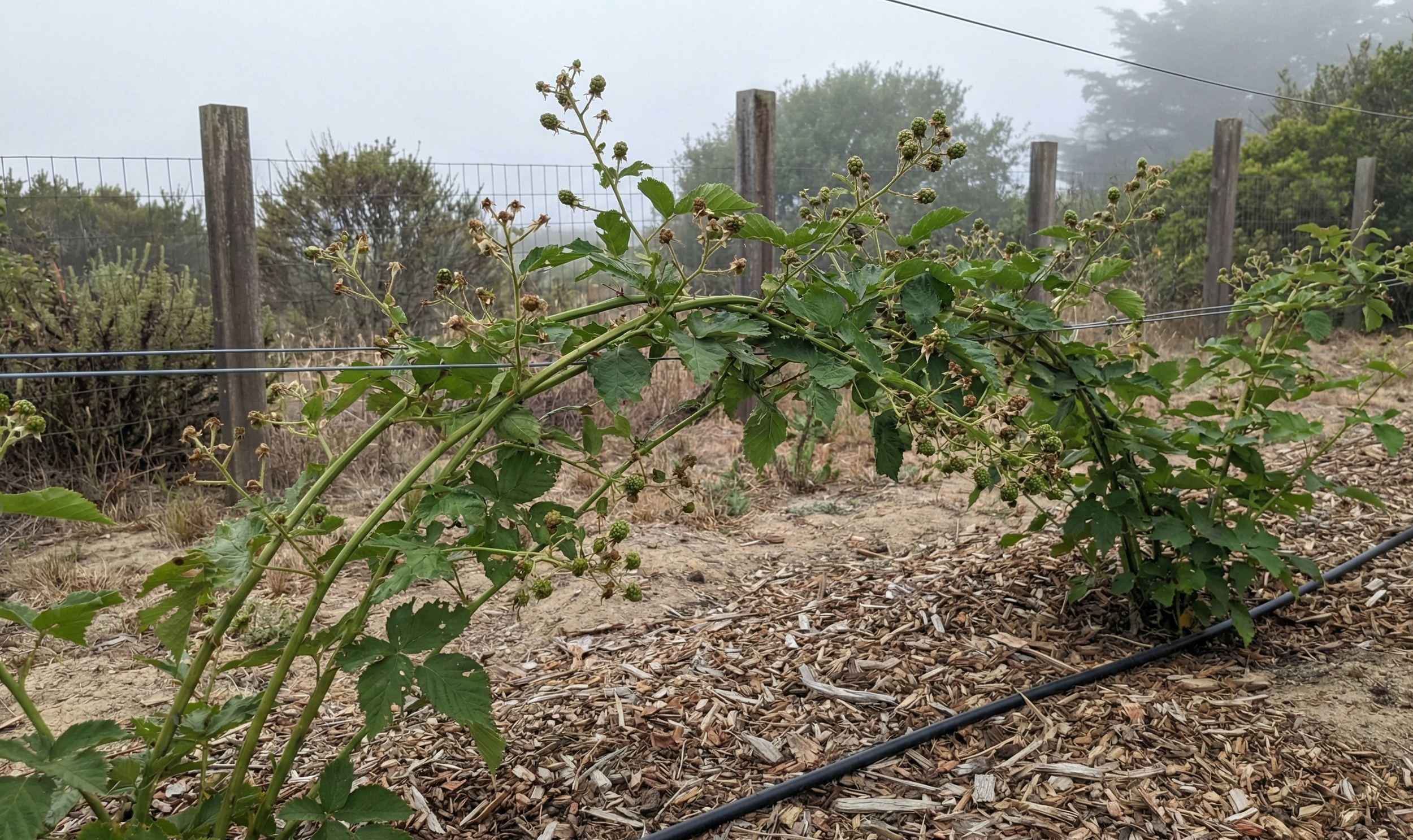
A healthy olallieberry patch has vigorous green canes, clean leaves without spots or coatings, and plump berries that color evenly over a concentrated early summer harvest. In Santa Cruz County, that typically means strong vegetative growth through spring and a harvest window sometime in June, though timing varies by microclimate.
Signs of a healthy plant:
Bright green leaves without yellowing, spots, or powdery coating
Strong primocanes (first-year canes) emerging from the crown
Floricanes (second-year fruiting canes) with abundant flower clusters
Berries that progress from green to red to deep purple-black
Fruit that releases easily when fully ripe
Normal variations (not problems):
Some lower leaf yellowing on floricanes after harvest (the plant redirects energy)
Thorns on most olallieberry varieties (thornless options exist but are less common)
Canes that naturally die back after fruiting (floricanes fruit once, then die)
If your plants look significantly different from this baseline, the sections below will help you identify what's going wrong.
What Are Common Fungal Diseases?
Fungal problems are the most common issues for olallieberries in Santa Cruz County. Our coastal fog and cool temperatures create ideal conditions for several diseases that can devastate a crop if left unchecked.
Powdery Mildew: White Coating on Leaves and Shriveled Berries
Powdery mildew is the most widespread fungal disease affecting olallieberries in our area. According to UC IPM, this disease thrives in moderate temperatures with high humidity but dry foliage, exactly the conditions our summer fog creates.
What it looks like:
White or gray powdery film on upper leaf surfaces and young shoots
Berries that fail to fully color, then dry out or crack
Leaves that curl or become distorted
Severe infections cause entire clusters to shrivel on the vine
In Santa Cruz County, an unusually warm winter followed by a damp bloom season can trigger major mildew outbreaks that destroy half or more of a farm's olallieberry crop. Home gardeners face the same risk.
How to fix it:
The Pacific Northwest Plant Disease Management Handbook recommends focusing on cultural controls first. Thin crowded canes to improve air circulation, maintaining recommended spacing on your trellis (typically 4 to 6 canes per linear foot). Switch to drip irrigation or soaker hoses and avoid wetting foliage during the day. Remove heavily infected leaves and fruit promptly.
For persistent problems, organic fungicides labeled for caneberries can help. UC IPM suggests sulfur-based products or neem oil applied before symptoms become severe. The key is prevention: once powdery mildew takes hold, it's difficult to stop.
Gray Mold: Soft, Fuzzy Berries (Botrytis Fruit Rot)
Gray mold, caused by the fungus Botrytis cinerea, is another common problem in our foggy coastal climate. According to UC IPM, this disease causes soft, water-soaked spots on berries that quickly develop a characteristic gray, fuzzy coating.
What it looks like:
Pale brown, soft areas on berries that become covered in gray fuzz
Clusters of rotting berries that cling to canes instead of dropping
Infections often start during cool, wet weather at bloom
Spreads rapidly through dense canopies with poor air circulation
The UMass Extension Small Fruit Management Guide notes that Botrytis overwinters on mummified fruit and dead cane tissue, reinfecting plants the following spring.
How to fix it:
Pick frequently during wet or foggy stretches. Remove overripe or damaged fruit even if you don't plan to eat it (leaving it on the plant spreads spores). Prune for open canopies that allow air to circulate and avoid overhead watering entirely.
In winter, remove all mummified fruit and dead canes to reduce the fungal inoculum for the following season. This sanitation step is particularly important in Santa Cruz County, where our mild winters don't kill off as many disease spores as harder freezes would.
Root and Crown Problems: Sudden Weakening or Death
When olallieberry plants suddenly weaken, turn yellow, or die back in patches, the problem often lies underground. Heavy clay soils and poor drainage (common in parts of Santa Cruz County) create conditions for root rots that can permanently damage or kill plants.
What it looks like:
Canes that wilt despite adequate soil moisture
Yellowing that starts from the bottom of the plant and progresses upward
Entire sections of the patch that decline while neighbors remain healthy
Crown tissue that appears dark or mushy when examined
According to Texas A&M AgriLife Extension, chronic waterlogging leads to root rots that permanently weaken caneberry plantings. The USDA Risk Management Agency bramble guide confirms that well-drained soil is essential for long-term plant health.
How to fix it:
Prevention is key. Avoid low spots when planting olallieberries. Use raised beds or mounded rows and keep the crown at or slightly above soil level. Mulch conserves moisture but keep it from burying the crown in constantly wet material.
If a section repeatedly declines despite good surface care, the underlying drainage may be beyond repair. Remove those plants, improve drainage significantly (raised beds with amended soil are often the answer), and replant in a new location with fresh stock.
How Does Weather and Climate Stress Affect Olallieberries?
Santa Cruz County's climate is generally kind to olallieberries, but weather extremes and unusual patterns can still cause problems.
Weak Bloom and Sparse Fruit After Warm Winters
Olallieberries need proper winter dormancy to produce well the following summer. According to local reporting in Good Times Santa Cruz, warm winters and drought years have caused "lethargic bloom," poor pollination, and disappointing harvests.
What it looks like:
Fewer flowers than usual in spring
Flowers that open over a long, scattered period instead of a tight flush
Uneven fruit sizes and ripening times
Reduced yields despite healthy-looking vegetative growth
The Southeast Regional Caneberry Production Guide from NC State Extension notes that chill requirements vary by variety, and olallieberries need adequate cold hours for proper dormancy.
What you can do:
You can't control winter temperatures, but focusing on overall plant vigor helps. Good pruning, balanced fertilizer (avoid excess nitrogen), and adequate water during the growing season give plants the best chance of tolerating marginal chill years.
If your site consistently produces weak olallieberry crops after mild winters, consider adding lower-chill blackberry cultivars to your patch. The Alabama Cooperative Extension commercial production guide lists several varieties with lower chill requirements that may perform more reliably in warming conditions.
Heat and Sunburn: Bleached or Scorched Fruit
While coastal Santa Cruz rarely experiences extreme heat, inland areas like Boulder Creek and Felton can see temperatures spike during summer heat waves. Exposed fruit can sunburn, especially on south-facing fences or in locations without afternoon shade.
What it looks like:
White or bleached drupelets on the sun-facing side of berries
Fruit that shrivels or dries out unevenly
Problems concentrated on exposed portions of the plant
Often coincides with heat spikes and insufficient watering
Oklahoma State University Extension recommends increasing irrigation during heat waves and providing shade for vulnerable fruit.
How to fix it:
Before and during heat waves, increase deep irrigation. According to Smart Gardener's olallieberry guide, caneberries generally need about 1 to 2 inches of water per week total from rain and irrigation during the growing season, more during extreme heat.
Mulch the root zone to keep soil cool and retain moisture. For exposed sites that repeatedly experience sunburn, consider temporary shade cloth over the fruit zone during heat events. On inland properties, east-facing locations that get morning sun but afternoon shade often produce better fruit than full-sun exposures.
What Insect Pests Attack Olallieberries?
Olallieberries face fewer serious pest problems than many crops, but a few insects can cause significant damage in Santa Cruz County.
Aphids: Curled, Sticky Shoot Tips
Aphids cluster on tender shoot tips and leaf undersides, sucking sap and causing curling, distortion, and sticky honeydew that attracts sooty mold. Our mild coastal winters mean aphids can remain active much of the year.
What it looks like:
Small green, black, or gray insects clustered on new growth
Curled or distorted young leaves
Sticky residue on leaves and canes
Black sooty mold growing on honeydew deposits
For more detailed identification and control strategies, see our Common Garden Pests in Santa Cruz County guide.
How to fix it:
Spray colonies off with a strong water jet every few days. This simple approach is surprisingly effective and doesn't harm beneficial insects. For persistent populations, use insecticidal soap or neem oil on leaf undersides, being careful to avoid open flowers.
Encourage lady beetles, lacewings, and other beneficial insects that prey on aphids. Manage ants aggressively (they protect aphid colonies in exchange for honeydew), as ant control often solves aphid problems indirectly.
Spider Mites: Stippled, Bronzed Leaves
Spider mites thrive in hot, dusty conditions and on water-stressed plants. They're most problematic in inland microclimates and during dry spells.
What it looks like:
Fine yellow speckling on leaves (stippling)
Overall bronzing or browning of foliage in severe cases
Fine webbing between leaf veins or on undersides
Tiny moving dots visible with a hand lens
How to fix it:
Keep plants evenly watered and occasionally hose off foliage to reduce dust and dislodge mites. Avoid broad-spectrum insecticides that kill natural mite predators like predatory mites and minute pirate bugs.
Spider mites rarely cause serious damage to well-watered olallieberries in coastal locations. Inland gardeners should be more vigilant, especially during heat waves.
Mystery Fruit Problems: Odd, Deformed, or Partially Dry Berries
Sometimes berries look strange without obvious insect or disease symptoms. Misshapen or partially dry fruit can result from pollination problems, dry berry syndrome, or a combination of minor issues.
According to the Pacific Northwest Plant Disease Management Handbook, dry berry syndrome causes individual drupelets to remain small, hard, and red while adjacent drupelets develop normally.
How to fix it:
Focus on overall plant health first. Consistent watering, good air circulation, and balanced nutrition resolve many mysterious fruit problems. Check closely for insect damage or fungal symptoms you might have missed.
If problems persist, consider whether pollinators have adequate access to your plants. Dense, tangled canes with flowers hidden in the interior may not get pollinated properly. Opening up the canopy through better pruning often helps.
How Do Water, Pruning, and Plant Vigor Affect Growth?
Many olallieberry problems trace back to basic cultural practices rather than diseases or pests.
Over- and Under-Watering
Water stress (in either direction) is one of the most common causes of poor olallieberry performance.
Too little water:
Small, seedy berries that never fully plump
Wilting during afternoon heat even with mulch
More common on inland or sandy sites
Too much water (or poor drainage):
Yellowing, weak canes
Root rot and crown disease
More common in clay soils or low spots
According to advice in the Los Angeles Times archives, olallieberries need consistent moisture but excellent drainage.
How to fix it:
Aim for deep watering about once a week in typical coastal weather, more frequently during heat waves. Provide roughly 1 to 2 inches of water per week total. Check moisture 4 to 6 inches down before watering (a soil probe or long screwdriver works well).
Container-grown olallieberries need more frequent water than in-ground plants. The UC Master Gardener Program of Contra Costa County notes that containers and very sandy soils dry out faster and may need watering every few days during summer.
Poor Pruning and Overcrowding
Skipping annual pruning creates a thorny tangle that shades out new growth, harbors disease spores, and produces disappointing harvests. This is one of the most common mistakes home gardeners make with caneberries.
What it looks like:
Dense mass of old, dead canes mixed with new growth
Fruit hidden deep in the canopy where it's hard to pick
Increased powdery mildew and rot problems
Declining yields year after year
According to Alabama Cooperative Extension, proper trellising and pruning are essential for healthy caneberries.
How to fix it:
Every year immediately after harvest, remove all canes that fruited (floricanes) by cutting them at ground level. These canes are done producing and will only harbor disease if left in place.
Tie the current season's primocanes to your trellis, spacing them evenly. In winter, shorten long laterals and thin weak or crossing canes. Most guides recommend maintaining 4 to 6 strong canes per foot of row.
The Food Gardening Network emphasizes that opening up the canopy through proper pruning dramatically reduces disease pressure.
When Should You Replant or Start Over?
Even with excellent care, there comes a time when an olallieberry patch needs replacement.
Signs it's time to replant:
Declining yields over several years despite good practices
Chronic disease that returns every season
Large dead sections or crown rot
Plants that no longer respond to improved care
Local reporting in Good Times Santa Cruz notes that Santa Cruz County's olallieberry industry has struggled partly because aging plantings accumulate disease pressure over time. Fresh, vigorous plants from reputable nurseries are more resistant to the problems that plague older patches.
Starting fresh:
If you decide to replant, remove all existing plants completely (don't plant new ones in the same holes). Improve drainage and amend soil generously. Source healthy stock from reputable nurseries like Cal Poly Pomona Nursery or Armstrong Garden Centers.
Consider trying a different location if your current site has persistent drainage or disease issues. Sometimes the best solution is to start over in better conditions.
Local Resources
Where to buy olallieberry plants:
San Lorenzo Garden Center in Santa Cruz
Sierra Azul Nursery in Watsonville (call ahead for availability)
Cal Poly Pomona Nursery (ships bare root plants)
Armstrong Garden Centers (multiple Bay Area locations)
Local expertise:
UC Master Gardeners of Monterey and Santa Cruz Counties offer free gardening advice
Swanton Berry Farm in Davenport (visit to see healthy olallieberry production)
For more information:
Frequently Asked Questions
Why are my olallieberry leaves turning white?
A white, powdery coating on leaves is almost certainly powdery mildew, the most common fungal disease affecting olallieberries in Santa Cruz County. Improve air circulation by thinning canes, switch to drip irrigation, and remove infected foliage. For severe cases, organic fungicides like sulfur or neem oil can help when applied early.
Why are my olallieberries small and seedy?
Small, seedy berries usually indicate water stress. Olallieberries need consistent moisture (about 1 to 2 inches per week) during fruit development. Increase deep watering, especially during warm weather, and add mulch to retain soil moisture. Poor pollination can also cause misshapen fruit with undeveloped drupelets.
Why did my olallieberries not produce fruit this year?
Several factors can cause poor fruit production: warm winters that don't provide enough chill hours, late frost that damages flowers, poor pollination, or weak plants from disease or inadequate care. Check the health of your canes and consider whether unusual weather affected bloom timing.
When should I prune my olallieberries?
Prune olallieberries twice a year. Immediately after harvest (usually late June or July in Santa Cruz), remove all floricanes (canes that just fruited) at ground level. In late winter, thin primocanes to 4 to 6 per foot of row and shorten long laterals.
How do I know if my olallieberry has root rot?
Signs of root rot include wilting despite adequate water, yellowing that starts at the base of the plant, and sections of the patch dying while neighbors remain healthy. Dig carefully and examine the roots and crown. Healthy roots are white or tan. Dark, mushy roots or crowns indicate rot, which is usually caused by poor drainage.
What's the best mulch for olallieberries?
Wood chips, straw, or shredded bark work well for olallieberries. Apply 3 to 4 inches around plants but keep mulch a few inches away from the crown to prevent moisture buildup that can cause rot. Mulch conserves water, suppresses weeds, and keeps soil temperature stable.
Should I spray my olallieberries for diseases?
Focus on cultural practices first: good air circulation, proper watering, prompt removal of infected material, and thorough cleanup in fall and winter. Most olallieberry problems in home gardens can be managed without sprays. If you do use fungicides, organic options like sulfur and neem oil are effective when applied preventively.
How long do olallieberry plants live?
With good care, olallieberry plants can produce well for 10 to 15 years or more. However, accumulated disease pressure and declining vigor often make replacement worthwhile after 8 to 10 years, especially if you're seeing chronic problems despite good cultural practices.
What Downloadable Guides Are Available?
For quick reference, download these PDF guides:
Garden Troubleshooting Guide: Quick fixes for common problems including pest identification and treatment options
Companion Planting Guide: Learn which plants help each other thrive, including pest-deterrent companions for fruit plantings
Seasonal Tasks Checklist: Month-by-month garden maintenance including pruning reminders
Gopher Control Guide: Essential reading for Santa Cruz County gardeners (gophers love berry roots)
Growing olallieberries in Santa Cruz County is easier than in most places, thanks to our naturally favorable climate. When problems do arise, they're usually manageable with basic cultural practices: good pruning, consistent watering, adequate air circulation, and prompt attention to disease symptoms.
Don't get discouraged if your patch struggles one season. Olallieberries are resilient plants, and a bad year doesn't mean a bad future. Focus on the fundamentals, remove diseased material promptly, and your plants will usually bounce back.
If you're dealing with persistent issues, check out our related guides on Gopher Control: What Actually Works (gophers are notorious for attacking berry roots) and Common Garden Pests in Santa Cruz County for help with other critters.
More Olallieberry Growing Guides
Part of our Complete Olallieberry Series for Santa Cruz County:
Growing Olallieberries in Santa Cruz County: The Complete Guide - Everything you need to know about growing these California-born berries in our unique coastal climate
How to Plant and Care for Olallieberries - Step-by-step planting instructions, soil preparation, trellising, and year-round care
Olallieberry vs. Blackberry: What's the Difference? - Learn how olallieberries compare to other blackberry varieties and which grows best here
Harvesting and Using Olallieberries: From Garden to Pie - When to pick, how to store, and delicious ways to use your harvest
