

Growing Shishito & Padrón Peppers in Santa Cruz: The Perfect Peppers for Coastal Gardens
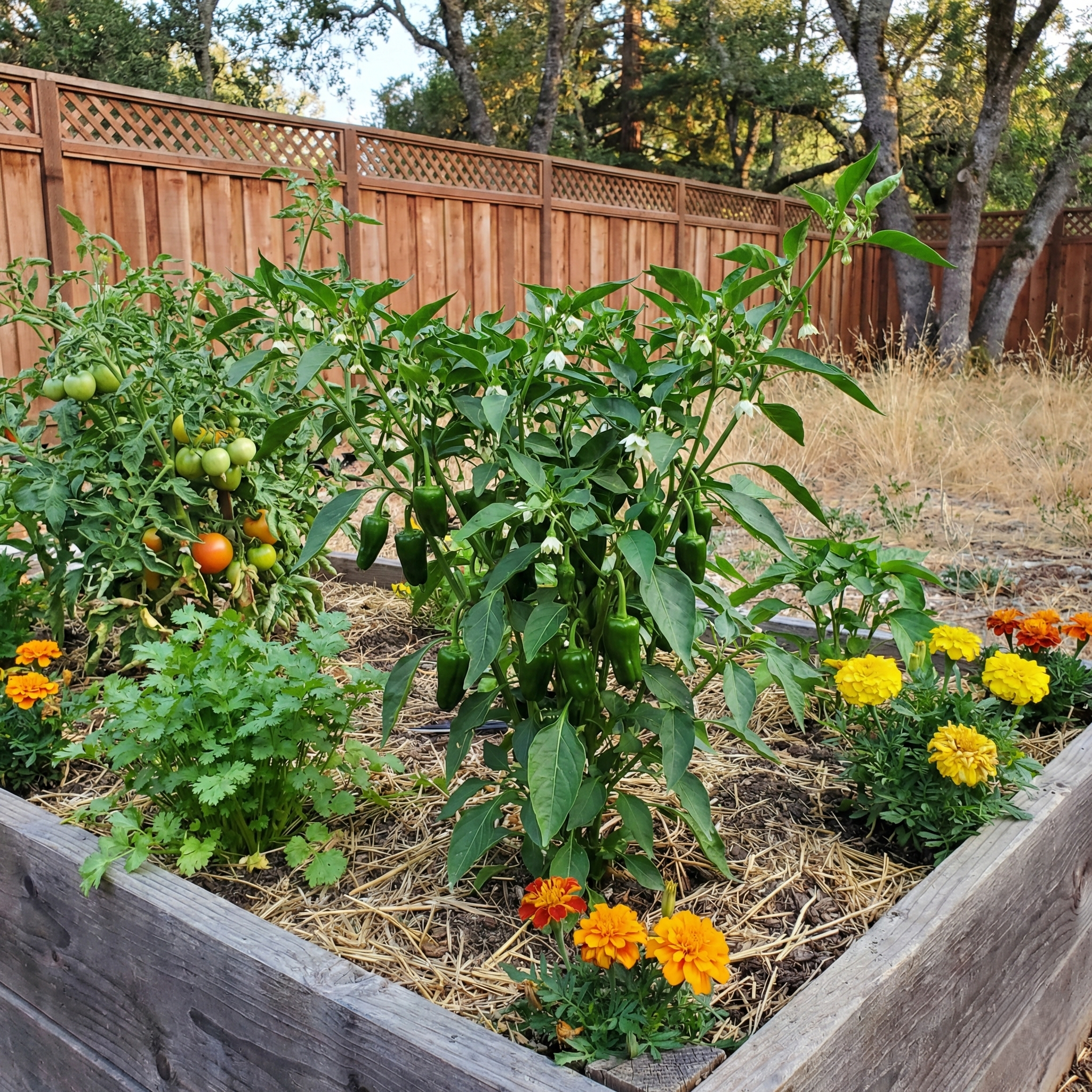
A few of the product links in this guide are affiliate links. If you buy through one, Ambitious Harvest may earn a small commission at no extra cost to you, which helps keep these guides free. We only point to gear we would use in our own Santa Cruz garden. As an Amazon Associate, we earn from qualifying purchases. Read our full disclosure.
If you've ever ordered blistered peppers at a restaurant, chances are they were shishitos or padróns. These thin-walled, mildly spicy peppers have exploded in popularity over the past decade, and for good reason: they're simple to cook, addictively delicious, and fun to eat (one in ten has a surprise kick of heat).
But here's what makes them particularly exciting for Santa Cruz County gardeners: shishitos and padróns are among the few peppers that actually thrive in our cool, foggy climate. While bell peppers and many hot peppers struggle without sustained summer heat, these varieties set fruit at lower temperatures and mature quickly enough to produce abundantly even in coastal gardens.
If you've given up on peppers because you live in Aptos or Capitola, shishitos and padróns deserve another look. They might be the most reliable pepper you can grow here.
What Makes Shishitos and Padróns Different?
Most peppers are tropical plants that want long, hot summers. They evolved in regions with daytime temperatures in the 80s and 90s°F, and they struggle when nights stay cool and fog rolls in every afternoon.
Shishitos and padróns are different.
Shishito Peppers (Japanese)
Shishitos (Capsicum annuum) are a Japanese variety that developed in East Asia's variable climate. The name comes from the Japanese word for "lion," referring to the wrinkled tip that supposedly resembles a lion's head.
Key characteristics:
Thin walls (no need to roast and peel)
Mild heat with occasional spicy surprises (about 1 in 10)
2-4 inches long, wrinkled, bright green to red when fully ripe
Harvested green for best flavor and texture
Plants are compact and productive
60-75 days to harvest from transplant
Padrón Peppers (Spanish)
Padróns (Capsicum annuum) come from Galicia in northwestern Spain, a region with cool, wet weather remarkably similar to coastal Santa Cruz. They've been grown there since the 16th century.
Key characteristics:
Thin walls, similar to shishitos
Mild heat with occasional spicy ones (the famous "Russian roulette" factor)
2-3 inches long, slightly smaller than shishitos
Traditional Spanish tapa when blistered and salted
Extremely productive in cool climates
60-70 days to harvest from transplant
The Cool-Climate Advantage
Both varieties share traits that make them well-suited to Santa Cruz:
Lower temperature requirements: They set fruit at temperatures that would cause blossom drop in bell peppers. Night temperatures in the mid-50s°F don't stop them.
Quick maturity: With 60-75 days to harvest from transplant, they produce even in our shorter warm season.
Harvest when green: Unlike peppers that need to fully ripen for best flavor, shishitos and padróns are harvested green, before the sugars fully develop. This means less time on the plant before harvest.
Thin walls: They don't need the extended heat to develop thick, sweet flesh. Their charm is their thin, blistering walls.
What Is the Santa Cruz Pepper Challenge (And Why These Succeed)?
Understanding why most peppers struggle here helps explain why shishitos and padróns succeed.
The Problem with Most Peppers
Blossom drop: Pepper flowers drop without setting fruit when night temperatures stay below 55°F or above 75°F. In coastal Santa Cruz, summer nights regularly dip into the low 50s.
Long maturity times: Bell peppers need 70-90 days from transplant to harvest, and that's to green stage. Full color (red, yellow, orange) adds another 2-4 weeks. Our warm season often isn't long enough.
Heat accumulation: Many peppers need consistent daytime heat to develop sugars and thick walls. Coastal fog reduces both temperature and direct sunlight.
Why Shishitos and Padróns Work
Adapted genetics: These varieties evolved in cooler, maritime climates. Padróns literally come from a climate similar to ours.
Set fruit in cool weather: They tolerate the night temperatures that cause blossom drop in other peppers.
Quick to harvest: You're picking peppers 8-10 weeks after transplanting, which is fast enough to get multiple harvests even in a short warm season.
Don't need to fully ripen: Harvesting green means you're not waiting for the plant to put additional weeks into fruit development.
How Do You Grow Shishitos and Padróns by Microclimate?
Your success with these peppers depends significantly on your location within Santa Cruz County. Here's what to expect:
Coastal Areas (Aptos, Capitola, Santa Cruz, Live Oak)
The verdict: Yes, you can grow them! These are among the few peppers that reliably produce on the coast.
Coastal strategies:
Plant in the warmest, most protected spot (south-facing wall, heat-reflecting surfaces)
Use containers so you can move plants to catch sun and avoid cold wind
Wait until late May or early June to transplant
Expect slower early growth but steady production once established
Black plastic mulch or Wall O' Waters help warm soil
Harvest may start later (mid-July) but continues into October
Realistic expectations: Smaller harvests than inland gardens, but still worthwhile. A healthy plant might produce 2-3 dozen peppers over the season.
Inland Valleys (Scotts Valley, Soquel)
The verdict: Excellent conditions for shishitos and padróns.
Inland strategies:
Plant in mid-May when soil has warmed
Full sun for maximum production
Consistent watering during fruit set
Expect abundant harvests
Realistic expectations: Each plant can produce 50+ peppers over the season with proper care.
Warmest Areas (Watsonville, Boulder Creek Sunny Exposures)
The verdict: These peppers will thrive, but you could also grow more demanding varieties here.
Warm-area strategies:
Plant as early as late April in warm spots
You might get two distinct harvest peaks (early summer, early fall)
Afternoon shade helpful during extreme heat (though rare here)
Realistic expectations: Highly productive. These are easy wins in warm microclimates.
San Lorenzo Valley (Boulder Creek, Ben Lomond, Felton)
The verdict: Variable depending on your specific site. Sunny exposures work well; shaded canyons struggle.
Mountain strategies:
Full sun is essential (6+ hours minimum)
Protect from late frost if transplanting early
Container growing lets you maximize sun exposure
South-facing slopes significantly outperform shaded locations
Realistic expectations: Good production on sunny sites; limited success in shade.
When Should You Plant Peppers in Santa Cruz?
Timing matters enormously for pepper success.
| Microclimate | Start Seeds Indoors | Transplant Outdoors | First Harvest | Success Rating | Key Tips |
|---|---|---|---|---|---|
| Coastal Aptos, Capitola, Santa Cruz, Live Oak |
Late Feb - Early Mar | Late May - Mid June | Mid-July - Aug | Good | Use containers for mobility. South-facing wall ideal. Black plastic warms soil. Harvest into Oct. |
| Inland Valleys Scotts Valley, Soquel |
Mid-Feb - Early Mar | Mid-May - Early June | Early-Mid July | Excellent | These peppers thrive here. Full sun, consistent water. Expect abundant harvests. |
| Warmest Areas Watsonville, sunny Boulder Creek |
Early-Mid Feb | Late April - Mid May | Late June - July | Excellent | Earliest planting possible. May get two harvest peaks (early summer + early fall). |
| San Lorenzo Valley Boulder Creek, Ben Lomond, Felton |
Mid-Feb - Early Mar | Mid-May - Early June | Mid-July | Variable | Full sun essential (6+ hrs). Sunny exposures = excellent. Shaded canyons = challenging. |
| Heavy Fog Zones Davenport, very exposed coast |
Mid-Feb - Early Mar | Early-Mid June | August | Challenging | Containers essential. Wall O' Waters help. Smaller harvests but still worthwhile. These are among the best peppers for fog. |
The Soil Temperature Rule
Peppers won't thrive if transplanted into cold soil. Wait until soil temperature reaches at least 60°F at 4 inches deep, and preferably 65°F.
Starting Seeds vs. Buying Transplants
Starting from seed:
Start indoors 8-10 weeks before transplant date
For May transplant, start seeds in late February to early March
Use heat mat (peppers need 75-85°F soil for germination)
Germination takes 7-14 days
Advantage: More variety choices
Buying transplants:
Available at local nurseries in April and May
Look for stocky plants with no flowers yet
Advantage: Easier, no germination hassle
For shishitos and padróns specifically, seeds are increasingly available but transplants may be harder to find at generic nurseries. Specialty nurseries and farmers market plant sales are good sources.
How Do You Plant Shishitos and Padróns?
Site Selection
Sun: Full sun (6+ hours minimum). More sun equals more peppers.
Wind protection: Peppers dislike constant wind. A protected spot near a south-facing wall is ideal for coastal gardens.
Soil: Well-draining, fertile soil. Peppers are moderate feeders. Work in 2-3 inches of compost before planting.
Spacing: 18-24 inches apart. These are compact plants that don't need as much space as bell peppers.
Planting Steps
Harden off seedlings for 7-10 days before transplanting
Dig hole twice the width of the root ball
Add a handful of compost to the planting hole
Plant at same depth as the pot (or slightly deeper is fine)
Water deeply after planting
Mulch with 2-3 inches of organic material (keep mulch away from stem)
Consider support - a short stake helps if plants get heavy with fruit
Container Growing (Recommended for Coastal Areas)
Containers offer significant advantages for coastal pepper growers:
Mobility: Move plants to catch sun and avoid cold wind Soil warmth: Container soil warms faster than ground soil Protection: Easier to cover on cold nights or bring to sheltered spots
Container requirements:
Minimum 5-gallon pot (larger is better)
Good drainage holes
Quality potting mix
More frequent watering than in-ground plants
Monthly fertilizing during growing season
How Do You Care for Your Plants?
Watering
The goal: Consistent, even moisture. Not soggy, not drought-stressed.
Signs of underwatering: Wilting in afternoon heat (some wilting on very hot days is normal and they'll recover overnight)
Signs of overwatering: Yellow leaves, slow growth, root rot
Watering schedule: Deep water when the top inch of soil feels dry. In peak summer, this might be every 2-3 days for in-ground plants, daily for containers.
Fertilizing
Peppers are moderate feeders. Too much nitrogen produces leafy plants with few peppers.
Fertilizing schedule:
At planting: Work compost into soil
At first flower: Side-dress with balanced organic fertilizer
Monthly during production: Light feeding with balanced fertilizer or compost tea
Signs of over-fertilizing: Lush green growth with few flowers or fruit
Common Problems
Blossom drop: Flowers fall off without setting fruit
Causes: Night temperatures below 55°F or above 75°F, inconsistent watering, over-fertilizing with nitrogen
Solutions: Choose appropriate varieties (shishitos/padróns are more tolerant), water consistently, reduce nitrogen
Aphids: Clusters on new growth, sticky leaves
Solutions: Spray off with strong water stream, insecticidal soap if severe
Hornworms: Large green caterpillars that eat leaves (less common on peppers than tomatoes)
Solutions: Hand-pick, Bt spray if severe
Blossom end rot: Dark, sunken spots on fruit bottom
Solutions: This is a calcium uptake issue usually caused by inconsistent watering. Water deeply and consistently.
When Should You Harvest?
Harvest timing affects both flavor and productivity.
When to Harvest
Harvest green: For the classic blistered pepper experience, harvest when peppers are 2-3 inches long and bright green. This is the traditional preparation.
Harvest red: Peppers left on the plant will eventually turn red. They're sweeter but hotter at this stage, and leaving them on slows new production.
Harvest frequently: Regular picking encourages the plant to keep producing. Check plants every 2-3 days during peak production.
How to Harvest
Use scissors or pruning shears to cut peppers from the plant. Pulling can damage branches.
Yield Expectations
A healthy plant in good conditions produces 30-60 peppers over the season. In optimal conditions (warm inland sites), some gardeners report 100+ peppers per plant.
What Is the Classic Preparation: Blistered Peppers?
The most popular way to enjoy shishitos and padróns is also the simplest.
Blistered shishito/padrón peppers:
Rinse and dry peppers thoroughly
Heat a cast iron skillet over high heat
Add a thin layer of high-heat oil (grapeseed, avocado)
Add peppers in single layer (don't crowd)
Let sit without stirring until blistered on one side (1-2 minutes)
Toss and blister other side
Remove to plate, sprinkle generously with flaky salt
Serve immediately
Variations:
Finish with a squeeze of lemon
Drizzle with soy sauce and sesame oil
Top with grated Parmesan
Add a drizzle of honey for sweet-savory contrast
The "Russian roulette" factor (one in ten is spicy) is part of the fun. You never know which pepper will bring the heat.
Shishito vs. Padrón: Which Should You Grow?
Both are excellent choices, and most gardeners grow whichever they can find. But there are some differences:
| Characteristic | Shishito | Padrón |
|---|---|---|
| Origin | Japan (East Asia) | Galicia, Spain (cool, maritime climate similar to Santa Cruz!) |
| Pepper Size | 2-4 inches long | 2-3 inches long (slightly smaller) |
| Skin Texture | Wrinkled, thin walls | Smooth to slightly wrinkled, thin walls |
| Heat Level | Mild 50-200 SHU ~1 in 10 surprise hot ones |
Mild 500-2,500 SHU ~1 in 10 surprise hot ones |
| Flavor Profile | Slightly sweet, grassy, clean | Earthy, mineral, slightly nutty |
| Days to Harvest | 60-75 days from transplant | 60-70 days from transplant |
| Plant Size | 18-24" tall, compact | 18-24" tall, compact to medium |
| Cool Climate Tolerance | Excellent | Excellent (bred in similar climate) |
| Productivity | 30-60+ peppers per plant | 30-60+ peppers per plant |
| Seed Availability | Easier to find Widely available online and at nurseries |
May need specialty sources Check Baker Creek, Kitazawa, specialty nurseries |
| Traditional Preparation | Blistered in hot oil, salted (izakaya style) | Blistered in olive oil, coarse salt (Spanish tapa) |
| Best Harvest Stage | Bright green, 2-3" long | Bright green, 1.5-2.5" long |
The short answer: They're similar enough that either will delight you. Grow whichever you can find, or grow both if you want to compare.
Frequently Asked Questions
Why are some peppers spicy and others mild?
The capsaicin (heat compound) in shishitos and padróns is influenced by growing conditions. Stress from heat, drought, or age tends to increase capsaicin production. Peppers from stressed plants or harvested late in the season are more likely to be hot. The "1 in 10" ratio is a rough guideline; actual spiciness varies.
Can I grow shishitos and padróns in fog zones?
Yes! These are among the best peppers for foggy areas. Container growing with mobility (moving to catch sun) helps maximize production. Expect smaller harvests than inland gardens, but they do produce.
Why aren't my peppers producing fruit?
Most likely causes: planted too early (soil too cold), too much shade, too much nitrogen fertilizer, or blossom drop from temperature extremes. Shishitos and padróns are more tolerant than other peppers, but they still need basic requirements met.
Should I let peppers turn red?
It depends on your preference. Green peppers have the classic flavor profile and keep plants productive. Red peppers are sweeter but hotter. For maximum harvest, pick green and let a few ripen red for variety.
How many plants should I grow?
For a household that enjoys blistered peppers regularly, 3-4 plants provide good production. Start with 2 plants if you're trying them for the first time.
Can I save seeds from my peppers?
Yes, but be aware that peppers cross-pollinate easily. If you grow multiple pepper varieties, saved seeds may produce hybrids. For true-to-type seeds, grow only one variety or hand-pollinate and bag flowers.
Do shishitos and padróns need to be peeled?
No! Unlike bell peppers or poblanos with thick skins, these thin-walled peppers are eaten skin-on. That thin skin is part of what makes them blister so beautifully.
What if I miss harvests and peppers get too big?
Oversized peppers (4+ inches) are still edible but may be tougher and hotter. They're fine stuffed or roasted. Regular harvesting produces better-quality peppers.
Downloadable Guides
These free PDF guides support your pepper-growing success:
Seasonal Planting Calendar: Month-by-month planting guidance including peppers.
Companion Planting Guide: What to plant near your peppers.
Garden Troubleshooting Guide: Quick fixes for common pepper problems.
Local Resources
UC Master Gardeners of Monterey and Santa Cruz Counties: Free gardening advice and pepper-growing guidance.
San Lorenzo Garden Center: Carries pepper transplants in spring.
Mountain Feed & Farm Supply: Organic seeds and gardening supplies.
Renee's Garden Seeds: Felton-based seed company with shishito seeds.
Love Apple Farms: Annual plant sales often include specialty peppers.
Related Articles
Growing Peppers in Containers in Santa Cruz County (The Mobility Advantage)
Growing Shishito & Padrón Peppers in Santa Cruz
