

Vegetable Gardens in Fire Zones: Growing Food Safely in Fire Country
Some links in this guide are affiliate links. If you buy through one, Ambitious Harvest may earn a small commission at no extra cost to you. As an Amazon Associate, we earn from qualifying purchases. Read our full disclosure.
Grow food within a plan for the whole property
A vegetable garden can fit on a fire-prone property, but watering it does not make it a firebreak. Keep planted beds and containers outside the immediate five-foot area around the home, assess the surrounding fuels, and make cleanup part of growing the crop. Follow evacuation instructions when fire threatens; the garden is never a reason to stay behind.
This guide recommends a plant-free, noncombustible first five feet as a conservative design choice. Confirm the rules and implementation dates that apply to your property with your local fire authority.
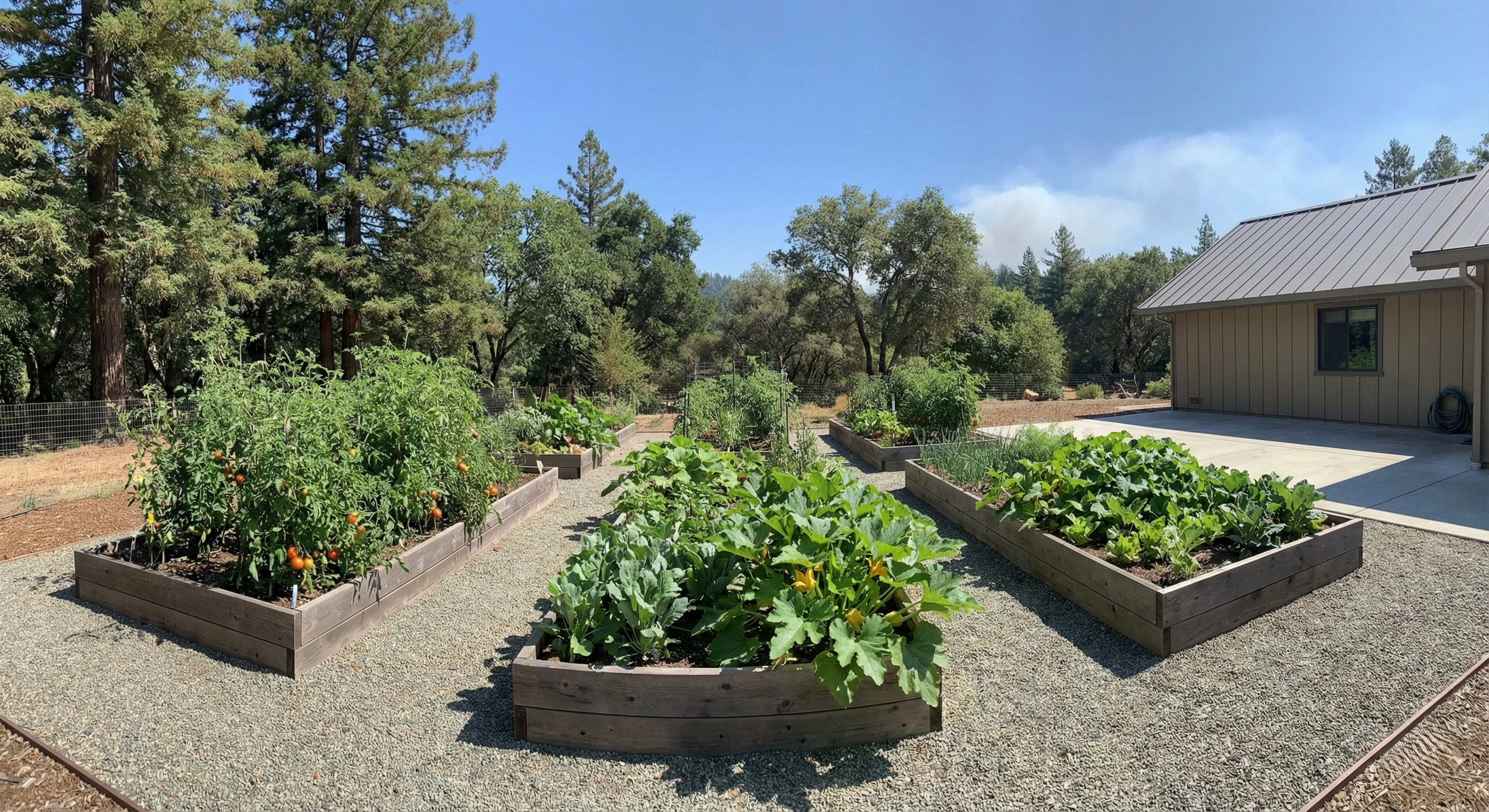
A sprawling squash vine is a useful place to see the difference. In summer it may be green and productive. Once it finishes, the same vine can leave dry stems across a path or against a fence. Growing food and reducing fuel can work together when the layout gives you room to notice those changes and deal with them.
What a vegetable garden adds to the fire-safety plan
Harvesting brings you into the garden regularly, which gives you opportunities to spot dry leaves, weeds and leaks. Use those visits to keep the bed maintained. They do not automatically prevent fuel from building up, especially beneath large plants or behind a trellis.
Assess the whole bed: plants, supports, mulch, frame and nearby structures. A crop's water content is not a fire-performance rating. Vegetables can burn, dry stalks can accumulate, and a wooden frame remains combustible even when the soil is wet. Ready for Wildfire: Fire-Smart Landscaping is a useful starting point for considering these connections.
In Santa Cruz County, a sunny patch on a mountain slope may have very different access and surrounding vegetation from a sheltered coastal yard. Choose a growing area you can reach and maintain through the season, without creating a new connection to the house or a neighbor's building.
Choose the location before choosing the bed
Use CAL FIRE defensible space guidelines and local information from the Fire Safe Council of Santa Cruz County as a planning framework. Confirm the requirements for your address with the responsible fire authority. The familiar zone distances do not establish that every spot within a zone is suitable for planting.
Beyond the immediate five feet
The area from five to 30 feet may offer convenient access for growing food when the layout is appropriate. UC Master Gardeners' Zone 1 article includes vegetables among the options discussed for that zone. That is not blanket permission to place a bed anywhere within it: consider the crop at full size, combustible materials, windows, decks, fences and nearby trees.
A bed farther away may also work if it has suitable light, water and safe access. On slopes, get advice before excavation or changes that could affect drainage and erosion. Fire can move uphill toward a garden or building, so assessing only the ground inside the bed misses part of the exposure.
Keep the immediate area noncombustible
CAL FIRE Defensible Space prioritizes the first five feet around structures. Keep vegetable beds and planted containers outside that immediate area as the fire-smart design goal. A low lettuce plant in a metal pot is still vegetation; limited space does not create a general exception.
If the only sunny space is against the wall, reassess the garden's size and location. A smaller growing area elsewhere may be more practical than forcing a bed into the wrong place. Confirm site-specific requirements and consider another growing arrangement rather than relying on extra watering.
- Keep plants and supports from touching eaves, siding or a combustible fence connected to the house.
- Consider low tree branches and overhead vegetation as part of the same layout.
- Leave paths and exits clear, with access for maintenance during ordinary conditions.
- Assess the slope and neighboring fuels; emergency watering is not a siting strategy.
Design a bed you can keep maintained
Raised beds can make soil management and access easier, but their edges are not guaranteed fire barriers. An in-ground bed can also fit a suitable plan. Choose the growing system for the site, then assess the materials and connections around it.
Bed materials and paths
Metal, stone or concrete can provide noncombustible bed walls. Plants, organic mulch, liners and nearby supports still require attention. Cedar and redwood are combustible too; their resistance to decay does not certify better wildfire performance. Composite products vary and should not be treated as noncombustible without appropriate documentation.
Use paths wide enough to move, harvest and remove spent plants without squeezing between beds. Keep the path clear as plants spread. Gravel, stone or paving can interrupt surface fuel when maintained, but no universal three- or four-foot path width guarantees that a fire will stop there.
Check drainage, stable footing and access before installing hardscape. CAL FIRE's guidance on home hardening also points to building details that a garden redesign alone cannot fix.
Supports and fencing
A metal trellis removes the wooden trellis itself as a fuel source, but the vine growing over it can still burn. Keep tall crops from connecting beds to low tree branches, roofs or eaves. Clear dried stems caught in cages and supports when the crop finishes.
Look at the fence beyond the bed as well. A combustible fence attached to a building can carry fire toward it. Plan a suitable noncombustible connection under current fire-authority guidance and keep vegetation and stored material from bridging it.
Irrigation for the crop
Drip irrigation can deliver water to roots, provided the system suits the bed and works properly. Check emitters beneath large plants, repair leaks and confirm that water reaches the intended soil. Match watering to the crop and actual conditions rather than keeping the entire area wet.
Know the shutoff location for routine repairs and maintain access to it. Normal irrigation is part of plant care. Do not plan to soak the garden as a wildfire approaches: UC Marin advises against wetting down property on Red Flag warning days because it can deplete water needed by fire departments.
Choose crops you have room to tend
Choose vegetables for the season, light and space available, then plan what happens when they finish. A crop list cannot certify a bed as low risk. The useful differences are its mature size, supports, drying stage and maintenance needs.
- Leafy greens: lettuce, spinach, chard and kale can fit manageable beds, but remove bolting or spent growth and the weeds underneath. Do not assume an irrigated bed has no fuel concerns.
- Tomatoes, peppers and eggplant: allow room for their mature growth. Check lower leaves, ties and supports, and collect dead material before it becomes hidden beneath the canopy.
- Squash and cucumbers: keep spreading vines within the planned growing area and remove finished vines instead of leaving them across paths.
- Root crops: carrots, beets, radishes and potatoes still have above-ground foliage to maintain. Harvest and clear the crop according to its needs, including dry tops.
- Brassicas: broccoli, cabbage and cauliflower leave substantial leaves and stems. Make removal of finished plants part of the succession plan.
Dry beans, grains and seed-saving crops need special planning because the harvest involves drying plant material. Choose an appropriate location, monitor them and remove spent stalks and pods after harvest. Do not leave a forgotten block of dry corn or beans beside a fence.
Pole beans, peas and large tomatoes need supports that do not lead into overhead vegetation or structures. Woody herbs such as rosemary and sage need their own placement and maintenance assessment; moving them across a zone boundary does not automatically make a dense planting suitable. Keep dry ornamental displays and accumulated grass stems out of the near-home growing area.
Use mulch with its location in mind
Mulch can conserve soil moisture and help manage weeds, but organic mulch can also burn. Research on mulch flammability compares materials under particular test conditions. It is not a blanket endorsement of compost, aged chips or straw for every vegetable bed.
Keep combustible mulch out of the immediate five-foot area around structures. Farther out, assess material, depth and continuity under current local guidance. Even composted chips can smolder. Aging a pile does not certify it as safe, and straw remains combustible even in a moderate layer.
Keep paths clear and avoid a continuous mulch layer connecting planted beds to wooden frames, fences or buildings. Do not top up automatically each season without checking what is already there. Finely shredded bark and accumulated pine needles deserve particular attention, and deep organic layers can conceal smoldering.
For regional context, consult the guidance on fire-safe landscaping and mulch choices. Choose the bed's mulch and surrounding surfaces together, rather than treating irrigation as a way to cancel the fuel.
Build cleanup into the harvest routine
Take a small container for dead leaves or weeds when you go out to harvest. Before planting the next crop, decide where the outgoing one will go. Those small routines make it easier to avoid a large dry pile at the end of the season.
- Clear finished crops and weeds as they become dry, including material caught in supports.
- Check beneath plants, beside bed walls and along fence bases after wind and leaf fall.
- Use an appropriate green-waste or disposal route. If composting, choose and manage the location so the pile does not become another fuel source near structures.
- Check irrigation for crop health while keeping the ground accessible for maintenance.
Chipping changes the size of woody material; it does not make the resulting chips noncombustible. Arrange a suitable destination before accepting a pile. Likewise, a winter cover crop needs a termination and residue-management plan before it becomes dry fuel.
Do not wait for a calendar date described as the peak of fire season. Clear crops as they finish and keep checking through dry conditions. Postpone spark-producing equipment work when conditions or restrictions make it unsafe.
Include sheds, containers and storage in the plan
A shed's siting depends on its size, construction, contents and nearby buildings. Being within Zone 1 is not a safety designation. Ask the building and fire authorities about the proposed location and clearance before placing or moving it. A metal shed can still contain combustible material.
Store gasoline, compressed-gas cylinders and other garden chemicals according to their labels and applicable fire requirements. Do not group every fertilizer under one flammability assumption or treat a generic metal cabinet as approval for every substance. Keep fuel-storage decisions separate from ordinary tool storage.
Containers are useful when you want a smaller growing area or need flexibility for future changes. Place them in a suitable area from the start, outside the immediate five-foot space around the home. A ceramic or metal container does not make its plants and growing material noncombustible.
Keep the surface beneath and around containers clear, and allow for drainage and safe movement. Large wet pots can be heavy; do not base the layout on being able to move them during an emergency. Make any planned relocation during safe conditions, and keep exits clear.
When fire threatens, follow the evacuation plan
Garden preparation belongs before an incident. Keep access routes clear, finish routine debris removal and know your normal irrigation controls ahead of time. Follow current official instructions and leave when directed.
Do not add a last-minute garden-soaking, harvest or container-moving job to an evacuation. Do not stay to protect the crop or make hurried building repairs. A garden can be replanted; evacuation decisions must center on people and animals.
After a fire, food safety is a separate decision
Permission to return to an area does not establish that a garden is safe to handle or use for food. Stay away from hazardous debris and follow the site's cleanup and access instructions. What burned nearby, and what ash or runoff reached the bed, matter as well as whether the plants survived.
UC ANR's post-fire soil and vegetable-gardening guidance explains assessment, appropriate testing and remediation. Ash from burned structures may contain contaminants that differ from vegetation ash; both require care. Do not till uncertain ash into the soil, compost suspect debris or assume washing a harvest resolves soil contamination.
Seek site-specific advice before growing or eating food from an unresolved area. A raised bed with imported soil still needs protection from affected ground, dust and runoff. A routine fertility kit, clean-looking leaves or elapsed time cannot certify that the garden is ready.
Frequently asked questions
Can a vegetable garden be part of defensible space?
It can fit a maintained property when the location, materials and care fit the fire-safety plan. Assess the whole bed and surrounding fuels. High water content and frequent watering do not turn vegetables into a firebreak or guarantee safety.
Is Zone 1 always the best place?
No single zone label settles the location. Beyond the immediate five feet, consider mature crops, structures, slope, access and current local requirements. Keep planted beds and containers out of the immediate area rather than relying on a low-growing-crop exception.
Are raised beds safer than in-ground beds?
Raised beds may improve access and soil management, but they add their own materials. Noncombustible walls remove one fuel source; plants, mulch and supports remain. Choose by the site and maintenance plan, not the assumption that a frame creates a fire barrier.
Which crops require the most attention?
Watch crops as they dry for seed or storage, tall plants on trellises and vines that spread beyond the bed. All crops need appropriate maintenance. Plan removal at the end of each crop instead of waiting for the entire garden to finish.
Can I use straw or wood mulch?
Neither is noncombustible. Keep organic mulch out of the immediate five-foot area, and review its use farther out for location, depth and continuity. Do not treat a thin straw layer or aged chips as a universal safer choice.
Should I soak the garden before evacuating?
No. Follow evacuation instructions and do not delay to water, harvest or move pots. Maintain irrigation during ordinary conditions for crop needs, and follow official emergency guidance when an incident occurs.
Can I eat vegetables after ash falls on the garden?
Do not decide from appearance alone. Follow local health and recovery advice for the incident and site, especially where structures or manufactured materials burned. Washing is not a substitute for assessing contamination and determining whether the growing area is suitable.
For planning larger changes, see fire-wise landscaping on a budget. Our water-wise gardening guide supports routine crop care; keep it alongside the site's fire-safety plan.
Garden-planning resources
Visit Your Garden Toolkit for the Fire-Wise Gardening Guide, Seasonal Garden Tasks Checklist, Beginner Garden Setup Checklist and Water-Wise Gardening Guide. Use these to organize growing and maintenance decisions alongside current fire-authority advice.
Keep CAL FIRE Defensible Space, Ready for Wildfire: Fire-Smart Landscaping, the Fire Safe Council of Santa Cruz County and the local Fire-Resistant Landscaping in Santa Cruz County resource available for further reading. Recheck current guidance when planning a substantial change.
For the next garden visit, choose one bed and follow it all the way to its edges: the dry vine, the support, the mulch and the path beside it. Keeping that small area manageable is a useful place to begin.
