

Growing Pineapple Tomatoes in Santa Cruz County: A Beefsteak Worth the Challenge
A few of the product links in this guide are affiliate links. If you buy through one, Ambitious Harvest may earn a small commission at no extra cost to you, which helps keep these guides free. We only point to gear we would use in our own Santa Cruz garden. As an Amazon Associate, we earn from qualifying purchases. Read our full disclosure.
Pineapple tomatoes are stunning. According to UC Master Gardeners, large beefsteak heirlooms like Pineapple need hot summer temperatures and 85 to 100 days to maturity. Slice one open and you'll see why: golden yellow flesh streaked with red, like a sunset captured in fruit. The flavor matches the appearance, sweet and fruity with almost no acid bite. Among heirloom beefsteaks, Pineapple is consistently rated among the best-tasting.
There's a catch for Santa Cruz County gardeners. Pineapple is a late-maturing variety, needing 85 to 95 days from transplant to ripe fruit. In our fog-cooled coastal climate, that timeline stretches even longer. Large beefsteak tomatoes like Pineapple need accumulated heat to size up and ripen, and our mild summers provide less warmth than catalog estimates assume.
This doesn't mean you can't grow Pineapple tomatoes here. It means you need to be strategic: choose your warmest microclimate, maximize every heat-capturing trick, and accept that this variety is more challenging than early-season or smaller-fruited tomatoes.
If you have the right spot and the patience, Pineapple rewards you with some of the most beautiful, best-tasting tomatoes you'll ever grow.
What Makes Pineapple Tomatoes Special?
What Makes Pineapple Special
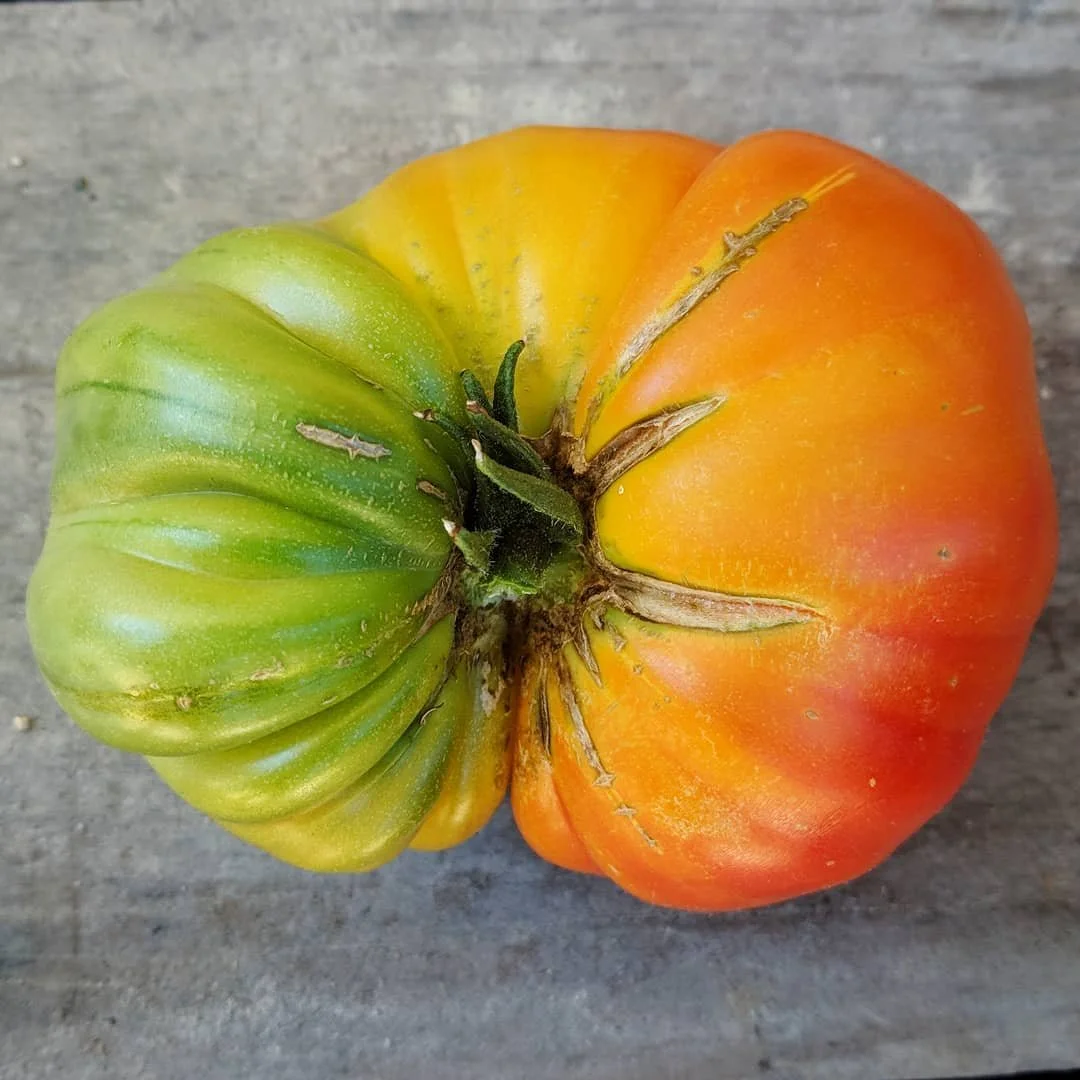
Pineapple is a bicolor beefsteak tomato, meaning fruits display two distinct colors: golden yellow flesh with red streaks radiating from the core. The marbling effect varies from fruit to fruit, with some showing dramatic streaking and others more subtle blending.
The flavor profile is notably sweet and mild, with very low acid levels compared to red tomatoes. Many people describe it as fruity or tropical, hence the "pineapple" name. For those who find red tomatoes too acidic or sharp, Pineapple offers a completely different experience.
Size and Appearance
Pineapple produces large fruits, typically 1 to 2 pounds each. The shape is classic beefsteak: flattened and often ribbed or irregular. The skin shows the bicolor pattern from outside, with golden-yellow background and pink-red streaking visible before you even cut.
The size is part of both the appeal and the challenge. Large fruits need more time to develop and ripen than small tomatoes, which is why Pineapple is a late-season variety.
Plant Characteristics
Pineapple is indeterminate, producing continuously until frost or disease stops the plant. Vines grow vigorously and can reach 6 to 8 feet or more, requiring substantial support.
Foliage is typically healthy and vigorous, which is good for photosynthesis but can shade developing fruit if not managed.
Days to maturity is typically listed as 85 to 95 from transplant. In Santa Cruz County's cooler conditions, this can stretch to 100 to 110 days or more in coastal areas.
What Climate Challenges Do They Face Here?
Why Beefsteaks Struggle Here
Tomatoes need heat units to ripen. Heat units are accumulated warmth over time: the more heat, the faster fruits develop and ripen.
Santa Cruz County's coastal areas average summer highs in the mid-60s to low 70s, with frequent fog and cool nights. Compare this to tomato-friendly climates like the Central Valley, where summer highs regularly hit 90 to 100 degrees.
The difference is dramatic. A tomato that ripens in 85 days in Sacramento may take 100+ days in Santa Cruz, if it ripens at all. Large beefsteaks like Pineapple are the most affected because their size requires more total heat accumulation.
Realistic Expectations by Microclimate
Coastal areas (Aptos, Capitola, Live Oak, Santa Cruz beaches):
Pineapple is a genuine challenge here. Success requires the absolute warmest microclimate: south-facing, against a heat-radiating wall, protected from fog and ocean breezes. Even then, expect late ripening (September or October) and possibly green fruit at season's end.
Consider whether the effort is worth it for your situation. Early-maturing or smaller-fruited varieties produce more reliably on the coast.
Inland areas (Scotts Valley, Watsonville, sunny mountain exposures):
Much better prospects. Warmer summer temperatures provide the heat units Pineapple needs. You should be able to ripen fruit by late August or September.
San Lorenzo Valley sunny exposures (Boulder Creek ridges, Ben Lomond sunny areas):
Good conditions when you have genuine full sun. These areas get hot enough in summer for Pineapple to perform well.
Under redwoods or shaded areas:
Don't attempt Pineapple. The combination of shade and cool temperatures makes ripening nearly impossible. Choose a different tomato entirely.
How Do You Maximize Success with Pineapple Tomatoes?
If you're committed to growing Pineapple, these strategies help maximize warmth and shorten time to ripeness.
Choose the Hottest Spot
This matters more for Pineapple than almost any other tomato. Survey your property for the warmest microclimate:
South-facing slopes or walls: Receive more direct sun and radiated heat.
Protected from ocean breezes: Wind carries away warmth. A wall, fence, or hedge that blocks prevailing winds creates a warmer microclimate.
Away from shade trees: Full sun, all day. Even a few hours of shade significantly reduces heat accumulation.
Elevated positions: Cold air settles in low spots. Higher positions may be warmer overnight.
Warm the Soil
Tomatoes establish faster and fruit earlier in warm soil.
Black plastic mulch: Lay black plastic over the planting area 2 to 3 weeks before transplanting. This warms soil several degrees and maintains warmth through the season.
Red plastic mulch: Some research suggests red plastic may accelerate tomato ripening even more than black. Worth trying if you can find it.
Raised beds: Soil in raised beds warms faster than in-ground plantings.
Start Early, Plant Large
Give Pineapple maximum time by:
Starting seeds early: Begin seeds indoors 8 to 10 weeks before transplant (rather than the standard 6 to 8), aiming for larger transplants.
Buying largest available starts: If purchasing transplants, choose the largest, most established plants available.
Transplanting on time: Don't delay transplanting waiting for perfect conditions. Get plants in the ground as soon as nighttime temperatures are consistently above 50 degrees.
Use Season Extension
Wall O' Water or similar: These water-filled teepees create a warm microclimate around transplants, protecting from cold nights and accelerating early growth. Essential for coastal Pineapple attempts.
Row cover:Floating row cover draped over plants provides a few degrees of warming. Remove once plants are well-established and flowering (or use during cold snaps).
Cold frames or hoop houses: Even a simple plastic-covered hoop house significantly extends the season and warms the environment.
Prune for Sun Exposure
Indeterminate tomatoes benefit from pruning to direct energy to fruit rather than foliage:
Remove lower suckers: Focus the plant's energy on the main stem(s).
Limit main stems: Train Pineapple to 1 to 3 main stems rather than allowing unlimited branching.
Remove lower leaves: Once fruit clusters form, remove leaves below the lowest cluster. This improves air circulation and allows more light to reach fruit.
Late-season topping: 4 to 6 weeks before expected frost, remove the growing tip and any new flowers. This redirects energy to ripening existing fruit.
How Do You Grow Pineapple Tomatoes?
Starting from Seed
Pineapple is an heirloom, so seeds saved from ripe fruit grow true to type.
When to start: 8 to 10 weeks before planned transplant date. For late May transplanting, start seeds in mid-March.
Germination: Plant 1/4 inch deep in quality seed starting mix. Keep soil temperature 70 to 85 degrees Fahrenheit. Germination takes 5 to 10 days.
Seedling care: Provide strong light immediately after germination. Grow lights are recommended for stocky, strong seedlings. Keep soil moist but not waterlogged.
Potting up: Move to larger containers as roots develop. Aim for 4-inch pots or larger by transplant time.
Finding Seeds or Starts
Baker Creek Heirloom Seeds carries Pineapple and many heirloom varieties.
Seed Savers Exchange offers member-listed heirloom seeds.
Renee's Garden stocks Pineapple seeds (and is based in Felton!).
For transplants, Love Apple Farms in Scotts Valley sells heirloom tomato starts at their spring sales, often including bicolor varieties. Check farmers markets for specialty tomato vendors.
Transplanting
When to transplant: After frost danger has passed and nighttime temperatures are consistently above 50 degrees Fahrenheit. Late May in most areas; consider Wall O' Water protection for earlier transplanting.
Hardening off: Gradually expose seedlings to outdoor conditions over 7 to 10 days before transplanting.
Planting technique: Bury tomatoes deep, up to the lowest leaves. The buried stem develops additional roots, creating a stronger plant.
Spacing: Allow 3 to 4 feet between Pineapple plants. These are vigorous growers that need room.
Support
Pineapple's heavy fruits and vigorous vines require substantial support:
Heavy-duty cages: Concrete reinforcing wire formed into cylinders, or very sturdy commercial cages. Flimsy wire cages will collapse under the weight.
Stake and tie: Tall stakes (7+ feet) with regular tying as plants grow. Allows close plant spacing but requires ongoing attention.
Regardless of method, install support at planting time to avoid damaging roots later.
Watering
Consistent moisture is critical, especially for beefsteaks which are prone to cracking and blossom end rot.
Drip irrigation: Ideal. Delivers water at soil level, keeping foliage dry.
Frequency: Water deeply 2 to 3 times per week, adjusting for conditions. Soil should stay consistently moist but not waterlogged.
Mulch: After soil has warmed (or over black plastic mulch), add organic mulch to moderate soil moisture.
Fertilizing
At planting: Mix compost into the planting hole. Add bone meal for phosphorus.
During growth: Side-dress with balanced organic fertilizer every 3 to 4 weeks.
Avoid excess nitrogen: Lush foliage at the expense of fruit is a common problem. If plants are very leafy but not setting fruit, reduce nitrogen.
When Should You Harvest Pineapple Tomatoes?
When to Harvest
Pineapple is ready when:
Color: The golden yellow background is fully developed with pink-red streaks visible. No remaining green.
Feel: Slight give when gently squeezed, but not soft.
Release: Ripe tomatoes detach easily from the vine.
How to Slice It
Pineapple's stunning appearance shows best when sliced. Cut horizontally through the equator to reveal the marbled interior. Each slice displays the bicolor pattern uniquely.
Handling and Storage
Handle carefully. Large beefsteaks bruise easily.
Store at room temperature out of direct sunlight. Never refrigerate, which destroys flavor and texture.
Use within a week of harvest for best quality.
Ripening Green Fruit
If frost threatens with green or partially ripe Pineapple tomatoes still on the vine, harvest them and ripen indoors:
Individual ripening: Place green tomatoes stem-end down in a single layer at room temperature. They'll ripen over days to weeks depending on maturity.
Paper bag method: Place tomatoes in a paper bag with a ripe banana or apple. Ethylene gas from the ripe fruit accelerates ripening.
Newspaper wrapping: Wrap individual tomatoes in newspaper, check regularly for ripeness.
Indoor-ripened tomatoes won't achieve quite the same quality as vine-ripened, but are still far superior to store-bought.
How Should You Use Pineapple Tomatoes?
Best Uses
Pineapple's exceptional eating quality and beautiful appearance make it ideal for:
Fresh eating: The ultimate use. Eat out of hand, slice for salads, or feature on fresh tomato plates where the bicolor pattern can be appreciated.
Sandwiches and burgers: Thick slices with sweet, mild flavor.
Caprese variations: The golden color contrasts beautifully with white mozzarella and green basil.
Fresh salsas: Diced for chunky salsas where mild flavor and attractive color are desired.
Less Ideal Uses
Pineapple is not the best choice for:
Sauce-making: Too watery and mild for rich sauces. Paste tomatoes are far superior.
Canning: The low acid level requires careful acidification for safe canning. Better to use purpose-bred canning varieties.
Cooking in general: The subtle flavor is lost when cooked. Use Pineapple fresh where its qualities shine.
What Are Good Alternatives to Consider?
If Pineapple proves too challenging for your microclimate, consider these alternatives:
Earlier Bicolors
Striped German: Similar bicolor appearance, slightly earlier maturity (75 to 80 days). May ripen more reliably in coastal areas.
Virginia Sweets: Large bicolor, reportedly earlier and more productive than some bicolor varieties.
Earlier Beefsteaks
Early Girl: The classic early beefsteak (50 to 60 days). Not a bicolor, but reliable ripening even in coastal fog.
Moskvich: Russian heirloom, very cold-tolerant, early maturity. Red fruits but exceptional flavor for an early variety.
Siletz: Bred in Oregon for cool climates. Earlier than most beefsteaks and sets fruit reliably in cool conditions.
Yellow/Orange Alternatives
If you want the bicolor look but need earlier maturity:
Jaune Flamme: Small to medium orange tomatoes, early and very productive. Not bicolor but beautiful color.
Sun Gold: Cherry tomato with intense sweetness. Matures quickly and reliably even in coastal areas.
What Are the Most Common Problems?
Slow Ripening
The main challenge with Pineapple in Santa Cruz County. Fruits develop but remain green for extended periods.
Solutions: All the heat-maximizing strategies discussed above. Reduce watering slightly once fruits are full-sized to encourage ripening. Consider red plastic mulch. Accept that some green fruit at season's end is likely.
Cracking
Large beefsteaks are prone to cracking when water uptake is uneven.
Prevention: Consistent watering throughout the season. Mulch to moderate soil moisture. Harvest promptly when ripe.
Catfacing
Severe scarring or deformation at the blossom end, common in large-fruited varieties.
Causes: Cool temperatures during flowering, excessive nitrogen, or variety tendency.
Solutions: Maintain warm conditions during flowering. Moderate nitrogen. Accept some catfacing as characteristic of large heirlooms; it doesn't affect flavor.
Blossom End Rot
Dark, sunken area at the fruit's bottom.
Cause: Calcium deficiency, usually from inconsistent watering rather than soil deficiency.
Prevention: Consistent watering. Mulch. Avoid high-nitrogen fertilizers that can interfere with calcium uptake.
Low Yields
Large beefsteaks typically produce fewer total pounds than small or medium varieties.
Reality check: Expect fewer fruits per plant than you'd get from cherry or paste tomatoes. Quality over quantity is the trade-off with large heirlooms like Pineapple.
Frequently Asked Questions About Growing Pineapple Tomatoes
Is Pineapple tomato good for beginners?
Pineapple is not the easiest first tomato, especially in Santa Cruz County. Its late maturity (85 to 95+ days) and large fruit size make it challenging in cool climates. Beginners would find greater success starting with early-maturing varieties like Early Girl or Siletz, then trying Pineapple once they've identified their warmest microclimate.
Can I grow Pineapple in foggy coastal areas?
It's genuinely difficult. Success requires the absolute warmest microclimate: south-facing, against a heat-radiating wall, protected from fog and ocean breezes. Use Wall O' Water for early season warmth, black or red plastic mulch, and all available heat-capturing tricks. Even then, expect late ripening or green fruit at season's end. Consider whether an earlier variety might be more satisfying.
Why is Pineapple tomato so sweet?
Pineapple has notably low acid levels compared to most tomatoes. Sweetness in tomatoes is perceived as a balance between sugar and acid; with less acid, the sweetness becomes more prominent. The result is a mild, fruity flavor that many people prefer, especially those who find red tomatoes too sharp.
How big do Pineapple tomatoes get?
Individual fruits typically weigh 1 to 2 pounds, with some reaching even larger sizes. The large fruit size is part of both the appeal and the growing challenge: bigger fruits need more time and heat to develop and ripen.
Can I save seeds from Pineapple tomatoes?
Yes. Pineapple is an heirloom variety, so seeds grow true to type. Save seeds from fully ripe fruits: scoop out seeds with gel, ferment in water 2 to 3 days until gel breaks down, rinse and dry thoroughly. Store in a cool, dry place. Seeds remain viable for several years.
What does "indeterminate" mean for Pineapple?
Indeterminate means the vine continues growing and producing fruit throughout the season until stopped by frost or disease. This contrasts with determinate varieties that grow to a fixed size and produce one main crop. For Pineapple, indeterminate habit means you'll get tomatoes over an extended period rather than all at once, and plants need substantial support as they can grow 6 to 8 feet tall.
How many tomatoes will one Pineapple plant produce?
Expect fewer fruits than from small or medium varieties. A healthy Pineapple plant might produce 6 to 12 large tomatoes over the season, representing perhaps 8 to 15 pounds of fruit. In challenging coastal conditions, yields may be lower. The trade-off with large heirlooms is quality over quantity.
What if my Pineapple tomatoes are still green when frost comes?
Harvest all fruits, regardless of ripeness. Green Pineapple tomatoes can ripen indoors over days to weeks. Place stem-end down at room temperature, or in a paper bag with a ripe banana to accelerate ripening. Indoor-ripened tomatoes won't match vine-ripened quality but are still excellent eating.
Are Pineapple Tomatoes Worth the Effort?
Pineapple tomatoes aren't the easiest choice for Santa Cruz County gardens. They demand more attention to microclimate, more effort at season extension, and more patience waiting for late-season ripening than early-maturing varieties.
But slice open a ripe Pineapple tomato and the reasoning becomes clear. That marbled golden and red interior, that sweet, fruity flavor with almost no acid bite. It's one of the finest eating tomatoes you can grow.
If you have a genuinely warm spot and you're willing to work for it, Pineapple rewards the effort with beauty and flavor that simpler varieties can't match.
