

Growing Peppers in Containers in Santa Cruz County: The Mobility Advantage
A few of the product links in this guide are affiliate links. If you buy through one, Ambitious Harvest may earn a small commission at no extra cost to you, which helps keep these guides free. We only point to gear we would use in our own Santa Cruz garden. As an Amazon Associate, we earn from Read our full disclosure.
Container growing solves problems that stop peppers from succeeding in Santa Cruz County gardens.
That south-facing wall gets morning sun but afternoon shade? Move your container pepper to catch the light. Cold night forecast in early June? Wheel your plants against the house or under an overhang. Foggy Davenport garden where in-ground peppers sulk? Container peppers can chase whatever sun appears.
This mobility advantage is why container growing transforms pepper production in our cool, foggy climate. But containers also offer faster soil warming, better drainage, and the ability to create ideal growing conditions in a small space. For coastal gardeners especially, container peppers often outperform in-ground plantings.
This guide covers everything you need to grow productive container peppers in Santa Cruz County, from choosing the right pot size to the specific care these plants need in our microclimates.
Why Do Containers Work for Santa Cruz Peppers?
The Mobility Advantage
The ability to move container peppers is their greatest strength in our variable climate.
Chasing the sun: Coastal gardens often have shifting sun patterns as fog rolls in and out. Container peppers can be repositioned to maximize sun exposure throughout the day or season. That spot that gets full sun in May might be shaded by a neighbor's tree in July. Containers let you adapt.
Wind protection: Peppers dislike constant wind, which is common in exposed coastal locations. Containers can be moved to sheltered spots during windy periods or positioned permanently in protected microclimates.
Cold protection: When unexpected cold nights threaten (common in our spring), container peppers can be moved against house walls, under overhangs, or even indoors temporarily. This flexibility can save a crop that in-ground peppers would lose to blossom drop.
Microclimate creation: A container against a south-facing wall experiences dramatically different conditions than the same plant in an open garden. UC Master Gardeners of Santa Clara County note peppers do best once daytime temperatures stay above 75 degrees F, which is why container mobility helps you chase the warm spots along our coast. Containers let you create warmer microclimates within your garden.
Faster Soil Warming
UC Master Gardeners of Contra Costa County emphasize that soil temperature is the most critical factor for pepper success. When peppers are planted in cold soil, they essentially go dormant, and even after warming up, the signal that tells the plant to set fruit may not activate properly.
Container soil warms faster than ground soil because:
Containers are exposed to air on all sides
Dark-colored containers absorb solar heat
Smaller soil volume warms more quickly
Containers can be placed on warm surfaces (concrete, stone)
This faster warming means container peppers can often be planted 1-2 weeks earlier than in-ground peppers, giving them a longer growing season in our already-short warm period.
Better Drainage Control
Peppers need consistent moisture but suffer in waterlogged soil. Containers with proper drainage holes and quality potting mix provide ideal conditions. You control the soil composition, drainage, and moisture level in ways that are difficult with in-ground planting.
How Should You Choose the Right Container?
Size Matters
| Pepper Type | Container Size | Example Varieties | Notes |
|---|---|---|---|
| Small / Compact |
Min: 3 gal Better: 5 gal |
Shishito, Padron, Thai, Cayenne, Fish Pepper, small ornamentals | These compact plants produce well in smaller containers. 5-gallon still produces more peppers. |
| Medium |
Min: 5 gal Better: 7 gal |
Jalapeno, Serrano, Banana, Hungarian Wax, Lunch Box, Lipstick, Cubanelle | 5-gallon is the sweet spot for most medium peppers. Good balance of yield and watering needs. |
| Large Sweet |
Min: 5 gal Best: 7-10 gal |
Bell peppers, Poblano, Anaheim, Italian frying types (Jimmy Nardello, Carmen, Marconi) | Larger containers significantly improve yields for these bigger plants. 7+ gallons recommended. |
| Superhots / Very Large |
Min: 7 gal Best: 10-15 gal |
Habanero, Scotch Bonnet, Ghost Pepper, Manzano, Carolina Reaper | These plants can become massive. Invest in large containers for best production. Half-barrels work well. |
Container size directly affects pepper production. Larger containers mean larger root systems, which means more peppers.
Minimum sizes by pepper type:
Small peppers (shishitos, padrons, Thai chiles, small ornamentals): Minimum 3-gallon container. These compact plants can produce well in smaller pots, though 5 gallons is better.
Medium peppers (jalapenos, serranos, banana peppers, small bells): Minimum 5-gallon container. Most gardeners find 5-gallon the sweet spot for these varieties.
Large peppers (full-size bells, poblanos, Anaheims, Italian frying types): Minimum 5-gallon, but 7-10 gallons produces significantly better harvests.
Very large plants (habaneros, ghost peppers, manzanos): 7-10 gallon minimum, with 15+ gallons producing the largest plants and best yields.
Peppers root mainly in the top 12 to 18 inches of soil, which in a container works out to roughly a 5 to 7 gallon pot.
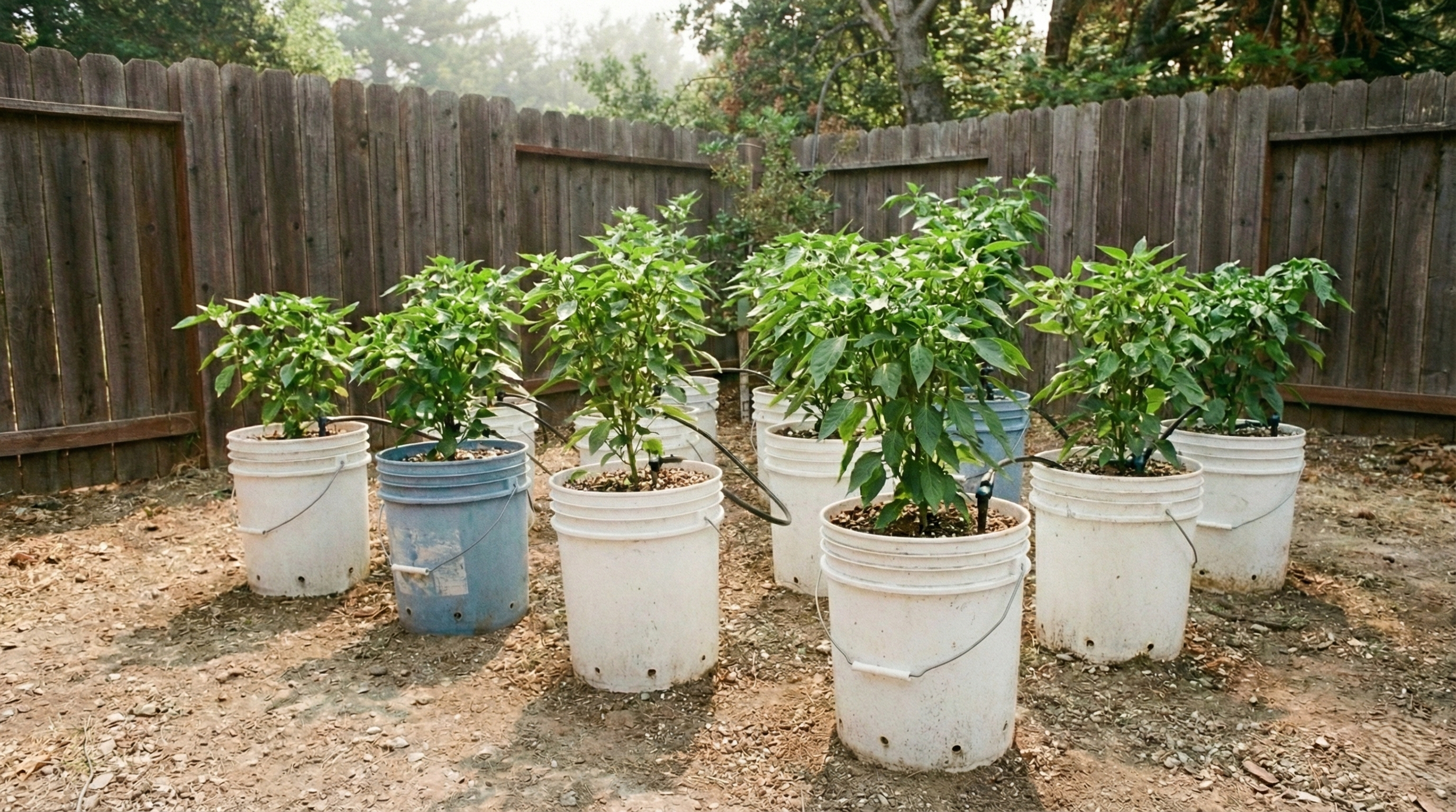
The 5-gallon bucket option: Food-grade 5-gallon buckets (available at hardware stores for $3-5) make excellent pepper containers. Drill 4-6 drainage holes in the bottom. They're not the most attractive option, but they're practical and affordable.
Fabric grow bags: Increasingly popular, fabric grow bags in the 5-7 gallon range work well for peppers. They provide excellent drainage and air pruning of roots, and they're lightweight and storable when not in use.
Container Material Considerations
Plastic: Lightweight, affordable, retains moisture well. Choose light colors in hot inland areas (dark plastic can overheat roots) or dark colors in coastal areas (absorbs heat, which peppers appreciate).
Terra cotta: Classic look, but dries out quickly and can be heavy. The porous material allows some air exchange to roots. Best in inland areas where the cooling effect of evaporation is beneficial.
Ceramic/glazed: Heavy but attractive, retains moisture better than terra cotta. Good for permanent placement.
Fabric grow bags: Lightweight, excellent drainage, promotes air pruning of roots. Dries out faster than plastic, requiring more frequent watering.
Wood (half barrels, raised planters): Attractive, good insulation. Ensure adequate drainage. Can be heavy when filled.
Drainage Requirements
Every container must have drainage holes. UC ANR advises covering (but not blocking) the drainage hole so water drains freely while holding potting soil in place. Use a pot shard or small piece of mesh.
Important: Do not add gravel to the bottom of containers. UC Master Gardeners note that gravel actually causes water to collect in the potting mix just above the gravel layer, creating the opposite of the intended effect.
What Potting Soil Works Best for Container Peppers?
Why Garden Soil Doesn't Work
UC Master Gardeners explain that garden soil causes problems in containers because it becomes compacted, leaving too little air space for healthy roots. Container plants have unique needs because their roots are restricted to the pot's space and water drains differently than in the ground.
Always use potting mix specifically formulated for containers, never garden soil.
What to Look For
Quality potting soil should:
Feel lightweight and fluffy, not dense and heavy
Contain perlite, vermiculite, or pumice for drainage and aeration
Include organic matter (bark, peat moss, or coco coir) for moisture retention
Be slightly acidic (pH 5.5-6.5), which peppers prefer
UC ANR recommends investing in quality potting mixes and avoiding generic or cheaper brands that may include garden soil. Look for products that list their ingredients.
Refreshing Potting Soil
Potting soil can be reused for 2-3 seasons with amendments:
Remove old root material
Add fresh compost (about 25% by volume)
Add fresh perlite if drainage has decreased
Consider adding slow-release fertilizer
After 2-3 years, replace at least half the potting mix with fresh material.
When and How Should You Plant Container Peppers?
When to Plant
Wait for both air and soil temperatures to warm adequately. UC Master Gardeners of Contra Costa County give 55 degrees F at nighttime as the minimum soil temperature for transplanting peppers, and 65 degrees F at nighttime as the optimum.
Typical container planting times in Santa Cruz County:
MicroclimateContainer Planting WindowCoastal (Aptos, Capitola, Santa Cruz)Late May - Mid JuneInland Valleys (Scotts Valley, Soquel)Mid-May - Early JuneWarmest Areas (Watsonville, sunny Boulder Creek)Early-Mid MaySan Lorenzo Valley (sunny exposures)Mid-May - Early JuneHeavy Fog Zones (Davenport)Early-Mid June
Container soil warms faster than ground soil, so you may be able to plant 1-2 weeks earlier than in-ground timing suggests.
Planting Steps
Prepare the container: Ensure drainage holes are clear. Cover holes with mesh or pot shards.
Moisten potting mix: Dry potting mix is difficult to wet thoroughly. Pre-moisten before filling containers.
Leave about an inch between the soil surface and the rim so there is room to hold water each time you irrigate.
Water the transplant: Thoroughly water the pepper in its nursery pot before transplanting.
Plant at the same depth: Unlike tomatoes, peppers don't benefit from deep planting. Set at the same level as the nursery container.
Water thoroughly: Settle soil around roots with deep watering.
Add mulch: A 1-2 inch layer of mulch helps retain moisture and moderate soil temperature. Keep mulch away from the stem.
Position strategically: Place containers in their growing location, considering sun exposure, wind protection, and your ability to move them if needed.
How Many Plants Per Container
One pepper per 5-gallon container is the standard recommendation. Crowding leads to competition for water and nutrients, reducing yields for all plants.
In larger containers:
7-10 gallon: 1 plant, or 2 of compact varieties with very attentive care
Half barrel (15+ gallons): 2-3 plants, spaced around the edges
How Do You Care for Container Peppers?
Watering
Container peppers need more frequent watering than in-ground plants because:
Limited soil volume holds less water
Containers lose moisture from all sides
Roots can't seek water beyond the pot
How to water:
Water deeply until water runs from drainage holes, then allow the top inch of soil to dry before watering again. UC Master Gardeners note that peppers do not tolerate overly wet or overly dry conditions.
Watering frequency:
Frequency depends on container size, material, weather, and plant size. General guidelines:
Hot summer days: Daily for 5-gallon containers, possibly twice daily for smaller pots
Mild weather: Every 2-3 days
Cool or foggy periods: Every 3-4 days, checking soil moisture first
Signs of watering problems:
Underwatering: Wilting (especially in afternoon heat), leaf drop, small or bitter fruit, blossom drop
Overwatering: Yellow leaves, slow growth, root rot, perpetually wet soil
Self-watering containers: These can be excellent for peppers, providing consistent moisture without daily attention. They're especially useful for gardeners who travel or have inconsistent schedules.
Fertilizing
Container peppers need regular fertilizing because nutrients leach out with each watering.
UC ANR advises beginning with water-soluble fertilizer at one-quarter strength with each watering, starting two to four weeks after planting.
The nitrogen balance:
UC Master Gardeners warn that pepper plants love nitrogen, but high nitrogen causes the plant to grow big and bushy at the expense of setting fruit. Use low-nitrogen fertilizers or feed at reduced strength more frequently.
Fertilizing schedule:
At planting: Mix slow-release fertilizer into potting soil, or wait 2 weeks before starting liquid feeding
During growth: Feed every 1-2 weeks with diluted balanced fertilizer (use half the recommended strength)
At flowering: Switch to lower-nitrogen formula or reduce nitrogen component
During fruiting: Continue light feeding to support fruit development
Organic options: Fish emulsion, liquid kelp, and compost tea all work well for container peppers. Apply at half strength more frequently rather than full strength less often.
Temperature Management
Protecting from cold:
When night temperatures threaten to drop below 55 degrees F:
Move containers against house walls (radiated heat)
Place under overhangs or covered patios
Group containers together (shared warmth)
Cover with frost cloth if moving isn't possible
Bring indoors temporarily for severe cold
Protecting from heat:
In inland areas on rare very hot days (above 90 degrees F):
Move containers to afternoon shade
Increase watering frequency
Mulch soil surface
Consider shade cloth for extended heat
Support and Staking
Many pepper plants become top-heavy when loaded with fruit. Stake at planting time to avoid root disturbance later.
Support options:
Single bamboo stake (adequate for most peppers)
Tomato cage (good for large, bushy varieties)
Three-stake tepee with twine
Tie plants loosely to stakes, allowing some movement. UC Master Gardeners note that this movement helps peppers form strong stems.
What Container Strategies Work by Microclimate?
| Microclimate | Container Advantage | Container Color | Key Strategies | Best Container Varieties |
|---|---|---|---|---|
| Coastal Aptos, Capitola, Santa Cruz, Live Oak | Essential | Dark colors (black, brown) to absorb heat and warm soil | Position against south-facing walls. Move to chase sun. Protect from wind. Keep containers mobile for cold nights. | Shishito, Padron, Lunch Box, Lipstick, Gypsy, King of the North |
| Inland Valleys Scotts Valley, Soquel | Beneficial | Light colors in hot spots to prevent overheating; dark colors in cooler spots | Full sun positioning. Can move to afternoon shade on hot days. Larger containers for bigger harvests. | All compact/medium varieties plus Jimmy Nardello, Carmen, jalapeno, serrano |
| Warmest Areas Watsonville, sunny Boulder Creek | Optional | Light colors preferred to prevent root overheating | Heat management focus. Provide afternoon shade on very hot days. Extended season with fall protection. | Any variety succeeds. Use large containers (7-10+ gal) for best yields. |
| SLV Sunny Sunny ridges, Boulder Creek, Ben Lomond | Beneficial | Match to specific conditions (dark for cool spots, light for warm) | Maximize limited sunny spots. Move to follow sun as it shifts seasonally. Protect from late frost. | Similar to inland valleys. Focus on early/compact varieties. |
| SLV Shaded Canyons in Felton, Ben Lomond | Essential | Dark colors to maximize heat absorption | Position on sunny decks, patios, driveways. Containers may be only option. Accept limited yields. | Shishito, Padron only. Consider if peppers are worth the effort. |
| Heavy Fog Davenport, exposed coast | Essential | Dark colors; place on dark pavement to absorb additional heat | Aggressive mobility required. Move daily/weekly to maximize sun. Use smaller pots for easier moving. Consider indoor start. | Shishito, Padron, Manzano. Very limited options. |
Coastal Areas (Aptos, Capitola, Santa Cruz, Live Oak)
Containers offer the biggest advantage in coastal gardens, where the mobility factor can dramatically improve pepper success.
Key strategies:
Dark containers: Choose dark-colored pots to absorb heat and warm soil
Maximum sun positions: Place against south or southwest-facing walls
Wind protection: Position in sheltered spots or create windbreaks
Mobility plan: Keep containers light enough to move (wheeled plant stands help)
Variety selection: Focus on fog-tolerant varieties (shishitos, padrons, early mini bells)
Realistic expectations: Even with optimal container growing, coastal gardens typically produce 10-25 peppers per plant of appropriate varieties. This is lower than inland yields but significantly better than in-ground coastal plantings often achieve.
Inland Valleys (Scotts Valley, Soquel)
Containers work well here but aren't as essential as on the coast. The main advantages are early soil warming and the ability to optimize placement.
Key strategies:
Light-colored containers: In warmer spots, lighter colors prevent root overheating
Afternoon shade option: In hottest locations, ability to move to partial shade helps
Full sun positioning: Most days, peppers want maximum sun
Larger containers: With better conditions, invest in bigger pots for larger harvests
Realistic expectations: 20-40+ peppers per plant for productive varieties, sometimes rivaling in-ground yields.
Warmest Areas (Watsonville, sunny Boulder Creek)
Container growing is optional here since in-ground peppers thrive. However, containers still offer benefits for specific situations.
Key strategies:
Heat management: Light-colored containers, afternoon shade on hot days
Larger containers: Take advantage of conditions with big pots for big harvests
Extended season: Containers can be protected in fall for longer harvest
Convenience: Grow near kitchen or entertaining areas
Realistic expectations: Similar to in-ground yields with proper care. 30-50+ peppers per plant for productive varieties.
San Lorenzo Valley (Boulder Creek, Ben Lomond, Felton)
Container success depends heavily on your specific sun exposure.
Sunny sites:
Treat like inland valleys
Containers help maximize limited sunny spots
Move to follow sun as it shifts seasonally
Shaded sites:
Containers may be the only way to grow peppers
Position on sunny decks, patios, or driveways
Accept that yields will be limited
Heavy Fog Zones (Davenport, exposed coast)
Containers are essential for any pepper success in heavy fog zones.
Key strategies:
Aggressive mobility: Move daily or weekly to maximize sun
Heat-absorbing positions: Dark pavement, south walls, any warm microclimate
Small containers for portability: Balance pot size against ability to move frequently
Limited variety selection: Shishitos, padrons, and manzanos only
Indoor option: Consider a sunny window or grow lights for starting season indoors
Realistic expectations: Modest harvests even with best practices. 10-15 peppers per plant in good years. Some years may produce little. Focus on fog-tolerant varieties and consider whether the effort is worthwhile for your situation.
What Are the Best Pepper Varieties for Containers?
Some pepper varieties perform particularly well in containers due to compact size, early maturity, or tolerance for the conditions containers create.
Top container performers for Santa Cruz County:
Shishito and Padron: Compact plants, quick maturity, extremely productive. The best container peppers for coastal areas (see our hot pepper growing guide). 3-5 gallon containers work well.
Lunch Box Mix: Mini bells bred for containers. Very productive, colorful, and reliable. 5-gallon containers.
Lipstick: Compact plants, early maturity, excellent flavor. 5-gallon containers.
Thai peppers: Compact, ornamental, extremely productive. Can produce in 3-gallon containers.
Cayenne: Relatively compact, productive, tolerates container conditions well. 5-gallon containers.
Fish pepper: Ornamental variegated leaves, good production, interesting history. 5-gallon containers.
Jalapeno (compact varieties): Look for patio or container-bred jalapeno varieties. 5-gallon containers.
Varieties that need larger containers:
Bell peppers: Need 7+ gallon containers for reasonable production.
Poblanos and Anaheims: Large plants, need 7-10 gallon containers.
Habaneros and superhots: Very large plants, benefit from 10-15+ gallon containers.
Frequently Asked Questions
What size container do I really need for peppers?
Five gallons is the practical minimum for most peppers, producing decent harvests without excessive watering demands. Larger containers (7-10 gallons) produce more peppers with less frequent watering. Small peppers like shishitos can produce in 3-gallon pots, while large plants like habaneros benefit from 10+ gallons.
Can I use garden soil in containers?
No. UC Master Gardeners explain that garden soil becomes compacted in containers, suffocating roots and causing drainage problems. Always use potting mix formulated for containers.
How often should I water container peppers?
It depends on container size, weather, and plant size. Check soil moisture daily in summer. Water when the top inch is dry. In hot weather, 5-gallon containers may need daily watering. Larger containers and cooler weather require less frequent watering.
Why are my container pepper leaves turning yellow?
Yellow leaves usually indicate either overwatering (check if soil is constantly wet) or nutrient deficiency (common in containers as nutrients leach out). Improve drainage if overwatering, or increase fertilizing frequency if soil moisture is appropriate.
Can I grow peppers in containers year-round in Santa Cruz?
Peppers are perennial in frost-free conditions, and some gardeners successfully overwinter container peppers in Santa Cruz County's mild climate. Move containers to protected locations in winter, reduce watering, and expect the plant to look rough until spring. Shishitos and manzanos are most likely to survive. However, most gardeners treat peppers as annuals and start fresh each year.
Should I pinch off early flowers on container peppers?
UC Master Gardeners recommend pinching flowers while holding peppers in pots waiting for soil to warm, directing energy to root and plant development. Once transplanted and established, let flowers develop normally.
How do I know when container soil is too old to reuse?
If soil compacts severely, drains very slowly, or produces poor plant growth despite adequate watering and fertilizing, it's time to replace it. Most potting soil can be refreshed for 2-3 seasons by adding compost and perlite, but eventually needs replacement.
Can I move container peppers indoors to extend the season?
Yes, and this is one of the major advantages of container growing. Move plants indoors before frost and place in the sunniest window possible. Production will slow dramatically without strong light, but you may get some late peppers and can overwinter plants for next year.
Container growing won't magically transform a foggy Davenport garden into Watsonville, but it can dramatically improve your pepper harvests in challenging microclimates. The ability to move plants to chase sun, protect them from cold nights, and create warmer microclimates against south-facing walls makes container peppers a practical solution for coastal and fog-zone gardeners who've struggled with in-ground plantings. Start with a few 5-gallon containers of shishitos or padrons, position them in your warmest spot, and experience the difference mobility makes. Once you've had success with container peppers, you may find yourself expanding your collection each year, discovering just how much is possible in your particular corner of Santa Cruz County.
Downloadable Guides
Seasonal Planting Calendar: Month-by-month planting for your area.
Know Your Microclimate Worksheet: Determine your specific growing conditions.
Garden Troubleshooting Guide: Solve common pepper problems.
Local Resources
San Lorenzo Garden Center: Containers, potting soil, and pepper transplants.
Mountain Feed & Farm Supply: Organic potting soil and amendments.
Dig Gardens: Curated container selection and quality potting mixes.
UC Master Gardeners of Monterey and Santa Cruz Counties: Free gardening advice including container growing guidance.
Related Articles
Growing Peppers in Containers in Santa Cruz County (The Mobility Advantage)
