

Manzano Peppers: The Hot Pepper Built for Cool Climates
A few of the product links in this guide are affiliate links. If you buy through one, Ambitious Harvest may earn a small commission at no extra cost to you, which helps keep these guides free. We only point to gear we would use in our own Santa Cruz garden. As an Amazon Associate, we earn from qualifying purchases. Read our full disclosure.
The manzano pepper (Capsicum pubescens) is a unique chili pepper that thrives in cool climates, making it an ideal choice for Santa Cruz County gardeners. Heat varies widely by strain, from around 12,000 Scoville heat units in mild manzano types up to the 175,000 units the NMSU Chile Pepper Institute recorded for a rocoto. Manzano peppers also prefer mild temperatures rather than the heat most chiles want. Capsicum pubescens is the only cultivated pepper species with black seeds and hairy leaves, and it handles cool weather better than the others, though it is not frost hardy.
These Andean natives actually prefer cooler temperatures. While jalapeños and habaneros struggle in foggy Aptos or Santa Cruz, Manzanos thrive. They set fruit at temperatures that shut down other hot peppers, keep setting fruit through cool nights, and can live for years as perennials where they are sheltered from frost.
If you have tried growing hot peppers on the coast and been disappointed, Manzano peppers deserve your attention. They offer medium-high heat (reliably hotter than a jalapeno, and sometimes far hotter) with a distinctive fruity, citrusy flavor that is prized for fresh salsas and Latin American cooking. And they will actually produce reliably in conditions that frustrate other pepper varieties.
Manzano Peppers
A Different Species
Manzano peppers (Capsicum pubescens) belong to a different species than most garden peppers. While jalapeños, bells, cayennes, and habaneros are all Capsicum annuum or Capsicum chinense, Manzanos are one of only a few cultivated peppers in the pubescens species.
This matters because it explains their unique characteristics:
Cool temperature preference: Manzanos evolved in the Andean highlands of Peru and Bolivia at elevations of 6,000 to 10,000 feet, where temperatures are mild year-round. They are adapted to conditions remarkably similar to coastal Santa Cruz County.
Black seeds: Manzano peppers have distinctive black or dark brown seeds, unlike the white or cream seeds of other pepper species. This is an easy way to identify true Manzanos.
Fuzzy leaves: The species name "pubescens" means hairy, referring to the fuzzy leaves. This pubescence helps the plants tolerate cooler, damper conditions.
Perennial growth: Where winters stay above freezing, Manzanos grow as woody perennials and can keep producing for several years.
The Fruit
Manzano means "apple" in Spanish, and the peppers are roughly apple-shaped: round to slightly elongated with thick, fleshy walls. Fruits typically measure 2 to 3 inches across.
Ripe Manzanos are usually bright yellow or orange, though red varieties exist. The flesh is notably thick and juicy compared to thin-walled hot peppers.
Published heat figures range widely, from about 12,000 Scoville units for mild manzano strains up to the 175,000 units the NMSU Chile Pepper Institute measured in a rocoto. A typical manzano sits in serrano territory, but assume any given plant may be much hotter. The flavor is distinctly fruity and citrusy, quite different from the earthy heat of jalapeños or the floral burn of habaneros.
Other Names
You may encounter Manzano peppers under several names:
Rocoto: The most common name in Peru and other South American countries
Locoto: Used in Bolivia
Chile perón: Used in parts of Mexico
Canario: Sometimes used for yellow varieties
All refer to the same species, though regional varieties may differ slightly in heat and flavor.
Why Manzanos Excel in Santa Cruz County
Temperature Preferences
UC ANR puts the ideal range for peppers at 75 to 85 degrees Fahrenheit by day with nights of 55 to 65, and notes that pollination and fruit set suffer as days approach 100 degrees. That is a narrow window that our coastal areas rarely hit consistently.
Manzanos have different preferences. The figures below come from grower experience with the species rather than from a published UC trial:
Ideal daytime temperature: 60 to 80 degrees Fahrenheit
Night temperature tolerance: Down to 45 degrees without dropping flowers
Heat stress: Above 85 to 90 degrees, Manzanos struggle and may drop flowers
This temperature profile matches coastal Santa Cruz County almost perfectly. Our summer highs typically range from 65 to 75 degrees with cool nights, exactly what Manzanos prefer. The same conditions that limit jalapeño production are ideal for Manzanos. UC Agriculture and Natural Resources publishes vegetable growing guidance for coastal California.
Fog Tolerance
The fuzzy leaves that give pubescens its name also help the plant handle humidity and moisture. While many pepper varieties develop fungal problems in foggy conditions, Manzanos are grown in the cool, humid mid-elevation Andes and handle our coastal fog well. Understanding your local microclimate can help you choose the best planting location for fog-tolerant crops like Manzanos.
Perennial Potential
In the Andes, Manzanos are grown as perennials, producing for years from a single planting. In Santa Cruz County's mild climate, the same is possible.
Established Manzano plants sometimes come through a light frost and regrow from woody stems if the tops are damaged, but the species is not frost hardy, so plan on protecting it. In protected coastal locations where hard freezes are rare, a well-sited plant can keep producing for several years.
This perennial nature means your investment of time in the first year (when growth is slow) pays off for years afterward as established plants produce increasingly heavy harvests.
Growing Manzanos by Santa Cruz County Microclimate
Coastal Areas (Aptos, Capitola, Live Oak, Santa Cruz)
This is Manzano country. The cool, foggy conditions that limit other peppers are exactly what Manzanos prefer.
Plant in the warmest spot you have (south-facing, against a wall if possible) but do not stress about achieving maximum heat. Manzanos will produce reliably in conditions that leave other peppers sulking.
Perennial growing is most successful here due to mild winters. Established plants may need only light frost protection in the coldest winters.
Inland Valleys (Scotts Valley, Parts of Watsonville)
Manzanos perform well in these transitional areas. Summer temperatures are warm enough for good production but typically do not reach the levels that stress these cool-loving plants.
Some afternoon shade during the hottest summer months can help prevent flower drop during heat waves.
Sunny Mountain Areas (Boulder Creek Ridges, Ben Lomond Sunny Exposures)
These areas may actually be too hot for optimal Manzano production during summer months. When temperatures regularly exceed 85 degrees, Manzanos drop flowers and stop setting fruit until conditions cool.
If you garden in a hot area, consider afternoon shade, or accept that Manzanos may produce primarily in spring and fall rather than midsummer.
Winter cold is also more of a factor in mountain areas. Manzanos in Boulder Creek will likely need protection or treatment as annuals rather than perennials.
Under Redwoods
The cool temperatures suit Manzanos, but the shade is problematic. Peppers need significant sun to produce well. If you can find a spot that is shaded by redwoods only part of the day (morning sun, afternoon shade, or vice versa), Manzanos might work. Full shade will not produce a worthwhile harvest.
Starting Manzano Peppers
The Germination Challenge
Here is the catch with Manzanos: they are slow and sometimes tricky to germinate. While most pepper seeds sprout in 7 to 14 days, Manzano seeds can take 3 to 6 weeks, and germination rates are often lower than other peppers.
This is not a flaw; it is an adaptation. In their native high-altitude habitat, irregular germination helps ensure survival. But it means you need patience and should start more seeds than you think you need.
Seed Starting
When to start: 10 to 12 weeks before your planned transplant date. For a late May transplant, that means starting seeds in early to mid-March. The extra time accounts for slow germination and slow early growth.
Temperature for germination: 75 to 85 degrees Fahrenheit. Consistent warmth is essential. Use a seedling heat mat and maintain temperature throughout the germination period.
Planting depth: 1/4 inch deep in quality seed starting mix.
Moisture: Keep soil consistently moist but not waterlogged during germination. Cover trays with plastic or humidity domes until seeds sprout.
Light: Seeds do not need light to germinate, but provide strong light immediately once seedlings emerge.
Patience: Check daily but do not give up. Some seeds germinate in 2 weeks; others from the same packet may take 6 weeks. Keep conditions consistent and wait.
Improving Germination
Several techniques can improve Manzano germination rates:
Fresh seeds: Manzano seed viability drops faster than other peppers. Use seeds less than a year old if possible.
Scarification: Gently scuff the seed coat with fine sandpaper before planting. This mimics the breakdown that would occur naturally in soil.
Hydrogen peroxide soak: Soak seeds in a dilute hydrogen peroxide solution (1 tablespoon per cup of water) for 15 minutes before planting. This can help break dormancy and prevent fungal problems.
Gibberellic acid: For stubborn seeds, a GA3 (gibberellic acid) soak can dramatically improve germination. Available from specialty seed suppliers. Follow package directions carefully.
Where to Find Seeds
Manzano seeds are not commonly stocked at garden centers. Reliable sources include:
Baker Creek Heirloom Seeds carries Manzano/Rocoto varieties.
Trade Winds Fruit specializes in unusual edibles including Manzanos.
Refining Fire Chiles stocks multiple Manzano varieties.
Locally, check specialty seed vendors at Santa Cruz farmers markets. The Felton Seed Lending Library occasionally has donated pepper seeds including unusual varieties.
Buying Transplants
Because of germination challenges, buying transplants is a reasonable alternative. Manzano plants are harder to find than common peppers, but some specialty nurseries carry them.
Mountain Feed & Farm Supply (Ben Lomond) occasionally stocks unusual pepper starts.
Check with pepper vendors at farmers markets; some sell starts of their unusual varieties in spring.
Transplanting and Growing Manzano Peppers
When to Transplant
Transplant outdoors when nighttime temperatures are consistently above 45 degrees Fahrenheit. In coastal Santa Cruz County, that is typically mid to late May.
Unlike heat-loving peppers where warm soil is critical, Manzanos tolerate cool soil reasonably well. Do not rush them out in early spring, but they do not need the soil warming that other peppers require.
Site Selection
Sun: Full sun (6 to 8 hours) for best production, though Manzanos tolerate partial shade better than most peppers.
Wind protection: Important, especially for tall mature plants. A location against a south-facing wall is ideal.
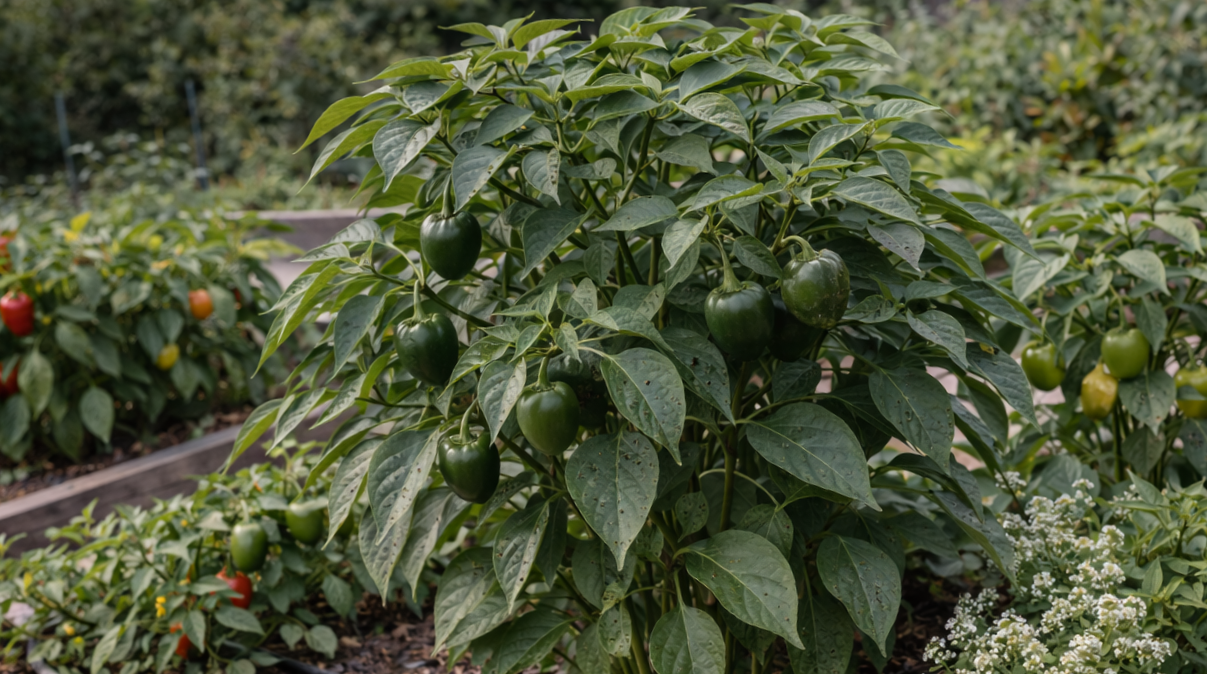
Room to grow: Manzanos get big. Plan for plants 4 to 6 feet tall and 3 to 4 feet wide at maturity. In subsequent years, perennial plants grow even larger.
Soil
Well-draining, moderately fertile soil. Manzanos do not need or want extremely rich conditions (which promote foliage over fruit), but they benefit from decent soil compared to truly poor conditions.
Amend heavy clay with compost to improve drainage. A slightly acidic to neutral pH (6.0 to 7.0) is ideal. The UC Cooperative Extension in Santa Cruz County is the local place to take soil and vegetable growing questions.
Planting
Dig a hole slightly larger than the root ball. Unlike tomatoes, peppers do not benefit from deep planting; set them at the same level they were in the pot.
Space plants 3 to 4 feet apart, or more if you are planning to grow them as perennials.
Water thoroughly after planting and apply 2 to 3 inches of mulch, keeping it away from the stem.
Watering
Consistent moisture is important, especially during flowering and fruit set. Water deeply when the top inch of soil is dry.
Manzanos are somewhat more tolerant of inconsistent watering than other peppers due to their thicker leaves, but drought stress still reduces yield.
In foggy coastal areas, you may need less supplemental irrigation than you expect; the plants receive significant moisture from fog.
Fertilizing
Feed moderately. Excessive nitrogen produces lush foliage but fewer peppers.
Apply a balanced organic fertilizer (like 4-4-4) at planting time. Side-dress once mid-season when plants are setting fruit. Fish emulsion or kelp provides nutrients without pushing excessive growth.
Support
Mature Manzano plants get large and heavy with fruit. Staking or caging prevents branches from breaking.
A sturdy tomato cage works for first-year plants. Perennial plants may need more substantial support: heavy-duty stakes, a section of welded wire fencing, or a custom frame.
Growing Manzanos as Perennials
One of Manzano peppers' greatest advantages in Santa Cruz County is perennial potential. An established plant produces more heavily each year and requires less work than starting fresh annually.
First-Year Expectations
Set realistic expectations for year one. Manzanos grow slowly compared to annual peppers. You may get a modest harvest in late summer or fall, but do not expect heavy production.
The plant is investing in root development and woody stem structure. This investment pays off in subsequent years.
Overwintering
In coastal areas, Manzanos may overwinter outdoors with minimal protection:
Mulch heavily around the base before winter to protect roots.
Provide frost protection if hard freezes are forecast. Frost cloth or a temporary cover during cold snaps may be all that is needed.
Reduce watering during winter when growth slows.
In colder areas (mountain locations, frost pockets), either grow Manzanos as annuals or take more aggressive measures:
Container growing allows you to move plants to a protected location (garage, greenhouse, covered porch) during cold periods. For more on this approach, see our guide to growing peppers in containers.
Heavy mulching plus frost cloth may protect established plants through occasional freezes.
Year Two and Beyond
Established Manzanos produce significantly more than first-year plants. By year two or three, expect heavy harvests over an extended season.
Perennial plants develop woody trunks and can reach 6 feet or taller. Prune in early spring before new growth begins to maintain shape and encourage branching.
Mature Manzano plants produce far more heavily than first-year plants.
Harvesting and Using Manzano Peppers
When to Harvest
Harvest when peppers reach full size and have colored completely (usually yellow, orange, or red depending on variety). Fully ripe peppers have the best flavor and heat development.
Unlike some peppers that are harvested green, Manzanos are primarily used ripe. Green Manzanos are edible but lack the characteristic fruity flavor.
Regular harvesting encourages continued production.
Handling Heat
Manzano peppers are significantly hotter than jalapeños. The oils can irritate skin and especially eyes and mucous membranes.
Wear gloves when handling, especially when seeding or slicing. Avoid touching your face. Wash hands and surfaces thoroughly after handling.
Culinary Uses
Fresh salsa: Manzanos are prized for fresh salsa, where their thick flesh, fruity flavor, and medium-high heat shine. Dice and combine with tomatoes, onions, cilantro, and lime.
Rocoto relleno: A traditional Peruvian dish of stuffed Manzanos, similar to chile rellenos but with distinctive flavor.
Hot sauce: The thick flesh makes excellent hot sauce, either fermented or fresh.
Ceviche: Sliced Manzanos are traditional in some ceviche preparations.
Careful substitution: Manzanos are hotter than jalapeños but milder than habaneros. When substituting in recipes, start with less than the recipe calls for and adjust to taste.
Storage
Fresh Manzanos keep 1 to 2 weeks refrigerated.
For longer storage:
Freezing: Whole or sliced peppers freeze well. Texture softens but flavor remains good for cooked applications.
Drying: Possible but challenging due to thick flesh. Slice thin and use a dehydrator.
Pickling: Excellent pickled. The thick walls hold up well to the pickling process.
Common Problems and Solutions
Slow Growth
Manzanos are naturally slow-growing, especially compared to annual pepper varieties. This is normal, not a problem to solve.
Ensure plants have adequate nutrition and water, but do not expect the rapid growth you would see from jalapeños or bells.
Flower Drop
From heat: Temperatures above 85 to 90 degrees cause Manzanos to drop flowers. This is actually less common here than in hotter regions, but can occur during heat waves.
From cold: Temperatures below 45 degrees can also cause flower drop, though Manzanos tolerate cool conditions better than other peppers.
Solution: In heat-prone areas, provide afternoon shade. In cool areas, plant against a south-facing wall for added warmth. Most coastal locations do not have either problem.
Poor Fruit Set
Manzanos are self-pollinating but benefit from pollinator activity. If fruit set is poor despite flowers, try hand-pollinating: gently shake plants or use a small brush to transfer pollen between flowers.
Pests
Manzanos face the same pests as other peppers:
Aphids: Check new growth regularly. Spray off with water or use insecticidal soap. The UC Integrated Pest Management Program offers detailed identification and treatment guidance for aphids on garden crops.
Spider mites: More common in hot, dry conditions. Increase humidity around plants; spray with water.
Hornworms: Hand-pick these large caterpillars.
Overwintering Failure
If perennial plants do not survive winter, the likely causes are:
Too much cold: a hard freeze kills Manzanos. In frost-prone areas, grow in containers you can protect.
Wet soil plus cold: The combination is more damaging than either alone. Improve drainage and reduce winter watering.
Young plants: First-year plants are more vulnerable than established specimens with woody growth. Provide extra protection in the first winter.
For the general pepper timeline from seed to ripe harvest, see our pepper growth stages guide.
Frequently Asked Questions About Growing Manzano Peppers
Why are my Manzano seeds taking so long to germinate?
Slow, irregular germination is normal for Manzano peppers. They can take 3 to 6 weeks to sprout, compared to 1 to 2 weeks for most peppers. Use fresh seeds, provide consistent warmth (75 to 85 degrees), and be patient. Starting seeds 10 to 12 weeks before transplant accounts for this slow germination.
Can I really grow Manzanos as perennials in Santa Cruz County?
Yes, especially in coastal areas where hard freezes are rare. Established plants can keep producing for several years with winter protection. Provide winter mulching and frost protection during cold snaps. Mountain areas with harder freezes are more challenging; container growing allows you to protect plants during cold periods.
How hot are Manzano peppers?
Published figures for manzano and rocoto run from about 12,000 Scoville units up to the 175,000 the NMSU Chile Pepper Institute recorded for a rocoto, so treat any manzano as well hotter than a jalapeno (2,500 to 8,000 Scoville) and taste a small piece before you commit it to a dish. The heat is accompanied by a distinctive fruity, citrusy flavor that sets them apart from other peppers at similar heat levels.
Why do my other hot peppers struggle while Manzanos thrive?
Manzanos evolved in the cool Andean highlands and prefer temperatures of 60 to 80 degrees. Most hot peppers (jalapeños, habaneros, etc.) want 80 to 90 degrees and struggle in our coastal fog and cool nights. Manzanos' cool-temperature preference makes them uniquely suited to Santa Cruz County's climate.
What is the difference between Manzano and Rocoto peppers?
They are the same pepper (Capsicum pubescens). "Manzano" is used more commonly in Mexico, while "Rocoto" is the standard name in Peru and other South American countries. Both refer to the same species with black seeds, fuzzy leaves, and preference for cool temperatures.
How do I know if I have a true Manzano pepper?
Look at the seeds. Manzano/Rocoto peppers (Capsicum pubescens) have distinctive black or dark brown seeds, unlike the white or cream seeds of all other commonly grown peppers. The leaves are also noticeably fuzzy compared to other pepper species.
Why is my Manzano plant not producing fruit the first year?
Manzanos are slow-growing and invest heavily in root and stem development their first year. A modest harvest (or even no harvest) in year one is normal. Production increases dramatically in year two and beyond as plants mature. This is why perennial growing is advantageous: you invest time once and harvest for years.
Can I grow Manzanos in a container?
Yes, and container growing is a good strategy in areas where winter protection is needed. Use at least a 10 to 15 gallon container for mature plants. Expect somewhat smaller plants and lower yields than in-ground growing, but container Manzanos can still produce well and be moved to protected locations during cold weather.
Is chile manzano the same as a manzano pepper? Yes. Chile manzano is simply the Spanish name for the manzano pepper, used widely in Mexico, where manzana means apple and refers to the fruit’s small apple-like shape. It is the same plant described on this page, Capsicum pubescens. So if you come across seeds or peppers labeled chile manzano, you are looking at the manzano pepper.
Free Gardening Resources
Getting Started
Beginner Garden Setup Checklist: Complete setup guide to start your garden right.
Know Your Microclimate Worksheet: Understand your local conditions before planting.
Planning & Timing
Seasonal Planting Calendar: Avoid timing mistakes with month-by-month guidance.
Vegetables by Season Chart: Quick reference for what to plant and when in Santa Cruz County.
Seasonal Garden Tasks Checklist: Stay on track with monthly garden maintenance tasks.
Growing Guides
Companion Planting Guide: Learn which plants grow better together and which to keep apart.
Tomato Variety Selector: Find the best tomato varieties for your Santa Cruz microclimate.
Problem Solving
Garden Troubleshooting Guide: Diagnose common problems before they become disasters.
Gopher Control Guide: Humane and effective strategies for managing gophers in your garden.
Santa Cruz-Specific Guides
Water-Wise Gardening Guide: Conserve water while keeping your garden thriving through dry seasons.
Right Pepper for Our Climate
Most gardening advice about hot peppers does not apply to coastal California. We read about peppers needing heat, struggling with cool nights, requiring the hottest spot in the garden. That is true for most peppers. It is not true for Manzanos.
If you have been frustrated by underperforming peppers in your foggy garden, Manzanos offer a different path. They are adapted to exactly the conditions we have: mild temperatures, cool nights, and maritime humidity. What limits other peppers helps Manzanos thrive.
Plant one this spring. Be patient through the slow first year. Protect it through winter. By year two, you will have a productive perennial pepper plant that may outlast anything else in your vegetable garden, producing bushels of fruity, fiery fruit for years to come.
Related Articles
Growing Peppers in Containers in Santa Cruz County
