

Top Strawberry Mistakes New Gardeners Make (And How to Avoid Them)
A few of the product links in this guide are affiliate links. If you buy through one, Ambitious Harvest may earn a small commission at no extra cost to you, which helps keep these guides free. We only point to gear we would use in our own Santa Cruz garden. As an Amazon Associate, we earn from qualifying purchases. Read our full disclosure.
Strawberries seem simple. Plant them, water them, pick berries. But most new strawberry gardeners make a handful of predictable mistakes that lead to disappointing harvests or dead plants. The good news? These mistakes are easy to avoid once you know what to watch for.
Here are the top mistakes I see (and have made myself) with practical fixes for each.
| Mistake | Severity | What Happens | The Fix |
|---|---|---|---|
| 1Planting crown too deep | Fatal | Crown rots within weeks. Plant dies. | Crown EXACTLY at soil level. Check after watering settles soil. |
| 2Expecting instant results | Common | Frustration and giving up on healthy plants. | Accept light Year 1 harvest. Remove early flowers to build roots. |
| 3Overwatering / inconsistent water | Serious | Root rot (overwater) or small bitter fruit (inconsistent). | Check soil moisture before watering. Consistent is key. |
| 4Skipping soil prep | Serious | Weak growth, poor drainage, small harvests. | Add compost. Ensure drainage. Use raised beds in clay soil. |
| 5Planting in too much shade | Serious | Lots of leaves, few flowers, little fruit. | Need 6+ hours direct sun. Try Alpines in partial shade. |
| 6Letting runners take over | Common | Crowded, tangled patch with declining yields. | Remove most runners. Allow only select few to root. |
| 7Never replacing old plants | Common | Production declines year after year. | Replace plants every 2-3 years using runners. |
| 8Over-fertilizing (nitrogen) | Serious | Beautiful leaves, almost no berries. | Fertilize moderately. Avoid high-nitrogen products. |
| 9Skipping mulch | Common | Weeds, fruit rot, dried-out roots. | 2-3 inches of straw or similar. Essential, not optional. |
| 10Not protecting from pests | Common | Birds and slugs eat your harvest. | Netting before berries ripen. Slug patrol at night. |
| 11Wrong variety choice | Common | Plants struggle or disappoint. | Choose proven local varieties: Albion, Seascape, Sequoia. |
| 12Planting at wrong time | Common | Poor establishment, stressed plants. | Coastal: fall-winter. SLV: late winter-spring. |
What Happens When You Plant the Crown Too Deep?
What happens: The crown (central growing point) rots and the plant dies, usually within weeks of planting.
Why it's so common: New gardeners naturally want to "plant it deep so it's secure." With most plants, a little deep is fine. With strawberries, it's fatal.
The Fix
The crown must sit exactly at soil level. Not 1 inch below. Not 2 inches below. Exactly at the surface.
When planting:
Dig a hole wide enough to spread roots
Create a small mound of soil in the center
Place the plant with roots spread over the mound
Position the crown exactly at soil level
Backfill, checking crown position before firming
After watering, check again. Settling soil can bury crowns. Adjust if needed.
How to Know If You Made This Mistake
Within 2 to 4 weeks, the crown softens and turns brown. New leaves stop emerging. The plant pulls out easily because roots have also rotted.
Why Shouldn't You Expect Instant Results from New Plants?
What happens: First-year plants produce little or no fruit. Gardeners assume something is wrong and give up.
Why it's so common: Patience isn't a gardening virtue many of us have. We want berries NOW.
The Fix
Set realistic expectations:
Bare-root plants: Day-neutral varieties may produce some fruit the first year if planted in late winter/early spring. June-bearing varieties typically produce their first significant crop in year two.
Plants from runners: Same timeline as bare-root. Runners rooted in summer may produce a small fall crop (day-neutral) but full production comes the following year.
Potted plants: May produce some fruit the first year, but don't expect a full harvest.
Many experienced gardeners actually remove first-year flowers to help plants establish stronger root systems. This feels counterintuitive but results in bigger harvests in subsequent years.
How Does Inconsistent Watering Harm Strawberries?
What happens: Overwatering causes root rot. Inconsistent watering causes small, bitter fruit.
Why it's so common: People either set it and forget it (overwatering) or water only when they remember (inconsistent).
The Fix
Consistency is key. Strawberries need regular moisture but not waterlogged soil.
Check soil moisture before watering. Stick your finger 1 to 2 inches into the soil. If it's dry, water. If it's still moist, wait.
Aim for:
Deeply moist soil during fruit development
Slightly drier conditions during dormancy
Never standing water
Drip irrigation or soaker hoses on a timer take the guesswork out. See our Drip Irrigation Setup 101 guide.
What Happens When You Ignore Soil Preparation?
What happens: Plants struggle in poor, compacted, or poorly draining soil. Growth is weak, harvests are small.
Why it's so common: Enthusiasm wins over preparation. People want to plant immediately, not spend time improving soil.
The Fix
Before planting:
Loosen soil to 8 to 10 inches deep
Work in 2 to 4 inches of compost
Ensure drainage is adequate (water shouldn't pool)
Test pH if possible (strawberries prefer 5.5 to 6.5)
In heavy clay or poorly draining soil, build raised beds. This single step prevents most root rot problems.
The time you invest in soil preparation pays dividends for years.
Can Strawberries Grow in Shade?
What happens: Plants produce lots of leaves but few flowers and little fruit.
Why it's so common: New gardeners underestimate how much sun strawberries need, or they plant in the only available spot.
The Fix
Strawberries need at least 6 hours of direct sunlight for good fruit production. More is better.
If your only space is partially shaded:
Choose the sunniest part
Accept reduced yields
Consider Alpine strawberries, which tolerate shade better than standard varieties
Focus on shade-tolerant crops for that space and find a sunnier spot for strawberries
How Should You Manage Strawberry Runners?
What happens: The patch becomes a tangled mess of plants. Individual plants are weak, and fruit production drops.
Why it's so common: Runners appear so fast and look so healthy that letting them go seems like free bonus plants.
The Fix
Manage runners intentionally:
For maximum fruit production: Remove all runners as they appear. This directs plant energy into berries instead of offspring.
For propagation: Allow select runners from your best plants to root. Remove the rest.
Never: Let all runners root wherever they land. This creates overcrowding, disease pressure, and declining yields.
A controlled patch with proper spacing (12 to 18 inches between plants) always outproduces a crowded mat of tangled plants.
See our guide: How to Multiply Strawberries from Runners
When Should You Replace Old Strawberry Plants?
What happens: Production declines year after year until you're harvesting a handful of small berries from exhausted plants.
Why it's so common: If it's not broken, don't fix it, right? Wrong. Strawberry plants have a natural lifespan.
The Fix
Replace plants every 2 to 3 years. Strawberry productivity naturally declines as plants age.
Use the rotation approach:
Year 1: New plants establish (light or no harvest)
Year 2: Peak production
Year 3: Still productive but declining
Year 4: Replace with new stock
Use runners from your second-year plants to create replacements, making this a free, self-sustaining cycle.
Can You Over-Fertilize Strawberries?
What happens: Lush, beautiful plants with dark green leaves. Almost no berries.
Why it's so common: More fertilizer = more growth = more fruit... right? Not with strawberries.
The Fix
Fertilize moderately and avoid high-nitrogen products.
Schedule:
Early spring (new growth emerging): Light balanced feeding
After harvest (for June-bearing): Light feeding to support recovery
Never: Heavy nitrogen applications, especially during flowering
If your plants are all leaves and no flowers, stop fertilizing entirely. Let them use up excess nitrogen before expecting fruit production to resume.
Why Is Mulch Essential for Strawberries?
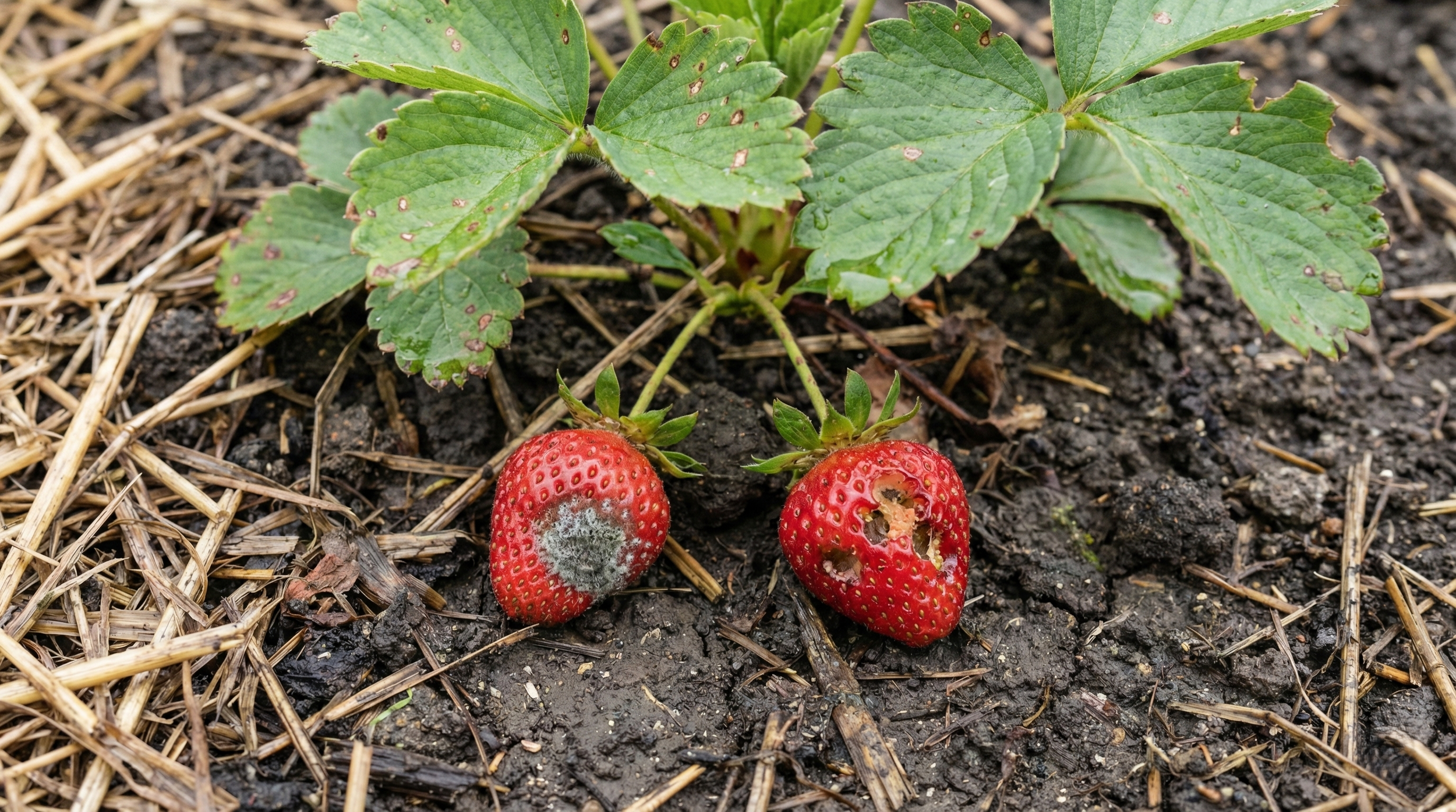
What happens: Weeds compete with plants. Fruit rots from soil contact. Roots heat up and dry out.
Why it's so common: Mulching feels optional, like a nice-to-have rather than a need-to-have.
The Fix
Mulch is essential for strawberries. Apply 2 to 3 inches of straw, pine needles, or similar material:
Around plants (but not touching crowns)
Under developing fruit
Throughout the growing season
Benefits:
Keeps fruit clean and reduces rot
Suppresses weeds
Conserves moisture
Moderates soil temperature
The word "strawberry" may come from the tradition of mulching with straw. It's that fundamental to growing them.
How Should You Protect Strawberries from Pests?
What happens: You check your patch, see beautiful ripe berries, plan to pick them tomorrow... and find them half-eaten or gone.
Why it's so common: New gardeners don't realize how quickly birds, slugs, and other creatures will find ripe strawberries.
The Fix
For birds: Install netting before berries start ripening, not after. Use hoops or stakes to hold netting off plants.
For slugs: Patrol at night with a flashlight. Set beer traps. Apply iron phosphate bait (Sluggo). Water in the morning so soil surface dries by evening.
For all pests: Harvest promptly. Don't leave ripe berries on plants overnight. Check the patch daily during peak production.
Which Strawberry Varieties Work Best in Santa Cruz?
What happens: Plants struggle in your conditions, produce poorly, or disappoint with flavor.
Why it's so common: Gardeners grab whatever the nursery has without considering local suitability.
The Fix
Choose varieties proven in Santa Cruz County:
Day-neutral for most gardeners: Albion, Seascape, San Andreas (extended harvest)
June-bearing for preserving: Chandler, Sequoia (concentrated harvest)
For coastal fog: Sequoia was developed for our conditions
For warmer areas: Seascape handles heat well
See our complete guide: Best Strawberry Varieties for Santa Cruz County
When Is the Best Time to Plant Strawberries?
What happens: Plants struggle to establish, especially if planted just before extreme weather.
Why it's so common: Gardeners plant when they buy plants or when they have time, not when conditions are optimal.
The Fix
Coastal Santa Cruz: Fall through late winter (October through February) is ideal for bare-root planting
San Lorenzo Valley / Inland: Late winter to early spring (February through March) after hardest frosts
Avoid: Planting just before a heat wave or during waterlogged winter soil
Timing matters less for container plants from nurseries, but bare-root plants need the right window to establish.
Strawberry Success Checklist for Beginners
- Choose a spot with 6+ hours of direct sun
- Test drainage (water should not pool)
- Add 2-4 inches of compost to soil
- Build or buy raised beds if drainage is poor
- Select proven varieties (Albion, Seascape, or Sequoia)
- Crown EXACTLY at soil level (not buried!)
- Space plants 12-18 inches apart
- Water thoroughly after planting
- Apply 2-3 inches of mulch (straw or similar)
- Keep mulch away from crown itself
- Remove flowers for first 4-6 weeks (builds stronger roots)
- Water when top 1-2 inches of soil is dry
- Fertilize lightly once you see active growth
- Remove most runners (plant needs energy to establish)
- Scout for pests weekly
- Install bird netting before berries ripen
- Harvest daily during peak production
- Manage runners intentionally (remove or root)
- Replace plants every 2-3 years
- Propagate from your best Year 2 plants
What Is the One Piece of Advice That Prevents Most Mistakes?
If I could give new strawberry gardeners just one tip, it would be this:
Start with raised beds.
Raised beds with quality soil solve most common problems:
Drainage issues? Gone.
Heavy clay? Irrelevant.
Crowding? Easy to manage in a defined space.
Weeds? Easier to control.
Watering? More consistent.
A 4×4 foot raised bed holds about 10 to 12 strawberry plants, enough to provide fresh berries for a household. It's a manageable scale for learning before expanding.
Frequently Asked Questions
What's the most common reason strawberry plants die?
Planting the crown too deep causes more strawberry deaths than any other mistake. The crown must sit exactly at soil level, not buried even slightly.
Why do my strawberry plants have lots of leaves but no berries?
Usually too much nitrogen fertilizer, but also possibly too little sun. Both cause plants to focus on leaf growth instead of fruit production.
How long do strawberry plants live?
Most plants produce well for 2 to 3 years before declining. Plan to replace your patch periodically using runners from your best plants.
Can I grow strawberries in shade?
Strawberries need at least 6 hours of direct sun for good production. In partial shade, expect fewer berries. In heavy shade, consider Alpine strawberries or choose different crops.
Should I remove strawberry flowers the first year?
It helps plants establish stronger roots, leading to better production in future years. At minimum, remove flowers for the first 4 to 6 weeks after planting.
Why are my strawberries small and hard?
Usually inconsistent watering or too many berries for the plant to support. Water consistently during fruit development and thin fruit if plants are overloaded.
How often should I water strawberries?
Check soil moisture and water when the top 1 to 2 inches are dry. During fruit development, this might be every 2 to 3 days. Adjust based on weather and soil type.
What's the best mulch for strawberries?
Straw is traditional and works well. Pine needles, wood chips, and other organic mulches also work. Avoid fresh grass clippings (too nitrogen-rich) and whole leaves (mat and block water).
How Can You Learn from Others' Mistakes?
Every experienced strawberry gardener has made at least a few of these mistakes. The difference is learning from them rather than repeating them. If you take away just three things from this guide, make them these: plant crowns exactly at soil level, water consistently, and start with raised beds if you have any doubts about your soil. These three practices alone prevent the majority of strawberry failures. Beyond that, be patient with your plants and with yourself. Gardening is a learning process, and even a disappointing first season teaches you something valuable for the next one. For detailed guidance on getting started right, see our Bare-Root Strawberry Planting Guide, and when problems do arise, our Strawberry Troubleshooting Guide can help you diagnose and fix them.
Free Gardening Resources
Find all our free guides in Your Garden Toolkit.
More Strawberry Growing Guides
Part of our Complete Strawberry Series for Santa Cruz County:
Growing Strawberries in Santa Cruz County: A Local Guide to Sweet Success - Everything you need to know about growing strawberries in our coastal climate
Best Strawberry Varieties for Santa Cruz County - Which varieties thrive here and where to find them locally
Planting Bare-Root Strawberries: A Santa Cruz Guide - Step-by-step instructions for bare-root planting success
Growing Strawberries: In the Ground vs. Raised Beds vs. Containers - Compare your planting options and find the best fit for your space
Understanding Strawberry Growth Stages in Your Santa Cruz Garden - What to expect from dormancy through harvest
How to Multiply Strawberries from Runners (Free Plants Forever) - Propagate new plants from runners for an ever-expanding patch
Strawberry Troubleshooting Guide - Identify and solve pests, diseases, and growing problems
Reviving Your Strawberry Patch After Harsh Weather - Recovery strategies for storm or heat-damaged plants
