

Reviving Your Strawberry Patch After Harsh Weather
A few of the product links in this guide are affiliate links. If you buy through one, Ambitious Harvest may earn a small commission at no extra cost to you, which helps keep these guides free. We only point to gear we would use in our own Santa Cruz garden. As an Amazon Associate, we earn from qualifying purchases. Read our full disclosure.
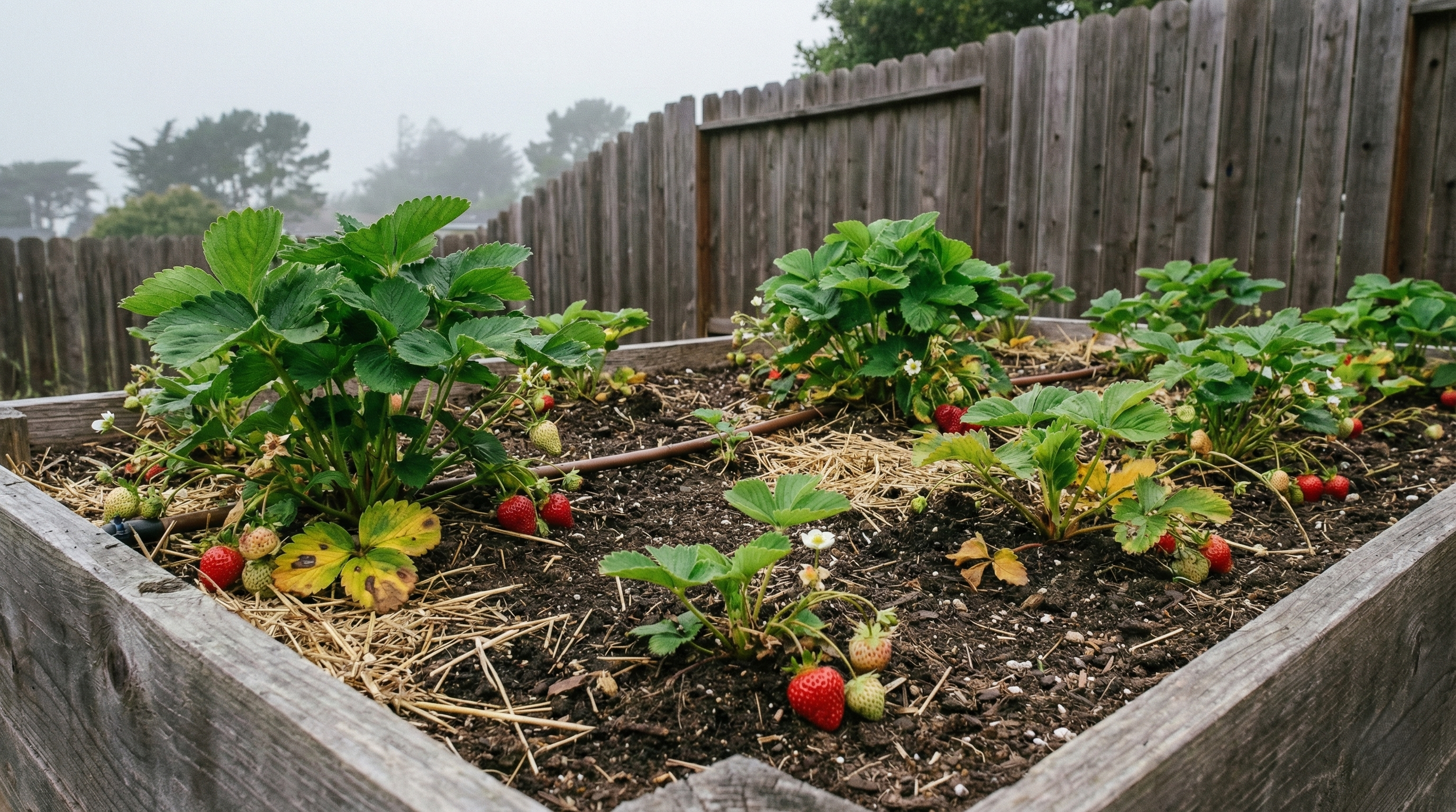
Santa Cruz County's mild climate usually treats strawberries well, but extreme weather happens. An unexpected late frost can blacken flowers overnight. A heat wave can wilt plants in hours. Winter storms can waterlog roots for days. When harsh weather hits your strawberry patch, don't panic. With the right response, most plants recover.
This guide covers how to assess damage, provide emergency care, and help your strawberries bounce back from whatever weather throws at them.
How Do You Assess Weather Damage to Your Strawberries?
The first rule after harsh weather: wait before making decisions. Plants often look worse immediately after an event than they actually are. Give them 1 to 2 weeks to show their true condition before removing plants or giving up on them.
| Weather Event | Severity | What You'll See | Recovery Steps | Timeline |
|---|---|---|---|---|
| Frost Damage | ||||
| Light Frost28-32°F | Mild | Flower centers blackened. Some leaf edges brown. Plants otherwise intact. |
|
1-2 weeks |
| Hard Frost25-28°F | Moderate | Significant foliage damage. Leaves wilted and brown. Flowers killed. |
|
2-4 weeks |
| Severe FrostBelow 25°F | Severe | Possible crown damage. Complete top dieback. Check crown firmness. |
|
4+ weeks |
| Heat Damage | ||||
| Heat Stress85-90°F | Mild | Temporary wilting during heat. Flower drop. Plants recover by evening. |
|
Days |
| Heat Wave90-95°F | Moderate | Leaf scorch (brown edges). Significant flower drop. Fruit quality issues. |
|
1-2 weeks |
| Extreme HeatAbove 95°F | Severe | Severe scorch. Possible crown damage. Significant dieback. |
|
Several weeks |
| Water Damage | ||||
| Brief Waterlogging1-2 days | Mild | Wilting even in wet soil. Temporary stress. Roots still white when checked. |
|
Days to 1 week |
| Extended Waterlogging3-7 days | Moderate | Yellowing leaves. Stunted growth. Some root browning visible. |
|
Several weeks |
| Prolonged Flooding7+ days | Severe | Root rot developing. Black, mushy roots. Plants declining rapidly. |
|
May need to restart |
What to Look For
Foliage damage: Brown, wilted, or blackened leaves indicate stress but aren't necessarily fatal. Plants can regrow leaves if crowns and roots survive.
Crown condition: The crown (center growing point) is the plant's vital organ. A firm crown with white or pale green tissue inside means the plant is likely viable. A mushy, brown, or black crown indicates the plant is dead or dying.
Root condition: If you suspect root damage, gently dig up one test plant. Healthy roots are white or tan. Black, mushy roots indicate rot.
New growth: Within 1 to 2 weeks after the event, healthy plants should show signs of new growth from the crown. No new growth after 2 to 3 weeks is concerning.
How Do You Revive Strawberries After Frost Damage?
Frost is the most common weather damage in Santa Cruz County, particularly in the San Lorenzo Valley, inland valleys, and anywhere cold air collects (low spots, valley bottoms).
Types of Frost Damage
Flower damage: Flowers are killed at about 28°F. Damaged flowers have blackened centers and won't produce fruit. This is the most common frost damage.
Leaf damage: Frost-burned leaves turn brown or black, often with a water-soaked appearance. Leaves may wilt and collapse.
Crown damage: Severe frost (below about 20°F, especially if prolonged) can damage crowns. This is less common in our area but possible during extreme cold snaps.
Recovery Steps
1. Wait and assess. Don't prune or remove anything for at least a week. What looks dead may recover.
2. Remove damaged tissue. After a week, trim off clearly dead leaves and flowers. Removing damaged tissue prevents disease and allows the plant to focus energy on new growth.
3. Water appropriately. Frost-damaged plants are stressed. Keep soil consistently moist but not waterlogged.
4. Hold off on fertilizer. Wait until you see active new growth before feeding. Fertilizing stressed plants can cause more harm.
5. Protect from further frost. If more cold nights are forecast, cover plants with frost cloth or row cover. Remove covers during the day.
What to Expect
Mild frost (28-32°F): Flowers killed; leaves may be damaged. Plants recover quickly and produce new flowers.
Moderate frost (25-28°F): Significant foliage damage. Recovery takes 2 to 4 weeks. Fruit production may be reduced for the season.
Severe frost (below 25°F): Possible crown damage. Some plants may not survive. Survivors need 4+ weeks to recover.
Coastal vs. Inland
Coastal Santa Cruz areas (Aptos, Capitola, Santa Cruz proper) rarely see damaging frost. The biggest concern is flowers during an unusual late cold snap in March or April.
San Lorenzo Valley and inland areas face more frost risk. If you garden in these areas, always have frost cloth ready from October through April.
How Do You Revive Strawberries After Heat Damage?
Heat waves are less common than frost but can be devastating when they occur. Watsonville and inland valleys are most vulnerable, though even coastal areas can see damaging heat during rare events.
Types of Heat Damage
Leaf scorch: Leaf edges and tips turn brown and crispy. Leaves may curl.
Wilting: Plants collapse during the heat of the day, even with adequate soil moisture. Roots can't move water fast enough to keep up with evaporation.
Flower abortion: Heat above 85°F causes flowers to drop without setting fruit. Developing fruit may remain small or bitter.
Crown cooking: In extreme cases (prolonged heat above 95°F with sun-baked soil), crowns can be damaged. This is rare but possible.
Recovery Steps
1. Water deeply and immediately. During a heat wave, water early in the morning (not midday when water can shock hot roots). Water deeply to encourage roots to grow down away from hot surface soil.
2. Provide temporary shade. Install shade cloth (30-50% shade) over plants during extreme heat. Even a beach umbrella helps in an emergency.
3. Mulch heavily. A thick layer of straw (3 to 4 inches) insulates soil and keeps roots cooler. If you're not already mulching heavily, add more during heat events.
4. Wait and assess. After the heat passes, give plants a week to show what's actually damaged versus just stressed.
5. Remove dead tissue. Trim off crispy, dead leaves after plants stabilize. Don't prune while heat continues.
6. Resume normal care gradually. As temperatures moderate, gradually return to normal watering schedules. Don't overwater in reaction to the heat.
What to Expect
Mild heat stress (85-90°F): Temporary wilting; flower drop. Plants recover within days once temperatures moderate.
Moderate heat stress (90-95°F): Leaf scorch; significant flower drop; fruit quality issues. Recovery takes 1 to 2 weeks.
Severe heat stress (above 95°F, especially if prolonged): Possible crown damage; significant dieback. Some plants may not recover. Survivors need several weeks to rebuild.
Prevention for Future Heat Waves
Choose heat-tolerant varieties (Seascape handles heat better than most)
Ensure excellent mulching before summer
Consider afternoon shade placement when planning your patch
Install irrigation on a timer so you don't miss critical waterings
How Do You Revive Strawberries After Waterlogging and Storm Damage?
Santa Cruz County's wet winters can sometimes overwhelm drainage, leaving strawberry roots sitting in water. Extended waterlogging kills roots through oxygen deprivation and invites root rot diseases.
Types of Water Damage
Root suffocation: Roots need oxygen. Waterlogged soil displaces air, essentially suffocating roots. Symptoms include wilting (even in wet soil), yellowing leaves, and stunted growth.
Root rot: Several fungal pathogens (Phytophthora, Pythium) thrive in wet conditions. Infected roots turn brown or black and mushy. Crown rot may follow.
Physical damage: Heavy rain and wind can break leaves and flower stalks. This is usually minor.
Recovery Steps
1. Improve drainage immediately if possible. If water is pooling, dig channels to drain it away. Raise plants by adding soil around crowns (don't bury crowns, just build up around them).
2. Don't walk on or work waterlogged soil. This compacts soil further and makes drainage worse.
3. Assess root damage. Once soil drains and dries somewhat, dig up a test plant. White or tan roots are healthy. Brown or black roots indicate damage.
4. Remove dead plants. If roots are completely rotted, the plant won't recover. Remove it to prevent disease spread.
5. Reduce watering after drainage. Let soil dry somewhat between waterings. Don't compound the problem with irrigation.
6. Hold fertilizer. Damaged roots can't take up nutrients. Wait until you see recovery before feeding.
7. Watch for follow-up disease. Root rot symptoms may not appear until weeks after the waterlogging event. Monitor plants for continuing decline.
What to Expect
Brief waterlogging (1-2 days): Most plants recover fully if drainage improves.
Extended waterlogging (3-7 days): Significant root damage likely. Some plants may die. Survivors need several weeks to regrow roots.
Severe waterlogging (more than a week): Most plants will develop root rot and die. Consider replanting in raised beds.
Prevention for the Future
Raised beds are the solution. If your strawberry patch floods regularly, raised beds (at least 8 to 12 inches high) eliminate the problem. This is the single best investment for Santa Cruz County strawberry growers with drainage issues.
How Do You Help Strawberries Recover from Multiple Stresses?
Sometimes plants face compounding stresses: frost followed by rain, or heat followed by irregular watering. Multiple stresses are harder on plants than single events.
The Compound Stress Problem
Each stress event weakens plants, making them more vulnerable to the next problem. A plant that survived frost damage has fewer resources to handle a subsequent heat wave. A plant fighting root rot has no reserves to cope with drought.
Recovery from Multiple Stresses
1. Prioritize basic needs. Focus on consistent water and moderate temperatures. Don't try to "boost" plants with fertilizer; they need stability, not stimulation.
2. Accept some losses. Weakened plants may not all survive. Focus your energy on the strongest survivors.
3. Be patient. Recovery from compound stress takes longer. Allow 4 to 6 weeks before making final decisions about plant survival.
4. Consider starting fresh. If more than half your plants died or are severely damaged, it may be more practical to remove everything, amend the soil, and replant with fresh stock.
| Weather Threat | Risk by Location | Prevention Checklist | Supplies to Have Ready |
|---|---|---|---|
| Frost Oct - April risk | Coastal: Low SLV: High Inland: Medium Watsonville: Low |
|
|
| Heat Waves June - Oct risk | Coastal: Low SLV (sunny): Medium Inland: Medium Watsonville: High |
|
|
| Waterlogging Nov - March risk | Coastal: Medium SLV: Medium Inland: Medium Watsonville: Low |
|
|
Should You Keep Trying or Start Fresh?
Keep Trying If:
Crown is firm and shows any green or white tissue
New growth appears within 2 to 3 weeks after the event
At least 50% of plants are recovering
The event was a one-time occurrence, not a recurring problem
Consider Starting Over If:
More than half of plants are dead or severely damaged
Crowns are mushy or show no signs of life after 3 weeks
Root rot is widespread
The underlying cause (drainage, exposure) hasn't been fixed
Plants were already 2+ years old and declining
Starting fresh isn't giving up; it's recognizing that sometimes the best path forward is new plants in improved conditions.
Frequently Asked Questions
My strawberry flowers turned black after a frost. Will the plant still produce fruit?
Not from those flowers; they're dead. But the plant will likely produce new flowers in the coming weeks if the crown survived. Your harvest will be delayed and possibly reduced, but not eliminated.
How cold does it have to get to kill strawberry plants?
Dormant plants can survive temperatures well below freezing. The vulnerable parts are flowers (killed at about 28°F) and actively growing tissue. Crown damage typically requires temperatures below 20°F or prolonged freezing.
Should I water strawberries during a heat wave?
Yes, but water early in the morning, not midday. Deep, morning watering helps plants through the day. Avoid wetting foliage, which can cause scorching when the sun hits water droplets.
My strawberry plants are wilting even though the soil is wet. What's wrong?
This is classic root rot. Waterlogged roots can't function, so the plant wilts despite abundant water. Improve drainage immediately and assess root damage by digging up a test plant.
How long should I wait before deciding if a plant is dead?
At least 2 to 3 weeks after the weather event. Plants often look terrible immediately afterward but recover. Check the crown for firmness and any sign of new growth.
My strawberries survived a frost but aren't growing well months later. What happened?
The frost may have damaged roots or the crown more than was immediately apparent. Weakened plants take time to rebuild. If they're still struggling after 6 to 8 weeks, they may not fully recover.
Will shade cloth help during a heat wave?
Yes. Shade cloth (30-50% shade) can reduce temperatures significantly and protect plants from direct sun stress. Remove it once temperatures moderate.
Should I fertilize strawberries after weather damage?
Wait until you see active new growth, which indicates the plant is recovering. Fertilizing stressed plants can cause additional damage. Once recovery is underway, a light feeding of balanced fertilizer supports regrowth.
What Is the Most Important Thing to Remember?
Weather damage is discouraging, but strawberries are more resilient than they often appear in the immediate aftermath of a harsh event. The most important thing you can do is wait before making decisions. Plants that look devastated often recover surprisingly well given time and appropriate care. Focus on the basics: appropriate water, removing clearly dead tissue, and protecting from further stress. If you do lose plants, remember that strawberries are relatively quick to replace and re-establish compared to many garden crops. A patch destroyed by flooding this winter can be productive again by next summer if you address the underlying drainage issues. For research-based guidance on strawberry frost tolerance and recovery, see UC ANR's Low Temperature and Frost Injury resource, the Growing Strawberries in the Home Garden guide (PDF), and UC Master Gardeners' frost protection recommendations. For help diagnosing ongoing problems beyond weather damage, see our Strawberry Troubleshooting Guide, and check our Garden Conditions Dashboard to stay ahead of incoming weather events.
Free Gardening Resources
Find all our free guides in Your Garden Toolkit.
More Strawberry Growing Guides
Part of our Complete Strawberry Series for Santa Cruz County:
Growing Strawberries in Santa Cruz County: A Local Guide to Sweet Success - Everything you need to know about growing strawberries in our coastal climate
Best Strawberry Varieties for Santa Cruz County - Which varieties thrive here and where to find them locally
Planting Bare-Root Strawberries: A Santa Cruz Guide - Step-by-step instructions for bare-root planting success
Growing Strawberries: In the Ground vs. Raised Beds vs. Containers - Compare your planting options and find the best fit for your space
Understanding Strawberry Growth Stages in Your Santa Cruz Garden - What to expect from dormancy through harvest
How to Multiply Strawberries from Runners (Free Plants Forever) - Propagate new plants from runners for an ever-expanding patch
Top Strawberry Mistakes New Gardeners Make (And How to Avoid Them) - Common pitfalls and how to sidestep them
Strawberry Troubleshooting Guide - Identify and solve pests, diseases, and growing problems
