

Zone 0 Makeover: Creating an Ember-Resistant Space Around Your Home
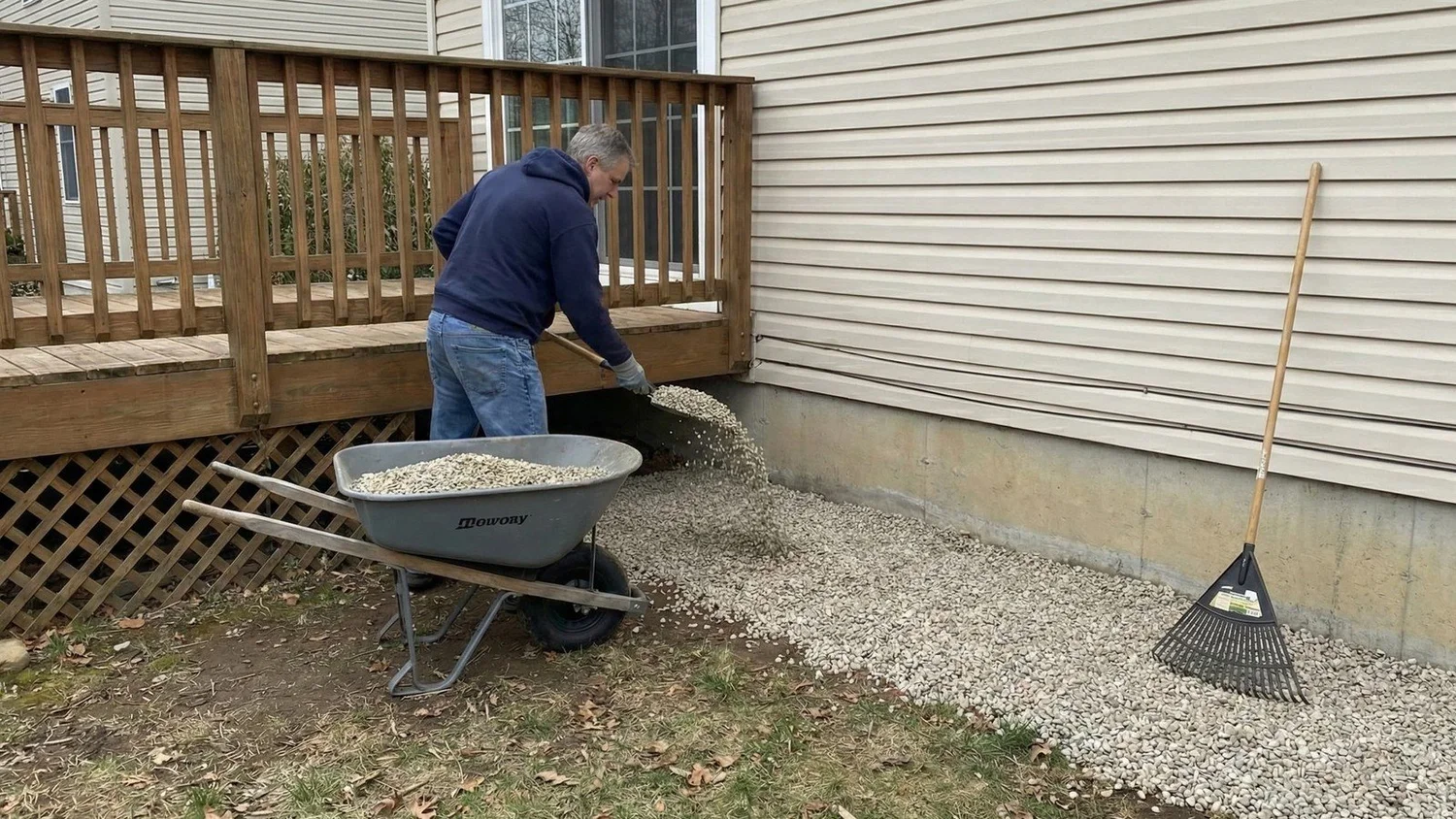
Installing gravel beside a Felton home as one part of a maintained noncombustible Zone 0 area. This photo illustrates the action and is not a property certification. Photo: Adrienne Gaughan / Ambitious Harvest Co
A few links in this guide are affiliate links. If you buy through one, Ambitious Harvest may earn a small commission at no extra cost to you. As an Amazon Associate, we earn from qualifying purchases. Read our full disclosure.
For a conservative fire-smart plan, keep the first five feet around your home and attached decks free of plants, planted containers, combustible mulch, and stored combustible items. This is Zone 0, the ember-resistant area. A gravel strip can help, but only if leaves, weeds, and other fuel don't collect in it.
This plant-free approach is preparation guidance, not a statement of the vegetation rules or compliance dates for every property. Confirm the requirements for your address with your fire authority.
The job often starts with something ordinary: bark beneath a window, a pot beside the door, or leaves tucked behind the steps. Working on these small spaces gives you a manageable place to begin. You can still have a welcoming entrance and a productive garden, with the planting beyond this immediate band and a clear, maintained space beside the house.
Why start at the house?
Windblown embers can reach a home ahead of the main fire. If they ignite material against the building, that small fire can expose siding, windows, or a deck to heat and flames. UC ANR recommends working outward from the home, giving the closest area the most attention.
Clearing this zone reduces one route to ignition. It doesn't make the building immune to wildfire: roof details, vents, windows, attachments, and the surrounding landscape still matter. Think of the garden work and home hardening as parts of the same project.
In a wooded Boulder Creek or Felton yard, falling leaves can refill a cleared corner quickly. A more open site has different maintenance demands. Your Santa Cruz microclimate helps you understand growing conditions, but it isn't a substitute for fire-hazard information or an assessment of the property.
Mark out the space before choosing materials
Use CAL FIRE’s defensible-space guidance and Santa Cruz County’s fire-season resources to review the area around your house and attached structures. Include the space beneath attached decks and stairs, along with the perimeter around them. Where a deck, fence, slope, or property line complicates the layout, have your local fire authority help identify the work needed.
The UC Master Gardener discussion of Zone 0 offers further background on Zone 0. For this garden plan, keep vegetation outside the first five feet. A metal or ceramic pot doesn't remove the plant, roots, dry leaves, or potting material it contains.
Clear the fuel you can see, then check the tucked-away spots
- Relocate planted pots and remove planting from the immediate band, including vines climbing the house.
- Remove bark, wood chips, straw, rubber mulch, and other combustible surface coverings.
- Move firewood, lumber, plastic storage, natural-fiber mats, cushions, and other combustible items away from the home to suitable locations.
- Clear leaf litter beneath steps, in corners, at fence attachments, and under decks. Avoid accumulating the removed material beside another structure.
Keep entrances, exits, vents, drains, and utility access clear. Large shrubs, roots beside foundations, and overhead tree work may need professional help. Don't turn a landscape cleanup into a structural or utility problem.
Choose a surface you can keep clear
Gravel, stone, concrete, and pavers offer noncombustible surface options. Choose for access, drainage, and upkeep as well as color. A surface you can safely walk on and easily clear is more useful than one that looks tidy only on installation day.
Gravel and decomposed granite
These materials come in colors that can work with the house and surrounding soil. Ask about the specific product, base preparation, edging, and suitability for your slope. Drainage depends on the whole installation and underlying soil; a gravel surface doesn't automatically prevent water from collecting beside a foundation.
Loose material can be difficult for wheelchairs, walkers, or narrow wheels. Test the proposed surface against the way people use the path. You'll still need to remove weeds and leaf litter.
Pavers, flagstone, and concrete
A firm path can make the entrance easier to use while creating a clear edge between house and garden. Consider joint width, uneven surfaces, and access for maintenance. Plan finished levels and drainage before installing: don't bury siding, obstruct vents, or direct runoff toward the building.
Seek qualified help where installation changes grades, retaining structures, or drainage. On a sloping Santa Cruz Mountains property, replacing vegetation with exposed soil without an erosion plan can create another problem.
River rock and larger stones
Rock can add texture to a non-walking area, but leaves may lodge between the stones. Choose a size and arrangement you can clean without a struggle. The rock itself doesn't burn; debris caught around it can.
Steel, stone, or concrete edging can define the transition to the planted area beyond. Check the whole product for combustible trim or accessories. Synthetic landscape fabric is combustible, so don't automatically include it beneath a Zone 0 surface. Review the complete installation with your assessor.
Put the greenery where it belongs
Use CAL FIRE guidance to plan a clear immediate zone, then place planted containers and beds beyond it. Succulents, thyme, dymondia, and other low plants don't create an exception to this plant-free plan. UC ANR’s plant guidance explains that plants can burn; moisture and maintenance do not turn them into noncombustible materials.
Outside Zone 0, choose plants for mature size, site conditions, spacing, and the care you can provide. A nursery's native-plant collection can be a starting point for plant research, while our guide to fire-wise gardening with California natives explains broader design considerations. Native status alone isn't a fire-safety rating.
Plan watering for the planted area using water-wise gardening guidance. The linked DIG raised-bed drip-watering kit is intended for raised vegetable beds; check its coverage, fittings, and pressure requirements against your actual layout. Irrigation supports plant care. It doesn't make planting beside the house appropriate or replace defensible-space maintenance.
Check the house connections
CAL FIRE’s home-hardening guidance addresses vulnerabilities that garden changes alone cannot fix. Look at the points where landscaping meets the building, then decide which jobs need a qualified contractor.
- Windows: keep the area beneath them free of plants and combustible items in Zone 0. Review the windows themselves as part of home hardening.
- Vents: clear surrounding debris and ask about suitable ember-resistant vent products. Don't improvise fine screens over dryer exhausts or other appliance openings; these have airflow and installation requirements.
- Fences: review a combustible fence attached to the house. A properly designed noncombustible connection can interrupt that route for fire.
- Decks and stairs: remove combustible storage and debris underneath. Have enclosure or retrofit details assessed so drainage, ventilation, and access remain appropriate.
- Pergolas and trellises: review attached combustible structures as home-hardening work, including vines that connect planting to walls or the roof.
U.S. Fire Administration guidance also includes attached decks and fences in the area immediately around a home. Confirm the requirements for your Santa Cruz County address with your own authority.
Keep organic mulch out of the immediate band
UC ANR’s mulch guidance distinguishes noncombustible rock materials from combustible organic and synthetic mulches. Composted chips can smolder, and wet mulch can dry. Keep bark, compost used as a surface mulch, wood chips, and straw outside Zone 0.
Beyond the first five feet, consider mulch type, amount, and continuity alongside vegetation spacing and local guidance. A continuous strip of combustible mulch can connect areas you intended to separate. The UC ANR Fire Network mulch guide explains the differences among mulch materials, but no organic mulch should be treated as fireproof.
Break the makeover into manageable jobs
- Photograph and measure. Record the perimeter, attached structures, drains, vents, and existing materials. Check where access or neighboring property limits the work.
- Clear loose items and debris. Start with work you can safely do now. Arrange an appropriate destination for removed material.
- Plan plant removal or relocation. Assess whether a plant can be moved successfully and whether its new location suits both growing needs and defensible space. Get help with large roots and trees.
- Choose the surface and installation. Resolve grading, drainage, utility, and access questions before ordering bulk material. A stable existing noncombustible path may need cleaning rather than replacement.
- Address attachments. Separate routine clearing from contractor work on fences, vents, decks, and other building details.
- Set a maintenance routine. Check how quickly leaves and weeds return, inspect after wind, and clear accumulations promptly. Adjust the frequency to the site rather than relying on two cleanups a year.
For appearance, use a restrained mix of texture and color: a firm path to the door, a contrasting stone edge, or a change in paving pattern. Leave room to clean around any noncombustible furnishings and keep the exit route clear. Place the planted pots beyond Zone 0, where they can be part of the garden without crowding the house.
Find local materials and advice
Aptos Landscape Supply and Central Home Supply are places to contact about hardscape materials. Confirm current locations, stock, delivery access, and quotes before visiting or ordering. Mountain Feed & Farm Supply is another source to check for garden supplies. For plants intended for suitable locations beyond Zone 0, research Sierra Azul Nursery; don't use a nursery label as approval for planting beside the house.
Ask the Fire Safe Council of Santa Cruz County about current resources and assistance. Its Home Ignition Zone assessment page provides a way to request site-specific feedback; check current availability and service coverage. Ready for Wildfire provides additional planning information.
Common questions about Zone 0
Can I keep a succulent pot next to the front door?
Place planted containers outside the immediate five-foot area around the house and attached decks. Pot material doesn't change the combustibility of its contents. Keep the doorway and route out clear.
How much will the project cost?
Measure the actual area and request a quote for material, delivery, base preparation, disposal, and installation. Access and drainage work can change the total considerably. Start with debris and stored items while planning larger work. Our guide to fire-wise landscaping on a budget helps you prioritize without relying on a generic square-foot estimate.
Does gravel mean I can stop maintaining the area?
No. Leaves collect on gravel and weeds can grow through it. Check regularly and after windy weather. Choose a surface and layout you can keep clear throughout the season.
What if my entire yard is narrow?
Ask your local fire authority to review the site, including property boundaries and access. Keep planted containers and beds beyond the immediate five-foot area. Coordinate with neighbors before working on their property, and get help where erosion or drainage complicates a plant-free area.
How do Zones 1 and 2 fit in?
Zone 1 generally runs from 5 to 30 feet and Zone 2 from 30 to 100 feet, or to the property boundary if closer. The focus shifts to spacing and managing fuels. Follow site-specific guidance, especially on slopes; reaching a zone boundary doesn't make a plant, mulch, or wooden structure automatically safe.
Will this change my insurance?
Ask your insurer which mitigation measures and documentation it recognizes and how they affect your policy. Keep dated photos and records. A home assessment or completed landscape project doesn't guarantee coverage, renewal, or a particular premium.
Is Zone 0 legally required at my address?
Check with the fire authority responsible for your property about applicable rules, inspections, and deadlines. The Board of Forestry's Zone 0 page provides the state rulemaking materials. This guide offers a vegetation-free planning approach; it does not establish a statewide compliance date or determine the legal requirements for an individual parcel.
Keep the next step small enough to finish
Pick one side of the house and inspect it from the wall outward. Clear what you can safely move, photograph anything that needs advice, and make the larger decisions before buying materials. A clear perimeter that stays clear is the result to work toward.
Find garden planning resources in your Garden Toolkit. For further technical guidance, use the UC ANR Fire Network and Santa Cruz County’s fire-season resources. Complete maintenance ahead of emergencies and follow evacuation instructions promptly; don't stay to finish garden work.
