

12 Vegetables Every Beginner Should Grow in California
12 Vegetables Every Beginner Should Grow in California
A few of the product links in this guide are affiliate links. If you buy through one, Ambitious Harvest may earn a small commission at no extra cost to you, which helps keep these guides free. We only point to gear we would use in our own Santa Cruz garden. As an Amazon Associate, we earn from Read our full disclosure.
According to the UC Master Gardener Program, California's long growing season and mild winters make it one of the best places in the country to grow food at home, with many crops producing year-round in USDA Zones 9 and 10 (University of California Agriculture and Natural Resources). If you are just getting started, these 12 vegetables are the most forgiving, productive, and rewarding crops you can plant in California soil.
I have been gardening in Santa Cruz for over 20 years, and these are the vegetables I recommend to every new gardener who asks where to begin. They tolerate common beginner mistakes, produce generously, and grow well across California's coastal, inland valley, mountain, and desert zones.
1. Tomatoes
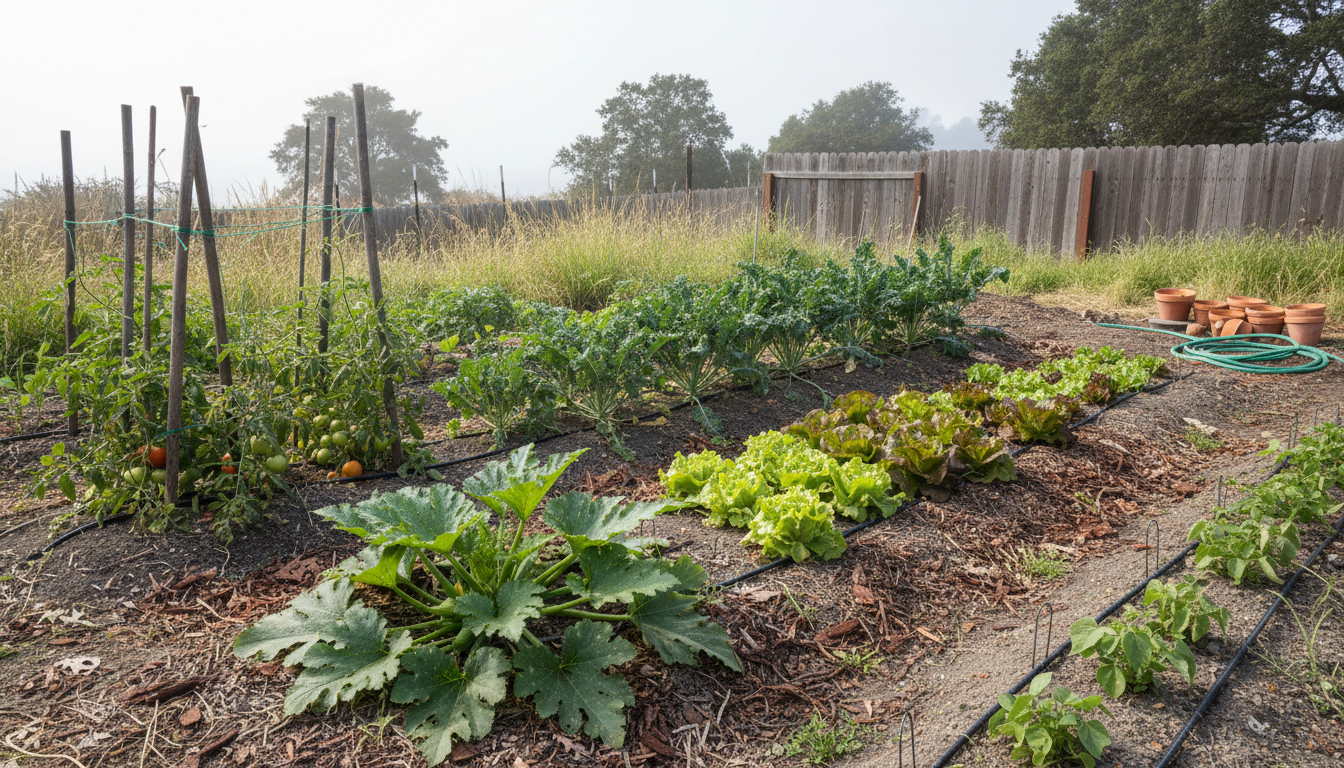
No California garden is complete without tomatoes. They thrive in our warm summers and reward even casual attention with pounds of fruit. California grows a large share of the country's fresh-market tomatoes, and that same climate works in your backyard.
Best varieties for beginners: 'Early Girl' is the classic California choice because it sets fruit in cooler conditions, which is perfect for coastal gardens like those in Santa Cruz. 'Sun Gold' cherry tomatoes are nearly indestructible and produce heavily from late spring through fall. For inland valleys, 'Celebrity' handles heat well and resists common diseases.
Planting tip: Wait until nighttime temperatures stay above 55 degrees F before transplanting. In coastal areas, that is usually mid-April to early May. Inland gardeners can often plant in late March.
Why it made the list: Tomatoes are the most widely grown crop in American home gardens, and California's climate gives beginners a real advantage. Even if you make mistakes, you will likely still harvest something. our California tomato growing guide
2. Zucchini
Zucchini is famously productive. Most beginners end up with more than they know what to do with, because a single healthy plant will often out-produce a whole family over the season.
Best varieties for beginners: 'Black Beauty' is the standard and does well across all California zones. 'Costata Romanesco' is an Italian heirloom with nutty flavor and beautiful ribbed skin. For small spaces, 'Patio Star' stays compact.
Planting tip: Direct sow seeds after the last frost, about one inch deep. In coastal California, plant from April through July. Inland and desert gardeners can start as early as March. Give each plant at least 3 feet of space.
Why it made the list: Zucchini germinates quickly, grows fast, and produces abundantly with minimal fuss. It teaches beginners what a healthy, thriving plant looks like. our squash growing guide
3. Lettuce
Lettuce is one of the fastest crops from seed to table, often ready in 30 to 60 days depending on the variety. UC Agriculture and Natural Resources notes that lettuce grows best in cool weather, which gives California coastal gardeners an especially long growing window.
Best varieties for beginners: 'Black Seeded Simpson' is a loose-leaf type that is nearly foolproof. 'Buttercrunch' forms tender heads and handles light heat. For cut-and-come-again harvesting, try a mesclun mix designed for mild climates.
Planting tip: In Santa Cruz and other coastal areas, you can grow lettuce almost year-round by planting every 2 to 3 weeks for continuous harvest. Inland gardeners should focus on fall through spring, as summer heat causes lettuce to bolt and turn bitter.
Why it made the list: Lettuce gives beginners fast results and teaches the rhythm of succession planting. There is nothing quite like cutting your first salad from your own garden. growing lettuce in California
4. Green Beans
Green beans are one of the most reliable crops for new gardeners. They germinate easily, grow quickly, and produce heavily. According to the UC Vegetable Research and Information Center, beans also fix nitrogen in the soil, which improves your garden for future plantings.
Best varieties for beginners: 'Blue Lake' bush beans are the classic California choice and produce well in a compact space. 'Provider' is especially cold-tolerant, which is great for cooler coastal gardens. If you have a trellis, 'Kentucky Wonder' pole beans produce over a longer period.
Planting tip: Direct sow seeds one inch deep after soil temperatures reach 60 degrees F. In coastal California, that is usually April through August. Beans do not transplant well, so always sow directly in the garden.
Why it made the list: Beans are satisfying because they grow fast, produce abundantly, and actually improve your soil. They are the rare crop that gives more than it takes. our guide to growing beans and peas
5. Herbs (Basil, Cilantro, Parsley)
Herbs deserve a spot in every beginner garden because they are easy to grow, expensive to buy at the store, and useful in nearly every meal. Basil, cilantro and parsley are the most versatile and forgiving place to start.
Best varieties for beginners: 'Genovese' basil is the standard for cooking and grows vigorously in California warmth. 'Santo' cilantro is slow to bolt, giving you a longer harvest window. Italian flat-leaf parsley is more flavorful than curly types and tolerates partial shade.
Planting tip: Basil needs warmth, so wait until nighttime temperatures are consistently above 50 degrees F. Cilantro and parsley prefer cooler weather and can be planted in fall or early spring. In coastal gardens, cilantro does well nearly year-round.
Why it made the list: A few herb plants pay for themselves quickly against supermarket prices, and they grow happily in containers if garden space is limited. our guide to growing herbs
6. Sugar Snap Peas
Sugar snap peas are a cool-season crop that California gardeners can enjoy when much of the country is still frozen. Peas are a cool-season crop. UC IPM notes they do best in cool weather and that warm weather shortens the harvest, which fits a typical Santa Cruz winter and spring.
Best varieties for beginners: 'Sugar Snap' is the original and still one of the best. 'Super Sugar Snap' has improved disease resistance. For small spaces or containers, 'Sugar Ann' is a compact bush type that does not need a trellis.
Planting tip: Direct sow seeds in fall (September through November) for a winter harvest, or in late winter (January through March) for a spring harvest. Peas do not need much fertilizer because, like beans, they fix their own nitrogen.
Why it made the list: Peas fill the cool-season gap when summer crops are not producing. Kids love picking and eating them straight from the vine, which makes them a great family garden crop.
7. Radishes
Radishes are the fastest vegetable you can grow. Many varieties go from seed to harvest in just 25 to 30 days. That speed makes them perfect for impatient beginners who want to see results quickly.
Best varieties for beginners: 'Cherry Belle' is the classic round red radish and takes about 25 days. 'French Breakfast' has a milder flavor and elongated shape. 'Watermelon' radishes take longer (50 to 60 days) but are stunning and delicious.
Planting tip: Direct sow seeds about half an inch deep and thin seedlings to one inch apart. In coastal and inland valley California, you can grow radishes from September through May. They bolt in summer heat, so avoid planting from June through August in inland areas.
Why it made the list: Radishes build confidence. When a brand-new gardener harvests their first crop in under a month, they are hooked. They also make excellent row markers when planted alongside slower crops like carrots.
8. Swiss Chard
Swiss chard is one of the toughest, most adaptable greens you can grow. It tolerates heat better than spinach, handles light frost, and keeps producing for months with regular harvesting. The UC Master Gardener Program of Santa Clara County lists it as one of the best year-round crops for the Bay Area and Central Coast.
Best varieties for beginners: 'Bright Lights' produces colorful red, orange, yellow, and pink stems that look beautiful in the garden. 'Fordhook Giant' has thick, crinkly leaves and mild flavor. Both varieties perform well across all California zones.
Planting tip: Direct sow or transplant in spring or fall. Chard seeds are actually clusters of multiple seeds, so thin seedlings to about 6 inches apart. Harvest outer leaves regularly to keep the plant productive.
Why it made the list: Chard is nearly impossible to kill. It handles neglect, temperature swings, and imperfect watering. For a beginner who is still learning their garden's rhythms, that kind of resilience is invaluable. our complete guide to growing greens in California
9. Peppers
Peppers love California's warm, sunny conditions. Peppers set fruit best in warm daytime temperatures, which is what inland valleys and protected coastal gardens provide from June through September.
Best varieties for beginners: 'California Wonder' (the name says it all) is the standard bell pepper and produces reliably. 'Shishito' peppers are incredibly productive and mostly mild. 'Padron' peppers are a tapas classic that grows beautifully in coastal California.
Planting tip: Start seeds indoors 8 to 10 weeks before your last frost, or buy transplants. In Santa Cruz and coastal areas, plant outdoors in late May after nights warm up. Peppers grow more slowly than tomatoes, so be patient through the first month.
Why it made the list: Peppers are lower maintenance than tomatoes, rarely need staking, and produce steadily through the warm months. They are also excellent container plants for patios and balconies.
10. Kale
Kale has earned its reputation as a superfood, but it has also earned a reputation among gardeners as one of the easiest greens to grow. Kale is one of the hardiest greens in the California garden, shrugging off hard frost and thriving in cool weather, though UC Master Gardeners note that high summer heat turns the leaves bitter.
Best varieties for beginners: 'Lacinato' (also called dinosaur or Tuscan kale) has dark, bumpy leaves and mild flavor. 'Red Russian' is tender, sweet, and beautiful. 'Winterbor' curly kale is extremely cold-hardy and keeps producing through California winters.
Planting tip: Plant in late summer for a fall and winter harvest, or in early spring for a spring crop. In coastal California, kale can grow year-round. Space plants 12 to 18 inches apart and harvest outer leaves as needed.
Why it made the list: Kale actually tastes better after a light frost, which sweetens the leaves. It keeps producing for months and rarely has serious pest problems in California home gardens.
11. Cucumbers
Cucumbers grow fast and produce heavily in California's warm months. The UC Vegetable Research and Information Center notes that cucumbers need warm soil (at least 60 degrees F) and consistent moisture, but beyond that, they are straightforward to grow.
Best varieties for beginners: 'Marketmore 76' is a reliable slicing cucumber with good disease resistance. 'Lemon' cucumbers are round, yellow, and mild, and they produce prolifically in California gardens. 'Spacemaster' is a bush variety that works well in containers or small spaces.
Planting tip: Direct sow seeds after the last frost when soil is warm. In coastal California, that is usually May. Provide a trellis for vining types to save space and keep fruit clean. Water consistently, as irregular watering causes bitter fruit.
Why it made the list: Cucumbers go from seed to harvest in about 60 days and produce so generously that you will be sharing with neighbors. They are a satisfying crop that shows beginners what their garden can really do.
12. Garlic
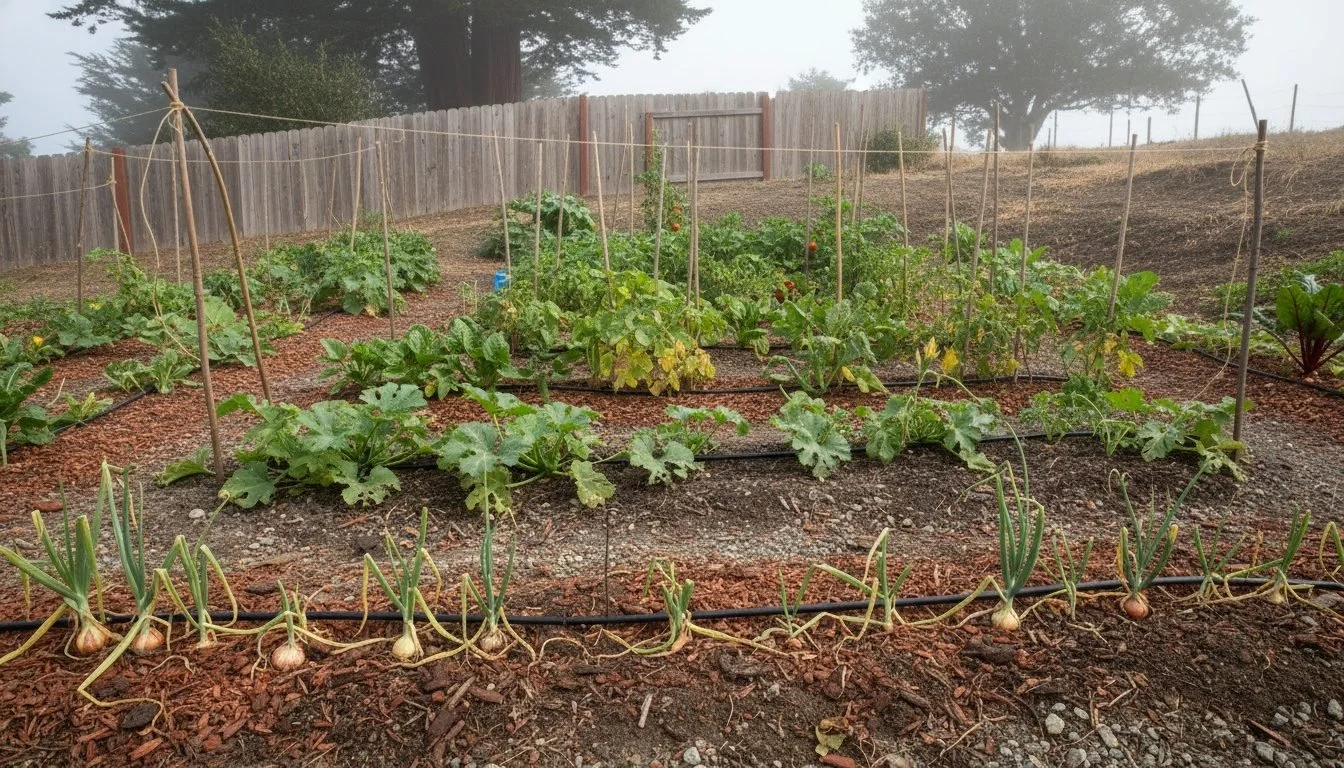
Garlic is the ultimate set-it-and-forget-it crop. You plant cloves in fall, let them grow through winter, and harvest in late spring or early summer. UC ANR recommends California softneck varieties for most home gardeners because they store well and are adapted to our climate.
Best varieties for beginners: 'California Early' is a softneck type that matures quickly and stores for months. 'Inchelium Red' is a mild softneck with large heads. Hardneck types such as 'Spanish Roja' are a poor bet on the coast. UC sources note hardnecks need four to six weeks below 40 to 45 degrees F to form a good bulb, which our mild winters rarely deliver, so stay with softnecks here.
Planting tip: Plant individual cloves 2 inches deep and 6 inches apart in October or November. Garlic needs a period of cool weather to form bulbs properly. Stop watering about two weeks before harvest, when the lower leaves begin to brown.
Why it made the list: Garlic requires almost no ongoing care and takes up very little space. A 4-by-4-foot bed planted at that spacing holds enough garlic for months of cooking. It is one of the best returns on effort in the garden. Garlic goes in during autumn, so plan it alongside the rest of your late-season planting.
How Do I Pick the Right Vegetables for My California Zone?
California has four main climate zones that affect what grows best: Coastal, Inland Valley, Mountain, and Desert. According to UC ANR, the single most important factor is understanding your area's first and last frost dates, which determine your planting windows.
If you garden along the coast (like I do in Santa Cruz), you have the advantage of mild temperatures year-round, but fog and cool summers can slow heat-loving crops like tomatoes and peppers. Choose varieties labeled "early" or "cool-tolerant" for these conditions.
Inland valley gardeners get hotter summers, which means tomatoes, peppers, and squash thrive. But you will need to shift lettuce, peas, and other cool-season crops to fall and spring. Mountain gardeners have shorter seasons and should focus on fast-maturing varieties. Desert gardeners can grow cool-season crops in winter when the rest of the state is too cold. understanding California climate zones
What Supplies Does a Beginner Need to Start?
You do not need much. The essentials for a beginning vegetable garden are good soil, adequate sun (6 or more hours for most vegetables), a water source, and basic hand tools.
Start with a raised bed or a small in-ground plot no larger than 4 by 8 feet. Buy a bag of quality compost, a hand trowel, a watering can or hose with a gentle spray nozzle, and seeds or transplants for three or four crops. You can add more tools and space as your confidence grows.
Resist the urge to start too big. One of the most common beginner mistakes is planting more than you can maintain. A small, well-tended garden produces more than a large, neglected one every time. setting up your first garden
When Should Beginners Start Planting in California?
Unlike much of the country, California does not have a single planting season. UC ANR divides the growing year into cool-season (roughly October through March) and warm-season (roughly April through September) crops, though exact timing varies by zone.
For beginners, the easiest entry point is spring. Start with transplants of tomatoes, peppers, and herbs in April or May, and direct sow beans, squash, and cucumbers once the soil warms. Then in September or October, plant your cool-season crops: lettuce, peas, radishes, kale, and garlic.
The goal is to always have something growing. Once you get comfortable with two planting seasons, coastal and inland valley gardens stay productive for ten or even twelve months of the year. Mountain and high desert gardens run shorter, so plan around your own frost dates.
Frequently Asked Questions
What is the easiest vegetable to grow in California?
Zucchini is widely considered the easiest vegetable to grow in California. A single zucchini plant is famously productive and can keep a household in squash all summer with minimal care. It germinates quickly from direct-sown seed, tolerates imperfect watering, and thrives in California's warm summers. Radishes are a close second for speed, going from seed to harvest in under a month.
Can I grow vegetables year-round in California?
Yes, most California gardeners can grow vegetables 10 to 12 months of the year by rotating between cool-season and warm-season crops. Plant lettuce, peas, and root vegetables from fall through spring, then switching to tomatoes, beans, and squash in warm months. Coastal gardeners in places like Santa Cruz can often grow cool-season crops through summer as well, thanks to marine fog.
How many hours of sun do vegetables need in California?
Most fruiting vegetables like tomatoes, peppers, and squash need at least 6 to 8 hours of direct sunlight per day. Leafy greens like lettuce, kale, and chard can produce with as few as 3 to 4 hours. In hot inland areas, afternoon shade can actually benefit crops by reducing heat stress during the hottest part of the day.
Should beginners start with seeds or transplants?
Beginners generally do better starting with transplants for tomatoes, peppers, and herbs, since these crops need a head start indoors. Beans, peas, squash, radishes, and lettuce grow easily from direct-sown seed. Starting with transplants for your first season reduces the learning curve and gives you faster results, which helps build confidence and momentum.
How often should I water vegetables in California?
Watering frequency depends on your soil, climate zone, and the season. As a general rule, water deeply 2 to 3 times per week rather than lightly every day. Stick your finger an inch into the soil: if it feels dry, water. In hot inland areas, you may need to water daily in summer. Coastal gardeners often need less water thanks to fog and cooler temperatures.
What are the best vegetables for containers in California?
Tomatoes, peppers, lettuce, herbs, and bush beans all grow well in containers. Containers should be at least 5 gallons for tomatoes and peppers, while lettuce and herbs can thrive in smaller pots. Use a quality potting mix (not garden soil, which compacts in containers) and water more frequently than in-ground plants, since containers dry out faster.
Do I need to amend California soil before planting?
In most cases, yes. California soils are often heavy clay or sandy, depending on your location. Add 2 to 4 inches of compost to your planting area and working it into the top 8 to 12 inches of soil. Compost improves drainage in clay soil and water retention in sandy soil. Raised beds filled with a compost and topsoil mix are an excellent option for beginners who want to skip the soil improvement step.
Ready to start your California garden? Sign up for our free weekly gardening newsletter for planting reminders, seasonal tips, and beginner-friendly guides delivered straight to your inbox.
