

How to Start a Vegetable Garden in Santa Cruz County
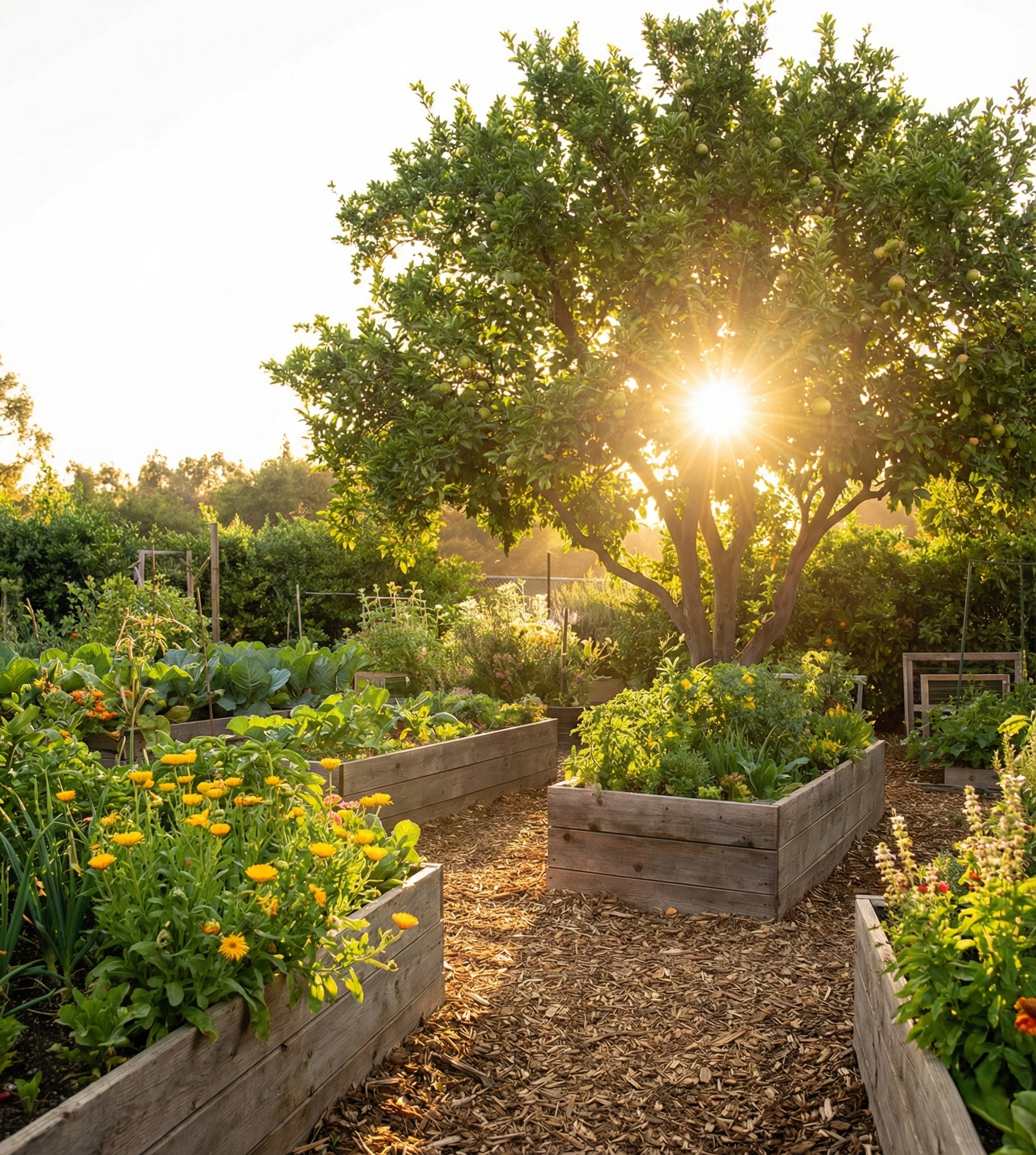
A few of the product links in this guide are affiliate links. If you buy through one, Ambitious Harvest may earn a small commission at no extra cost to you, which helps keep these guides free. We only point to gear we would use in our own Santa Cruz garden. As an Amazon Associate, we earn from qualifying purchases. Read our full disclosure.
To start a vegetable garden in Santa Cruz County, choose a spot with 6 to 8 hours of direct sun, build a 4x8-foot raised bed with gopher wire underneath, and fill it with a 60/30/10 mix of topsoil, compost, and perlite. According to the UC Master Gardener Program, raised beds keep a garden more organized and less likely to degrade to weeds, and you can grow vegetables at any scale, from a single patio pot to a larger plot, depending on the space and time you have.
Our microclimates, fog patterns, dry summers, and mild winters require a different approach. This guide will walk you through exactly how to start your first vegetable garden here in Santa Cruz County and the greater Bay Area.
Why Is Gardening in Santa Cruz County Different from Other Places?
Before you dig in, it's important to understand what makes gardening here unique. We're not in the Midwest. We're not in the Pacific Northwest. Generic gardening advice written for those climates will often steer you wrong.
Here's what defines our growing conditions:
Year-round growing season. We don't have a true winter dormancy period. While growth slows in December and January, you can harvest and plant cool-season crops all winter long.
Dry summers, wet winters. We follow a Mediterranean climate pattern. That means no rain from roughly May through October, then all our annual rainfall compressed into November through April.
Dramatic microclimates. Gardening in coastal Aptos is completely different from gardening in sunny Boulder Creek or under the redwoods in Felton. Your specific microclimate will determine what grows best and when to plant it.
Fog is a factor. If you live near the coast, summer fog keeps things cooler and more humid. Inland areas get much more sun and heat.
Understanding these conditions is the first step to gardening successfully here.
Where Should I Put My Vegetable Garden in Santa Cruz?
The single most important decision you'll make is where to put your garden. Vegetables need sun, and in Santa Cruz County, sun can be surprisingly hard to come by depending on where you live.
How much sun do you need?
Most vegetables need at least 6 to 8 hours of direct sun per day. Leafy greens, herbs, and some root crops can tolerate partial shade (4 to 6 hours), but fruiting crops like tomatoes, peppers, squash, and cucumbers absolutely need full sun.
Track your sun.
Spend a day observing your yard. Check at 9am, noon, 3pm, and 6pm. Note which areas get the most consistent sun throughout the day. Don't forget that the sun angle changes with the seasons. A spot that's sunny in summer might be shaded in winter when the sun is lower.
If you live under redwoods or have a heavily shaded yard, you'll need to focus on shade-tolerant crops or consider removing some lower branches to let in more light.
Other location factors:
Water access. You'll be watering regularly, especially in summer. Make sure you can reach your garden with a hose or set up drip irrigation easily.
Level ground. Flat ground is easier to work with. If you're on a slope, consider terracing or building raised beds.
Drainage. Avoid low spots where water pools after rain. Vegetables don't like wet feet.
Proximity to the house. The closer your garden is to your kitchen, the more likely you are to actually tend it and harvest from it.
How Big Should a Beginner Vegetable Garden Be?
This is the advice every beginner hears and promptly ignores, then regrets later. Start small.
A 4x8-foot raised bed or a 10x10-foot plot is plenty for your first year. You can always expand next season. It's much better to have a small, thriving garden than a large, overwhelming one full of weeds and neglected plants.
Starting small lets you:
Learn what grows well in your specific spot
Build your skills without burning out
Avoid overspending on materials and amendments
Actually keep up with watering, weeding, and harvesting
Should I Use Raised Beds or Plant In-Ground in Santa Cruz?
Most Santa Cruz gardeners choose raised beds, and for good reason.
Raised beds are ideal if you have:
Heavy clay soil (common in many parts of the county)
Poor drainage
Gophers (they're everywhere here)
Limited mobility or back problems
Contaminated soil (older properties near roads or industrial areas)
Raised beds let you import good soil, install gopher wire on the bottom, and create perfect growing conditions from day one. They warm up faster in spring and drain better in our wet winters.
In-ground planting works if you have:
Naturally good soil (sandy loam is gold)
No gopher problems (rare, but it happens)
A tight budget (raised beds require materials)
A large space to cover
If you go in-ground, plan to amend your soil heavily with compost. Most Santa Cruz soils are either heavy clay or sandy and depleted. You'll need to build organic matter over time. For a full guide to improving your native soil, see our California Garden Soil Amendments Guide.
Where to get materials locally:
For raised bed materials, check out:
San Lorenzo Garden Center for lumber, soil, and compost
Scarborough Gardens for pre-made raised bed kits
Dig Gardens for soil amendments and sustainable materials
How Do I Build a Raised Bed for Vegetables?
For raised beds:
The most common size is 4 feet wide by 8 feet long by 12 inches deep. This gives you plenty of growing space while keeping everything reachable from the sides.
Use untreated lumber (cedar or redwood are rot-resistant) or galvanized metal. Avoid pressure-treated wood unless it's rated for organic gardening.
Before filling your beds:
Level the ground where the bed will sit
Lay down cardboard or newspaper to suppress weeds
Install gopher wire on the bottom if gophers are a problem in your area (they probably are)
Fill with a mix of 60% topsoil, 30% compost, and 10% drainage material like rice hulls or perlite
For in-ground beds:
Remove existing vegetation. You can sheet mulch (lay down cardboard and top with compost) or manually remove sod.
Loosen the soil to a depth of 12 inches with a broadfork or spading fork. Don't rototill unless absolutely necessary. It destroys soil structure.
Add 3 to 4 inches of compost on top and work it into the top 6 inches of soil.
Create paths between beds so you're not compacting your growing area.
What Vegetables Grow Best in Santa Cruz County?
Santa Cruz's year-round growing season is a blessing, but it also means planting times are different from the rest of the country.
Cool-season crops (lettuce, kale, broccoli, peas, carrots) grow best in fall, winter, and early spring. Plant them from September through March.
Warm-season crops (tomatoes, peppers, squash, cucumbers, beans) need heat and sun. Plant them from April through July, with peak planting in May and June after the last frost risk passes.
Year-round crops (herbs like cilantro and parsley, chard, certain lettuces) can be planted almost any time as long as you're mindful of extreme heat or cold.
Your microclimate matters.
Coastal gardeners can grow cool-season crops almost year-round but struggle with heat-loving crops. Inland gardeners have better luck with tomatoes and peppers but may face frost in winter.
Not sure what your microclimate is? Check out our guide to Santa Cruz County microclimates to identify your growing zone.
What Should I Plant First in My New Garden?
Don't try to grow everything at once. Pick 5 to 7 crops for your first season and focus on mastering those.
Best first crops for Santa Cruz beginners:
Lettuce and salad greens. Fast-growing, productive, and forgiving. Plant successively every 2 weeks for continuous harvest.
Cherry tomatoes. Easier than large tomatoes and incredibly productive. Choose fog-tolerant varieties if you're coastal.
Zucchini or summer squash. One plant will feed a family. Thrives in our summers.
Herbs (basil, cilantro, parsley). Essential for cooking and nearly impossible to kill.
Bush beans. Plant in late spring. They fix nitrogen in the soil and produce heavily.
Radishes. Ready in 3 to 4 weeks. Great confidence builder.
Kale or chard. Productive, pest-resistant, and grows almost year-round here.
Avoid crops that are tricky for beginners: cauliflower (fussy), celery (constant water needs), and melons (need consistent heat, which coastal areas don't have).
Where to buy transplants and seeds:
Sierra Azul Nursery in Watsonville has an excellent vegetable transplant selection and knowledgeable staff
Dig Gardens in Capitola carries organic transplants and seeds
Renee's Garden Seeds is based right here in Felton and specializes in varieties that thrive in our climate
UCSC Farm & Garden has plant sales in spring and fall with varieties trialed at the farm
Love Apple Farms in Scotts Valley offers heirloom tomato seedlings in spring
For seeds by mail, try Territorial Seeds, Kitazawa Seed Company (great for Asian vegetables), or Baker Creek.
When Should I Plant Vegetables in Santa Cruz County?
This is where local knowledge really matters. National seed packets will tell you to plant tomatoes in March or April. In Santa Cruz, that's way too early for most of the county. Coastal areas won't warm up enough until June. Even inland areas should wait until May.
General planting windows for Santa Cruz County:
January to March: Cool-season crops (peas, lettuce, brassicas, carrots, beets)
April to June: Warm-season crops (tomatoes, peppers, squash, cucumbers, beans)
July to September: Fall crops (more brassicas, lettuce, root vegetables)
October to December: Overwintering crops (garlic, fava beans, certain lettuces)
Check our monthly planting guides for specific recommendations based on your microclimate.
How Should I Water My Vegetable Garden?
In Santa Cruz, you'll get no rain from May through October. That means you're responsible for every drop of water your plants receive for half the year.
Drip irrigation is your best friend.
It delivers water directly to plant roots, reduces evaporation, and keeps foliage dry (which prevents disease). It also conserves water, which matters in California.
You can set up a simple drip system with:
A timer on your hose bib
Mainline tubing running the length of your beds
Drip emitters or soaker tape for each plant
San Lorenzo Garden Center and Scarborough Gardens both carry drip supplies and can help you design a system.
Hand watering works too, especially for small gardens. Water deeply and less frequently rather than shallowly every day. This encourages deep root growth.
How much to water:
In summer, most vegetables need 1 to 2 inches of water per week. Sandy soil drains fast and needs more frequent watering. Clay soil holds moisture longer.
Water in the morning if possible. Evening watering can encourage fungal diseases, especially in coastal fog.
Why Is Mulching Important for Santa Cruz Gardens?
Mulch is one of the best investments you can make in a Santa Cruz garden.
A 2 to 3-inch layer of mulch:
Conserves water by reducing evaporation
Suppresses weeds
Regulates soil temperature
Breaks down over time, adding organic matter to your soil
Best mulches for vegetable gardens:
Straw (not hay, which has seeds). Clean, effective, affordable.
Compost. Adds nutrients as it protects the soil.
Shredded leaves. Free if you have trees. Break down faster than straw.
Wood chips. Good for paths, less ideal directly around vegetables (can tie up nitrogen).
Keep mulch a few inches away from plant stems to prevent rot and discourage pests.
What Should New Gardeners Expect in Their First Year?
Your first gardening season is an experiment. You'll make mistakes. Plants will die. Gophers will raid your beds. Tomatoes will get blight. This is all part of the process.
Gardening in Santa Cruz gives you multiple chances per year. If your spring lettuce bolts in the heat, plant more in fall. If your first tomatoes fail, try again next May with a different variety.
Keep notes on what works. What varieties thrived? When did you plant them? How much did they produce? This information becomes gold when planning next season.
Local resources to tap into:
UC Master Gardeners of Monterey Bay answer gardening questions through their online Gardening Advice Line and run classes across the three counties
UCSC Center for Agroecology runs workshops and tours
Love Apple Farms offers classes on seed starting, tomato growing, and more
Cabrillo College has gardening and permaculture courses
Join local gardening groups on Facebook or Instagram. Santa Cruz gardeners are generous with advice and happy to share what works in their specific neighborhoods.
You're Ready to Start
Starting a vegetable garden in Santa Cruz County is easier than you think, especially once you understand our unique growing conditions. Choose a sunny spot, start small, plant at the right time for your microclimate, and set up good watering habits. The rest will come with time and practice.
For additional research-based guidance, see UC ANR's Vegetable Garden Basics (PDF), Vegetable Gardening Handbook for Beginners (PDF), and the UC Master Gardener raised bed guide.
The best day to start a garden was last year. The second best day is today.
Ready for the next step? Check out our guide to the first 5 vegetables to grow in Santa Cruz, or explore our seasonal planting guides to see what you can plant right now.
Frequently Asked Questions About Starting a Garden in Santa Cruz
How much sun does a vegetable garden need in Santa Cruz?
Most vegetables need 6-8 hours of direct sun daily. Fruiting crops (tomatoes, peppers, squash, cucumbers) absolutely require full sun. Leafy greens, herbs, and some root crops tolerate partial shade (4-6 hours). Track sun in your yard at 9am, noon, 3pm, and 6pm to find your sunniest spots. Remember that sun angles change seasonally, so a sunny summer spot may be shaded in winter.
Should I use raised beds or plant in the ground?
Raised beds are ideal for most Santa Cruz gardeners because they solve common problems: heavy clay soil, poor drainage, and gopher access. They let you import quality soil and install gopher wire on the bottom. In-ground planting works if you have naturally good soil, no gophers, and a tight budget. Most beginners find success faster with raised beds because conditions are easier to control from day one.
What size garden should I start with?
Start with a single 4x8-foot raised bed or 10x10-foot plot. This gives enough space to grow meaningful quantities of food while remaining manageable for a beginner. You can always expand next season. A small, thriving garden builds skills and confidence better than a large, overwhelming space that becomes weedy and neglected. Many successful gardeners started with just one or two beds.
What are the best vegetables for Santa Cruz beginners?
Start with 5-7 easy crops: lettuce and salad greens (fast, forgiving), cherry tomatoes (productive, easier than large tomatoes), zucchini (one plant feeds a family), herbs like basil and cilantro (essential and nearly impossible to kill), bush beans (fix nitrogen and produce heavily), radishes (ready in 3-4 weeks), and kale or chard (productive year-round). Avoid fussy crops like cauliflower and celery your first year.
When should I plant vegetables in Santa Cruz?
Timing depends on crop type. Cool-season crops (lettuce, kale, peas, carrots) grow September through March. Warm-season crops (tomatoes, peppers, squash) plant April through July, with May-June being prime time after frost risk passes. Coastal areas plant warm crops later (May-June) than inland areas (April-May). Our year-round growing season means there's almost always something you can plant.
How often should I water my vegetable garden?
In summer (May-October), most vegetables need 1-2 inches of water weekly. Sandy soil needs more frequent watering; clay holds moisture longer. Water deeply and less frequently to encourage deep root growth. Drip irrigation is ideal because it delivers water directly to roots, reduces evaporation, and keeps foliage dry. Water in the morning to prevent fungal diseases, especially in foggy coastal areas.
Where can I buy plants and seeds locally?
Great local options include: Sierra Azul Nursery in Watsonville (excellent vegetable selection), Dig Gardens in Capitola (organic transplants), San Lorenzo Garden Center (supplies and plants), Renee's Garden Seeds in Felton (varieties bred for our climate), UCSC Farm & Garden plant sales (spring and fall), and Love Apple Farms in Scotts Valley (heirloom tomatoes). Farmers markets often have transplants in spring.
How do I deal with gophers in my garden?
Gophers are nearly universal in Santa Cruz County. The most effective protection is hardware cloth (1/2-inch mesh) installed on the bottom of raised beds before filling with soil. For in-ground gardens, plant in gopher baskets (wire cages around root zones). Trapping works for active infestations. Encourage natural predators by installing owl boxes and welcoming gopher snakes. Prevention beats treatment.
Free Garden Starting Resources
Download these free guides to start your Santa Cruz vegetable garden:
Beginner Garden Setup Checklist:Everything you need to do before planting, from site selection to soil preparation. Print and check off each step as you complete it.
Know Your Microclimate Worksheet:Assess sun exposure, frost risk, and growing conditions in your specific space. Essential for choosing the right location and crops.
Seasonal Planting Calendar:Month-by-month guide showing what to plant when in Santa Cruz County. Never miss a planting window again.
Gopher Control Guide:Protect your new garden from Santa Cruz County's most persistent pest. Hardware cloth installation, trapping, and prevention strategies.
