

Native Plants by Microclimate: What to Grow Where in Santa Cruz County
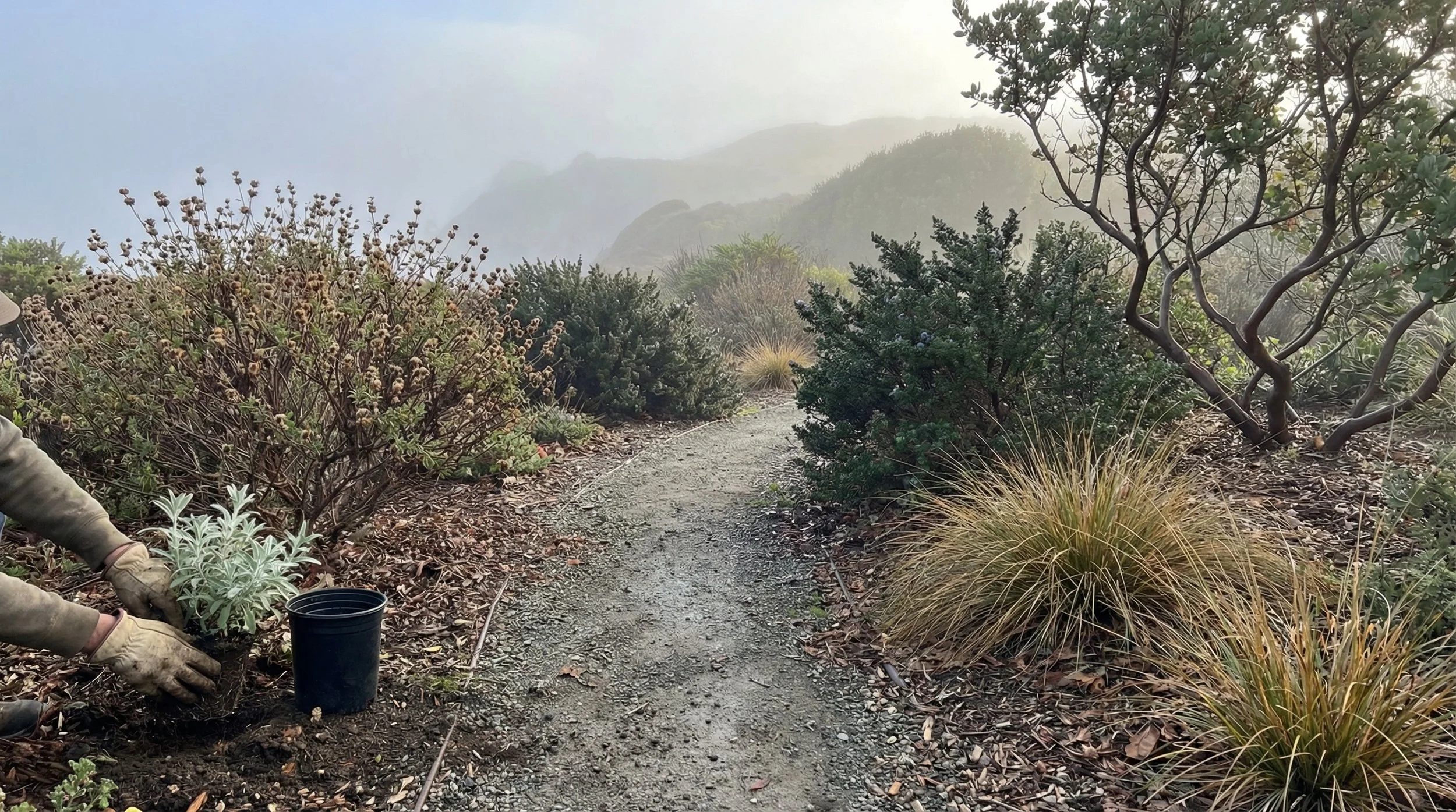
The promise of California native plants is undeniable: drought tolerance, wildlife support, and a garden that feels like it belongs here. But here's what many gardeners discover the hard way: a native plant that thrives in sunny Boulder Creek may struggle in foggy Live Oak, and vice versa.
Santa Cruz County spans an astonishing range of conditions within a small geographic area. A drive from the beaches of Capitola to the sunny ridges above Ben Lomond takes less than 30 minutes but crosses through dramatically different growing environments. The native plants that evolved in our region adapted to specific conditions, and matching the right plant to the right microclimate is the key to success.
This guide breaks down which California natives work best in each of Santa Cruz County's five distinct growing zones. Coastal fog, redwood canopy, and sunny chaparral slopes each have natives that thrive with minimal fuss once established.
Why Microclimates Matter for Native Plant Success
California natives have a reputation for being "easy" plants, and in many ways they are. Once established, most require little to no supplemental water and rarely need fertilizing. But that ease comes with a caveat: they need to be planted in conditions similar to their native habitat.
According to the California Native Plant Society, the most common reason native plants fail in home gardens is a mismatch between the plant's needs and the site conditions. A coastal sage scrub species planted in deep shade, or a redwood understory plant put in full sun, will struggle regardless of how well you care for it.
Santa Cruz County's microclimates create distinct opportunities and challenges. Understanding your specific conditions is the first step toward a thriving native garden.
Santa Cruz County's Five Growing Zones
Before choosing plants, identify which zone best describes your garden. Many properties span multiple zones, so you may need to select different plants for different areas.
Zone 1: Coastal Fog Belt Areas: Westside Santa Cruz, Live Oak, Capitola, Aptos (near the coast), Seacliff Conditions: Frequent fog (especially summer), temperatures rarely above 75°F, mild winters with little frost, moderate humidity, salt air near beaches Sun exposure: Often reduced by marine layer, especially mornings
Zone 2: San Lorenzo Valley Chaparral Areas: Boulder Creek, Ben Lomond (sunny exposures), upper Scotts Valley ridges Conditions: Sunnier and warmer than coastal areas, more frost risk in winter, drier conditions, fire-prone Sun exposure: Full sun to part shade depending on aspect
Zone 3: Under the Redwoods Areas: Felton, Ben Lomond canyons, shaded areas in Bonny Doon, parts of Scotts Valley Conditions: Dappled to full shade, acidic soil (pH 5.5-6.5), cool and moist, thick duff layer Sun exposure: Limited, often less than 4 hours direct sun
Zone 4: Inland Valleys Areas: Scotts Valley, Soquel hills, parts of Santa Cruz inland, Pasatiempo Conditions: Mixed, moderate temperatures, some frost risk, less fog than coast Sun exposure: Variable, often good sun exposure
Zone 5: Pajaro Valley Areas: Watsonville, Freedom, Corralitos, agricultural areas toward Monterey County Conditions: Warmest microclimate in the county, less fog, longest growing season Sun exposure: Typically full sun
For help identifying your specific microclimate, see our complete guide to Navigating Santa Cruz County's Microclimates or download our Know Your Microclimate Worksheet.
Native Plants for the Coastal Fog Belt (Zone 1)
Coastal gardens face a unique set of conditions: reliable moisture from fog drip, cooler temperatures, salt exposure near beaches, and reduced sun hours during summer when the marine layer often persists through mid-morning or later.
The good news is that many California natives evolved in exactly these conditions along our coast. These plants not only tolerate fog but actually benefit from it.
Shrubs for Coastal Gardens
Coast Live Oak (Quercus agrifolia): While this is a tree, smaller cultivars and young specimens work well as large shrubs in coastal gardens. Extremely long-lived and provides excellent wildlife habitat. Coast Live Oak is one of our most adaptable native trees, thriving from the coast to inland valleys.
Coffeeberry (Frangula californica): This adaptable shrub handles coastal conditions beautifully. The variety 'Eve Case' grows 4-6 feet and produces berries that birds love. Tolerates more shade than many natives.
California Lilac (Ceanothus): Choose coastal-adapted varieties like 'Yankee Point' or 'Carmel Creeper' for groundcover forms, or 'Dark Star' for an upright shrub. These cover themselves in blue flowers in spring, creating a stunning display. Learn more in our Growing California Lilac guide.
Toyon (Heteromeles arbutifolia): The "California Holly" produces white spring flowers followed by red berries that persist through winter. Extremely tough and adaptable, thriving equally well in coastal fog or inland heat. See our complete Toyon Growing Guide.
Perennials and Groundcovers for Coastal Gardens
Seaside Daisy (Erigeron glaucus): This low-growing perennial is practically made for coastal gardens. Lavender-pink daisy flowers bloom prolifically, and the plant handles salt spray and wind. Great for borders and rock gardens.
Sticky Monkey Flower (Mimulus aurantiacus): The orange, tubular flowers attract hummingbirds from spring through fall. This shrubby perennial handles coastal conditions well and provides important nectar during the dry season. Our Sticky Monkey Flower guide covers everything you need to know.
California Poppy (Eschscholzia californica): Our state flower thrives in coastal gardens as long as it gets at least half a day of direct sun. Self-sows readily once established. See our Growing California Poppies guide.
Beach Strawberry (Fragaria chiloensis): An excellent evergreen groundcover for coastal gardens, spreading by runners to form a dense mat. Tolerates salt spray and sandy soil.
Native Plants by Santa Cruz County Microclimate
| Zone | Best Shrubs | Best Perennials/Groundcovers |
|---|---|---|
|
Zone 1: Coastal Fog
Westside SC, Live Oak, Capitola, Aptos
|
Coffeeberry, Toyon, California Lilac ('Yankee Point'), Coast Live Oak | Seaside Daisy, Sticky Monkey Flower, California Poppy, Beach Strawberry |
|
Zone 2: Sunny Chaparral
Boulder Creek, Ben Lomond ridges
|
Manzanita, Mountain Mahogany, Bush Anemone, Flannelbush | California Fuchsia, Cleveland Sage, Buckwheat, Hummingbird Sage |
|
Zone 3: Under Redwoods
Felton, Ben Lomond canyons
|
Western Azalea, Snowberry, Red Flowering Currant, Evergreen Huckleberry | Redwood Sorrel, Wild Ginger, Sword Fern, Pacific Coast Iris |
|
Zone 4: Inland Valleys
Scotts Valley, Soquel hills
|
California Lilac (various), Western Redbud, Toyon, Island Mallow | Matilija Poppy, California Lupine, Yarrow, Blue-Eyed Grass |
|
Zone 5: Pajaro Valley
Watsonville, Corralitos
|
White Sage, Lemonade Berry, Woolly Blue Curls, Coyote Brush | California Fuchsia, Deer Grass, Giant Wild Rye |
Native Plants for Sunny Chaparral Areas (Zone 2)
The sunnier, drier slopes of the San Lorenzo Valley and inland ridges support a different plant community. These areas experience hotter summers, colder winters with more frost, and much less summer moisture. Plants from chaparral and oak woodland communities excel here.
Shrubs for Sunny, Dry Sites
Manzanita (Arctostaphylos): The quintessential chaparral shrub, with smooth red bark, evergreen leaves, and urn-shaped flowers that bees adore. Sierra Azul Nursery in Watsonville carries many varieties suited to different garden situations. 'Howard McMinn' is a reliable performer at 5-6 feet. See our complete Manzanita Growing Guide.
Mountain Mahogany (Cercocarpus betuloides): A large shrub or small tree with feathery seed plumes that catch the light. Extremely drought tolerant once established and provides good screening.
Bush Anemone (Carpenteria californica): One of our showiest native shrubs, producing large white flowers with yellow centers in late spring. Does well in the warmth of Zone 2 and tolerates some shade.
Flannelbush (Fremontodendron): Nothing beats the bold yellow flowers of Flannelbush against a blue spring sky. Needs excellent drainage and no summer water once established. The variety 'California Glory' is widely available.
Perennials for Sunny Sites
California Fuchsia (Epilobium canum): This late-season bloomer provides crucial nectar for hummingbirds in late summer and fall when little else is flowering. Tubular red-orange flowers cover the gray-green foliage.
Cleveland Sage (Salvia clevelandii): Intensely fragrant foliage and whorls of blue-purple flowers make this a garden standout. Needs good drainage and full sun.
Hummingbird Sage (Salvia spathacea): Despite the name, this sage actually prefers some shade and handles the edge conditions where sun meets oak woodland. Magenta flower spikes in spring.
Buckwheat (Eriogonum): Several species work well here. Santa Cruz Island Buckwheat (E. arborescens) grows as a rounded shrub, while Sulfur Buckwheat (E. umbellatum) stays lower. All are excellent pollinator plants.
Native Plants for Shaded Redwood Gardens (Zone 3)
Gardening under redwoods presents unique challenges: deep shade, acidic soil, competition for water from shallow redwood roots, and thick duff that can inhibit seed germination. But a beautiful palette of native plants evolved in exactly these conditions.
According to UC Santa Cruz's Arboretum, the key to success under redwoods is choosing plants from the same plant community and working with, rather than against, the existing conditions.
Shrubs for Shade
Western Azalea (Rhododendron occidentale): One of our showiest native shrubs, with fragrant white to pink flowers in late spring. Needs the acidic soil and consistent moisture that redwood groves provide.
Snowberry (Symphoricarpos albus): A tough, spreading shrub with white berries that persist into winter. Tolerates deep shade and spreads to form colonies.
Red Flowering Currant (Ribes sanguineum): One of the earliest bloomers, with pendant clusters of pink to red flowers in late winter. Hummingbirds depend on it for early-season nectar.
Evergreen Huckleberry (Vaccinium ovatum): Slow growing but worth the wait. Produces edible blue-black berries and tolerates quite deep shade. The new growth flushes bronze-red.
Groundcovers and Perennials for Shade
Redwood Sorrel (Oxalis oregana): The classic redwood understory plant, with clover-like leaves and pink-streaked white flowers. Spreads to form a lush groundcover in moist shade.
Wild Ginger (Asarum caudatum): Heart-shaped evergreen leaves form an attractive groundcover. The curious brown flowers hide beneath the foliage.
Sword Fern (Polystichum munitum): Not a flowering plant, but essential to the redwood garden. Forms graceful clumps 2-3 feet tall and tolerates quite dry shade once established.
Pacific Coast Iris (Iris douglasiana): Strap-like evergreen foliage looks good year-round, and the purple, blue, or white flowers appear in spring. Handles dry shade surprisingly well.
Native Plants for Inland Valleys (Zone 4)
The inland valleys of Scotts Valley, Soquel hills, and inland Santa Cruz offer some of the most versatile growing conditions in the county. With moderate temperatures, decent sun exposure, and less extreme conditions than either coast or mountains, gardeners here can draw from multiple plant communities.
Shrubs for Inland Gardens
California Lilac (Ceanothus): Many varieties thrive here. 'Julia Phelps' offers deep blue flowers on a compact shrub. 'Ray Hartman' grows into a small tree. For more options, see our California Lilac guide.
Toyon (Heteromeles arbutifolia): Equally at home inland as on the coast. The red berries feed birds through winter and were traditionally used by the Ohlone people.
Western Redbud (Cercis occidentalis): A small tree or large shrub that covers itself in magenta flowers in early spring before the leaves emerge. Stunning planted against evergreen natives.
Island Mallow (Malva assurgentiflora): Fast growing with large pink flowers nearly year-round. Can reach 8-10 feet if not pruned. Originally from the Channel Islands but happy in Santa Cruz gardens.
Perennials for Inland Gardens
Matilija Poppy (Romneya coulteri): The "fried egg flower" produces huge white blooms with golden centers. Spreads by underground runners, so give it room. Spectacular when established. See our Matilija Poppy guide.
California Lupine (Lupinus): Several species work well here, from the annual Arroyo Lupine to the perennial Bush Lupine. All fix nitrogen in the soil. Learn more in our California Lupine guide.
Yarrow (Achillea millefolium): The native yarrow has white flowers and ferny foliage. Extremely adaptable and drought tolerant, spreading slowly to form colonies.
Blue-Eyed Grass (Sisyrinchium bellum): Actually an iris relative, this small perennial produces blue flowers in spring. Grasslike foliage works well in meadow plantings.
Native Plants for the Pajaro Valley (Zone 5)
The warmest part of Santa Cruz County, the Pajaro Valley and Watsonville area experiences less fog, warmer temperatures, and a longer growing season. Plants from Southern California and the Central Valley often do well here.
Shrubs for Warm Microclimates
White Sage (Salvia apiana): The classic ceremonial sage, with silvery-white aromatic foliage. Needs excellent drainage and no summer water. Best for Zone 5 where summer fog is minimal.
Lemonade Berry (Rhus integrifolia): A large shrub or small tree with leathery evergreen leaves. Tolerates heat, drought, and even some salt spray. The berries can be used to make a tart drink.
Woolly Blue Curls (Trichostema lanatum): Spectacular blue flowers attract bees and hummingbirds. Needs excellent drainage and full sun. Short-lived but worth replanting.
Coyote Brush (Baccharis pilularis): Not flashy, but extremely tough and useful for erosion control and wildlife habitat. The cultivar 'Pigeon Point' stays low and spreads as a groundcover.
Perennials for Warm Areas
California Fuchsia (Epilobium canum): Even more at home in warm areas, where it blooms prolifically in late summer and fall.
Deer Grass (Muhlenbergia rigens): A graceful bunch grass that forms large clumps with airy flower spikes. Excellent for dry areas and provides structure year-round.
Giant Wild Rye (Leymus condensatus 'Canyon Prince'): A striking gray-blue grass for bold effect. Tolerates heat and drought and spreads slowly.
Choose Native Plants by Your Growing Conditions
Full Sun + Dry Soil
Hot, sunny spots with fast-draining soil
- Manzanita
- Cleveland Sage
- California Fuchsia
- Buckwheat
- White Sage
Part Shade + Average Soil
Morning sun or dappled light, moderate moisture
- Coffeeberry
- Hummingbird Sage
- California Lilac
- Toyon
- Yarrow
Full Shade + Moist Soil
Under trees, north-facing, cool and damp
- Redwood Sorrel
- Sword Fern
- Wild Ginger
- Western Azalea
- Pacific Coast Iris
Coastal + Fog Exposure
Salt air, summer fog, mild temperatures
- Seaside Daisy
- Beach Strawberry
- Coast Buckwheat
- California Poppy
- Sticky Monkey Flower
Working with Transition Zones
Most Santa Cruz County properties don't fit neatly into a single microclimate. You might have a sunny front yard and a shaded back garden, or a coastal location with one protected, warmer corner.
This is actually an opportunity. By recognizing the different conditions on your property, you can create diverse habitats that support more wildlife and provide interest throughout the year.
Some tips for working with mixed conditions:
Use the edge effect: Where sun meets shade, or dry meets moist, you can often grow plants from both communities. These transition zones often support the greatest diversity.
Create microclimates intentionally: A south-facing wall creates a warmer, drier microclimate where you might try a plant at the edge of its range. A swale or low area stays moister and can support plants needing more water.
Group plants by water needs: Even within a diverse planting, keep plants with similar water requirements together. This makes irrigation more efficient and prevents overwatering drought-adapted species.
For more on creating intentional design with natives, see our Native Garden Design guide.
Most Common Mistakes to Avoid
Overwatering established natives: This is the number one killer of native plants in gardens. Most California natives need regular water only during their first one to two summers. After that, summer water can cause root rot in many species. UC ANR recommends completely eliminating summer irrigation for most established natives.
Planting chaparral species in coastal fog: Plants like White Sage, Woolly Blue Curls, and some Manzanita species evolved in dry summer conditions. Coastal humidity and fog drip can promote fungal problems.
Ignoring soil drainage: Many native plant failures stem from poor drainage. If your soil stays soggy, either amend the planting area or choose moisture-tolerant species like Coffeeberry or Red Flowering Currant.
Planting in summer: Fall (October through December) is the ideal planting time for California natives. This allows plants to establish roots during the rainy season before facing summer drought.
Native Plant Establishment Timeline
Planting Season (Oct - Dec)
Plant at the start of the rainy season. Water deeply at planting time, then let rain take over. Check weekly and water only if no rain for 2+ weeks.
First Summer (Critical Period)
Water deeply every 7-14 days depending on conditions. Focus on deep, infrequent watering to encourage roots to grow down. Mulch around plants (not touching stems).
Second Summer (Weaning)
Reduce watering to every 2-3 weeks. Plants should show good growth and begin to look established. Some may flower for the first time.
Established (Low to No Water)
Most natives need little to no summer water once established. A deep monthly soak during extended heat waves is optional. Overwatering is now the main risk.
Where to Find Native Plants in Santa Cruz County
Sourcing locally-grown native plants ensures they're adapted to our conditions and supports local nurseries doing important conservation work.
Sierra Azul Nursery in Watsonville specializes in California natives and offers an excellent selection suited to our region. The staff can help match plants to your specific site conditions.
Dig Gardens in Santa Cruz carries a curated selection of natives alongside ornamentals, and the knowledgeable staff understands local growing conditions.
The Santa Cruz Chapter of the California Native Plant Society holds periodic plant sales featuring locally-propagated natives, often including species difficult to find in regular nurseries.
UCSC Arboretum is worth visiting for inspiration, with extensive collections of California natives and plants from similar Mediterranean climates worldwide.
Frequently Asked Questions
When is the best time to plant California natives in Santa Cruz County?
Fall is ideal, typically between October and December. Planting at the start of the rainy season allows roots to establish before summer drought. Spring planting can work but requires more attention to watering through the first summer.
How long do I need to water native plants before they're established?
Most natives need supplemental water through their first two summers. Water deeply but infrequently (every 1-2 weeks depending on conditions) to encourage deep root growth. By the third summer, most established natives need little to no irrigation.
Will California natives work in my foggy coastal garden?
Absolutely. Many natives evolved in coastal conditions and actually prefer the cool, moist environment. Choose species from coastal scrub and dune communities, such as Seaside Daisy, Coffeeberry, Coast Buckwheat, and Beach Strawberry.
Can I grow natives in my redwood shade garden?
Yes, a beautiful palette of natives thrives under redwoods. Focus on species from the redwood understory community: Redwood Sorrel, Sword Fern, Wild Ginger, Pacific Coast Iris, and shade-tolerant shrubs like Western Azalea and Evergreen Huckleberry.
Do native plants attract bees and other pollinators?
Native plants are among the best for supporting pollinators because our native bees evolved alongside these plants. Species like Manzanita, California Lilac, Buckwheat, and Salvia provide crucial food sources for native bees, butterflies, and hummingbirds.
Are California natives deer resistant?
Many are, especially aromatic species like Sages, Buckwheat, and Monkey Flower. However, deer pressure varies by location, and hungry deer may browse almost anything. For specific recommendations, see our Deer-Resistant Vegetable Gardening guide.
Can I mix native plants with non-native ornamentals?
Yes, as long as you group plants by water needs. Natives that need no summer water shouldn't be planted alongside thirsty exotics. Many Mediterranean climate plants (lavender, rosemary, rockrose) have similar needs to California natives and combine well.
How do I improve drainage for native plants?
Plant on mounds or berms, especially in heavy clay soil. Avoid amending the soil in the planting hole (this creates a "bathtub" effect). Instead, mulch the surface with bark or wood chips, keeping mulch away from the crown of the plant.
Free Resources
Know Your Microclimate Worksheet: Identify your specific growing conditions with this interactive guide.
Water-Wise Gardening Guide: Learn strategies for reducing water use with native and drought-adapted plants.
Fire-Wise Gardening Guide: Many native plants are excellent choices for defensible space. This guide helps you choose wisely.
Related Articles
Native Garden Design in Santa Cruz County: A Complete Guide
