

Deer-Resistant Vegetable Gardening in Santa Cruz County
A few of the product links in this guide are affiliate links. If you buy through one, Ambitious Harvest may earn a small commission at no extra cost to you, which helps keep these guides free. We only point to gear we would use in our own Santa Cruz garden. As an Amazon Associate, we earn from qualifying purchases. Read our full disclosure.
How Bad Is the Deer Problem?
If you garden in the San Lorenzo Valley, the hills above Soquel, rural Aptos, Bonny Doon, or almost anywhere outside the urban core of Santa Cruz, you know deer. They're beautiful, they're everywhere, and they will eat your garden to the ground overnight.
Unlike gophers that work unseen below the surface, deer are brazen. They'll stroll through your yard at dusk, sample your tomatoes, decapitate your bean plants, and strip your fruit trees while you watch helplessly from the window. By morning, weeks of work can be reduced to stubble.
Deer pressure in Santa Cruz County is intense, especially in foothill and forested areas. The combination of wildlands, suburban edges, and year-round mild weather creates ideal deer habitat, and they've learned that gardens are easy meals. But with the right strategies, you can still grow a productive vegetable garden. It takes planning, investment, and a little stubbornness.
How Do Deer Behave?
Knowing how deer operate helps you outsmart them, or at least stay one step ahead.
What Deer Love to Eat
Deer are browsers, eating a wide variety of plants. In your garden, they particularly favor:
Top favorites (protect these first):
Beans and peas (absolute candy to deer)
Lettuce and leafy greens
Strawberries
Brassicas (broccoli, cabbage, kale, Brussels sprouts)
Fruit tree leaves, bark, and developing fruit
Most flowers (especially roses, tulips, hostas, daylilies)
Also on the menu:
Chard and spinach
Sweet potato vines
Corn (once they discover it)
Young tree bark (can kill trees through girdling)
What Drives Their Behavior
Creatures of habit: Deer follow established paths and return repeatedly to food sources. Once they learn your garden provides easy meals, they'll keep coming back until something changes.
Dawn and dusk feeders: Peak activity is early morning and evening, but they'll browse anytime they feel safe, including broad daylight in areas where they're accustomed to people.
Drought intensifies pressure: Dry conditions push deer into gardens seeking moisture and tender growth. During drought years, deer will eat plants they'd normally ignore.
Does with fawns are bold: A doe feeding fawns may take risks she'd otherwise avoid, including entering gardens close to houses.
Memory matters: Deer remember food sources from year to year. If your garden fed them last season, they'll check back.
Deer Pressure by Location
Heaviest: Rural, wooded, and hillside areas (San Lorenzo Valley, Bonny Doon, Soquel hills, rural Aptos, Corralitos)
Moderate: Suburban neighborhoods adjacent to open space or greenbelts
Lighter but not absent: Dense urban areas (deer do wander into downtown Santa Cruz occasionally)
Variable: Some neighborhoods have resident deer populations that are remarkably bold, while neighboring areas see less pressure. Ask your neighbors about their experience.
Why Is Fencing the Only Reliable Solution?
Let's be direct: if you have serious deer pressure, fencing is the only reliably effective long-term solution. Everything else, including deterrents, resistant plants, and clever design, is a supplement to fencing, not a substitute for it.
This isn't what anyone wants to hear. Fencing is expensive, changes the look of your property, and feels like admitting defeat. But after years of fighting deer with sprays and deterrents, most gardeners come to the same conclusion: a fence is worth every penny.
Standard Deer Fence (8 Feet Tall)
Deer can jump impressively high, up to 8 feet when motivated. An effective deer fence needs height.
Materials and options:
Polypropylene deer netting: Black mesh on metal T-posts. Relatively affordable ($1 to $2 per linear foot for materials), nearly invisible from a distance, and durable. This is the most common choice for dedicated vegetable gardens.
Welded wire fencing: Sturdier than netting, more visible, and lasts longer. Good for permanent installations. Costs more but requires less maintenance.
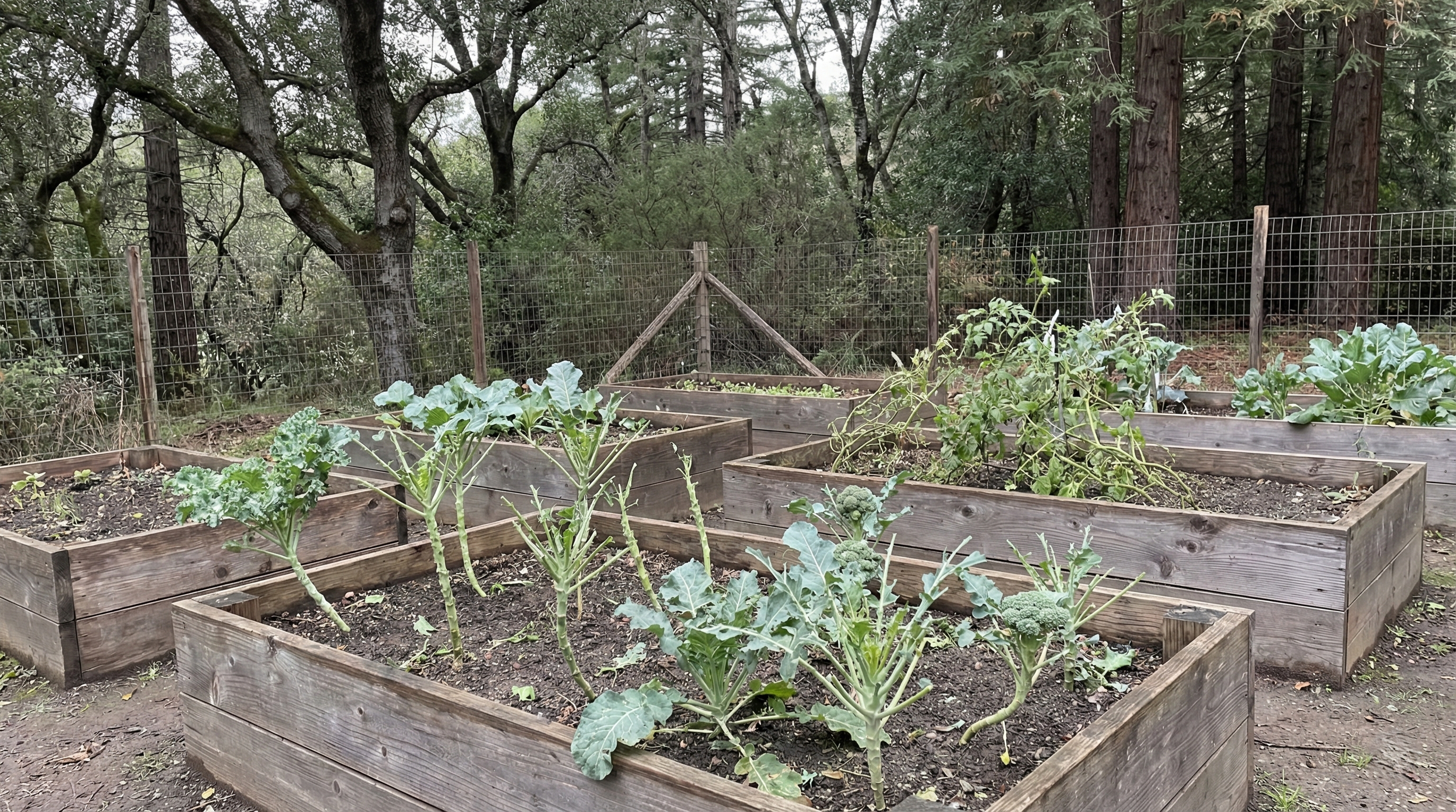
Wood fence or combined materials: More expensive but more attractive. Can serve as both garden boundary and deer barrier. Often uses wood posts with wire or mesh attached.
Installation tips:
8 feet is the standard recommendation; 7 feet may work if deer pressure is moderate
Bury the bottom 6 inches or stake firmly to the ground to prevent deer from pushing underneath
Gates must be equally tall and close securely (gates are often the weak point)
Posts should be sturdy enough to withstand deer leaning on or pushing against the fence
Check local regulations; some areas have fence height restrictions
Cost considerations: A proper deer fence is an investment. Materials for a 100-foot perimeter typically run $500 to $1,500 depending on materials, plus installation labor if you're not doing it yourself. But it's a one-time cost that protects your garden for years. Compare that to annual crop losses and replacement costs, and fencing usually pays for itself within a few seasons.
Double Fence (Shorter but Effective)
Deer are good at jumping high but not good at jumping both high and wide simultaneously. A double fence system exploits this limitation.
How it works:
Two parallel fences, each 4 to 5 feet tall
Spaced 4 to 5 feet apart
Deer won't attempt to jump both at once
Can be less visually imposing than a single 8-foot fence
Best for:
Gardens where an 8-foot fence isn't feasible due to regulations or aesthetics
Properties where you want a less fortress-like appearance
Areas with moderate deer pressure
Drawbacks: Uses more ground space, requires two fence installations, and the gap between fences needs management (it can become a weed haven or awkward dead zone).
Angled Fence
A fence angled outward at 45 degrees confuses deer and makes jumping difficult.
How it works:
Fence is 4 to 5 feet tall but angles outward toward approaching deer at roughly 45 degrees
Deer can't gauge the distance and typically won't attempt the jump
Requires sturdy construction to maintain the angle under pressure
This design is less common but can be effective where a tall vertical fence isn't practical.
Electric Fence
Electric fencing can be effective and is often less expensive than tall physical barriers.
Options:
Single or double strand at deer nose height (about 30 inches)
Baited with peanut butter to train deer to avoid it (they touch the bait, get shocked, and learn)
Full electric mesh fencing for maximum protection
Considerations:
Requires power source (solar chargers work well in our sunny climate)
Needs regular maintenance to keep vegetation from shorting the wire
May not be appropriate for all neighborhoods or if you have young children or pets
Very effective once deer learn to avoid it (conditioning takes a few encounters)
Lower initial cost than tall physical fencing
Electric fencing works best as part of a managed system where you're regularly checking and maintaining the setup.
Which Plants Are Deer-Resistant?
No plant is truly deer-proof. A hungry enough deer, especially during drought, will eat almost anything. But some plants are significantly less appealing than others, and knowing these can help you prioritize protection.
Vegetables Deer Usually Avoid
These are your best bets for unprotected or lightly protected areas:
Strong aromatics:
Garlic and onions (the smell deters browsing)
Leeks and shallots
Chives
Herbs:
Rosemary (strongly scented, tough leaves)
Lavender (fragrant and unpalatable)
Sage (strong flavor deer dislike)
Thyme
Oregano
Mint (deer avoid it; just be aware it spreads aggressively)
Nightshades (with caveats):
Tomatoes (leaves are toxic and unpalatable; fruit is less tempting than other options)
Peppers (especially hot peppers)
Eggplant
Note: Deer may still browse these if pressure is high, other food is scarce, or your particular deer population has developed unusual tastes.
Squash family:
Squash and pumpkins (prickly leaves and stems deter browsing)
Cucumbers (less appealing than beans or greens, though not immune)
Root vegetables (roots protected underground):
Potatoes
Carrots (deer may eat the tops, but roots survive and develop)
Beets
Radishes
Turnips
Vegetables Deer Love (Protect These)
These need fencing or serious protection:
Beans (all types, absolutely top of the menu)
Peas
Lettuce and salad greens (all varieties)
Spinach
Chard
Kale and collards
Broccoli, cauliflower, and cabbage
Brussels sprouts
Strawberries
Sweet potato vines
Corn (once they discover it)
If you can only fence part of your garden, prioritize protecting these crops.
What Deterrent Strategies Work?
If fencing isn't possible, or as a supplement to fencing, deterrents can help reduce damage. Manage your expectations: deterrents rarely provide complete protection, especially under high deer pressure.
Scent Deterrents
Deer rely heavily on smell. Strong or unfamiliar scents can discourage browsing, at least temporarily.
Commercial repellents:
Liquid Fence: Egg and garlic-based, widely available at local nurseries, reasonably effective
Plantskydd: Blood meal-based, longer lasting between applications, can be applied to edibles
Bobbex: Another popular option with good reviews from local gardeners
Application tips:
Apply to dry foliage (won't stick to wet plants)
Reapply after rain or irrigation
Rotate products occasionally (deer can habituate to familiar scents)
Apply before deer discover your garden if possible (prevention is easier than breaking established patterns)
Follow label instructions for edible crops (some products have waiting periods before harvest)
DIY options:
Irish Spring soap (hung in mesh bags around the garden perimeter)
Human hair (from your hairbrush, scattered around beds or in mesh bags)
Strongly scented herbs planted as a border (rosemary, lavender)
Effectiveness reality check: Scent deterrents work best when deer pressure is light to moderate and alternative food sources are available. During drought or in high-pressure areas, hungry deer push through the smell. Think of deterrents as speed bumps, not walls.
Motion-Activated Devices
Surprise and unfamiliarity can deter deer temporarily.
Options:
Motion-activated sprinklers: Startle deer with sudden water spray. Effective short-term, fun to watch.
Noise makers: Ultrasonic devices, radios, or motion-triggered alarms
Lights: Motion-activated floodlights
Limitations: Deer habituate to most devices within weeks. The sprinkler that terrified them in June becomes background noise by August. Rotating devices or locations can extend effectiveness, but nothing beats physical barriers for long-term protection.
Visual Deterrents
Options:
Reflective tape or old CDs hung around the garden (movement and flashing light)
Predator decoys (coyote or dog silhouettes)
Fishing line at various heights (creates invisible barrier that confuses deer)
The fishing line trick: Run monofilament fishing line (30-pound test or heavier) around your garden at heights of about 2 feet and 4 feet. Deer bumping into the invisible line get confused and often turn back rather than pushing through. This works best for light deer pressure and as a secondary measure, not primary protection.
How Can Garden Design Reduce Deer Damage?
How you design and locate your garden can reduce deer damage, even without complete fencing.
Keep deer-favored plants closest to the house. Deer are warier near buildings where human scent and activity are strongest. Put your beans, lettuce, and strawberries in beds adjacent to the house, with less vulnerable crops in more exposed areas.
Create barriers with resistant plants. Our companion planting guide includes deer-deterrent combinations. Plant a border of rosemary, lavender, or other strongly scented herbs around your garden perimeter. It's not a wall, but deer may hesitate to push through aromatic plants to reach what's beyond.
Reduce cover. Deer feel vulnerable in open areas and prefer to browse where escape routes are nearby. Clearing brush and reducing hiding spots near your garden may discourage lingering.
Use raised beds. Deer are slightly more hesitant to step into raised beds, particularly taller ones. Not foolproof, but it adds a small psychological barrier.
Consider sightlines. Deer avoid situations where they can't see approaching threats. A garden visible from multiple directions may feel less safe than one tucked into a corner.
Plant extras. This isn't exactly a strategy, but if you expect some deer damage, plant more than you need. A 30% loss is less devastating when you planned for it.
Is Fencing Worth the Investment?
If deer are a significant problem on your property, investing in proper fencing is almost always worth it. Consider the math:
The frustration and crop losses from years of fighting deer add up to more than the cost of a fence. A single destroyed fruit tree or a summer of lost vegetables costs real money and countless hours of effort. A fence is a one-time investment that pays dividends every season for a decade or more.
Many Santa Cruz gardeners who resisted fencing for years say the same thing after finally installing one: "I wish I'd done this sooner."
For research-based deer management strategies, the UC IPM deer management guide provides detailed recommendations on fencing heights, repellent effectiveness, and integrated approaches for California gardens.
Frequently Asked Questions About Deer-Resistant Gardening
How tall does a deer fence really need to be?
Eight feet is the standard recommendation because motivated deer can clear 7 feet. However, in areas with moderate pressure, a 7-foot fence often works, especially if combined with other deterrents. The key factors are how badly deer want what's inside and whether they have a running start (deer jump higher with momentum). If deer have easy access to food outside your garden, they're less likely to attempt a risky jump.
Do deer repellent sprays actually work?
Yes, but with limitations. Commercial repellents like Liquid Fence and Plantskydd do reduce browsing, especially when applied consistently and before deer establish feeding patterns. However, they're not foolproof. Hungry deer, especially during drought, will eat through the smell. Rain and irrigation wash repellents away, requiring reapplication. Think of sprays as one tool in a system, not a complete solution.
My neighbor doesn't have a fence and deer don't bother their garden. Why?
Several possibilities: your neighbor may be growing less appealing plants, their yard may feel less safe to deer (more open, closer to activity, dogs), they may be using deterrents you don't see, or deer patterns in your immediate area may differ. Deer pressure can vary significantly even within a neighborhood based on travel routes, available cover, and individual deer preferences.
Will deer eat my tomatoes?
Usually tomato plants aren't first choice because the leaves contain toxic alkaloids that deer find unpalatable. However, deer will sometimes browse tomato foliage, especially young tender growth, and may eat ripening fruit if other food is scarce. Tomatoes are lower priority for protection than beans, lettuce, or brassicas, but they're not immune in high-pressure situations.
Can I train deer to avoid my garden with deterrents alone?
Sometimes, but don't count on it. Deer can learn to associate your garden with unpleasant experiences (spray from motion detectors, shocking from electric fence, bad tastes from repellents), and this conditioning may keep them away. However, it only takes one successful meal to undermine the conditioning, and new deer that haven't learned will test your defenses. Conditioning works best as a supplement to physical barriers.
What's the most cost-effective deer fencing approach?
Black polypropylene deer netting on metal T-posts is typically the least expensive effective option, costing roughly $1 to $2 per linear foot for materials. You can install it yourself in a weekend. It's not the most attractive solution, but it's nearly invisible from a distance, durable, and effective. For a 50 by 50-foot garden (200 linear feet of perimeter), expect $200 to $400 in materials.
Will an electric fence hurt the deer?
Electric fences deliver a startling shock but don't cause injury. The voltage is high but the amperage is very low, similar to static electricity but more memorable. Deer (and other animals) learn quickly to avoid the fence after one or two contacts. The goal is conditioning, not harm.
Do dogs help keep deer away?
Dogs can be effective deer deterrents if they have access to the garden area, are present regularly, and actually chase deer. A dog that ignores deer or is only outside occasionally provides little protection. Some gardeners use their dog's hair or urine around the garden perimeter as a scent deterrent, with mixed results.
Free Deer Management Resources
Download these guides to help you protect your garden from wildlife:
Garden Troubleshooting Guide , Solutions for common garden problems including pest and wildlife damage.
Know Your Microclimate Worksheet , Understanding your specific garden conditions helps you plan effective protection strategies.
Companion Planting Guide , Strategic plant combinations that may help deter browsing.
Seasonal Planting Calendar , Time your plantings to work around peak deer pressure periods.
How Do You Learn to Live with Deer?
Even with the best defenses, you'll likely share your property with deer. They're a fact of life in much of Santa Cruz County, and they're beautiful animals when they're not destroying your garden.
Protect what matters most. Accept some losses in unprotected areas. Plant extras of your favorites. Invest in fencing if you're serious about vegetable production. And find a way to appreciate these animals even as you defend your beans from their appetites.
For broader pest management approaches, see our organic pest control guide. Gardening with deer is a challenge, but it's a challenge Santa Cruz gardeners have been meeting for generations. With realistic expectations and appropriate strategies, you can grow abundant food even in deer country.
