

Growing Stone Fruit in Santa Cruz County: Peaches, Plums, Apricots, and Nectarines
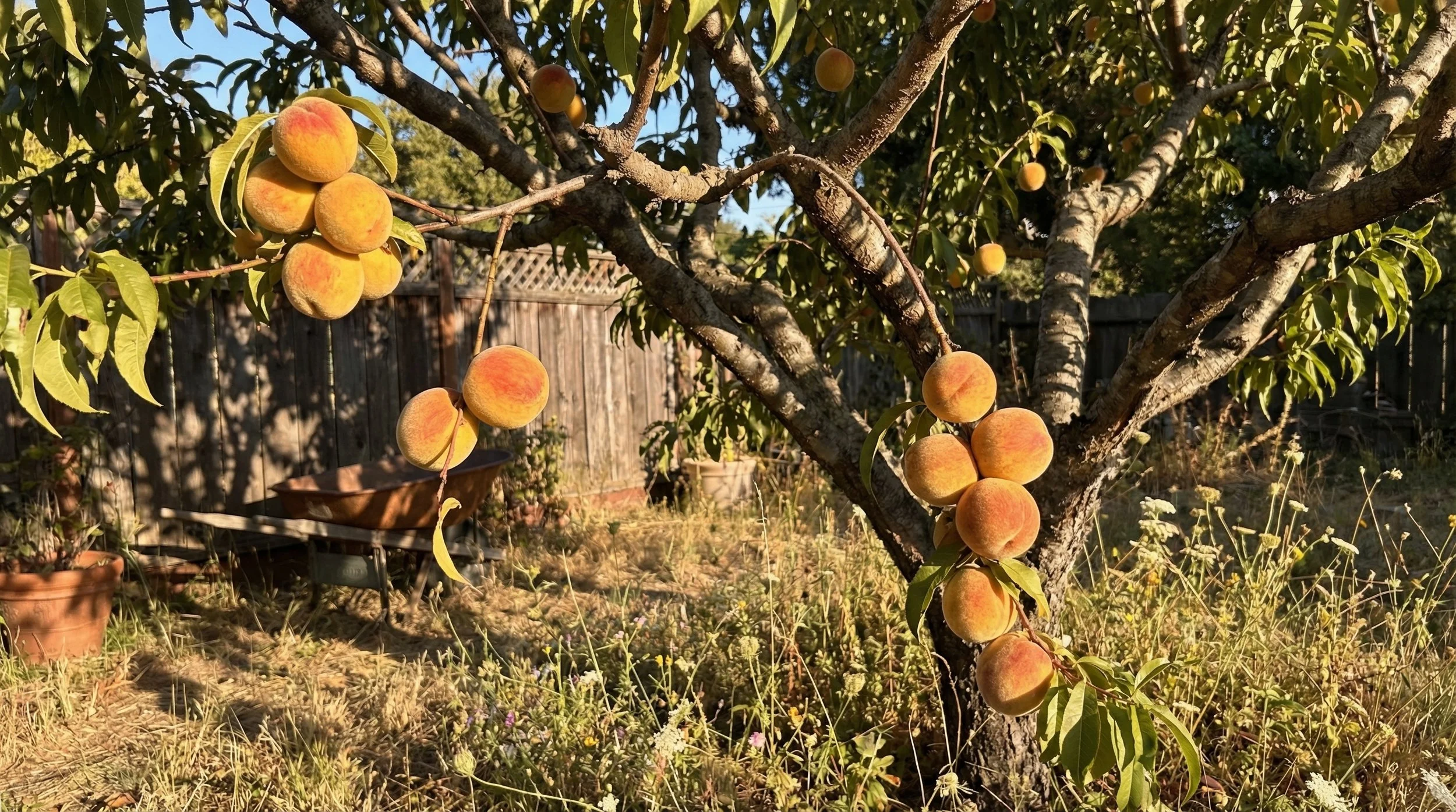
Stone fruits (peaches, nectarines, plums, and apricots) represent some of the most rewarding trees you can grow in Santa Cruz County. When you bite into a tree-ripened peach still warm from the sun, you understand why home gardeners devote the effort these trees require. Commercial stone fruit is picked hard for shipping and never develops the flavor of fruit ripened on the branch.
The challenge is that stone fruits, like apples, need winter chill to produce properly, and they are more susceptible to fungal diseases in our foggy, humid coastal climate. Success depends on choosing low-chill varieties suited to your specific microclimate and staying ahead of disease pressure through good cultural practices.
This guide covers variety selection, planting, and care for peaches, nectarines, plums, and apricots across Santa Cruz County's diverse growing conditions.
Chill Requirements for Stone Fruit
Stone fruits evolved in continental climates with cold winters and hot summers. During winter dormancy, these trees require a specific number of hours between 32°F and 45°F (chill hours) before they can break dormancy and fruit normally in spring. Without adequate chill, trees exhibit delayed leafing, poor fruit set, and reduced fruit quality.
UC Davis fruit specialists note that the number of chilling hours needed for normal development varies by variety and species, and advise checking with local nurseries or farm advisors. As a working guide, Traditional peach and nectarine varieties often need 600 to 1,000 chill hours, while many plum varieties require 500 to 900 hours. Apricots generally need 300 to 700 hours depending on variety.
Santa Cruz County's coastal fog belt (Aptos, Capitola, Live Oak, westside Santa Cruz) typically accumulates only 200 to 400 chill hours annually. Inland valleys (Scotts Valley, Soquel hills) see 400 to 600 hours, while mountain areas (Boulder Creek, Ben Lomond) may reach 600 to 800 hours in cold years.
This means coastal gardeners need to select low-chill varieties specifically bred for mild winter climates, while inland and mountain gardeners have more flexibility. Planting a traditional 'Elberta' peach on the coast will result in years of frustration and little to no fruit.
Peaches and Nectarines for Santa Cruz County
Peaches and nectarines are genetically identical except for a single gene controlling skin fuzz. Both require similar growing conditions and chill hours, so they can be selected interchangeably based on your preference for fuzzy or smooth-skinned fruit.
Low-Chill Varieties for Coastal Areas (Under 400 Chill Hours)
Tropic Snow (peach, 200 hours) is perhaps the most reliable peach for coastal Santa Cruz. This white-fleshed freestone produces sweet, aromatic fruit in late June to early July. The low chill requirement means it performs well even in mild winters. Tropic Snow is self-fertile, so you need only one tree for pollination.
Bonita (peach, 250 hours) produces yellow-fleshed freestone fruit with classic peach flavor. It ripens in mid-July and requires minimal chill to fruit reliably. Like most peaches, Bonita is self-fertile.
Desert Gold (peach, 200-300 hours) is an early-season yellow peach that ripens in late May to early June, one of the earliest peaches to harvest. The fruit is smaller than some varieties but has good flavor. This variety performs well in coastal microclimates.
Panamint (nectarine, 250-300 hours) is a yellow-fleshed freestone nectarine with excellent flavor. It ripens in late July and is one of the most recommended nectarines for mild coastal California. The fruit has a red blush over yellow background and outstanding sweetness.
Arctic Star (nectarine, 300 hours) produces white-fleshed fruit with a distinctive sweet, subacid flavor that many gardeners prefer to traditional yellow nectarines. It ripens in early June and is self-fertile.
Moderate-Chill Varieties for Inland and Mountain Areas (400-600 Chill Hours)
Gardeners in Scotts Valley, Soquel, and the sunny exposures of the San Lorenzo Valley can grow a wider range of peaches and nectarines. These varieties offer improved flavor and productivity for those with adequate chill accumulation.
Red Baron (peach, 500 hours) produces large, yellow-fleshed freestone fruit with exceptional flavor in late July. Beyond its excellent fruit, Red Baron is prized for its showy double red flowers in spring, making it both productive and ornamental.
O'Henry (peach, 750 hours) is pushing the limit for most Santa Cruz County locations but can succeed in the coldest mountain microclimates. This late-season (August) yellow freestone is considered one of the best-flavored commercial peaches. Plant only if your location consistently accumulates 700+ chill hours.
Fantasia (nectarine, 500-600 hours) is a large, yellow freestone with excellent flavor ripening in late July. It is one of the most widely grown nectarine varieties in California and performs well in inland Santa Cruz County gardens.
Independence (nectarine, 700 hours) produces deep red, flavorful fruit and is suited only to mountain areas with reliable chill accumulation. The fruit ripens in mid-July with a perfect balance of sweetness and acidity.
Plums for Santa Cruz County
Plums as a group offer more diversity than peaches, with Japanese types (round, sweet, eaten fresh), European types (oval, often dried as prunes), and native hybrids each having different characteristics and chill requirements.
Japanese plums generally require less winter chill than European types, making them better suited to coastal Santa Cruz. However, most Japanese plums need a pollinator of a different variety for good fruit set.
Japanese Plums for Coastal and Inland Gardens
Santa Rosa (plum, 400 hours) is California's most famous plum, developed by Luther Burbank in Santa Rosa. It produces large, red-skinned fruit with amber flesh and tangy-sweet flavor. Santa Rosa is partially self-fertile but produces better crops with a pollinator like Burgundy or Beauty. Ripens late June to early July.
Beauty (plum, 250 hours) is an excellent low-chill choice for coastal gardens. This early-season plum (late May to June) produces bright red fruit with amber flesh and sweet flavor. Beauty pollinates well with Santa Rosa.
Burgundy (plum, 250-300 hours) produces small, dark red fruit with sweet flavor and ripens over an extended period in June and July. Its low chill requirement makes it reliable in coastal areas. Burgundy pollinates Santa Rosa and is partially self-fertile.
Satsuma (plum, 300-400 hours) is distinctive for its blood-red flesh, which makes beautiful jams and preserves. The fruit has firm texture and mild, sweet flavor, ripening in late July. Satsuma needs a pollinator (Santa Rosa or Beauty work well).
Elephant Heart (plum, 400-500 hours) produces very large, heart-shaped fruit with deep red flesh and rich flavor. This late-season plum (August) is worth growing if your location has adequate chill. It needs a pollinator.
European Plums (Prunes)
European plums require more chill (generally 700+ hours) and are best suited to mountain areas of Santa Cruz County. However, a few varieties have lower requirements.
Improved French Prune (500-600 hours) produces the classic drying plum with sweet, rich flavor. It ripens in August and is self-fertile. This variety succeeds in inland Scotts Valley and similar locations with moderate chill.
Apricots for Santa Cruz County
Apricots are perhaps the trickiest stone fruit in coastal California, not because of chill requirements (many varieties need only 300 to 500 hours) but because they bloom very early (February) when rainy weather promotes brown rot. The humid coastal climate creates persistent disease pressure that makes consistent apricot production challenging.
Inland and mountain gardeners typically have better success with apricots due to lower humidity and reduced disease pressure during bloom. Even so, selecting disease-resistant varieties and practicing good sanitation helps significantly.
Recommended Apricot Varieties
Blenheim (Royal) (apricot, 400-500 hours) is California's legendary apricot, once covering the Santa Clara Valley before development. The small to medium fruit has intense, complex apricot flavor that commercial varieties cannot match. Blenheim is self-fertile and ripens in early June. This variety can succeed in Scotts Valley, Soquel, and similar inland microclimates but often struggles in the coastal fog belt.
Gold Kist (apricot, 300 hours) was developed specifically for mild California climates and requires significantly less chill than Blenheim. The fruit is large with good flavor (though not quite matching Blenheim's intensity). Gold Kist is self-fertile and ripens in late May to early June. This is the most reliable apricot for coastal Santa Cruz.
Katy (apricot, 300-400 hours) produces large, flavorful fruit that ripens early (mid to late May). The tree has some resistance to late frost damage due to its later bloom timing. Katy is self-fertile and a good choice for marginal apricot territory.
Robada (apricot, 500 hours) is noted for excellent fresh-eating quality with rich, aromatic flavor. It ripens in early June and is self-fertile. Best for inland gardens with reliable chill.
Stone Fruit Variety Quick Reference
| Variety | Type | Chill Hours | Harvest | Pollinator Needed? | Best For |
|---|---|---|---|---|---|
| Tropic Snow | Peach | 200 | Late June | No | Coastal fog belt |
| Panamint | Nectarine | 250-300 | Late July | No | Coastal to inland |
| Beauty | Plum | 250 | Late May | No (helps Santa Rosa) | Coastal fog belt |
| Santa Rosa | Plum | 400 | Late June | Partial (better with Beauty) | Inland valleys |
| Gold Kist | Apricot | 300 | Late May | No | Coastal (most reliable) |
| Blenheim | Apricot | 400-500 | Early June | No | Inland only |
Site Selection and Planting
Stone fruits need full sun (at least 6 to 8 hours of direct sunlight daily) to produce quality fruit. In our coastal fog belt, this means south-facing exposures away from buildings or large trees. Trees planted in insufficient light produce poor fruit with reduced sugar content.
Soil drainage is critical. Stone fruits are highly susceptible to root diseases in waterlogged conditions. If your soil holds water, plant in raised mounds or berms to improve drainage. Heavy clay soils benefit from generous amendment with compost at planting time.
For complete bare root planting instructions, see our guide to Bare Root Fruit Trees: A Santa Cruz County Planting Guide. Winter (December through February) is the ideal planting time when bare root trees are available at nurseries.
Space standard stone fruit trees 15 to 20 feet apart. Semi-dwarf varieties can be planted 10 to 15 feet apart. In small gardens, consider genetic dwarf varieties that grow only 5 to 6 feet tall and can even be grown in large containers.
How Should You Prune Stone Fruit for Production?
Stone fruits produce their best crops on year-old wood (branches that grew the previous season). Understanding this helps you prune for maximum production.
Peaches and nectarines require the heaviest pruning of any fruit trees. Each winter, remove about 50% of the previous year's growth to stimulate new fruiting wood and maintain manageable tree size. Without aggressive pruning, trees become leggy with fruit production moving farther from the center.
Plums need less severe pruning than peaches. Focus on removing crossing branches, water sprouts, and dead wood while maintaining an open center that allows light and air circulation.
Apricots produce on short fruiting spurs that remain productive for several years. Prune lightly, removing only dead, diseased, or crossing branches. Heavy pruning stimulates excessive vegetative growth at the expense of fruit production.
For detailed pruning techniques, see our article on Pruning and Training Fruit Trees in Santa Cruz County.
Disease Management in Our Humid Climate
Coastal Santa Cruz's fog and humidity create persistent challenges for stone fruit growers. The three major diseases to manage are peach leaf curl, brown rot, and bacterial canker.
Peach Leaf Curl
Peach leaf curl causes dramatic puckered, reddened leaves on peaches and nectarines in spring. While visually alarming, a single year of moderate infection rarely kills trees. However, repeated severe infections weaken trees and reduce fruit production.
UC IPM recommends a single dormant spray of copper fungicide (Bordeaux mixture or fixed copper) applied in fall after leaves drop or in late winter before buds swell. Timing is critical: once buds begin to open, sprays are ineffective. In coastal Santa Cruz, spray in late November or December, and again in late January if heavy rains wash away the first application.
Some peach varieties show improved resistance to leaf curl. 'Frost' (400 chill hours) and 'Q-1-8' are among the most resistant, though they are less commonly available than standard varieties.
Brown Rot
Brown rot fungus attacks blossoms and fruit, causing flowers to turn brown and stick to branches, and fruit to develop spreading brown soft spots. The disease thrives in wet, humid conditions during bloom and as fruit ripens.
Management involves multiple strategies:
Remove all mummified fruit (dried, shriveled fruit) from trees and ground in winter, as these harbor disease spores
Prune to maintain open canopy for air circulation
Spray sulfur or copper fungicide at early bloom if wet weather is forecast
Thin fruit to prevent clustering, which promotes disease spread
Bacterial Canker
Bacterial canker causes sunken, oozing areas on bark and can girdle and kill branches or entire young trees. The disease enters through wounds (including pruning cuts) and is most active during cool, wet weather.
Avoid pruning during rainy periods. If you must prune during questionable weather, allow cuts to dry before rain if possible. Young trees are most susceptible; established trees often tolerate low levels of infection.
Thinning Fruit for Better Quality
Stone fruits notoriously overproduce fruit, and without thinning, you will harvest a tree full of marble-sized peaches with poor flavor. Thinning also prevents the branch breakage that occurs when heavy fruit loads stress limbs.
Thin peaches and nectarines when fruitlets are marble-sized (typically May), leaving one fruit every 6 inches along branches. Yes, this means removing most of the developing fruit. The remaining fruit will grow larger and develop better flavor.
Plums and apricots benefit from thinning to 4 to 6 inches between fruit, though they are slightly less sensitive to overcropping than peaches.
Harvest and Storage
Stone fruit quality depends entirely on tree ripening. Unlike apples, which improve in storage, stone fruits must be picked at peak ripeness for best flavor. Unfortunately, fully ripe stone fruit is extremely perishable.
Signs of ripeness vary by variety but generally include:
Background color change (green undertones fade to yellow or cream)
Slight softening at the shoulder (where fruit attaches to stem)
Fragrance develops (ripe peaches and apricots are aromatic)
Fruit separates easily from tree with slight twist
Ripe stone fruit keeps only 3 to 5 days refrigerated. Plan to eat, share, or process your harvest quickly. Freezing, canning, and drying are traditional preservation methods.
Frequently Asked Questions
Can I grow peaches in the fog belt near the coast? Yes, with the right variety selection. Choose peaches requiring 300 or fewer chill hours, such as Tropic Snow, Desert Gold, or Bonita. These low-chill varieties were bred for mild coastal California and similar climates. Avoid varieties developed for traditional peach-growing regions with cold winters.
Why do my plum trees bloom but never set fruit? Most Japanese plums (Santa Rosa, Satsuma, Elephant Heart) need a different plum variety nearby for cross-pollination. Unlike peaches, which are self-fertile, plums typically need a pollinator. Plant at least two compatible varieties or ensure a neighbor has a plum tree within bee-flying range (about 300 feet).
What causes the red, puckered leaves on my peach tree? This is peach leaf curl, a fungal disease that infects during cool, wet weather when buds are swelling in late winter. The disease can only be prevented (not cured once symptoms appear) by applying copper fungicide during dormancy, before buds open. Spray in late November or December and again in late January for best protection.
Is it worth growing apricots in Santa Cruz? Apricots are challenging in coastal areas due to brown rot during their early bloom period (February), when rains and humidity are common. Inland gardens (Scotts Valley, Soquel) have better success. If you want to try apricots on the coast, choose 'Gold Kist' for its low chill requirement and plant in the warmest, driest spot in your garden.
My stone fruit trees have oozing sap and dead branches. What is wrong? This sounds like bacterial canker, a common problem in cool, wet climates. The bacteria enter through wounds and are most active during rainy periods. Prune out affected branches in dry weather, cutting well below visible damage. Avoid pruning during the rainy season when fresh cuts are vulnerable to infection.
When should I prune peach and nectarine trees? Prune peaches and nectarines in late winter while still dormant but after the coldest weather has passed (late January through mid-February in Santa Cruz County). Peaches need aggressive annual pruning, removing about half of the previous year's growth to stimulate new fruiting wood and maintain tree size.
How do I know when stone fruit is ripe enough to pick? Look for background color change (green fading to yellow or cream), slight softening at the stem end, and developing fragrance. Ripe fruit separates easily with a gentle twist. Peaches should feel slightly soft at the "shoulder" but not mushy. When in doubt, taste one. Underripe stone fruit never develops full sweetness off the tree.
What rootstock is best for stone fruit in Santa Cruz County? Citation (Prunus insititia hybrid) is widely recommended for its tolerance of wet soils and resistance to root-knot nematode. Lovell (peach seedling rootstock) performs well in lighter soils with good drainage. Nemaguard, common in commercial orchards, works in well-drained sites but struggles in heavy clay. Ask your nursery what rootstock is used.
Free Resources
Download these guides to help with your stone fruit trees:
Seasonal Planting Calendar for bare root planting timing
For all downloadable resources, visit Your Garden Toolkit.
