

Growing California Poppies in Santa Cruz County
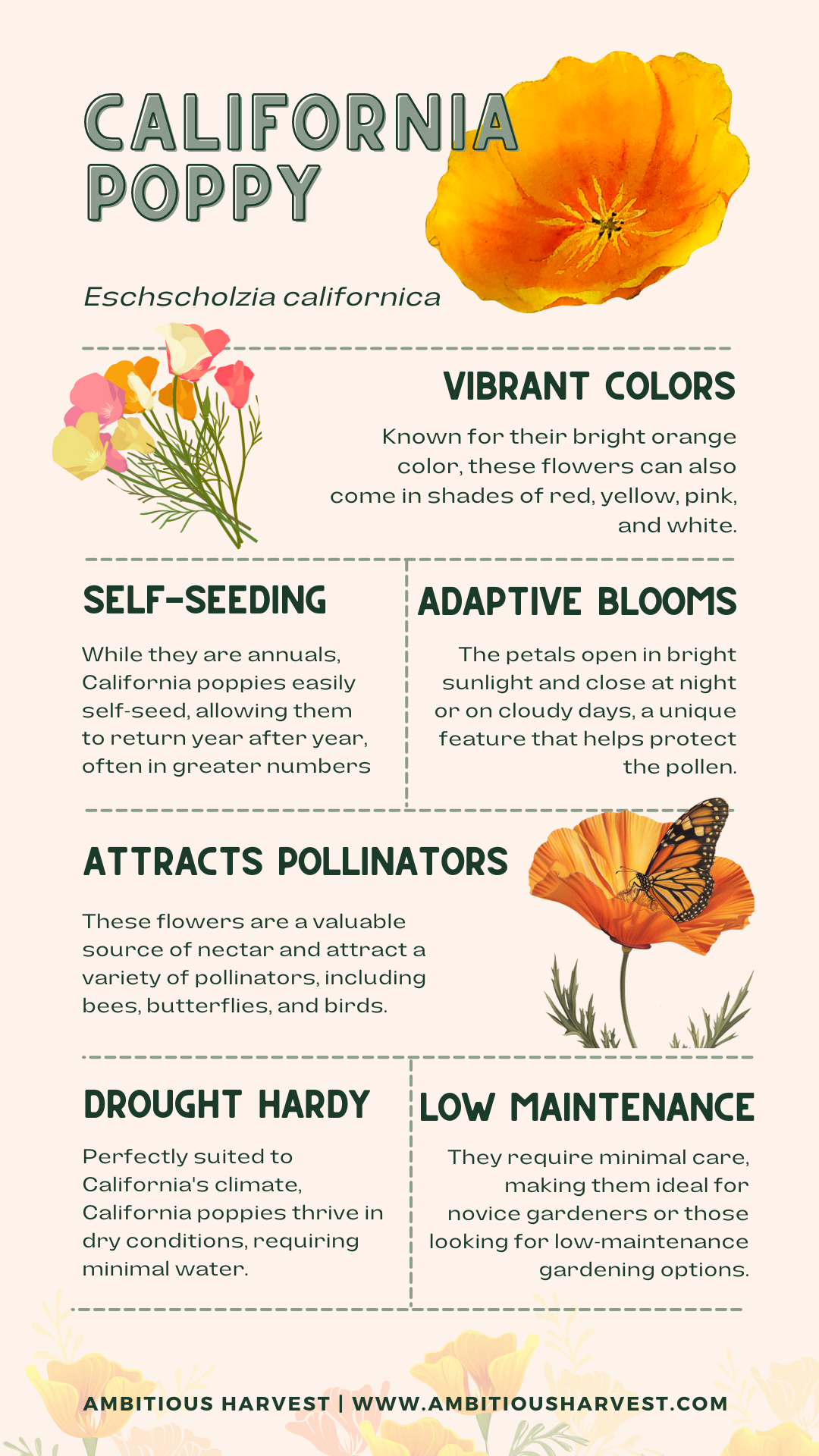
Nothing says California quite like a hillside ablaze with orange poppies. These iconic wildflowers have graced our state's landscapes for thousands of years, their brilliant blooms closing each evening and unfurling again with the morning sun. If you've ever driven Highway 1 on a spring day and pulled over to admire a meadow of gold, you've experienced the magic of Eschscholzia californica.
For Santa Cruz County gardeners, California poppies offer something rare: effortless beauty. Scatter seeds in fall, and by spring you'll have pools of sunset-orange flowers that bloom for months, support native bees, reseed themselves year after year, and ask absolutely nothing in return. No watering, no fertilizing, no fussing. Just flowers.
As the official state flower of California since 1903, poppies carry cultural significance alongside their beauty. April 6th is California Poppy Day, a sign of how deeply this flower is woven into our state's identity. Growing poppies connects your garden to California's natural heritage while providing one of the easiest, most rewarding flower displays possible.
Check our Garden Conditions Dashboard to see current soil temperatures and weather conditions for optimal planting timing, or browse our Garden Events Calendar for local native plant sales and wildflower walks.



What Is California Poppy?
What Makes California Poppy Special
California poppies are members of the Papaveraceae (poppy) family, though unlike some relatives, they do not produce the opium alkaloids of Papaver somniferum. They are still not a food plant, and no part of them should be eaten. The genus name Eschscholzia honors Johann Friedrich von Eschscholtz, a 19th-century naturalist who documented California's flora.
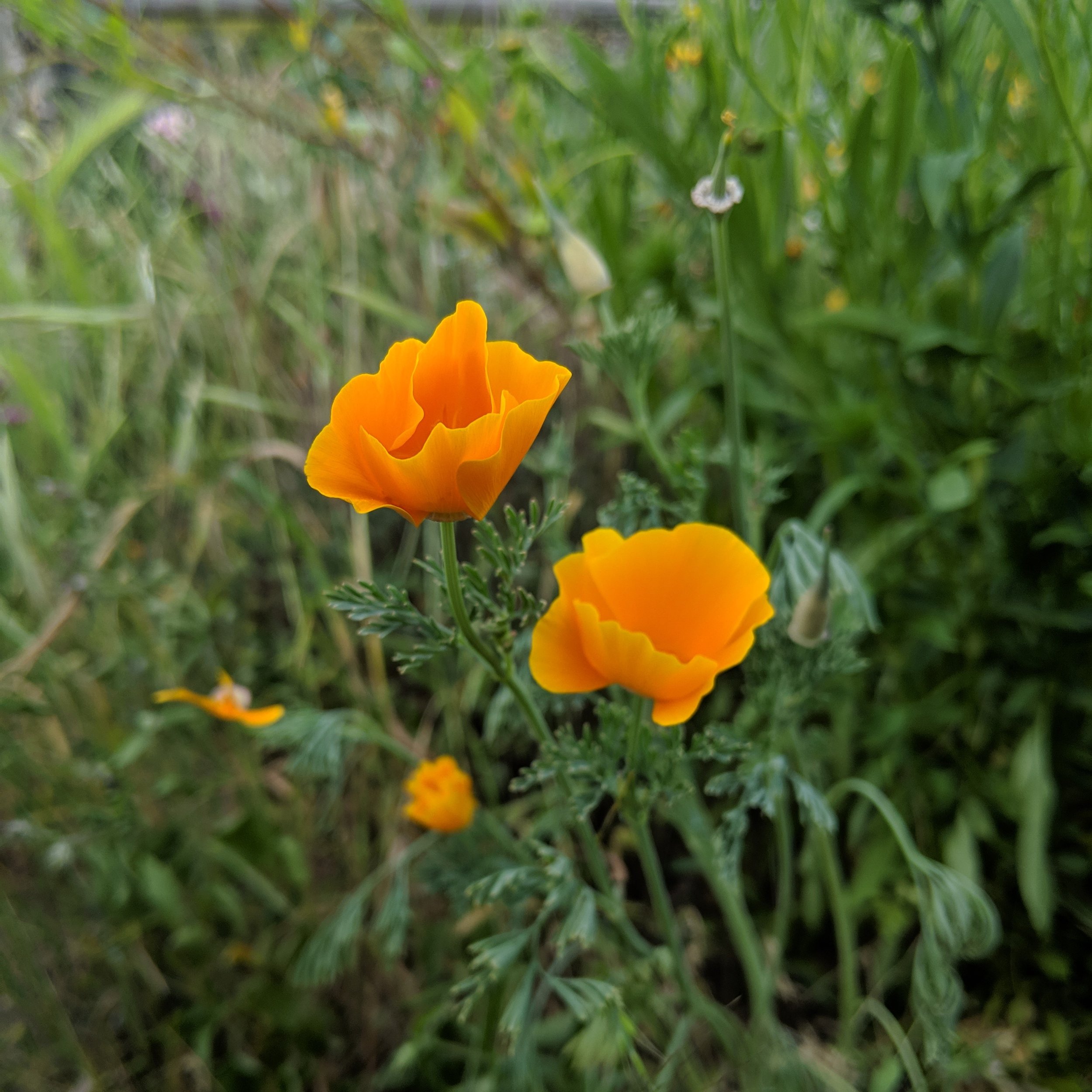
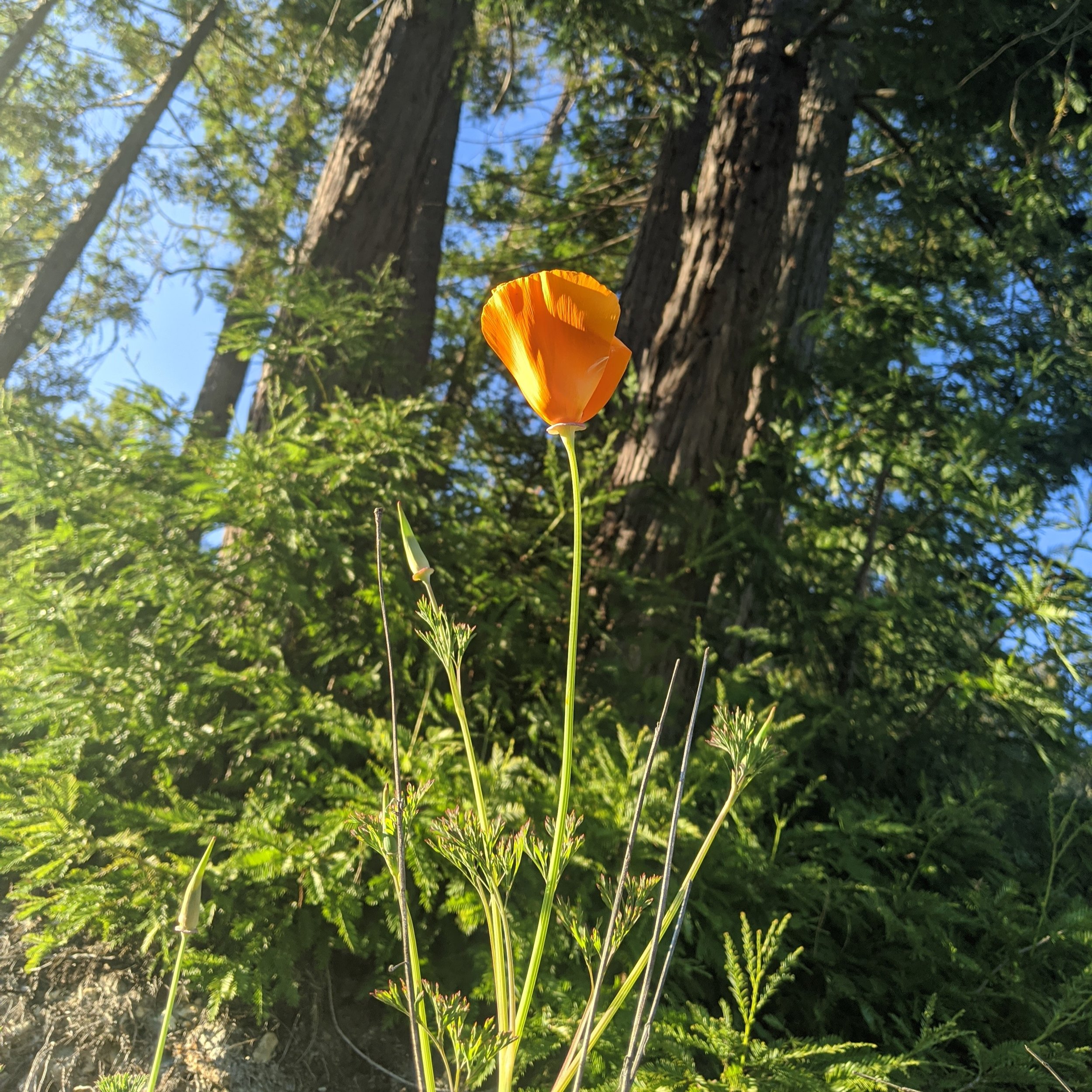
The flowers are unmistakable: four silky petals forming a cup shape, typically in brilliant orange but ranging from pale cream to deep red-orange. Each bloom lasts several days, and individual plants produce flowers continuously for months. On sunny days, the flowers open wide to welcome pollinators; on cloudy days and each evening, they close into elegant spiraled buds.
The foliage is equally distinctive. Finely divided blue-green leaves give the plant a ferny, delicate appearance that provides attractive texture even before flowering begins. The entire plant typically grows 12 to 18 inches tall and about 12 inches wide, forming low mounds that spread over time.
One of the poppy's most charming behaviors is its response to light. Watch a patch of poppies at dusk, and you'll see the blooms twist closed as the sun drops. By the next morning, they've reopened to greet the day. This movement is called nyctinasty, and it tracks light and temperature through the day.
Annual or Perennial?
In Santa Cruz County's mild climate, California poppies behave as short-lived perennials, often persisting for two to three years. However, they're most vigorous in their first year and tend to become woody and less floriferous with age. Most gardeners treat them as self-sowing annuals, allowing plants to set seed and create new generations rather than maintaining old plants.
This self-sowing habit is one of the poppy's greatest assets. Once established, a poppy planting usually keeps itself going for years, with new seedlings replacing aging plants, as long as weeds and grasses are kept out. Your initial seed investment produces years of flowers with no additional effort.
Color Varieties
While the classic orange is most beloved, California poppies come in a surprising range of colors:
Orange Tones (Traditional)
Classic orange (the most common wild color)
Deep orange-red ('Mikado')
Burnt orange ('Copper Pot')
Yellow Tones
Pale yellow ('Champagne and Roses' mix includes yellows)
Bright gold ('Golden West')
Cream ('White Linen', 'Alba')
Pink and Rose Tones
Soft pink ('Rose Chiffon')
Deep rose ('Carmine King', 'Purple Gleam')
Bicolored pink and white ('Ballerina' mix)
Red Tones
Red-orange ('Red Chief')
Deep red ('Thai Silk Rose Chiffon')
Mixed Varieties
'Mission Bells' offers a range of colors
'Silk' series provides semi-double flowers in various hues
While these color selections are beautiful, be aware that poppies readily cross-pollinate. Over generations of self-sowing, mixed color plantings typically revert toward orange, the genetically dominant color. If you want to maintain specific colors, you'll need to resow purchased seed periodically rather than relying entirely on self-seeding.
For maximum ecological authenticity, stick with the classic orange. It matches wild populations that local bees evolved alongside for thousands of years.
How Do You Grow California Poppy in Santa Cruz County?
When to Plant
Fall sowing (October through December) is ideal in Santa Cruz County. Seeds sown in fall germinate with winter rains, establish robust root systems during cool weather, and begin flowering in early spring. Fall-sown poppies typically bloom earlier, longer, and more prolifically than spring-sown plants.
Early spring sowing (February through March) is also successful, though plants may bloom later and have a shorter season. Spring sowing works well if you missed the fall window or want to fill gaps in an existing planting.
Avoid summer sowing. Poppy seeds require cool temperatures (50 to 65°F) to germinate and won't sprout in warm soil. Seeds sown in summer simply wait in the ground until conditions improve, essentially becoming a delayed fall sowing.
| Sowing Window | Soil Conditions | Germination & Establishment | Bloom Timing |
|---|---|---|---|
| Fall (October through December) | Cooling soil (50 to 65°F), first fall rains | Seeds germinate with fall/early winter rains; plants form low rosettes and develop deep taproots | Earliest and longest bloom; flowers begin early to mid-spring and continue into early summer |
| Early spring (February through March) | Soil cooling from winter but beginning to warm; still within 50 to 65°F | Germination in 10 to 21 days; root systems shallower than fall-sown plants | Bloom begins later (mid to late spring) and often ends earlier as heat arrives |
| Summer (late spring through summer) | Warm to hot soil (above 65°F); typically dry | Seeds sit dormant and wait until conditions cool; spotty germination | Effectively becomes delayed fall sowing; no same-season bloom |
Check our Garden Conditions Dashboard for current soil temperatures to time your planting perfectly.
Site Selection
California poppies demand two things: full sun and good drainage. Beyond these requirements, they're remarkably adaptable.
Full sun means at least 6 hours of direct sunlight daily, though more is better. In too much shade, poppies become leggy, bloom sparsely, and are prone to fungal issues.
Good drainage is essential. Poppies rot in waterlogged soil. Sandy, gravelly, or sloped sites are ideal. If your soil is heavy clay, plant poppies on mounds or slopes where water drains away, or improve drainage by mixing in generous amounts of coarse sand or gravel.
| Microclimate | Typical Conditions | Expected Bloom Behavior |
|---|---|---|
| Coastal (Aptos, Capitola, Live Oak, Santa Cruz beaches) | Cool, foggy mornings; mild days; sandy or well-drained soils; winter rain, dry summers | Bloom may start slightly later but often lasts longer into summer thanks to moderate temperatures |
| San Lorenzo Valley (Boulder Creek, Ben Lomond, Felton) | Hotter summer highs and colder winter lows than coast; redwood shade in canyons; mixed/clay soils | Full-sun exposures bloom early and may finish by late spring/early summer; shaded canyon bottoms are often too dark for strong flowering |
| Inland hills & valleys (Scotts Valley, Soquel hills) | Moderate inland climate; less fog than coast but cooler than Pajaro Valley; mixed soil textures | Fall or early spring sowing typically gives mid-spring to early-summer bloom; a good compromise between coastal and valley timing |
| Pajaro Valley (Watsonville) | Warmer valley conditions; strong agricultural soils; less fog, more heat accumulation | Poppies may germinate and bloom earlier than coastal plantings; bloom can end earlier as summer heat builds |
For detailed information about your specific area, see our Santa Cruz County Microclimates Guide.
Soil Preparation
Here's the good news: poppies prefer poor soil. Rich, amended garden beds actually work against you, producing lush foliage at the expense of flowers and promoting the soft growth that pathogens love.
Ideal conditions: Sandy, gravelly, or lean soil with excellent drainage and no added fertilizer or compost.
What to do with good garden soil: If your planting area has been amended and fertilized, simply stop amending. Over a season or two, fertility will decline to poppy-friendly levels. Alternatively, dilute rich soil by mixing in sand or gravel.
What to do with heavy clay: Improve drainage by planting on slopes or mounds, mixing in generous amounts of coarse sand or gravel (not fine sand, which can make clay worse), or creating raised beds.
| Conditions | What to Expect |
|---|---|
| Full sun + lean, well-drained soil | Compact plants, abundant blooms, long flowering season |
| Partial shade + rich soil | Leggy growth, fewer flowers, increased disease risk |
| Full sun + heavy clay (poor drainage) | Risk of root rot; improve drainage or plant on mounds |
| Full sun + sandy coastal soil | Excellent results; natural poppy habitat |
Planting Instructions
California poppies grow best when direct-seeded rather than transplanted. Their taproots resent disturbance, and transplanted poppies often struggle compared to direct-sown plants.
Preparing the site:
Remove existing vegetation from the planting area (weeds, old plants, debris)
Rake the soil surface lightly to create loose soil for seed contact
If your soil is compacted, loosen the top inch or two
Sowing seeds:
Scatter seeds over prepared soil at a rate of about 1 pound per 1,000 square feet for meadow plantings, or more densely for concentrated displays
Press seeds gently into the soil surface (walk over the area or tamp lightly)
Do not cover seeds deeply; they need light to germinate. A light dusting of soil (1/8 inch or less) is fine, but leaving them on the surface works too
Water gently to settle seeds (if fall rains haven't begun)
What to expect:
Seeds germinate in 10 to 21 days when soil temperature is 50 to 65°F
Seedlings emerge as pairs of narrow, grass-like seed leaves
True leaves appear within a few weeks, showing the characteristic feathery shape
Plants remain low rosettes through winter
Rapid growth and flowering begin as days lengthen in spring
Ongoing Care
California poppies need almost no care once established. Here's what to know:
Watering: Once seeds have germinated and plants are established (typically by late fall), stop watering entirely. Poppies survive on rainfall alone. Supplemental irrigation promotes disease and shortens plant life. Exception: during unusually dry winters, one or two deep waterings may help young seedlings, but err on the side of less water.
Fertilizing: Don't fertilize. Poppies bloom best in lean soil. Fertilizer produces floppy, disease-prone growth with fewer flowers.
Deadheading: Optional. Removing spent flowers can slightly extend bloom season and keeps plantings tidy. However, allowing some flowers to set seed ensures self-sowing for future years. A good compromise is to deadhead early in the season for extended bloom, then stop deadheading by late spring to allow seed production.
End of season: After flowering finishes (usually by June or July), plants decline and look increasingly ragged. You can leave them to drop seed naturally, or cut plants back and collect seeds for sowing elsewhere. Old plants eventually dry up and disappear.
| Problem | Likely Cause | Solution |
|---|---|---|
| Seeds don’t germinate | Sown in warm soil (above 65°F); seeds buried too deeply; poor seed-to-soil contact; old seed | Sow in fall or early spring when soil is cool; press seeds into the surface; avoid covering more than 1/8 inch; use fresh seed |
| Leggy, sparse plants | Insufficient sunlight (less than 6 hours of direct sun); too much competition from weeds | Move future seedings to full-sun sites; clear weeds thoroughly before sowing |
| Plants rot or collapse | Poor drainage or overwatering; heavy clay soils that stay wet | Plant on slopes or mounds; improve drainage; stop watering once established |
| Very short bloom season | Hot temperatures arriving early; shallow roots from late sowing | Prefer fall sowing for deeper roots; coastal sites naturally have longer seasons |
| Mixed colors turning orange | Open pollination and genetic dominance of orange | Enjoy the natural shift, or reseed periodically with purchased color mixes |
| Aphids on plants | Common in cool, moist spring weather | Spray off with water; let beneficial insects handle them; avoid excess nitrogen |
How Can You Create Stunning Poppy Displays?
Wildflower Meadow
The classic poppy experience is a mass planting that mimics California's famous wildflower displays. Here's how to create your own:
Site preparation: Choose the largest sunny, well-drained area available. Remove existing vegetation completely (this is key since poppies don't compete well with established grasses and weeds). Scalp the area down to bare soil.
Seed mix: For an authentic California wildflower meadow, combine California poppy seeds with other native wildflowers like sky lupine, tidy tips, baby blue eyes, and clarkia. Pre-mixed "California wildflower" blends are available, or create your own.
Maintenance: The biggest challenge is weed control during establishment. Hand-pull weeds as they appear during the first season, before they can set seed. Once your wildflowers establish a self-sowing cycle, they'll increasingly outcompete weeds.
Garden Beds and Borders
Poppies work beautifully in more formal settings too:
Border edging: A ribbon of orange poppies along a walkway or bed edge creates cheerful definition from spring through early summer.
Mixed plantings: Combine poppies with other drought-tolerant plants like lavender, California fuchsia, and native sages for a water-wise border with extended bloom.
Focal point patches: Even a small area (4 by 4 feet) planted densely with poppies makes an impact. Position where you'll see it from windows or seating areas.
Container Growing
Yes, you can grow poppies in containers, though they're not ideal subjects:
Use a large container (at least 12 inches deep) to accommodate the taproot
Choose fast-draining potting mix
Site in full sun
Allow soil to dry between waterings
Expect shorter plant life than in-ground plantings
Combining with Other Plants
California poppies pair naturally with:
Sky lupine (Lupinus nanus): Blue and orange, the classic California combination
Tidy tips (Layia platyglossa): Yellow and white flowers complement orange poppies
Clarkia (Clarkia species): Pink and purple tones extend the color range
California goldfields (Lasthenia californica): Masses of tiny yellow flowers blend beautifully
Native bunch grasses: Purple needlegrass and California fescue provide texture contrast
For non-native companions, consider:
Lavender: Similar water needs, complementary colors
Ornamental grasses: Texture contrast and movement
Succulents: Shared preference for dry conditions
What Are the Ecological Benefits of California Poppy?
Pollinator Support
California poppies produce abundant pollen (though no nectar) and are enthusiastically visited by native bees. Watch a poppy patch on a sunny morning, and you'll see bees diving into the cup-shaped flowers, emerging dusted with orange pollen.
Native sweat bees, mining bees, and bumblebees are particularly common visitors. While honeybees also work poppies, the flowers are especially valuable for our native bee species that co-evolved with them.
The pollen provides protein for bee reproduction and development. A healthy poppy stand can support significant bee populations during its bloom season. Learn more in our pollinator-friendly gardens guide.
Part of the Native Ecosystem
California poppies are native from southern Washington to Baja California, with California as their heartland. For thousands of years, they've been part of our local ecosystem, providing food for insects and seeds for birds and small mammals.
When you plant California poppies, you're adding a piece of native California to your garden, supporting the web of relationships between plants and wildlife that developed here over millennia. For more on designing with native species, see our guide to native garden design in Santa Cruz.
Soil Health
As taprooted plants, poppies can penetrate compacted soil, creating channels for water and air. When plants die and decompose, these channels remain, improving soil structure over time. Poppy seed is used in erosion control mixes, roadside plantings, and California restoration projects, mostly for quick cover rather than for soil building.
When Should You Harvest California Poppy Seeds?
One of the joys of growing poppies is collecting seeds to share or expand your plantings.
When to harvest: Wait until seed pods have fully dried on the plant, turning from green to tan or brown. The pods should feel papery and rattle when shaken.
How to harvest:
Cut or snap off dried seed pods
Place pods in a paper bag
Allow to dry completely (a week or two in a warm, dry location)
Shake the bag or rub pods gently to release seeds
Separate seeds from chaff by gently winnowing or using a fine mesh strainer
Storage: Store seeds in a cool, dry, dark location. Paper envelopes work well. Properly stored poppy seeds remain viable for several years, though germination rates decline over time.
California Poppy Law: Myth vs. Reality
Myth: "You can't pick California poppies because they're the state flower."
Reality: No law protects poppies specifically. California Penal Code Section 384a restricts cutting or removing plants from state and county highway rights of way, and from any land you do not own without the owner's written permission. It names no species. On your own property, you can grow, pick, harvest seeds, and even sell poppies freely. The state flower designation doesn't create legal restrictions on private property.
Where Can You Find California Poppy Seeds Locally?
California poppy seeds are widely available:
Renee's Garden Seeds (Felton): Right here in Santa Cruz County! Renee's offers high-quality poppy seeds in various colors and mixes.
Mountain Feed & Farm Supply (Ben Lomond): Carries wildflower seeds including California poppies.
San Lorenzo Garden Center (Santa Cruz): General nursery with seasonal seed availability.
Sierra Azul Nursery (Watsonville): Native plant nursery that often carries poppy seeds.
CNPS Santa Cruz Chapter Plant Sales: The California Native Plant Society sales sometimes include poppy seeds.
Felton Seed Lending Library: Free seed library at the Felton Branch Library (6121 Gushee Street) where gardeners can borrow seeds.
Check our Garden Events Calendar for upcoming native plant sales and seed swaps in Santa Cruz County.
Frequently Asked Questions About Growing California Poppy
When do California poppies bloom, and how long does the bloom last?
In most of California, California poppies bloom from late winter into spring, with the heaviest show from March through May. Along the cool coast, scattered blooms can continue into summer. The flowers close on cloudy days and in the evening, then reopen in full sun, so the patch looks fullest on bright spring afternoons.
Are California poppies annuals or perennials?
California poppy is a short-lived perennial in the wild, but most gardeners treat it as an annual or a self-seeding wildflower. In mild, frost-free parts of California it can live for a few years, resting through the hot, dry months and returning with the cool, wet season. Because it reseeds so easily, a patch often persists for years even when individual plants are short-lived.
Do California poppies need full sun, or will they grow in shade?
They need full sun to flower well. In shade the plants stretch, flop, and produce far fewer blooms, and the flowers tend to stay closed. Poppies also prefer lean, well-drained soil, so skip the rich compost and heavy watering. This is one plant that flowers best with a little neglect.
When is the best time to plant California poppy seeds in Santa Cruz?
Fall (October through December) is ideal. Seeds sown in fall germinate with winter rains, establish strong roots during cool weather, and bloom vigorously in spring. Early spring sowing (February through March) also works but typically produces later, shorter bloom seasons. Avoid summer sowing since poppy seeds won't germinate in warm soil. Check our Garden Conditions Dashboard for current soil temperatures.
Why didn't my poppy seeds germinate?
The most common reasons are: sowing in warm soil (wait for temperatures below 65°F), burying seeds too deeply (they need light; sow on or barely below the surface), poor seed-to-soil contact (press seeds firmly after scattering), or old seeds with poor viability (buy fresh seeds if yours are several years old).
Can I transplant California poppies?
It's possible but not recommended. Poppies develop taproots that resent disturbance, and transplanted poppies often struggle or die. If you must transplant, do so when plants are very young (just a few true leaves), disturb roots as little as possible, and water well after transplanting. Direct sowing is far more successful.
Why are my poppies flowering but the plants look leggy and sparse?
Insufficient sunlight is almost always the cause. California poppies need full sun (at least 6 hours daily) for compact growth and abundant flowering. Plants in partial shade become stretched and sparse. If your current location is too shady, try a sunnier spot next year.
Do California poppies reseed themselves?
Yes, enthusiastically. Once established, poppies self-sow reliably, creating new generations each year. Allow some flowers to mature and drop seeds at the end of the bloom season. Over time, a poppy planting can keep itself going for years without additional seeding, provided weeds and grasses do not crowd it out.
Is it legal to pick California poppies?
On your own property, absolutely. The California Penal Code covers state and county highway rights of way, and it also covers private land: taking plants from property you do not own requires the owner's written permission. You can grow, pick, harvest seeds, and even sell poppies from your own garden. The state flower designation doesn't create legal restrictions on private property.
Why are my mixed-color poppies turning all orange?
Orange is genetically dominant in wild California poppies, and color selections are not stable. When different colors cross-pollinate, which happens readily, seedlings drift back toward the wild orange. Over several generations of self-seeding, mixed plantings revert toward orange. To maintain other colors, resow with purchased seed periodically rather than relying solely on self-seeding.
Do California poppies attract pollinators?
Yes, especially native bees. Poppies produce abundant pollen (though no nectar) and are enthusiastically visited by bumblebees, sweat bees, mining bees, and other native species. The cup-shaped flowers make pollen easily accessible. A patch of poppies can support significant bee populations during bloom season.
How tall do California poppies grow?
Most California poppies reach 12 to 18 inches tall and about as wide. In lean soil and full sun they stay compact and upright, while rich, regularly watered garden beds push taller growth that tends to flop. Coastal forms often stay lower and tighter than inland plants.
Free California Poppy Growing Resources
Seasonal Planting Calendar: Month-by-month guide to planting times for Santa Cruz County, including wildflower seeding windows.
Water-Wise Gardening Guide: Comprehensive strategies for reducing water use in your Santa Cruz garden while keeping plants thriving.
Know Your Microclimate Worksheet: Identify your garden's specific growing conditions for better plant selection.
Companion Planting Guide: Learn which plants grow well together, including wildflower combinations.
Ready to Bring California's Golden Beauty Home?
California poppies ask for less than almost anything else you can plant. Scatter seeds in fall on any sunny, well-drained spot. Don't water. Don't fertilize. Don't fuss. By spring, you'll have brilliant orange flowers that last for months, support native bees, and return year after year without additional work.
Few plants deliver so much beauty for so little investment. And unlike exotic ornamentals, poppies connect your garden to the California landscape that stretches from our local hillsides to the legendary superbloom sites of the desert valleys.
This fall, grab a packet of seeds from Renee's Garden in Felton or Mountain Feed in Ben Lomond. Find a sunny patch of ground. Scatter, press, walk away. Next spring, when those silky orange petals open to greet the morning sun, you'll understand why California chose this flower as its own.
