Growing Sticky Monkey Flower in Santa Cruz County
A few of the product links in this guide are affiliate links. If you buy through one, Ambitious Harvest may earn a small commission at no extra cost to you, which helps keep these guides free. We only point to gear we would use in our own Santa Cruz garden. As an Amazon Associate, we earn from qualifying purchases. Read our full disclosure.
If you've hiked anywhere in Santa Cruz County during spring or summer, you've likely passed sticky monkey flower without knowing its name. Those cheerful tubular flowers in shades of orange, yellow, and salmon peek out from trailside slopes, coastal bluffs, and chaparral edges throughout our region. What you might not have noticed is the constant traffic of hummingbirds darting between blossoms.
For home gardeners, sticky monkey flower offers something remarkable: a tough, drought-tolerant native that blooms for months, attracts hummingbirds like a magnet, and asks almost nothing in return. In a region where water conservation matters, this plant delivers abundant beauty on minimal resources.
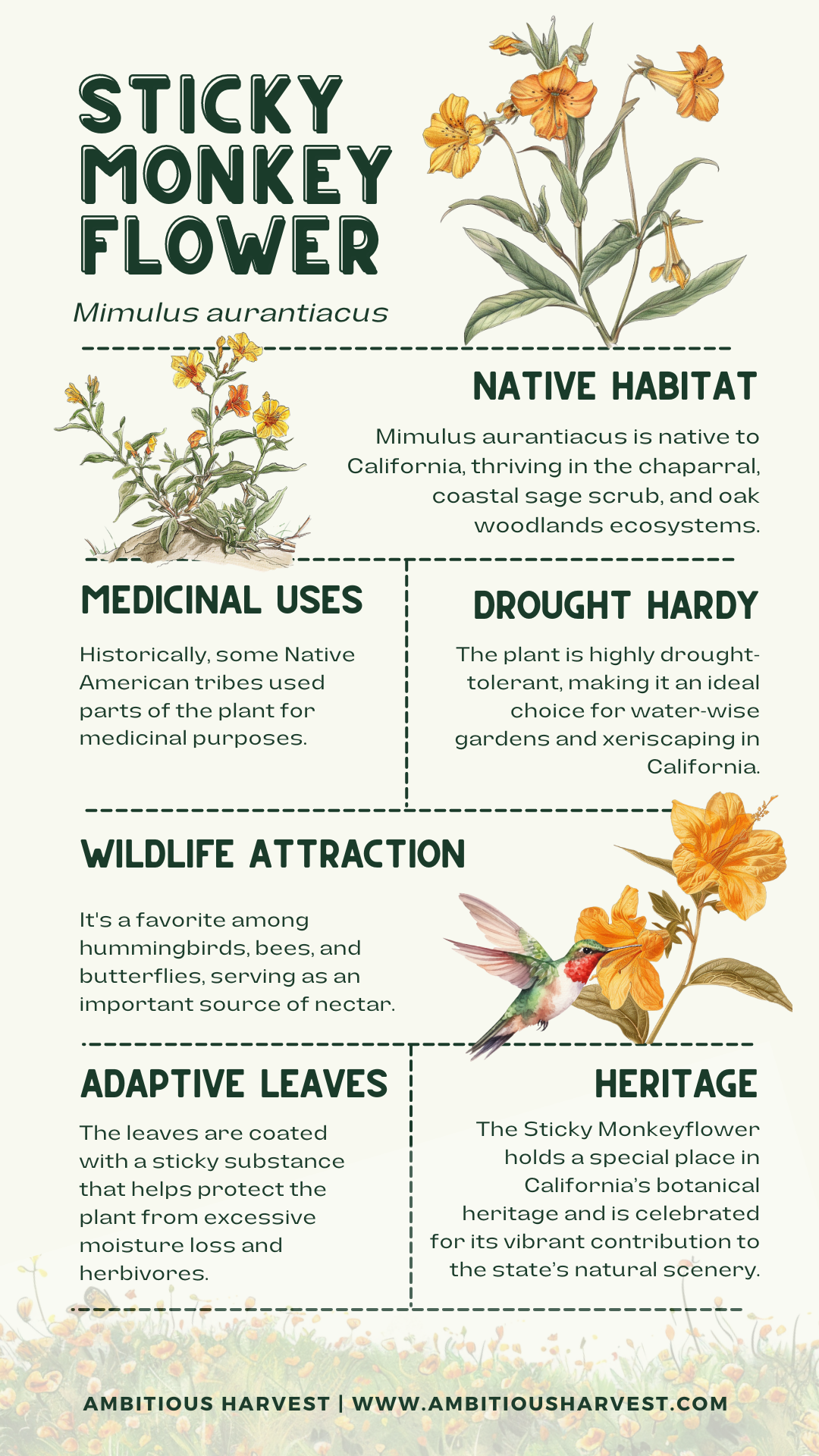
The common name comes from the flower's shape (which some see as resembling a grinning monkey face) and the sticky, resinous leaves that help the plant conserve moisture during our long dry summers. That stickiness also gives the foliage a light, pleasant fragrance when brushed.
Unlike many natives that bloom briefly and then fade into the background, sticky monkey flower provides color from early spring well into fall, with peak flowering in late spring and summer. In mild coastal areas, it may bloom sporadically year-round. For a water-wise garden that doesn't sacrifice color, it's hard to find a better choice.


What Is Sticky Monkey Flower?
A Note on Names
You may encounter this plant under different scientific names. For decades, it was classified as Mimulus aurantiacus. Recent botanical research moved it (along with most California monkey flowers) to the genus Diplacus, so the current accepted name is Diplacus aurantiacus. Nurseries and references may use either name, and both refer to the same plant. Some sources also call it bush monkey flower or orange bush monkey flower.
What Makes Sticky Monkey Flower Special
Sticky monkey flower is a small, mounding shrub typically growing 1 to 4 feet tall and wide. The narrow, lance-shaped leaves are dark green and notably sticky with resinous glands that help reduce water loss. This adaptation allows the plant to thrive during our dry summers without irrigation.
The tubular flowers flare open at the tips into two-lipped faces. While orange is the most common wild color, natural populations show considerable variation, from pale cream and butter yellow to deep orange-red and salmon pink. This natural color diversity has led to numerous cultivated selections.
Each flower lasts several days, and the plant produces new blooms continuously over a long season. Spent flowers drop cleanly, though light deadheading can encourage even more prolific blooming.
The flower shape is perfectly adapted for hummingbird pollination. The tubular form fits a hummingbird's bill precisely, and the nectar reward keeps them coming back. Anna's hummingbirds (our year-round residents) and Allen's hummingbirds (spring and summer visitors) both frequent sticky monkey flower enthusiastically.
Color Varieties and Cultivars
While the straight species produces orange flowers, selective breeding and natural variation have produced plants in a range of colors:
Orange and Red-Orange Tones
The straight species (Diplacus aurantiacus) typically blooms in warm orange shades
'Trish' offers deep orange-red flowers on compact plants
Yellow Tones
Diplacus aurantiacus var. pubescens produces soft yellow flowers and occurs naturally in parts of the Bay Area
'Jelly Bean Gold' features clear yellow flowers
Salmon and Apricot Tones
'Pamela' produces lovely salmon-pink flowers
Natural populations sometimes include peachy-salmon variants
Red Tones
'San Gabriel' offers deep red flowers (this may be a hybrid with the related Diplacus puniceus)
When selecting cultivars, keep in mind that hummingbirds seem to prefer the warmer orange and red tones, though they'll visit flowers of any color.
How Do You Grow Sticky Monkey Flower in Santa Cruz County?
When to Plant
Fall (October through December) is the ideal planting time in Santa Cruz County. Fall planting allows roots to establish during the cool, rainy season, and plants will be ready to handle their first dry summer with minimal supplemental water.
Early spring planting (February through April) is also successful, though you'll need to provide some irrigation through the first summer.
Avoid summer planting. The stress of transplanting combined with heat and drought makes establishment difficult.
Site Selection by Microclimate
Coastal Areas (Aptos, Capitola, Live Oak, Santa Cruz beaches): Understanding your local microclimate helps with placement. Sticky monkey flower thrives here, appreciating the moderate temperatures and tolerating the fog. In these cooler areas, plants often bloom over an extended season and may flower sporadically year-round. Full sun produces the best flowering, though plants tolerate light afternoon shade.
San Lorenzo Valley Chaparral (Boulder Creek, Ben Lomond sunny exposures): This is prime sticky monkey flower territory, mimicking the plant's natural habitat. The warmer temperatures and excellent drainage on slopes create ideal conditions. Flowering may be more concentrated in spring and early summer, with plants going semi-dormant during the hottest periods.
Under the Redwoods (Felton, shaded canyons): Sticky monkey flower needs at least 4 to 6 hours of direct sun to bloom well. In heavily shaded redwood settings, plants become leggy and flower sparsely. Look for sunnier pockets or edges where more light penetrates.
Inland Valleys (Scotts Valley, Soquel hills): These moderate conditions suit sticky monkey flower well. Plants may appreciate light afternoon shade during the hottest summer weeks.
Pajaro Valley (Watsonville): The warmer conditions here work well, though ensure good drainage if soils are heavy. Full sun produces abundant flowers.
Soil Requirements
Sticky monkey flower tolerates a wide range of soil types, from sandy coastal soils to heavier inland clays, as long as drainage is adequate. It actually performs surprisingly well in clay soils compared to many California natives, though drainage remains important.
The key is avoiding waterlogged conditions, especially during summer. If your soil stays wet for extended periods, plant on a slope or mound, or amend the planting area with gravel to improve drainage.
Don't amend the soil with rich compost. Like many California natives, sticky monkey flower evolved in lean soils and performs better without high fertility. Rich soil promotes lush, floppy growth that's more susceptible to disease.
Light Requirements
Full sun (at least 6 hours of direct sunlight) produces the most compact growth and abundant flowers. Plants in partial shade become leggier and bloom less prolifically.
In our hottest inland areas, light afternoon shade can actually benefit plants by reducing heat stress during summer's peak, but morning sun is important for drying dew and preventing fungal issues.
Planting Instructions
Dig a hole twice as wide as the root ball but no deeper than the nursery container.
Check drainage if you're uncertain about your soil. Fill the hole with water and see how quickly it drains. If water sits for more than an hour, improve drainage or choose a different location.
Remove the plant from its container and gently loosen any circling roots. Sticky monkey flower has a relatively small root system compared to its above-ground size.
Position the plant so the top of the root ball is level with or slightly above the surrounding soil.
Backfill with native soil and firm gently. Don't amend with compost.
Water thoroughly to settle soil around roots.
Mulch lightly with gravel or wood chips, keeping mulch a few inches away from the stem.
Watering
First season: Water new plants deeply once weekly during dry weather until fall rains begin. This establishes the root system.
Second season: Water deeply every 2 to 3 weeks during summer if there's no rain. Plants should be mostly established by now.
Established plants: In most Santa Cruz locations, sticky monkey flower needs no supplemental water once established (typically by the third year). Plants may look somewhat stressed during late summer drought, possibly dropping some leaves, but this is normal and they recover quickly with fall rains.
In our hottest inland locations, occasional deep watering (once monthly) during extreme heat can keep plants looking better through summer, but it's not necessary for survival.
Critical point: Avoid frequent shallow watering. Like most California natives, sticky monkey flower prefers deep, infrequent irrigation that mimics our natural rainfall pattern. Constant moisture promotes root rot and other diseases.
Fertilizing
Skip the fertilizer. Sticky monkey flower is adapted to lean soils and doesn't need supplemental nutrients. Fertilizing promotes weak, leggy growth and can reduce flowering. If your soil is very poor (pure sand or heavily compacted), a light application of slow-release organic fertilizer in early spring won't harm plants, but it's rarely necessary.
Pruning
Sticky monkey flower benefits from occasional pruning to maintain shape and vigor. Here's how to approach it:
After flowering (late summer to early fall): Cut plants back by about one-third to one-half. This promotes bushier regrowth and prevents plants from becoming leggy and sparse in the center. Use hedge shears or hand pruners.
Light shaping anytime: Remove any dead or damaged branches whenever you notice them. Pinch or cut back overly long stems to maintain shape.
Renewal pruning: Older plants that have become woody and sparse can be cut back hard (to about 6 inches) in late fall or early winter. This is somewhat risky since not all plants recover, but it can rejuvenate a declining specimen. Well-established plants with healthy root systems usually regrow vigorously.
Avoid: Pruning during active flowering season, which reduces bloom. Also avoid heavy pruning during summer heat or drought stress.
What Are the Common Challenges With Sticky Monkey Flower?
Sticky monkey flower is generally easy, but a few issues can arise:
Legginess and sparse growth: Usually caused by too much shade or lack of pruning. Plants in insufficient light stretch toward sun and bloom poorly. Regular post-bloom pruning keeps plants compact and full.
Summer decline: In hot, dry conditions, plants may drop leaves or look generally stressed in late summer. This is normal and not cause for concern. Plants recover quickly with fall rains. If you find the late-summer appearance unappealing, site plants where other perennials will hide them during their off-peak period.
Short lifespan: Sticky monkey flower typically lives 5 to 10 years, sometimes longer. Individual plants eventually become woody, sparse, and less attractive. Plan for replacement by taking cuttings or allowing seedlings to establish nearby.
Root rot: Overwatering or poor drainage causes plants to decline and die. Symptoms include yellowing leaves, wilting despite moist soil, and eventual collapse. Prevention through proper siting and watering is the only solution.
Gophers: Our ever-present gophers will eat sticky monkey flower roots, though it's not their favorite food. In high-gopher areas, planting in gopher baskets provides protection.
Frost damage: While established plants tolerate temperatures into the low 20s°F, young plants and new growth can be damaged by hard freezes. In our coldest inland areas (Boulder Creek, Bonny Doon), provide protection during the first winter.
Why Does Sticky Monkey Flower Matter for Your Garden Ecosystem?
Hummingbird Haven
Sticky monkey flower is one of the best hummingbird plants for Santa Cruz gardens, period. The tubular flower shape, nectar production, and extended bloom season create an irresistible draw for these tiny birds.
Anna's hummingbirds, which live here year-round, visit sticky monkey flower whenever it's blooming. During spring and summer, Allen's hummingbirds join them. Plant several sticky monkey flowers, and you'll have regular hummingbird visitors throughout the growing season.
The orange and red color forms are most attractive to hummingbirds, though they'll visit flowers of any color once they discover the nectar source.
Native Bee Magnet
While hummingbirds get most of the attention, native bees also work sticky monkey flower enthusiastically. If you are building a pollinator-friendly garden, this is one of the best plants to include. Bumblebees are particularly common visitors, along with various smaller native bee species. The flowers' extended bloom season provides food during periods when many other plants have finished flowering.
Butterfly Host Plant
Sticky monkey flower serves as a larval host plant for several butterfly species, including the Common Buckeye and the Chalcedon Checkerspot. Female butterflies lay eggs on the foliage, and the caterpillars feed on leaves before pupating. If you notice some leaf damage from caterpillars, consider it a sign of ecological success rather than a problem.
Part of the Native Ecosystem
When you plant sticky monkey flower, you are adding a piece of our local native ecosystem to your garden. This plant co-evolved with our local pollinators, birds, and insects over thousands of years. The relationships are established; the wildlife knows how to use it. Native plants like this support far more biodiversity than non-native ornamentals.
For detailed growing and pest management information, the UC Integrated Pest Management Program maintains a helpful profile on monkey flower care. The UC Master Gardeners of Contra Costa County offer an excellent overview of the Diplacus genus and its garden value. For water use planning, the UC Davis WUCOLS database classifies sticky monkey flower as very low water use across California climate zones.
What Plants Pair Well With Sticky Monkey Flower?
Sticky monkey flower combines beautifully with other drought-tolerant plants that share similar growing requirements:
Native pollinator garden: Sticky monkey flower + California fuchsia (Epilobium canum) + buckwheat (Eriogonum) + native sages (Salvia). This combination provides hummingbird and bee food from spring through fall, with staggered bloom times.
Chaparral garden: Sticky monkey flower + manzanita + California lilac (Ceanothus) + toyon. A combination of shrubs in various sizes that mimics our native chaparral plant community.
Rock garden: Sticky monkey flower + California poppy + sedum + native bunch grasses. Low-water plants with contrasting textures and colors for sunny, well-drained slopes.
Mediterranean border: Sticky monkey flower + lavender + rosemary + society garlic. All thrive with minimal summer water and provide extended bloom in sunny locations.
Mixed native border: Sticky monkey flower + deer grass + Douglas iris + coral bells (Heuchera). A combination that works in partial shade edges.
Color echo planting: Pair orange sticky monkey flower with blue California lilac for a striking complementary color combination. Add yellow California poppy for a vibrant spring display.
Design Tips
Mass plantings of 3 to 5 plants create more visual impact than single specimens
Slope plantings show off the mounding form and help with drainage
Container growing works well for patios and small spaces (use fast-draining soil and infrequent deep watering)
Wildlife garden focal point plant several around a seating area to watch hummingbird activity up close
How Do You Propagate Sticky Monkey Flower?
Sticky monkey flower propagates easily from cuttings, making it simple to replace aging plants or share with friends.
Softwood Cuttings (Best Method)
Timing: Late spring through early summer, when plants are actively growing but before stems become woody.
Method:
Take 3 to 4 inch cuttings from non-flowering stem tips
Remove leaves from the lower half of the cutting
Dip the cut end in rooting hormone (optional but helpful)
Insert cuttings into moist, fast-draining potting mix (half perlite, half potting soil works well)
Keep cuttings moist but not waterlogged in bright indirect light
Roots typically develop in 3 to 4 weeks
Transplant rooted cuttings to individual pots, then to the garden in fall
From Seed
Sticky monkey flower can be grown from seed, though it's slower than cuttings. Collect seeds from dried capsules in late summer. Sow on the surface of moist potting mix in fall (seeds need light to germinate). Keep moist until germination, which is often erratic. Seedlings grow slowly at first but speed up once established.
Note that seeds from cultivars may not produce plants identical to the parent due to genetic variation and potential cross-pollination.
Where Can You Find Sticky Monkey Flower in Santa Cruz?
Several local sources carry sticky monkey flower:
Sierra Azul Nursery (Watsonville): Excellent selection of California natives including sticky monkey flower, often in multiple color forms. sierraazul.com
Far West Nursery (Santa Cruz): Carries California natives, often including sticky monkeyflower. farwestnursery.com
CNPS Santa Cruz Chapter Plant Sales: The California Native Plant Society holds spring and fall plant sales at Cabrillo College with locally sourced native plants. cruzcnps.org
UCSC Arboretum Plant Sales: Seasonal sales featuring California natives. arboretum.ucsc.edu
Dig Gardens (Santa Cruz & Aptos): Curated selection of natives. diggardens.com
San Lorenzo Garden Center (Santa Cruz): General nursery that sometimes carries sticky monkey flower. sanlorenzolumber.com/garden-center
Calscape.org: The California Native Plant Society database provides information on sticky monkey flower's growing requirements and can help you find mail-order sources. calscape.org
Frequently Asked Questions About Growing Sticky Monkey Flower
Why aren't hummingbirds visiting my sticky monkey flower?
Give it time. Hummingbirds are creatures of habit and may need to discover your new plants. Once they find the food source, they'll return regularly. Make sure plants are in a sunny location and blooming well (shade-grown plants with sparse flowers are less attractive to hummingbirds). Also, if you're maintaining hummingbird feeders, some birds may prefer the easy sugar water over working flowers. Consider reducing feeders to encourage natural foraging.
My sticky monkey flower is tall and leggy with few flowers. What's wrong?
This usually indicates insufficient sunlight. Sticky monkey flower needs at least 6 hours of direct sun for compact growth and abundant flowering. Plants in too much shade stretch toward light and bloom sparsely. If possible, move the plant to a sunnier location. Also, establish a regular pruning schedule, cutting plants back by one-third to one-half after flowering to promote bushier regrowth.
Can I grow sticky monkey flower in a container?
Yes, sticky monkey flower adapts well to container growing. Use a pot at least 12 inches in diameter with excellent drainage holes. Choose a fast-draining potting mix (cactus mix works well) and water only when the top several inches are dry. Container plants may need more frequent watering than in-ground plants, but avoid keeping soil constantly moist. Full sun is essential for compact growth and good flowering.
How long does sticky monkey flower live?
Individual plants typically live 5 to 10 years before becoming woody, sparse, and less attractive. Some plants live longer, especially if regularly pruned. Plan for eventual replacement by propagating cuttings from plants you want to perpetuate, or allow self-sown seedlings to establish nearby.
What's eating holes in my sticky monkey flower leaves?
Likely caterpillars of butterflies that use sticky monkey flower as a host plant, including Common Buckeyes and Chalcedon Checkerspots. This is actually good news ecologically since it means your garden is supporting native wildlife. The damage is usually cosmetic and doesn't harm established plants. Resist the urge to spray, and enjoy watching the butterflies that result.
My sticky monkey flower looks terrible in late summer. Is it dying?
Probably not. In hot, dry conditions, sticky monkey flower often drops some leaves and generally looks stressed in late summer and early fall. This is a natural response to drought and not cause for concern. Plants recover quickly once fall rains arrive, putting out fresh growth and often producing a flush of fall flowers. If you find the late-summer appearance unsightly, site plants where other perennials screen them during their off-peak period.
Is there a difference between Mimulus aurantiacus and Diplacus aurantiacus?
These are two names for the same plant. The name Mimulus aurantiacus was used for decades, but recent botanical research moved most California monkey flowers to the genus Diplacus. You'll see both names in nurseries and reference materials, and both refer to the sticky monkey flower.
Will sticky monkey flower spread and take over my garden?
No. Sticky monkey flower is a well-behaved garden plant that stays where you put it. It may self-sow occasionally, producing scattered seedlings, but it doesn't spread aggressively by runners or roots. Any unwanted seedlings are easily removed.
Free Sticky Monkey Flower Growing Resources
Download these guides to help you successfully grow sticky monkey flower and other water-wise plants:
Water-Wise Gardening Guide: Comprehensive strategies for reducing water use in your Santa Cruz garden while keeping plants thriving.
Know Your Microclimate Worksheet: Identify your garden's specific growing conditions to choose the right plants for your location.
Companion Planting Guide: Learn which plants grow well together for healthier, more productive gardens.
Seasonal Planting Calendar: Month-by-month guide to planting times for Santa Cruz County.
Bring the Hummingbirds Home
If you've ever wished for more hummingbirds in your garden, sticky monkey flower is your answer. This unassuming native shrub, with its cheerful orange flowers and sticky aromatic leaves, creates a hummingbird hotspot that provides entertainment all season long.
Beyond the hummingbirds, you'll be supporting native bees, butterflies, and the broader ecosystem that depends on native plants. All while using almost no water once plants establish.
Find a sunny spot with decent drainage. Plant this fall. Cut back after flowering to keep plants bushy. That's really all there is to it. By next spring, you'll have hummingbirds working your flowers, bees buzzing through the blossoms, and months of color from a plant that evolved right here in our Santa Cruz landscape.
