

What Is Succession Planting and How Do I Use It?
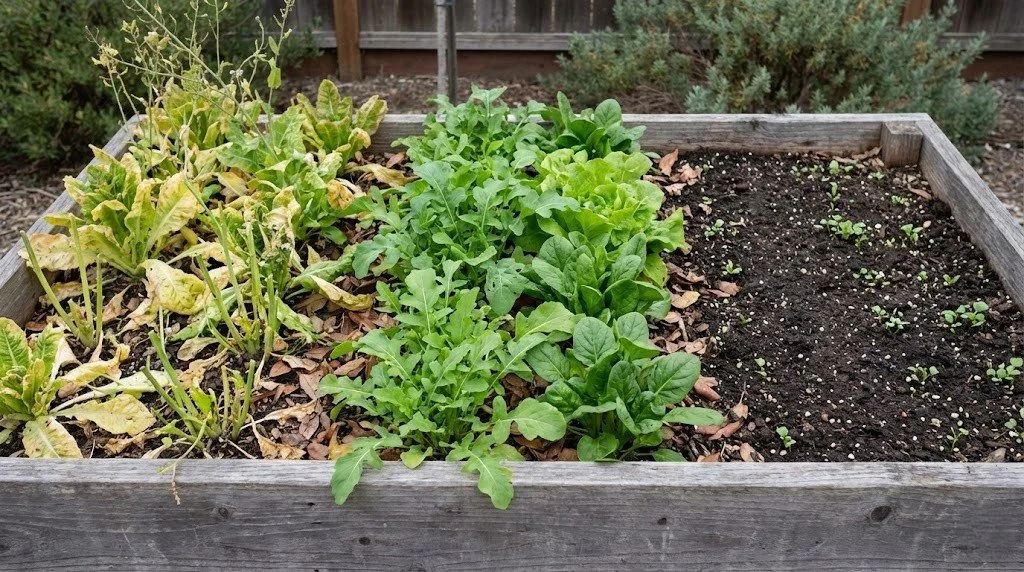
A whole row of lettuce ready at once can be more salad than you want. Succession planting spreads the harvest out: you sow smaller amounts at different times, or plant a new crop as another finishes. It gives a small garden a steadier rhythm, with something coming along behind what you're picking now.
Repeat sowing is the easiest way to start. Plant a short row of lettuce, then sow another a few weeks later while the first is still growing. Lettuce, radishes, arugula, cilantro, beans, and beets are useful crops to consider in their growing season. The UC Master Gardener guide to using garden space includes succession planting among the ways to make better use of a small plot. The aim is to spread out maturity, although weather and variety will affect the gap between harvests.
Santa Cruz County's long growing season gives you room to keep planting, but the next sowing still needs to suit the season and your spot. A cool coastal bed and a warm inland bed won't always be ready for the same crop. As one planting slows down, think about what can follow it. The UC Master Gardener Program of Sonoma County describes this seasonal handoff and recommends keeping notes on planting and harvest dates.
Here are three of the approaches described by UC Master Gardeners. Repeat sowing means planting the same crop on staggered dates. Following one crop with another means clearing a finished planting and using its space for the next crop. Variety staggering means choosing earlier- and later-maturing varieties so the harvest is spread out even when you plant them together. Start with one approach and keep a simple calendar or notebook. The next planting is much easier to remember when it has a date.
This week: Choose one quick-growing crop you eat regularly and check that it's in season for your garden. Plant a small row, then set a reminder to plan the next sowing in about two weeks. Adjust that timing as you see how the first planting grows.
Our free Planting Calendar can help you check the sowing window before you start. Use the Vegetables by Season Chart to choose what might follow when that space opens up.
Keep Reading
Where to get seeds: One seed source to browse is Seeds Now, a California company selling non-GMO, open-pollinated, and heirloom seed. (Affiliate link, see our disclosure.)
Frequently Asked Questions
Which crops are best for succession planting?
Lettuce, radishes, arugula, cilantro, beans, and beets are useful starting points. Choose something you enjoy eating, then check its local growing season. A small sowing that fits the weather is more useful than a large one planted because the calendar reminder went off.
How far apart should I space my plantings?
About two weeks is a starting point for repeat sowings, rather than a promise of perfectly spaced harvests. Watch how quickly your first planting grows and adjust for the crop, variety, and weather. Keeping the dates in a notebook makes that adjustment easier next time.
Does Santa Cruz's climate help with succession planting?
Our long growing season gives you opportunities to follow one crop with another. The useful window still depends on the crop and your microclimate, so check local planting guidance before each round. Coastal and inland gardens can need different timing.
