

Choosing the Right Garlic for Your Santa Cruz Garden
Some links in this guide are affiliate links. If you buy through them, we may earn a small commission at no extra cost to you. Read our full disclosure.
Not all garlic is created equal, and what thrives in Montana or Maine may struggle in our Mediterranean climate. Santa Cruz County's mild winters, cool coastal influence, and dry summers create specific conditions that favor some garlic types over others. Choose the right variety for your microclimate, and you'll harvest plump, flavorful bulbs every June. Choose poorly, and you might end up with undersized heads that barely seem worth the space.
This guide covers the garlic varieties that perform reliably in Santa Cruz County, organized by type and suited to different growing conditions. There are options here for fog-belt gardens in Capitola and for sunny ridges in Boulder Creek.
What Are Garlic Types?
Before we get to specific varieties, it helps to understand the two main garlic categories and why they matter for your growing conditions.
Softneck garlic (Allium sativum var. sativum) is the type you typically find in grocery stores. It gets its name from the flexible stem that remains soft at harvest, making it ideal for braiding. Softneck varieties store longer (often 9-12 months under good conditions), tend to have more cloves per bulb (10-20+), and generally need less cold to develop properly. This makes softneck garlic the safer choice for milder coastal areas.
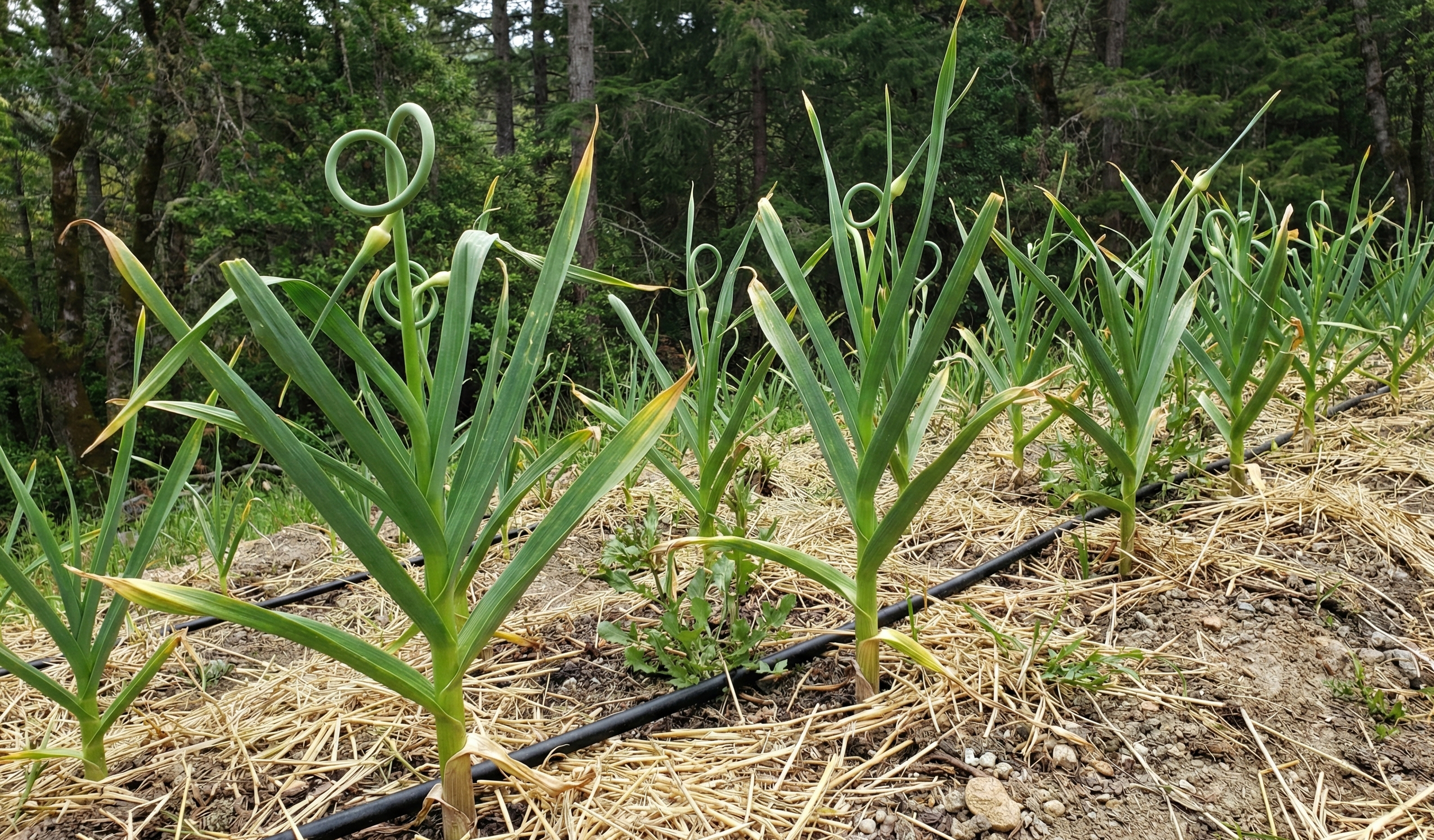
Hardneck garlic (Allium sativum var. ophioscorodon) produces a stiff central stem that eventually sends up a curling flower stalk called a scape. Hardneck varieties typically have fewer but larger cloves (4-12 per bulb), stronger and more complex flavors, and require more cold exposure (vernalization) to form good bulbs. They store for shorter periods (4-6 months typically) but offer a culinary experience that many garlic lovers prefer.
Within these categories are multiple subgroups, each with distinct characteristics. UC Master Gardener trials and taste tests in individual California counties are the practical guide to which garlic types perform locally, since recommendations shift with the microclimate.
What Are the Best Softneck Varieties for Santa Cruz County?
Softneck garlic is the most reliable choice for coastal and mild-winter areas of Santa Cruz County. For a complete overview of growing garlic and onions in Santa Cruz, check our companion guide. These varieties consistently produce good bulbs even when winter temperatures stay relatively warm.
'California Early' and 'California Late' The California Early and California Late varieties (sometimes sold as 'California Softneck') are the backbone of commercial garlic production in Gilroy and throughout California. They're adapted to our climate, store exceptionally well, and produce mild to medium-flavored garlic perfect for everyday cooking. California Early matures about two weeks before California Late, allowing you to stagger harvest. These are excellent beginner varieties because they're forgiving of imperfect conditions.
'Inchelium Red' An heirloom from the Colville Indian Reservation in Washington, 'Inchelium Red' consistently ranks among the best-tasting softneck varieties. Despite being developed further north, it performs well in mild winters because it doesn't require intense cold. The large bulbs have creamy white wrappers tinged with pink, and the flavor is rich and smooth without excessive heat. Rodale Institute named it the best-tasting garlic in trials, and it's become a favorite of Santa Cruz gardeners who've tried it.
'Silver White' A strong-flavored softneck that holds up well in cooking. 'Silver White' produces tight, symmetrical bulbs with silvery-white wrappers. It's disease-resistant and stores very well (often 10+ months). Good choice for gardeners who want maximum storage life and don't mind slightly more pungent garlic.
'Lorz Italian' Another top-rated heirloom with a mild, nutty flavor that sweetens beautifully when roasted. 'Lorz Italian' has been grown in the Pacific Northwest for generations but adapts well to California conditions. The medium-sized bulbs produce 12-18 cloves, and the flavor balance works well both raw (not overpowering) and cooked.
'Nootka Rose' If you want to try braiding your garlic, 'Nootka Rose' combines excellent storage and beautiful rose-streaked wrappers. The flavor is mild and well-rounded. Originally from the San Juan Islands, it handles mild winters well and matures relatively early.
What Are the Best Hardneck Varieties for Santa Cruz County?
Hardneck garlic can be more challenging in our mild climate, but gardeners in cooler microclimates (San Lorenzo Valley, inland valleys, higher elevations) can succeed with the right varieties. Even coastal gardeners can grow hardneck if they select types that need less vernalization.
'Chesnok Red' (Purple Stripe) One of the most reliable hardneck varieties for California, 'Chesnok Red' produces beautiful purple-striped wrappers and exceptional flavor. The taste is sweet and rich when baked, making it a favorite for roasted garlic. According to Washington State University Extension, Purple Stripe varieties like 'Chesnok Red' can tolerate milder winters better than some hardneck types. Plant in the coldest spot in your garden to maximize vernalization. For timing details, see our guide to planting garlic in fall.
'Music' (Porcelain) 'Music' is one of the largest-cloved garlics you can grow, often with just 4-6 huge cloves per bulb. The flavor is robust and hot raw, mellowing beautifully when cooked. Porcelain types need more cold than some hardnecks, so 'Music' is best suited to San Lorenzo Valley gardens, inland valleys, and other areas that reliably get cold nights (below 40°F) for extended periods in winter. In warm coastal areas, bulbs may remain small.
'Spanish Roja' (Rocambole) A classic heirloom with devoted fans who consider it among the finest-flavored garlics. 'Spanish Roja' has a full-bodied, true garlic taste that's strong but not harsh. However, Rocambole types require significant cold to bulb properly, limiting success in our mildest areas. Try this one if you garden in Boulder Creek, Felton's cooler spots, or anywhere you get consistent winter temperatures in the 30s and 40s.
'Georgian Crystal' (Porcelain) More tolerant of mild winters than 'Music' while still offering large, easy-to-peel cloves. 'Georgian Crystal' has a mild flavor compared to other hardnecks, making it a good introduction for gardeners who want hardneck characteristics without the strong bite.
'Asian Tempest' (Asiatic) Asiatic types are among the earliest-maturing hardnecks and need less vernalization than others. 'Asian Tempest' produces gorgeous purple-blushed bulbs with hot, spicy flavor that's excellent in Asian cooking. It's worth trying in coastal gardens where other hardnecks struggle.
Varieties by Santa Cruz Microclimate
Your specific location matters when choosing garlic. Here's how to match varieties to conditions:
Coastal fog belt (Aptos, Capitola, Live Oak, westside Santa Cruz) Stick primarily with softneck varieties. 'California Early', 'Inchelium Red', and 'Nootka Rose' all perform reliably. If you want to experiment with hardneck, try 'Asian Tempest' or 'Georgian Crystal', which need less cold. Plant in your sunniest spot and don't expect massive bulbs, but flavor will still be excellent.
San Lorenzo Valley sunny exposures (Boulder Creek, Ben Lomond ridges) You have the best of both worlds: enough cold for hardneck varieties but not so extreme that anything is off-limits. Try 'Chesnok Red', 'Music', and 'Spanish Roja' alongside softneck favorites. Your warmer days support good bulb development while cold nights provide vernalization.
Under redwoods (Felton, shaded canyons) Limited sun is your primary challenge, not temperature. Choose softneck varieties that can handle less-than-ideal light. 'California Early' and 'Lorz Italian' are good options. Hardneck may struggle more with low light than with cold issues here.
Inland valleys (Scotts Valley, Soquel hills) Good territory for both types. Softneck will always be reliable; hardneck varieties like 'Chesnok Red' and 'Georgian Crystal' should also perform well with your moderate winters.
Pajaro Valley (Watsonville) Your warmest microclimate means hardneck varieties may struggle despite excellent growing conditions otherwise. Focus on softneck: 'California Early', 'California Late', 'Inchelium Red', and 'Silver White' will all produce well. The professional growers in this area primarily use softneck for good reason.
Where to Buy Quality Seed Garlic
Seed garlic is typically available from September through November. Buy early for the best selection.
Local sources:
Santa Cruz Garlic is a small local grower selling seed garlic grown here in Santa Cruz, with 2026 varieties including Red Sulmona, Carpathian, German Red, Chinese Pink, Lorz Italian, and Inchelium Red. Orders go through the website
Mountain Feed & Farm Supply in Ben Lomond stocks multiple varieties each fall
San Lorenzo Garden Center carries seed garlic seasonally
Local farmers markets often have vendors selling locally-adapted seed garlic
Online sources with good California-adapted selections:
Territorial Seed Company - Wide selection, ships at the right time for West Coast planting
Peaceful Valley Farm Supply - Organic seed garlic with varieties suited to California
Filaree Garlic Farm - Specialists with extensive variety information
Gourmet Garlic Gardens - Detailed growing guidance with each order
Order by early October for best selection. Many varieties sell out quickly.
Special Notes on Elephant Garlic
Elephant garlic isn't actually garlic at all. It is more closely related to leeks, which explains its mild flavor and enormous cloves. It grows well in Santa Cruz County and can be treated like softneck garlic for planting purposes. If you love garlic flavor but want something gentler (great for roasting whole), elephant garlic is worth growing. Just know that it won't have the pungency of true garlic varieties.
Once your cloves are in the ground, our garlic growth stages guide shows the fall-to-summer journey to a full bulb.
Frequently Asked Questions
How many garlic bulbs should I plant for my family?
A good rule of thumb is 15-25 plants per person who eats garlic regularly. Each clove planted produces one bulb. If you use 2-3 heads per week, plant at least 50 cloves (from about 6-8 seed garlic heads) to have garlic most of the year. When those bulbs are ready, our guide to harvesting and curing garlic will walk you through the process. Start small your first year to gauge your success, then scale up.
Can I plant garlic from the farmers market?
Yes, farmers market garlic is usually a much better choice than grocery store garlic. It hasn't been treated to prevent sprouting and is often grown in similar conditions to yours. Ask the vendor what variety it is and whether it performs well locally.
Why are some garlic varieties so much more expensive?
Rare heirloom varieties take time to build up stock, and some have lower yields than commercial types. The difference in flavor often justifies the cost for cooking enthusiasts. For everyday use, affordable varieties like 'California Early' work perfectly well.
Should I plant more than one variety?
Absolutely. Planting several varieties gives you a range of flavors, staggered harvest times, and insurance against any single variety failing. If problems arise, see our garlic and onion troubleshooting guide. Many experienced garlic gardeners grow 3-5 varieties annually.
How long does seed garlic stay viable?
Fresh seed garlic from the current season has the best germination. Stored garlic from the previous year may sprout but often produces smaller bulbs. Always plant the freshest seed garlic you can get.
What if I can only find grocery store garlic to plant?
It's not ideal, but if it's your only option, choose organic garlic (less likely to be treated) and look for heads already showing signs of sprouting. Expect lower yields than from proper seed garlic, and plan to save your best homegrown bulbs for planting next year.
Do softneck and hardneck garlic taste different?
Yes, though individual varieties vary more than the types overall. In general, hardneck varieties tend toward more complex, robust flavors with more distinct personality. Softneck tends to be milder and more straightforward. Both are excellent; it's largely personal preference.
When should I order seed garlic?
Order in August or September for fall planting. Popular varieties sell out fast, especially from smaller specialty suppliers. Local sources typically have stock available September through November.
Free Resources
Seasonal Planting Calendar: Includes garlic planting timing for each Santa Cruz microclimate
Know Your Microclimate Worksheet: Identify your conditions to choose the best variety
