

The First 5 Vegetables to Grow in Santa Cruz County


A few of the product links in this guide are affiliate links. If you buy through one, Ambitious Harvest may earn a small commission at no extra cost to you, which helps keep these guides free. We only point to gear we would use in our own Santa Cruz garden. As an Amazon Associate, we earn from qualifying purchases. Read our full disclosure.
The five best vegetables for beginning gardeners in Santa Cruz County are cherry tomatoes (Sungold for coastal areas, Sweet 100 for inland), zucchini, lettuce, herbs (basil, cilantro, parsley), and bush beans. According to UC Master Gardeners, these five crops are forgiving, productive, and well-suited to California's Mediterranean climate, making them ideal for first-time gardeners building confidence and skills.
Here's the truth: you don't need to grow everything. Start with crops that are forgiving, productive, and actually taste good. Build confidence and skills with these five vegetables, then expand from there.
These recommendations are specifically chosen for Santa Cruz County and Bay Area beginners. They handle our microclimates well, don't demand constant attention, and reward you with abundant harvests.
Why Are Cherry Tomatoes the Best Starter Vegetable?
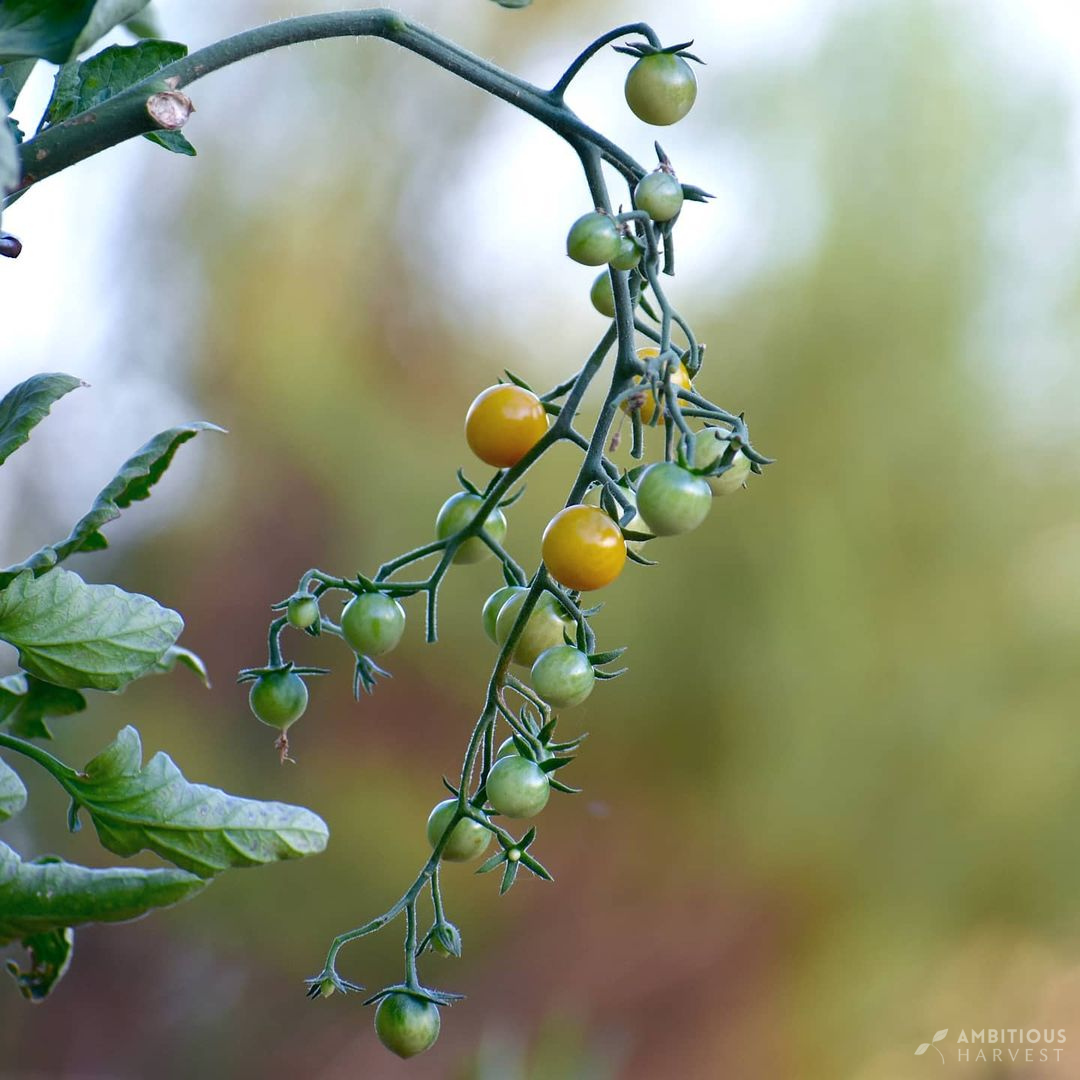
If you're only going to grow one thing, make it cherry tomatoes. They're productive, delicious, and far easier than large slicing tomatoes.
Why cherry tomatoes are perfect for beginners:
Incredibly productive. One healthy plant produces hundreds of tomatoes from July through October, sometimes into November if you're coastal.
More forgiving than big tomatoes. Cherry tomatoes handle cooler coastal conditions better. They ripen faster, so even if your microclimate doesn't provide intense heat, you'll still get fruit.
Fewer problems. Smaller fruit means less cracking, blossom end rot, and splitting. They're naturally resistant to many common tomato diseases.
Kid-friendly. If you're gardening with kids, cherry tomatoes are instant gratification. They're sweet, poppable, and fun to harvest.
Best varieties for Santa Cruz:
For coastal areas (Aptos, Capitola, Live Oak), choose fog-tolerant varieties:
'Sungold' (orange, incredibly sweet, produces in cool weather)
'Black Cherry' (purple-black, rich flavor, handles fog)
'Isis Candy' (gold with red stripes, cold-tolerant)
For inland valleys (Scotts Valley, Watsonville, San Lorenzo Valley sunny spots):
'Sweet 100' (classic red, huge yields)
'Sun Sugar' (super sweet, reliable)
'Matt's Wild Cherry' (small but prolific, disease resistant)
Where to buy locally:
Love Apple Farms in Scotts Valley holds an annual spring tomato sale with hundreds of heirloom varieties, including cherry tomatoes perfectly suited to our climate. Check their website at growbetterveggies.com for dates.
Sierra Azul Nursery in Watsonville carries excellent transplants in spring.
Dig Gardens in Santa Cruz and Aptos has organic starts.
San Lorenzo Garden Center stocks a good selection of standard varieties.
When to plant:
Coastal gardeners: Wait until June. Your soil and air need to warm up. Planting in May risks cold, stunted plants.
Inland gardeners: Mid-May to early June is ideal. Last frost is typically mid-April, but wait a few weeks after for consistent warmth.
Care tips:
Plant in full sun (at least 6 hours daily, more is better)
Stake or cage from the start. Cherry tomatoes grow tall and bushy.
Water consistently. Irregular watering causes fruit splitting.
Mulch heavily to retain moisture and prevent soil splash
Side-dress with compost monthly once fruiting begins
Harvest: Start picking in July. Harvest regularly to encourage more production. Cherry tomatoes often fruit until the first hard frost (December or later in mild years).
Why Is Zucchini So Easy to Grow in Santa Cruz?
Summer squash is the ultimate beginner vegetable. It grows fast, produces abundantly (sometimes too abundantly), and tolerates a wide range of conditions.
Why summer squash is ideal for beginners:
Fast results. Plant a seedling in June and harvest squash by late July. Instant gratification.
Prolific beyond belief. One plant produces 10 to 20 pounds of squash over the season. Two plants feed a family with plenty to share.
Easy to grow. Squash isn't fussy. Give it sun, water, and decent soil, and it produces.
Handles our climate. Summer squash thrives in Santa Cruz's dry summers. Inland and coastal microclimates both work.
Best varieties for Santa Cruz:
'Black Beauty' zucchini (classic dark green, reliable)
'Costata Romanesco' (ribbed Italian zucchini, excellent flavor, see our zucchini variety guide)
'Golden zucchini' (yellow, slightly different flavor)
'Pattypan' squash (UFO-shaped, fun and productive)
'Tromboncino' (climbing squash, saves space, borer-resistant)
Where to buy locally:
Transplants widely available in spring at Sierra Azul Nursery, San Lorenzo Garden Center, Dig Gardens, and Scarborough Gardens.
Seeds from Renee's Garden (based in Felton), Kitazawa Seed Company, or any local nursery.
When to plant:
April through July. Squash loves warm soil. Peak planting is May and June.
Succession planting: Plant a few seeds or transplants every 3 to 4 weeks through July for continuous harvest. One planting provides 6 to 8 weeks of production before slowing down.
Care tips:
Full sun and warm soil are essential
Space plants 3 feet apart, they sprawl
Water deeply once or twice per week in summer
Mulch around plants to suppress weeds and retain moisture
Watch for powdery mildew (common late summer). Remove affected leaves, improve air circulation.
Harvest: Pick squash when small and tender, 6 to 8 inches long for zucchini. Oversized squash are seedy and bland. Check plants daily once production starts.
Pest watch: Squash bugs can be an issue. Hand-pick adults and scrape off egg clusters on leaf undersides.
How Do Lettuce and Salad Greens Thrive on the Coast?
Lettuce is the gateway vegetable: fast, easy, and you can harvest continuously by planting in succession.
Why lettuce is perfect for beginners:
Quick harvest. Baby greens are ready in 3 to 4 weeks. Mature heads take 6 to 8 weeks. You'll be eating homegrown salads within a month of planting.
Grows almost year-round here. Lettuce thrives in cool weather. Plant in spring, fall, and winter. In coastal microclimates, you can grow it through summer too.
Succession planting is easy. Sow a row of seeds every 2 weeks for continuous harvests.
No special equipment needed. Direct seed in the ground or grow in containers. Lettuce has shallow roots.
Best varieties for Santa Cruz:
'Buttercrunch' (heat-tolerant, doesn't bolt quickly)
'Jericho' romaine (holds well in summer)
'Red Sails' (loose-leaf, beautiful, productive)
'Mesclun mix' (cut-and-come-again salad greens)
'Winter Density' (compact romaine, cold-hardy)
Where to buy locally:
Seeds available everywhere: San Lorenzo Garden Center, Dig Gardens, Mountain Feed & Farm Supply, online from Renee's Garden or Territorial Seed Company.
Transplants at most nurseries, though direct seeding is easier and cheaper for lettuce.
Felton Seed Lending Library at Felton Branch Library (6121 Gushee Street) offers free lettuce and salad green seeds. Borrow seeds, grow them out, save and return seeds if you can.
When to plant:
Spring: February through April
Summer: Coastal areas only, choose heat-tolerant varieties
Fall: August through October (best for inland areas)
Winter: November through January (excellent season for lettuce in Santa Cruz)
Care tips:
Lettuce prefers cooler weather. In hot microclimates, provide afternoon shade in summer.
Keep soil consistently moist. Lettuce has shallow roots and wilts quickly.
Thin seedlings to 6 to 8 inches apart for heads, 2 to 3 inches for baby greens.
Harvest outer leaves first (cut-and-come-again method) or cut entire heads at soil level.
Harvest: Baby greens in 3 to 4 weeks. Full heads in 6 to 8 weeks. Harvest before plants bolt (send up a flower stalk). Bolting happens when it gets too hot or plants are stressed.
Which Herbs Grow Best for Beginners in Santa Cruz?
Herbs are essential for cooking and ridiculously easy to grow. Start with these three, they're the workhorses of the kitchen garden.
Basil
Perfect for beginners because:
Grows fast and produces heavily
Thrives in our warm summers
The more you harvest, the more it grows
Smells amazing and adds flavor to everything
Best varieties:
'Genovese' (classic Italian basil for pesto)
'Siam Queen' (Thai basil, anise flavor)
'Lemon' basil (citrus notes, great in salads)
When to plant: May through July. Basil needs warmth. Don't plant too early or it sulks.
Where to buy: Transplants everywhere in spring: Sierra Azul, Dig Gardens, San Lorenzo Garden Center. Seeds from Renee's Garden or local nurseries.
Care: Full sun, consistent water, pinch off flower buds to encourage leaf production.
Cilantro
Perfect for beginners because:
Grows quickly (ready in 4 to 6 weeks)
Cool-season crop, perfect for fall, winter, spring
Self-seeds readily (you'll have cilantro volunteers everywhere)
Essential for tacos, salsa, and Mexican dishes
Varieties:
'Santo' (slow to bolt)
'Calypso' (heat-tolerant)
Mexican varieties from Kitazawa Seed Company
When to plant:
Fall: September through November (best season)
Winter: December through February
Spring: March through April (bolts quickly as weather warms)
Avoid summer. Cilantro hates heat and bolts immediately.
Where to buy: Seeds widely available. Renee's Garden, local nurseries, Mountain Feed & Farm Supply.
Care: Cool weather and consistent moisture. Let some plants bolt and set seed (coriander). It self-seeds generously for future harvests.
Parsley
Perfect for beginners because:
Long harvest period (8+ months)
Biennial, so it produces year one and bolts year two
Hardy through winter
Versatile in the kitchen
Varieties:
Flat-leaf (Italian) parsley: Better flavor
Curly parsley: Decorative, mild flavor
When to plant: March through September. Parsley is flexible about timing.
Where to buy: Transplants at all local nurseries. Seeds germinate slowly (2 to 3 weeks), so transplants save time.
Care: Part sun to full sun. Keep soil moist. Harvest outer leaves, leaving the center to keep producing.
Where to buy herbs locally:
UCSC Farm & Garden has plant sales in spring and fall with organically grown herb starts.
Farmers markets often have herb vendors in spring:
Downtown Santa Cruz Farmers Market (Wednesdays at Cedar & Cathcart Streets)
Westside Santa Cruz Farmers Market (Saturdays at Western Drive & Mission Street Extension)
Live Oak Farmers Market (Sundays at E. Cliff Drive & 15th Avenue)
Why Are Bush Beans a Great Choice for New Gardeners?
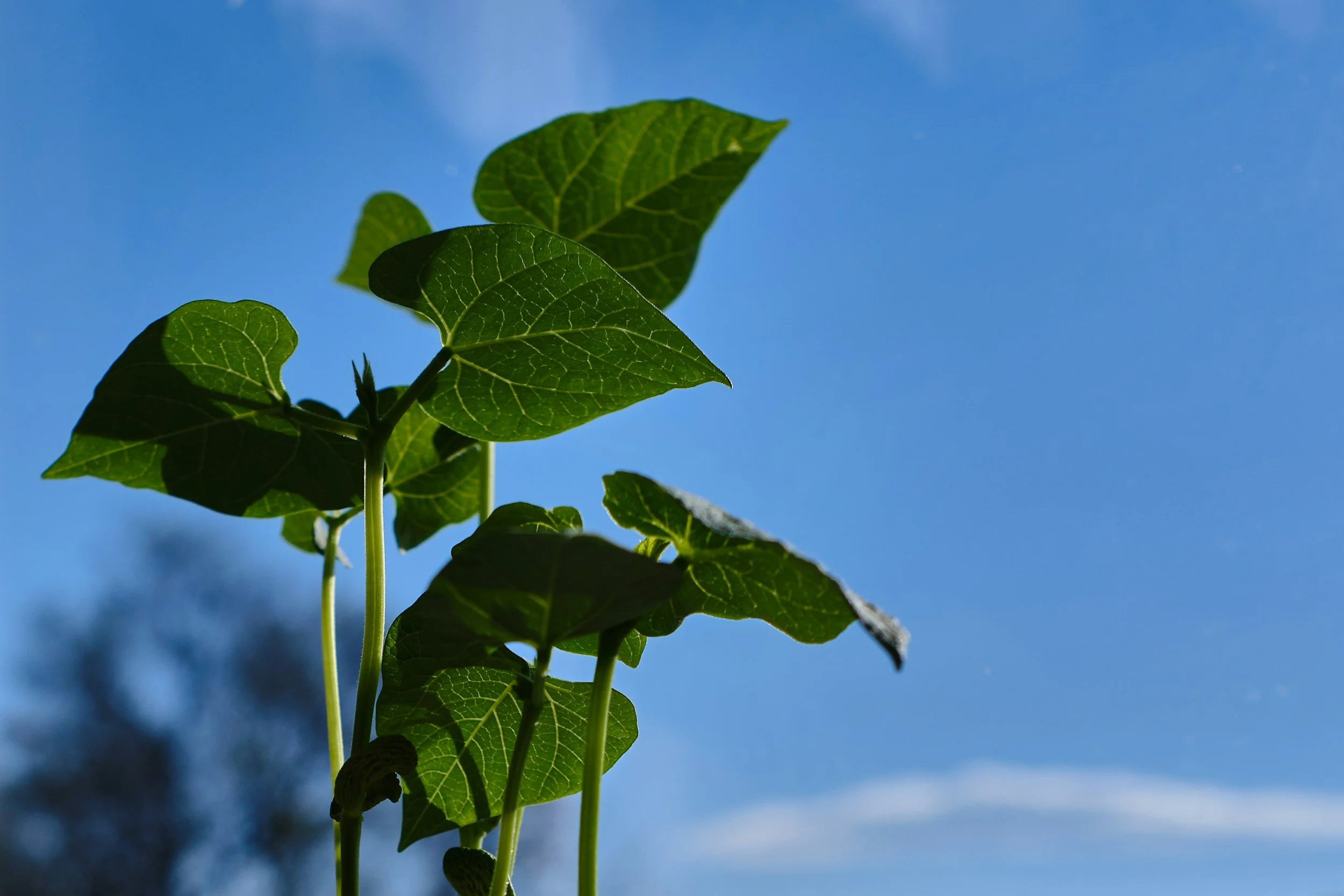
Beans are a beginner's dream crop. They're nearly foolproof, productive, and improve your soil by fixing nitrogen.
Why beans are perfect for beginners:
Easy to grow. Direct seed in the ground and they germinate reliably within a week.
Fast harvest. Ready to pick in 55 to 60 days from seed.
Productive. A 10-foot row produces pounds of beans over 3 to 4 weeks.
Improve soil. Beans are legumes. They pull nitrogen from the air and store it in root nodules, enriching your soil for future crops.
No trellising needed. Bush beans stay compact (unlike pole beans which need support).
Best varieties for Santa Cruz:
'Provider' (green bean, reliable, high yields)
'Maxibel' (French filet bean, tender, delicious)
'Royal Burgundy' (purple beans turn green when cooked, easy to see for harvesting)
'Romano' (flat Italian bean, meaty texture)
Where to buy locally:
Seeds at Mountain Feed & Farm Supply, San Lorenzo Garden Center, Renee's Garden, Territorial Seed Company.
When to plant:
Late April through July. Beans need warm soil (at least 60°F). Planting too early in cold, wet soil causes seeds to rot.
Succession planting: Sow a new row every 3 weeks through July for continuous harvests.
Care tips:
Full sun
Direct seed 1 inch deep, 3 inches apart in rows or blocks
Water consistently once flowering begins. Irregular water during flowering reduces yields.
No fertilizer needed. Beans fix their own nitrogen.
Mulch to suppress weeds and retain moisture.
Harvest: Pick beans when slender and tender, before seeds bulge inside. Harvest every 2 to 3 days once production starts. Regular picking encourages more beans.
Pest watch: Aphids sometimes cluster on new growth. Spray them off with water or tolerate them (they won't ruin your harvest).
What Other Vegetables Are Easy to Grow in Santa Cruz?
These five vegetables (cherry tomatoes, summer squash, lettuce, herbs, and bush beans) give you a diverse, productive garden with minimal hassle. But if you want to add one more:
Radishes: Ready in 3 to 4 weeks. Perfect confidence builder. Plant in spring and fall.
Kale or chard: Productive year-round in most Santa Cruz microclimates. Harvest outer leaves continuously.
Carrots: Direct seed in fall for winter harvest. Great for kids. Choose shorter varieties like 'Danvers' or 'Chantenay' if you have clay soil.
What Vegetables Should Beginners Avoid Growing?
Some vegetables are finicky, require specific conditions, or just aren't worth the effort for beginners:
Cauliflower: Beautiful but demanding. Needs consistent cool weather, doesn't tolerate heat or frost well, fussy about soil.
Celery: Constant water needs. Bolts easily. Not worth the trouble.
Melons: Need consistent heat, lots of space, and tricky in coastal microclimates. Try cantaloupe inland if you want to experiment.
Eggplant: Possible but slow. Takes 75+ days and needs heat. Better once you've mastered tomatoes and peppers.
Save these for year two or three after you've gained confidence.
What Tips Help New Gardeners Succeed in Santa Cruz?
Start small. Plant one or two of each crop, not a dozen tomato plants. Learn what grows well in your space before scaling up.
Plant at the right time. This is critical in Santa Cruz. Follow local planting guides (check our seasonal planting calendar) rather than national seed packet instructions.
Water consistently. Most vegetable failures come from irregular watering. Set up drip irrigation or commit to hand watering daily in summer.
Mulch everything. A 2- to 3-inch layer of straw or compost saves water, suppresses weeds, and improves soil.
Keep notes. Write down what you planted, when, and how it performed. This becomes your personalized guide for future seasons.
Where Can New Santa Cruz Gardeners Find Help?
Classes and workshops:
UC Master Gardeners of Monterey Bay offers free talks and a help line (1432 Abbott Street, Salinas, mbmg.ucanr.edu).
UCSC Center for Agroecology runs tours and workshops at the UCSC Farm.
Cabrillo College Horticulture Department has hands-on gardening classes (6500 Soquel Drive, Aptos).
Community support:
Join local gardening groups on Facebook or Instagram. Santa Cruz gardeners are generous with advice.
Visit the Downtown Santa Cruz Farmers Market on Wednesdays and talk to farmers. Ask what varieties they recommend, where they source transplants, what's working for them.
Frequently Asked Questions About Growing Your First Vegetables in Santa Cruz County
What is the easiest vegetable to grow for beginners in Santa Cruz County?
Cherry tomatoes are the easiest and most rewarding vegetable for beginners in Santa Cruz County. One plant produces hundreds of sweet tomatoes from July through October (sometimes November in coastal areas). They handle our microclimates well, tolerate fog better than large tomatoes, and have fewer problems with cracking or disease. Summer squash is a close second for ease and abundance. Start with these two for guaranteed success.
When should I start my first vegetable garden in Santa Cruz County?
Spring (April through June) is ideal for beginners in Santa Cruz County. Plant cherry tomatoes and summer squash in May or June when soil warms up. Add lettuce in March or April, herbs in May, and bush beans from late April through July. Our mild climate, shaped by our varied microclimates, also allows fall planting (September through November) for lettuce, herbs, and cool-season crops. You can start gardening almost any time of year here.
Can beginners grow vegetables year-round in Santa Cruz County?
Yes! Santa Cruz County's mild climate allows year-round vegetable gardening. Lettuce and herbs (cilantro, parsley) grow fall through spring. Cherry tomatoes and squash produce summer through fall. Bush beans work spring through summer. Coastal areas like Aptos and Capitola can even grow lettuce through summer. This extended season gives beginners multiple chances to try crops and learn without waiting for next year.
Where should I buy vegetable starts in Santa Cruz County?
Local nurseries with quality transplants include Sierra Azul Nursery (Watsonville), San Lorenzo Garden Center (Santa Cruz), Dig Gardens (Santa Cruz and Aptos), Scarborough Gardens (Scotts Valley), and Mountain Feed & Farm Supply (Ben Lomond). Love Apple Farms holds an annual spring tomato sale in Scotts Valley with hundreds of varieties. UCSC Farm & Garden has spring and fall plant sales. Check farmers markets (Downtown Santa Cruz, Westside, Live Oak) for herb starts.
What vegetables should beginners avoid in Santa Cruz County?
Skip cauliflower (demanding and fussy), celery (constant water needs, bolts easily), melons (need consistent heat, tricky in coastal areas), and eggplant (slow, needs lots of heat). These crops require specific conditions or constant attention. Master cherry tomatoes, squash, lettuce, herbs, and beans first. Add more challenging crops like broccoli, peppers, and carrots in your second or third season.
Do these vegetables work in both coastal and inland Santa Cruz areas?
Yes, with minor adjustments! Coastal areas (Aptos, Capitola, Live Oak) excel with lettuce year-round and fog-tolerant cherry tomatoes like Sungold or Black Cherry. Plant tomatoes in June after soil warms. Inland areas (Boulder Creek, Scotts Valley, Watsonville) get more heat for squash, beans, and Sun Sugar tomatoes. Plant tomatoes in mid-May. All five crops succeed countywide with proper timing and variety selection.
How much space do I need for my first vegetable garden?
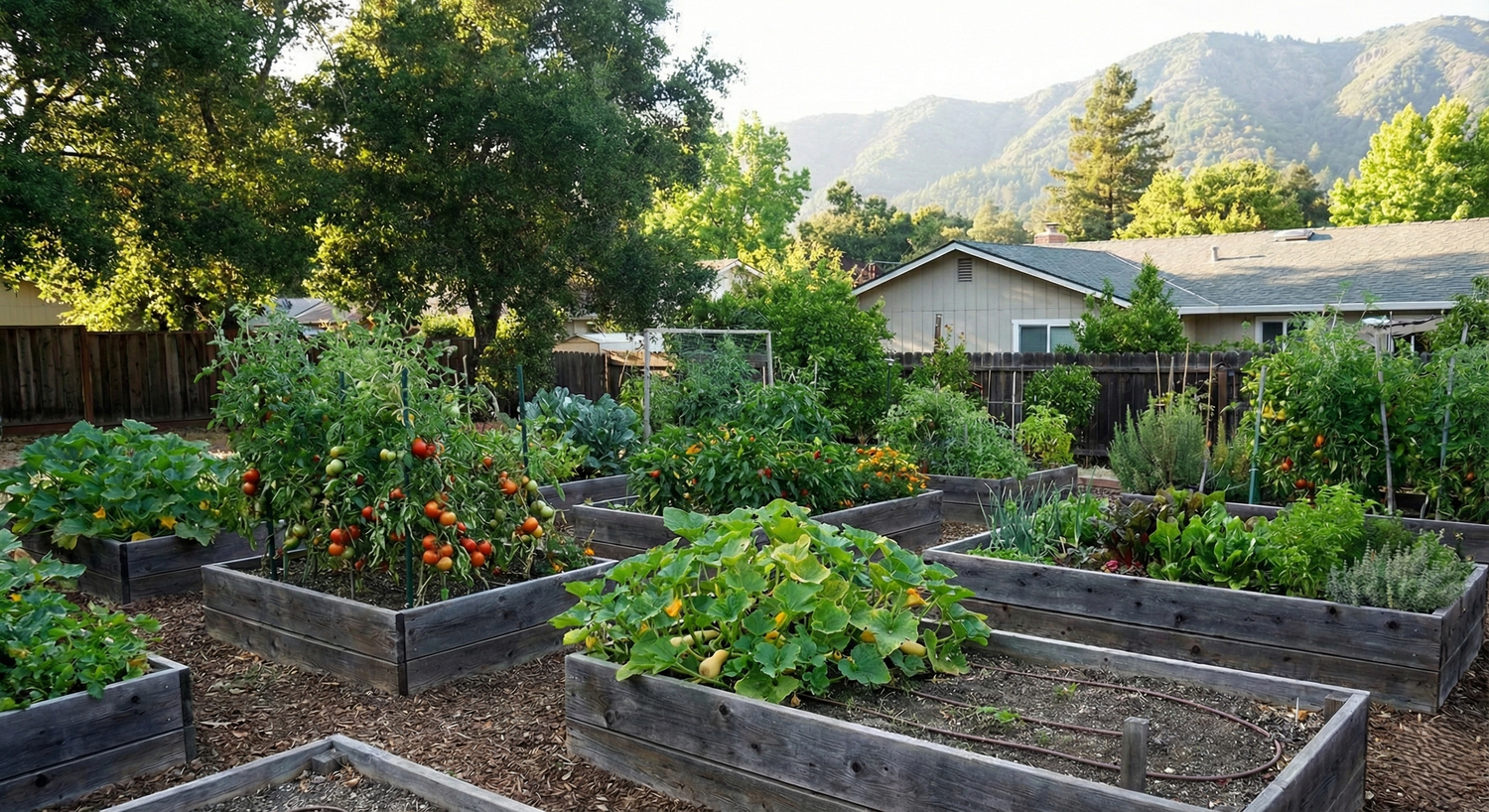
Start small! A 4x8 foot raised bed or equivalent space fits: 2 cherry tomato plants, 2 summer squash plants, a 3-foot row of lettuce, 3 to 4 herb plants, and a 3-foot row of beans. This manageable size produces abundant harvests without overwhelming beginners. Many Santa Cruz gardeners start with just containers on a patio: one tomato in a 5-gallon pot, lettuce in window boxes, and herbs in smaller pots.
When will I harvest my first vegetables in Santa Cruz County?
Lettuce is fastest at 3 to 4 weeks for baby greens. Bush beans take 55 to 60 days from seed. Summer squash produces in 6 to 8 weeks. Cherry tomatoes need 60 to 80 days from transplant (expect harvests in July if planted in May). Herbs can be harvested lightly as soon as plants are established (4 to 6 weeks). Plant a mix for continuous harvests rather than waiting for everything at once.
You're Ready to Start
These five vegetables, cherry tomatoes, summer squash, lettuce, herbs, and bush beans, will give you a productive, manageable first garden. They're forgiving, fast, and perfectly suited to Santa Cruz's microclimates.
Start here. Master these. Then expand into broccoli, carrots, peppers, and all the other wonderful crops that thrive in our year-round growing season.
Beginner Garden Setup Checklist , A step-by-step checklist covering everything you need before you plant: assessing your space, understanding your soil, choosing your setup, and planning your first crops. Includes quick-reference planting timing for Santa Cruz County.
Seasonal Planting Calendar , Our month-by-month planting calendar shows exactly what to plant, prepare, observe, and skip each month in Santa Cruz County. Never miss a planting window again.
Vegetables by Season Quick Reference , A one-page reference showing which vegetables to grow in spring, summer, fall, and winter in Santa Cruz County. Perfect for planning your year-round garden.
Tomato Variety Selector , Not sure which tomatoes to grow? This guide breaks down the best varieties for coastal fog zones versus sunny inland areas, plus cherry tomato recommendations for beginners.
Know Your Microclimate Worksheet , Fill out this worksheet to understand your garden's unique conditions: sun exposure, fog patterns, frost risk, soil type, and wildlife challenges. Helps you choose the right crops and timing for your specific spot.
