

Warm-Season Cut Flowers for Santa Cruz County
A few of the product links in this guide are affiliate links. If you buy through one, Ambitious Harvest may earn a small commission at no extra cost to you, which helps keep these guides free. We only point to gear we would use in our own Santa Cruz garden. As an Amazon Associate, we earn from qualifying purchases. Read our full disclosure.
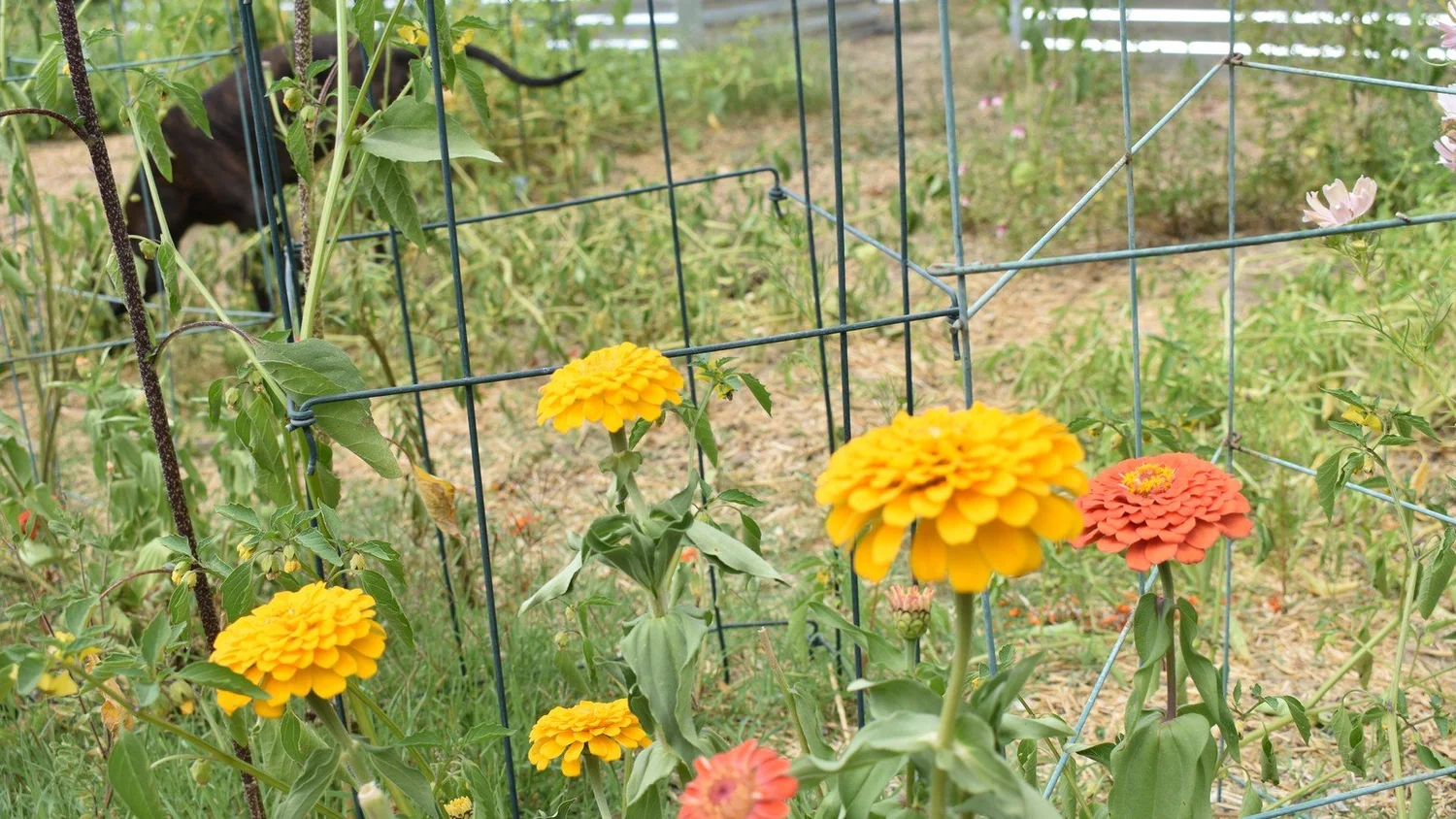
Warm-season zinnias blooming at several stages beside a trellis in Adrienne's Boulder Creek cut-flower garden. Photo: Adrienne Gaughan / Ambitious Harvest Co
Summer is prime time for cut flower gardens, with bold zinnias, towering sunflowers, and dramatic dahlias taking center stage. These heat-loving flowers fill vases with color when cool-season varieties have gone dormant, and they're among the easiest, most productive flowers you can grow.
For Santa Cruz County gardeners, warm-season flowers come with a unique consideration: our coastal influence moderates summer temperatures. What's "warm season" here would be considered mild elsewhere. This actually extends our warm-season flower production, as plants experience less heat stress than in hot inland valleys.
This guide covers the best warm-season cut flowers for our area, timing strategies for our moderate climate, and how to maximize production from July through October.
The UC Master Gardeners of Santa Clara County maintain a helpful Cut Flower Planting Chart covering seasonal timing for many of these varieties. For zinnia-specific growing advice, the UC Master Gardeners of Solano County offer excellent tips on watering, deadheading, and seed starting. And the UC Master Gardeners of Sonoma County provide a thorough sunflower growing reference for our climate region.
What Makes a Flower "Warm-Season"?
Warm-season cut flowers share several characteristics:
Temperature preferences: Thrive at 70-85°F; struggle below 55-60°F
Frost sensitivity: Killed or damaged by any frost
Day length: Most bloom regardless of day length (day-neutral) or prefer long days
Native range: Tropical or subtropical origins, or warm temperate regions
Soil temperature: Need warm soil (60°F+) for germination and growth
These flowers won't tolerate cold, which is why we wait until late spring to plant them. But once established, they bloom prolifically through the warmest months.
The Best Warm-Season Cut Flowers for Santa Cruz County
Zinnias (Zinnia elegans)
The workhorse of summer cutting gardens. Zinnias are easy, fast, productive, and come in every color except blue. Our moderate summers allow for extended production without the heat stress that plagues hotter regions.
Plant: April-July (direct sow or transplant)
Bloom: June-October
Notes: Cut-and-come-again; the more you cut, the more they produce
See our complete guide: Growing Zinnias in Santa Cruz County
Dahlias (Dahlia spp.)
The queens of late summer and fall. Dahlias produce stunning blooms in an incredible range of forms and colors, from dinner-plate giants to pompon balls. Our mild climate extends their season.
Plant: April-May (tubers)
Bloom: July-November
Notes: Single planting produces for months; staking required
See our complete guide: Growing Dahlias in Santa Cruz County
Sunflowers (Helianthus annuus)
Bold, cheerful, and surprisingly varied. Branching varieties produce multiple stems; single-stem types create striking focal flowers. Fast from seed to bloom.
Plant: April-July (direct sow)
Bloom: June-October (with succession planting)
Notes: Single-stem types produce one flower per plant; branching types produce multiple
See our complete guide: Growing Sunflowers in Santa Cruz County
Cosmos (Cosmos bipinnatus and C. sulphureus)
Airy, romantic flowers on tall stems. Cosmos are incredibly easy, drought-tolerant once established, and bloom heavily with minimal care. Perfect for beginners.
Plant: April-June (direct sow)
Bloom: June-October
Notes: Chocolate cosmos (C. atrosanguineus) smells like chocolate but is a perennial tuber, not an annual
See our complete guide: Growing Cosmos in Santa Cruz County
Celosia (Celosia argentea)
Unusual, attention-grabbing flowers in crested (cockscomb), plumed, or wheat forms. Thrives in heat, making it ideal for inland Santa Cruz County gardens.
Plant: May-June (transplants; needs warm soil)
Bloom: July-October
Notes: Dries beautifully; needs warmest spots in coastal areas
See our complete guide: Growing Celosia in Santa Cruz County: Bold Texture for Warm-Season Bouquets
Strawflowers (Xerochrysum bracteatum)
Papery, everlasting flowers that look fresh for weeks in a vase and dry perfectly for permanent arrangements. Drought-tolerant and easy.
Plant: May-June (direct sow or transplant)
Bloom: July-October
Notes: Harvest before fully open for best dried flowers
See our complete guide: Growing Strawflowers in Santa Cruz County
Marigolds (Tagetes erecta - African/American types)
Tall African marigolds produce large, ruffly blooms excellent for cutting. Underrated as cut flowers but long-lasting in the vase.
Plant: April-June (transplants or direct sow)
Bloom: June-October
Notes: Choose tall cutting varieties, not dwarf bedding types; deadhead for continued production
Lisianthus (Eustoma grandiflorum)
Rose-like blooms prized by florists. Challenging to grow but rewarding. Needs a long season, making our mild climate advantageous.
Plant: February-March (start indoors 10-12 weeks before transplant)
Bloom: July-September
Notes: Slow to establish but worth the wait; excellent vase life (2+ weeks)
Globe Amaranth (Gomphrena globosa)
Round, clover-like flower heads that dry perfectly. Heat-loving and productive. Available in magenta, purple, white, and pink.
Plant: May-June (transplants)
Bloom: July-October
Notes: One of the best flowers for drying; looks fresh for years
Timing Warm-Season Flowers for Santa Cruz County
Our coastal influence affects warm-season flower timing differently than inland regions:
Soil temperature is key. Warm-season flowers need soil temperatures of 60-70°F+ to germinate and grow well. In Santa Cruz County:
Coastal areas: Soil may not warm adequately until late May or June
Inland areas: Soil warms earlier; mid-to-late April planting often works
Use a soil thermometer if you're uncertain
Don't rush. The most common warm-season flower mistake is planting too early. Seeds rot in cold soil, and transplants sulk without growing. Waiting a few weeks produces much better results than pushing the season.
Extended fall production. Our mild falls allow warm-season flowers to produce well into October or even November. Take advantage of this extended season by succession planting through June or early July.
Santa Cruz County planting windows:
Succession Planting Warm-Season Flowers
For continuous harvest, succession plant rather than planting everything at once. For a deeper look at this technique, see our guide to succession planting cut flowers for continuous blooms.
Zinnias: Sow every 2-3 weeks from your first safe planting date through late June. This keeps fresh plants coming into production as older ones decline.
Sunflowers (single-stem types): Sow every 2 weeks for continuous harvest. Each plant produces one flower, then is done.
Cosmos: Less need for succession planting; single plantings bloom for 3-4 months. But a second planting 6 weeks after the first extends the season.
Dahlias, strawflowers, marigolds: Single planting is usually sufficient; these bloom continuously once they start.
Care Tips for Warm-Season Cut Flowers
Watering:
Consistent moisture is critical during establishment
Once established, most tolerate some drought
Water deeply and less frequently rather than shallow and often
Drip irrigation is ideal; overhead watering promotes disease
Feeding:
Work compost or balanced fertilizer into soil at planting
Side-dress heavy feeders (dahlias, zinnias) monthly during bloom
Avoid excessive nitrogen, which produces foliage at the expense of flowers
Deadheading:
Remove spent flowers regularly to encourage continued production
For cut flowers, harvesting IS deadheading
Don't let flowers go to seed if you want continued bloom
Staking:
Tall varieties (dahlias, tall zinnias, sunflowers) need support
Install stakes or netting at planting time
Wind can damage tall stems quickly
Pest management:
Aphids: Common on new growth; spray with water or insecticidal soap
Japanese beetles: Hand-pick in early morning; traps attract more beetles
Spider mites: Increase in hot, dry conditions; spray with water
Powdery mildew: Improve air circulation; water at base of plants
Warm-Season Flowers by Microclimate
Coastal fog belt (Westside Santa Cruz, Live Oak, Aptos, Capitola)
Moderate conditions with some challenges:
Heat-lovers (celosia) may underperform
Extended bloom season due to mild temperatures
Less disease pressure from heat stress
Plant later than inland areas
Best performers: Zinnias, dahlias, cosmos, sunflowers, strawflowers May struggle: Celosia (needs more heat)
San Lorenzo Valley and sunny inland areas (Boulder Creek, Scotts Valley)
Excellent warm-season flower territory:
Warmer temperatures support vigorous growth
Can plant earlier than coastal areas
All warm-season flowers perform well
May need extra water during hot spells
Best performers: All warm-season flowers Heat-lovers thrive: Celosia, globe amaranth
Under the redwoods (Felton, Ben Lomond canyons)
Challenging for warm-season flowers:
Shade limits production significantly
Cool temperatures slow growth
Only attempt if you have a sunny clearing
Best options: Impatiens (shade-tolerant but not great for cutting), consider focusing on cool-season and shade-tolerant flowers instead
Pajaro Valley / Watsonville
Excellent warm-season territory:
Warmest microclimate in the county
Longest warm season
All heat-lovers perform well
May need extra water in sandy soils
Best performers: All warm-season flowers; celosia excels here
Creating All-Season Color
Combine warm-season and cool-season flowers for year-round bouquets:
Spring overlap (April-May):
Cool-season flowers still producing: sweet peas, ranunculus, snapdragons
Plant warm-season flowers as space allows
Earliest zinnias may begin blooming in late May
Summer peak (June-August):
Full warm-season production: zinnias, dahlias, sunflowers, cosmos
Cool-season flowers dormant
Succession plant for continuous harvest
Fall transition (September-October):
Warm-season flowers at peak or beginning to slow
Plant cool-season flowers (snapdragons, stock) for winter
Dahlias often peak in fall
Winter through early spring (November-March):
Cool-season flowers take over
Pull spent warm-season plants; prepare beds for spring
Where to get flower seeds: For cut-flower and pollinator varieties that do well here, we like Seeds Now, a California company selling non-GMO, open-pollinated, and heirloom seed. (Affiliate link, see our disclosure.)
Frequently Asked Questions
Why aren't my warm-season flowers growing?
Most commonly: planted too early in cold soil. Warm-season flowers need soil temperatures of 60-70°F+ to thrive. Wait for genuinely warm conditions, not just warm air.
Can I start warm-season flowers indoors?
Yes, but most do fine direct-sown once soil warms. Indoor starting makes sense for slow developers (lisianthus), for getting a head start in coastal areas, or for maximizing a short warm season.
How do I extend the warm-season flower season?
Succession plant through June or early July. Our mild falls allow production well into October. Protect from early frost (rare but possible inland) with row cover if needed.
Why do my zinnias get powdery mildew?
Powdery mildew thrives when days are warm, nights are cool, and humidity is high. Improve air circulation, water at the base of plants (not overhead), and choose mildew-resistant varieties. Some mildew is almost inevitable by late season.
Are warm-season flowers drought-tolerant?
Once established, cosmos, zinnias, sunflowers, and strawflowers tolerate drought reasonably well. Dahlias and celosia need more consistent moisture. None should be left completely dry for extended periods during active growth.
When should I pull warm-season flowers?
When they stop producing worthwhile blooms (usually after first frost inland, or when plants look exhausted). In mild coastal areas, dahlias may produce into December. Clear beds when ready to plant cool-season flowers.
Free Resources
Download these guides for warm-season flower growing:
Seasonal Planting Calendar: Complete monthly timing
Visit our Garden Toolkit for more downloadable resources.
Related Articles
Growing a Cut Flower Garden in Santa Cruz County: A Complete Guide
Succession Planting Cut Flowers for Continuous Blooms
Growing Celosia in Santa Cruz County
