

Cool-Season Cut Flowers for Santa Cruz County
A few of the product links in this guide are affiliate links. If you buy through one, Ambitious Harvest may earn a small commission at no extra cost to you, which helps keep these guides free. We only point to gear we would use in our own Santa Cruz garden. As an Amazon Associate, we earn from qualifying purchases. Read our full disclosure.
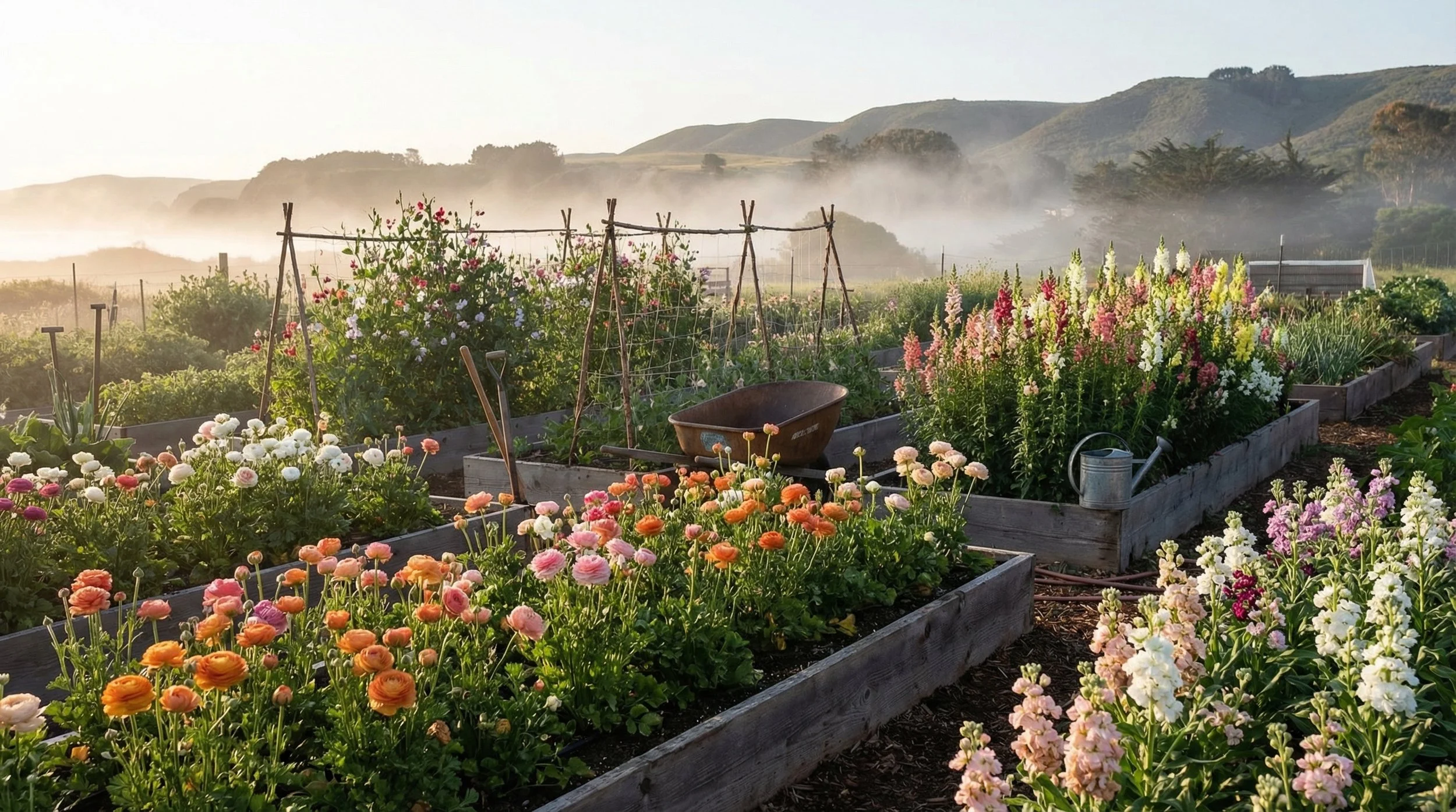
While most gardeners think of cut flowers as a summer pursuit, Santa Cruz County's mild climate opens up an entire second season for flower production. From late fall through spring, cool-season flowers fill the gap when warm-season varieties are dormant, providing fresh bouquets during the months when florist flowers are most expensive.
Our Mediterranean climate is particularly well-suited to cool-season flowers. These plants evolved in regions with mild, wet winters and dry summers, making them perfectly adapted to Santa Cruz County's weather patterns. With proper timing and variety selection, you can harvest homegrown bouquets from November through June.
This guide covers the best cool-season cut flowers for our area, when to plant them, and how to keep them producing through our mild winters and cool springs.
What Makes a Flower "Cool-Season"?
Cool-season flowers share several characteristics:
Temperature preferences: They thrive at 50-70°F and struggle or stop blooming above 75-80°F
Frost tolerance: Most tolerate light frost (28-32°F); some survive harder freezes
Day length: Many are triggered to bloom by shorter days or prefer the lower light of winter
Native range: Typically from Mediterranean climates, cool coastal regions, or temperate zones
In hot climates, these flowers are confined to a brief spring window. In Santa Cruz County, our mild conditions extend their season dramatically.
The Best Cool-Season Cut Flowers for Santa Cruz County
Sweet Peas (Lathyrus odoratus)
The quintessential cool-season cut flower. Sweet peas produce intensely fragrant, ruffled blooms on climbing vines. Our foggy springs are ideal for extended production.
Plant: October-November (fall) or January-February (late winter)
Bloom: February-June (fall-planted) or April-June (late winter-planted)
Notes: Need trellising; fall planting produces longest stems
See our complete guide: Growing Sweet Peas in Santa Cruz County
Ranunculus (Ranunculus asiaticus)
Rose-like blooms with layers of papery petals. Among the most elegant spring flowers you can grow. Our cool springs allow for excellent production.
Plant: October-December (corms)
Bloom: February-May
Notes: Pre-sprout corms before planting; excellent vase life
See our complete guide: Growing Ranunculus in Santa Cruz County
Snapdragons (Antirrhinum majus)
Versatile spikes of dragon-mouth flowers. With proper timing, snapdragons can produce in both cool seasons and carry through mild summers in coastal areas.
Plant: August-October (for winter/spring bloom) or January-March (for spring/early summer)
Bloom: November-June with multiple plantings
Notes: Pinch for bushier plants; near year-round production possible in fog belt
See our complete guide: Growing Snapdragons in Santa Cruz County
Stock (Matthiola incana)
Intensely fragrant spikes in soft pastels. One of the most perfumed garden flowers. Loves our cool conditions.
Plant: September-October (transplants) or August-September (seeds)
Bloom: December-April
Notes: Fragrance rivals sweet peas; prefers temperatures under 65°F for best bloom
Anemones (Anemone coronaria)
Poppy-like flowers with dark centers. Perfect companion to ranunculus with nearly identical culture.
Plant: October-December (corms, pre-sprouted)
Bloom: February-May
Notes: Same planting technique as ranunculus; striking in arrangements
Iceland Poppies (Papaver nudicaule)
Delicate, tissue-paper blooms on wiry stems. Ethereal and charming. Our mild winters allow them to establish and bloom heavily.
Plant: September-November (transplants) or August-September (seeds)
Bloom: February-May
Notes: Short vase life (3-5 days) but worth it; sear stem ends for longer life
Calendula (Calendula officinalis)
Cheerful orange and yellow daisy-like flowers. One of the easiest cool-season cut flowers. Often self-sows and returns year after year.
Plant: September-October or February-March
Bloom: October-June (with summer gap in hot areas)
Notes: Edible petals; medicinal uses; attracts beneficial insects
Larkspur (Consolida ajacis)
Tall spikes of delphinium-like flowers. Excellent vertical element for arrangements. Direct sow for best results.
Plant: September-November (direct sow)
Bloom: April-June
Notes: Resents transplanting; let self-sow for return crops; all parts toxic if eaten
Bachelor's Buttons/Cornflowers (Centaurea cyanus)
Classic cottage garden flowers in blue, pink, white, and burgundy. Easy and productive.
Plant: September-November (direct sow)
Bloom: March-June
Notes: Direct sow successive plantings; excellent dried
Bells of Ireland (Moluccella laevis)
Unusual green flower spikes prized by florists. Adds unique color to arrangements.
Plant: February-March (seeds need cold; start indoors)
Bloom: May-July
Notes: Challenging germination but worth the effort; dries beautifully
Planting Timing for Cool-Season Flowers
Cool-season flowers need time to establish before they bloom. In Santa Cruz County, this typically means fall planting for earliest spring flowers.
Fall planting (September-November):
Establishes roots during mild fall weather
Plants are ready to bloom when days lengthen in late winter
Produces earliest flowers and longest stems
Best for: sweet peas, ranunculus, anemones, larkspur, poppies
Late winter planting (January-March):
Catch-up option if you missed fall planting
Blooms later (April-June)
Shorter bloom window before heat arrives
Still worthwhile for most cool-season flowers
Plant snapdragons in August, January, and July for near year-round production
Sow larkspur and bachelor's buttons monthly from September-February
Plant ranunculus and anemones in one fall planting; they bloom for months
Growing Cool-Season Flowers: General Principles
Site selection:
Full sun (6+ hours) even in winter
Good drainage (crucial; winter wet kills more plants than cold)
Protection from heavy rain (raised beds help)
South-facing exposure maximizes winter warmth and light
Soil preparation:
Amend with compost for drainage and fertility
Ensure soil is loose to at least 12 inches
Consider raised beds in heavy clay areas
Watering:
Consistent moisture during establishment
Reduce during rainy periods (don't add to wet soil)
Resume regular watering if winter is dry
Water morning rather than evening to reduce disease
Frost protection: Most cool-season flowers tolerate light frost, but tender new growth and flower buds can be damaged by hard freezes (below 28°F). In frost-prone inland areas:
Cover plants with frost cloth during cold snaps
Avoid fertilizing in late fall (tender new growth is more frost-sensitive)
Site plants against south-facing walls for thermal protection
Disease management: Cool, wet conditions favor fungal diseases. Prevention:
Space plants for air circulation
Avoid overhead watering
Remove affected foliage promptly
Consider raised beds for improved drainage
Cool-Season Flowers by Microclimate
Coastal fog belt (Westside Santa Cruz, Live Oak, Aptos, Capitola)
This is premier cool-season flower territory:
Frost rarely severe enough to damage hardy varieties
Extended cool spring means longest bloom season
Sweet peas may bloom into June
Ranunculus flowers are large and long-lasting
Inland valleys (Scotts Valley, parts of SLV)
Good conditions with some adjustments:
Watch for harder frosts; protect tender varieties
Blooms may start later (fewer winter growing days)
Spring bloom window is shorter before heat arrives
Mountain areas (Boulder Creek, higher elevations)
Challenging but possible:
Colder winters limit plant survival
Focus on hardiest varieties
May need winter protection
Excellent spring conditions once established
Planning a Year-Round Cutting Garden
By combining cool-season and warm-season flowers, Santa Cruz County gardeners can harvest bouquets almost every month:
| Month | What's Blooming |
|---|---|
| January | Snapdragons, calendula (mild years) |
| February | Snapdragons, ranunculus, anemones begin |
| March | Sweet peas, ranunculus, anemones, Iceland poppies |
| April | Peak cool-season: everything above plus larkspur |
| May | Late sweet peas, ranunculus; zinnias starting |
| June | Overlap: late cool-season + early warm-season |
| July | Zinnias, cosmos, sunflowers, dahlias |
| August | Peak warm-season |
| September | Warm-season continues; plant cool-season |
| October | Late dahlias, cosmos; new snapdragons starting |
| November | Snapdragons, calendula; plant cool-season |
| December | Snapdragons, calendula (coastal areas) |
The key is overlap: plant warm-season flowers in late spring while cool-season flowers are still producing, and plant cool-season flowers in fall while warm-season flowers wind down.
Where to get flower seeds: For cut-flower and pollinator varieties that do well here, we like Seeds Now, a California company selling non-GMO, open-pollinated, and heirloom seed. (Affiliate link, see our disclosure.)
Frequently Asked Questions
Can I grow cool-season flowers in summer?
Most cool-season flowers stop producing or decline rapidly when temperatures exceed 75-80°F consistently. They're adapted to our cool season; trying to grow them in summer is usually frustrating. Exception: in the fog belt, some (like snapdragons) may continue through mild summers.
Why did my sweet peas stop blooming in May?
Heat shuts down sweet pea production. Once temperatures consistently exceed 75°F, plants stop flowering and go to seed. Plant earlier (October) for longer harvest before heat arrives.
Are cool-season flowers frost-tolerant?
Most tolerate light frost (28-32°F) without protection. Hard freezes (below 28°F for extended periods) can damage flower buds and tender growth. In frost-prone areas, be prepared to cover plants during cold snaps.
When should I pull cool-season flowers and plant warm-season ones?
When cool-season plants stop producing or look tired (typically May-June). Don't wait too long; warm-season flowers need time to establish before peak summer production.
Can I grow ranunculus and anemones together?
Yes! They have nearly identical cultural requirements and make perfect planting companions. Interplant for a mixed spring display.
Do I need to refrigerate ranunculus corms before planting?
In Santa Cruz County, no. Our fall soil temperatures are naturally cool enough. Pre-sprouting is helpful, but refrigeration (often recommended for warm climates) isn't necessary here.
Free Resources
Download these guides for cool-season flower growing:
Seasonal Planting Calendar: Complete monthly timing
Visit our Garden Toolkit for more downloadable resources.
Sources: UC Master Gardeners: Sweet Peas | UC Master Gardeners: Ranunculus | UC Master Gardeners: Anemones for Early Spring Color
Related Articles
Growing a Cut Flower Garden in Santa Cruz County: A Complete Guide
Growing Sweet Peas in Santa Cruz County
Growing Ranunculus in Santa Cruz County
