

Growing a Cut Flower Garden in Santa Cruz County: A Complete Guide
A few of the product links in this guide are affiliate links. If you buy through one, Ambitious Harvest may earn a small commission at no extra cost to you, which helps keep these guides free. We only point to gear we would use in our own Santa Cruz garden. As an Amazon Associate, we earn from qualifying purchases. Read our full disclosure.
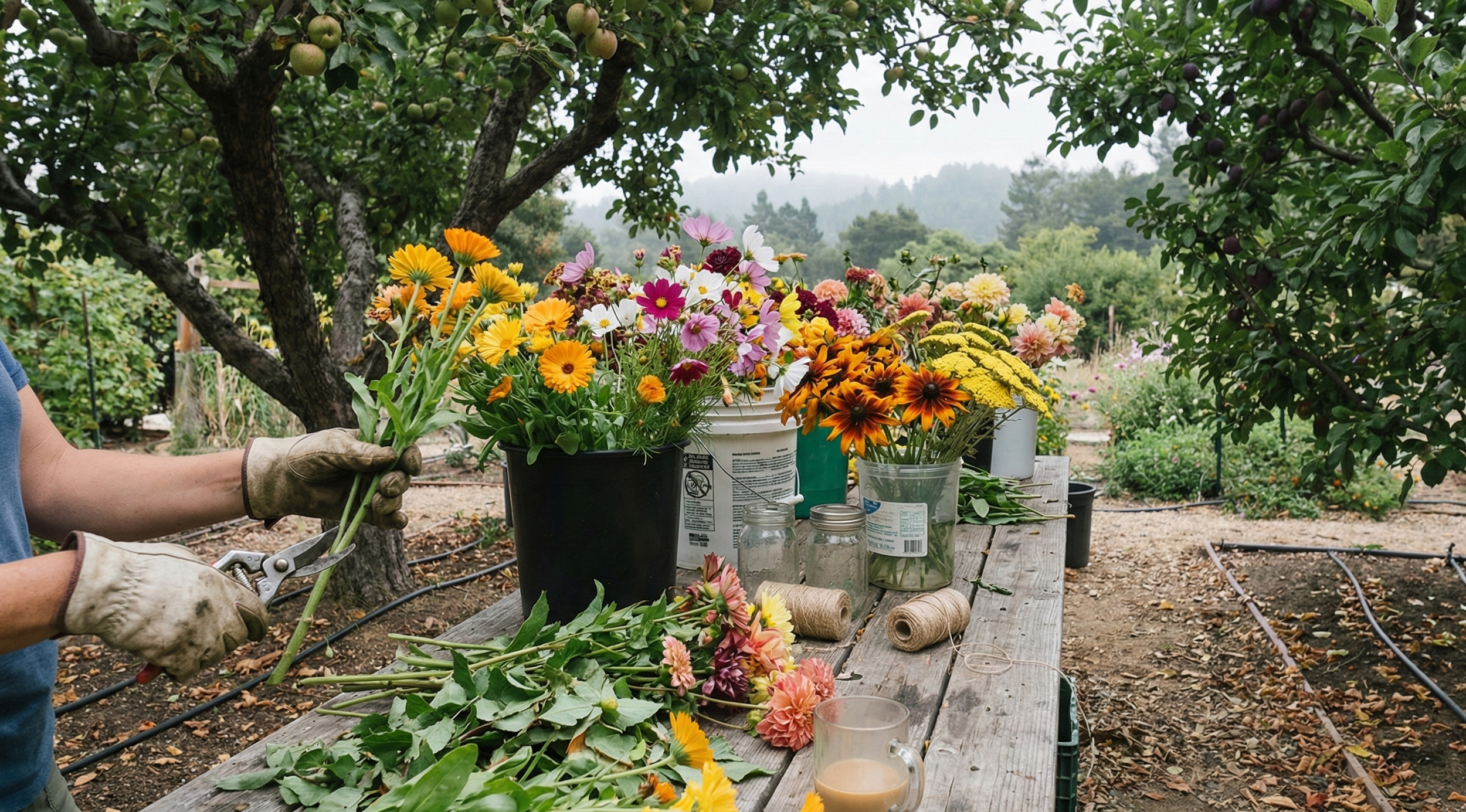
There's something magical about walking into your garden with a pair of scissors and emerging with an armful of flowers for your kitchen table. Unlike vegetables, which demand specific timing and careful attention, many cut flowers reward even casual gardeners with abundant blooms throughout our long Santa Cruz County growing season.
This guide covers everything you need to know to grow your own cut flowers here on the Central Coast. Whether you have a dedicated cutting garden or want to tuck flowers between your vegetable beds, you'll find practical advice tailored to our unique microclimates, from the foggy coastal areas of Aptos and Live Oak to the sunny ridges of Boulder Creek and the warm agricultural soils of Watsonville.
The best part? Santa Cruz County's mild climate means you can harvest homegrown bouquets from late winter through the first hard frost (which, in many areas, may never come at all).
Why Is Santa Cruz County Ideal for Cut Flowers?
Cut Flowers by Microclimate
Our Mediterranean climate creates near-perfect conditions for growing an impressive range of cut flowers. Mild winters allow cool-season favorites like sweet peas and ranunculus to thrive, while our warm (but not scorching) summers support heat-lovers like zinnias and dahlias without the stress that comes from triple-digit temperatures.
Several factors make our region particularly well-suited for flower farming at home:
Long growing season. Most of Santa Cruz County sits in USDA Zones 9b to 10a, with frost-free periods extending 300+ days in many coastal and inland areas. This means you can grow flowers nearly year-round with careful variety selection.
Moderate summer temperatures. Unlike California's Central Valley, where summer heat can cause flowers to bolt or fade quickly, our coastal influence keeps daytime highs manageable. UC Cooperative Extension notes that many cut flowers perform best in the 65-85°F range, which describes most Santa Cruz County summer days perfectly.
Natural pest suppression. Our foggy mornings create conditions that discourage some common flower pests while supporting beneficial insects. The coastal influence also reduces spider mite pressure compared to hotter, drier regions.
Excellent local resources. From Renee's Garden Seeds right here in Felton to specialty nurseries throughout the county, you'll find locally-adapted varieties and expert advice close to home.
Planning Your Cutting Garden
Before you plant a single seed, take time to plan a cutting garden that works for your space, your microclimates, and your bouquet goals.
Assessing your light. Most cut flowers need at least 6 hours of direct sunlight, with 8+ hours being ideal for heavy bloomers like zinnias and sunflowers. If you garden under the redwoods in Felton or Ben Lomond, focus on shade-tolerant options like hydrangeas, astilbe, and ferns for greenery. Coastal gardeners in the fog belt should position flowers to catch maximum morning and midday sun.
Choosing a location. The best spot for a cutting garden is one you'll see regularly (so you remember to harvest) with good drainage and protection from strong winds. A south-facing location near your house works beautifully in most Santa Cruz microclimates. If deer are an issue in your area, plan for fencing from the start.
Deciding on a layout. You have two main options:
Dedicated cutting beds: Rows or blocks of flowers grown specifically for cutting. This approach maximizes production and makes harvesting efficient. Even a 4x8 foot bed can yield impressive bouquets.
Integrated planting: Tucking cut flowers between vegetables and ornamentals. Cosmos and zinnias make excellent companions to tomatoes, and many cut flowers attract pollinators that benefit your edibles.
For serious bouquet production, consider adopting the "cut and come again" approach popular with flower farmers: plant in succession, harvest aggressively, and replant as varieties finish.
Soil Preparation for Cut Flowers
Good soil is the foundation of a productive cutting garden. Most cut flowers prefer:
Rich, well-draining soil amended with plenty of organic matter
pH between 6.0 and 7.0 (slightly acidic to neutral)
Consistent moisture without waterlogging
In Santa Cruz County, soil conditions vary dramatically by location. Coastal areas often have sandy soil that drains quickly but needs frequent amending. Inland valleys may have heavier clay that holds moisture but requires loosening. Gardens under the redwoods typically have acidic soil (pH 5.5-6.5) that benefits from lime applications for most flowers.
Before planting, work 3-4 inches of quality compost into your beds. This improves drainage in clay soils, increases water retention in sandy soils, and feeds the beneficial microorganisms that help flowers thrive. Local sources like San Lorenzo Garden Center carry bulk compost suitable for flower gardens.
| Flower | Season | Plant | Bloom | Notes |
|---|---|---|---|---|
| Sweet Peas | Cool | Oct–Nov | Mar–May | Needs cool roots; trellised. Best coast performance. |
| Ranunculus | Cool | Nov–Dec | Mar–May | Excellent in fog belt; soak corms before planting. |
| Snapdragons | Cool | Sep–Oct | Feb–May | Start indoors; rebloom with cut-and-come-again harvest. |
| Anemones | Cool | Oct–Nov | Feb–Apr | Pairs with ranunculus. Soak corms 4 hrs before planting. |
| Zinnias | Warm | Apr–May | Jul–Oct | Inland zones best; coastal: choose Benary's Giant series. |
| Dahlias | Warm | Apr–May | Aug–Nov | Top performer. Overwinter tubers inland. Choose dinner plate or ball types. |
| Sunflowers | Warm | Apr–Jun | Jul–Sep | Direct sow every 2 weeks for continuous harvest. |
| Cosmos | Warm | Apr–May | Jun–Oct | Direct sow; drought-tolerant; prolific. Great filler flower. |
| Celosia | Warm | May | Aug–Oct | Start indoors 4-6 wks early. Flame and plumed types both excellent. |
What Soil Conditions Do Cut Flowers Need?
Choosing Flowers by Bloom Season
The key to year-round bouquets is planting flowers that bloom in different seasons. Santa Cruz County's climate allows you to grow cool-season and warm-season flowers, extending your harvest window significantly.
Cool-Season Flowers (Fall planting, winter/spring bloom)
These flowers thrive in our mild winters and prefer temperatures between 50-70°F. Plant in fall for late winter through spring blooms:
Sweet peas: Our foggy springs are perfect for these fragrant favorites. Plant seeds in October-November for April-June blooms.
Ranunculus: These rose-like flowers love our coastal climate. Plant corms in fall for spectacular spring color.
Snapdragons: Cold-tolerant and long-lasting in the vase. Start seeds in late summer for winter and spring cutting.
Stock: Wonderfully fragrant, thrives in cool weather. Direct sow in fall.
Anemones: Plant corms alongside ranunculus for similar care and complementary colors.
Warm-Season Flowers (Spring planting, summer/fall bloom)
These heat-lovers need soil temperatures above 60°F to germinate and thrive in our summer warmth:
Zinnias: The workhorses of summer bouquets. Direct sow after last frost for continuous summer blooms.
Dahlias: Spectacular late-summer through fall flowers. Plant tubers in spring after soil warms.
Cosmos: Effortless and abundant. Direct sow in spring for flowers from midsummer through frost.
Sunflowers: Fast and rewarding. Succession plant every 2-3 weeks for continuous harvest.
Celosia: Heat-loving and unique. Start indoors or direct sow in warm soil.
Year-Round and Perennial Options
Some flowers produce reliably across seasons or return year after year:
Strawflowers: Technically a warm-season annual, but blooms over a very long period and dries beautifully.
Calendula: Cool-season annual that often self-sows and blooms much of the year in our climate.
Perennial salvias: Many bloom spring through fall with regular deadheading.
Cut Flowers by Microclimate
Santa Cruz County's microclimates significantly affect which flowers perform best in your garden. Here's how to choose based on your location:
Coastal Fog Belt (Westside Santa Cruz, Live Oak, Aptos, Capitola)
The fog moderates temperatures and increases humidity, which benefits:
Sweet peas (less heat stress means longer bloom period)
Ranunculus (cool temperatures extend vase life)
Snapdragons and stock (thrive in cool conditions)
Dahlias (fog reduces spider mite pressure)
Challenges: Reduced sunlight hours may slow growth. Choose varieties described as "early" or "compact" when possible.
San Lorenzo Valley and Sunny Inland Areas (Boulder Creek, Ben Lomond ridges, Scotts Valley)
Warmer days and cooler nights create ideal conditions for:
Zinnias (love the heat)
Sunflowers (reach full potential with abundant sun)
Celosia (heat-lover that thrives here)
Cosmos (appreciate the warmth)
Challenges: Greater frost risk in winter. Be prepared to protect tender plants or focus on warm-season production.
Under the Redwoods (Felton, Ben Lomond canyons, shaded areas)
Limited sun is the primary constraint, but some flowers adapt:
Hydrangeas (prefer partial shade)
Astilbe (shade-tolerant perennial)
Ferns and foliage plants (excellent for bouquet greenery)
Nicotiana (tolerates shade, fragrant evening blooms)
Focus on greenery and shade-tolerant perennials rather than sun-loving annuals.
Pajaro Valley and Watsonville
The warmest microclimate in the county, with excellent conditions for:
All warm-season flowers (longer, hotter growing season)
Extended dahlia season (more accumulated heat)
Lisianthus (challenging elsewhere, possible here with warm soil)
Double-cropping cool and warm season flowers
This agricultural zone offers the most flexibility for cut flower production.
Starting Cut Flowers from Seed
Many cut flowers are easy and economical to grow from seed. Starting your own transplants gives you access to unusual varieties and saves significant money compared to buying starts.
Direct Sowing
Some flowers resent transplanting and perform best when sown directly where they'll grow:
Zinnias
Cosmos
Sunflowers
Sweet peas
Calendula
Wait until soil temperatures reach at least 60°F for warm-season flowers (typically mid-April through May in most Santa Cruz locations). Mark your rows clearly and thin seedlings to proper spacing once they have true leaves.
Starting Indoors
Other flowers benefit from a head start indoors:
Dahlias (from seed, though tubers are more common)
Snapdragons
Celosia
Strawflowers
Lisianthus
Start seeds 6-8 weeks before your target transplant date using a quality seed-starting mix. Provide bright light (a sunny south-facing window or grow lights) and consistent moisture. Harden off seedlings gradually over 7-10 days before transplanting outdoors.
Local Seed Sources
For the best selection of cut flower seeds suited to our climate, try:
Renee's Garden Seeds (based in Felton, excellent local varieties)
Johnny's Selected Seeds (professional-quality cut flower varieties)
Floret Flowers (curated collections for cutting gardens)
Succession Planting for Continuous Blooms
The secret to bouquets all season long is succession planting: starting new batches of flowers every 2-3 weeks rather than planting everything at once.
This technique works especially well for:
Sunflowers: Plant a new row every 2 weeks from April through July for blooms from June through October.
Zinnias: Successive sowings ensure a constant supply of fresh blooms rather than one big flush that fades.
Cosmos: While individual plants bloom over a long period, succession planting keeps your patch from looking tired by late summer.
For succession planting, keep a calendar and set reminders. It's easy to get busy in the garden and forget to plant that next round of seeds.
Harvesting Cut Flowers for Longest Vase Life
Proper harvesting technique can double or triple how long your flowers last in a vase. The key principles are:
Timing matters. Harvest in early morning (when flowers are fully hydrated) or late evening. Avoid cutting during the heat of the day when plants are stressed.
Cut at the right stage. Most flowers should be harvested when buds are showing color but not fully open. Specific timing varies by flower type:
Zinnias: When petals are fully open
Dahlias: When 3/4 to fully open
Sunflowers: When petals just begin to lift from the face
Sweet peas: When the bottom flower is open
Use clean, sharp tools. Dull or dirty blades crush stems and introduce bacteria. Clean your snips with rubbing alcohol between cuts, especially if any plants show signs of disease.
Get stems into water immediately. Carry a bucket of cool water into the garden. As soon as you cut a stem, plunge it into water. Air bubbles can block water uptake if stems sit dry for even a few minutes.
Remove lower foliage. Strip leaves that would sit below the waterline. Submerged foliage rots quickly and shortens vase life.
Condition in a cool, dark place. After harvesting, let flowers rest in cool water for several hours (or overnight) in a cool location before arranging. This "conditioning" period helps flowers fully hydrate and extends their display life.
Common Challenges and Solutions
Even in our favorable climate, cut flower gardens face some challenges:
Powdery mildew. This fungal disease appears as white powder on leaves, particularly on zinnias, dahlias, and sweet peas. UC IPM recommends promoting good air circulation by proper spacing, watering at the base of plants (not overhead), and choosing resistant varieties when available.
Aphids. These small sap-sucking insects congregate on new growth and flower buds. A strong spray of water dislodges most infestations. For persistent problems, insecticidal soap provides effective control. Encourage beneficial insects like ladybugs and lacewings by avoiding broad-spectrum pesticides.
Deer. In many Santa Cruz County areas, deer will browse cut flowers aggressively. Fencing is the most reliable solution. If fencing isn't possible, focus on deer-resistant options like snapdragons, lavender, strawflowers, and most herbs.
Gophers. These underground pests can devastate a flower garden. Planting in raised beds lined with hardware cloth provides the best protection. For in-ground gardens, see our detailed guide to Gopher Control Strategies for Santa Cruz County Gardens.
Bolting in heat. Cool-season flowers like sweet peas and ranunculus will stop blooming and go to seed when temperatures consistently exceed 75-80°F. Plant early for the longest harvest window, and accept that these are spring flowers in our climate.
Where to get flower seeds: For cut-flower and pollinator varieties that do well here, we like Seeds Now, a California company selling non-GMO, open-pollinated, and heirloom seed. (Affiliate link, see our disclosure.)
For inspiration, and for the weeks when your own beds are between flushes, our guide to the u-pick flower fields around Santa Cruz covers where you can cut your own dahlias, sunflowers, and lavender.
Frequently Asked Questions
How much space do I need for a cutting garden?
Even a 4x8 foot raised bed can produce meaningful bouquets. For regular arrangements throughout the season, plan for 50-100 square feet per household member who enjoys fresh flowers. Start small and expand as you learn what works in your space.
Can I grow cut flowers in containers?
Yes, though production will be more limited. Choose compact varieties (look for "dwarf" or "container" in the name) and use large containers (at least 5 gallons). Dahlias, zinnias, and cosmos all grow reasonably well in containers with consistent watering and feeding.
When should I start seeds for summer flowers in Santa Cruz?
For most warm-season flowers, start seeds indoors in late February to early March, or direct sow outdoors from mid-April through June once soil has warmed. Coastal gardeners may need to wait until May for reliable soil warmth.
Will cutting flowers encourage more blooms?
Absolutely. Most cut flowers are "cut and come again" types that produce more blooms when harvested regularly. Letting flowers go to seed signals the plant that its job is done. Keep cutting, and the plant keeps producing.
How do I keep flowers fresh in hot weather?
Harvest early in the morning, condition in cool water for several hours, change vase water every 1-2 days, and keep arrangements away from direct sun and heat sources. Adding floral preservative (or a DIY mix of sugar and a few drops of bleach) also helps.
What flowers are best for drying?
Strawflowers, statice, globe amaranth, and celosia all dry beautifully and retain their color. Harvest when blooms are at peak color and hang upside down in a dark, dry location with good air circulation.
Should I deadhead flowers I'm not cutting?
Yes. Removing spent blooms prevents seed formation and redirects the plant's energy into producing more flowers. Even if you don't bring every bloom inside, regular deadheading keeps your cutting garden productive.
What's the best cut flower for beginners in Santa Cruz?
Zinnias are hard to beat. They're direct-sown (no transplanting stress), heat-tolerant, prolific, and available in every color imaginable. Start with a packet of mixed colors and prepare to be hooked.
Free Resources
Download these guides to help plan and maintain your cutting garden:
Seasonal Planting Calendar: Month-by-month planting guide for Santa Cruz County
Visit our Garden Toolkit for the complete collection of downloadable resources.
Related Articles
Growing Zinnias in Santa Cruz County: Bold Summer Color with Minimal Effort
Growing Cosmos in Santa Cruz County: Effortless Color from Summer to Fall
Navigating Santa Cruz County's Microclimates: The Key to Garden Success
What to Plant in Santa Cruz & the Bay Area in March
Cut flowers also make excellent companion plants. See our companion planting guide for combinations that benefit both your flowers and vegetables. For water-efficient flower gardening, check our water-wise gardening guide.
