

Growing Dahlias in Santa Cruz County: The Crown Jewel of Late Summer Bouquets
A few of the product links in this guide are affiliate links. If you buy through one, Ambitious Harvest may earn a small commission at no extra cost to you, which helps keep these guides free. We only point to gear we would use in our own Santa Cruz garden. As an Amazon Associate, we earn from qualifying purchases. Read our full disclosure.
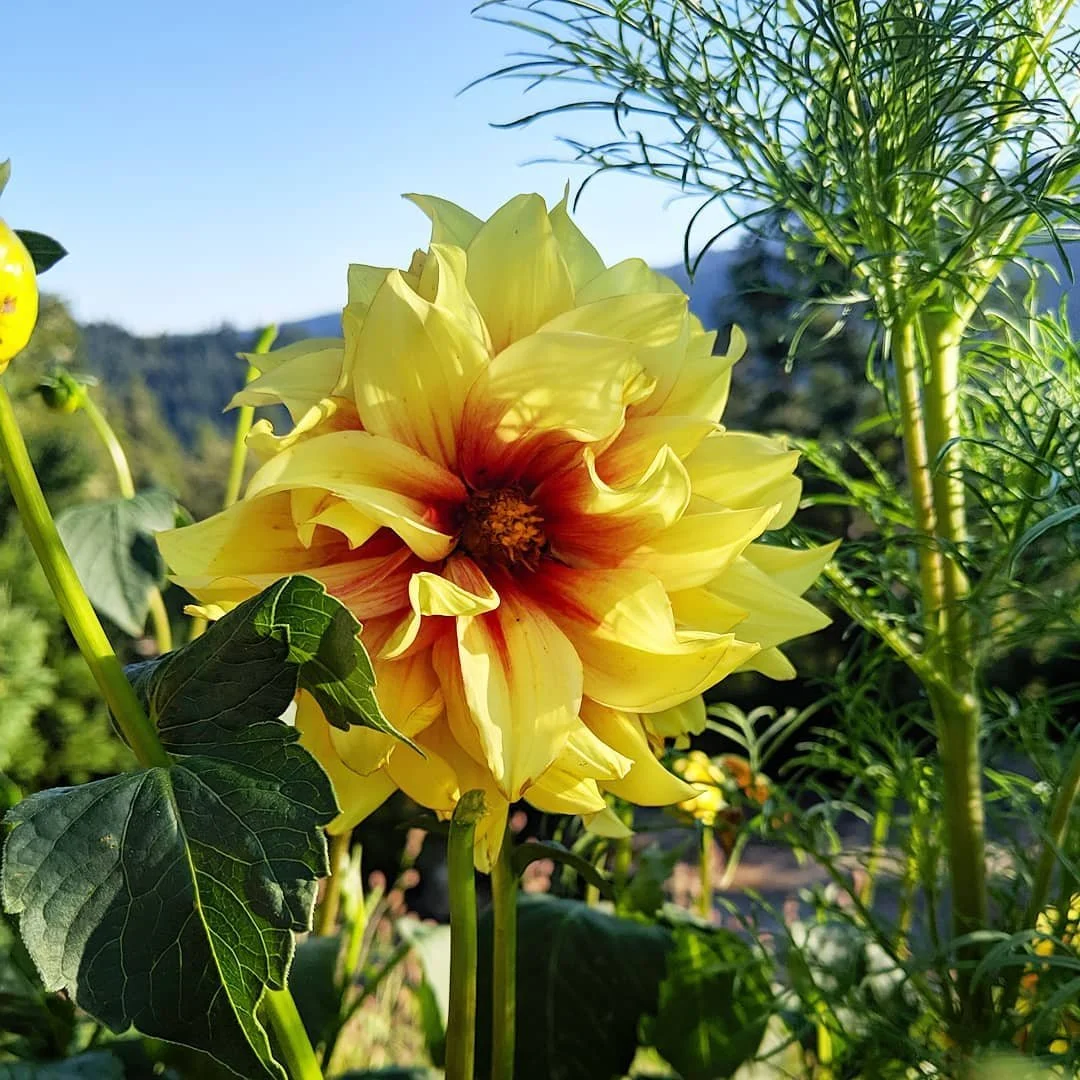
Few flowers can match the drama of a dahlia. From dinner plate-sized blooms to delicate pompons, dahlias transform late summer and fall gardens into a riot of color. And here in Santa Cruz County, our mild climate creates nearly ideal conditions for these showstopping flowers.
If you've ever admired buckets of dahlias at the farmers market and wondered whether you could grow your own, the answer is absolutely yes. Our moderate temperatures, long growing season, and mild winters (in many areas) make dahlia growing more straightforward than in regions with extreme heat or early frosts.
This guide covers everything you need to know to grow stunning dahlias in your Santa Cruz County garden, from selecting tubers to overwintering your collection for years of blooms to come.
Why Dahlias Thrive in Santa Cruz County
Dahlias are native to the mountainous regions of Mexico, where they evolved in conditions remarkably similar to what we experience here: warm days, cool nights, and moderate rainfall. This makes Santa Cruz County one of the best places in the country to grow these spectacular flowers.
Our climate advantages include:
Moderate summer temperatures. Dahlias struggle when temperatures consistently exceed 90°F, which causes bud drop and reduced flowering. Most Santa Cruz County locations stay well below this threshold, even during heat waves. UC Master Gardeners of Monterey and Santa Cruz Counties note that dahlias perform best with daytime highs between 70-85°F, which describes our typical summer perfectly.
Cool nights. The Pacific influence keeps our nights cool (typically 50-60°F even in summer), which dahlias love. Cool nights help flowers develop deeper colors and longer vase life compared to regions where nights stay warm.
Long growing season. Dahlias need about 120 days from planting to peak bloom. Our frost-free period of 300+ days gives plenty of time for tubers to mature and produce abundant flowers.
Reduced pest pressure. The coastal influence suppresses some common dahlia pests, particularly spider mites, which thrive in hot, dry conditions. Our foggy mornings create a less hospitable environment for these damaging pests.
Mild winters. In many Santa Cruz County locations, particularly coastal areas, gardeners can leave dahlias in the ground year-round. This simplifies growing considerably compared to colder regions where tubers must be dug and stored each fall.
Choosing the Right Dahlias
With over 42 recognized dahlia forms and thousands of named varieties, choosing can feel overwhelming. Start by considering how you'll use your dahlias and select forms that match your goals.
By bloom size:
Dinner plate dahlias (8-14" blooms): Dramatic statement flowers. One bloom can anchor an entire arrangement. Varieties like 'Cafe au Lait,' 'Kelvin Floodlight,' and 'Penhill Dark Monarch' fall into this category. They need staking and produce fewer blooms per plant.
Medium dahlias (4-8" blooms): Versatile for arrangements. Good balance of drama and productivity. 'Labyrinth,' 'Cornel Bronze,' and 'Thomas Edison' are popular choices.
Small dahlias (2-4" blooms): High productivity, excellent for cutting. Ball, pompon, and many decorative types. 'Jomanda,' 'Wizard of Oz,' and 'Franz Kafka' produce dozens of blooms per plant.
By flower form:
Decorative: Fully double with broad, flat petals. The most popular form for cutting.
Ball and Pompon: Round, tight flowers with tubular petals. Excellent vase life.
Cactus and Semi-cactus: Spiky, rolled petals. Dramatic and unusual.
Anemone: Open center with shorter petals. Charming cottage-garden feel.
Collarette: Single row of petals with a contrasting "collar." Pollinators love them.
Single and Mignon: Simple, daisy-like flowers. Best for pollinators. Pair them with sunflowers for a pollinator-rich cutting garden.
Best varieties for Santa Cruz County:
For cut flowers, focus on varieties with long, strong stems and good vase life. Ball and pompon types typically outlast decorative forms in a vase, but decoratives offer more drama.
When and How to Plant
Timing. Plant dahlia tubers after your soil has warmed to at least 60°F. In most Santa Cruz County locations, this means:
Coastal areas: Late April to mid-May
Inland valleys: Mid-April to early May
Sunny microclimates: As early as late March (but watch for late frost)
There's no advantage to planting too early. Tubers sitting in cold, wet soil may rot before they sprout. Wait until the soil has genuinely warmed; you can check with a soil thermometer or simply wait until the soil feels comfortably warm to your hand.
Site selection. Choose a spot with:
Full sun (minimum 6 hours, ideally 8+)
Good drainage (dahlias rot in soggy soil)
Protection from strong winds (tall varieties need shelter)
Room to stake and access for cutting
Soil preparation. Dahlias prefer:
Rich, well-draining soil
pH 6.0-7.0 (slightly acidic to neutral, per UC ANR soil guidelines)
Moderate fertility (too much nitrogen produces foliage at the expense of flowers)
Work 2-3 inches of compost into the planting area. Avoid heavy applications of nitrogen-rich fertilizers at planting time.
Planting depth and spacing:
Dig a hole 6-8 inches deep
Lay the tuber horizontally with the eye (growth point) facing up
Cover with 2-3 inches of soil initially
Space plants 18-24 inches apart (closer for smaller varieties, wider for dinner plates)
Staking. Install stakes at planting time, not after plants have grown and you risk damaging tubers. Use sturdy stakes (bamboo, metal, or wood) at least 4 feet tall for medium varieties, 5-6 feet for dinner plates. You'll thank yourself later when plants are heavy with blooms.
Caring for Dahlias Through the Season
Watering. Dahlias need consistent moisture but not waterlogged conditions. The balance is important:
Water deeply once or twice per week rather than light daily sprinkles
Increase frequency during heat waves
Mulch to conserve moisture and regulate soil temperature
Reduce watering in fall as plants begin to wind down
In coastal fog belt areas, you may need less supplemental water. In sunny inland microclimates, summer watering is essential for good bloom production.
Feeding. Dahlias are moderate feeders:
Avoid high-nitrogen fertilizers (promotes foliage over flowers)
Side-dress with balanced fertilizer (10-10-10 or similar) when plants are 12 inches tall
Switch to low-nitrogen, high-potassium fertilizer (like 5-10-10) once buds form
Stop fertilizing in early fall to help tubers harden off
Pinching and disbudding. These techniques dramatically improve dahlia performance:
Pinching: When your plant reaches 12-16 inches tall with 3-4 pairs of leaves, pinch out the center growing tip. This encourages branching and more flowers. Without pinching, you'll get one tall stem with a single bloom. With pinching, you'll get 4-6 stems, each producing multiple flowers.
Disbudding: For larger blooms (especially on dinner plate types), remove the two side buds that develop alongside the central bud on each stem. This directs all the plant's energy into one spectacular flower. For maximum cut flower production, skip disbudding and enjoy more (slightly smaller) blooms.
Pest and disease management.
Common issues in Santa Cruz County include:
Powdery mildew: Appears as white powder on leaves, especially in late summer when days are warm and nights are cool. Improve air circulation, avoid overhead watering, and remove affected leaves. UC IPM recommends preventive applications of sulfur or potassium bicarbonate in susceptible gardens.
Slugs and snails: Love tender dahlia shoots in spring. Use iron phosphate bait (safe for pets and wildlife) or handpick at night.
Earwigs: Hide in dahlia blooms and damage petals. Shake flowers gently before bringing inside. Trap earwigs with rolled newspaper or tuna cans baited with oil.
Spider mites: Less common in coastal areas but possible during dry spells. Look for stippled leaves and fine webbing. Spray with water to dislodge; use insecticidal soap for severe infestations.
Harvesting Dahlias for Bouquets
Proper harvesting technique can mean the difference between flowers that last 3 days and those that last 10+ days in a vase.
When to cut. Harvest when flowers are about 3/4 to fully open. Unlike many flowers, dahlias don't continue opening much once cut. A tight bud may never open; an overly mature bloom will drop petals quickly.
How to cut:
Harvest in early morning or late evening when flowers are most hydrated
Use clean, sharp snips or a knife
Cut stems long (at least 12-18 inches)
Plunge immediately into cool water
Conditioning for long vase life:
Strip all foliage that would be below waterline
Re-cut stems at an angle under water (removes air bubbles)
Let flowers rest in cool water for several hours or overnight in a cool, dark place
Use clean vases and fresh water with floral preservative
Hot water treatment (optional but effective): Some dahlia growers swear by briefly dipping cut stems in hot (not boiling) water for 20-30 seconds, then immediately into cool water. This is thought to seal latex and improve water uptake. Try it and see if you notice a difference.
Extend your harvest: The more you cut, the more dahlias produce. Regular cutting encourages continuous blooming through frost. For variety in your bouquets, grow snapdragons alongside your dahlias. If you let flowers go to seed, production slows dramatically. For nonstop blooms from spring through fall, explore succession planting for cut flowers.
Overwintering Dahlias in Santa Cruz County
Here's where our climate offers a real advantage: in many Santa Cruz County locations, you can leave dahlia tubers in the ground year-round.
In-ground overwintering (coastal and mild areas):
If your garden rarely experiences hard freezes (below 28°F for extended periods), try leaving tubers in place:
After frost blackens foliage (or in late fall if frost doesn't come), cut stalks to 4-6 inches
Apply 4-6 inches of mulch over the planting area (leaves, straw, or wood chips)
Ensure good drainage; wet soil plus cold is the real killer
Mark locations so you don't accidentally dig into tubers in spring
This works well in most coastal locations, including Live Oak, Aptos, Capitola, and much of Santa Cruz proper. Success rates vary in inland areas.
Digging and storing (colder microclimates):
If you garden in frost-prone areas (mountain elevations, cold air drainages, SLV valleys), dig tubers for winter storage:
After first frost blackens foliage, cut stalks to 4-6 inches
Carefully dig tubers, working from the outside in to avoid cuts
Gently shake off soil but don't wash (risks rot)
Let tubers cure for a few days in a frost-free location
Store in slightly damp peat moss, vermiculite, or wood shavings
Keep in a cool (40-50°F), dark place; check monthly for rot or shriveling
Divide and replant in spring
The goal of storage is maintaining tubers at cool temperatures with just enough humidity to prevent shriveling but not so much that they rot.
Dividing tubers: After a season of growth, your original tuber will have multiplied into a clump. Divide in fall before storing or in spring before planting:
Each division needs at least one "eye" (growth point) connected to a tuber
Eyes are typically found where tubers connect to the old stalk
Use a clean, sharp knife
Let cuts dry for a day before storing or planting
Dahlias by Microclimate
Coastal fog belt (Westside Santa Cruz, Live Oak, Aptos, Capitola)
Advantages: Reduced spider mite pressure, cooler temperatures extend bloom quality, in-ground overwintering usually successful.
Challenges: Less intense sun may produce slightly smaller blooms. Some dinner plate varieties may not reach full size.
Recommendations: All dahlia types succeed here. This is excellent dahlia territory. Focus on varieties you love without worrying much about climate limitations.
San Lorenzo Valley and sunny inland areas (Boulder Creek, Scotts Valley, Ben Lomond ridges)
Advantages: More intense sun produces vibrant colors and larger blooms. Excellent growing conditions during the season.
Challenges: Greater temperature swings. May need to dig and store tubers in colder pockets. More careful watering needed.
Recommendations: All dahlias grow well during the season. Decide whether in-ground overwintering works for your specific location by trialing a few tubers; conditions vary considerably.
Under the redwoods (Felton, Ben Lomond canyons)
Advantages: Cool temperatures are good for dahlia flower quality.
Challenges: Limited sun is the primary constraint. Dahlias need at least 6 hours of direct sun to bloom well.
Recommendations: Only plant dahlias if you have a sunny clearing. Shaded gardens won't produce satisfactory results regardless of other conditions.
Pajaro Valley / Watsonville
Advantages: Warm soil, long season, excellent conditions for large dahlia production.
Challenges: Higher temperatures may require more diligent watering.
Recommendations: Outstanding dahlia territory. Expect prolific blooms and success with even challenging varieties.
If you want to see dahlia forms side by side before you order tubers, our guide to the u-pick farms and flower fields around Santa Cruz covers the dahlia patches you can cut from in late summer.
Frequently Asked Questions
When do dahlias bloom in Santa Cruz County? Expect first blooms about 8-12 weeks after planting, typically mid-July to August depending on variety and planting date. Peak bloom occurs in September and October, continuing until frost (which may never arrive in coastal areas).
Can I grow dahlias from seed? Yes, though most gardeners grow from tubers. Seed-grown dahlias won't be identical to named varieties but can produce lovely, unique plants. Start seeds indoors 6-8 weeks before planting out. First-year tubers are often small but can be saved.
How do I know if my tubers are still good in spring? Healthy tubers are firm, not shriveled or mushy, with visible eyes (growth points). If a tuber is soft, moldy, or completely dried out, discard it. Partially damaged tubers can sometimes be salvaged by cutting away the bad portion.
My dahlias aren't blooming. What's wrong? The most common causes are insufficient sun (need at least 6 hours), too much nitrogen (lots of foliage, few flowers), or planting too late. Also check for earwig damage to developing buds.
Should I remove dahlia flowers that are past their prime? Yes. Deadheading (removing spent blooms) encourages continued flowering. Cut back to where a new side shoot is emerging for best results.
Do dahlias need to be staked? Most varieties benefit from staking, especially dinner plates and tall decoratives. Even shorter varieties can flop under the weight of rain-soaked blooms. Stake at planting time to avoid damaging tubers later.
Are dahlias deer-resistant? No. Deer love dahlia foliage and flowers. If deer visit your garden, you'll need fencing to protect dahlias.
Can I grow dahlias in containers? Yes, but choose smaller varieties (ball, pompon, or dwarf types) and use large containers (at least 10-gallon size). Container dahlias need more frequent watering and feeding than in-ground plants.
Free Resources
Download these guides to support your dahlia growing:
Seasonal Planting Calendar: Month-by-month timing for Santa Cruz County
Companion Planting Guide: What to plant alongside dahlias
Visit our Garden Toolkit for more downloadable resources.
