

Understanding Frost Dates in Santa Cruz County
A few of the product links in this guide are affiliate links. If you buy through one, Ambitious Harvest may earn a small commission at no extra cost to you, which helps keep these guides free. We only point to gear we would use in our own Santa Cruz garden. As an Amazon Associate, we earn from qualifying purchases. Read our full disclosure.
Why Are Generic Frost Dates Wrong for Santa Cruz County?
The average last spring frost in coastal Santa Cruz County falls between January 15 and February 15, while inland valleys experience their last frost between February 15 and March 31. According to the Western Regional Climate Center, these dates vary by 6 to 8 weeks depending on microclimate, elevation, and proximity to the coast. Coastal areas average 300 or more frost-free days per year, while mountain locations may see only 200 to 250.
National gardening resources will tell you our "last frost" is somewhere in March or April and our "first frost" is in November or December. These broad generalizations ignore the dramatic microclimate differences across our county. Coastal Aptos may never experience frost in a typical year. Boulder Creek can frost from late October through early May. The gap between these realities is enormous.
Even USDA hardiness zones (we're 9b to 10a depending on location) don't capture frost timing well. They tell you average minimum winter temperatures but not when frost occurs or how often. Generic frost-date calculators give you a single date for the entire city, ignoring whether you're gardening on a sunny ridge or in a shaded canyon.
This guide explains what frost actually means for your garden, provides accurate frost dates for specific areas of Santa Cruz County, and shows you how to protect plants when unexpected cold arrives.
What Temperature Causes Frost in a Garden?
Frost occurs when temperatures drop to 32°F (0°C) or below and moisture in the air or in plant cells freezes. When water inside plant cells freezes, it expands, rupturing cell walls and killing the tissue.
Types of Frost
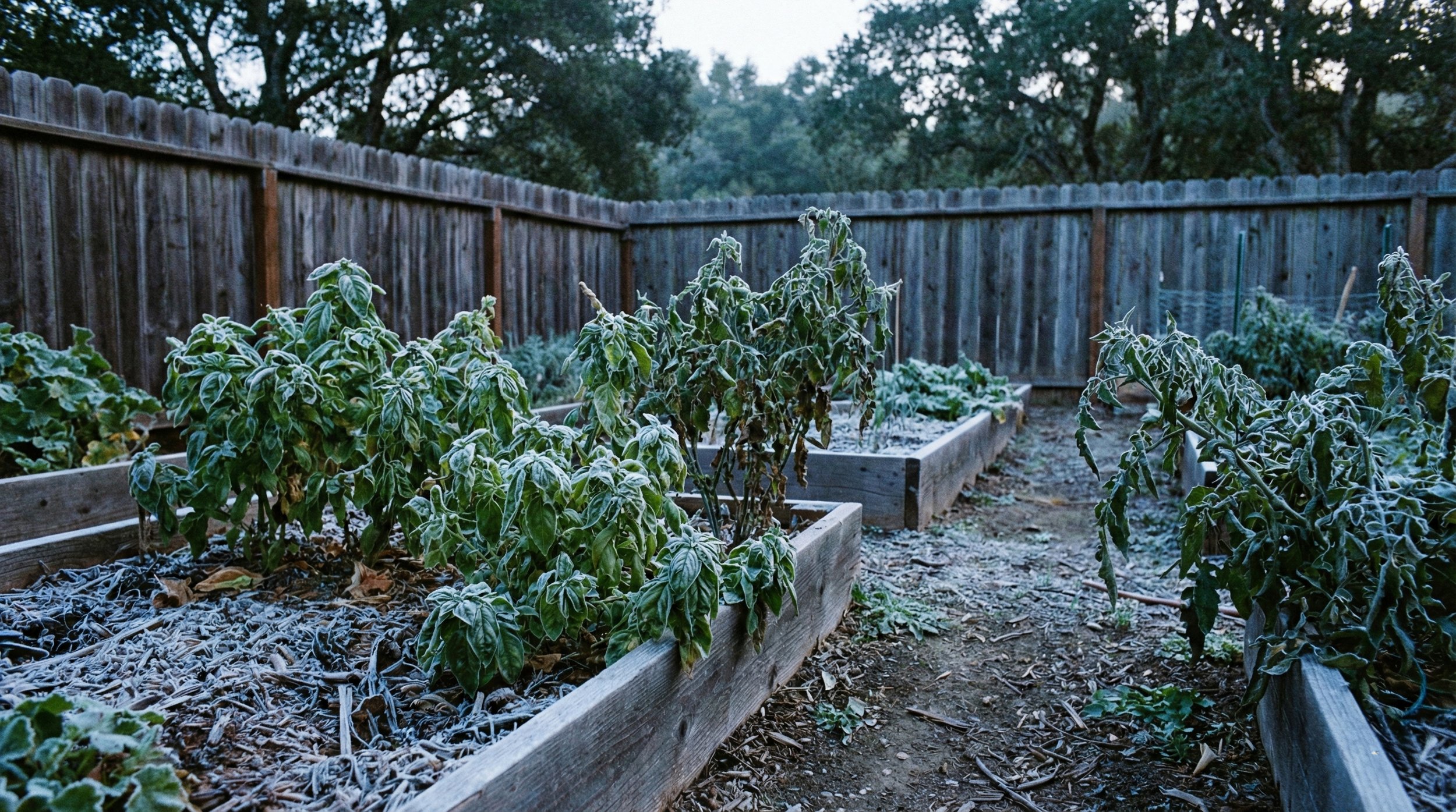
Light frost (32°F to 29°F): Damages tender plants like tomatoes, peppers, basil, squash, cucumbers, beans, and melons. Hardy crops like kale, chard, broccoli, and lettuce are fine and may actually taste better after exposure to cold.
Hard frost or freeze (28°F or below): Damages even hardy vegetables. Most crops suffer at least some damage. Root vegetables in the ground can handle this if mulched, but above-ground portions of even cold-hardy plants may be damaged.
Frost vs. Freeze
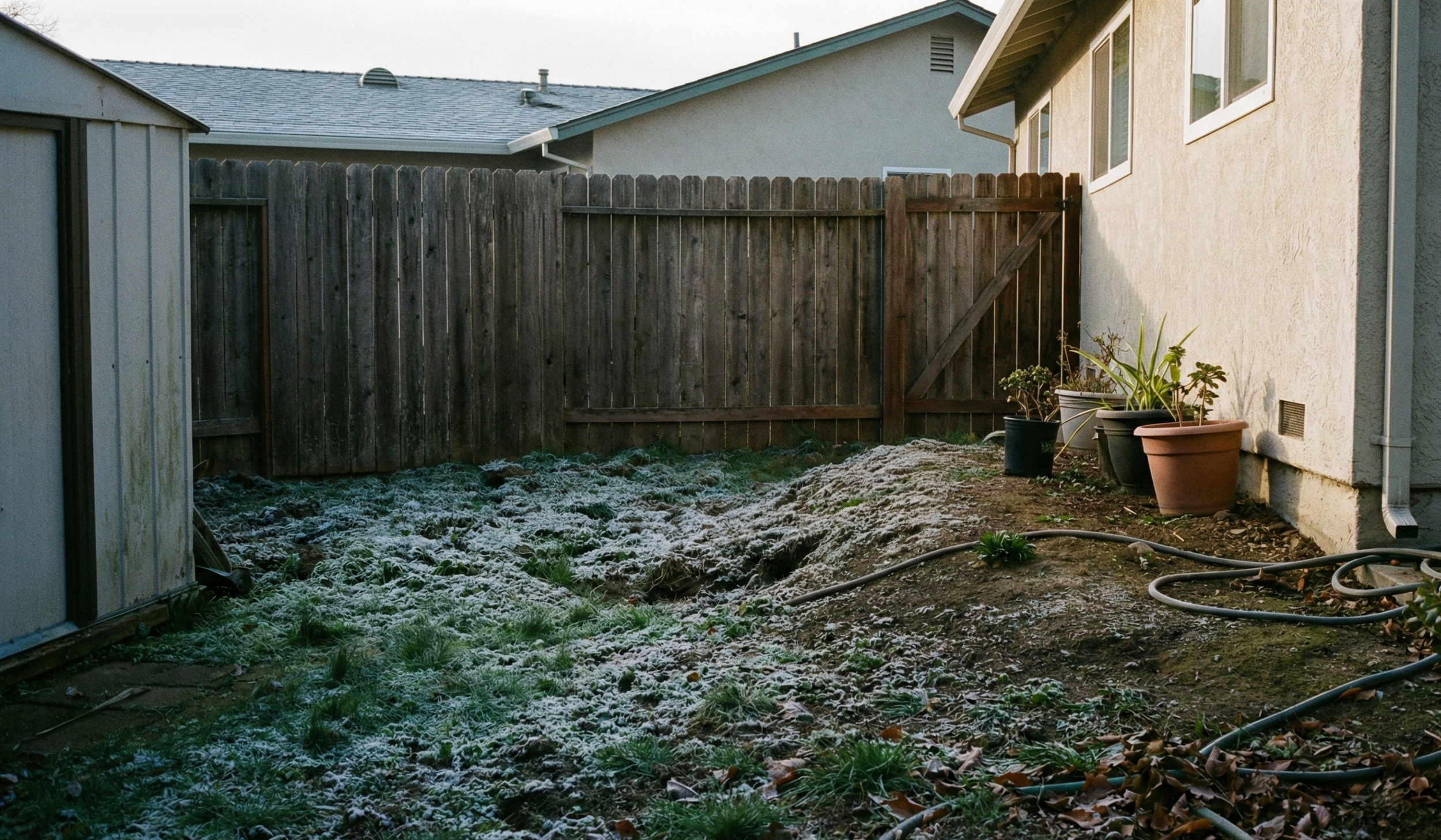
Frost refers to ice crystals forming on surfaces when temperatures drop to freezing. The actual air temperature may be slightly above 32°F while surfaces cool enough through radiational cooling to form frost.
Freeze describes a longer period of below-freezing temperatures that penetrates deeper into plant tissue and soil. A freeze is more damaging than a brief frost.
In Santa Cruz County, hard freezes are rare except in mountain areas. Most of our cold events are light frosts that last a few hours before dawn and lift as the sun rises.
Why Do Frost Dates Matter for Vegetable Gardening?
Last spring frost: The date after which frost is unlikely. This tells you when it's safe to plant tender warm-season crops like tomatoes, peppers, eggplant, squash, cucumbers, and basil outdoors without protection.
First fall frost: The date when frost becomes likely again. This tells you how long your growing season is and when to harvest remaining tender crops or protect them.
Frost-free season: The days between last spring frost and first fall frost. This is how long you have for warm-season crops to mature from transplant to final harvest.
Santa Cruz's Advantage
Our mild Mediterranean climate gives us one of the longest frost-free seasons in the country. Climate data for Santa Cruz shows very few freezing nights, with average winter lows mostly in the 40s. Many coastal areas go entire winters without measurable frost. This allows year-round gardening for cool-season crops and an extended season for tomatoes, peppers, and other warm-season favorites.
But "mild" doesn't mean "uniform." Your specific microclimate determines your actual frost risk, and the variation across the county is dramatic. A gardener in coastal Capitola and a gardener in the canyons of Felton might as well be in different climate zones.
What Are the Frost Dates for Each Santa Cruz Microclimate?
Here are approximate frost dates by location. These are guidelines based on typical years, not guarantees. Unusually cold winters bring frost to areas that normally escape it. Microclimates vary even within neighborhoods, and your specific yard may differ from neighbors just up the hill or down the street.
Coastal Areas (Aptos, Capitola, Live Oak, Santa Cruz Beaches, Seacliff, Rio Del Mar)
Last spring frost: Rare, typically not a concern. Maybe late February or March in unusual years.
First fall frost: Late December or none. Many years go entirely frost-free.
Frost-free season: 300+ days, essentially year-round for practical purposes.
Why: Ocean proximity moderates temperatures powerfully. The Pacific Ocean is a massive thermal buffer, keeping coastal areas from getting very hot or very cold. Cold air drains toward lower elevations and the water. Marine layer (fog) provides insulation on clear nights that would otherwise promote frost formation.
Planting implications: You have the longest season for cool-season crops but may actually struggle more than inland gardeners with heat-loving crops due to fog and persistently cool summer temperatures. Don't rush to plant tomatoes just because frost isn't a concern. Wait until late May or June when soil finally warms, or your tomatoes will sulk in cold soil despite frost-free conditions. For more details, see our guide to Gardening in Coastal Aptos & Capitola.
Inland Valleys (Scotts Valley, Inland Santa Cruz, Soquel Hills, Upper Aptos)
Last spring frost: Mid to late April
First fall frost: Mid to late November
Frost-free season: 210 to 240 days
Why: Farther from ocean moderation but still relatively protected. Cold air can settle in valley bottoms, creating frost pockets. Elevation varies, creating significant variation within these areas.
Planting implications: More reliable warmth for tomatoes and peppers than coastal areas, often with better fruit set and earlier ripening. Plant warm-season crops mid-May. Expect frost to end your tomato season by Thanksgiving, though often you can squeeze out another week or two with protection.
San Lorenzo Valley Sunny Exposures (Boulder Creek South-Facing Slopes, Ben Lomond Ridges)
Last spring frost: Late April to early May
First fall frost: Early to mid-November
Frost-free season: 190 to 210 days
Why: Higher elevation than the coast or Scotts Valley, farther from ocean moderation, surrounded by mountains that trap cold air. However, south-facing slopes and sunny exposures can be significantly warmer than the valley floor. Climate data for Boulder Creek shows significantly more cold nights than Santa Cruz proper.
Planting implications: Excellent summer heat for warm-season crops once established, but a shorter season than lower elevations. Plant tomatoes in mid to late May after soil warms. Frost arrives earlier in fall, so plan harvests accordingly. The intense summer sun can be an advantage for heat-loving crops. For detailed guidance, see our article on Gardening in the San Lorenzo Valley.
Shaded Canyons and Under Redwoods (Felton, Ben Lomond Shaded Areas, Creek Drainages, Boulder Creek Valley Floor)
Last spring frost: Late April to early May
First fall frost: Mid-October to early November
Frost-free season: 160 to 190 days, but shade limits warm-season crops regardless of frost
Why: Cold air is heavy and drains into canyons, valleys, and low-lying areas, where it settles and pools. Shade from redwood canopy keeps temperatures cool even on sunny days. Frost forms earlier in fall and persists later into spring in these cold pockets.
Planting implications: Focus on cool-season crops that tolerate both frost and shade. Warm-season crops struggle more from inadequate sun than from frost timing. If you have 4+ hours of sun, protect frost-sensitive plants in both spring and fall to extend your season.
Bonny Doon
Last spring frost: Mid-April to early May (varies significantly by specific location)
First fall frost: Early to mid-November
Frost-free season: 190 to 220 days
Why: Bonny Doon is particularly variable. Coastal-facing slopes get marine influence and milder temperatures. Inland-facing areas and higher elevations experience more frost. The plateau geography creates complex air drainage patterns.
Planting implications: Know your specific spot. Some Bonny Doon gardens are nearly frost-free; others frost regularly from October through April. Observe your property across a full year before making assumptions.
Pajaro Valley and Watsonville
Last spring frost: Early to mid-April
First fall frost: Late November to early December
Frost-free season: 230 to 260 days
Why: Agricultural zone with good air drainage, moderate elevation, and less marine fog influence than the immediate coast while still benefiting from ocean temperature moderation. The valley floor can have frost pockets, but overall conditions are favorable. Frost date data for this area confirms the extended growing season.
Planting implications: Excellent for warm-season crops. Commercial farms grow here for good reason. Plant tomatoes late April to mid-May. The combination of warmth, sun, and long season makes this area ideal for heat-loving vegetables.
What Factors Create Frost Pockets in My Yard?
Even within a single yard, frost risk varies. Understanding these factors helps you place tender crops strategically and use your warmest spots for plants that need protection.
Elevation and Air Drainage
Cold air is denser than warm air. It sinks to the lowest points and pools there.
Low-lying areas: Higher frost risk. Avoid planting tender crops in dips, swales, the bottom of slopes, or areas where cold air naturally collects.
Higher ground: Lower frost risk. Even a slight rise of 2 to 3 feet above surrounding terrain can make a meaningful difference on marginal nights.
Slopes: Cold air drains downhill like water. Mid-slope positions are often warmer than either the top (exposed to wind) or the bottom (cold air pooling).
Structures and Thermal Mass
South-facing walls: Absorb heat during the day and radiate it back at night. The area within a few feet of a south-facing wall can be 3 to 8°F warmer than an exposed location. This is prime real estate for tomatoes, peppers, and other tender crops.
North-facing areas: Coldest spots on your property. First to frost, last to warm up in spring. Use these for cold-hardy crops or non-garden purposes.
Paved surfaces, stone walls, and large rocks: Absorb and slowly release heat, moderating temperatures in nearby soil and air.
Overhanging eaves and tree canopy: Create a "ceiling" that traps rising warm air and reduces radiational cooling. Plants under trees or eaves often escape frost that damages plants in the open.
Wind and Exposure
Windbreaks (fences, hedges, buildings): Slow cold air movement and reduce frost severity in the protected area. A solid fence or dense hedge on the north or east side of your garden provides meaningful protection.
Exposed, open areas: More vulnerable to frost. Wind strips away the thin boundary layer of warmer air that naturally forms near the ground and plant surfaces.
Coastal winds: Generally protective, bringing marine warmth and moisture. However, occasional offshore (east) winds can increase frost risk by bringing cold, dry air from inland.
Soil Moisture
Moist soil holds more heat than dry soil and releases it slowly overnight, moderating air temperatures near the ground.
Dry soil cools quickly and provides little thermal buffer.
Watering before an expected frost can actually help protect plants. Moist soil radiates heat through the night. Water in the afternoon before a frost (not at night, which can increase humidity and ice formation on leaves).
How Can I Tell When Frost Is Coming?
Don't rely solely on generalized frost dates. Learn to watch for conditions that create frost so you can protect plants when it matters.
Signs Frost Is Likely
Clear skies: Cloud cover acts like a blanket, trapping heat near the ground. Clear skies allow heat to radiate into space, and temperatures drop more dramatically.
Calm winds: Still air allows cold to settle near the ground. Wind mixes air layers and prevents the coldest air from pooling at plant level.
Low humidity: Dry air cools faster than moist air. Coastal fog and high humidity provide some natural frost protection.
Temperature dropping rapidly after sunset: If temperatures fall 5 to 10°F in the first hour after sunset on a clear, calm night, frost is likely by dawn.
Dew point at or below 32°F: The dew point is the temperature at which moisture condenses from the air. If the dew point is at or below freezing, frost will form when air temperature drops to that point. Weather forecasts include dew point.
Where to Check Forecasts
Weather.gov and Weather.com provide overnight low temperatures for your area. If your location is forecast for 36°F or below and conditions are clear and calm, assume frost is possible, especially in cold pockets.
Hyperlocal weather stations: Personal weather stations report on sites like Weather Underground (wunderground.com). Search for stations near your address for more localized data than official forecasts, which may be based on sensors miles away.
Your own observations: Keep a simple garden journal. Note when frost occurs in your yard, what the forecast said, and what conditions were like. Over a few seasons, you'll know your specific frost risk better than any forecast or generalized frost date.
How Do I Protect My Plants from Frost?
If frost threatens and you're not ready to lose your tender plants, protection is possible. Most protection methods are simple and use materials you already have.
Row Covers and Frost Blankets
How they work: Lightweight fabric traps heat radiating from the soil, creating a warmer microclimate underneath. The fabric also reduces radiational cooling from plant surfaces.
Protection level: Adds 2 to 8°F of protection depending on fabric weight. Heavyweight frost blankets provide more protection than lightweight row cover.
Best for: Low-growing crops (lettuce, greens, strawberries), newly planted transplants, and beds you can easily drape.
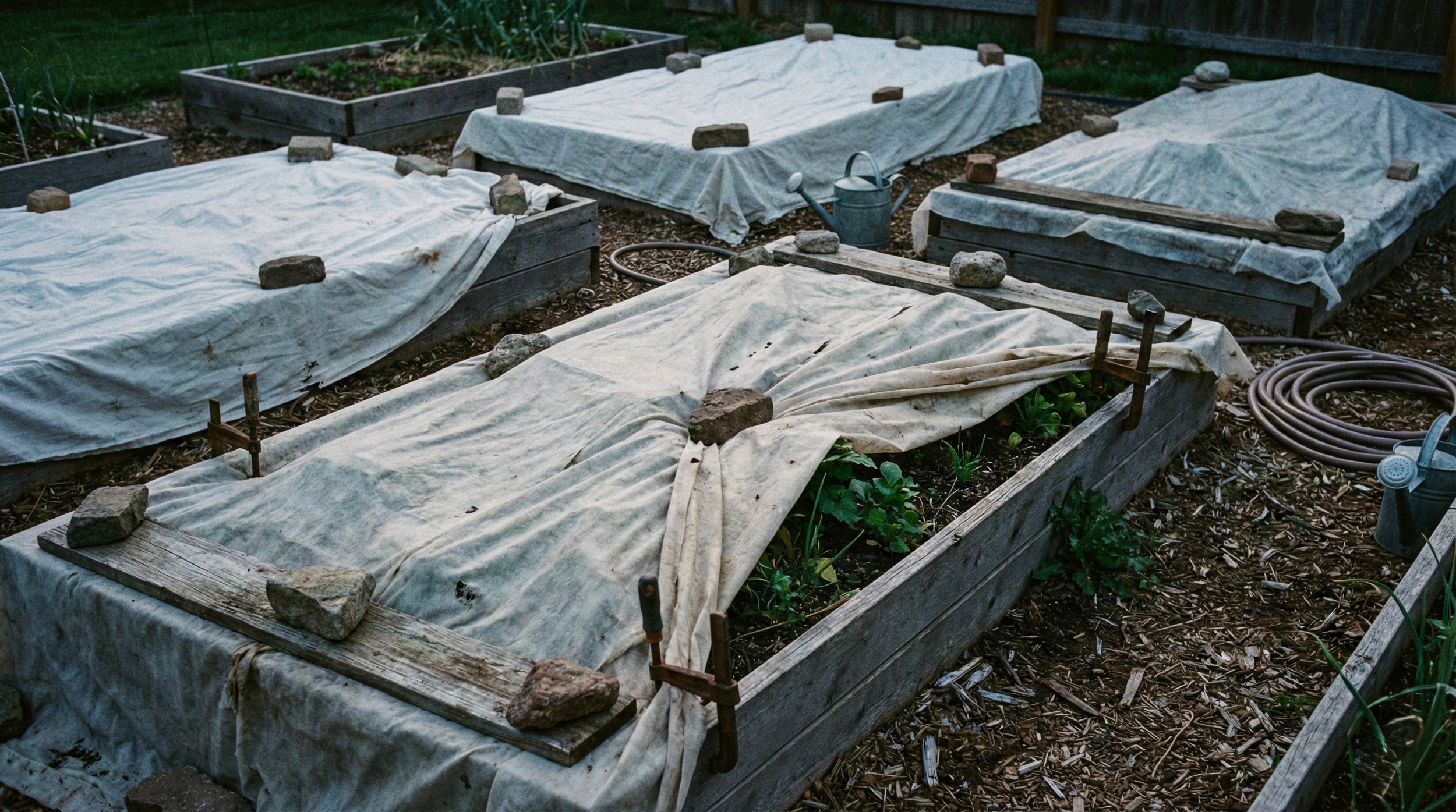
How to use: Drape over plants before sunset, while air is still relatively warm. Secure edges with rocks, boards, or landscape pins so cold air doesn't blow underneath. Remove in morning after temperatures rise above freezing so plants don't overheat.
Reusable: Good quality row cover lasts 3 to 5 seasons with careful handling.
Where to buy locally: San Lorenzo Garden Center, Mountain Feed & Farm Supply, Dig Gardens, or online from Johnny's Selected Seeds or Peaceful Valley Farm Supply.
Bedsheets, Blankets, and Tarps
Old bedsheets, blankets, and even plastic tarps work similarly to commercial row cover. Use whatever you have on hand. Fabric that breathes is better than solid plastic, which can trap moisture and cause other problems.
Tip: Don't let fabric rest directly on plant leaves where possible. Leaves touching cold fabric can freeze even when surrounding air doesn't. Use stakes, tomato cages, or hoops to lift fabric slightly above the plant.
Cloches and Hot Caps
Individual plant covers (plastic jugs with bottoms cut off, milk cartons, commercial glass or plastic cloches) protect single plants.
Best for: Protecting individual transplants in spring, especially newly planted tomatoes, peppers, and eggplant.
Important: Remove during sunny days or plants will overheat. The same properties that trap heat at night cause temperatures to soar when the sun hits them.
Mulch
Heavy mulch (4 to 6 inches) around plants protects roots and crowns even when above-ground portions freeze. Mulch won't save exposed foliage but helps plants survive and regrow from protected crowns and roots.
Best for: Protecting root vegetables (carrots, beets, turnips, parsnips), garlic, perennial herbs, and overwintering crops. Heavily mulched carrots and parsnips can be harvested all winter even through frost.
Move Containers
Container soil freezes faster than ground soil because it's exposed on all sides. Move pots against a south-facing wall, under eaves, or into a garage overnight on frost nights.
Even moving containers to a covered porch or against the house provides meaningful protection.
Water Before Frost
Counterintuitive but effective. Moist soil holds and releases heat more effectively than dry soil. Water your garden in the afternoon before an expected frost (not at night, which increases humidity around leaves).
The thermal mass of wet soil radiates heat through the night, moderating air temperature near the ground.
Do Nothing
For most Santa Cruz gardeners, occasional light frost isn't worth extensive stress or effort. Cool-season crops handle frost just fine. Warm-season crops are usually finished by the time frost arrives anyway. If a tomato plant dies in November, that's the natural end of its season.
Protect newly planted spring transplants when a late frost threatens. Otherwise, let nature take its course. A light frost that kills your basil in late October is simply telling you basil season is over.
How Do Frost Dates Affect When I Should Plant?
The advice to "plant after last frost" is too vague for Santa Cruz County's varied microclimates. Here's a more nuanced approach:
For Warm-Season Crops
Check soil temperature, not just air temperature. Warm-season crops like tomatoes, peppers, squash, and beans need soil at least 60°F to thrive, ideally 65 to 70°F. Cold soil stunts growth even when air temperatures are safe and frost-free. A soil thermometer (available at nurseries) takes the guesswork out of this. For more on soil temperature thresholds and planting timing, see this helpful guide.
Coastal gardeners: You can technically plant tomatoes in April since frost isn't a concern. But your soil won't warm up until late May or June, and fog keeps air temperatures cool. Plants set out too early sit and sulk. Wait until soil warms even though the calendar says it's safe.
Inland and mountain gardeners: Soil warms faster once spring arrives. You can often plant in mid-May when soil temperatures and frost risk align favorably.
Watch your neighbors. When experienced gardeners in your neighborhood start putting tomatoes in the ground, conditions are probably right.
For Cool-Season Crops
Frost isn't a concern. Broccoli, kale, lettuce, peas, cabbage, and root vegetables tolerate frost. Plant them in fall (September to November) and spring (February to April) without worrying about frost dates. The UC Master Gardener Program uses frost dates to determine planting times, noting that cool-season crops tolerate slight frosts while warm-season crops require frost-free conditions to thrive.
In fact, fall planting is often better than spring planting for these crops. They establish during mild fall weather, grow slowly through winter, and produce abundantly in spring before heat arrives.
What Vegetables Can Survive Frost?
These crops tolerate frost and often taste better after cold exposure. UC Master Gardeners of Sonoma County note that some cold-hardy crops, such as cabbage and Brussels sprouts, can become sweeter with a light frost. For a complete reference on vegetable frost tolerance, see this helpful chart.
Very Frost-Hardy (to 20°F or below)
Kale (all varieties)
Collard greens
Brussels sprouts
Cabbage
Spinach
Turnips and turnip greens
Parsnips (flavor improves dramatically after frost)
Leeks
Garlic
Mâche (corn salad)
Claytonia (miner's lettuce)
Moderately Frost-Hardy (to 25°F to 28°F)
Broccoli
Cauliflower
Swiss chard
Beets and beet greens
Carrots
Lettuce (most varieties, though some are more cold-tolerant than others)
Peas
Radishes
Bok choy and other Asian greens
Cilantro
Parsley
Frost-Sensitive (damaged at 32°F or below)
Tomatoes
Peppers (all types)
Eggplant
Squash (summer and winter)
Cucumbers
Melons
Basil
Beans (all types)
Corn
Sweet potatoes
Frequently Asked Questions About Frost in Santa Cruz County
I live on the coast and everyone says we're frost-free. Should I even worry about this?
Mostly no, but occasionally yes. Coastal areas go years without frost, then get a surprise cold snap. The January 2007 freeze and the December 2013 cold event both brought frost to areas that rarely see it. It's worth knowing the signs of frost-prone conditions (clear, calm, cold nights) so you're not caught completely off guard. But don't lose sleep over it. The odds are strongly in your favor.
If my area is frost-free, why shouldn't I plant tomatoes in March?
Because soil temperature matters as much as frost. Tomatoes need warm soil (60°F minimum, 65 to 70°F ideal) to grow vigorously. Coastal soil stays cold through spring due to fog and cool marine air. A tomato planted in March will sit there, barely growing, stressed and vulnerable to disease, until soil warms in late May or June. A tomato planted in June often catches up to and surpasses one planted in March because it never experiences cold-soil stress.
How do I know if I'm in a frost pocket?
Signs of a frost pocket include: being at the bottom of a slope or in a low-lying area, noticing that frost lingers longer in your yard than in neighboring higher areas, finding frost on your lawn when neighbors uphill don't have it, and seeing that cold air seems to "pool" in your location on calm, clear nights. If you're unsure, observe your property over a winter. Frost pockets become obvious once you're watching for them.
My neighbor's garden frosts but mine doesn't (or vice versa). How is that possible?
Microclimates vary significantly even within short distances. Your neighbor might be in a slight depression where cold air pools. Or they might have an open yard while yours is protected by trees or structures. South-facing versus north-facing orientation makes a huge difference. Proximity to buildings, paving, or large rocks affects thermal mass. These small variations can mean the difference between frost and no frost on marginal nights.
Should I cover my citrus trees when frost is forecast?
Yes, young citrus trees (under 3 to 4 years old) are vulnerable to frost damage and worth protecting with blankets or frost cloth draped over the canopy. Mature citrus trees are generally more cold-tolerant and can handle light frost, though prolonged freezes can damage fruit and foliage. If hard frost (below 28°F) is forecast, protect even mature trees if practical.
What's the difference between frost date and planting date?
Frost date tells you when frost risk ends (spring) or begins (fall). Planting date depends on frost date plus other factors: soil temperature, day length, the specific crop's needs, and your microclimate. Frost date is one input to determine planting date, but not the only one. Our monthly planting guides take all these factors into account for Santa Cruz County conditions.
Can frost actually improve some vegetables?
Yes. Cold exposure improves the flavor of several cold-hardy crops. Kale, Brussels sprouts, parsnips, carrots, turnips, and leeks all taste sweeter and more complex after frost. This is why fall-planted crops often taste better than spring-planted ones: they've experienced cold that intensified their flavor. Some gardeners deliberately leave parsnips in the ground through multiple frosts before harvesting.
How accurate are frost date averages?
They're useful guidelines but not guarantees. "Average last frost April 15" means frost has occurred after April 15 about half the time in historical records. In any given year, the actual last frost might be March 20 or May 5. Climate change is also shifting frost dates, generally making last frosts earlier and first frosts later in many California locations. Use averages as starting points, but observe your own conditions.
Free Frost and Planting Resources
Download these guides to help time your plantings:
Seasonal Planting Calendar - Month-by-month planting guide for Santa Cruz County.
Know Your Microclimate Worksheet - Document your garden's specific frost risk, sun exposure, and other conditions.
Vegetables by Season Guide - Which crops are frost-hardy and which need protection.
Seasonal Tasks Checklist - Reminders for seasonal garden preparation, including frost protection timing.
Related Articles
What Is the Bottom Line on Frost Dates?
Forget generic frost dates from national gardening resources. They don't account for Santa Cruz County's remarkable microclimate variation. Instead, learn your specific location's patterns.
Coastal gardeners rarely worry about frost but deal with cool, foggy summers. Inland gardeners have real frost risk but enjoy warmer summers for heat-loving crops. Mountain gardeners balance shorter seasons against excellent growing conditions during frost-free months.
Watch for frost conditions (clear, calm, cold nights) and protect tender plants when needed. But mostly, plant cool-season crops in fall and winter when they thrive, and warm-season crops in late spring when soil has truly warmed. Let soil temperature, not arbitrary calendar dates, guide your most important planting decisions.
Santa Cruz's mild climate is a gardening gift. Even our "frost risk" is minimal compared to most of the country. Once you understand your specific microclimate, you can garden year-round with confidence.
