

Growing Roma Tomatoes in the San Lorenzo Valley
If you garden in Felton, Ben Lomond, or Boulder Creek, whether you can grow a Roma depends almost entirely on which part of your property you are standing in. The SLV is a split reality: sunny ridges can do it, shaded redwood canyons cannot.
Quick verdict: It depends on your sun. On an open ridge or south-facing clearing with six or more hours of direct sun, Romas are workable and the valley's warm afternoons help them ripen. Down in a shaded canyon under the redwoods, with cold air pooling at night and short usable sun, they are a poor fit. Before you plant, audit your actual sun hours. That single number decides this for you.
Do a real sun audit first
The San Lorenzo Valley is a folded landscape of ridges, slopes, and deep canyons threaded by tall redwoods, and the sun reaches each of those very differently. A Roma needs at least six hours of direct summer sun, and many SLV yards that feel bright actually get far less once you track the shadows hour by hour. Redwoods and Douglas firs throw long, moving shade, and a clearing that is sunny at noon can be shaded by ten in the morning and again by three in the afternoon. Spend one clear day noting when direct sun actually lands on your intended bed. If you cannot find six real hours, the answer is not a different tomato, it is a different spot, or a container you can move into the sun. A ridge-top or south-facing opening with full sun is genuinely good Roma ground. A canyon-floor bed under filtered redwood light is not, no matter how you tend it.
Frost pockets and timing in the valley
The other half of the split is temperature. The SLV runs colder than the coast or the Banana Belt because cold air drains downhill at night and pools on the canyon floors and valley bottoms. Those frost pockets can stay cold weeks after the ridges have warmed, and they can deliver a surprise late frost in spring or an early one in fall that the rest of the county never sees. This is why timing matters more here than almost anywhere in the county. On a cold valley floor, hold transplants until mid to late May when the pooling cold has truly passed. On a warm ridge that drains well and never frosts, you can plant a couple of weeks earlier. Know which you have, because a frost pocket will cut your season at both ends and a Roma needs every warm week it can get.
When to plant in the San Lorenzo Valley
SLV frost dates vary by hundreds of feet of elevation and by where the cold air settles, so the county-wide frost calendar is only a rough guide here. Trust your own spot. If you have watched frost linger in your low corner into April, plant late and warm the soil first.
The container-on-the-ridge option
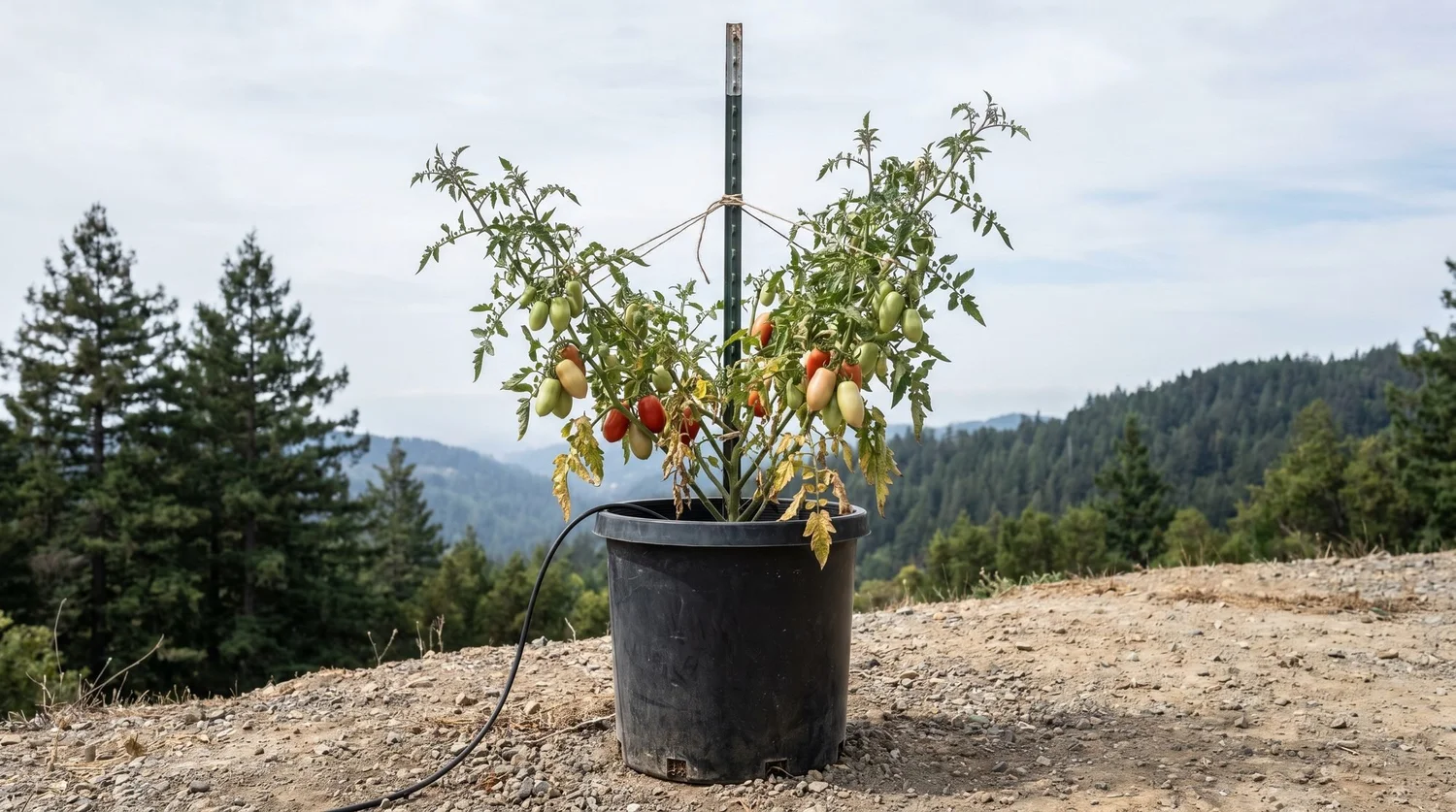
If your in-ground beds are too shaded or sit in a frost pocket, a large container is the SLV gardener's best workaround, and it is often the difference between no Romas and a real crop. A pot lets you place the plant in the one genuinely sunny patch you have, a driveway edge, a deck rail, a south-facing clearing, rather than wherever the bed happens to be. It lifts roots off cold, acidic, root-filled redwood ground, and you can fill it with a proper neutral tomato mix instead of fighting the valley's low pH. A pot up against a sun-warmed wall also banks heat the canyon floor never gets. Use the biggest container you can manage, at least fifteen gallons, because a small pot dries out fast and stresses a paste tomato into blossom end rot. For many shaded-lot gardeners in Felton and Ben Lomond, the practical path to homegrown Romas is a few big pots parked in the sun, not a bed under the trees.
Deer and gophers: plan for them
The wild edge is closer here than in town, and two animals will find your tomatoes. Deer browse readily through SLV gardens and will strip a young Roma overnight, so plan on a real barrier from day one: a tall fence, a sturdy cage, or growing on a fully enclosed deck. Gophers are the other constant. They work the soft soil of raised beds and will take a healthy plant down by the roots in an afternoon. Line raised beds and planting holes with hardware cloth before you plant, not after you lose one. These pressures are part of why the container-on-the-ridge approach appeals to so many valley gardeners. A pot on a deck sidesteps both the deer and the gophers at once.
Common problems in the SLV
Too little sun: the number one cause of failure. A shaded plant grows tall and leafy but sets little fruit and ripens almost none. Move to sun or a pot.
Late or early frost in a cold pocket: clips the season at both ends. Time transplants to your spot and cover late fruit if an early fall frost threatens.
Acidic redwood soil: the valley's native pH runs low for tomatoes. Lime in-ground beds toward neutral, or sidestep it entirely with potting mix in containers.
Damp shade disease: still, shaded, humid air invites fungal trouble. Site for airflow and water at the base in the morning.
Local tip: Let the sun decide, then let elevation set your calendar. Find your sunniest six-hour spot, even if that means a pot on the driveway, and match your planting date to whether that spot is a warm ridge or a cold pocket. Gardeners who pick the right spot and the right date succeed with Romas in the SLV. Those who fight a shady frost pocket rarely do.
Frequently asked questions
Can I grow Roma tomatoes under the redwoods?
Not in true redwood shade. Tomatoes need at least six hours of direct sun, and a canyon bed under filtered redwood light will not ripen a paste tomato. If your lot is shaded, grow Romas in a large container you can place in your sunniest open spot instead of in a bed under the trees.
Why do my SLV tomatoes get frost when the coast does not?
Cold air drains downhill at night and pools on the valley floors and canyon bottoms, creating frost pockets that stay cold long after the ridges and the coast have warmed. If you garden in one of these low spots, plant later, into mid or late May, and be ready to cover plants if an early fall frost threatens.
My soil is acidic from the redwoods. Will Romas mind?
Yes. Tomatoes prefer near-neutral soil, and native SLV ground often runs too acidic. Test your bed and add lime to bring the pH up, or skip the problem altogether by growing in containers filled with a balanced potting mix.
How do I keep deer and gophers off my tomatoes here?
Assume both will visit. Fence or cage against deer from the start, and line raised beds and planting holes with hardware cloth against gophers before you plant. Many SLV gardeners avoid both by growing Romas in pots on an enclosed deck.
