

Drip Irrigation vs. Ollas: Which Saves More Water?
A few of the product links in this guide are affiliate links. If you buy through one, Ambitious Harvest may earn a small commission at no extra cost to you, which helps keep these guides free. We only point to gear we would use in our own Santa Cruz garden. As an Amazon Associate, we earn from qualifying purchases. Read our full disclosure.
Ollas (unglazed clay pots buried in the soil) are the most water-efficient irrigation method available, using up to 70% less water than conventional surface watering according to research from the University of Arizona. However, drip irrigation is the more practical choice for most Santa Cruz vegetable gardens because it scales easily and automates well. Ollas excel in small, intensive plantings, but drip wins when you need to water more than a few square feet.
When to Choose Drip Irrigation
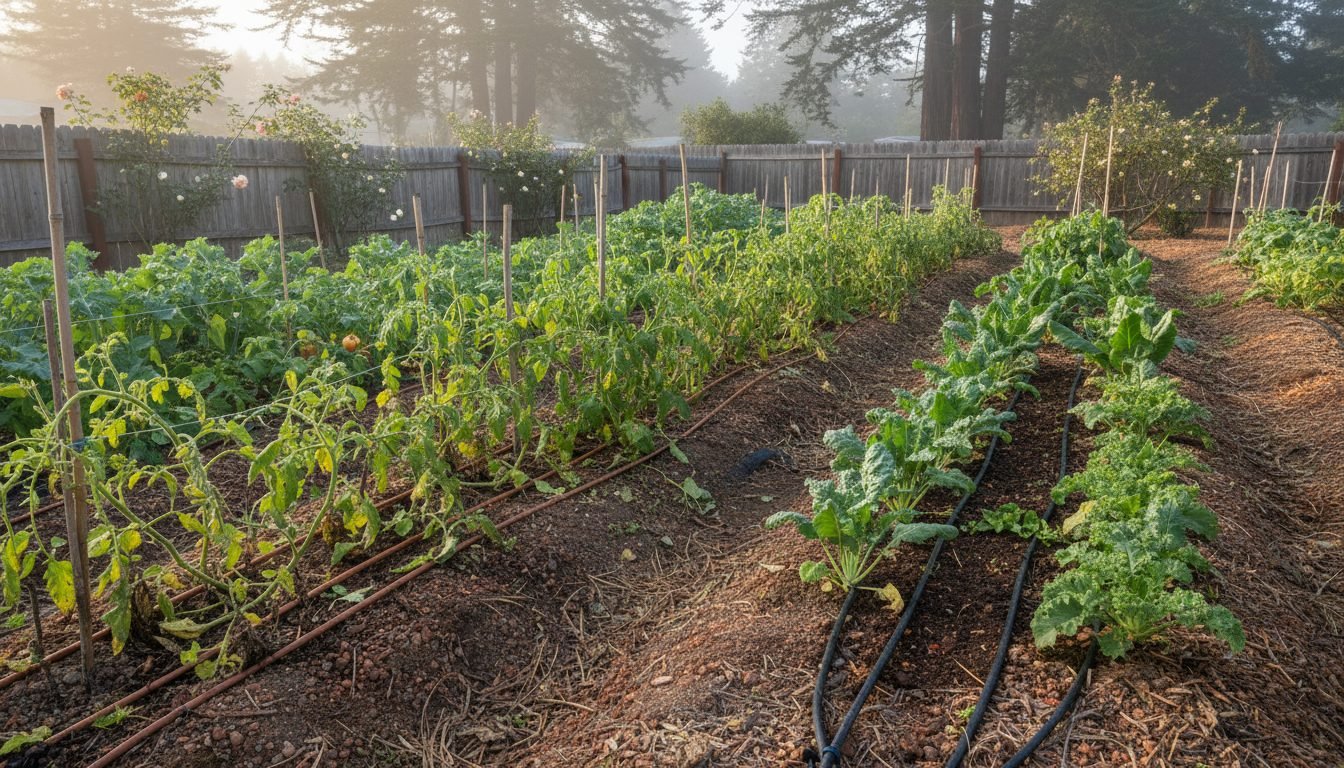
Drip irrigation is the right system when you are watering more than a couple of raised beds, need hands-off automation, or grow plants with varied water needs on the same line. A drip system paired with a $30 battery timer means your tomatoes, peppers, and squash all get watered at dawn without you lifting a finger. That convenience matters during Santa Cruz's dry summers, especially in July and August when you might be away for a long weekend.
Drip also works better on slopes and in larger garden layouts. If you garden in the hills above Scotts Valley or along the ridgelines in Bonny Doon, drip lets you run lines across uneven terrain without worrying about uneven water distribution.
When to Choose Ollas
Ollas shine in small, intensive plantings where you want the absolute maximum water savings. They are perfect for a 4x4 raised bed of tomatoes or peppers, a container garden on a patio, or anywhere you want to reduce watering visits to once or twice a week. The physics are simple: the unglazed clay only releases water when surrounding soil dries out, creating a self-regulating system with essentially zero waste.
Santa Cruz's heavy clay soil actually works in the olla's favor, slowing the seepage rate and extending the time between refills. If you garden in the fog belt near the coast, you might only need to refill every 5-7 days during summer. Ollas are also a wonderful option for gardeners who want a low-tech, no-plastic approach to water conservation. You can make your own by gluing two unglazed terracotta pots together for about $5.
The Bottom Line for Santa Cruz Gardeners
For most vegetable gardens in Santa Cruz County, drip irrigation is the more practical system. It scales to fit any layout, automates completely, and still achieves excellent water efficiency. But if you have a small, dedicated bed of heat-loving crops like tomatoes or squash, adding one or two ollas is a smart supplement. The two systems are not mutually exclusive. Use drip as your backbone and tuck an olla into your most water-hungry bed for the ultimate water-saving combination.
This week: Try making a DIY olla by sealing two 6-inch unglazed terracotta pots together with waterproof silicone. Bury it in your tomato bed with the opening above soil level, fill it with water, and see how long it lasts before needing a refill.
For more on saving water in your California garden, check out our free Seasonal Planting Guide at [/your-garden-toolkit].
Frequently Asked Questions
Which saves more water, drip irrigation or ollas?
Ollas, unglazed clay pots buried in the soil, are very water efficient, and University of Arizona Cooperative Extension reports they may save 60 to 70 percent of the water used by a conventional watering can. Drip irrigation is still very efficient and far more practical for most gardens.
When is drip irrigation the better choice?
Choose drip when watering more than a couple of raised beds, when you want hands-off automation, or when growing plants with varied water needs on one line. Paired with a $30 battery timer, it waters everything at dawn and works well on slopes and larger layouts.
When do ollas make the most sense?
Ollas shine in small, intensive plantings like a 4x4 bed of tomatoes or peppers, where they cut watering visits to once or twice a week. Santa Cruz's heavy clay slows the seepage rate and extends time between refills, though ollas may crack in mountain frost.
Can I use drip irrigation and ollas together?
Yes, the two are not mutually exclusive. Use drip as your backbone and tuck one or two ollas into your most water-hungry bed for the ultimate water-saving combination. You can make a DIY olla by sealing two unglazed terracotta pots together for about $5.
