

Composting 101: From Kitchen Scraps to Garden Gold
A few of the product links in this guide are affiliate links. If you buy through one, Ambitious Harvest may earn a small commission at no extra cost to you, which helps keep these guides free. We only point to gear we would use in our own Santa Cruz garden. As an Amazon Associate, we earn from qualifying purchases. Read our full disclosure.
What Is Composting and How Do I Start?
Composting is the natural process of recycling organic matter, like kitchen scraps and yard waste, into a nutrient-rich soil amendment that improves garden health. According to the UC Master Gardener Program, a well-managed compost pile can produce finished compost in as little as two to three months. Starting is simple: layer green (nitrogen-rich) and brown (carbon-rich) materials, keep the pile moist, and turn it regularly. In Santa Cruz County, our mild coastal climate makes composting possible year-round, giving home gardeners a steady supply of what many call "garden gold."
Why Should Santa Cruz Gardeners Compost?
If you garden anywhere along the Central Coast, composting is one of the most impactful habits you can build. Our soils here tend toward sandy loam near the coast and heavier clay in the inland valleys, and both benefit enormously from the addition of finished compost. The UC Division of Agriculture and Natural Resources notes that compost improves soil structure, increases water-holding capacity, and supports beneficial microbial life, all things that help plants thrive without relying on synthetic fertilizers.
There is also a practical reason to compost. California's SB 1383 organic waste diversion law, which took full effect in 2022, requires residents to keep organic waste out of the landfill. By composting at home, you reduce your curbside green bin load while creating something genuinely useful for your garden beds. Organic waste like food scraps and yard trimmings makes up roughly a third of what California residents send to landfills, a major reason for the state's SB 1383 diversion law. That is a lot of potential garden gold going to waste.
Beyond the environmental benefits, compost acts as a slow-release fertilizer. UC research has shown that compost provides a steady supply of nitrogen, phosphorus, and potassium as it continues to break down in the soil. For Santa Cruz gardeners dealing with our foggy summers and mild winters, this steady nutrient release matches the way many vegetables and perennials actually grow here: slowly and steadily rather than in a short burst of summer heat. For more on how organic matter transforms your garden beds, see Mulch and Soil Health: The Hidden Irrigation System in Your Santa Cruz County Garden.
What Composting Method Works Best for My Space?
The right composting method depends on how much space you have, how much material you generate, and how involved you want to be. Here are the four most common approaches, along with notes on how each performs in our local climate.
Traditional Open Pile
An open pile is the simplest approach. You designate a corner of your yard (at least 3 feet by 3 feet), pile up your materials, and let nature do the work. UC Cooperative Extension recommends a minimum pile size of 3 feet in each dimension to generate enough internal heat for efficient decomposition. In Santa Cruz, open piles work well in sunny spots. If your yard sits in a fog belt (think westside Santa Cruz, Davenport, or Bonny Doon), you may find that piles stay cooler and decompose more slowly. That is fine. It just means your timeline stretches from two months to four or five.
Enclosed Bin
Enclosed bins, whether purchased or homemade from wire mesh and hardware cloth, offer a tidier look and help contain the pile. They also deter raccoons, which are a real consideration in neighborhoods near Pogonip, DeLaveaga, or anywhere backing up to open space. The Santa Cruz County composting program has periodically offered subsidized bins, so check with Public Works before buying one at full price. A standard bin holds about 12 cubic feet of material, which is enough for most single-family households.
Tumbler
Tumbler composters are sealed drums that spin on a frame. Their advantage is speed: because you can turn the contents easily, you mix air into the pile more frequently, which accelerates decomposition. UC research suggests that tumbler composting can produce finished compost in four to eight weeks under ideal conditions. They work well in smaller yards and on patios. The downside is capacity. Most tumblers hold less material than an open bin, so if you generate a lot of yard waste from pruning or leaf drop, you may need a second system alongside it.
Vermicomposting (Worm Bins)
Worm composting uses red wiggler worms (Eisenia fetida) to break down food scraps into castings, one of the richest soil amendments available. UC research on vermicomposting shows worm castings contain higher concentrations of plant-available nutrients than traditional compost. Worm bins are ideal for apartment dwellers, renters, or anyone who generates mostly kitchen scraps rather than yard waste. Santa Cruz's mild temperatures (rarely below 40 degrees or above 85 degrees) make outdoor worm bins viable year-round, though you should move them to a shaded spot during occasional heat waves. For more on worm composting, read In-Bed Vermicomposting: Composting with Worms Directly in Your Garden Beds.
What Can I Compost (and What Should I Avoid)?
Successful composting depends on balancing two categories of materials: greens (nitrogen sources) and browns (carbon sources). UC Master Gardener guidance targets a carbon-to-nitrogen balance around 30 to 1. Depending on materials, that runs from roughly equal parts brown and green by volume up to about 2 to 3 parts brown to 1 part green. Getting this ratio close to right is the single most important thing you can do for a healthy, productive compost pile.
Greens (Nitrogen-Rich Materials)
- Fruit and vegetable scraps (avocado skins and citrus peels are fine, despite popular myth)
- Coffee grounds and paper filters
- Fresh grass clippings (spread thin to avoid matting)
- Plant trimmings from the garden
- Spent flowers and deadheaded blooms
- Seaweed and kelp (rinse off salt first; great source of trace minerals)
- Leave animal manure out of this beginner kitchen-and-yard-waste pile. Backyard composting is not a guaranteed sanitizing process.
Browns (Carbon-Rich Materials)
- Dry leaves (oak and redwood leaves work but break down slowly; chop or shred first)
- Straw or hay (available from local feed stores in Watsonville and Scotts Valley)
- Cardboard and newspaper (shredded, non-glossy)
- Wood chips and small prunings (under half an inch in diameter)
- Dried plant stalks from spent tomato or bean plants
- Sawdust from untreated wood (use sparingly, as it is very high in carbon)
- Pine needles (acidic, so mix well rather than dumping in large batches)
What to Keep Out
Some materials should stay out of a home compost pile. Meat, fish, dairy, and oily foods can attract rodents and create odor problems. Pet waste from dogs and cats may contain pathogens that home compost piles do not reach high enough temperatures to kill. Diseased plant material, especially anything showing signs of fusarium wilt or late blight on tomatoes, should go in the green bin for commercial processing, where temperatures exceed 150 degrees Fahrenheit. UC guidance advises against composting plants infected with soil-borne diseases in home systems, since home piles rarely get hot enough to kill those pathogens. For help identifying plant diseases, see Tomato Problems and How to Fix Them: A Santa Cruz Troubleshooting Guide.
How Do I Build and Maintain a Compost Pile Step by Step?
Once you have chosen your method and gathered materials, building your pile is straightforward. Here is a step-by-step process based on UC Cooperative Extension guidelines.
Step 1: Choose Your Location
Pick a level, well-drained spot with partial sun. In Santa Cruz, a spot that gets morning sun and afternoon shade is ideal, especially during warmer months when full sun can dry out the pile too quickly. Avoid placing your pile directly against wooden fences or structures, as the moisture can cause rot over time. If you are on a slope (common in the hills above the city), level a small area or use a contained bin to prevent material from sliding.
Step 2: Layer Your Materials
Start with a 4 to 6 inch layer of coarse brown material like small twigs or straw. This creates air channels at the base. Add a 2 to 3 inch layer of green material on top, then another layer of browns. Continue alternating. Think of it like building a lasagna. Each green layer should be roughly half the depth of the brown layers above and below it.
Step 3: Add Water
Your pile should be about as moist as a wrung-out sponge. In Santa Cruz, our dry summers (typically May through October) mean you will need to water your pile during those months. During the rainy season, you may need to cover an open pile with a tarp to prevent waterlogging. The UC Master Gardener handbook notes that overly wet piles become anaerobic and smelly, while overly dry piles simply stop decomposing.
Step 4: Turn Regularly
Turning introduces oxygen, which feeds the aerobic bacteria doing the decomposition work. For a hot, fast pile, turn every three to five days. For a more relaxed approach, turning every two to three weeks still produces good compost. You will know the pile is working when you see steam rising from the center on cool mornings, a common and satisfying sight during our foggy summer dawns.
Step 5: Monitor Temperature
A compost thermometer (available at garden centers in Santa Cruz and online) helps you track progress. An active pile should reach 130 to 150 degrees Fahrenheit internally. According to UC Agriculture and Natural Resources, controlled composting requires a specified process, not just one warm reading. For manure, the National Organic Program specifies an initial carbon-to-nitrogen ratio of 25:1 to 40:1 and 131 to 170 degrees Fahrenheit for three days in an in-vessel or static aerated system, or 15 days in a windrow with at least five turns. A backyard pile should not be assumed to meet that process or sanitize manure. These are organic-production standards, not universal backyard-garden law. If your pile is not heating up, it likely needs more green material, more water, or more frequent turning.
Step 6: Know When It Is Done
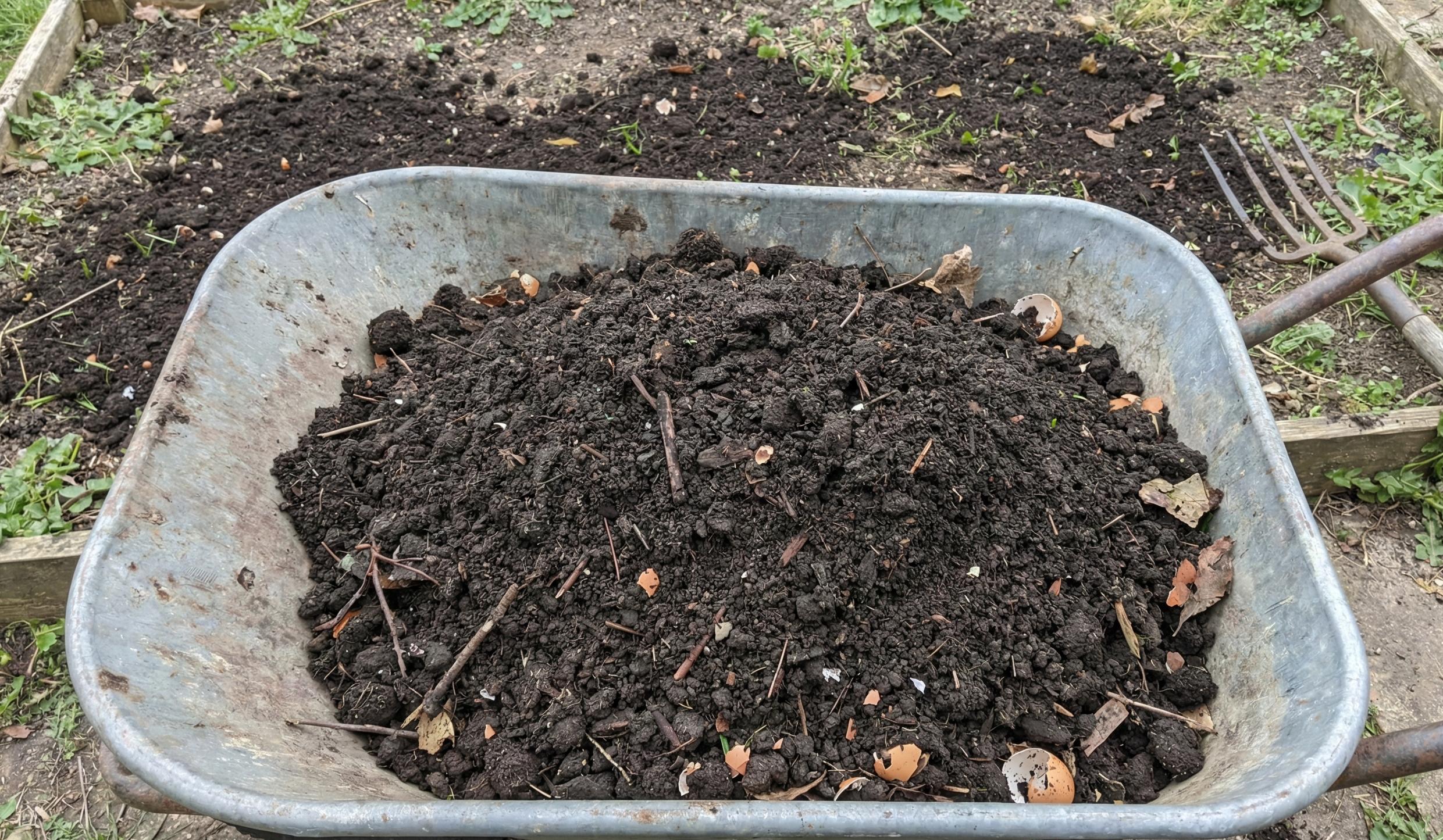
Finished compost is dark brown to black, crumbly, and smells like rich earth. You should not be able to identify the original materials. The process typically takes two to four months for an actively managed pile in our climate, or six to twelve months for a passive pile. If you are unsure whether your compost is ready, do a simple germination test: plant a few radish seeds in a small pot of the compost. Normal germination is a maturity clue, not proof that pathogens or contaminants are absent.
When Is the Best Time to Start Composting in Santa Cruz?
The answer is any time. Our mild year-round temperatures mean there is no wrong season to begin. That said, fall is particularly good because you have an abundance of brown materials from leaf drop and garden cleanup, and the arriving rains provide natural moisture. Starting a pile in October or November and maintaining it through winter can give you finished compost just in time for spring planting in March and April. For seasonal timing, check out Your March Garden Checklist for Santa Cruz County.
If you start in spring or summer, you will have plenty of green materials from lawn clippings and kitchen scraps but may need to stockpile browns. Save cardboard boxes, newspaper, and bags of dry leaves for this purpose. Many Santa Cruz gardeners keep a dedicated "brown bin" next to their compost pile so they always have carbon material on hand when they add kitchen scraps.
How Do I Troubleshoot Common Compost Problems?
Even experienced composters run into issues. Here are the most common problems and their fixes, based on guidance from UC Master Gardener resources.
The Pile Smells Bad
A sour or rotten smell usually means the pile is too wet or has too many greens. Add dry brown material (shredded cardboard works fast) and turn the pile to introduce air. If the smell is like ammonia, that is excess nitrogen escaping. Add more browns to balance the ratio. In Santa Cruz, piles that sit through heavy winter rains without a cover are the most common culprits.
The Pile Is Not Heating Up
A cold pile is usually too dry, too small, or too heavy on browns. Add green material and water, and make sure the pile is at least 3 feet in each dimension. You can also add a compost activator like a shovelful of finished compost or garden soil to introduce beneficial microorganisms. UC Cooperative Extension notes that fresh grass clippings are one of the fastest ways to heat up a sluggish pile.
Fruit Flies or Gnats
Fruit flies are attracted to exposed food scraps. Always bury kitchen waste under a layer of browns when you add it to the pile. If you already have a fly problem, turn the pile and add a thick cap of dry leaves or shredded newspaper on top. In our coastal climate, this is more common in late summer when temperatures are warmest and the fog lifts for a few days.
Animals Are Getting Into the Pile
Raccoons, rats, and skunks are common in Santa Cruz neighborhoods, especially near greenbelts and riparian corridors. If wildlife is raiding your pile, switch to an enclosed bin or add hardware cloth (quarter-inch mesh) around the base and top of your pile. Never add meat, dairy, or cooked food, as these are the biggest attractants. The UC IPM Program offers additional guidance on rodent management in and around compost systems.
The Pile Has Ants
Ants in a compost pile usually indicate the pile is too dry. Water it thoroughly and turn it. The ants will relocate on their own once the moisture level increases. This is not a cause for alarm, and UC IPM does not recommend using pesticides in or near compost piles.
How Do I Use Finished Compost in My Garden?
Finished compost is versatile. Here are the most effective ways to use it in a Santa Cruz garden.
As a soil amendment: Work 2 to 4 inches of compost into the top 6 to 8 inches of soil before planting. This is especially valuable for our sandy coastal soils, which drain quickly and benefit from the water retention that compost provides. UC research shows compost-amended soils hold noticeably more water than unamended soils, an advantage for our sandy coastal beds.
As mulch: Spread a 1 to 2 inch layer of compost on top of soil around established plants. This suppresses weeds, regulates soil temperature, and slowly feeds the soil as rain and irrigation carry nutrients downward. In our Mediterranean climate, compost mulch is particularly helpful during the dry season. To understand the difference between using compost as mulch versus other materials, read What Is the Difference Between Compost and Mulch?
As a seed-starting mix component: Blend finished, well-screened compost with perlite and coconut coir in equal parts for a homemade seed-starting mix. Sift the compost through half-inch hardware cloth first to remove any large pieces. This mix works well for starting cool-season crops like lettuce, kale, and broccoli indoors during January and February for transplanting in March.
As compost tea: Steep a burlap sack of compost in a bucket of water for 24 to 48 hours, then use the liquid to water plants. While UC research notes that the benefits of compost tea are not as well-documented as direct compost application, many local gardeners report good results using it as a foliar spray and root drench, particularly for tomatoes and peppers during the growing season.
Two common questions worth settling: whether compost tea beats plain compost, and whether you need a tumbler to compost at all.
Frequently Asked Questions
How long does composting take in Santa Cruz's climate?
In Santa Cruz's mild coastal climate, an actively managed hot compost pile typically produces finished compost in two to four months. A passive pile that is turned infrequently may take six to twelve months. The UC Master Gardener Program notes that temperature, moisture, and the carbon-to-nitrogen ratio are the three primary factors that determine speed. Our year-round moderate temperatures are an advantage compared to regions with freezing winters.
Can I compost in a small yard or on a patio?
Yes. Worm bins (vermicomposting) and small tumbler composters work well in compact spaces and even on patios or balconies. A standard worm bin roughly 2 feet by 3 feet can handle about 3 to 4 pounds of food scraps per week, enough for most one- or two-person households. Many Santa Cruz apartment dwellers compost successfully using this method year-round.
Do I need to buy a compost starter or activator?
No. Commercial compost starters are unnecessary if your pile has a good balance of greens and browns plus adequate moisture. UC ANR composting guidance notes that the microorganisms needed for decomposition are already present on the organic materials you add. A shovelful of garden soil or finished compost from a neighbor's pile provides more than enough microbes to get things going.
Can I compost citrus peels and onions?
Yes. The common advice to avoid citrus and onions in compost is mostly myth. According to UC Master Gardener resources, citrus peels and onion scraps break down just fine in a well-managed compost pile. They may take slightly longer than softer materials, so chop them into smaller pieces to speed decomposition. The only exception is worm bins, where large amounts of citrus can lower pH to levels that stress the worms.
Will composting attract rats or other pests?
A properly managed compost pile should not attract pests. The UC IPM Program recommends always burying food scraps under a layer of brown material, never adding meat or dairy, and using an enclosed bin if you live in an area with known rodent activity. In Santa Cruz neighborhoods near creeks or open space, an enclosed bin with a wire mesh bottom is the safest approach.
Is compost the same as mulch?
No. Compost is fully decomposed organic matter that is mixed into soil as an amendment or applied as a thin top layer. Mulch, which can include wood chips, straw, or bark, is typically not fully decomposed and is placed on the soil surface to suppress weeds and retain moisture. According to the UC Division of Agriculture and Natural Resources (Publication 8367), compost feeds the soil biology while mulch primarily protects the soil surface. Both are valuable, and they serve different purposes in the garden.
Can I compost weeds from my garden?
It depends on the weed and your composting method. Annual weeds that have not gone to seed can be composted safely. However, UC Cooperative Extension advises against composting perennial weeds like bermudagrass or bindweed, as home compost piles rarely reach temperatures high enough to kill their root fragments. Weeds that have set seed should also go in the municipal green bin, where commercial composting temperatures exceed 150 degrees Fahrenheit.
How do I know if my compost is finished and safe to use?
Finished compost is dark, crumbly, and earthy-smelling, with no recognizable food or plant material visible. The UC Master Gardener handbook suggests a simple maturity test: fill a sealed plastic bag with moist compost and leave it for a week. An earthy smell is a maturity clue, not proof of pathogen safety. If it smells sour or like ammonia, it needs more time. Using immature compost can temporarily tie up nitrogen in your soil and harm seedlings.
What is the right brown-to-green ratio for composting?
Aim for roughly two to three parts brown material (dry leaves, straw, cardboard) to one part green (fresh scraps, grass, coffee grounds) by volume. Browns supply carbon and airflow; greens supply nitrogen. If the pile mats down or smells, add more browns. UC ANR notes a balanced carbon-to-nitrogen mix helps a pile break down quickly without odor.
Why does my compost smell bad?
A healthy pile smells earthy. An ammonia smell means too many greens, so add dry browns like leaves or straw. A rotten-egg odor means the pile is too wet and airless, so turn it to add oxygen and mix in coarse material. UC ANR notes that balancing moisture and airflow resolves most compost odors.
Why isn't my compost heating up or breaking down?
Three things usually stall a pile: it is too small, too dry, or short on nitrogen. Build the mass to about three feet by three feet so it can hold heat, keep it as damp as a wrung-out sponge, and add greens like fresh scraps or grass. UC ANR notes that size, moisture, and nitrogen drive the heat that speeds decomposition.
Start Composting This Week
Composting is one of those rare garden practices that costs almost nothing, reduces waste, and genuinely improves your soil over time. Whether you start with a simple pile in a back corner or a tidy worm bin on your patio, the process is forgiving and the results are worth it. Santa Cruz's mild climate gives us a real advantage here, so there is no reason to wait.
For more gardening tools, guides, and resources built specifically for California home gardeners, visit Your Garden Toolkit.
